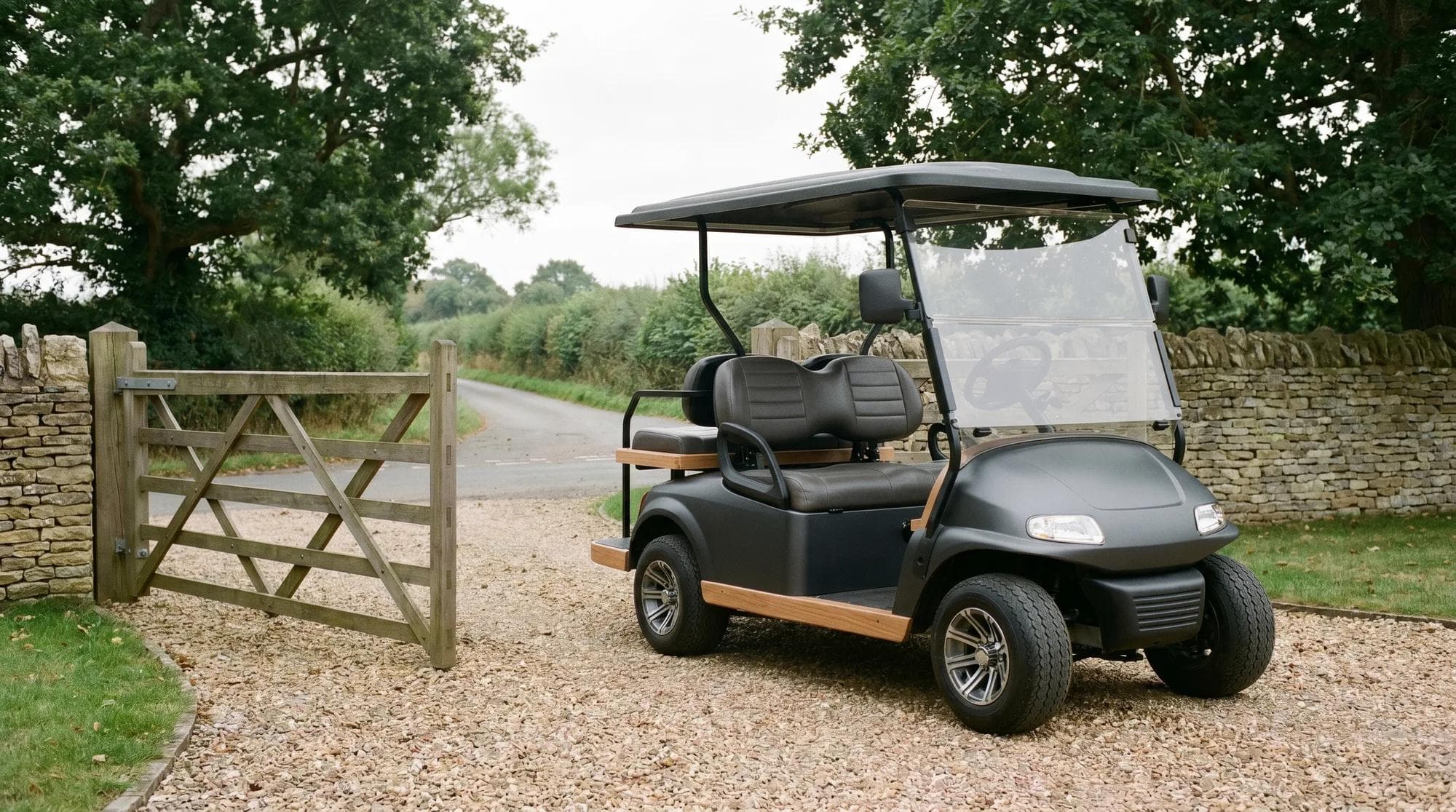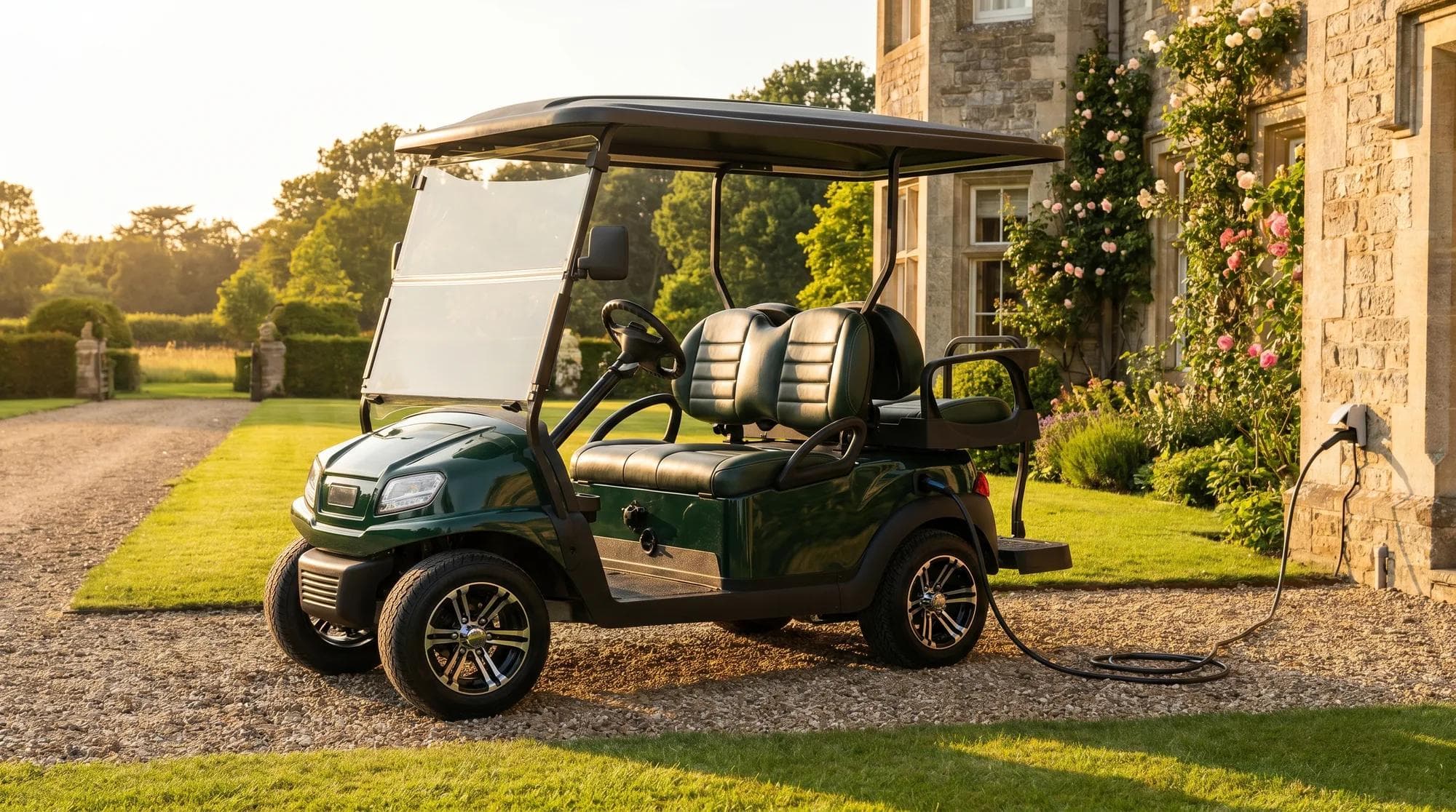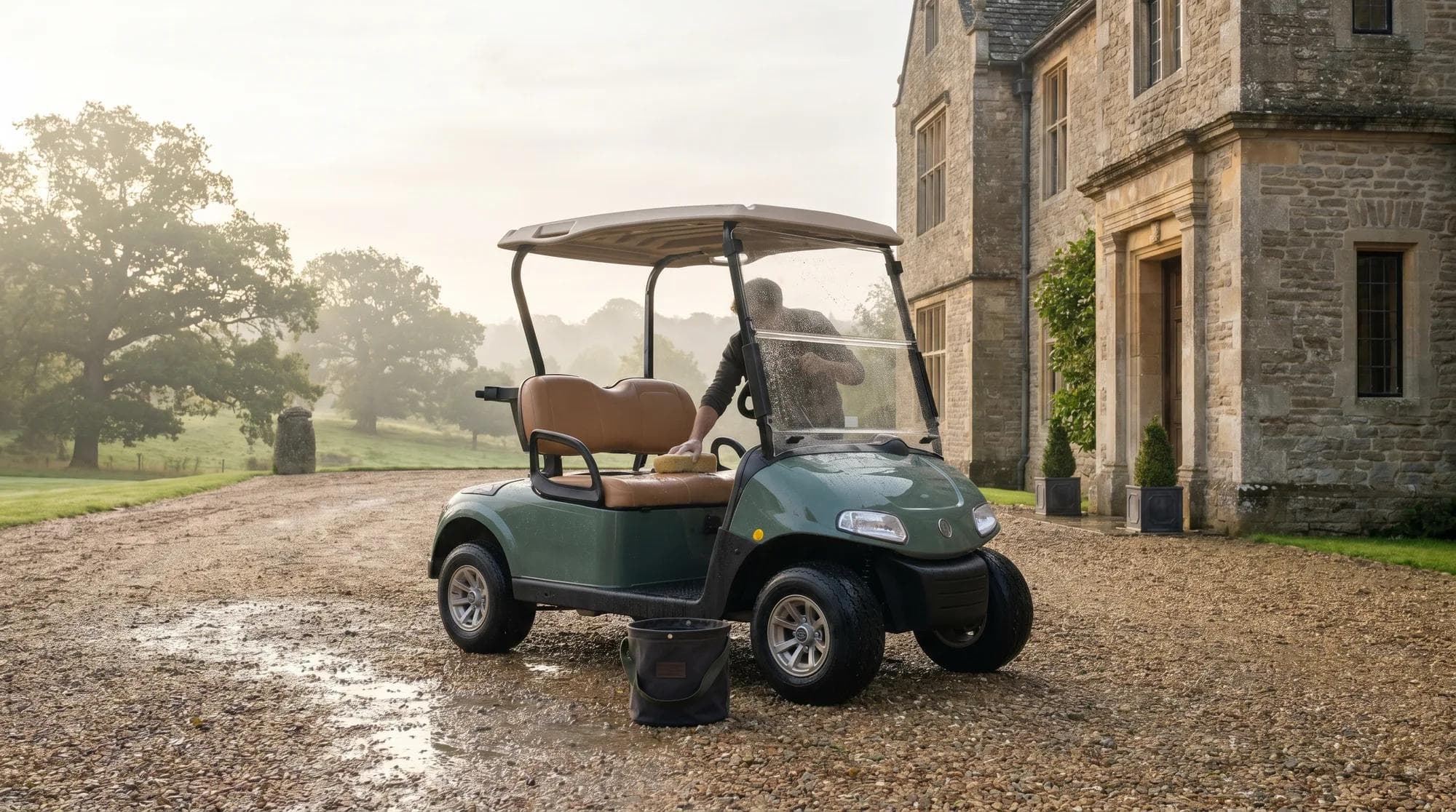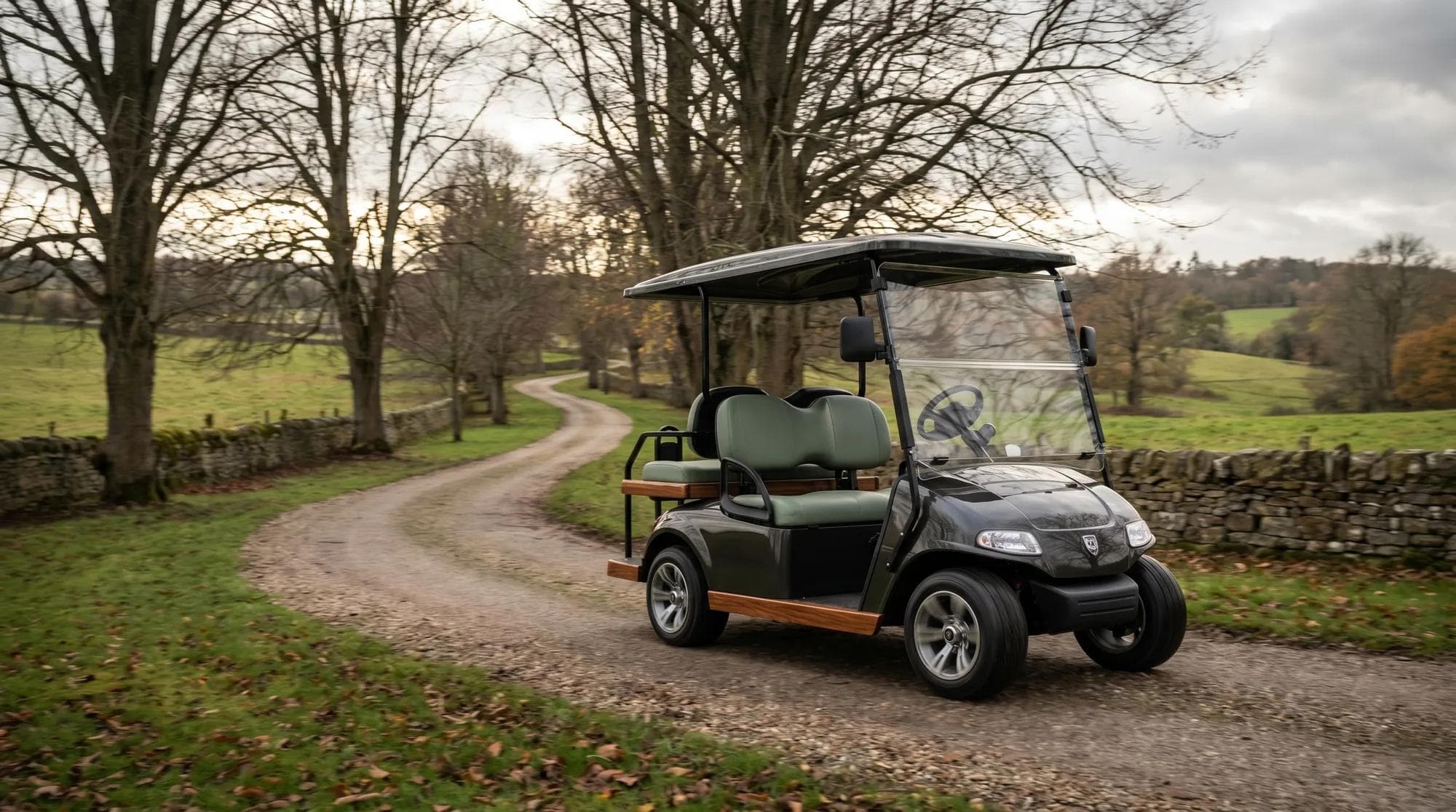
Every Hawke electric golf buggy is built to order, so there is no fixed UK price list in 2026: the cost is set by seat count (two to eight seats, plus utility and cargo builds), battery chemistry and the specification you choose, and it is confirmed on a tailored quotation. The spec you choose, above all the battery, moves the final figure most.
- Every new buggy is built to order: seat count, battery and specification set the price, confirmed on quotation
- Battery chemistry is the single biggest price lever: lithium costs more upfront and usually less over the vehicle's life
- Judge total cost of ownership, not the sticker price: running costs, servicing and battery replacement decide the real figure
- Larger people-movers (11 to 23 seats) and road trains are quoted to spec rather than priced off a list
- A configured quote is the only accurate number, and it costs nothing to request
What sets the price for each size
The table below shows how the range lines up by size and who each build typically suits. Every vehicle is a new, premium build prepared for UK delivery; options, battery upgrades and bespoke work shape the figure, and every build is confirmed with a formal quotation before you commit.
- Typical buyer
- Private owners, golfers, small grounds teams
- Typical buyer
- Families, estates, guest transport
- Typical buyer
- Hotels, venues, visitor attractions
- Typical buyer
- Resorts, campuses, event fleets
- Typical buyer
- Grounds, facilities and estate work
| Typical buyer | |
|---|---|
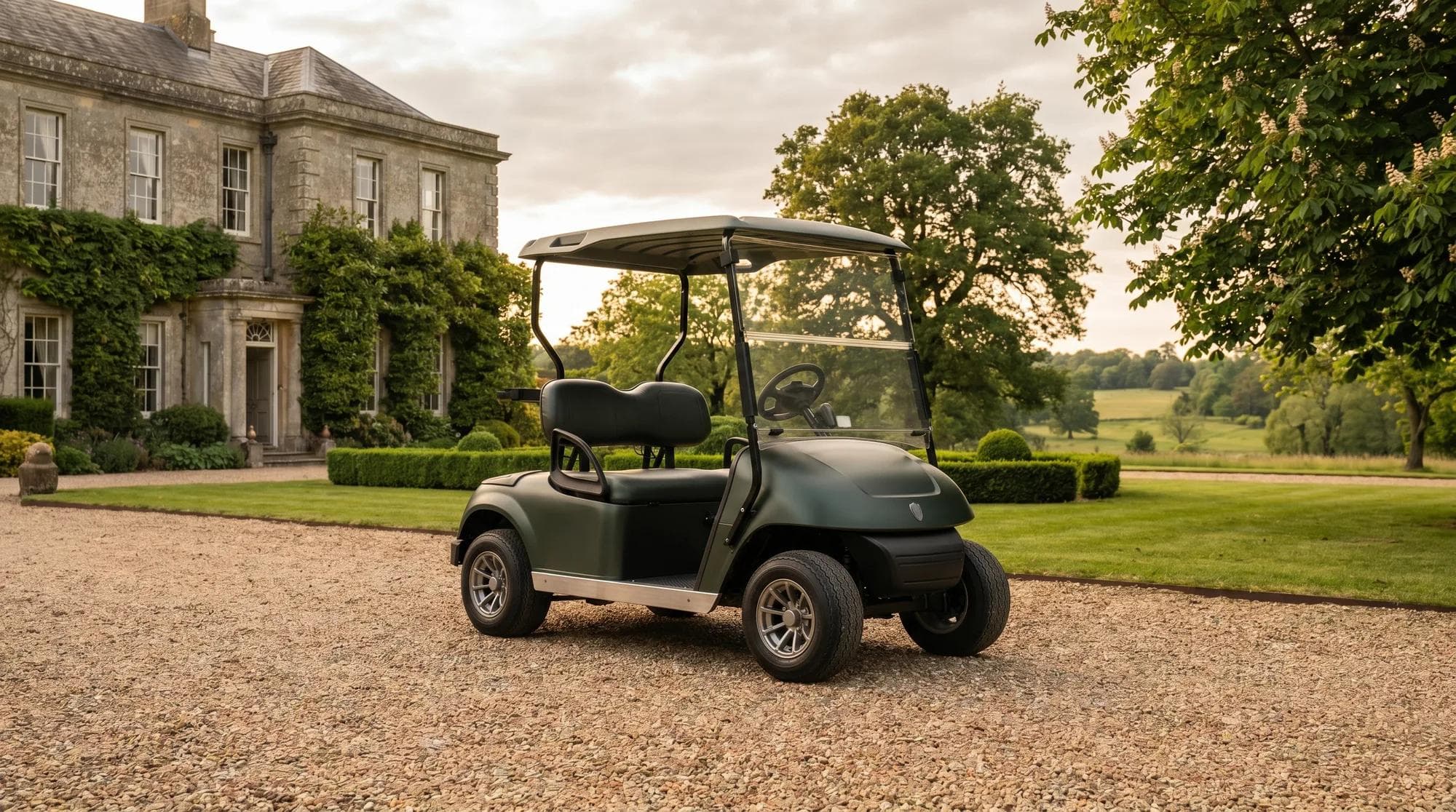
| Two-seat golf buggy | Private owners, golfers, small grounds teams |
| Four-seat buggy | Families, estates, guest transport |
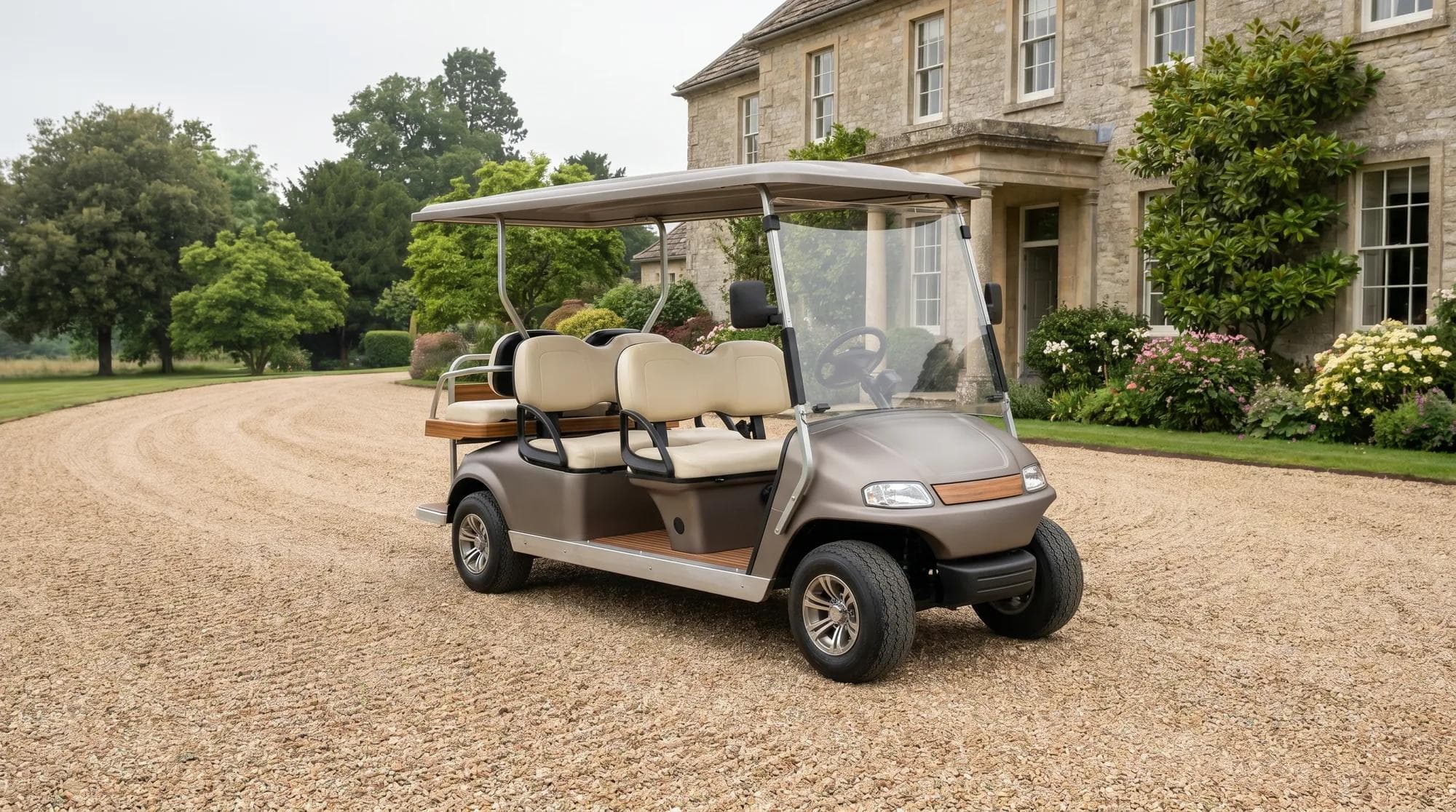
| Six-seat buggy | Hotels, venues, visitor attractions |
| Eight-seat people mover | Resorts, campuses, event fleets |
| Utility and cargo builds | Grounds, facilities and estate work |
Above eight seats the range moves into shuttle and tram territory: 11, 14, 17 and 23-seat people-movers and the road train are specified vehicle by vehicle, so they are quoted to your site and duty cycle rather than sold off a price list. If you are weighing up sizes, our guide to which buggy size you need walks through the decision.
What actually drives the price
Battery chemistry and capacity
The battery is the most expensive component on the vehicle and the first thing to get right. Lithium packs cost more than lead-acid upfront, charge faster, need no watering and typically outlast lead-acid several times over, which is why most working fleets now specify them. Capacity matters too: a buggy asked to run all day on a large site needs more stored energy than one doing eighteen holes.
Build quality and specification
Frame construction, suspension, weather protection, seating materials and paint finish all separate a premium vehicle from a budget import. So does what surrounds the vehicle: pre-delivery inspection, a 3-year warranty with 24-hour call-out, and parts and engineer support for the years after delivery. A cheaper buggy with nothing behind it becomes expensive the first time it stops working in a busy week.
Seats, bodywork and configuration
Each step up in seat count adds chassis, body and battery cost, so larger builds are quoted higher. Utility conversions, cargo beds, tippers, cabs and doors, and specialist bodies such as ambulance or catering builds are configured items priced on the build.
Road-legal specification
A standard buggy is a private-land vehicle. Making one road-legal in the UK means meeting a specific approval and registration route, and the extra equipment involved adds cost. If that is where you are heading, start with our guide to whether golf buggies are road-legal in the UK before you spec anything.
Customisation and branding
Colour, trim, upholstery, canopies, screens, lighting and fleet branding are where a buggy becomes yours. Individually these are modest line items; a fully bespoke build is naturally a different conversation, and our bespoke programme covers what is possible.
The cheapest buggy is rarely the least expensive to own. Lithium, build quality and warranty decide what the vehicle really costs over five years, not the sticker price.
Lead-acid vs lithium: the cost decision that matters
Lead-acid batteries are cheaper on day one but heavier, slower to charge, maintenance-hungry and shorter-lived. Lithium costs more upfront and usually wins on whole-life cost for any vehicle in regular use, because it charges faster, holds range better and does not need replacing as soon. Our lithium vs lead-acid guide sets out the range and lifespan numbers in full.
- Lead-acid
- Lower
- Lithium
- Higher
- Lead-acid
- Shorter, degrades with deep use
- Lithium
- Several times longer in regular use
- Lead-acid
- Slower, full cycles preferred
- Lithium
- Faster, happy with partial top-ups
- Lead-acid
- Watering and terminal care
- Lithium
- None day to day
- Lead-acid
- Usually higher
- Lithium
- Usually lower
| Lead-acid | Lithium | |
|---|---|---|
| Upfront cost | Lower | Higher |
| Typical lifespan | Shorter, degrades with deep use | Several times longer in regular use |
| Charging | Slower, full cycles preferred | Faster, happy with partial top-ups |
| Maintenance | Watering and terminal care | None day to day |
| Whole-life cost in regular use | Usually higher | Usually lower |
Do not stop at the purchase price
Two buggies with the same sticker price can cost very different amounts to own. Electricity is a fraction of the cost of petrol for the same miles, servicing is simpler than a combustion vehicle, and the big variable is the battery: when it needs replacing and what chemistry you chose. Our running-costs guide breaks down a typical year, and the electric vs petrol comparison shows the head-to-head.
New, used or financed?
A well-sorted used buggy costs a fraction of new, but the battery's age and condition dominate the value, so a used purchase is really a battery inspection with a vehicle attached; our used buying checklist covers exactly what to look at. If the decision is between the two, new vs used weighs it honestly. For clubs, estates and businesses spreading the cost, finance and leasing options exist for both single vehicles and fleets; our finance guide explains the routes at a high level.
How to get an exact figure
- 01
Configure the vehicle
Choose size, battery, colours, trim and options so the quote reflects the buggy you actually want.
- 02
Request a tailored quote
Tell us how and where the vehicle will work; duty cycle changes the right specification.
- 03
Confirm delivery and support
Every vehicle arrives inspected, with a 3-year warranty and 24-hour call-out behind it.
The most reliable way to get a real figure for your use is to configure a vehicle and request a quote; it costs nothing, takes minutes, and the quotation itemises exactly what you are paying for.
Get your exact price
Configure a vehicle or request a tailored quotation for your site and use.
Frequently asked questions
Are electric golf buggies cheaper to run than petrol?+
Yes. Electricity costs far less than petrol for the same miles, and an electric drivetrain has fewer moving parts to service. The full picture, including batteries, is in our running-costs and electric vs petrol guides.
Why do prices vary so much between suppliers?+
Battery chemistry, build quality and what stands behind the vehicle. A buggy with a lithium pack, proper pre-delivery inspection, a 3-year warranty and 24-hour call-out costs more upfront than an unsupported import, and usually less over its life.
How much does a used electric golf buggy cost?+
Meaningfully less than new, but the battery's age and condition dominate the price, so two similar-looking used buggies can be worth very different amounts. Our used buying checklist covers how to judge one.
Do larger people-movers have list prices?+
The 11 to 23-seat shuttles and the road train are specified to the site and duty cycle, so they are quoted individually rather than sold from a price list.
What is included in the price of a new buggy?+
A new, premium-built vehicle prepared for UK delivery with pre-delivery inspection and a 3-year warranty. Options, battery upgrades and bespoke work are itemised on the quotation.
Related solutions
Ready to explore what we build?
See the vehicles and the setting this applies to, or get a tailored quote built around your site.

Ready to find the right buggy?
Tell us how and where it will work and we will specify a vehicle and a tailored quote built around you. Every build comes with a 3-year warranty and a 24-hour priority call-out.
Our guides are written and reviewed by the Hawke Electric Vehicles team, the people who specify, build, deliver and support the vehicles. We focus on honest, practical advice and flag where a figure depends on the build rather than guessing.
More guides by Hawke