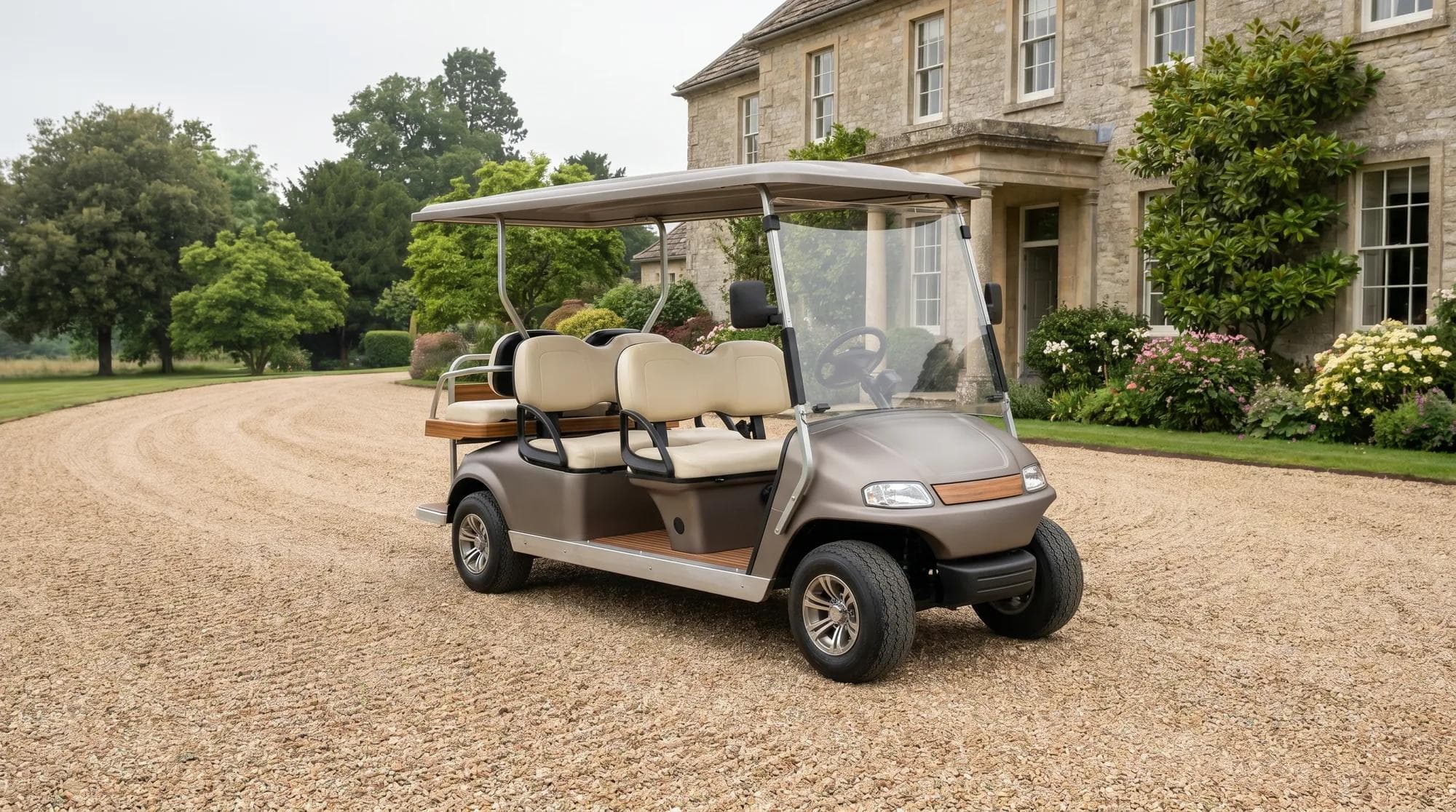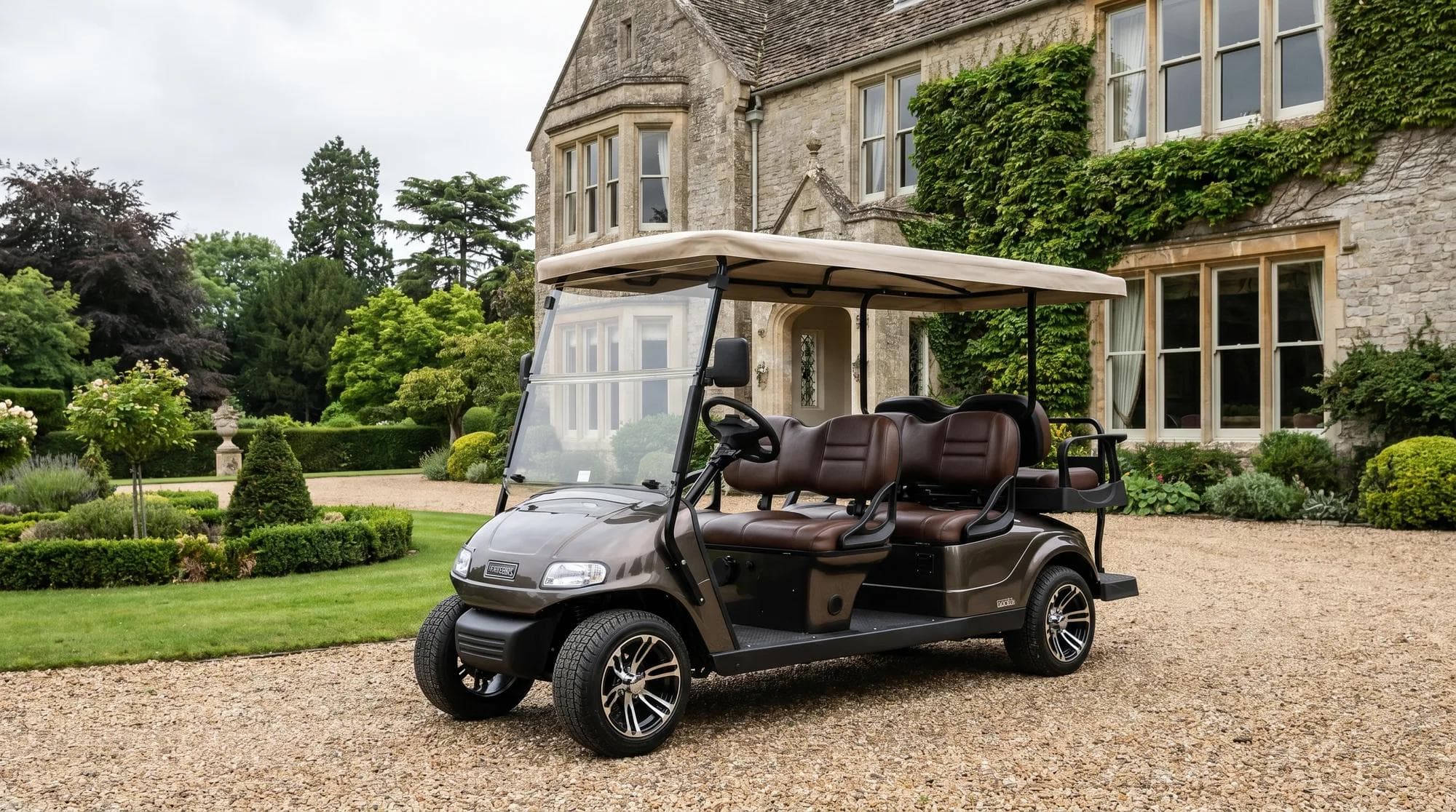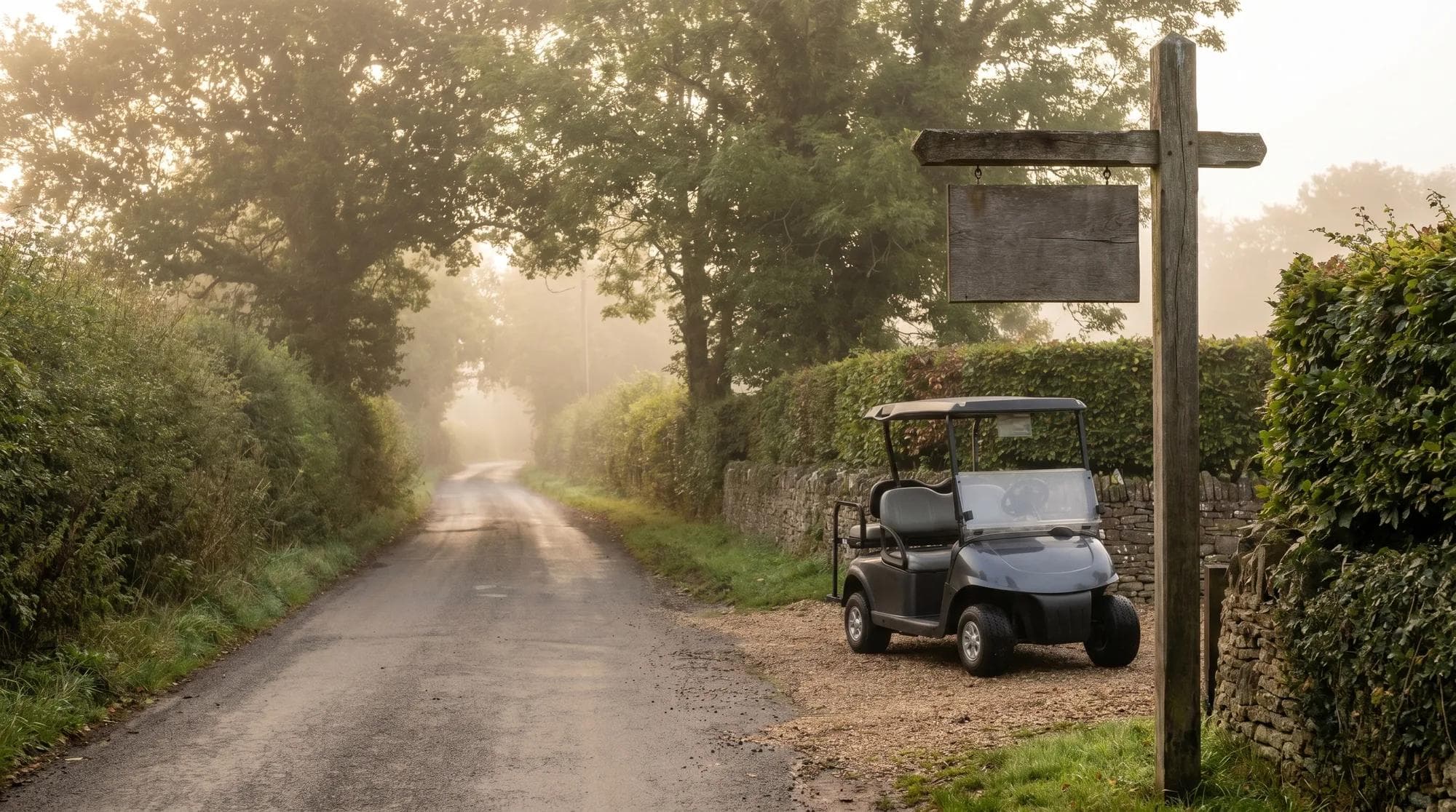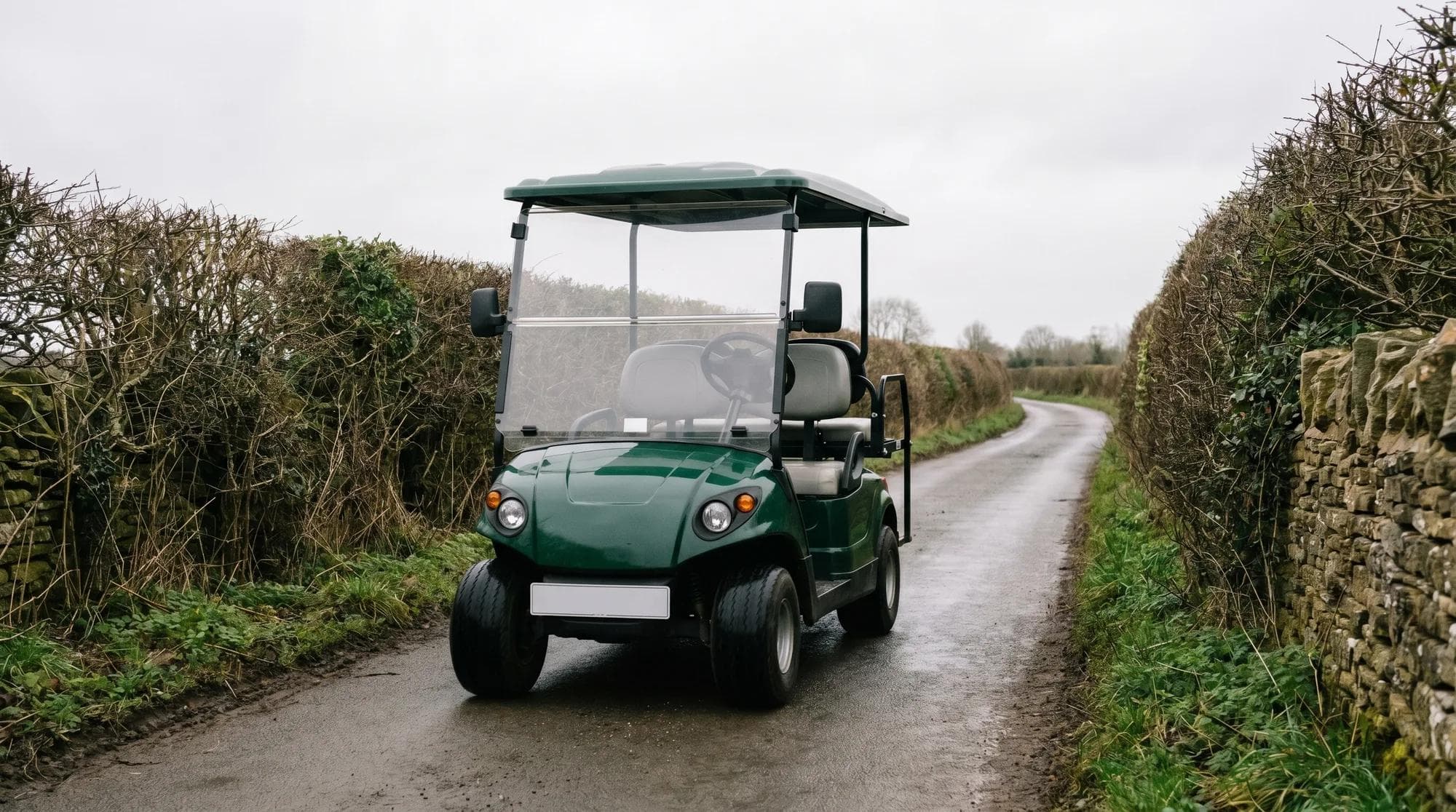
It's one of the most common questions we're asked: can you drive an electric buggy on the road in the UK? The short answer is that most buggies are designed for private land, but road use is possible with the right specification and registration. This guide sets out the practical difference between private land and the public road, what actually makes a model road legal, and the real situations where the question arises. Road rules are a serious matter, so we keep this cautious: treat it as a starting point and confirm the detail for your own vehicle and use.
- Standard electric buggies are built for private land and are not road legal as supplied.
- On private land, no registration, tax, MOT or licence is needed.
- Road use needs type approval (usually MSVA), DVLA registration, road lighting, insurance and a licence.
- Even crossing a public road counts as road use.
- Tell us at enquiry if any part of your route touches a road and we will advise honestly.
Private land versus public road in practice
On private land, an estate, golf course, resort, holiday park or event site, a buggy needs no registration, road tax, MOT or driving licence, which is exactly where the vast majority operate. This covers almost every job a golf buggy or golf cart is bought for, moving members around a course, carrying guests across a resort, or working grounds on an estate. The moment any part of a journey uses a public road, however, the rules change completely. A road is treated as public if the public has access to it, which can include some estate driveways and car parks, so the distinction is about access rather than ownership. If you are unsure whether a stretch counts as public, treat it as though it does.
What makes a model road legal
To use public roads legally, a buggy has to be built and registered to a far higher standard than a private-land vehicle. In broad terms that means the vehicle meeting the relevant type approval (typically Motorcycle Single Vehicle Approval, the MSVA, for low-volume or bespoke vehicles), being classified in the correct vehicle category, and being registered with the DVLA so it carries number plates. It must also be insured for road use and driven by someone holding the right licence. The vehicle itself needs the safety equipment a road vehicle requires.
- Type approval, usually Motorcycle Single Vehicle Approval (MSVA), confirming the vehicle meets road standards
- The correct vehicle category, low-speed vehicles often fall under category L
- DVLA registration, so the vehicle is taxed and carries number plates
- Lights, indicators, brake lights, reflectors and at least one mirror
- A horn, and on many models a windscreen and wiper
- Valid road-use insurance and the appropriate driving licence
Single-seat and slow-vehicle nuances
Not every low-speed vehicle is treated the same way. Single-seat machines, very slow vehicles and certain mobility-type vehicles can fall under different rules from a multi-seat passenger buggy, and the speed a vehicle is capable of affects which category and approval apply. A buggy built only for private land is generally not designed to be retro-fitted to full road standard, which is why road use is usually specified from the outset rather than added later. Because the detail varies, the specifics of category and approval for any given model are best confirmed for that exact vehicle before it is driven on or near a public road.
How it works in practice
A few real scenarios show where the question actually lands. An estate that wants to run a buggy from the main house down to the village is asking about genuine public-road use, which needs a road-registered, suitably approved and insured vehicle. A golf course where a path crosses a public road needs to know that even a short crossing counts as road use. A resort whose buggies stay entirely within private grounds, even across what looks like a roadway, generally does not need registration at all. Working out which of these your use resembles is the first step, and it usually settles the question before any paperwork begins.
Insurance follows directly from this. On private land cover is sensible but optional; on the public road a road-use policy is a legal requirement alongside registration and the correct specification. Our companion guide on golf buggy insurance covers the cover side in more detail.
Most buggies never need road registration, but where they do, we advise honestly on exactly what's required before you buy.
If your use involves crossing or travelling on a public road, tell us at enquiry and we'll set out exactly what specification and paperwork would be needed for your situation, or confirm that a private-land vehicle is all you need.
Get the specification right
Tell us where and how you intend to use the vehicle and we will advise honestly on whether road registration is needed and what it involves. Then request a tailored quote.
Frequently asked questions
Can I drive a golf buggy on the road in the UK?+
Only if the vehicle is built and registered for road use, with the correct type approval, DVLA registration, road lighting and equipment, insurance and a valid driving licence. Standard buggies are designed for private land and are not road legal as supplied.
Do I need a licence or tax for a buggy on private land?+
No. On private land such as an estate, golf course or resort, a buggy needs no registration, road tax, MOT or driving licence. Those only apply once a public road is used.
Does crossing a public road count as road use?+
Yes. Even a short crossing of a public road is road use and requires a road-legal, registered and insured vehicle. Tell us at enquiry if any part of your route touches a public road.
Related solutions
Ready to explore what we build?
See the vehicles and the setting this applies to, or get a tailored quote built around your site.
Ready to find the right buggy?
Tell us how and where it will work and we will specify a vehicle and a tailored quote built around you. Every build comes with a 3-year warranty and a 24-hour priority call-out.
Our guides are written and reviewed by the Hawke Electric Vehicles team, the people who specify, build, deliver and support the vehicles. We focus on honest, practical advice and flag where a figure depends on the build rather than guessing.
More guides by Hawke