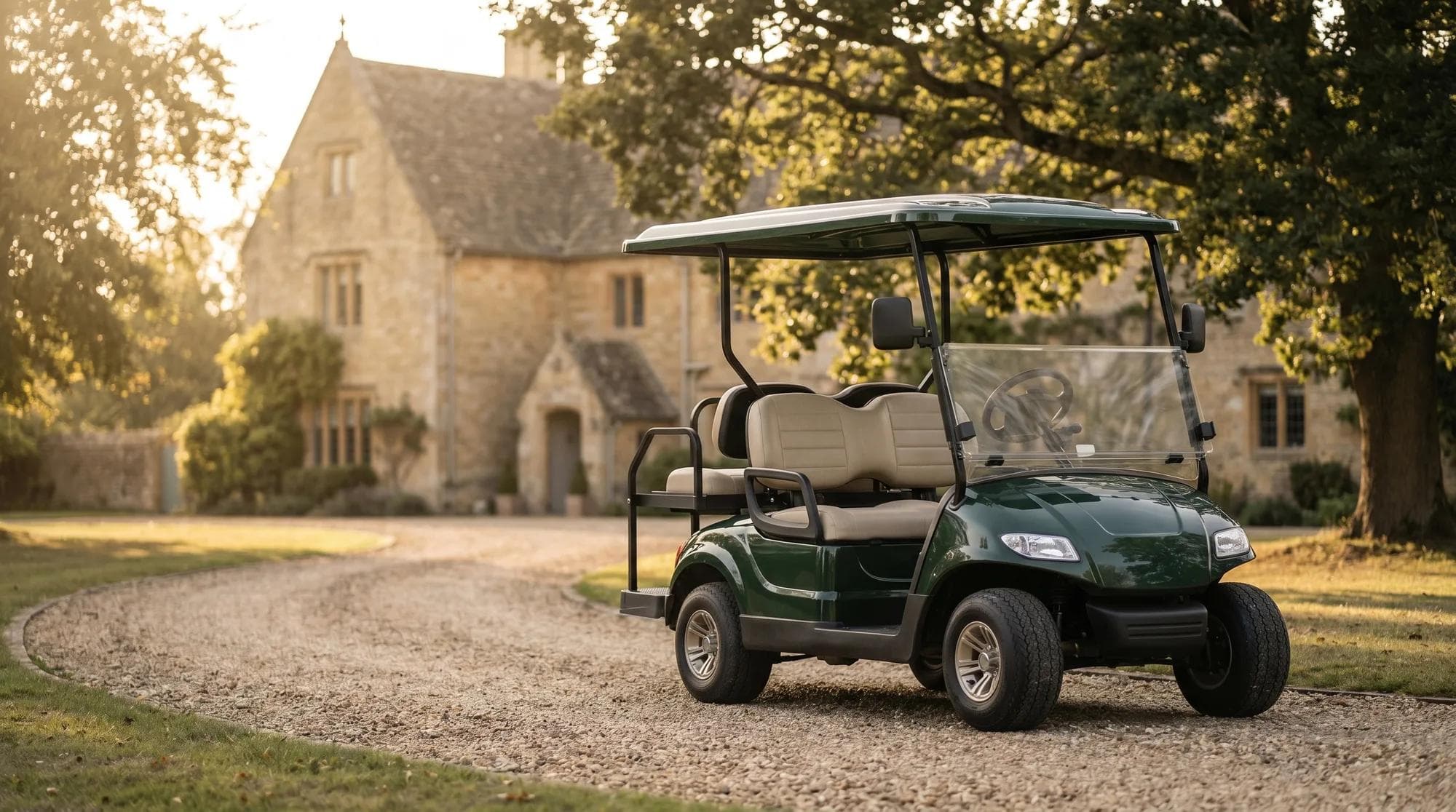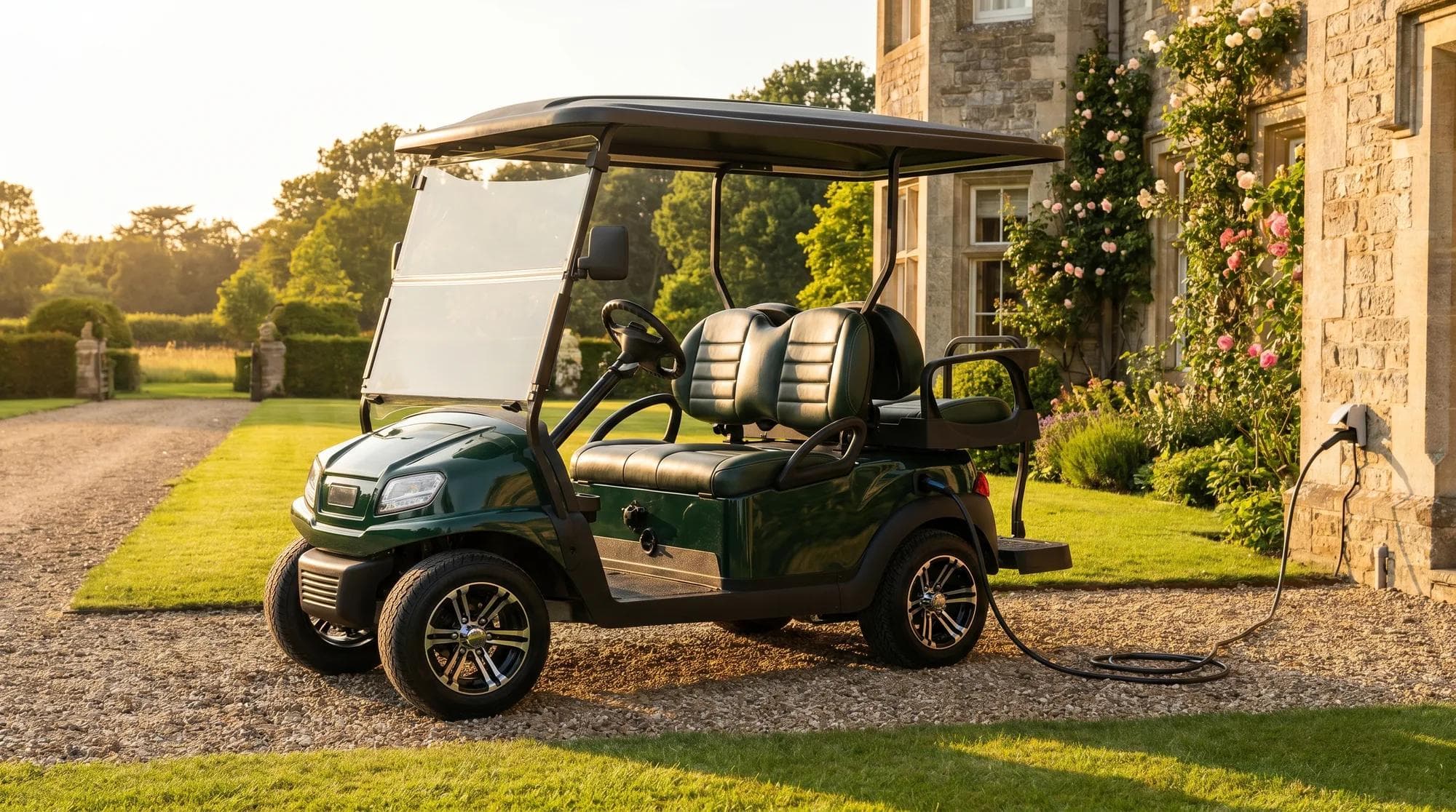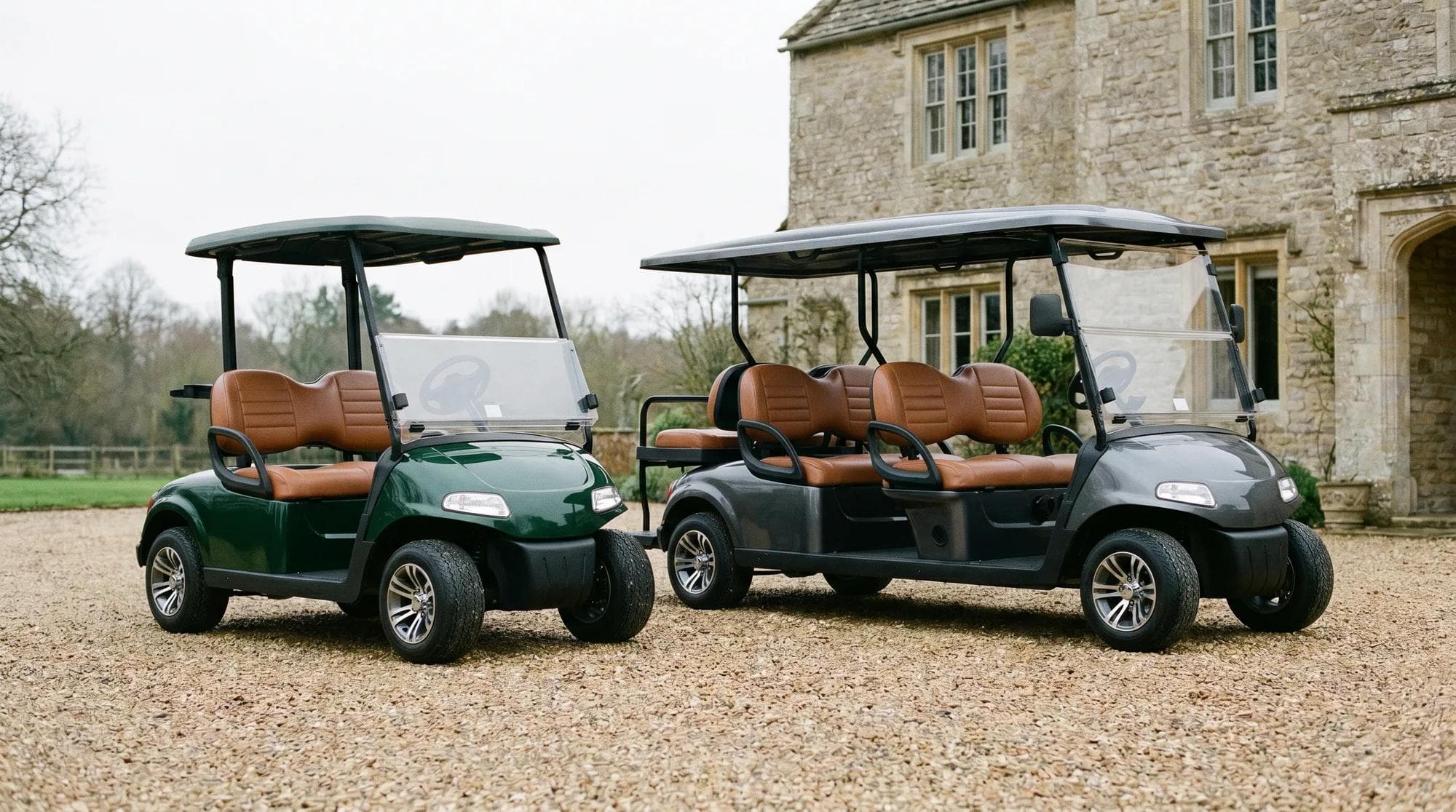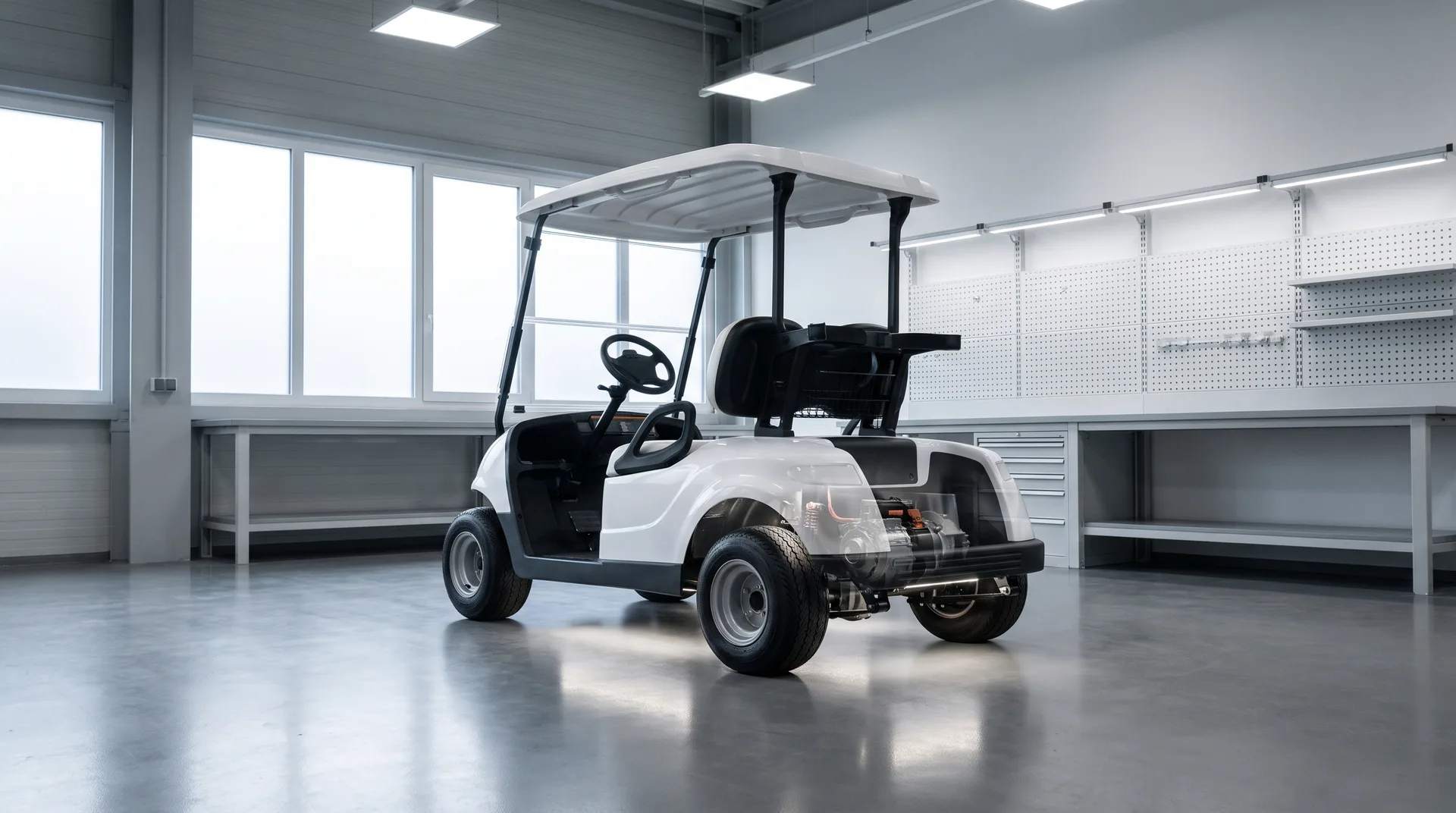
It sounds like a detail, but golf buggy weight quietly shapes a lot of practical decisions: how you'll tow it, what trailer you need, whether it'll mark a soft lawn, and how easily two people can move it when the battery's flat. There's no single number, because a compact two seater and an eight seat shuttle are very different machines. So here are realistic weight bands by size and battery, and why each one matters.
How much does a golf buggy weigh?
As a rough guide, most golf buggies sit somewhere between about 300kg and 800kg unladen. A small two seater is usually at the light end, a four seater lands in the middle, and the larger six and eight seaters carry the most weight. Battery choice moves the figure too. These are typical ranges to plan around, not exact model figures, because the real number depends on the build, the battery and the options fitted.
- Rough weight band
- Around 300 to 450kg
- Why it matters
- Easiest to tow, trailer and manoeuvre by hand
- Rough weight band
- Around 400 to 550kg
- Why it matters
- The popular all-rounder; check your tow and trailer rating
- Rough weight band
- Around 450 to 650kg
- Why it matters
- Built to carry and tow, so plan for laden weight too
- Rough weight band
- Around 550 to 700kg
- Why it matters
- Larger trailer and a heavier braked tow needed
- Rough weight band
- Around 650 to 800kg plus
- Why it matters
- Heaviest; transport and ground protection need real thought
| Rough weight band | Why it matters | |
|---|---|---|
| Two seater (the Hawke S2) | Around 300 to 450kg | Easiest to tow, trailer and manoeuvre by hand |
| Four seater (the Hawke S4) | Around 400 to 550kg | The popular all-rounder; check your tow and trailer rating |
| Utility (the Hawke S2 Pickup) | Around 450 to 650kg | Built to carry and tow, so plan for laden weight too |
| Six seater (the Hawke S6) | Around 550 to 700kg | Larger trailer and a heavier braked tow needed |
| Eight seater (the Hawke S8) | Around 650 to 800kg plus | Heaviest; transport and ground protection need real thought |
If you're still weighing up which size suits you, our guide to what size golf buggy you need matches seats to use, and the full electric golf buggy buyers' guide walks through every decision from seats to battery. Both pair naturally with the weight question, because the size you pick sets the weight you'll be planning around.
Why does golf buggy weight matter?
Weight isn't just a number on a spec sheet. It decides several real-world things, and getting them wrong is inconvenient at best and expensive at worst. Here's where it actually counts.
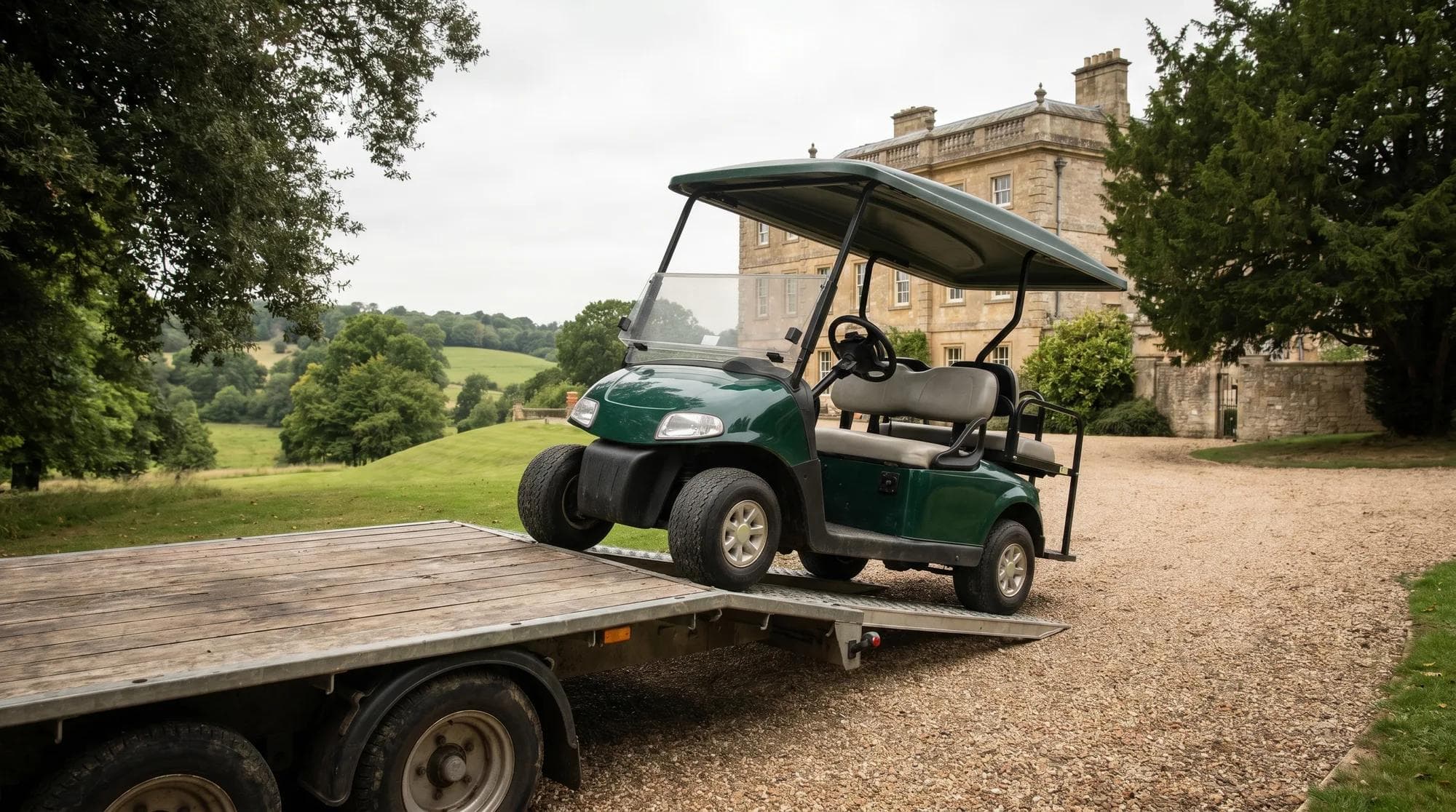
- Towing. If you'll tow the buggy on a trailer behind a car or van, the buggy plus the trailer has to sit within your vehicle's towing limit and your licence entitlement. Heavier buggies push you toward a braked trailer and a more capable tow car.
- Trailers. The trailer itself must be rated to carry the buggy. A two seater fits a modest trailer; a six or eight seater needs a larger, stronger one, which changes the cost and the logistics.
- Ground protection. A heavier buggy puts more load through its tyres onto the ground. On soft grass, fine gravel or a manicured lawn, that means more risk of marking, rutting or compaction, especially when laden and turning.
- Transport and handling. Moving a buggy that won't drive (a flat battery, say) is far easier at 350kg than at 750kg. Loading ramps, lifting points and the number of people needed all scale with weight.
- Floors and lifts. If the buggy ever goes indoors, into a basement car park, or onto a goods lift, the floor loading and lift capacity have to take it. Larger buggies are the ones that catch people out here.

Does the battery change the weight?
Yes, and by more than you'd expect. The battery is one of the heaviest single parts of any buggy, so the chemistry you choose has a real effect on the total. Lead-acid packs are heavy. Lithium packs deliver the same or better range for a good deal less weight, which is one of the quieter reasons lithium has taken over.
So a lithium buggy is usually noticeably lighter than the lead-acid version of the same model. That helps in almost every way that weight matters: easier to tow, gentler on the ground, less effort to load and move. Our lithium versus lead-acid guide sets out the full trade-off on range, lifespan, cost and weight side by side.
Lithium doesn't just go further; it gets there carrying less weight, which makes the whole buggy easier to live with.
Working out what you can tow
Before you commit to a size, do a quick check on the towing side. Look up your tow vehicle's maximum towing weight, then add the trailer's own weight to the buggy's weight and make sure the total fits, with headroom. Check your driving licence entitlement too, since what you can legally tow depends on when you passed your test. A heavier buggy may mean a braked trailer, a stronger tow car, or both.
None of this is a reason to avoid a bigger buggy if that's what the job needs. It just pays to know the numbers before you buy, not after the trailer turns up. When you enquire, tell us how you plan to transport it and we'll factor the weight into the recommendation.
Matching weight to how you'll use it
The weight that matters is the one for your actual buggy, on your actual site. A private owner with a flat drive and no plan to tow barely needs to think about it. A team transporting a fleet by trailer, or running buggies across delicate turf, should plan around it from the start. Browse the full range to see how the sizes line up, then tell us how you'll move and use the buggy and we'll specify one with the right weight, battery and tyres for the job.
Get the right buggy for your site
Tell us how you'll use and transport the buggy and we'll specify the right size, battery and weight, then confirm a tailored quote. Every build comes with a 3-year warranty and a 24-hour priority call-out.
Frequently asked questions
How much does a golf buggy weigh?+
Most golf buggies weigh roughly 300kg to 800kg unladen, depending on size and battery. A two seater is usually the lightest, a four seater sits in the middle, and six and eight seaters are the heaviest. These are typical ranges to plan around, not exact figures, since the real weight depends on the build and battery.
Is a lithium golf buggy lighter than a lead-acid one?+
Generally yes. The battery is one of the heaviest parts of any buggy, and a lithium pack delivers the same or better range for considerably less weight than lead-acid. So a lithium buggy is usually noticeably lighter than the lead-acid version of the same model, which helps with towing, transport and ground protection.
Can I tow a golf buggy behind my car?+
Often yes, but check the numbers first. The buggy plus the trailer has to sit within your tow vehicle's towing limit and your licence entitlement, and a heavier buggy may need a braked trailer and a stronger tow car. Tell us how you plan to transport it and we'll factor the weight in.
Will a golf buggy damage my lawn or grass?+
It depends on the weight, the tyres and the ground. A heavier, laden buggy puts more load through its tyres, so soft grass can mark or rut, especially when turning. Choosing a lighter build, lithium and the right tyres reduces the risk, and dry, firm ground copes far better than wet, soft turf.
How heavy is a 4 seater golf buggy?+
A four seater typically weighs somewhere around 400kg to 550kg unladen, depending on the battery and options. Lithium versions sit at the lighter end. As with any size, that's a general range rather than an exact figure, so confirm the weight for your specific build before sorting a trailer or tow car.
Related solutions
Ready to explore what we build?
See the vehicles and the setting this applies to, or get a tailored quote built around your site.

Ready to find the right buggy?
Tell us how and where it will work and we will specify a vehicle and a tailored quote built around you. Every build comes with a 3-year warranty and a 24-hour priority call-out.
Our guides are written and reviewed by the Hawke Electric Vehicles team, the people who specify, build, deliver and support the vehicles. We focus on honest, practical advice and flag where a figure depends on the build rather than guessing.
More guides by Hawke