Buying a buggy outright is the simplest route, but it isn't the only one, and for a club, estate or resort it often isn't the smartest. Spreading the cost keeps capital free and turns a lump sum into a predictable monthly figure you can plan around. There are two broad ways to do that, finance and leasing, and they suit different situations. This guide explains both in plain terms so you can decide which fits before you enquire.
Finance or lease: what's the difference?
Finance means you're buying the buggy, just over time. You spread the cost across monthly payments and, at the end, you own it. Leasing means you're paying to use the buggy for a fixed term, with the vehicle handed back (or the lease renewed) at the end, a bit like leasing a car. The quick test: if you want to own the asset and keep it for years, finance leans your way. If you'd rather have a fixed-term arrangement with predictable payments and less to think about at the end, leasing does.
- Finance (hire purchase style)
- You, once payments finish
- Leasing
- The lessor; you use it
- Finance (hire purchase style)
- The buggy is yours
- Leasing
- Return, renew or upgrade
- Finance (hire purchase style)
- Often a deposit
- Leasing
- Usually lower to start
- Finance (hire purchase style)
- Long-term, year-round use
- Leasing
- Fixed terms and easy upgrades
- Finance (hire purchase style)
- An owned asset
- Leasing
- Often an operating cost
| Finance (hire purchase style) | Leasing | |
|---|---|---|
| Who owns it | You, once payments finish | The lessor; you use it |
| End of term | The buggy is yours | Return, renew or upgrade |
| Up-front cost | Often a deposit | Usually lower to start |
| Best for | Long-term, year-round use | Fixed terms and easy upgrades |
| On the books | An owned asset | Often an operating cost |
What this means for clubs, estates and resorts
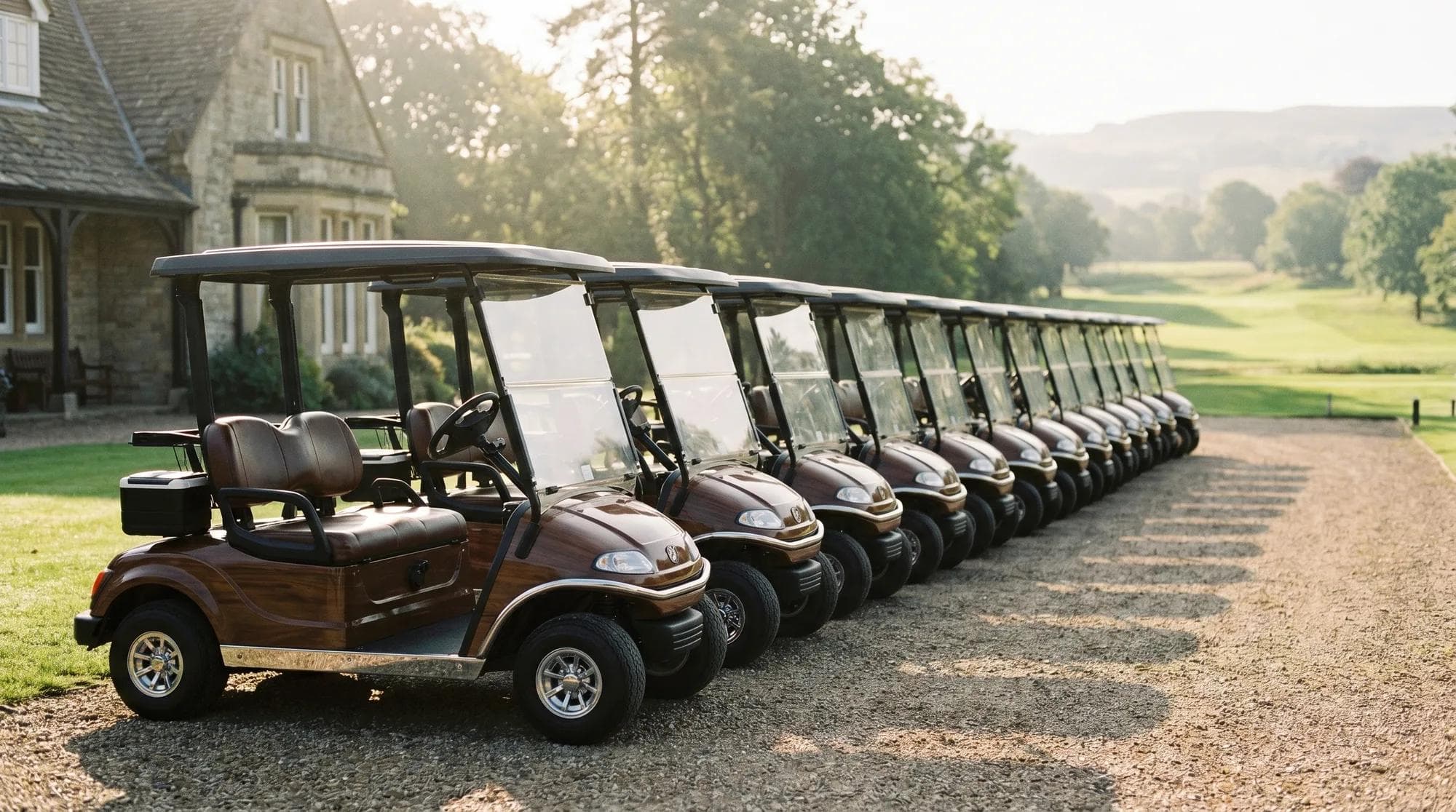
For a business buyer, the decision is usually about cash flow and how you'd rather account for the vehicle. Spreading the cost keeps capital available for the things that earn, the course, the rooms, the grounds, while still putting a reliable fleet to work. A predictable monthly figure is also easier to budget and to justify than a one-off outlay. If you run a golf club fleet, leasing can make it simple to refresh the fleet on a cycle and keep every vehicle on warranty and on brand.

Lease versus buy: the honest trade-off
There's no universally right answer, only the right one for you. Buying, with or without finance, gives the lowest long-run cost and full control of the specification and branding, which matters if you want a matched, bespoke fleet you'll keep for years. Leasing costs a little more over time in exchange for lower up-front cost, predictable payments and an easy upgrade path. Our view: if the buggy is a permanent fixture, own it; if you value flexibility and fixed costs over the lowest lifetime figure, lease it. Plenty of operators do both, owning a core fleet and leasing the rest.
What about tax?
At a high level, how a business buys a vehicle affects how it's treated for tax, and leasing and buying are treated differently. The detail depends on your business and how the buggy is used, so this is one to confirm with your accountant rather than take from a buying guide. We can set out the options on your quote; your accountant can tell you which works best for your numbers.
How to apply
Because every buggy is built to order, finance and leasing start with the same conversation as any quote. Tell us the vehicle or fleet you have in mind, how you'll use it and the term you're thinking of, and we'll set out the options and confirm the figures. If you're still weighing the spend, our cost guide and the buyers' guide are good places to start.
Talk through finance or leasing
Tell us the buggy or fleet you need and the term you're considering, and we'll set out the options and confirm the figures on a tailored quote.
Frequently asked questions
Can you lease a golf buggy in the UK?+
Yes. Leasing lets you use a buggy or a fleet over a fixed term for predictable monthly payments, then return, renew or upgrade at the end. It suits operators who prefer lower up-front cost and easy fleet refreshes over owning the asset outright.
Is it better to lease or buy a golf buggy?+
Buying, with or without finance, gives the lowest long-run cost and full control of specification and branding, so it suits permanent, year-round use. Leasing costs a little more over time but lowers the up-front outlay and makes upgrades simple. Many operators own a core fleet and lease the rest.
Can I get finance on a golf buggy fleet?+
Fleet finance and leasing are available for business buyers. Tell us the fleet size, how you'll use it and the term you want when you request a quote, and we'll set out the options and confirm the figures.
What are the tax benefits of leasing a buggy?+
Leasing and buying are treated differently for tax, and the right choice depends on your business and how the buggy is used. It's worth confirming the detail with your accountant; we can lay out the options so you have the figures to take to them.
Related solutions
Ready to explore what we build?
See the vehicles and the setting this applies to, or get a tailored quote built around your site.
Ready to find the right buggy?
Tell us how and where it will work and we will specify a vehicle and a tailored quote built around you. Every build comes with a 3-year warranty and a 24-hour priority call-out.
Our guides are written and reviewed by the Hawke Electric Vehicles team, the people who specify, build, deliver and support the vehicles. We focus on honest, practical advice and flag where a figure depends on the build rather than guessing.
More guides by Hawke