If you run a large site, the problem is nearly always the same: a lot of people, a lot of ground, and a long walk between the two. A people mover solves it. It's a multi-passenger electric vehicle that carries a group across your site quietly, cleanly and on demand, without the noise, fumes or fuss of a minibus. This guide explains what a shuttle buggy actually is, the sizes that do the work, where they earn their keep, and how to pick the right one.
What is an electric people mover?
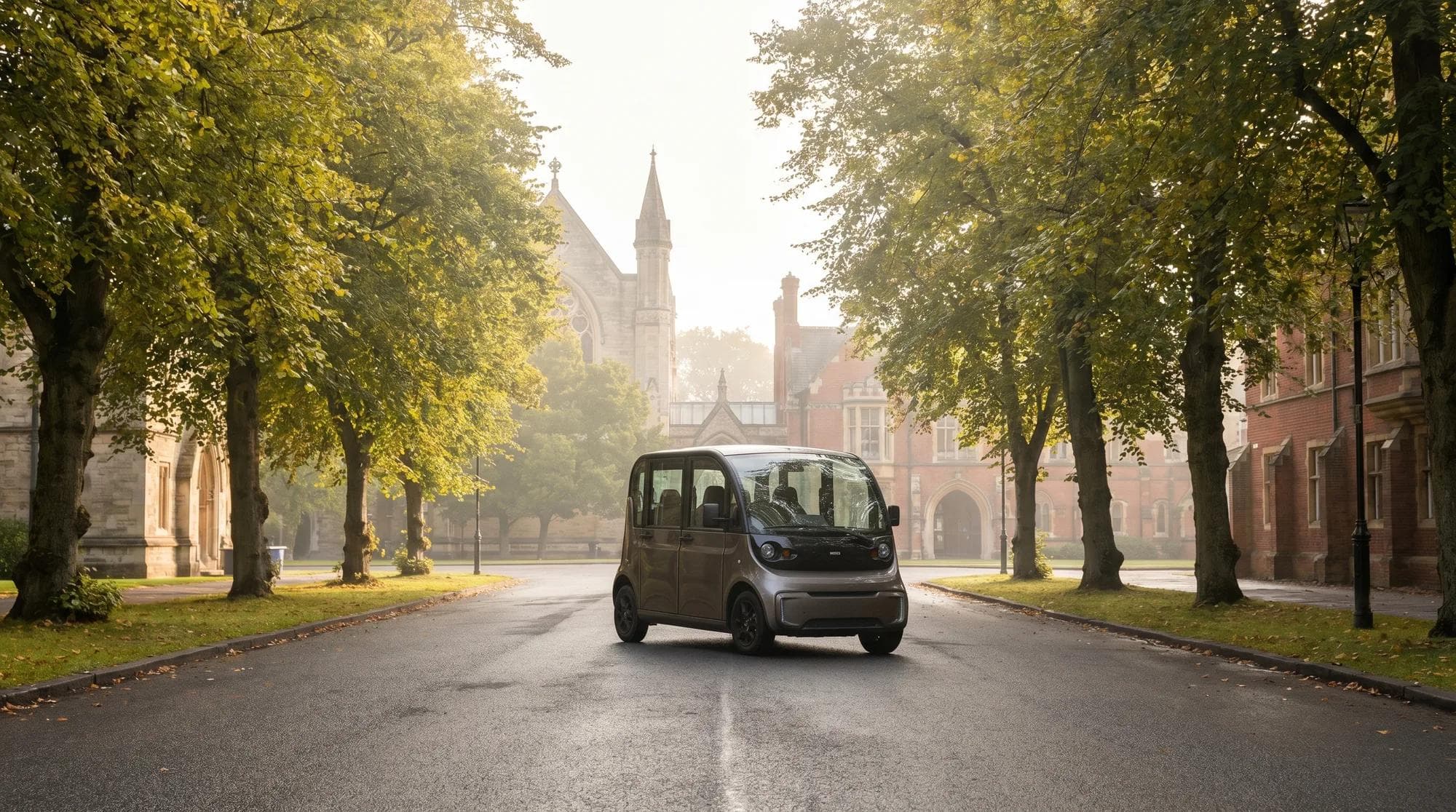
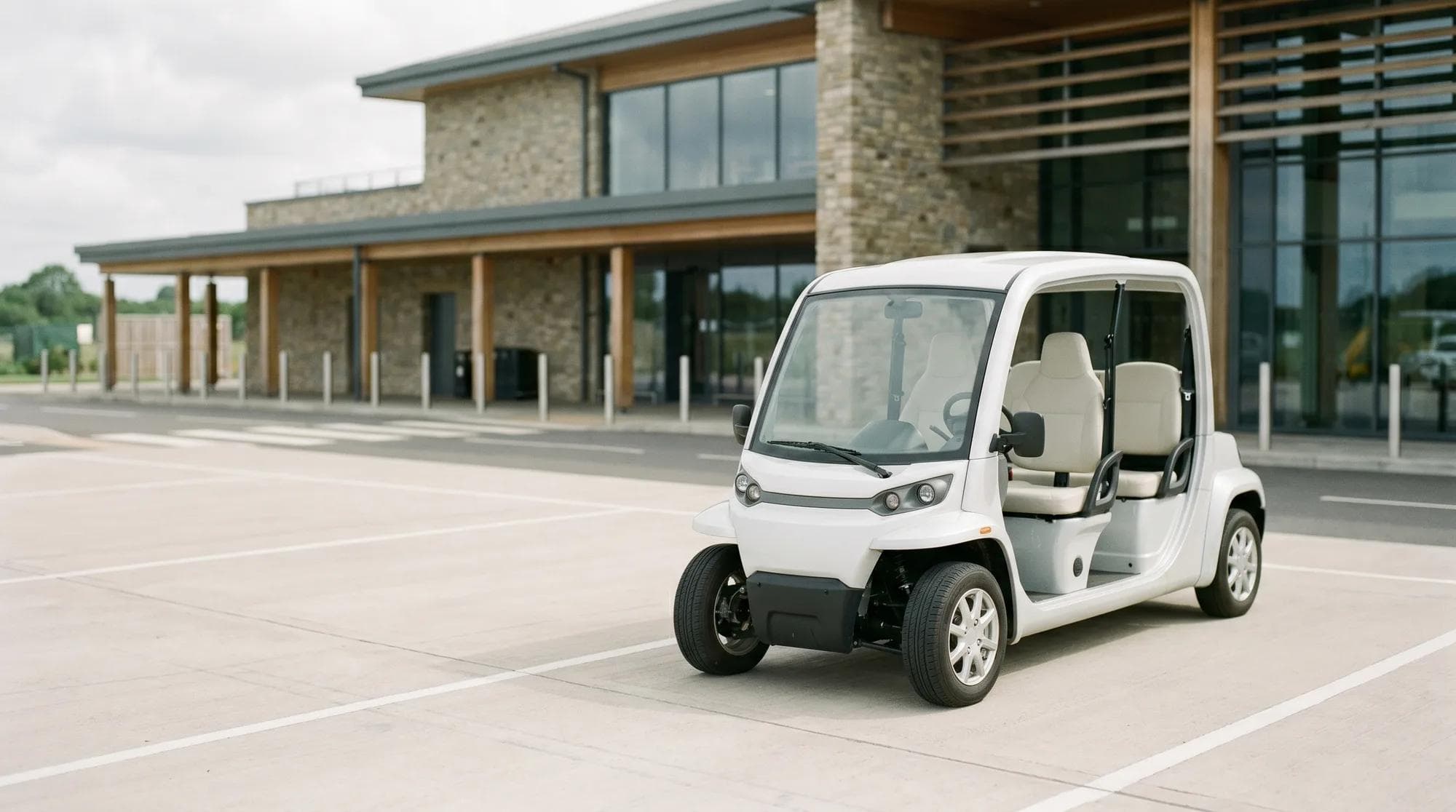
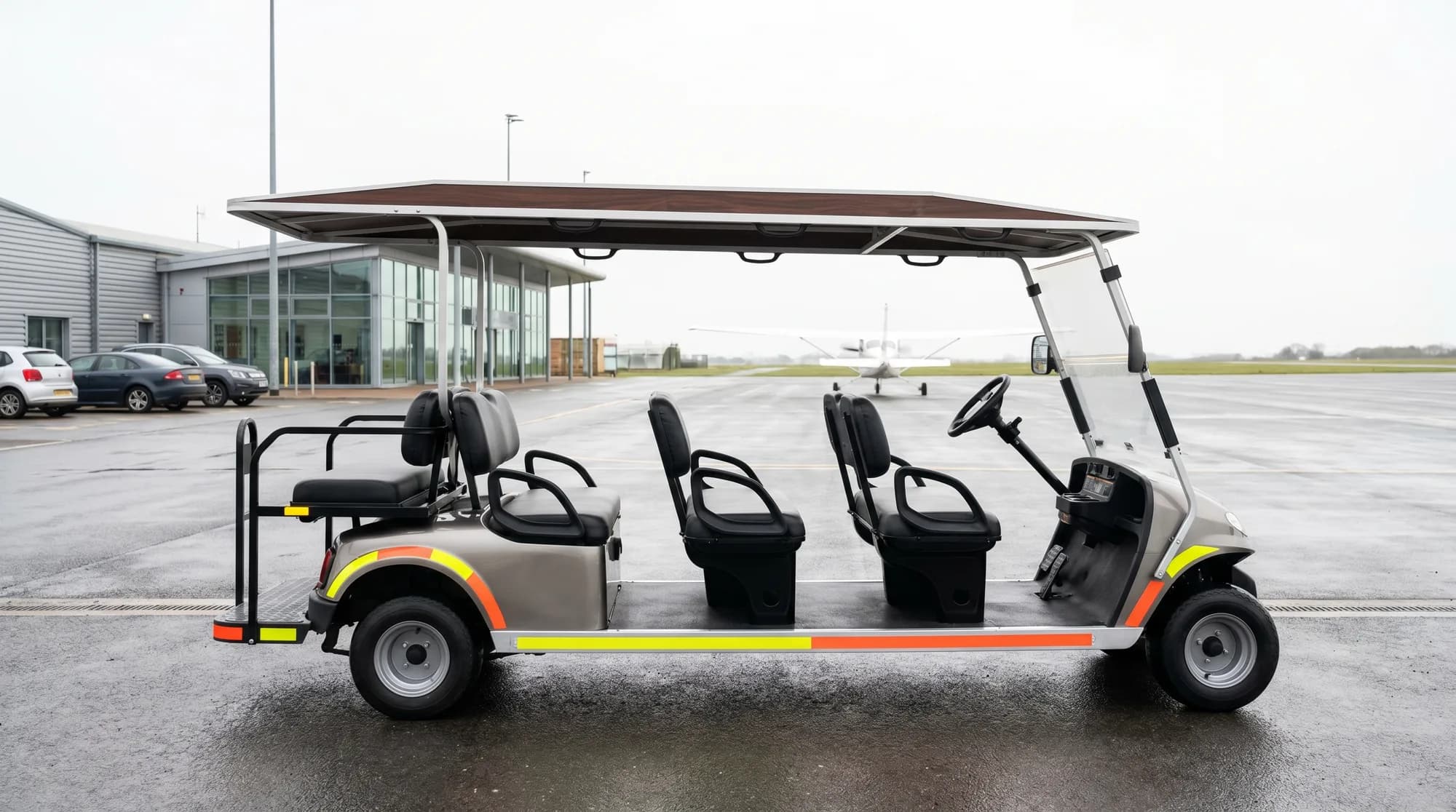
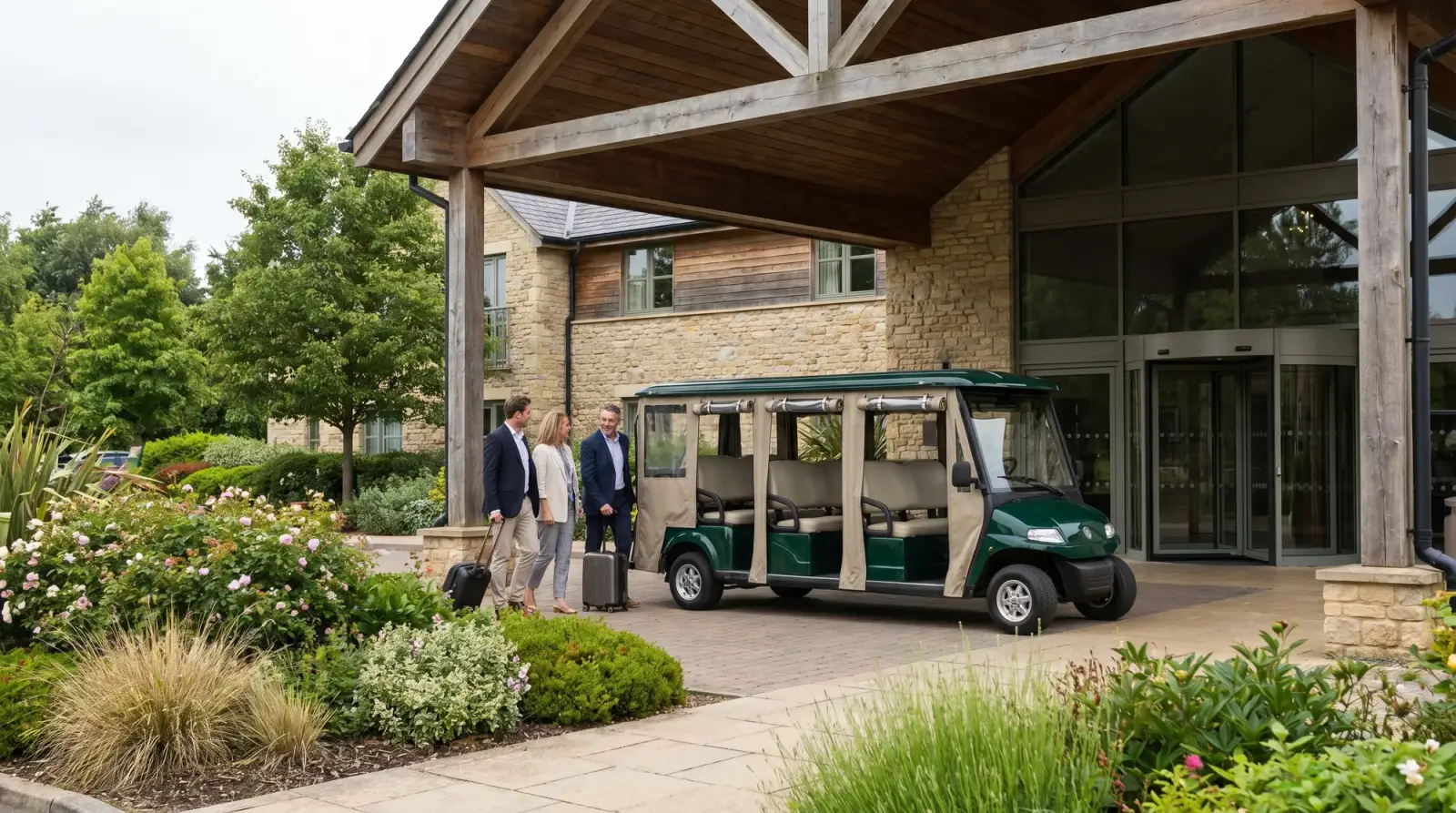
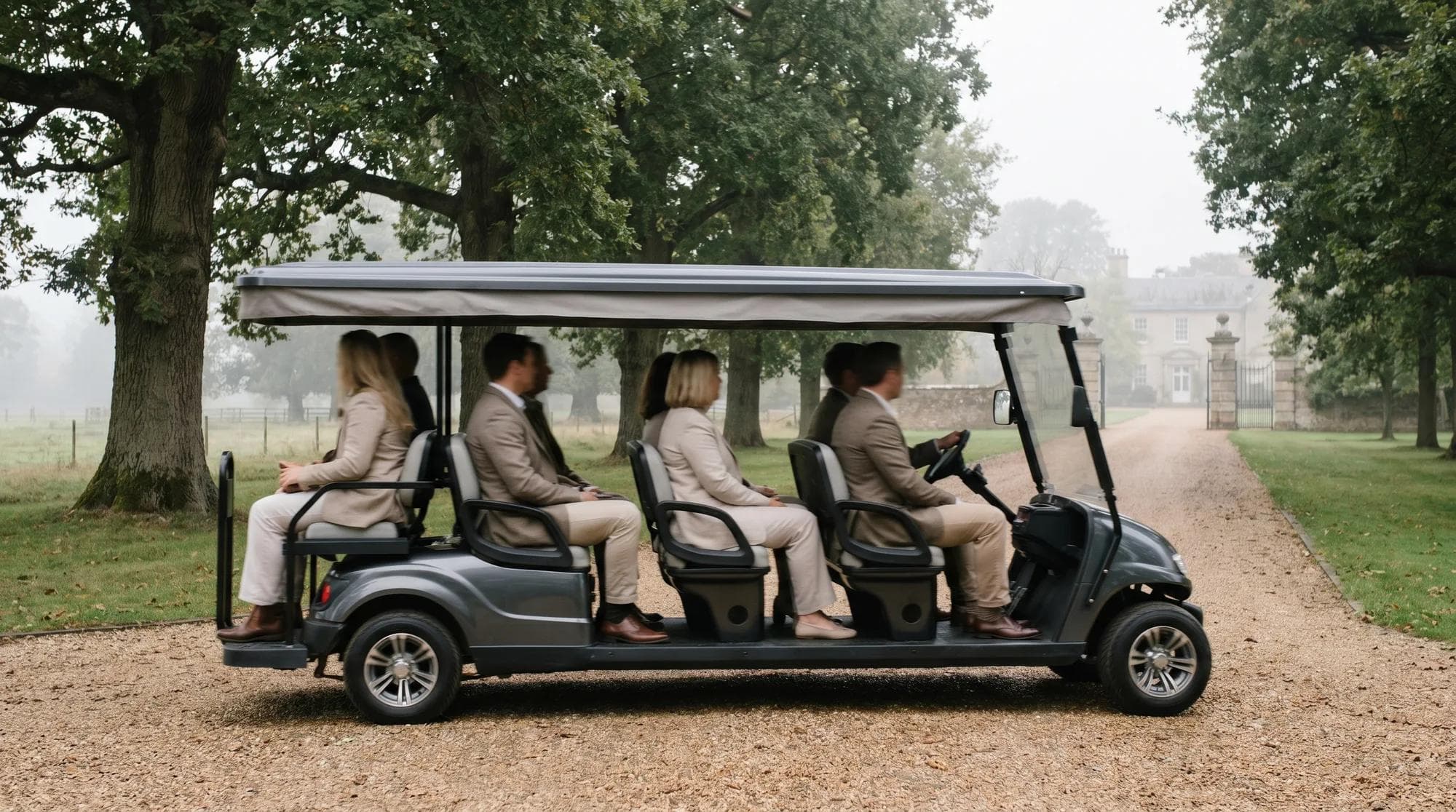
A people mover is simply a passenger transport vehicle built to move several people at once, short distances, on private land. Think of it as a stretched golf buggy with rows of forward-facing seats, a roof and grab rails, set up to carry guests, staff or visitors rather than a couple of golfers and their clubs. Some are open-sided for warm-weather venues. Others get full weather protection for year-round use. The drivetrain is electric, so it's near silent and produces nothing at the tailpipe, which matters when you're driving past hotel windows, exam halls or a queue of families.
People call them different things: shuttle buggies, passenger carts, tram-style carts, courtesy vehicles. The job is the same. Carry a group from A to B with the least fuss, then go back for the next one.

What capacities are there, and what do they carry?
For buggy-scale shuttle work, two sizes do most of it: the six seater Hawke S6 and the eight seater Hawke S8. Above them sit our dedicated people movers, the eleven-seat Hawke P11, fourteen-seat P14 and twenty-three-seat P23, with the T42 road train for the biggest sites. Smaller buggies have their place for one or two passengers, but once you're moving groups on a timetable, the larger platforms pay for themselves in fewer trips. Here's how the multi-passenger end of the range lines up.
- Carries
- Up to 4
- Best for
- Small groups, light shuttle runs, mixed duties
- Carries
- Up to 6
- Best for
- Steady shuttle work, resort runs, campus loops
- Carries
- Up to 8
- Best for
- High-volume transfers, peak crowds, venue shuttles
- Carries
- As specified
- Best for
- Trams, trailers, accessible layouts, fleet branding
- Carries
- Up to 11
- Best for
- Bus-style shuttle service, visitor attractions, park-and-ride loops
- Carries
- Up to 14
- Best for
- High-demand shuttle routes with steady queues
- Carries
- Up to 23
- Best for
- The biggest sites: full-group transfers in one run
| Carries | Best for | |
|---|---|---|
| Four seater (the Hawke S4) | Up to 4 | Small groups, light shuttle runs, mixed duties |
| Six seater (the Hawke S6) | Up to 6 | Steady shuttle work, resort runs, campus loops |
| Eight seater (the Hawke S8) | Up to 8 | High-volume transfers, peak crowds, venue shuttles |
| Bespoke | As specified | Trams, trailers, accessible layouts, fleet branding |
| Hawke P11 people mover | Up to 11 | Bus-style shuttle service, visitor attractions, park-and-ride loops |
| Hawke P14 people mover | Up to 14 | High-demand shuttle routes with steady queues |
| Hawke P23 people mover | Up to 23 | The biggest sites: full-group transfers in one run |
Our rule of thumb: if you'll regularly fill more than four seats, go to the Hawke S6. If you're running a proper shuttle service with queues at peak, the Hawke S8 moves more people per trip and earns the difference back fast, and for a genuine bus-style service the P11 to P23 people movers carry a full queue in one run. See the six seater Hawke S6 and the eight seater Hawke S8 for the closer look, or compare the full range in one place.
Once you're moving groups on a timetable, the larger platform pays for itself in fewer trips.
Where do passenger shuttles fit?
Almost anywhere with a big footprint and people to move. The pattern repeats across very different sites.
- Resorts and hotels. Guest transfers from reception to rooms, spa or restaurant, plus a courtesy shuttle to the car park.
- University and college campuses. Open-day tours, accessibility runs and moving staff and kit between distant buildings.
- Holiday parks. Carrying families and luggage from the gate to the pitch or lodge, which is where the day starts and ends.
- Venues, parks and visitor attractions. Moving crowds from car parks to entrances, and around large grounds.
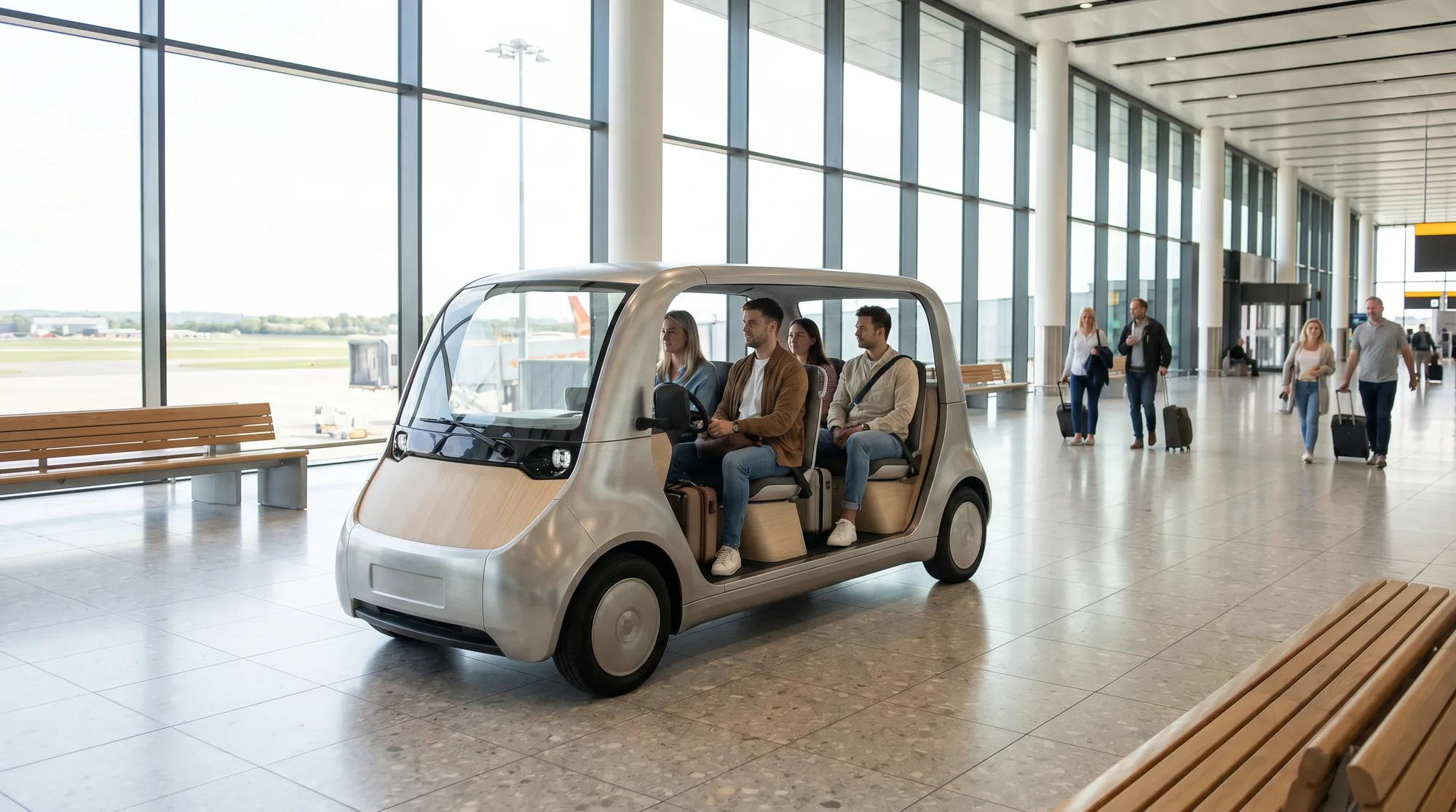
- Airports and large business parks. Passenger transfers across terminals, aprons and sprawling sites.
The thread running through all of them is distance plus volume. If your visitors face a long walk, or your staff lose half their day getting from one end of the site to the other, a shuttle buggy turns that dead time into something productive. We dig into the specifics in our guides for electric buggies on university campuses, electric buggies for holiday parks and airport passenger transport buggies.
What about accessibility?
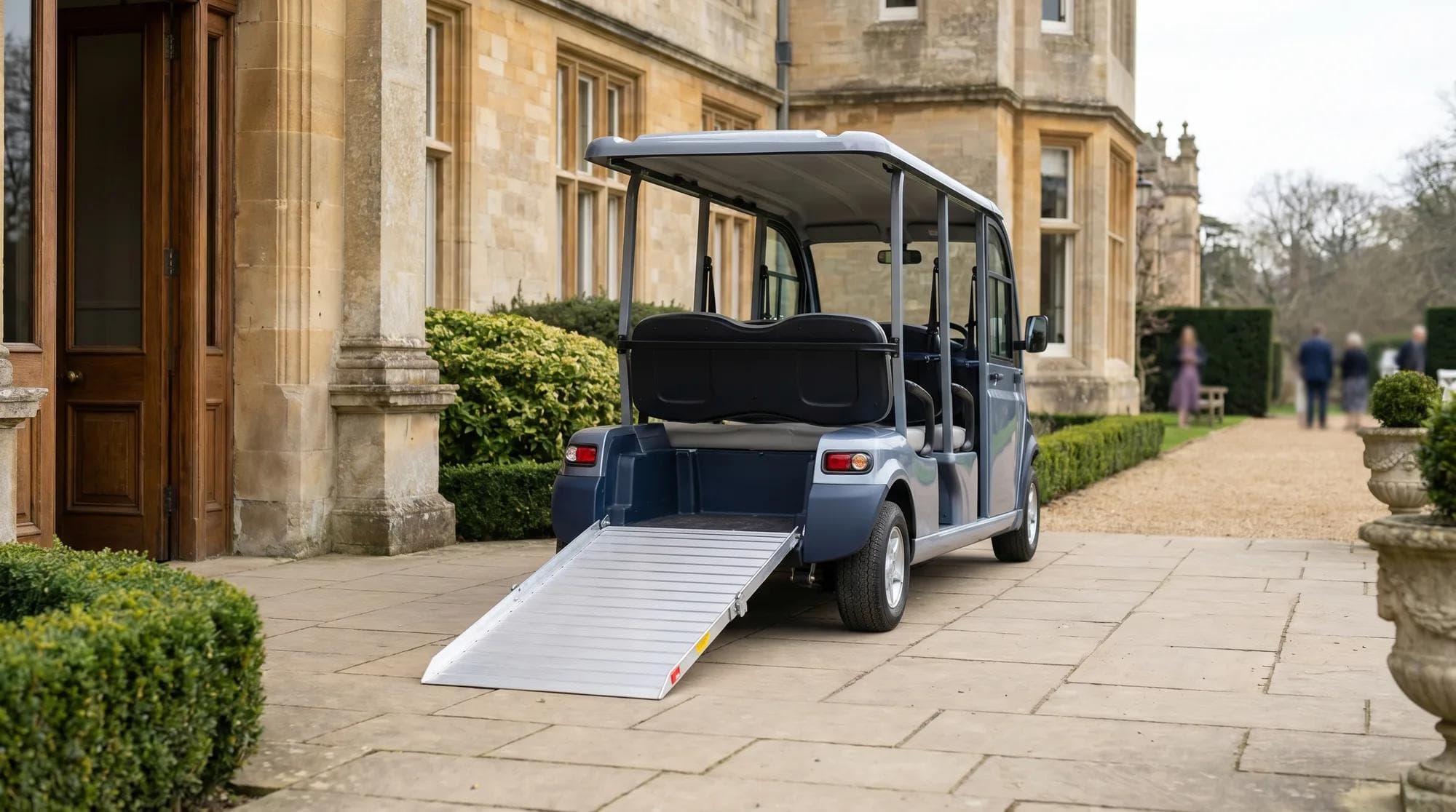
This is the question serious operators ask early, and rightly so. A shuttle that only suits people who can climb in and out misses part of the point. Passenger buggies can be specified with accessibility in mind: a low step, sturdy grab rails, and on a bespoke build, a wheelchair-accessible layout with a ramp or lift and proper restraints. If you're carrying the public, or you have a duty to do so, design this in from the start rather than bolting it on later.
Because every vehicle is built to order, the accessible options are part of the same conversation as seats and weather protection, not a separate product. Our guide to accessible and wheelchair electric buggies covers the layouts and the practical points worth thinking through before you commit.
Open-sided or weather-protected?
In the UK this matters more than people expect. An open shuttle is fine for a summer festival or a warm-weather resort, but it'll sit idle the moment it rains. A roof and side screens turn the same vehicle into something you can run all year, which for most sites is the whole point of owning one. If the buggy is a core part of how your site works, specify proper weather protection. If it's a fair-weather extra, you can spend less.
Lithium or lead-acid for shuttle duty?
For a vehicle that runs all day, this is the decision that quietly sets your running cost. Lead-acid is cheaper to buy but heavier, slower to charge and shorter-lived. Lithium costs more up front and gives you more range, faster top-ups between runs and a service life of roughly eight to ten years. A shuttle doing constant loops is exactly the use where lithium wins, because the ability to splash in a partial charge over a quiet half-hour keeps the vehicle working rather than waiting. Our lithium versus lead-acid guide lays out the trade-off.
How to choose your people mover
Work through these in order and the right vehicle more or less picks itself.
- How many people do you move at once on your busiest run? That sets six seats or eight.
- How many hours a day will it work? Heavy use leans firmly to lithium.
- Will any passengers need step-free or wheelchair access? Specify it from the start.
- Open-sided or year-round? Weather protection decides how many days a year it earns its keep.
- One vehicle or a branded fleet? Matched, branded shuttles look the part on a public-facing site.
How to buy from us
Every shuttle is built to order, so it starts with a conversation rather than a checkout. Tell us your site, the numbers you move and how the route runs, and we'll specify the right vehicle or fleet around you, confirm a tailored price and arrange delivery and commissioning, in the UK or worldwide. Every build comes with a 3-year warranty and a 24-hour VIP call-out, we offer custom fleet branding.
Specify a shuttle for your site
Tell us how many people you move and how your site is laid out, and we'll specify the right people mover or fleet and a tailored quote built around you.
Frequently asked questions
What is an electric people mover?+
It's a multi-passenger electric buggy built to carry groups short distances across private land, like a stretched golf buggy with rows of forward-facing seats, a roof and grab rails. People also call them shuttle buggies or passenger carts. They're near silent and produce no fumes, which suits resorts, campuses and venues.
How many people can a passenger shuttle buggy carry?+
The popular sizes carry six (the Hawke S6) or eight (the Hawke S8). Smaller four seaters suit light duties, and a bespoke build can be configured as a tram-style vehicle for higher capacity. For steady shuttle work, the six and eight seaters move the most people per trip.
Can a people mover be made wheelchair accessible?+
Yes. Because every vehicle is built to order, a passenger shuttle can be specified with a low step, grab rails, or a full wheelchair-accessible layout with a ramp or lift and proper restraints. Raise accessibility at the quote stage so it's designed in rather than retrofitted.
Are passenger shuttle buggies road legal in the UK?+
As supplied they're built for private land, not public roads. If any part of a route crosses or uses a public road, even briefly, that counts as road use and needs a vehicle built and registered to a much higher standard. Flag any road crossing before you buy.
How much does an electric shuttle buggy cost?+
The Hawke S6 and Hawke S8 are priced on request, with battery choice, weather protection, accessibility options and fleet branding moving the figure. Tell us your use and we'll confirm a tailored price.
Related solutions
Ready to explore what we build?
See the vehicles and the setting this applies to, or get a tailored quote built around your site.
Ready to find the right buggy?
Tell us how and where it will work and we will specify a vehicle and a tailored quote built around you. Every build comes with a 3-year warranty and a 24-hour priority call-out.
Our guides are written and reviewed by the Hawke Electric Vehicles team, the people who specify, build, deliver and support the vehicles. We focus on honest, practical advice and flag where a figure depends on the build rather than guessing.
More guides by Hawke