- Modern terminals are long, and the walk from security to a far gate can run well over a kilometre, which is a problem for tight connections and anyone who cannot walk far.
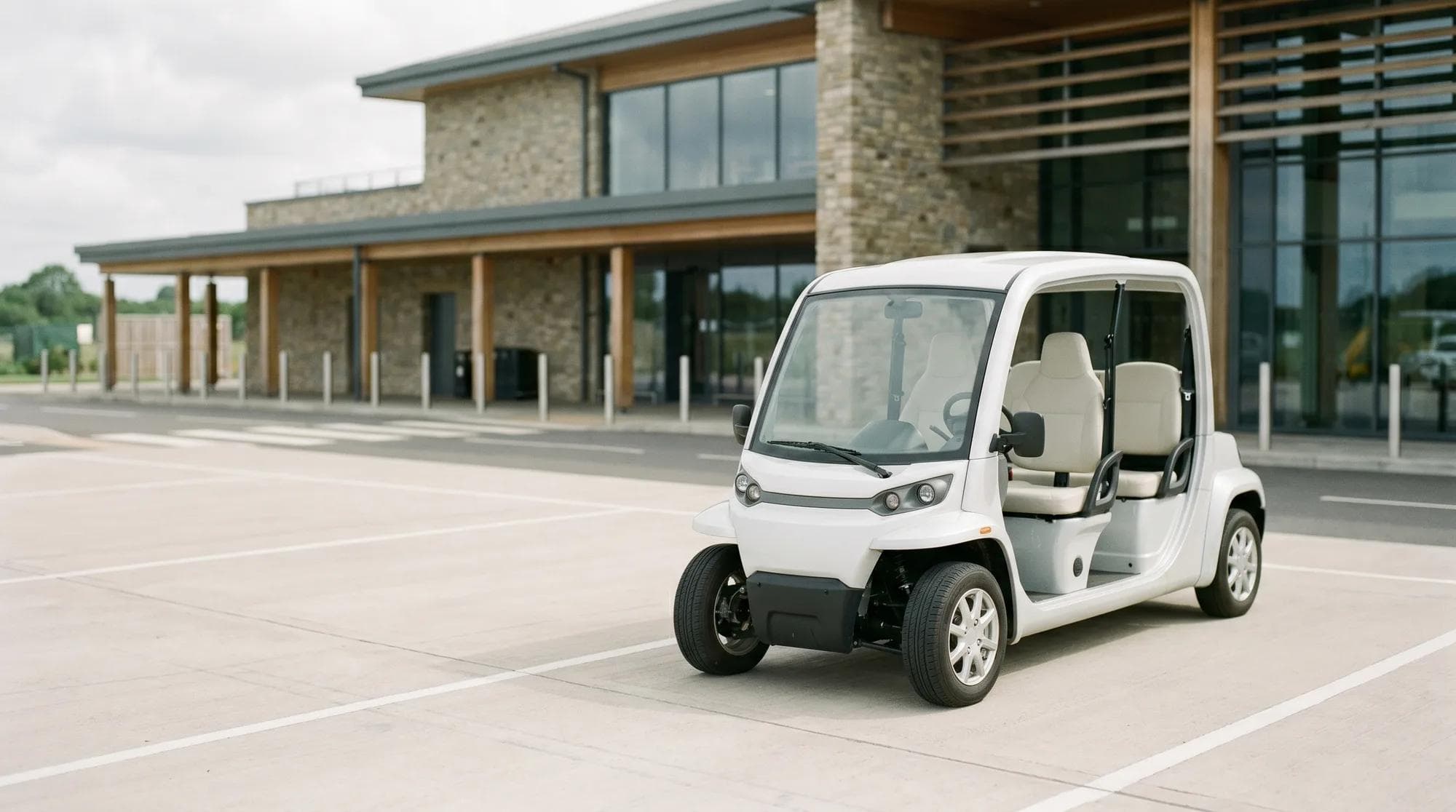
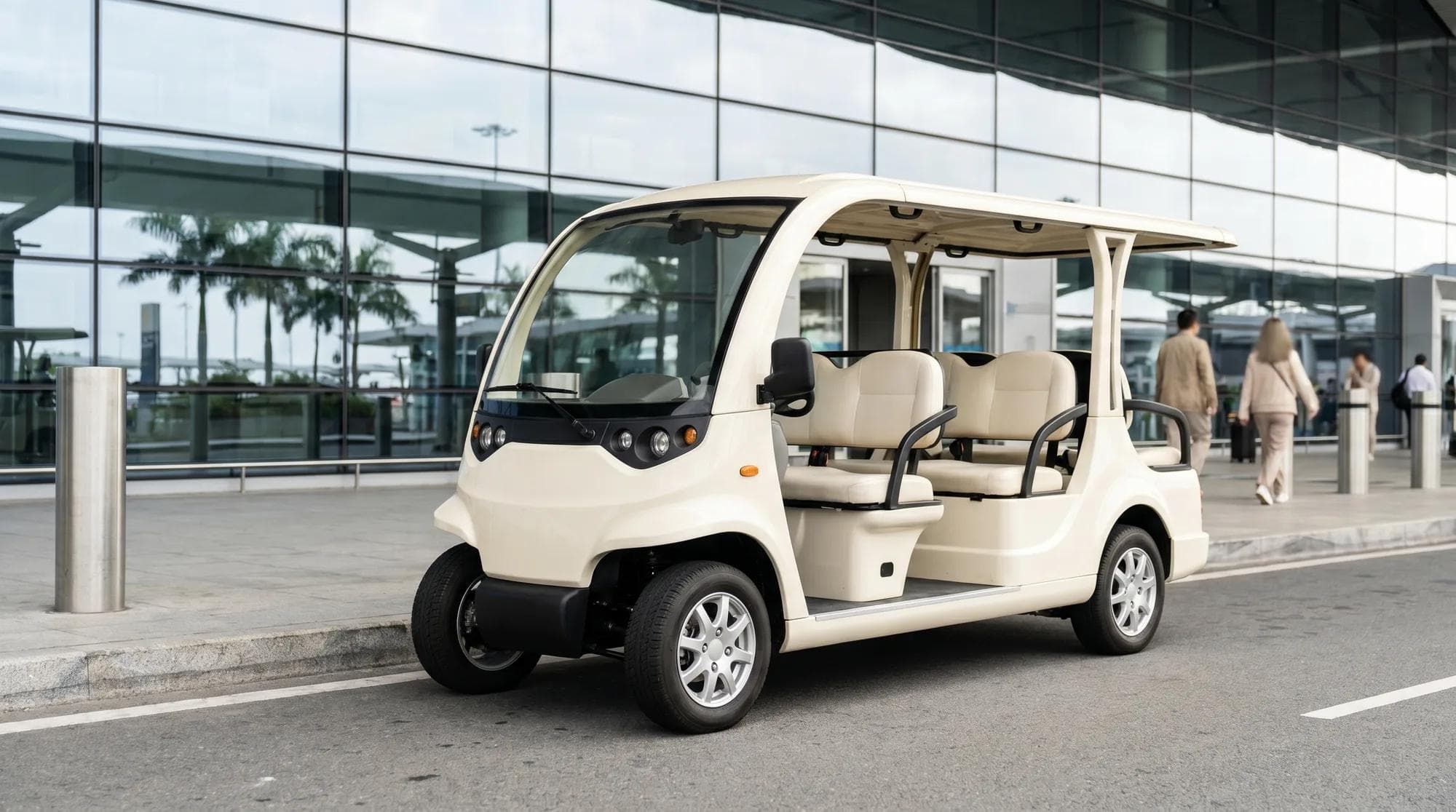
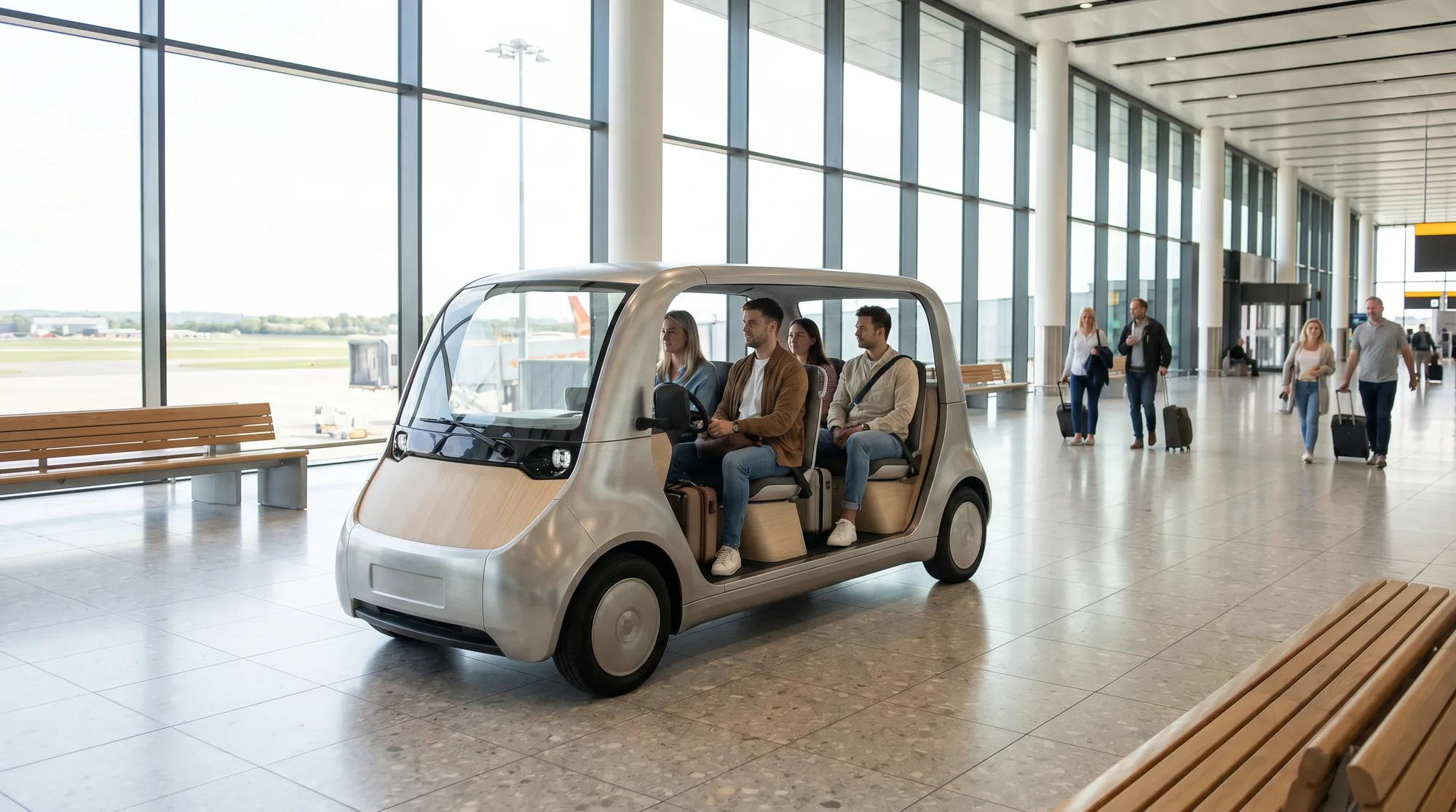
- A terminal passenger buggy moves people along the concourse and between distant gates at a gentle, predictable pace among pedestrians.
- Indoor use sets the spec: low noise, no fumes, tight turning, soft start and stop, and clear sightlines for the driver.
- These vehicles suit connecting passengers on short transfers as much as those who simply cannot manage the distance.
- Plan around the route and the busiest hour, not just the headline floor area, then size the fleet and charging to match.
Walk the length of a large terminal and you understand the problem quickly. From the security exit to the furthest gate can be well over a kilometre, often up a level and along a pier with moving walkways that only cover part of the distance. For a fit traveller with time to spare it is a stroll. For someone with a forty-minute connection, a heavy bag and a gate that has just changed, it is a sprint they may not win. For an older passenger, or anyone who cannot walk far, it can be the difference between making the flight and missing it.
A terminal passenger buggy is the simplest answer to that. It is a small, quiet electric vehicle that carries a handful of people and their bags along the concourse, weaving at walking pace through the crowd to get them to the gate. The vehicles are not new, but the brief has tightened: terminals are bigger, connections are tighter, and the expectation now is that the buggy is clean, near-silent and comfortable to share a building with. This guide covers what the job actually asks of the vehicle.
Why long concourses need a buggy in the first place
Terminal design has pushed walking distances up. Hub airports spread gates along long piers to fit more aircraft, and the security hall is often a long way from the part of the building passengers need to reach. Moving walkways help, but they run in straight lines and stop short of the gate. The result is a gap between where people land inside the building and where they need to be, and a clock that is usually running.
That gap matters most for two groups. Connecting passengers on a short transfer cannot afford to walk slowly, and a delayed inbound flight leaves them no margin. And passengers who cannot walk far, whether through age, a medical condition or a temporary injury, may not be able to cover the distance at all. A buggy serves both, and it does so without committing the passenger to the formal special-assistance process if they do not need it.
Indoor use sets the spec
A buggy that works on an outdoor apron is not automatically right for a concourse. Working inside a busy building, surrounded by people on foot, changes what the vehicle needs to be. Noise has to be low, because the buggy runs through quiet areas, near seating and past gate desks where people are listening for announcements. There can be no exhaust fumes, which rules out anything but electric for indoor work. And the vehicle has to be manoeuvrable enough to turn in a concourse and pull in tight to a gate without a long shuffle.
- Low noise: a near-silent electric drivetrain that does not carry across a quiet terminal.
- Zero local emissions: essential for an enclosed, air-conditioned building full of people.
- A gentle drive: smooth acceleration and braking so passengers feel secure and pedestrians are not startled.
- Tight manoeuvrability: a small turning circle for concourses, lifts and gate areas.
- Clear sightlines and signalling: good driver visibility, plus lights or a gentle audible cue so people on foot know the buggy is there.
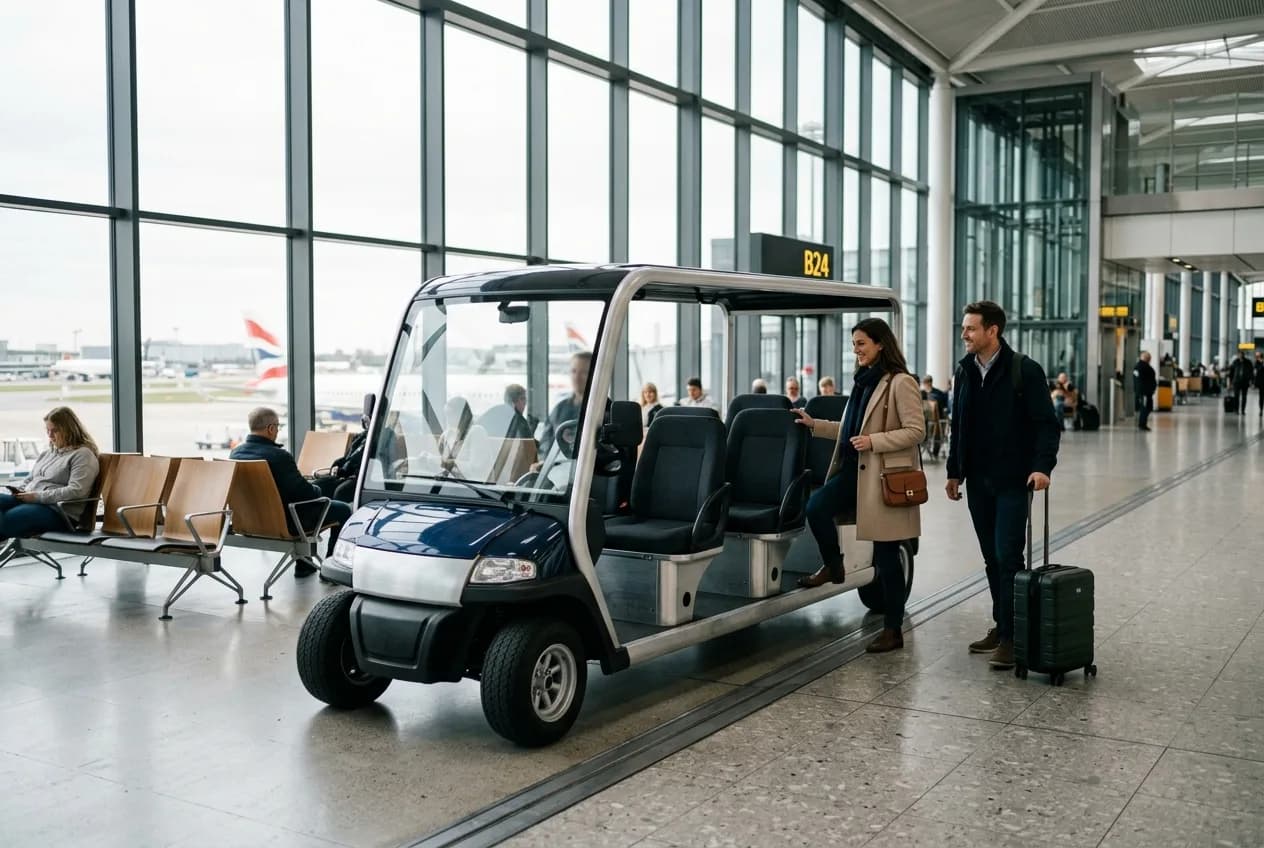
A gentle pace among pedestrians is a feature, not a limit
It can be tempting to judge a terminal buggy on speed, but speed is the wrong measure. The vehicle shares the floor with people who are not looking out for it: passengers reading boards, families with children, travellers stopping suddenly to check a bag. A buggy that moves at a steady walking pace, with smooth braking and clear signalling, is safer and, in a crowded concourse, often no slower in practice than one that tries to go quicker and keeps having to stop.
The driver matters as much as the vehicle here. Good sightlines, an easy view past passengers and luggage, and controls that make slow, precise movement comfortable all help the driver place the buggy gently in a busy space. We cover the wider point about moving people in shared pedestrian areas in our guide to electric people-movers and shuttles.
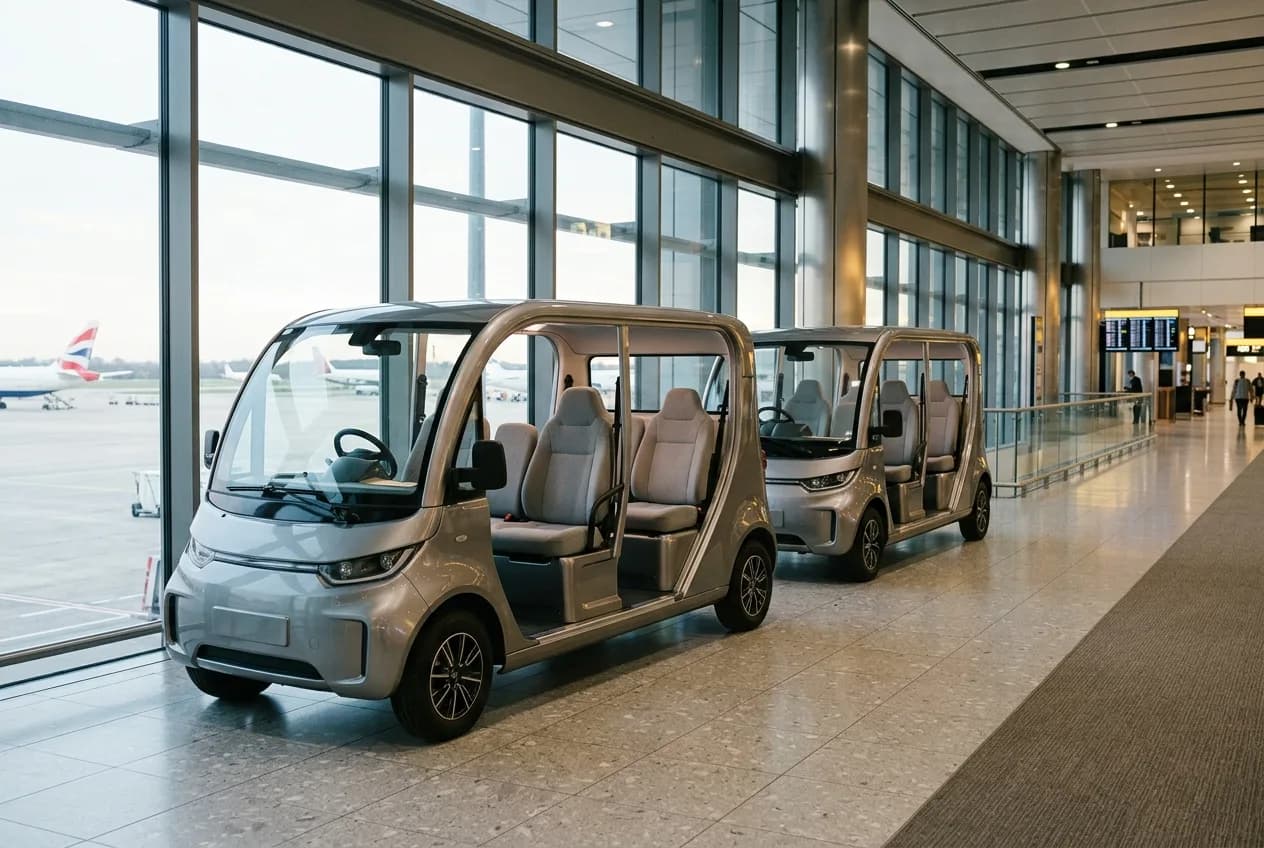
Passenger buggies, built to order
Choose the seat count and finish, liveried to your terminal, with an indoor-friendly low-noise spec and a 24-hour call-out behind it.
Who actually rides, and how to plan for them
Demand for a terminal buggy is not even across the day, and it is not one type of passenger. On a normal hour you are carrying a steady trickle: a connecting passenger pointed your way by a gate agent, an older traveller who asked at a desk, someone moving slowly after a long flight. Then a delayed inbound arrives, a bank of tight connections lands at once, and demand spikes. Planning for the average misses the moments that matter.
- 01
Map the routes
Identify the long runs people actually struggle with: security to the far piers, between distant gates, and any level changes that slow walkers down.
- 02
Find the peak
Look at when connections cluster and inbound delays bite, because that busiest period decides how many buggies you need, not the daily average.
- 03
Match vehicles to the peak
Size the fleet to clear that peak with a short wait, then accept that some vehicles tick over quietly off-peak.
- 04
Fit charging to the gaps
Plan charging around the quiet spells so a vehicle is always ready when the next wave of connections arrives.
Some of those riders will be passengers with reduced mobility who would otherwise go through the formal assistance route. A terminal buggy service and a special-assistance service overlap, and it is worth deciding where one ends and the other begins. Our guide to accessible airport vehicles goes into that in more detail.
Why electric is the only sensible choice indoors
For a concourse the case for electric is not really a comparison, it is a requirement. A combustion vehicle cannot run inside an enclosed terminal because of the fumes, and it would be far too loud for the space. Electric removes both problems at once: no local emissions, and a drivetrain quiet enough to pass a gate desk without raising voices. On top of that the running costs are low, which suits a vehicle that loops the same building all day, and an overnight charge comfortably covers an operating day for most patterns.
Move people along your concourse, quietly
Tell us the routes, the distances and the busiest hour, and we will spec quiet, zero-emission passenger buggies, liveried for your terminal and built for indoor work.
Frequently asked questions
How fast does a terminal passenger buggy go?+
Indoors it should move at a gentle walking pace among pedestrians. In a crowded concourse that is safer and rarely slower in practice than trying to go quicker, because a faster vehicle simply has to stop more often.
Are these buggies safe to use inside a busy building?+
Yes, when specified for it. Low noise, smooth braking, a tight turning circle, good driver sightlines and clear signalling let the buggy share space with people on foot safely.
Can the same service help passengers with reduced mobility?+
It often does. A terminal buggy and a special-assistance service overlap, so it is worth deciding where each one fits. We build accessible vehicles too if you need them.
Why does it have to be electric?+
A combustion vehicle cannot run inside an enclosed terminal because of fumes and noise. Electric removes both, with no local emissions and a near-silent drive, plus low running costs for all-day looping.
Can the buggies be branded for our terminal?+
Yes. Because they are built to order, the seat count, finish and livery are specified into the build so they match your terminal and your service.
Related solutions
Ready to explore what we build?
See the vehicles and the setting this applies to, or get a tailored quote built around your site.

Ready to find the right buggy?
Tell us how and where it will work and we will specify a vehicle and a tailored quote built around you. Every build comes with a 3-year warranty and a 24-hour priority call-out.
Our guides are written and reviewed by the Hawke Electric Vehicles team, the people who specify, build, deliver and support the vehicles. We focus on honest, practical advice and flag where a figure depends on the build rather than guessing.
More guides by Hawke