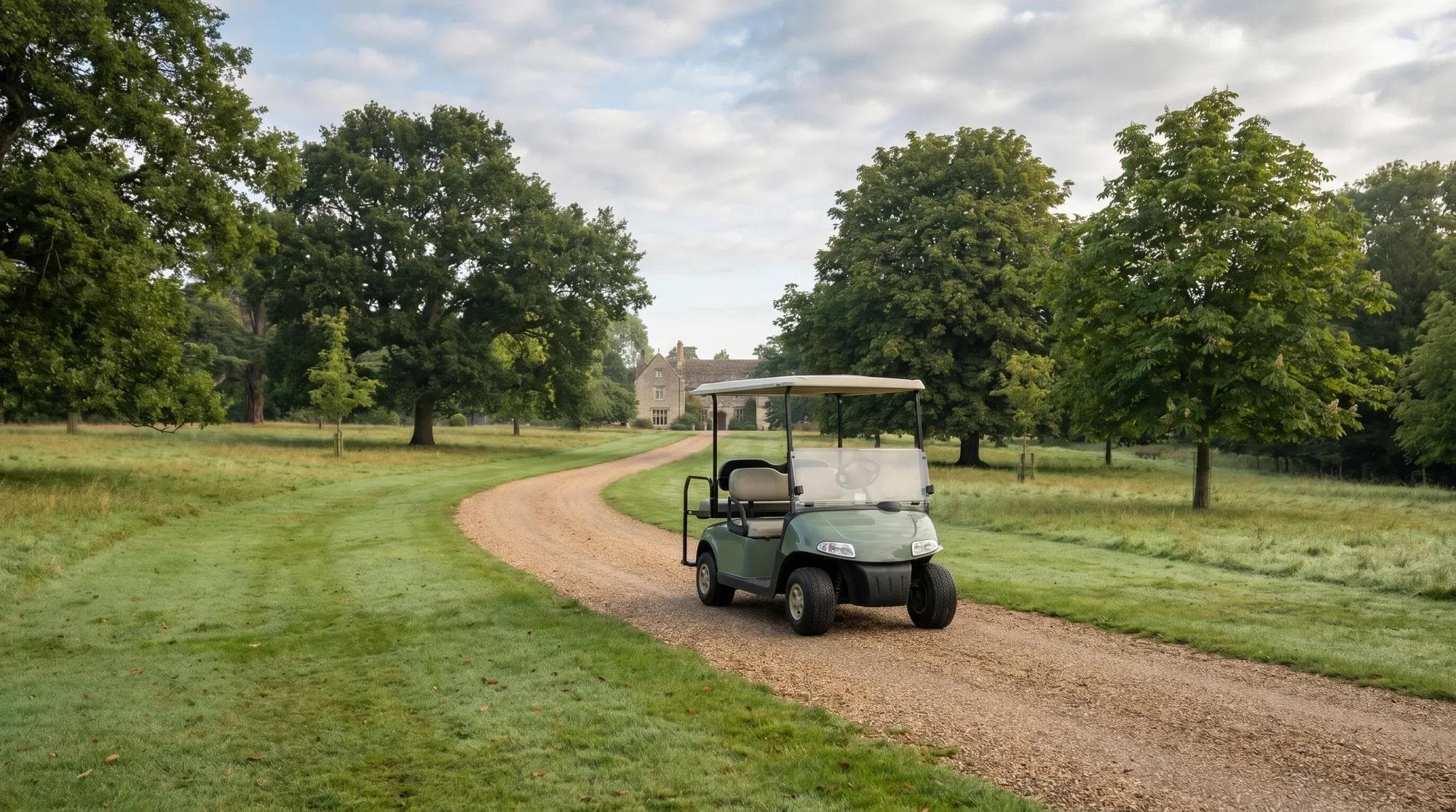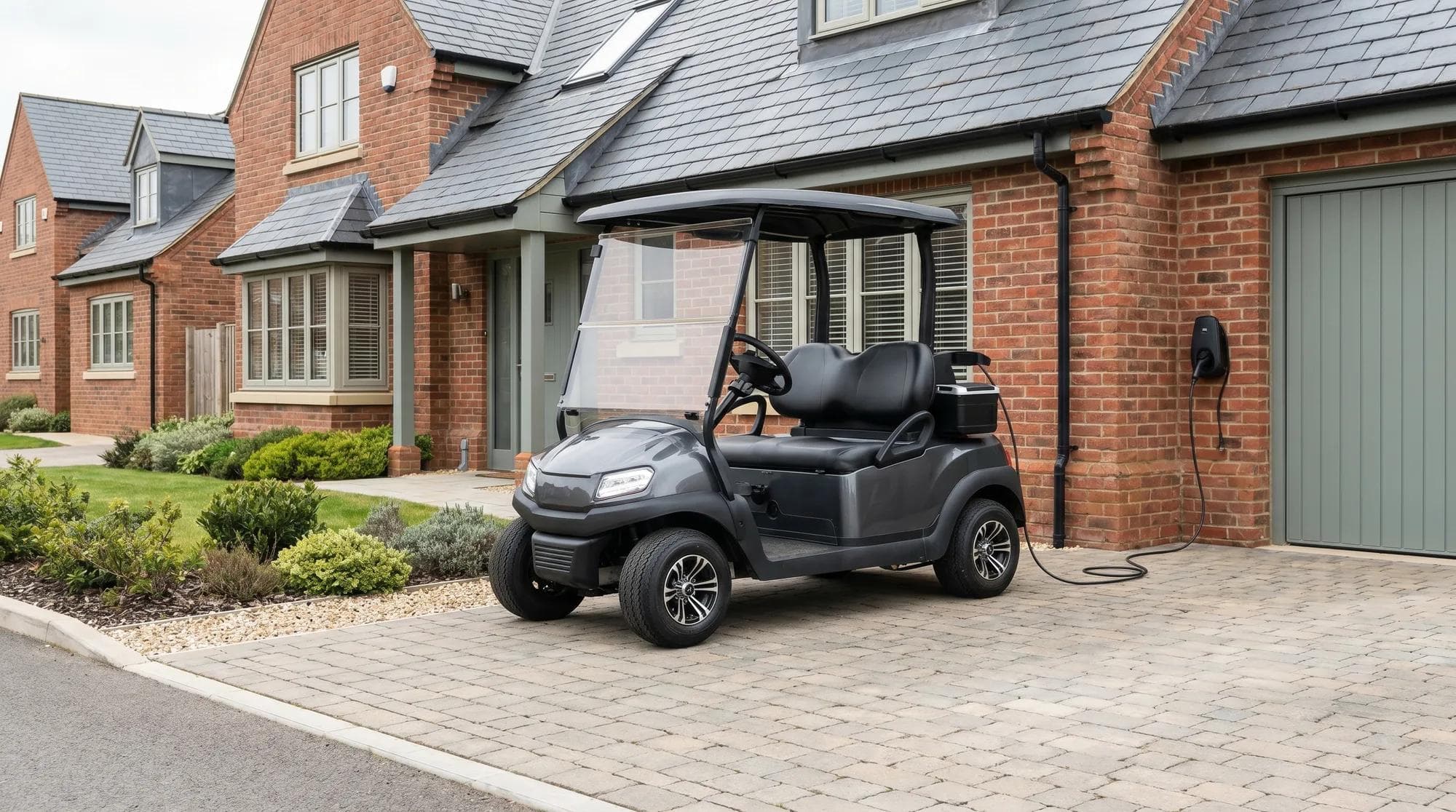
Parks and grounds teams have a particular problem. They need a workhorse that hauls tools, staff and the odd visitor across mixed terrain all day, but they also run that vehicle through public spaces where fumes and engine noise are exactly what the public came to get away from. Electric vehicles for parks solve both at once: a quiet, clean utility platform that does the work without spoiling the place it works in. This guide covers what they do, the net-zero and air-quality case, how they stack up against diesel on cost, and how a council actually buys one.
Where electric vehicles for parks earn their keep
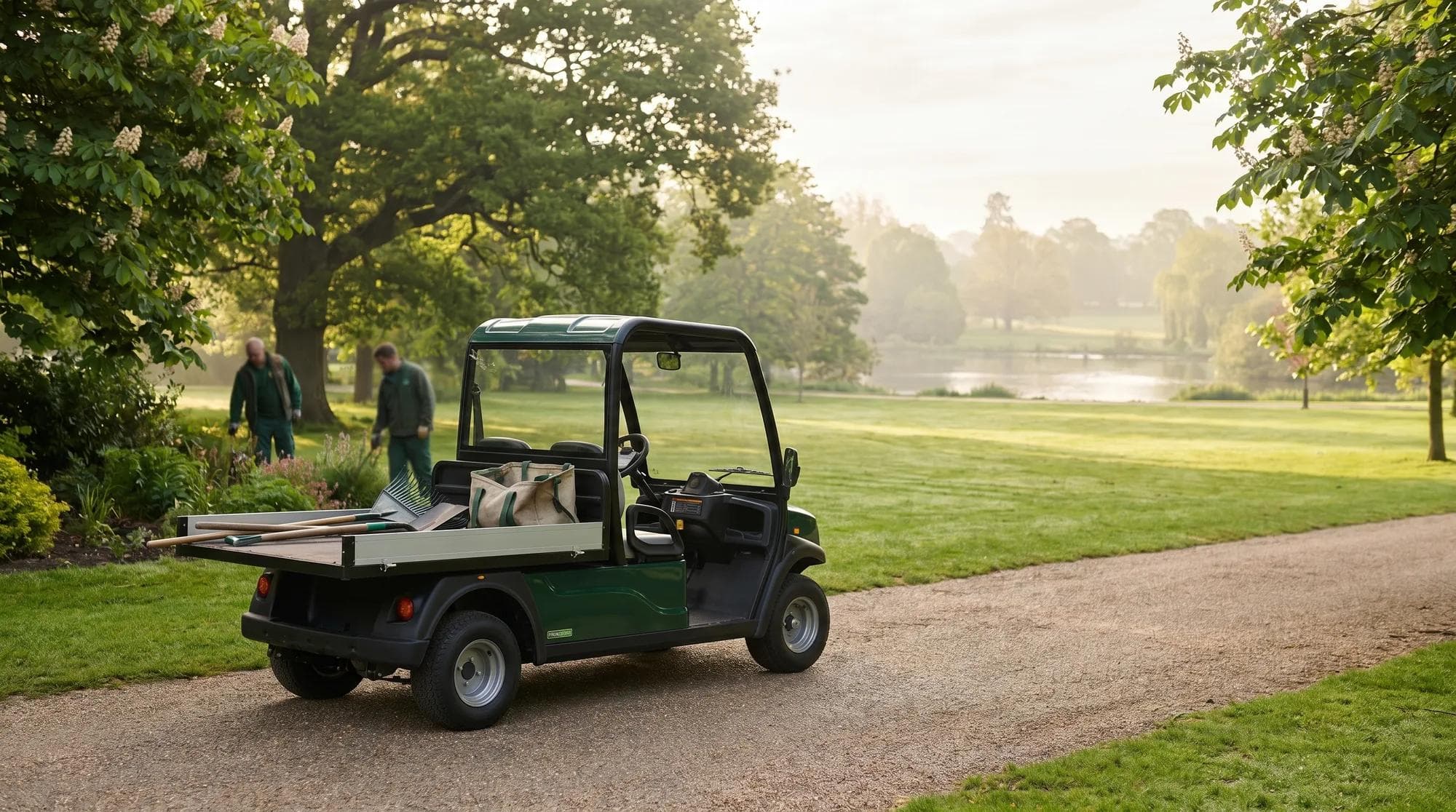
Most park fleets do two jobs, and an electric utility vehicle covers both. The first is groundscare and maintenance: moving mowers, strimmers, bagged leaf litter, tools, bark and turf around a site, often off-path and over wet grass. The second is people: getting staff out to a far corner quickly, and in larger parks, carrying visitors who can't manage the distance on foot. A local authority electric utility vehicle handles the load-lugging with a flat bed or tipping body, then doubles as transport when the grounds work is done.
The day-to-day case is simple. A grounds maintenance vehicle that runs near-silent doesn't interrupt a tai chi class, a memorial service or a toddler group on the green. It doesn't leave a diesel haze by the cafe or the play area. And for the crew working alongside it for eight hours, there's no exhaust and far less noise to put up with. That last point matters more than it sounds: it's a real improvement to the working day.

Visitor and accessibility transport in large parks
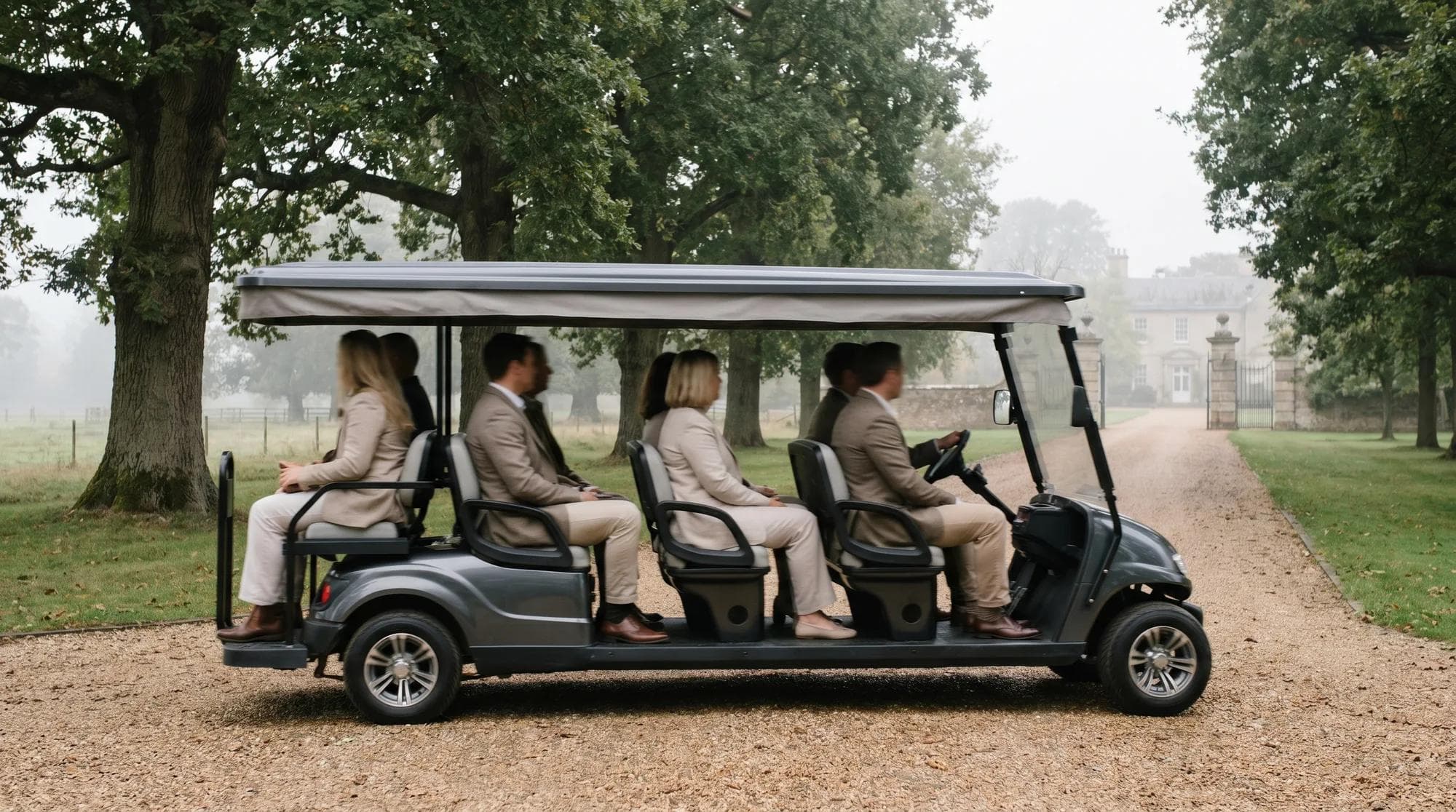
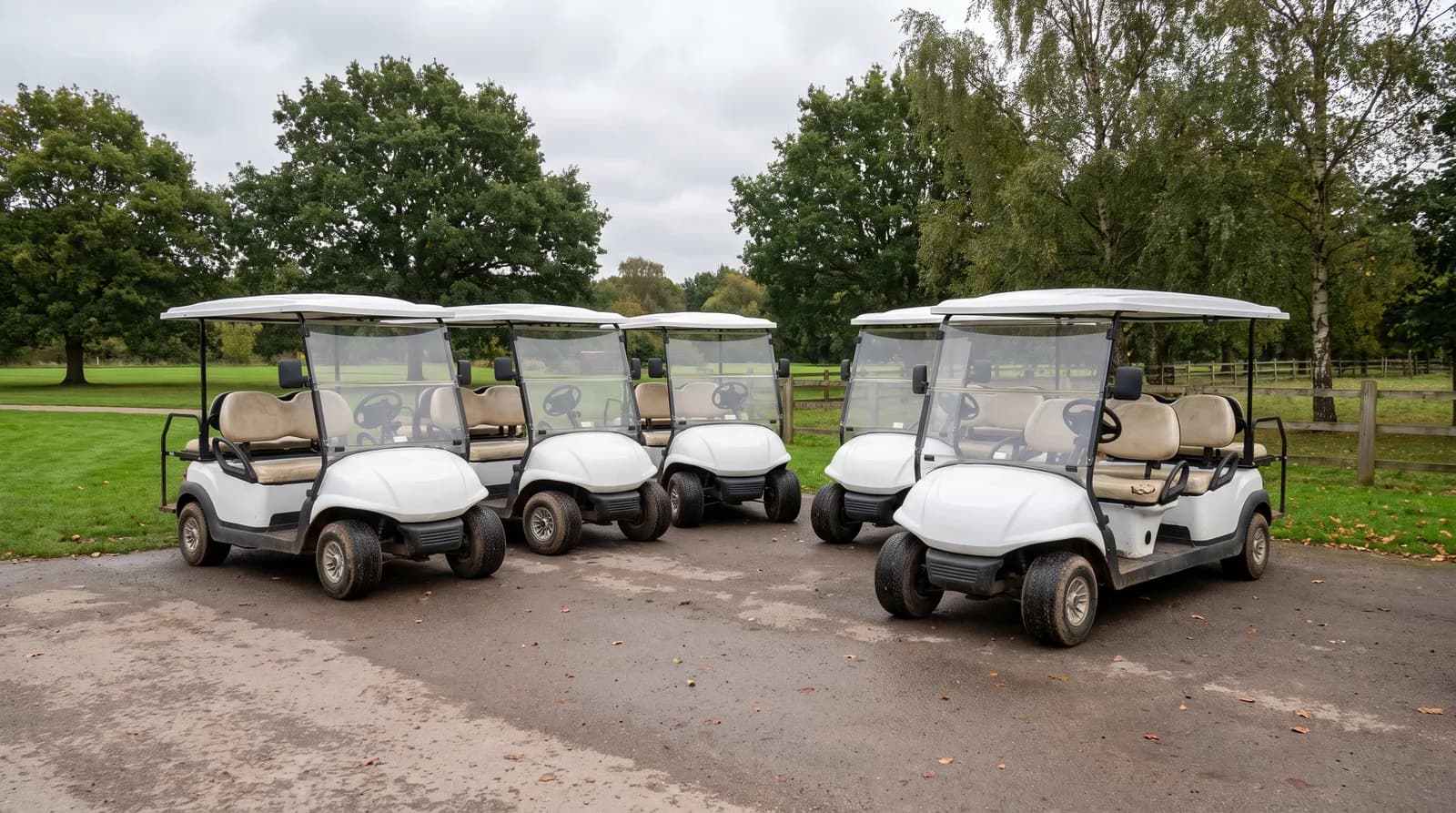
In a country park, a botanic garden or a large urban green space, distance is a barrier. Visitors with limited mobility, older visitors and families with small children often can't reach the far side of a site, which quietly shuts them out of part of what the park offers. A people-carrying electric buggy turns a long walk into a short ride. It's an inclusion measure as much as a transport one, and it reads well against a council's public-sector equality duty. If shuttles are part of your thinking, our people-mover and shuttle guide covers seat counts and how to run them.
The net-zero and air-quality case
Most councils now have a declared climate emergency or a net-zero target, usually 2030 or 2040, and a fleet decarbonisation plan to go with it. Grounds vehicles are an easy, visible win in that plan. Swapping a diesel utility vehicle for an electric one removes a clear source of on-site emissions and noise, and it's the kind of tangible action a scrutiny committee can actually point to. It's measurable, it's easy to explain to residents, and nobody can argue it's greenwashing when the fumes have simply gone.
There's an air-quality angle too. Plenty of councils have Air Quality Management Areas and clean-air commitments that diesel plant works directly against. An electric grounds fleet helps rather than hinders those obligations, and it keeps the council's own vehicles consistent with the message it gives residents about idling and emissions. For the honest, defensible version of the environmental argument, our environmental benefits guide sets out what you can and can't credibly claim.
When the fumes and the engine noise are simply gone, no resident can call it greenwashing.
Total cost of ownership against diesel
The sticker price is rarely the number that decides a fleet. Total cost of ownership is, and that's where electric tends to pull ahead over a vehicle's working life. Electricity to charge a buggy costs far less than the equivalent diesel, and there's no fuel to store, secure or account for. The maintenance bill is lighter too: no engine oil, no filters, no belts, no fuel system, fewer moving parts to fail. The trade-off is a higher up-front cost and the need to plan charging, so the case is strongest where the vehicle works regularly.
- Electric
- Higher
- Diesel
- Lower
- Electric
- Low, mains electricity
- Diesel
- Higher, pump diesel
- Electric
- Light, few moving parts
- Diesel
- Engine, oil, filters, belts
- Electric
- None where it's driven
- Diesel
- Exhaust fumes and particulates
- Electric
- Near silent
- Diesel
- Loud, worst at idle
- Electric
- No fuel stored on site
- Diesel
- Diesel storage and spill risk
- Electric
- Supports the target
- Diesel
- Works against it
| Electric | Diesel | |
|---|---|---|
| Up-front cost | Higher | Lower |
| Energy cost per year | Low, mains electricity | Higher, pump diesel |
| Servicing | Light, few moving parts | Engine, oil, filters, belts |
| On-site emissions | None where it's driven | Exhaust fumes and particulates |
| Noise | Near silent | Loud, worst at idle |
| Fuel handling | No fuel stored on site | Diesel storage and spill risk |
| Net-zero fit | Supports the target | Works against it |
For the worked-through numbers on what each option costs to keep on the road across a year, our electric vs petrol running cost guide does the maths in a way that transfers straight to a diesel comparison. The headline holds: the higher purchase price is usually recovered through lower running and maintenance costs over the life of the vehicle, which is the figure a whole-life costing in a tender should be built on.
How councils procure these vehicles
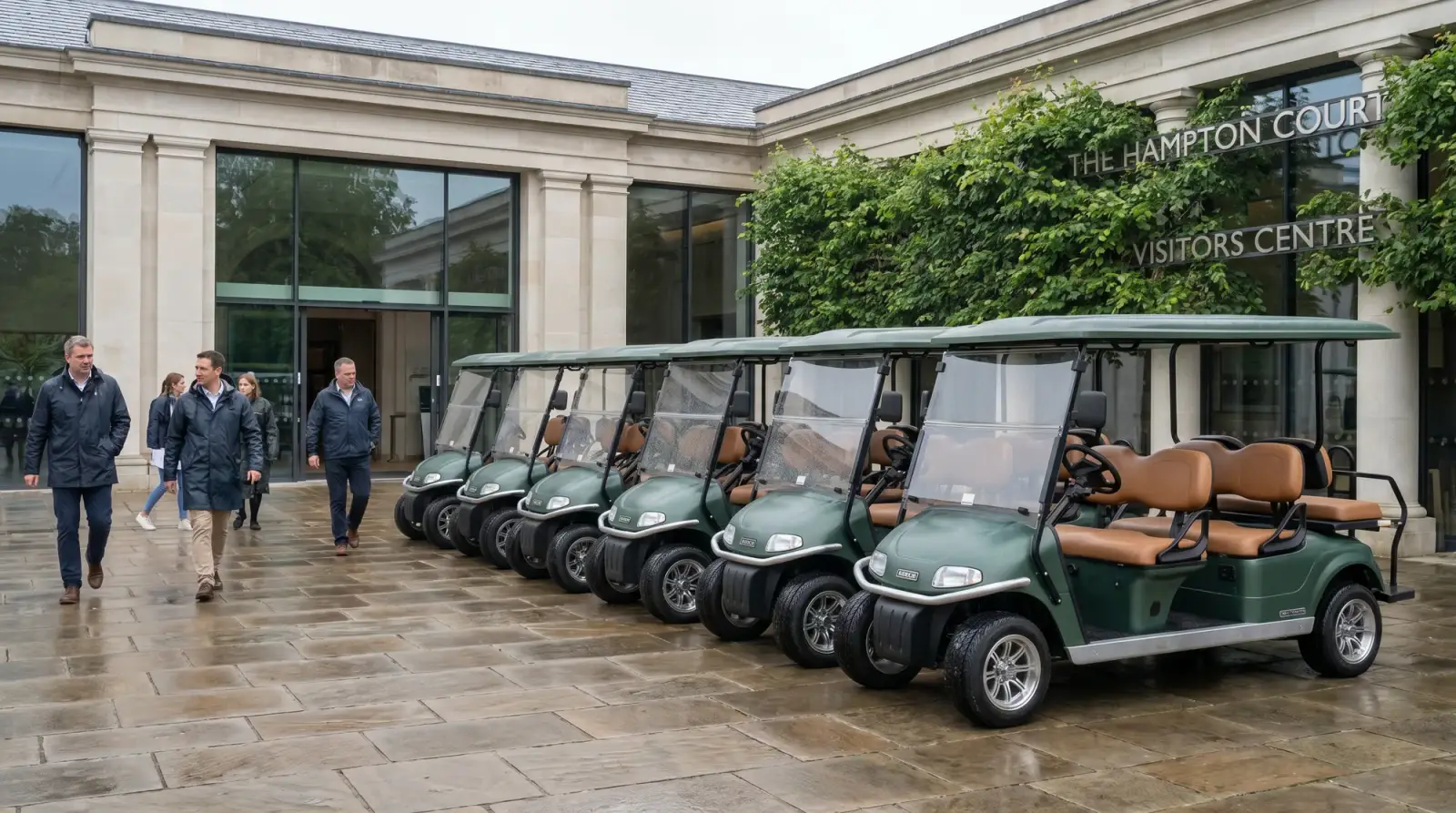
Councils don't buy off the shelf. Parks-and-grounds EVs are bought through the official tender route, and getting the paperwork right matters as much as picking the vehicle. For lower-value purchases, that usually means a request for quotation against a written specification and three or more compliant quotes. Above the relevant threshold, it means a full tender, often run through a framework or a dynamic purchasing system so the procurement is compliant from the start.
Whichever route applies, the specification carries the decision. Set out the duty cycle, the payload and bed type, the seat count, the terrain and gradients, the range you need between charges, your charging arrangements, and the whole-life cost basis you'll evaluate on. Be clear about social value, warranty and call-out cover, and delivery timescales. We're set up to support the buyer side of that: a detailed quote against your spec, whole-life cost figures, fleet branding in your livery, and the documentation a tender needs. Every vehicle is built to order, so it's specified to your duty cycle rather than forced to fit a stock model.
Specifying the right vehicle for your parks
Start with the hardest task the vehicle will do, not the average one. If it has to climb a wet bank with a full load of bark, spec for that. Match the body to the work: a tipping bed for grounds waste, a flat bed for plant and tools, seating for staff or visitor runs. Think about charging now rather than later, because a vehicle that can't recharge between shifts isn't a vehicle you can rely on. Our purpose-built Hawke S2 Pickup utility model is the natural starting point for a parks fleet, and our parks and public spaces work explains how we specify and brand it to suit a council site.
Specify a parks fleet built around your duty cycle
Tell us how your grounds and visitor work actually runs and we'll build a detailed, tender-ready quote with whole-life cost figures and your council's livery. Every vehicle is built to order, with a 3-year warranty and a 24-hour VIP call-out.
Frequently asked questions
What are electric vehicles for parks used for?+
Two jobs, mainly. Grounds maintenance and groundscare, which means carrying mowers, tools, bark, turf and bagged waste across a site, often off-path. And transport, which means moving staff quickly to a far corner and, in larger parks, carrying visitors who can't manage the distance on foot. A well-specified utility vehicle covers both.
Are electric grounds vehicles cheaper than diesel?+
Over a fleet's working life, usually yes. The purchase price is higher, but electricity costs far less than diesel, there's no fuel to store, and servicing is lighter because there are fewer moving parts. The whole-life cost, which is what a tender should evaluate, typically lands lower than diesel for a vehicle that works regularly.
How do electric vehicles help a council meet net-zero?+
They remove a clear, visible source of on-site emissions and noise from the council's own fleet, which is exactly the kind of tangible action a net-zero target needs. They also support clean-air commitments and Air Quality Management Areas that diesel plant works against, and they're easy to explain to residents and scrutiny committees.
How does a council buy an electric utility vehicle?+
Through the official tender route. Lower-value purchases usually need a written specification and three or more compliant quotes; larger purchases need a full tender, often run through a framework or dynamic purchasing system. The specification, particularly the duty cycle and whole-life cost basis, decides the outcome.
Can an electric park vehicle carry both cargo and passengers?+
Yes. A utility platform can be specified with a removable cargo bed or a convertible rear so it runs grounds work on weekdays and visitor or staff transport when needed. For a council watching the budget, one vehicle doing both is often better value than two single-purpose ones.
Ready to find the right buggy?
Tell us how and where it will work and we will specify a vehicle and a tailored quote built around you. Every build comes with a 3-year warranty and a 24-hour priority call-out.
Our guides are written and reviewed by the Hawke Electric Vehicles team, the people who specify, build, deliver and support the vehicles. We focus on honest, practical advice and flag where a figure depends on the build rather than guessing.
More guides by Hawke