Getting across a large site is hard if you can't walk it. A long path from a car park to an entrance, a slope that's fine on foot but not in a chair, a gap between buildings with nowhere to rest: these are the moments where access quietly breaks down. A wheelchair accessible buggy can help bridge them. This guide is honest about where a buggy is the right tool, where a purpose-built PRM vehicle is better, and what good accessible design actually looks like.
What makes a buggy wheelchair accessible?
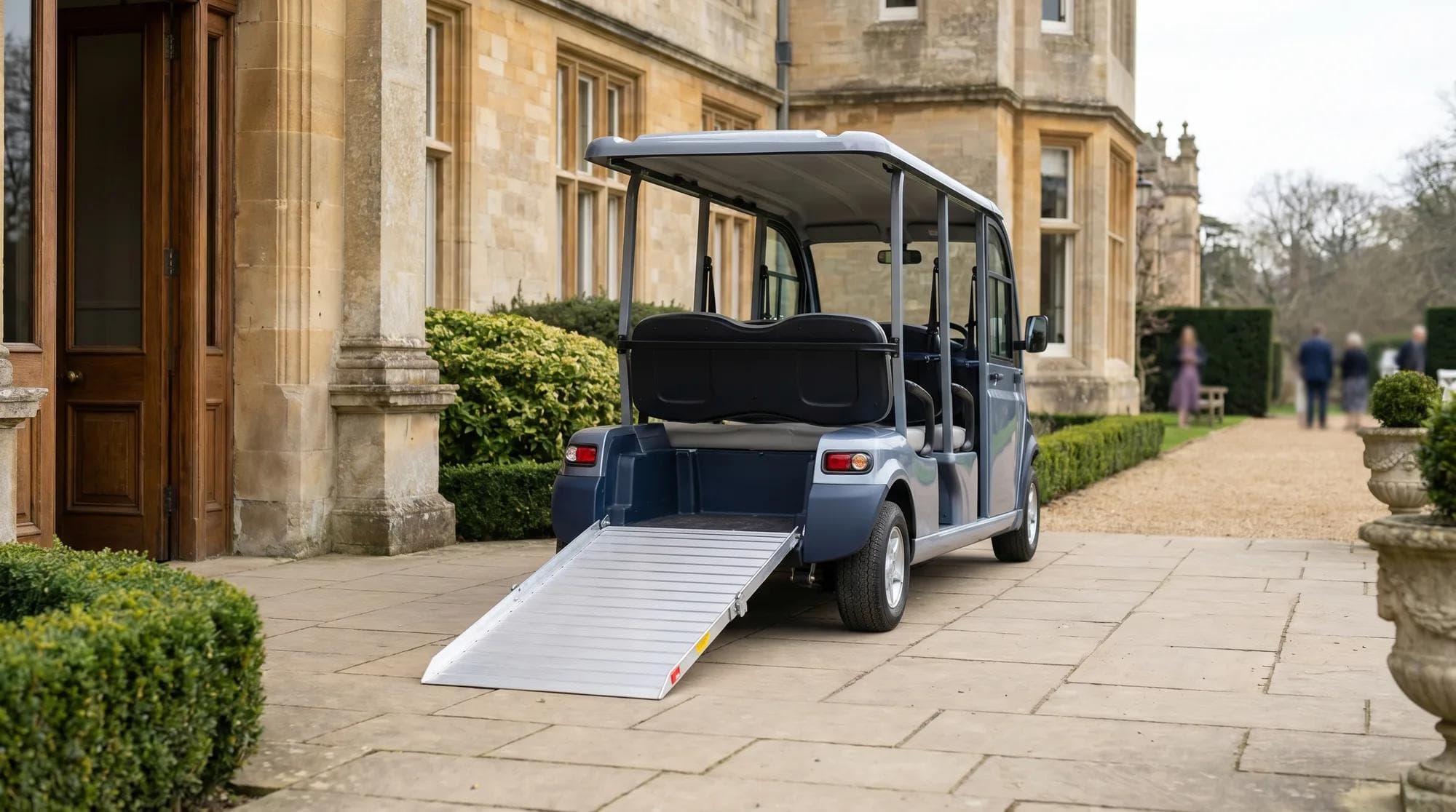
Two things, mainly. First, the passenger can get aboard without an awkward climb or transfer. That usually means a ramp and a step-free, flat or low-level layout, so a wheelchair user can roll on and stay in their own chair. Second, once aboard, the chair and the person are properly held in place for the journey. A ramp on its own isn't enough: a moving vehicle needs a way to secure the wheelchair and a separate restraint for the passenger.
Beyond those essentials, the details matter more than people expect. A gentle ramp angle is easier and safer than a steep one. A flat, non-slip floor with no lip to catch a wheel helps. A roof and side protection keep the weather off. And enough room to manoeuvre a chair without a three-point turn makes the difference between a layout that works and one that looks accessible on paper but isn't in practice.

Where an accessible buggy suits a venue
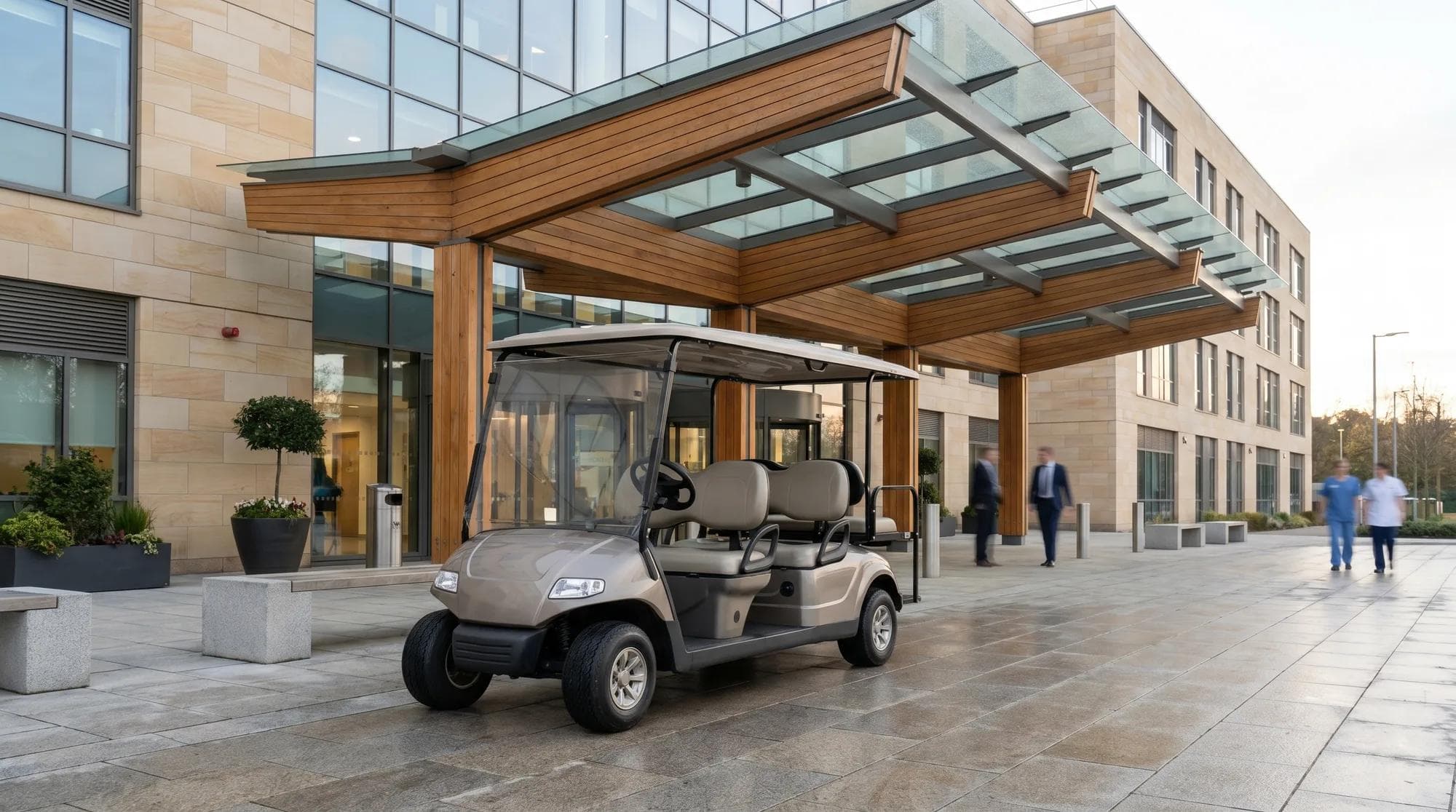
Buggies earn their place where the job is moving people short to medium distances across private ground at low speed. Think the path from a car park to a clinic entrance, the run from a holiday park reception to a lodge, the route across a resort, an estate, a festival site or a hospital or healthcare campus. On flat or gently graded paths, away from public roads, an accessible buggy does a calm, dignified job that a long walk simply can't.
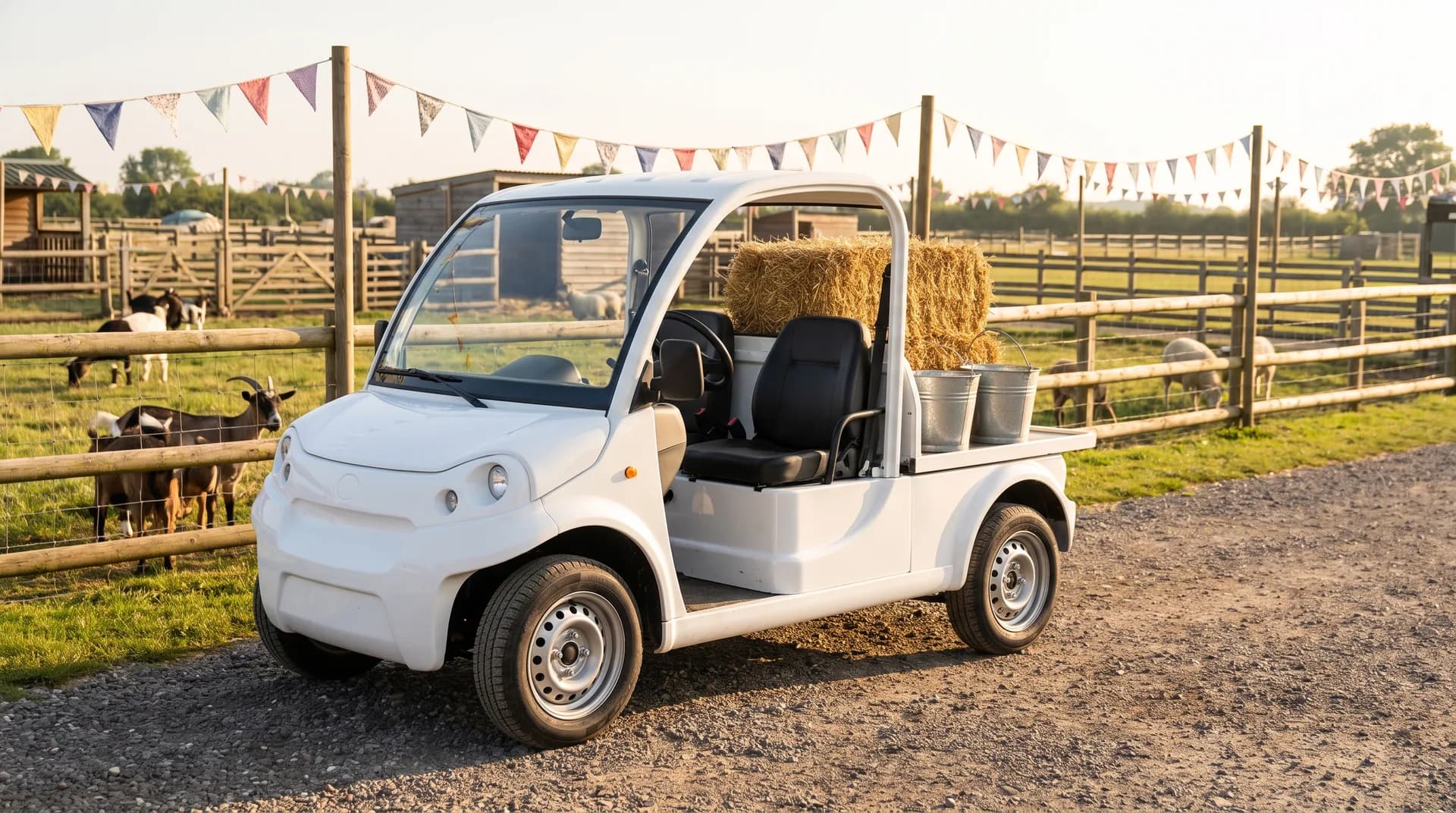
The appeal is that one vehicle can do several things. A buggy specified with an accessible layout can carry a wheelchair user when needed, then seat other passengers or carry kit the rest of the time. For a venue with occasional but real accessibility demand, that flexibility is often the practical answer. You're not buying a single-purpose vehicle that sits idle; you're adding capability to a fleet that's working anyway.
Where a purpose-built PRM vehicle is the better answer
Be clear-eyed about the limits. A buggy is built for private land at low speed. It is not a road-legal vehicle as supplied, and it isn't designed for high-volume, all-day passenger transfers in the way a purpose-built PRM (passengers with reduced mobility) vehicle is. If your need is moving large numbers of people with reduced mobility, especially anywhere that touches a public road, a dedicated accessible vehicle is usually the right tool.
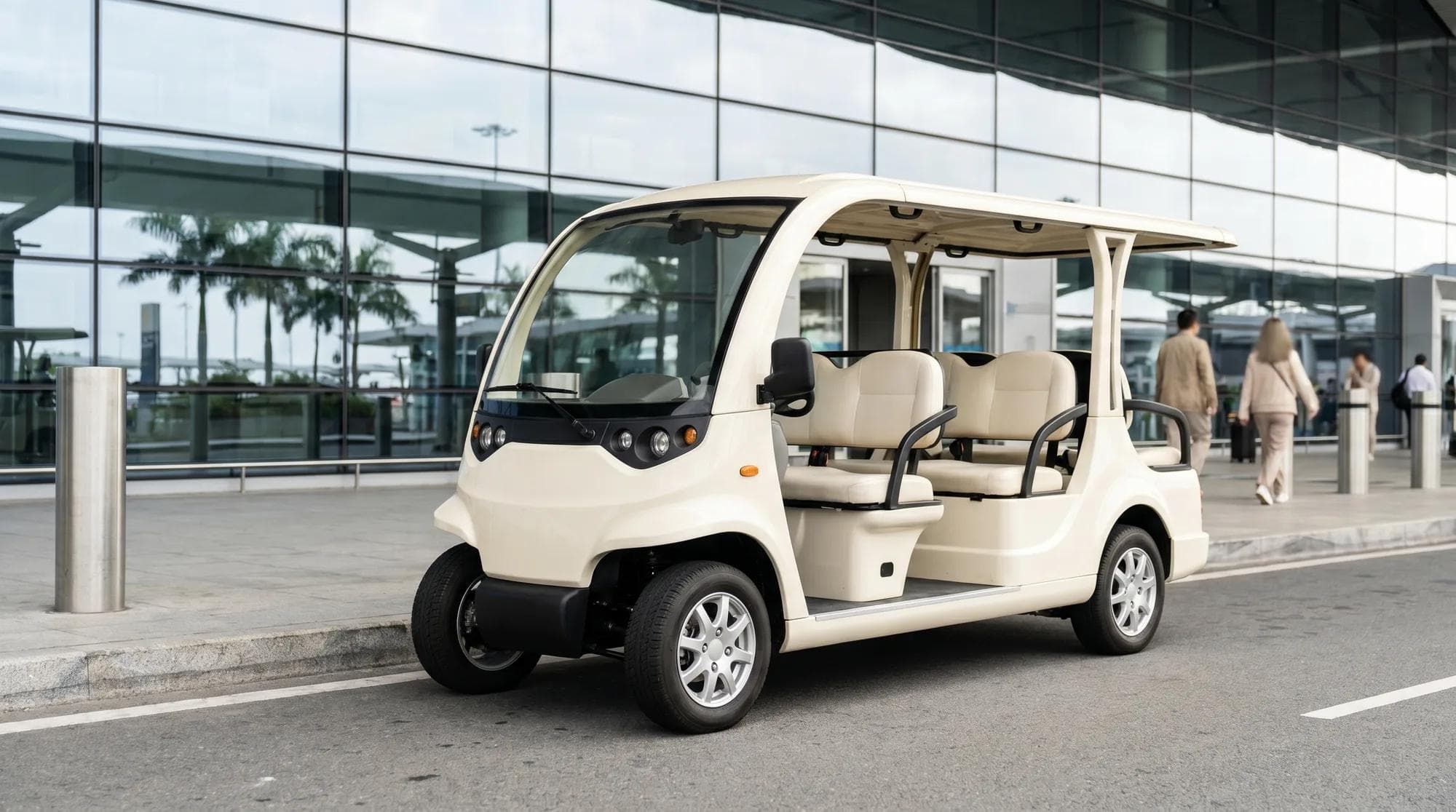
Airports are the clearest example. PRM transfers there run at scale, often airside and across distances and environments a buggy isn't built for, which is why specialist vehicles and processes exist. Our airport PRM transport guide goes into where each type of vehicle fits. And if any part of a route uses a public road, even crossing one, that's road use, and a standard buggy isn't built or registered for it; see are golf buggies road legal in the UK.
- Accessible buggy
- Short to medium runs on private ground
- Purpose-built PRM vehicle
- High-volume transfers, longer distances
- Accessible buggy
- Low speed, private land only
- Purpose-built PRM vehicle
- Built for its specific operating environment
- Accessible buggy
- Not road legal as supplied
- Purpose-built PRM vehicle
- Specified and registered for its role
- Accessible buggy
- Doubles as passenger or utility transport
- Purpose-built PRM vehicle
- Usually single-purpose accessible transport
- Accessible buggy
- Resorts, parks, estates, healthcare campuses
- Purpose-built PRM vehicle
- Airports, large transport hubs
| Accessible buggy | Purpose-built PRM vehicle | |
|---|---|---|
| Best for | Short to medium runs on private ground | High-volume transfers, longer distances |
| Speed and setting | Low speed, private land only | Built for its specific operating environment |
| Road use | Not road legal as supplied | Specified and registered for its role |
| Flexibility | Doubles as passenger or utility transport | Usually single-purpose accessible transport |
| Typical venues | Resorts, parks, estates, healthcare campuses | Airports, large transport hubs |
There's no shame in a buggy not being the answer. We'd rather tell you that early than sell you the wrong vehicle. If a purpose-built PRM vehicle suits your site better, we'll say so. If a buggy genuinely fits, we'll specify it properly around your routes, access points and gradients through our bespoke service.
We'd rather tell you a buggy isn't the right answer than sell you the wrong vehicle.
Designing for dignity, not just access
Access is the floor, not the goal. The real test is whether a disabled passenger feels like an equal traveller rather than a logistics problem. A gentle ramp they can use without a fuss, a layout that lets them sit alongside friends or family rather than apart, somewhere to rest a bag or a stick, and a driver who isn't rushing: small things, but they're the whole experience.
We'd always design the accessible layout with the people who'll use it in mind. That means a sensible ramp angle, a flat non-slip floor, clear space to position and secure the chair, and weather protection so a wet day doesn't make the journey miserable. Get those right and the buggy stops being a special arrangement and just becomes how people get around.
The individual route: buying for one person
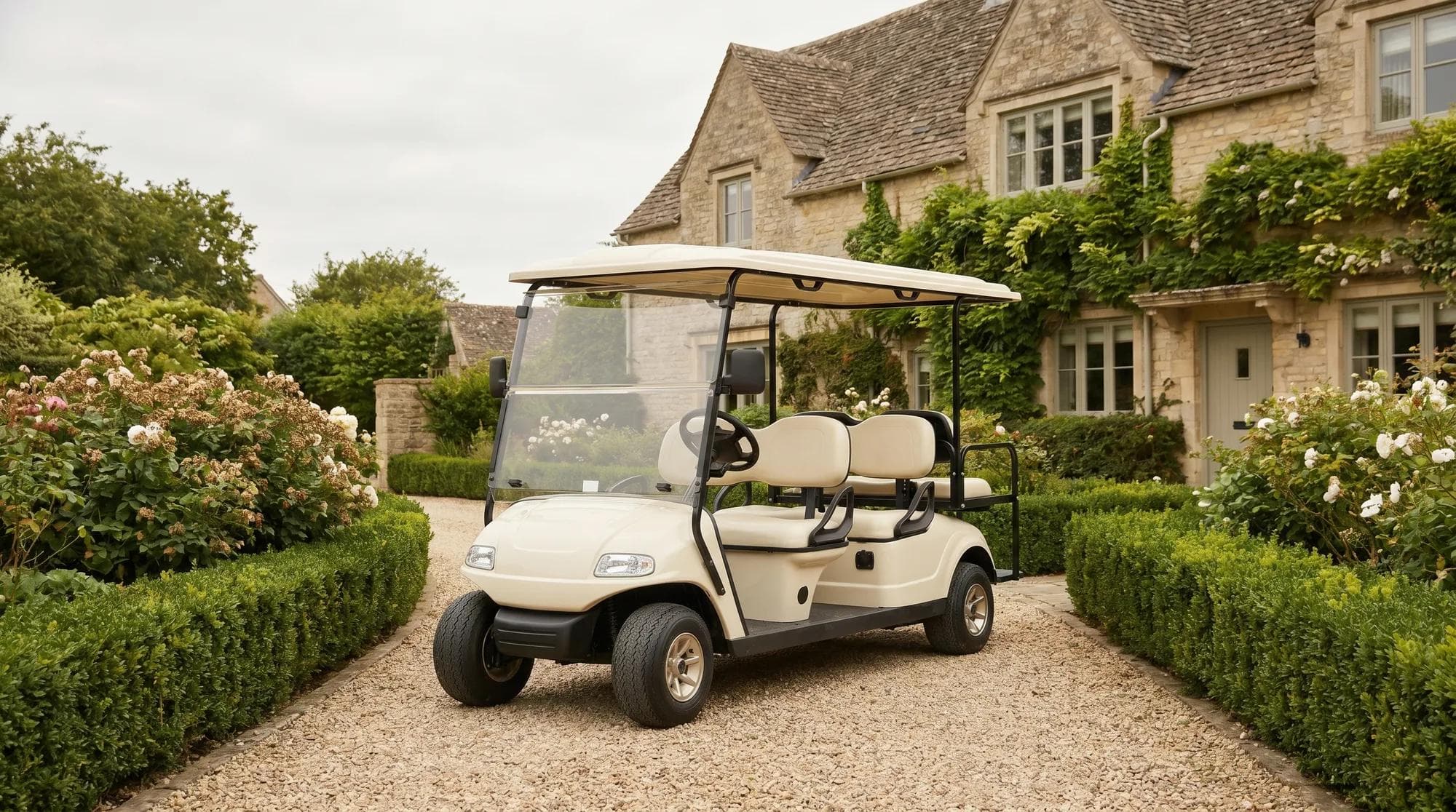
Most of this guide is aimed at venues, but plenty of enquiries come from individuals: someone with a long drive, a large garden or a smallholding who wants to keep getting around their own land. An accessible buggy can be a genuine help here, specified around the person rather than a generic layout. The same principles apply: a gentle ramp, a flat floor, proper securing, and weather protection for the British climate.
If the buggy is for an individual, it's worth involving an occupational therapist or accessibility specialist in the specification. They can advise on the chair, the restraint and the layout in a way no buying guide can, because the right setup depends on the person. We build to order, so once you know what's needed, we can build the vehicle around it.
What we can and can't do
Here's the honest version. We can build an electric buggy with an accessible, wheelchair-capable layout: a ramp, step-free access, a secured position for a chair and weather protection, specified around your site or the individual using it. Every vehicle is built to order with a 3-year warranty and a 24-hour VIP call-out behind it.
What we won't do is pretend a buggy is something it isn't. It's not a medical device, not an ambulance, and not a road-legal PRM vehicle as supplied. We won't claim it meets a standard or a clinical need we can't verify, and we won't overstate what it can do. Where a different vehicle suits you better, we'll point you to it. That's the only way this works.
How to get the right setup
Start with the people and the place. Who needs to travel, how often, across what distances and gradients, and does any part of the route touch a public road? From there we can say honestly whether a buggy fits, and if it does, specify the ramp, floor, securing and layout to suit. You can see the full range for a sense of the options, or go straight to a tailored quote and we'll work it through with you, including any accessibility or healthcare-sector requirements.
Specify an accessible buggy around your needs
Tell us about your site or the person who'll use it, your routes and your access requirements, and we'll advise honestly on whether a buggy fits and specify one built to suit. Every vehicle is built to order, with a 3-year warranty and 24-hour VIP call-out.
Frequently asked questions
What is a wheelchair accessible buggy?+
It's an electric buggy specified so a wheelchair user can get aboard without an awkward climb, usually via a ramp and a step-free, flat-floor layout, and travel while staying in their own chair. The chair is secured and the passenger restrained for the journey. We build these to order around your site or the individual using it.
Can a wheelchair user stay in their chair on a buggy?+
Yes, if the buggy is specified for it. A ramp and a flat or low-level layout let a passenger roll on and stay seated in their own wheelchair rather than transfer. The chair must be properly secured and the passenger restrained, and that system should be set with a qualified accessibility specialist for your vehicle.
When is a buggy not the right accessible vehicle?+
When you need high-volume transfers, longer distances, or any travel on a public road. A buggy is built for private land at low speed and isn't road legal as supplied. For large-scale needs like airport PRM transfers, a purpose-built accessible vehicle is usually the better answer, and we'll tell you if that's your situation.
Is a buggy a road-legal accessible vehicle?+
No. A standard buggy is built for private land and isn't road legal as supplied, and even crossing a public road counts as road use. If your accessible route touches a road at all, you need a vehicle built and registered for it, so flag that at enquiry and read our road-legal guide before you decide.
Can I get VAT relief on an accessible buggy?+
VAT relief may apply for eligible disabled customers on qualifying products, but eligibility and what qualifies depend on the rules, which change. We can't confirm specifics here, so check your situation against current HMRC guidance. We'll work with you on what applies to your particular order.
Can you build an accessible buggy for one person?+
Yes. We build to order, so an accessible buggy can be specified around an individual's needs as well as a venue's. It's worth involving an occupational therapist or accessibility specialist on the chair, restraint and layout, since the right setup depends on the person, and then we build the vehicle to suit.

Ready to find the right buggy?
Tell us how and where it will work and we will specify a vehicle and a tailored quote built around you. Every build comes with a 3-year warranty and a 24-hour priority call-out.
Our guides are written and reviewed by the Hawke Electric Vehicles team, the people who specify, build, deliver and support the vehicles. We focus on honest, practical advice and flag where a figure depends on the build rather than guessing.
More guides by Hawke