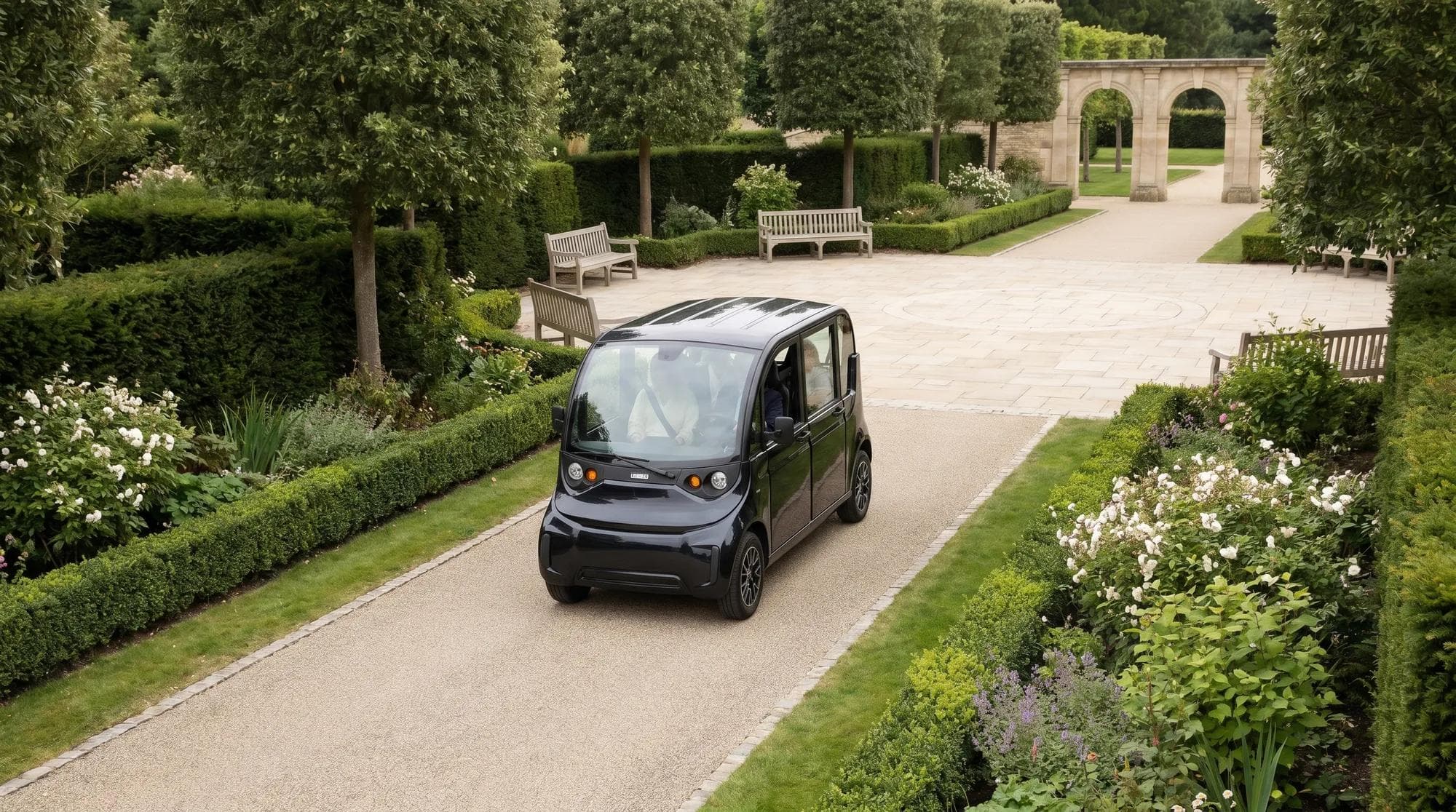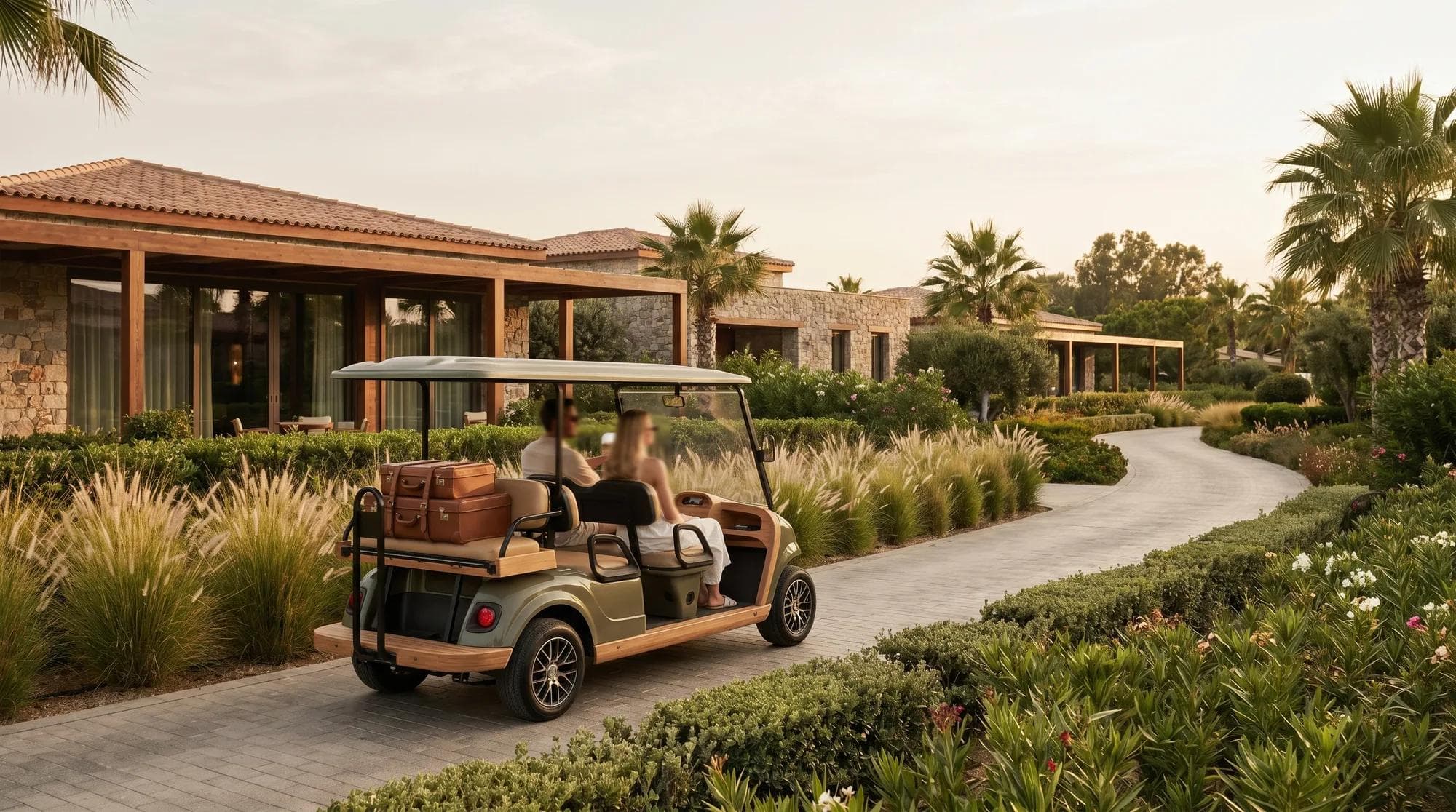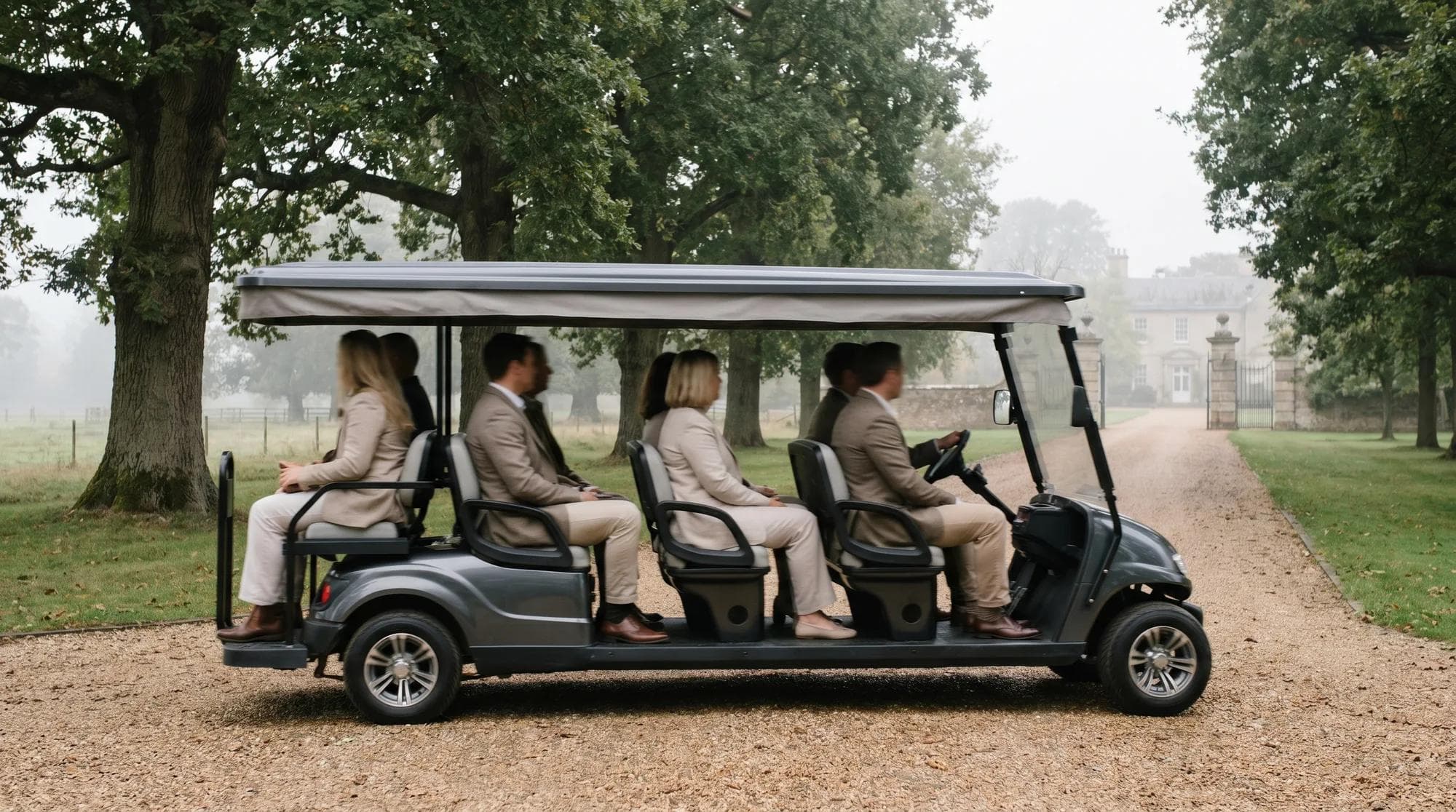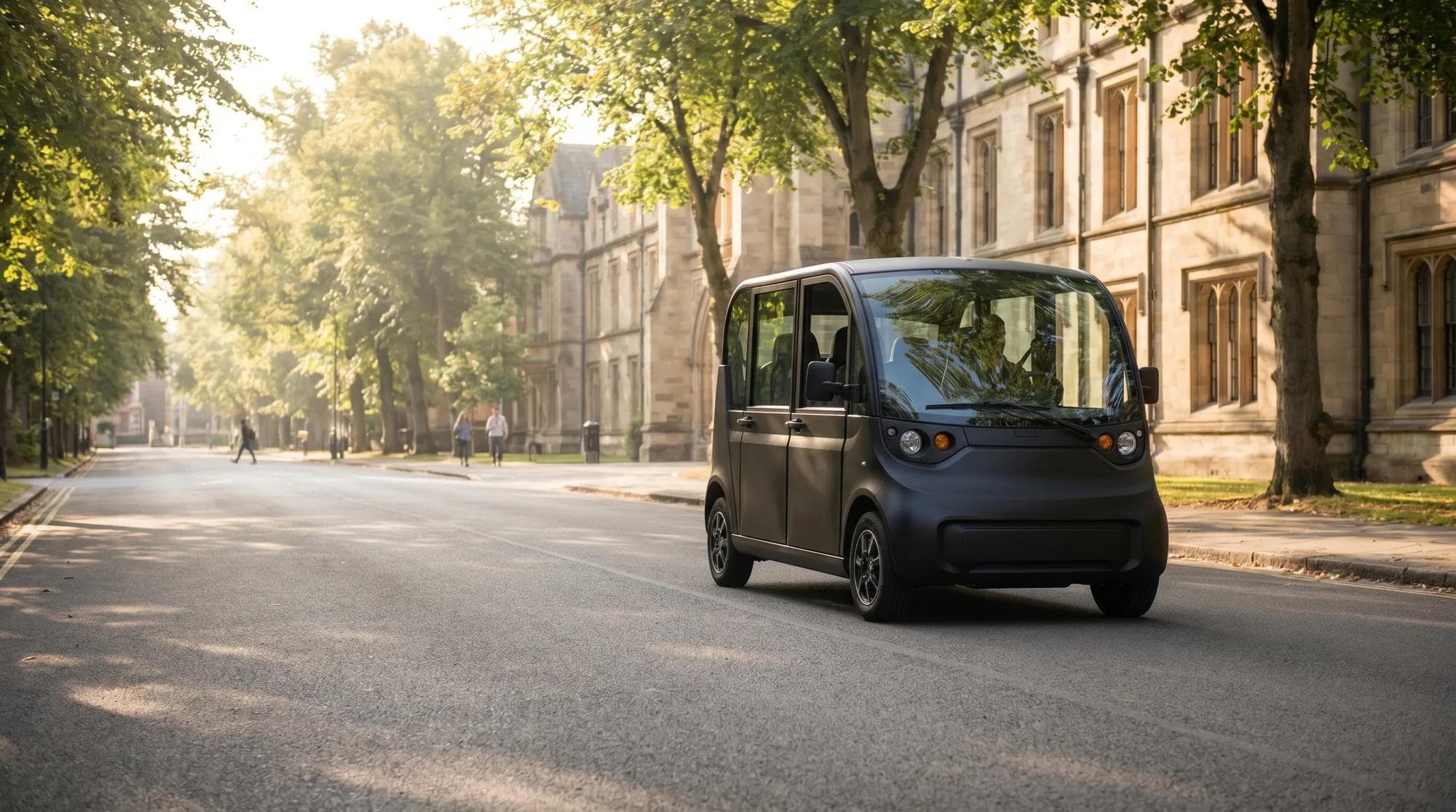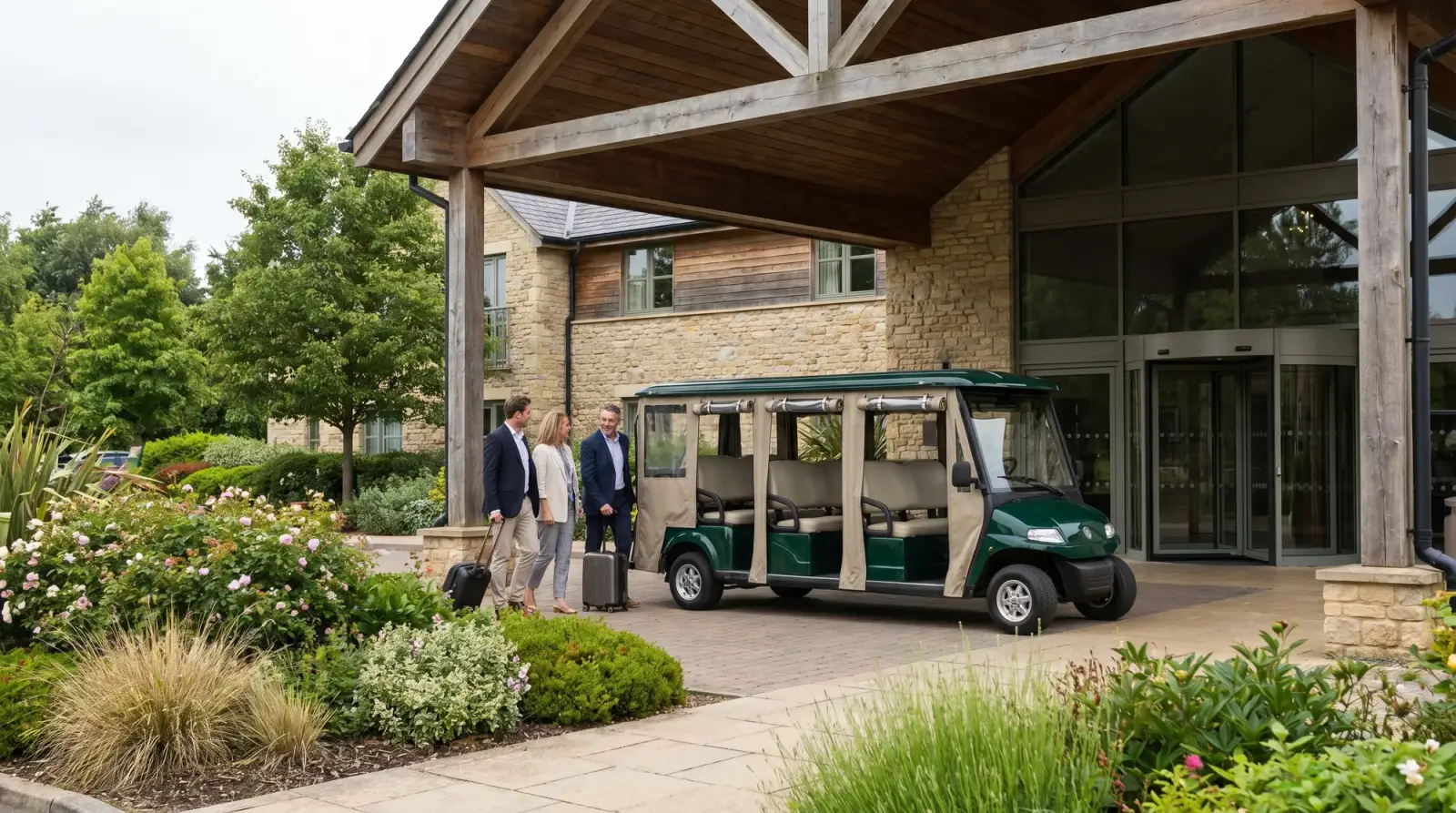
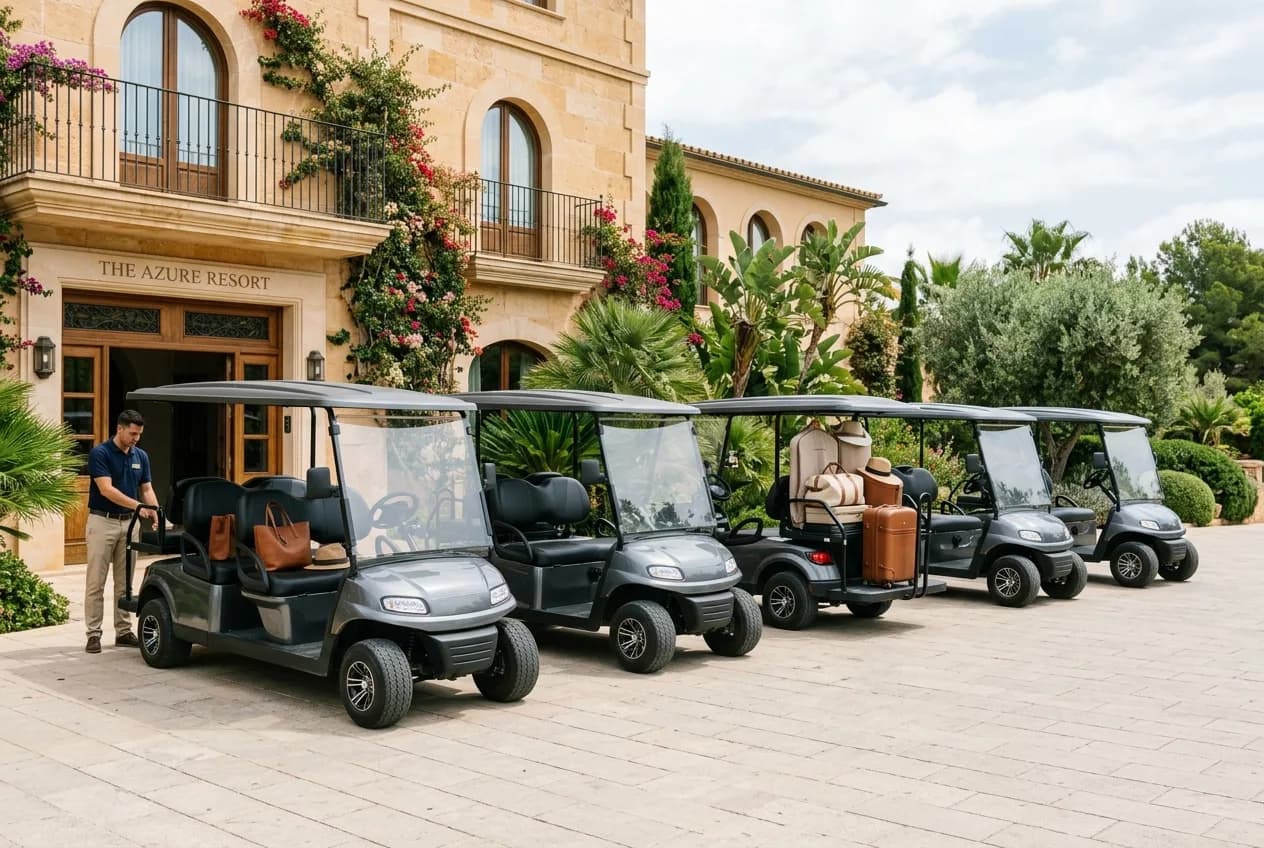
- Hotel shuttle buggies link an on-site resort hotel to the park gate, so guests arrive at the attraction fresh rather than footsore.
- The route is short and repetitive, lobby to gate and back, which is exactly the kind of loop electric vehicles run best.
- Plan for luggage on arrival and departure day, because that is when the shuttle earns its keep and when it gets busiest.
- Size the fleet around check-in and check-out peaks, not the average hour, or the queue forms at the worst possible moment.
- A quiet, branded shuttle reads as part of the welcome, and that first impression colours the whole stay.
At a large resort attraction with an on-site hotel, one of the most useful vehicles you will run never goes near a ride. It is the shuttle that carries guests from the hotel lobby to the park gate, and back again at the end of the day. The distance is rarely huge, but after a long drive, or a long day on your feet, the difference between a walk and a quiet lift is the difference between arriving fresh and arriving tired.
Hotel shuttle buggies sit in an easy-to-miss spot between the hotel operation and the park operation, and they often fall between the two when a site is being planned. That is a shame, because they shape the guest's first and last impression of the resort. This guide looks at how to plan the route, deal with luggage, and size the fleet around the peaks that actually matter.
Why an on-site hotel needs its own shuttle
A resort hotel is sold partly on convenience. The promise is that you stay on site, roll out of bed and you are at the gate before the day-trippers have found a parking space. A shuttle is what makes that promise real. Without one, even a few hundred metres between the lobby and the entrance turns into a trudge with children, bags and a pushchair, and the convenience you charged a premium for starts to feel thin.
There is also a flow argument. Hotel guests tend to arrive at the gate in waves, around opening and again after an afternoon break, and a shuttle keeps those waves moving rather than letting them back up on a footpath. Run the same loop in reverse at closing and you spare tired guests the worst walk of the day. Our guide to electric buggies for hotels and resorts covers the wider hospitality picture, but the gate link is the part that is specific to an attraction.
Designing the lobby-to-gate route
The good news is that this is one of the simplest routes a resort runs. It is short, fixed and predictable: out of the lobby, along a set path, drop at the gate, return. That predictability is what lets you run it tightly. Pick clear, sheltered pick-up and drop-off points, keep the path away from the busiest pedestrian crush where you can, and make the stops obvious so guests are not left wondering where to wait.
- A covered lobby pick-up, so a wait in the rain does not sour the start of the day.
- A gate drop-off close enough to the entrance that the last few steps are short.
- A path that avoids the worst pedestrian pinch points at opening.
- Clear, branded signage at both ends so the service feels official, not improvised.
- A return loop that works just as well tired and laden as it does fresh and empty.
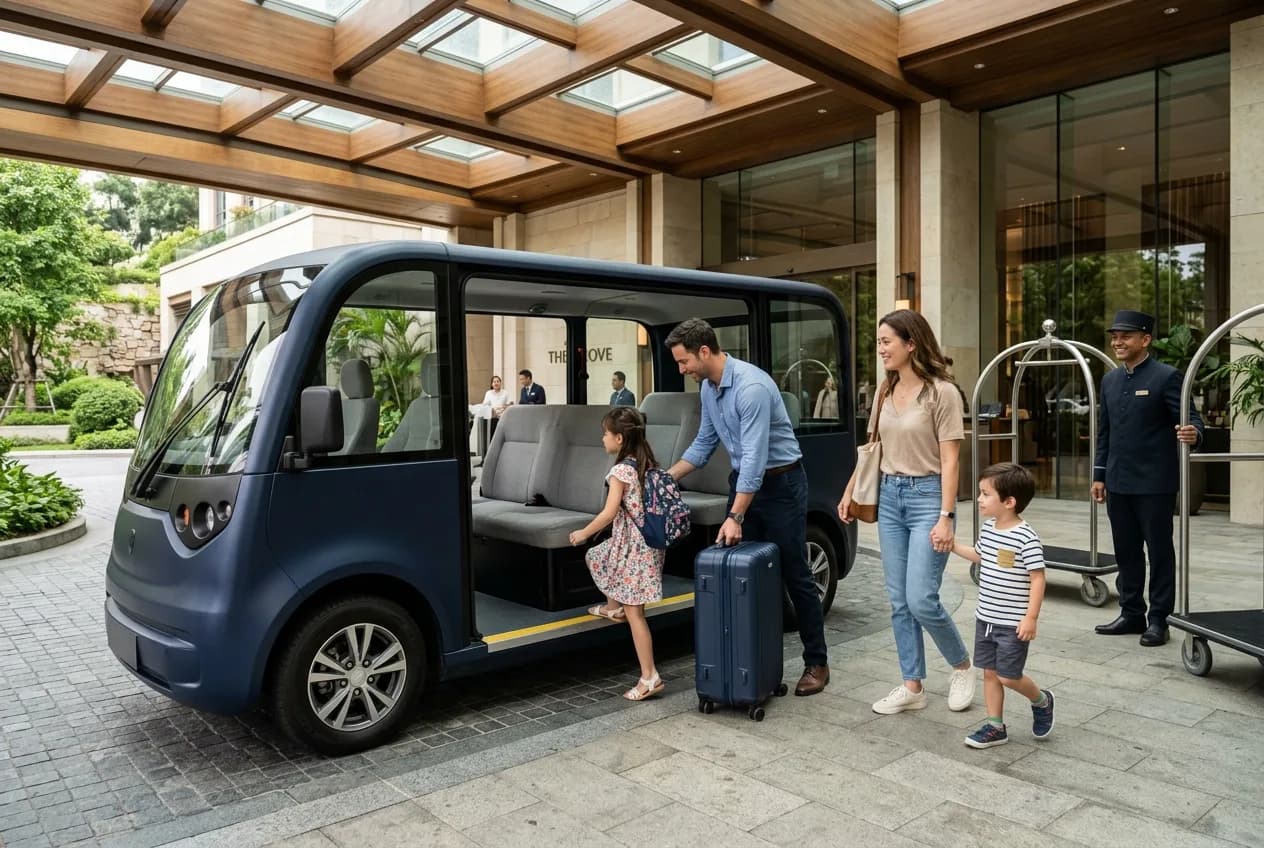
The luggage problem nobody plans for
On arrival and departure day the shuttle does a second job, and it is the one most easily overlooked. Guests checking in have cases, and guests checking out have cases plus whatever they bought during the stay. A people-mover with nowhere for a suitcase forces families to balance bags on their knees, which is uncomfortable and slow to load. Plan for luggage from the start and the whole arrival flows better.
In practice that means either a shuttle with a dedicated luggage area, or a small utility vehicle running alongside to carry bags from the lobby to the room block while guests ride separately. Either works; what matters is deciding early, because retrofitting luggage space onto a passenger fleet after the fact is awkward. Since every vehicle we build is made to order, the seat layout and load space can be set to suit the arrivals you actually expect.
Sizing around check-in and check-out peaks
Here is the mistake to avoid: sizing the shuttle for a typical hour. Hotel demand is spiky. Check-in clusters in the afternoon, check-out clusters mid-morning, and the gate run peaks hard around opening. Size for the average and you will be fine for most of the day and short at exactly the moments guests are forming their first and last impression of the resort.
- What is happening
- Check-out, guests heading home with bags
- Demand on the shuttle
- High, luggage-heavy
- What is happening
- Hotel guests pushing to the gate
- Demand on the shuttle
- Very high, short and sharp
- What is happening
- Check-in begins, day winds down
- Demand on the shuttle
- High, luggage-heavy
- What is happening
- Tired guests returning to rooms
- Demand on the shuttle
- Steady, lighter
| Period | What is happening | Demand on the shuttle |
|---|---|---|
| Mid-morning | Check-out, guests heading home with bags | High, luggage-heavy |
| Park opening | Hotel guests pushing to the gate | Very high, short and sharp |
| Afternoon | Check-in begins, day winds down | High, luggage-heavy |
| Evening close | Tired guests returning to rooms | Steady, lighter |
The method is the same one we use for any loop. Take the busiest realistic fifteen or thirty minutes, work out how many people need to move, divide by the seats per vehicle, and factor in how long a round trip takes including loading bags. That gives you the number of vehicles that keep the wait short when it matters. We cover the full approach in our people-movers and shuttles guide.
Why electric suits this loop in particular
A lobby-to-gate shuttle is close to the ideal use case for an electric vehicle. The loop is short, the speeds are low, and the daily mileage is modest, all of which a battery handles comfortably with charge to spare. Because it runs right past guests, the hotel frontage and outdoor dining, the near-silent drivetrain matters: there is no engine note or diesel fumes intruding on the welcome. And it charges overnight while the resort sleeps, ready for the morning rush.
There is a brand point too. A clean, quiet, well-finished shuttle in the resort's own livery reads as part of the experience. A clattering petrol cart does the opposite. When the shuttle is the first vehicle a guest steps into and the last one they leave, it is worth getting that detail right.
Shuttles built around your resort
From compact people-movers to luggage-ready builds, every vehicle is made to order, assembled and finished in the UK and finished in your livery, so the shuttle looks part of the welcome.
Fitting the shuttle into the wider resort fleet
The hotel shuttle rarely lives alone. A resort attraction usually runs a car-park-to-gate service for day visitors, accessible vehicles for guests with reduced mobility, and utility buggies behind the scenes. Planning the hotel shuttle as part of that whole picture means vehicles, chargers and livery line up, spares are shared, and the same support covers everything. It also means a guest who needs step-free access gets it on the hotel run as well as everywhere else, not just on the main loops.
If you are starting from a blank sheet, that integrated view is the cheap thing to get right early and the expensive thing to fix later. Tell us how the hotel sits relative to the gate and we will fold the shuttle into a fleet plan that works across the resort.
Planning a hotel-to-gate shuttle?
Tell us the distance from the lobby to the gate, the rooms you are filling and your check-in pattern. We will recommend the right shuttle and fleet size, branded as your own and built to order, assembled and finished in the UK.
Frequently asked questions
How far should a hotel shuttle run before it is worth it?+
There is no fixed distance. If guests would otherwise face a walk that feels long with children and bags, even a couple of hundred metres, a shuttle improves the arrival. The busier and more premium the resort, the lower that threshold tends to be.
Can the shuttle carry luggage as well as people?+
Yes. Because we build to order, a shuttle can include a dedicated luggage area, or you can run a small utility vehicle alongside to carry bags. We will suggest the right mix based on your arrival pattern.
How many shuttles does an on-site hotel need?+
It depends on room numbers and how sharply check-in, check-out and park opening peak. We size the fleet around those peaks rather than the average hour, so the wait stays short when it matters most.
Is electric practical for a shuttle running all day?+
Yes. A lobby-to-gate loop is short and low-speed, which suits a battery well. Vehicles run the operating day and charge overnight, with no fuel to store and far less servicing than petrol.
Can the shuttle match the resort's branding?+
Yes. Every vehicle is finished to order, so colour, livery and a logo can be applied. As the first and last vehicle a guest uses, it is worth having it look part of the resort rather than generic hire equipment.
Related solutions
Ready to explore what we build?
See the vehicles and the setting this applies to, or get a tailored quote built around your site.
Ready to find the right buggy?
Tell us how and where it will work and we will specify a vehicle and a tailored quote built around you. Every build comes with a 3-year warranty and a 24-hour priority call-out.
Our guides are written and reviewed by the Hawke Electric Vehicles team, the people who specify, build, deliver and support the vehicles. We focus on honest, practical advice and flag where a figure depends on the build rather than guessing.
More guides by Hawke