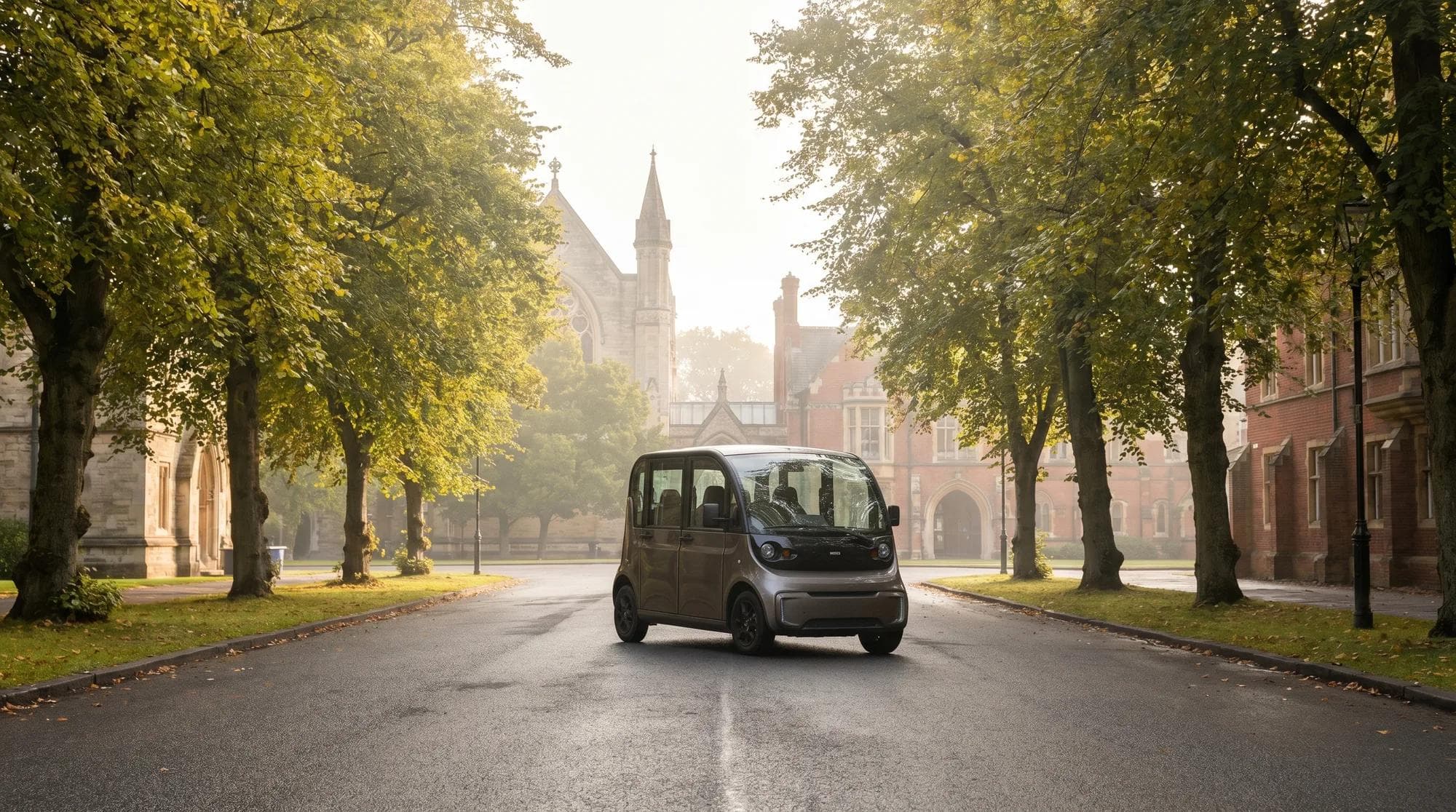
A large campus is a small town that nobody can park in. Staff cross it on foot carrying tools they shouldn't be carrying that far, grounds teams haul kit between buildings, and a visitor with limited mobility faces a walk that puts them off coming at all. A campus utility vehicle solves the everyday version of all three. This guide is honest about where an electric buggy fits, and where it doesn't, for a university or college estate.
Where a campus utility vehicle fits, and where it doesn't
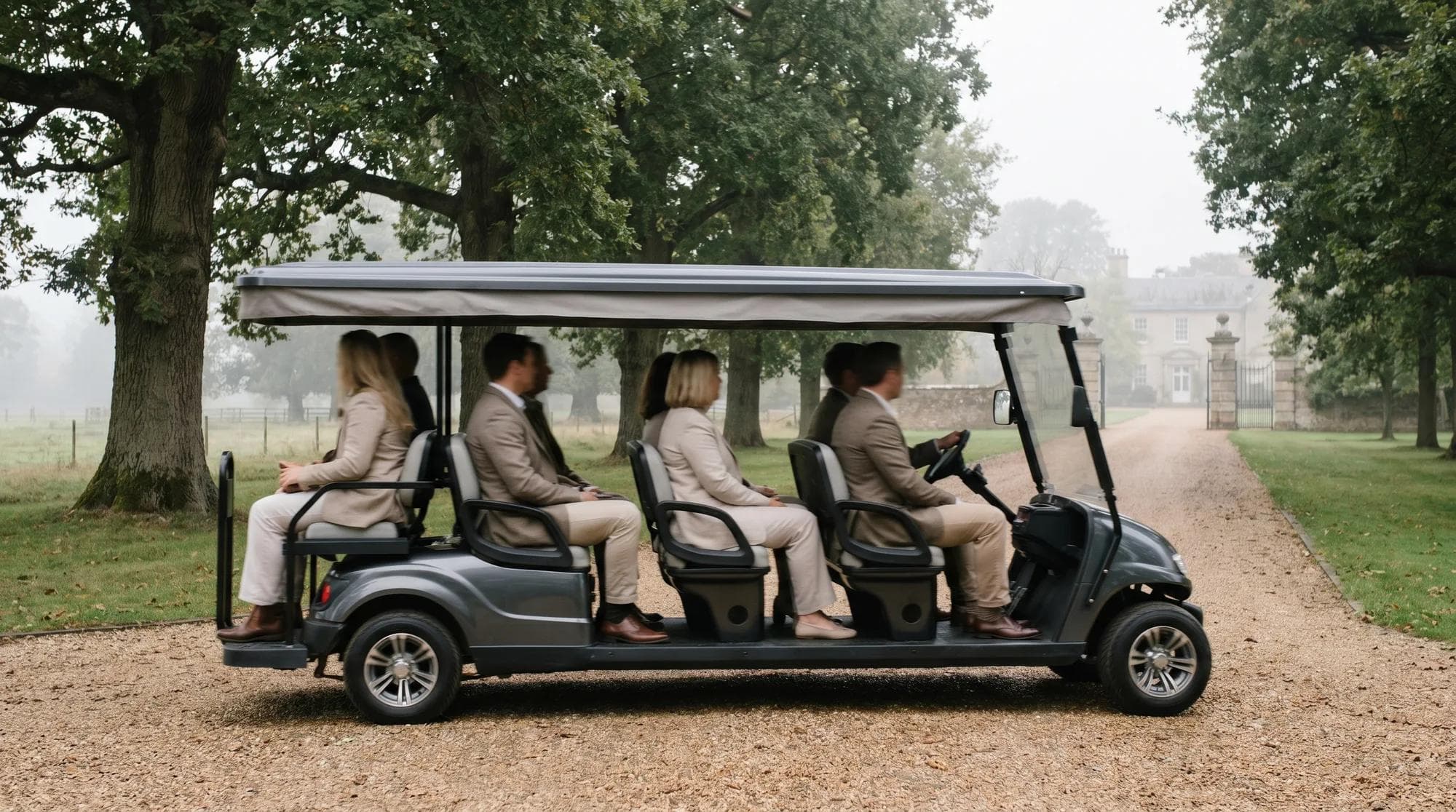
Let's be straight first. If you need to move hundreds of students between distant halls and lecture blocks on a timetable, that's a shuttle-bus job, and it's a different product with different rules. A buggy fleet isn't that. What it does brilliantly is the close-in work: facilities and grounds, security patrol, accessibility and visitor transport, and short hops between buildings on a compact site. Think of it as the vehicle that does the jobs a van is too big for and walking is too slow for.
On a compact campus, or for inter-building runs on a larger one, the maths is simple. A quiet electric vehicle that carries two to eight people, or a load of kit, across private paths and service roads saves hours of staff time every week. For a clearer view of the people-moving end, our electric people movers and shuttles guide sets out where a multi-seat buggy stops and a true shuttle begins.
Facilities and grounds: the daily workhorse
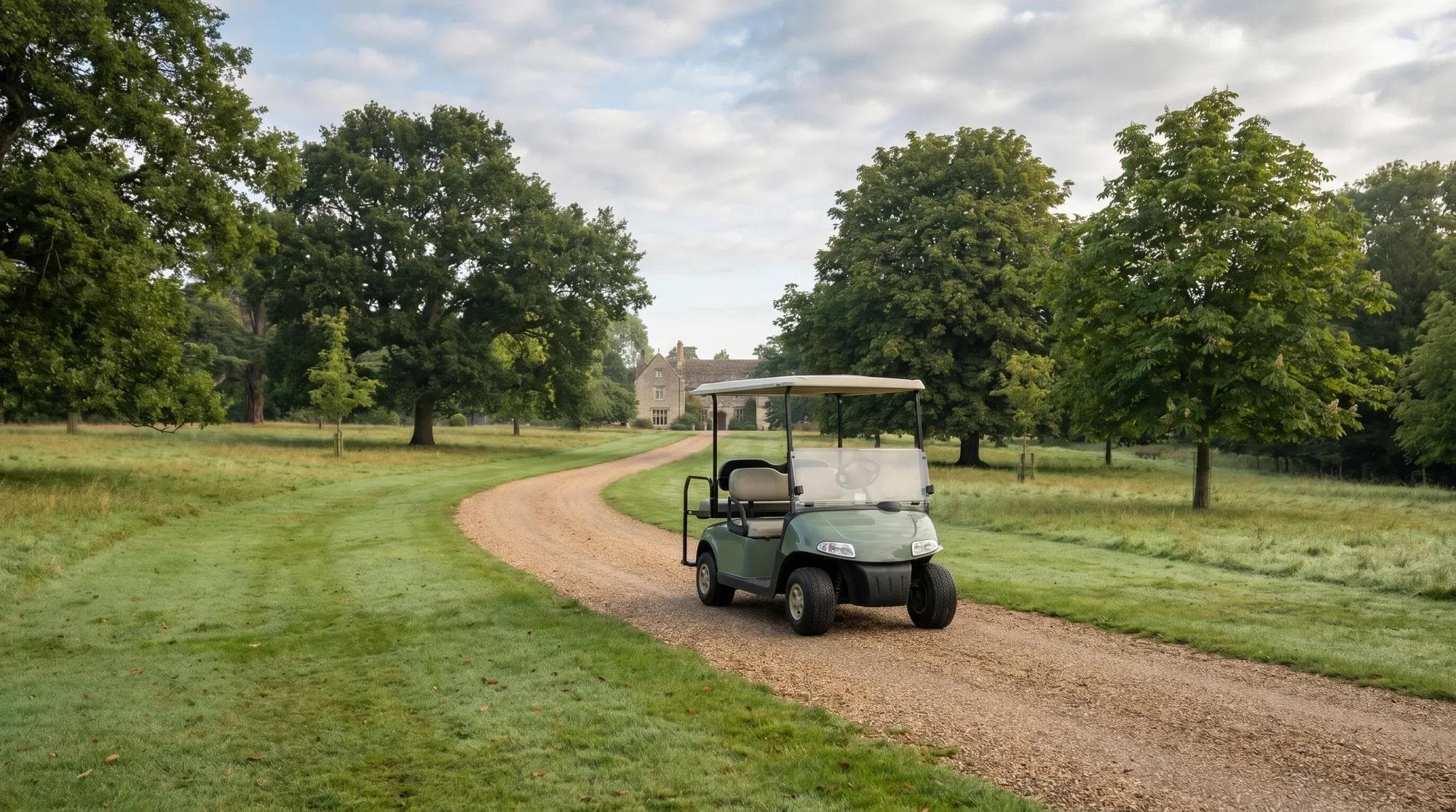
This is where most campus buggies spend their lives. A utility model, the Hawke S2 Pickup in our range, carries tools, post, cleaning kit, signage and a maintenance team across a site without the noise of a petrol vehicle or the bulk of a van. Grounds teams use it for everything from moving strimmers and bags of feed to towing a small trailer between jobs. It keeps people off their feet and gets the heavy stuff to where the work is.

The case for electric is strongest here. A buggy that runs through a working day with no fumes can go indoors, through covered walkways and past lecture halls in session without complaint. There's far less to service than a petrol equivalent, which matters for a team that's already stretched. The big lever on running cost and uptime is the battery, so it's worth getting that choice right.
Security patrol after dark
Campus security is the other obvious fit. A patrol buggy lets officers cover a large site quickly, respond faster, and stay visible without the noise of an engine announcing them from two buildings away. Quiet matters for security: you want to approach a situation, not broadcast it. Add work lighting, a beacon, radio mounts and clear signage at the build stage, and the vehicle becomes a proper patrol tool rather than a borrowed grounds buggy.
Quiet matters for security: you want to approach a situation, not broadcast it from two buildings away.
Battery choice earns its keep on security duty too. A patrol that runs across a long night shift needs range and the option of a quick top-up between rounds, which is where lithium pulls ahead of lead-acid. Spec the lighting and the battery for the shift, not the brochure.
Accessibility and visitor transport
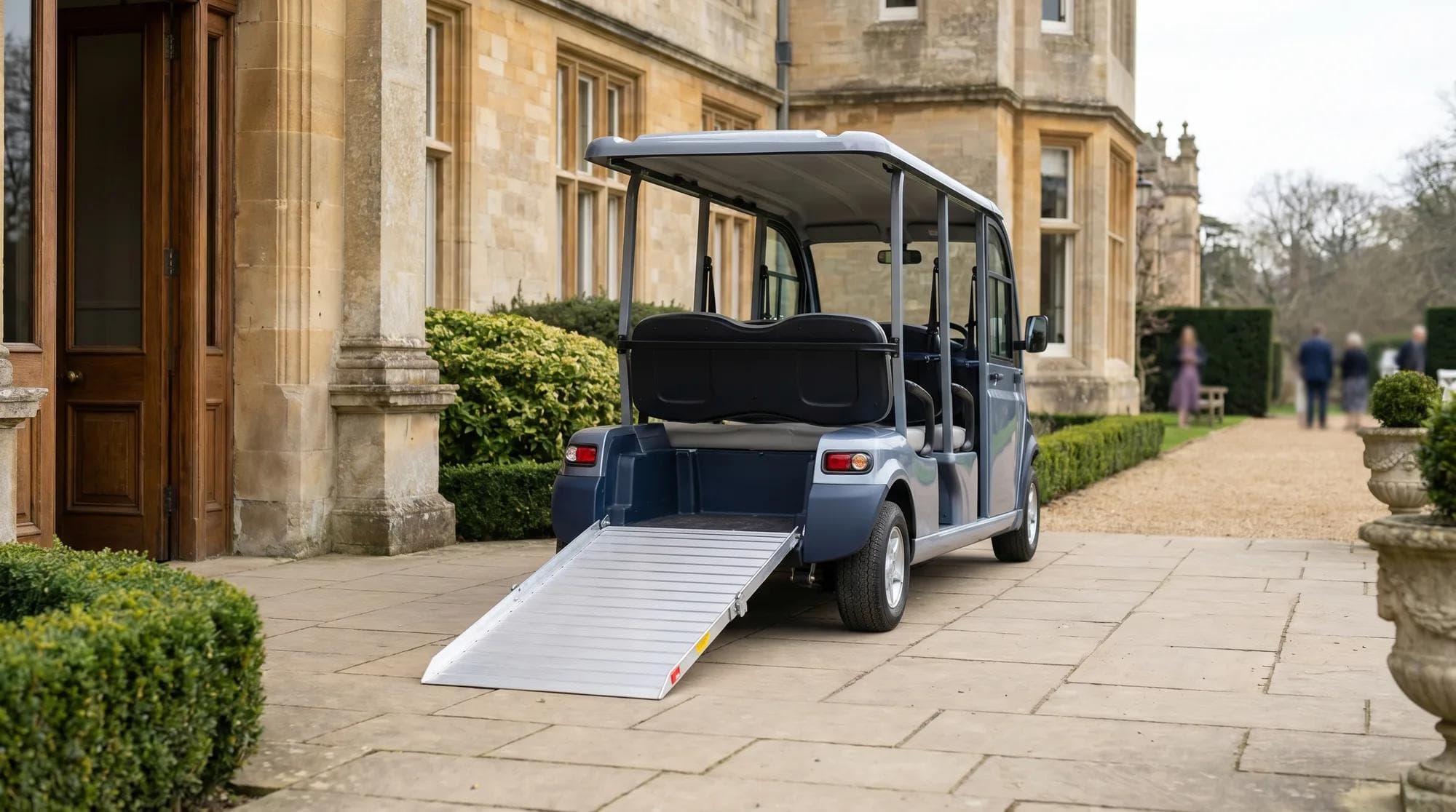
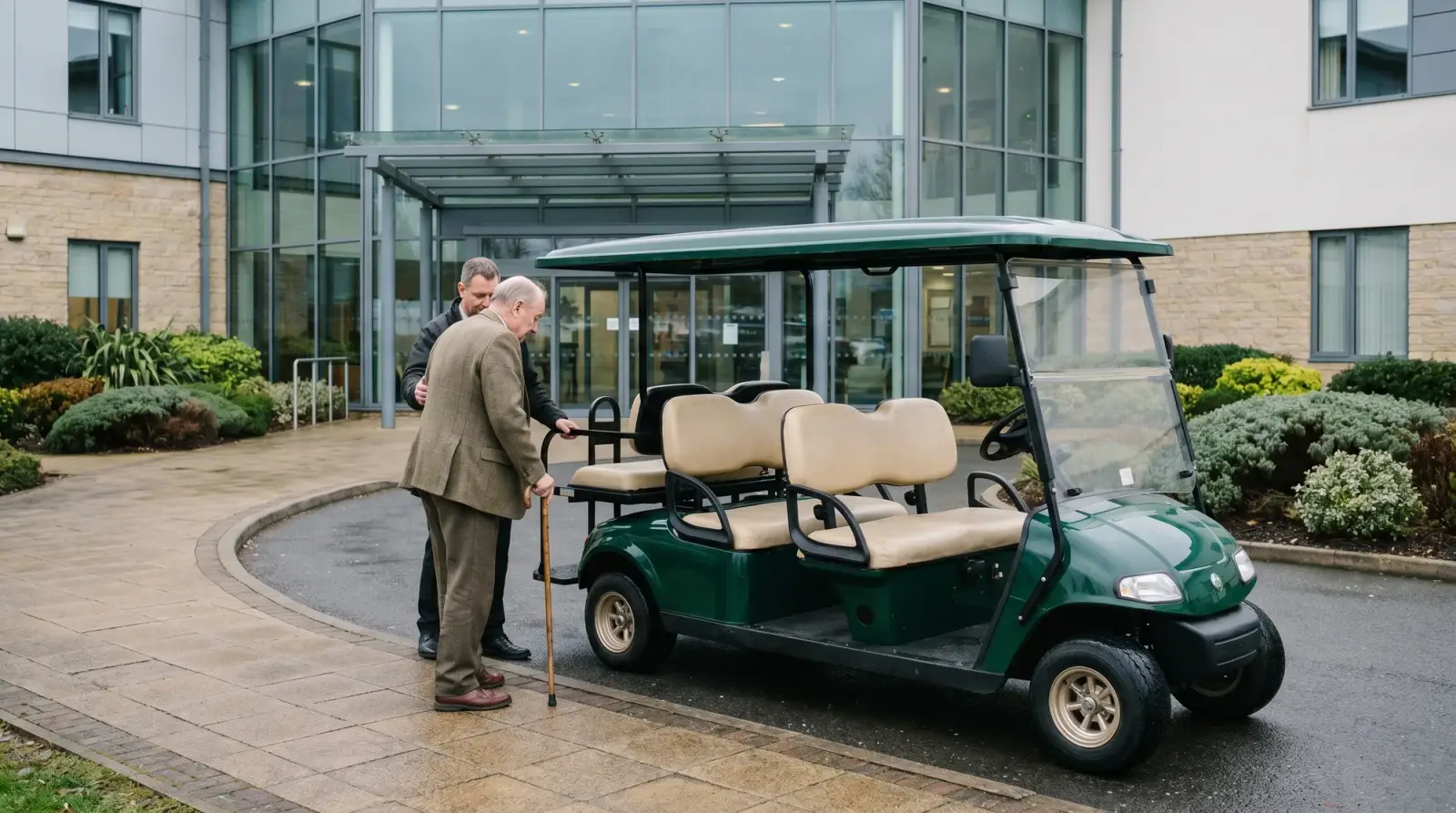
This is the part that often surprises estates teams once they have a buggy on site. A long walk across an open campus is a real barrier for staff, students and visitors with limited mobility, and an accessible buggy turns that barrier into a two-minute lift. Open days, graduations, conferences and exam periods all create moments where getting someone comfortably from a car park to a building is the difference between a good visit and a struggle.
If wheelchair access is part of the brief, it has to be designed in, not added later. A vehicle with a ramp and a proper securing position is a different build from a standard passenger buggy. Our accessible and wheelchair electric buggies guide explains what to specify and the questions to ask before you buy. Get it specified up front and the same fleet that moves kit on a Tuesday moves a visitor with dignity on a Saturday.
Sustainability and the recruitment story
Universities take net-zero seriously, and rightly so, because students and funders increasingly ask about it. An electric buggy fleet is a small but visible piece of that picture. It removes a clear source of on-site emissions and noise, which is exactly the kind of tangible action a sustainability commitment needs. It's easy to explain in an environmental report and easy for people on campus to see for themselves.
Be careful not to oversell it. The honest claim is no exhaust emissions where the buggy operates, lower noise, and cleaner air around buildings, not a precise carbon figure you haven't measured. Our environmental benefits guide sets out the defensible version of the case, the one that survives a hard question. A quiet, clean, branded fleet also reads well on an open day, when prospective students and parents are forming a first impression of the place.
Branding the fleet
A campus buggy is a moving billboard whether you plan it or not, so plan it. Custom fleet branding in the university's colours, with the crest or logo, turns a working vehicle into part of the visual identity. It also matters practically: a clearly branded buggy reads as official, which helps for security patrols and for staff directing visitors. We build branding in at the factory rather than wrapping it on afterwards, so it looks right and lasts.
Charging across a campus
Charging is the question that decides how smoothly a fleet runs day to day. Most campuses charge buggies overnight at a central facilities depot or in a vehicle store, from a standard supply, so a full charge is ready each morning. For a fleet that runs hard across long days, plan a charging point or two near where the vehicles rest between jobs, so a top-up is easy.
Battery choice shapes all of this. Lithium charges faster, takes a partial top-up without harm and lasts far longer, which suits a fleet that can't always wait for a full overnight charge. Lead-acid is cheaper to buy but heavier, slower and shorter-lived. For a working campus fleet, lithium almost always wins once you count the replacement cycles.
Sizing the fleet: a quick guide
There's no single right buggy for a campus, because the jobs differ. Most estates end up with a mix. Here's a rough way to map use to model and budget.
- Best for
- Security patrol, quick staff runs
- Best for
- Facilities and grounds, tools and cargo
- Best for
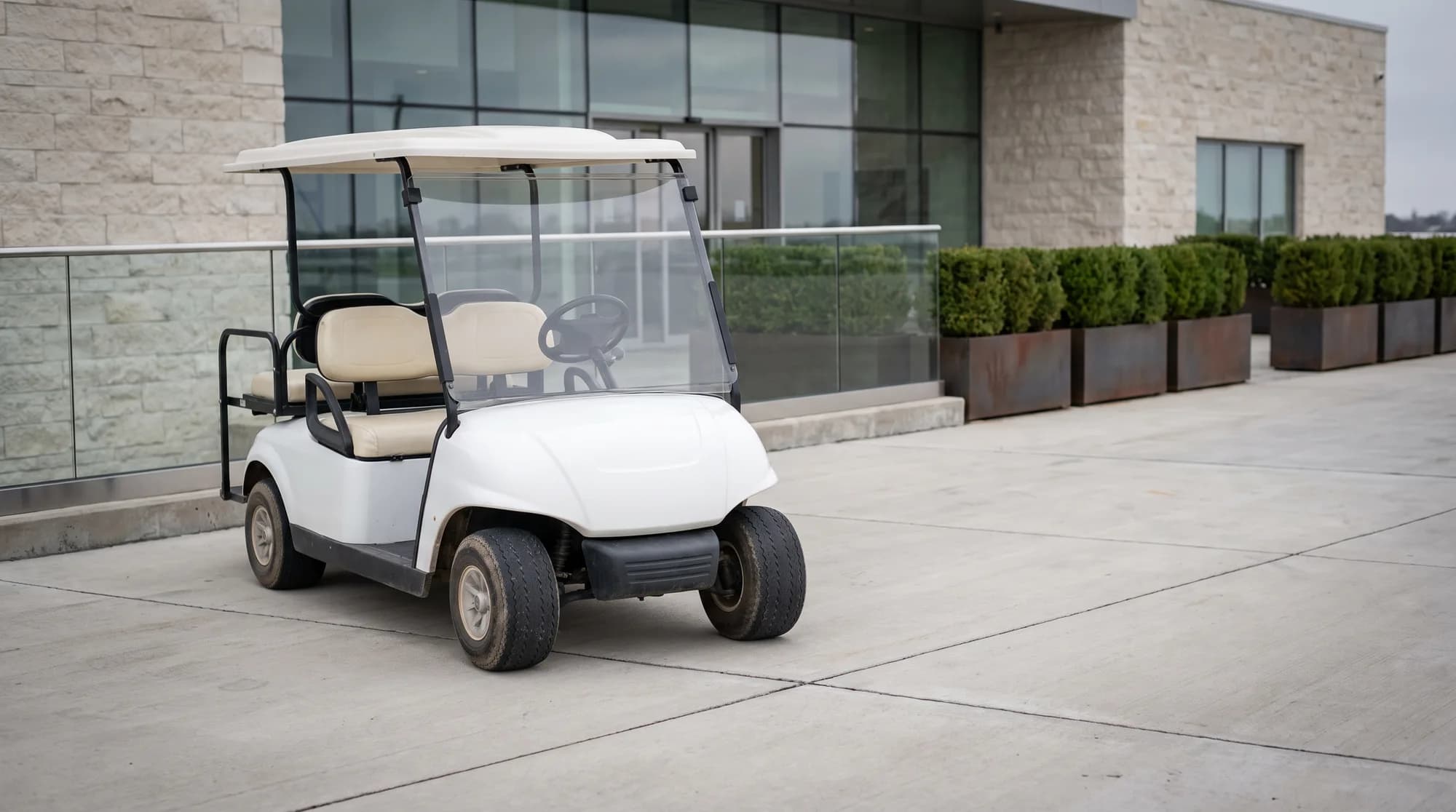
- Visitor and staff transport, small groups
- Best for
- Open days, group visitor runs
- Best for
- Inter-building transport on compact sites
- Best for
- Accessible builds, patrol fit-out
| Best for | |
|---|---|
| Two seater (the Hawke S2) | Security patrol, quick staff runs |
| Utility (the Hawke S2 Pickup) | Facilities and grounds, tools and cargo |
| Four seater (the Hawke S4) | Visitor and staff transport, small groups |
| Six seater (the Hawke S6) | Open days, group visitor runs |
| Eight seater (the Hawke S8) | Inter-building transport on compact sites |
| Bespoke | Accessible builds, patrol fit-out |
Every vehicle is built to order, so the fleet is specified around your campus rather than picked off a shelf. You can see the working end of the range on the utility buggy page, and we'll help you balance the mix when you enquire.
How to get a campus fleet specified
Buying starts with a conversation, not a checkout. Tell us the size of your site, the jobs the fleet has to do, whether accessibility or patrol fit-out is in scope, and how you'd like it branded. We'll specify the vehicles, confirm a tailored price, and arrange delivery and commissioning. Every build comes with a 3-year warranty and a 24-hour VIP call-out, which matters when a vehicle is part of how your estate runs.
Build a campus fleet around your estate
Tell us your site, your jobs and your branding and we'll specify an electric fleet built around you, with a tailored quote. Every vehicle is built to order.
Frequently asked questions
What is a campus utility vehicle?+
It's a small electric vehicle used to move staff, kit and people across a large site like a university or college. On campus it handles facilities and grounds work, security patrols, accessibility lifts and short hops between buildings, jobs a van is too big for and walking is too slow for. It runs on private paths and service roads rather than public roads.
Can a buggy replace a campus shuttle bus?+
Not for a high-volume, timetabled shuttle network moving hundreds of students; that's a different product with different rules. A multi-seat buggy works well for inter-building transport on compact sites and for visitor and group runs, but a large-scale shuttle operation needs a purpose-built shuttle bus.
Are electric buggies good for campus security patrols?+
Yes. They let officers cover a large site quickly and quietly, respond faster and stay visible. Spec work lighting, a beacon, radio mounts and clear signage at the build stage, and choose lithium for the range and quick top-ups a long night shift needs.
Can a campus buggy carry wheelchair users?+
It can, but it has to be designed for it. An accessible buggy with a ramp and a proper securing position is a different build from a standard passenger model, so specify it up front rather than adding it later. Our accessible buggies guide covers what to ask for.
How do you charge a fleet of campus buggies?+
Most campuses charge overnight at a central facilities depot from a standard supply, so each vehicle is ready in the morning. For fleets that run long days, add a charging point or two near where the buggies rest. Lithium suits campus use because it charges faster and takes partial top-ups.
Can campus buggies be branded in our university colours?+
Yes. We build custom fleet branding in your colours with your crest or logo at the factory, not as an afterthought wrap. A clearly branded fleet reads as official, which helps security and visitor-facing work, and looks the part on open days.
Related solutions
Ready to explore what we build?
See the vehicles and the setting this applies to, or get a tailored quote built around your site.

Ready to find the right buggy?
Tell us how and where it will work and we will specify a vehicle and a tailored quote built around you. Every build comes with a 3-year warranty and a 24-hour priority call-out.
Our guides are written and reviewed by the Hawke Electric Vehicles team, the people who specify, build, deliver and support the vehicles. We focus on honest, practical advice and flag where a figure depends on the build rather than guessing.
More guides by Hawke