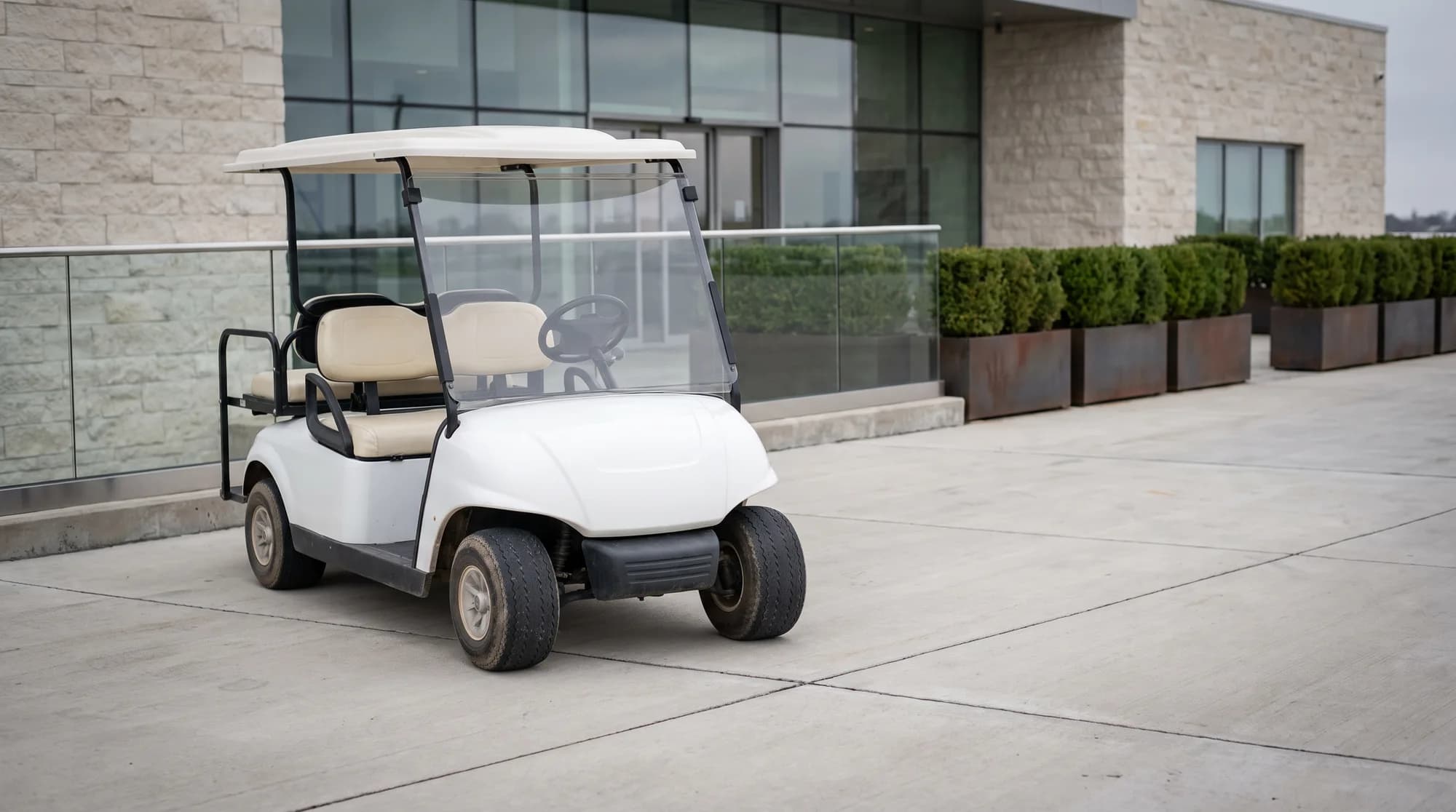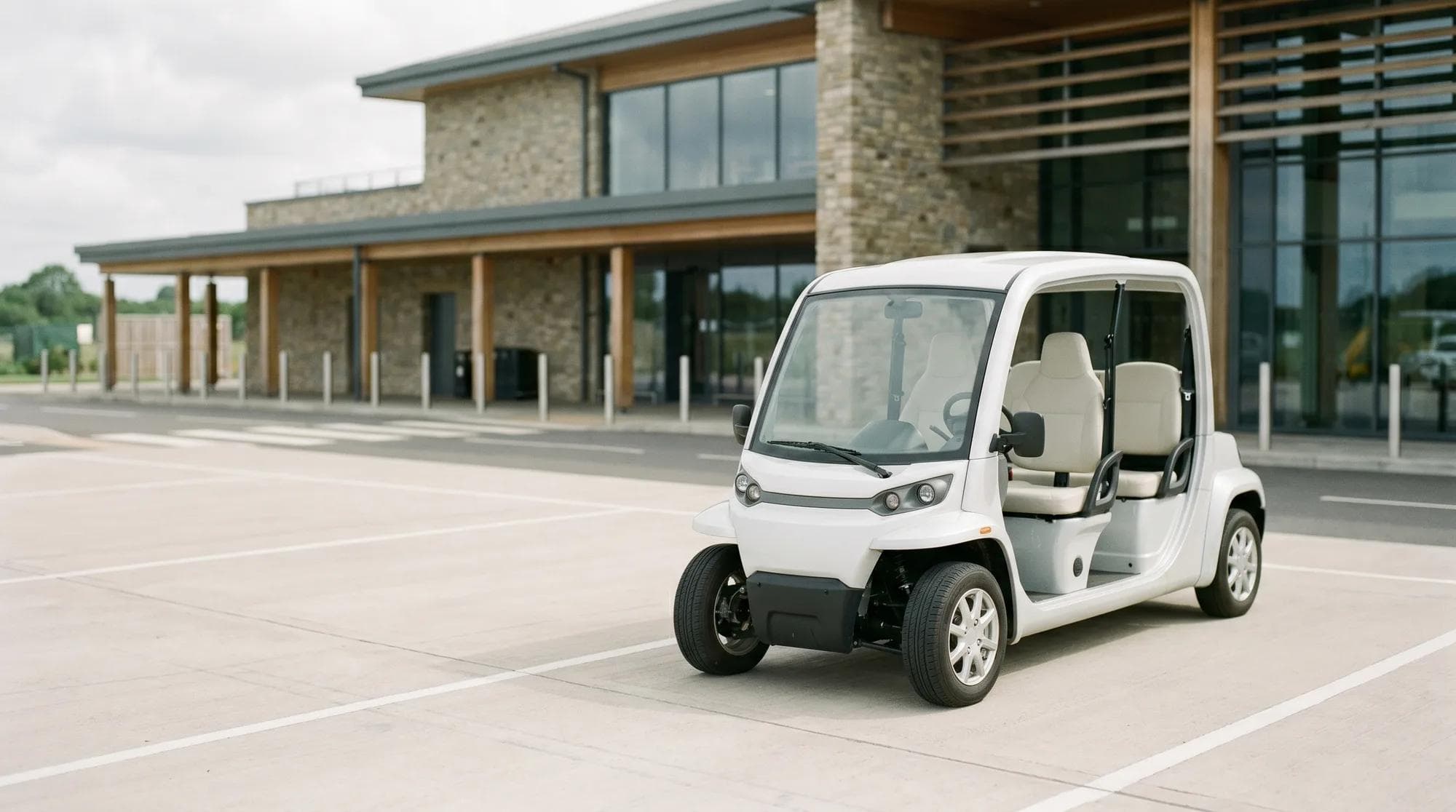
Airports run on distance. A traveller can walk a mile inside a single terminal, and a ground crew can cover far more across the apron in a shift. An electric airport passenger transport vehicle takes the slog out of that: it moves people, crew and equipment quietly, with no exhaust fumes near aircraft or doors, and very little to service. This guide sets out where a buggy fits at an airport, what it does well, and the jobs it isn't the right tool for.
Where electric buggies fit in airport passenger transport
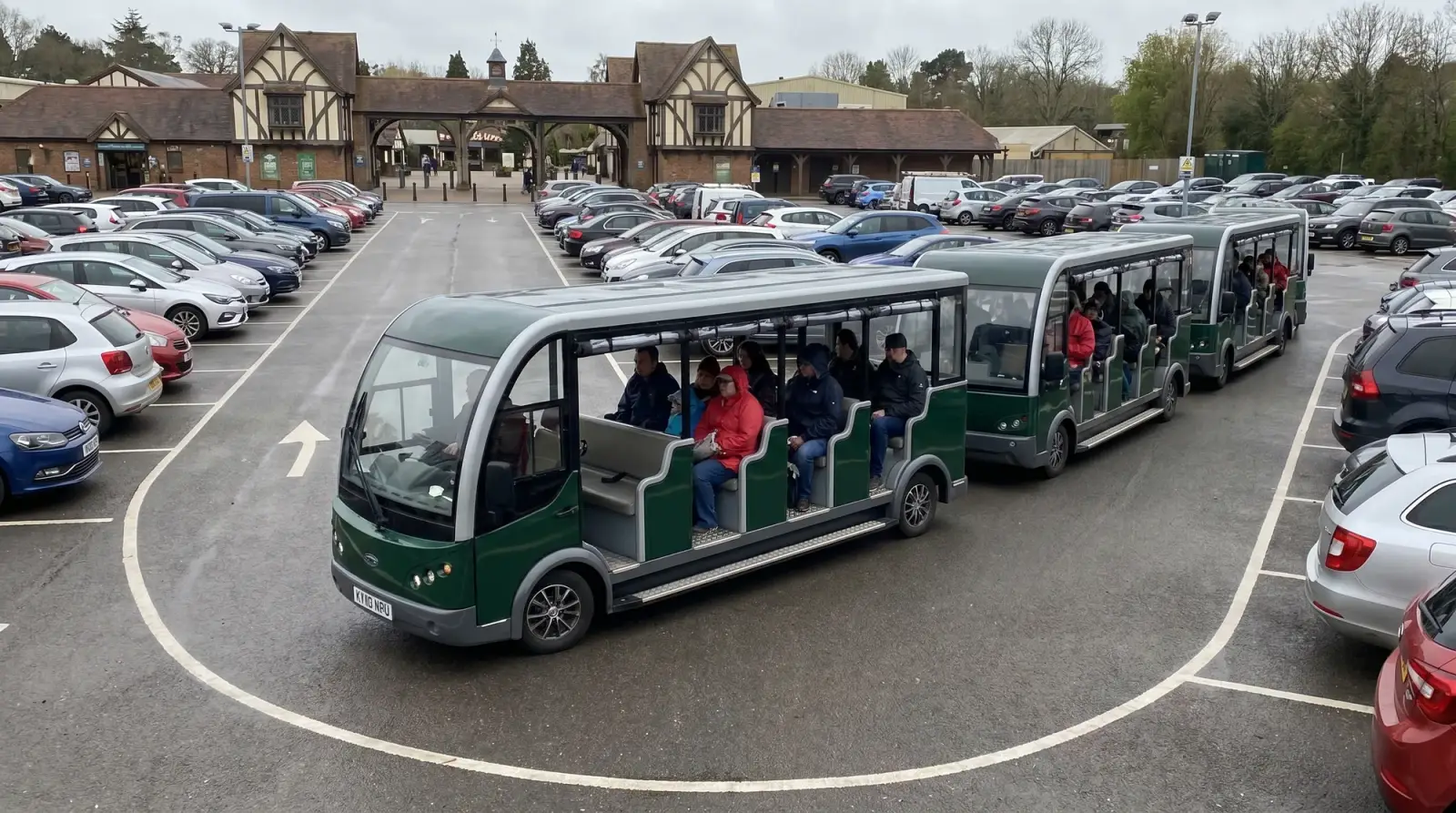
Not every airport transport job is the same, so it helps to be specific about ours. We're strong on the buggy and visitor-transport slice: moving small groups, staff and kit across paths, forecourts and apron, mostly outdoors. Where we're honest is the rest. Purpose-built indoor vehicles for passengers with reduced mobility are a specialist's stronghold, and the largest terminal trams that haul big crowds the length of a concourse run well beyond our eight-seat top end. If you need either of those, that's a different supplier and a different vehicle, and we'll tell you so rather than oversell.

Passenger transport or operations: two different jobs
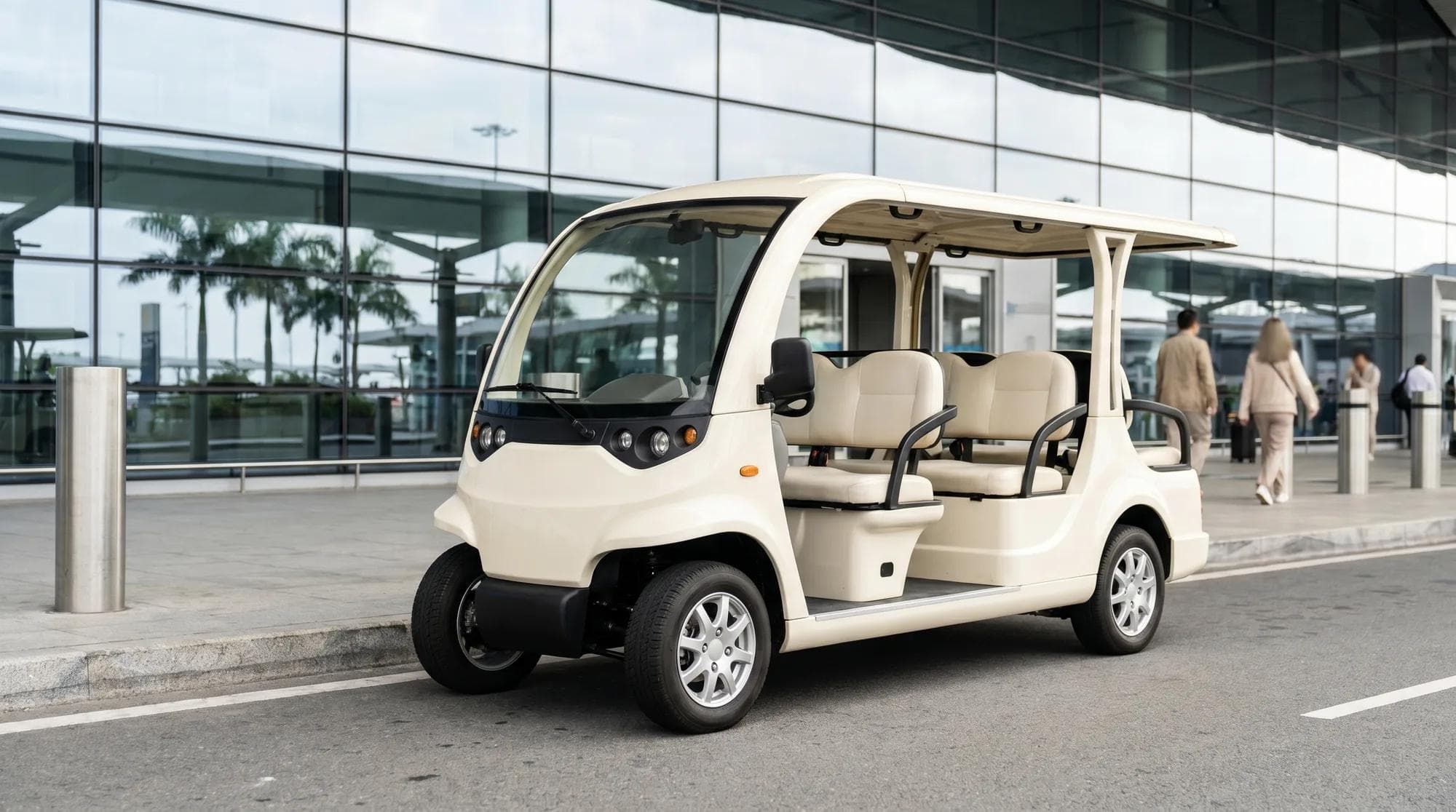
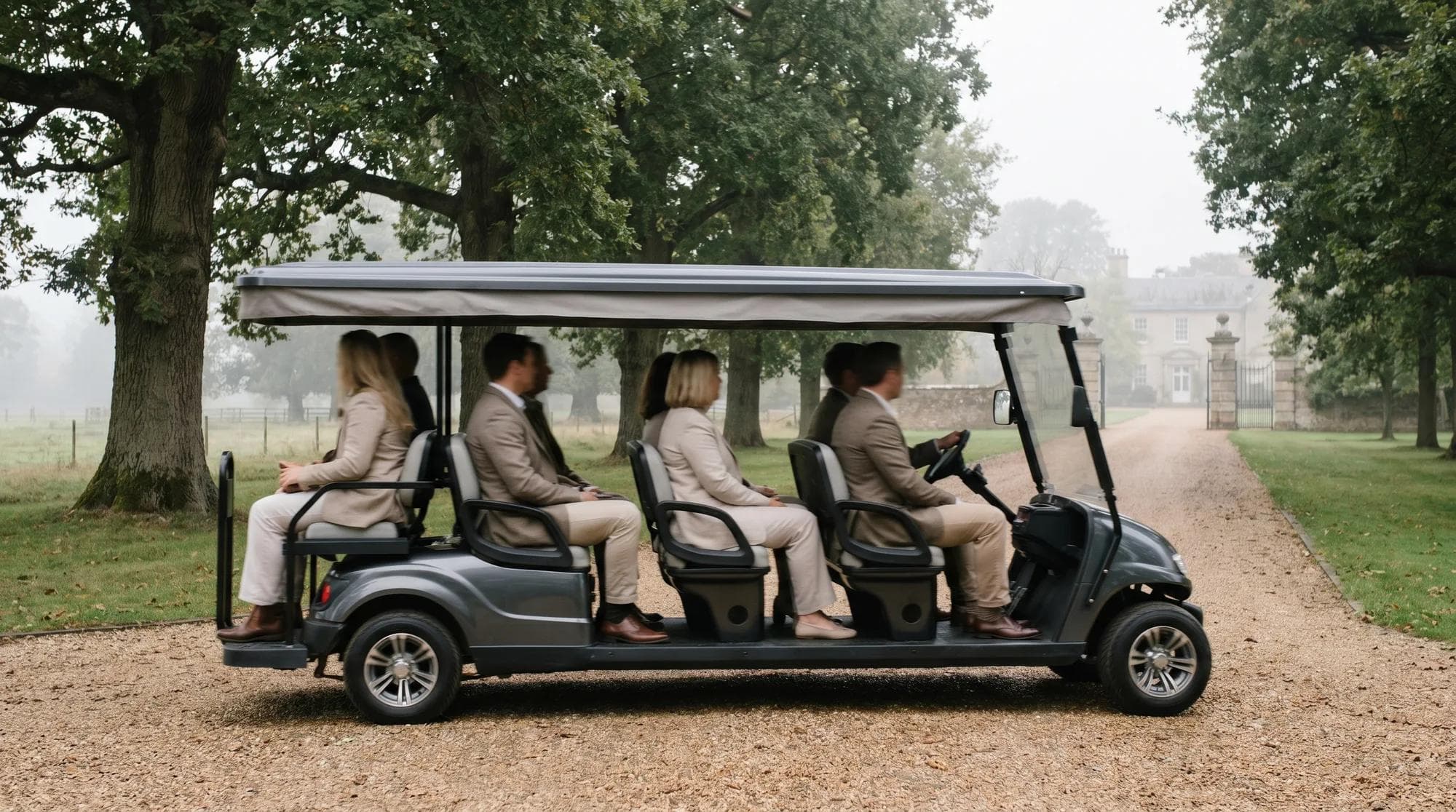
Most airport buggy use splits into two camps, and the right specification looks different for each. Passenger transport is about comfort, easy boarding and a clean, on-brand look: think a forecourt shuttle, a run between a car park and the door, or moving a group of guests at a private terminal. Operations is about getting work done: moving crew between stands, carrying tools, parts and small loads across a large airside area, and doing it shift after shift in all weather.
- Passenger transport
- Comfort and presentation
- Operations transport
- Payload, durability, uptime
- Passenger transport
- Four, six or eight seater
- Operations transport
- Utility, with cargo bed
- Passenger transport
- Premium, branded, neat
- Operations transport
- Hard-wearing and practical
- Passenger transport
- Forecourt, paths, kerbside
- Operations transport
- Apron, perimeter, back-of-house
- Passenger transport
- [The Hawke S8](/range/8-seater-electric-golf-buggy-hawke-s8) eight seater
- Operations transport
- The Hawke S2 Pickup utility
| Passenger transport | Operations transport | |
|---|---|---|
| Priority | Comfort and presentation | Payload, durability, uptime |
| Typical model | Four, six or eight seater | Utility, with cargo bed |
| Finish | Premium, branded, neat | Hard-wearing and practical |
| Where it works | Forecourt, paths, kerbside | Apron, perimeter, back-of-house |
| Best fit | [The Hawke S8](/range/8-seater-electric-golf-buggy-hawke-s8) eight seater | The Hawke S2 Pickup utility |
Plenty of airports run both. A branded shuttle out front to move people, and a workmanlike utility buggy out back to keep the operation ticking. Because every vehicle is built to order, we specify each one for the job rather than handing you a one-size compromise.
Why electric, and why it matters near aircraft
Electric makes particular sense in an airport setting. There are no exhaust fumes, which matters near doors, jet bridges and inside any covered area. The drive is quiet, so it doesn't add to an already noisy environment or drown out radio chatter on the apron. Running costs are low, and there's far less to service than a petrol equivalent, which keeps a working fleet available. For a busy operation that runs long days, that uptime is often worth more than the headline price.
Every vehicle is built to order, with pricing on request: battery choice, roof, weather protection, wheels and fleet branding set the figure. We deliver worldwide, so an airport overseas is no obstacle.
Safety in a busy airport environment
An airport is one of the more demanding places a buggy can work. Pedestrians, vehicles, aircraft and tight schedules all share the same space, and visibility and control matter more than usual. None of that is unique to airports, but it does raise the bar on how a vehicle is specified and how it's driven. Speak to us about the conditions on your site and we'll build to suit, from lighting and high-visibility finish to roof and weather protection for year-round outdoor use.
What about passengers with reduced mobility (PRM)?
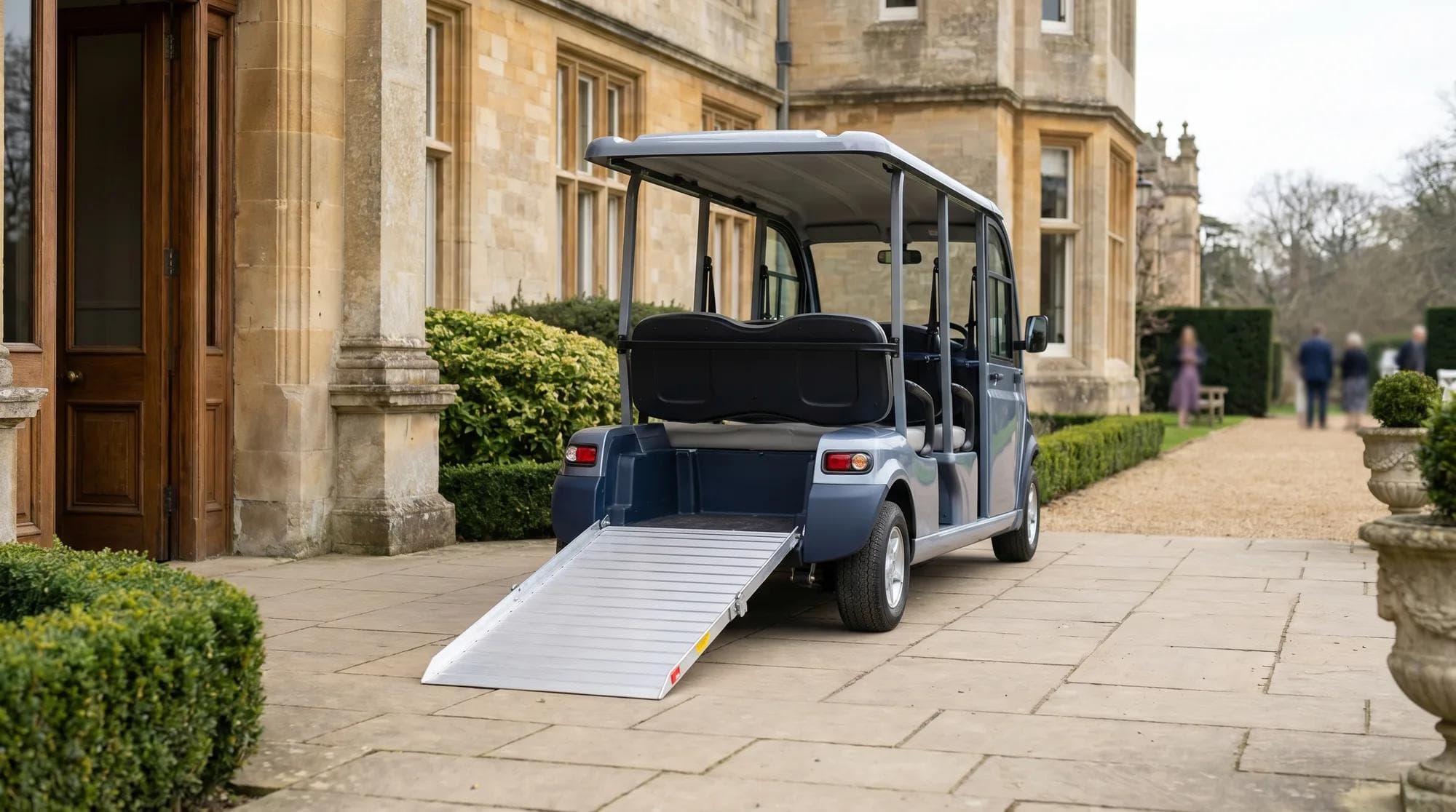
This is the question we get asked most, and it deserves a straight answer. Assisting passengers with reduced mobility through a terminal is a specialist job, and dedicated indoor PRM vehicles are built around it. That's not our strongest slice. Our angle is the outdoor, apron and visitor-transport side. Where accessibility crosses into our world, for example a wheelchair-accessible buggy for moving guests around an estate-style site or a private terminal, we can help. We cover the detail in our airport PRM transport and accessible vehicles guide, and our accessible and wheelchair electric buggies guide explains what's possible on our platforms.
The honest line: if your need is moving passengers with reduced mobility through a busy terminal, talk to a PRM specialist first. If your need is accessible, outdoor passenger transport across a site, that's a conversation we're glad to have. We'd rather point you to the right vehicle than fit a square peg to a round hole.
We'd rather point you to the right vehicle than oversell ours into a job it doesn't suit.
Branding and a consistent fleet
A buggy on an airport forecourt is seen by thousands of people a day, so it's part of the airport's image whether you plan it that way or not. Custom fleet branding lets you put your colours and identity on every vehicle, so a passenger shuttle looks like it belongs to you rather than borrowed from anywhere. For a group of vehicles, that matched, on-brand look is worth specifying from the start rather than retrofitting later.
How to specify an airport fleet
Start with the job, as always. Tell us whether it's passenger transport, operations, or both, where the vehicles will work (forecourt, paths or apron), how hard they'll run, and any airport rules they need to meet. We'll specify the right models, confirm a tailored price and arrange delivery and commissioning, in the UK or worldwide. You can see the sector picture on our airports page, or look at the Hawke S8 eight seater if a shuttle is what you have in mind.
Specify an airport transport fleet
Tell us how and where the vehicles will work, passenger, operations or both, and we'll specify the right models and a tailored quote built around your airport.
Frequently asked questions
What is an airport passenger transport vehicle?+
It's a vehicle used to move travellers, crew and equipment across an airport, where distances are long. Electric buggies suit the visitor and staff-transport slice well, especially outdoors on forecourts, paths and apron. The largest indoor terminal trams and dedicated PRM vehicles are a separate, specialist category.
Can electric buggies be used airside at an airport?+
They can, but airside operation sits under the airport operator's own rules, including driver training, vehicle marking, lighting and access permissions. Confirm those requirements with your airport before specifying, and we'll build the vehicle to suit the conditions you describe.
Are buggies suitable for passengers with reduced mobility?+
Assisting passengers with reduced mobility through a busy terminal is a specialist job best served by dedicated indoor PRM vehicles. For accessible, outdoor passenger transport across a site, we can help. See our airport PRM and accessible electric buggies guides for the detail, and tell us your exact need.
How many people can an airport shuttle buggy carry?+
Our largest standard buggy, the Hawke S8, seats eight, which suits forecourt shuttles and group runs. For bigger passenger flows we also build the Hawke P11, P14 and P23 people movers, seating eleven to twenty-three, and the T42 road train for the largest sites.
How much does an airport transport buggy cost?+
Every vehicle is a new, premium build priced on request. Battery, weather protection, lighting and fleet branding all move the figure. We deliver worldwide, so request a tailored price for your fleet.
Related solutions
Ready to explore what we build?
See the vehicles and the setting this applies to, or get a tailored quote built around your site.
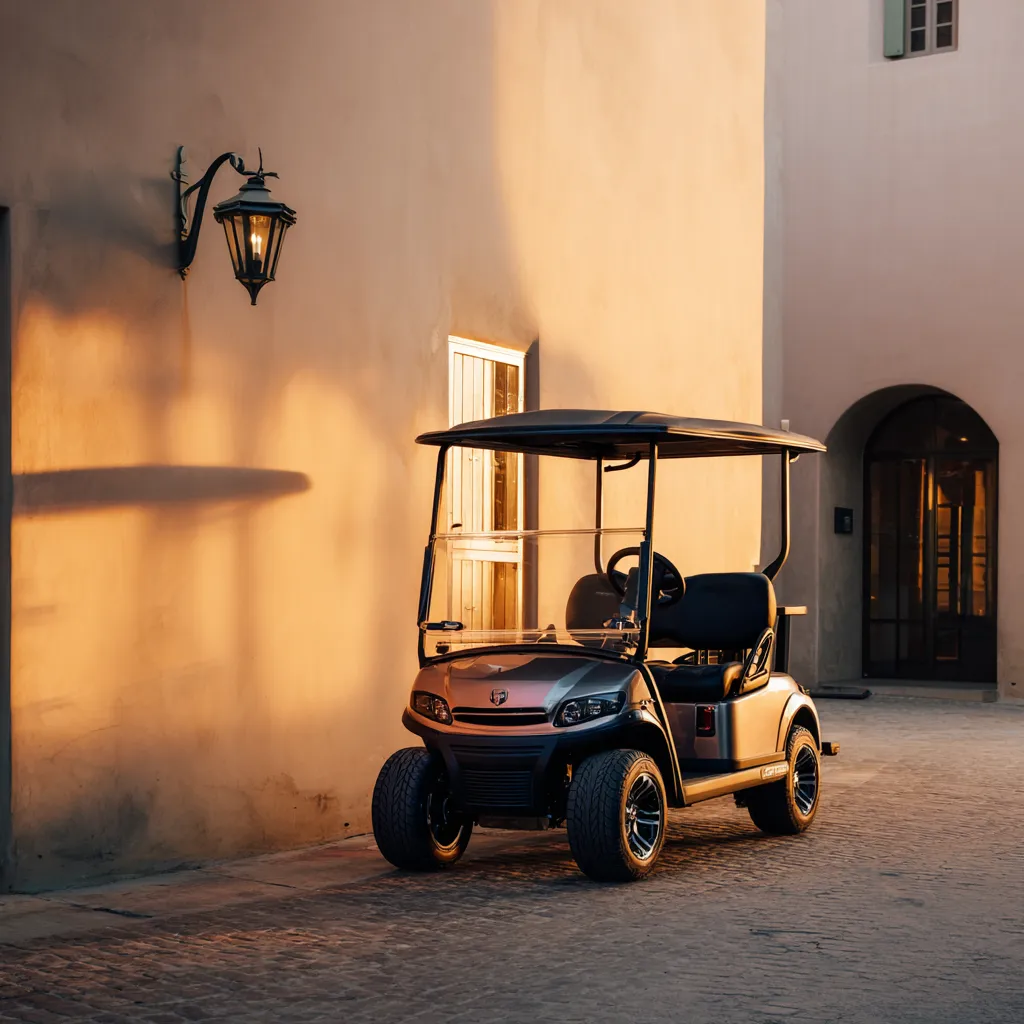
Ready to find the right buggy?
Tell us how and where it will work and we will specify a vehicle and a tailored quote built around you. Every build comes with a 3-year warranty and a 24-hour priority call-out.
Our guides are written and reviewed by the Hawke Electric Vehicles team, the people who specify, build, deliver and support the vehicles. We focus on honest, practical advice and flag where a figure depends on the build rather than guessing.
More guides by Hawke