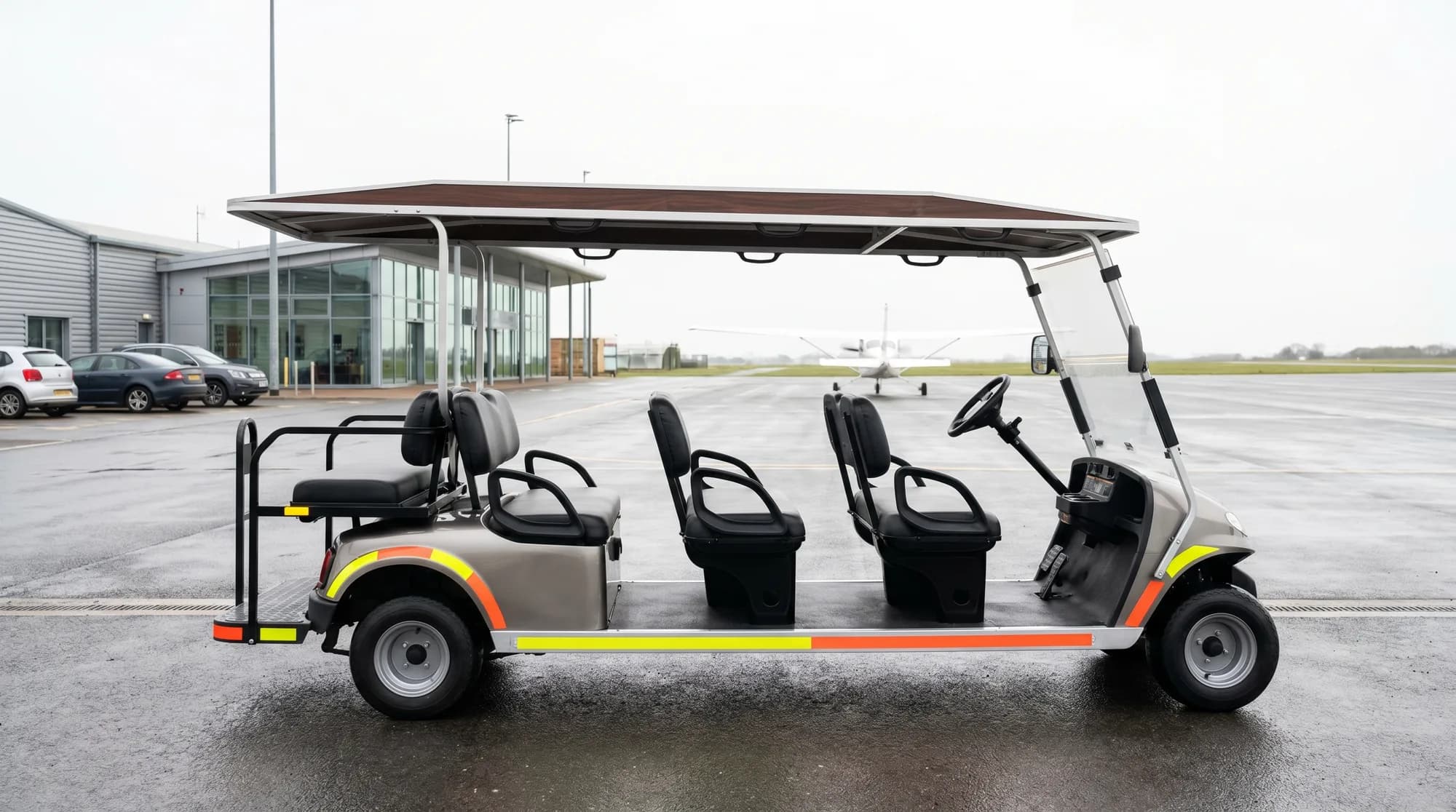
- A regional airport does not need a large airport's fleet to go electric. The right starting point is a handful of well-chosen vehicles, not dozens.
- Most smaller airports cover four jobs with one flexible fleet: passenger transfers, special assistance, crew movement and light utility work.
- Right-sizing means matching the fleet to your real traffic and walking distances, not to a target borrowed from a hub airport.
- Airside requirements still apply at any size. Permits, high-visibility livery and lighting are specified into the build whether you buy two vehicles or twenty.
- Phased adoption works well: start with the clearest need, prove it, then add vehicles as budget and confidence grow.
Regional airport electric vehicles tend to get discussed as if every airport faces the same problem as a major hub. They do not. A regional airport with a single terminal and a short walk to the gates has a very different brief from a multi-terminal operation moving tens of thousands of people an hour. The good news is that going electric does not require a hub-scale fleet or a hub-scale budget. It can start small and still do everything that matters.
If you run a smaller airport, the question is not whether you can afford a Heathrow-style fleet. It is what a sensible, right-sized set of vehicles looks like for your traffic, your distances and your duty cycle. This guide walks through how to size that fleet, what jobs it needs to cover, how airside rules still apply, and how to add to it in phases rather than all at once.
Why regional airports are well suited to electric
Smaller airports often have shorter, more predictable vehicle routes than big hubs, which is exactly what suits a battery. A buggy that runs a known loop between a terminal and the apron, with quiet spells through the day, charges easily around the timetable. There is no fuel to store or dispense on site, far less servicing, and the vehicles are quiet near aircraft and passengers. For an operation watching costs closely, the lower running cost is often the part that makes the case.
There is also a presentation point. A clean, quiet, branded electric buggy moving passengers across the apron says something about the airport. Regional airports compete on feeling easier and friendlier than the big hubs, and the ground experience is part of that.
Four jobs, one flexible fleet
At a regional airport, a small fleet usually has to be a generalist. Rather than separate vehicle types for every task, the sensible approach is a core set that covers the main jobs between them:
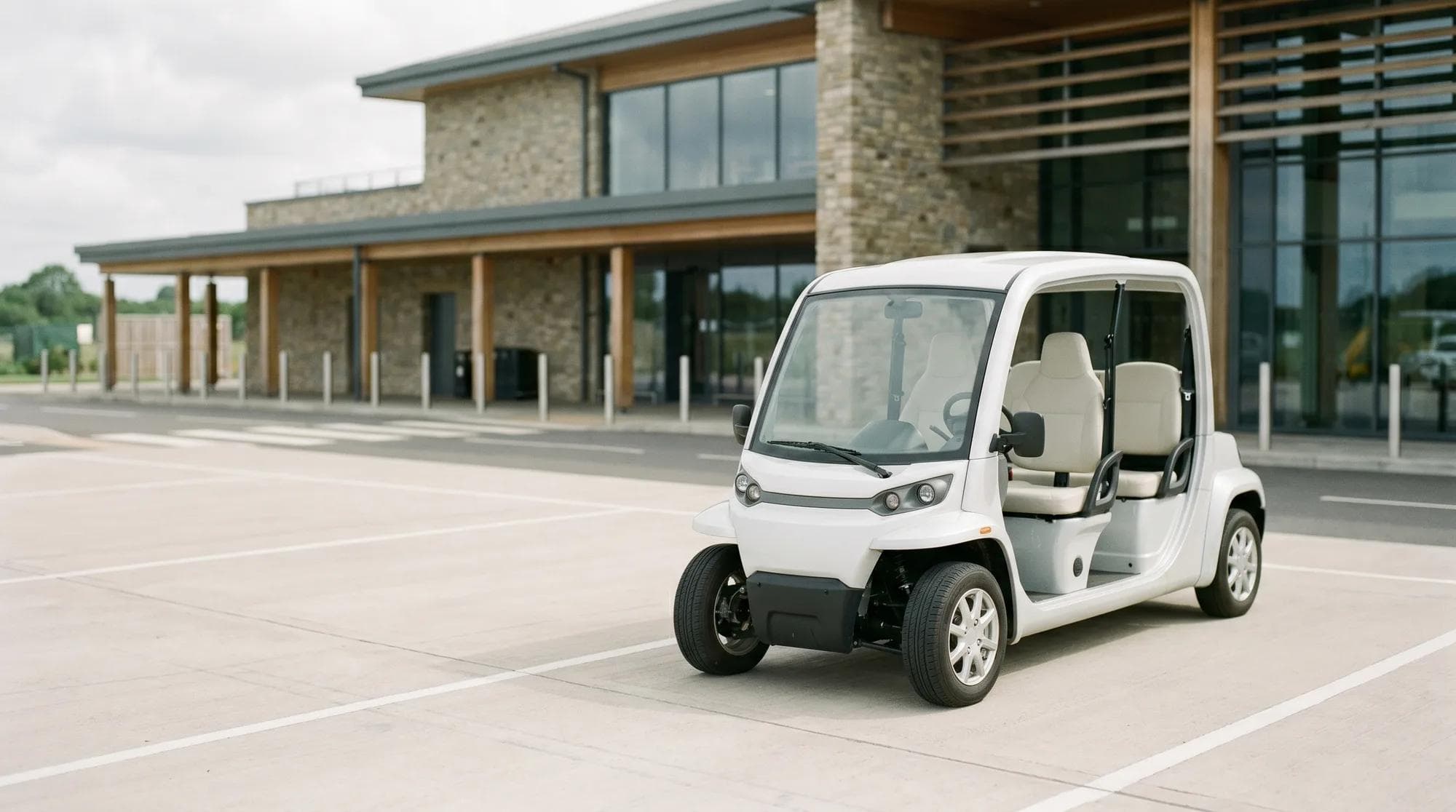
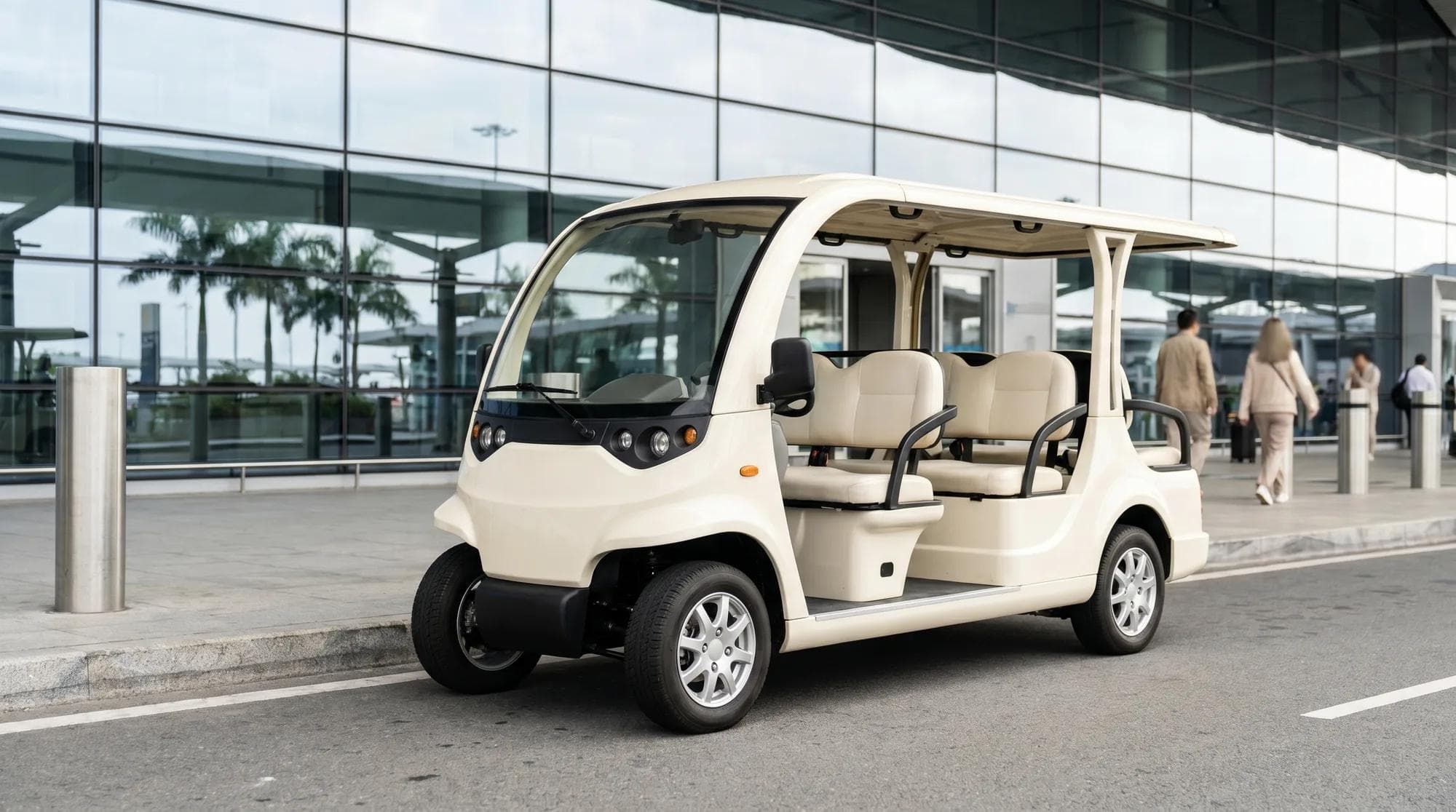
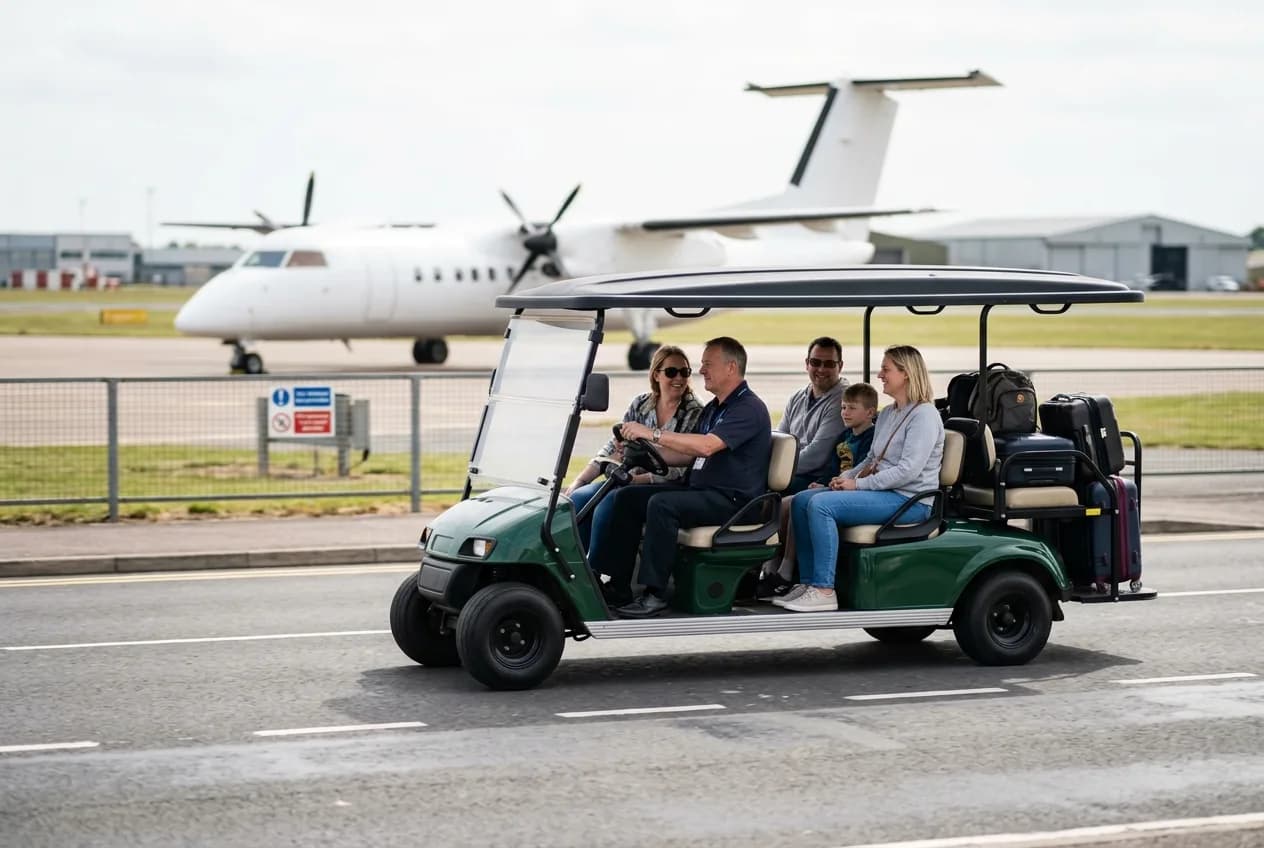
- Passenger transfers across the apron or to a remote stand, where there is no air bridge. See our guide to passenger transport buggies.
- Special assistance for reduced-mobility passengers, covered in detail in our PRM transport guide.
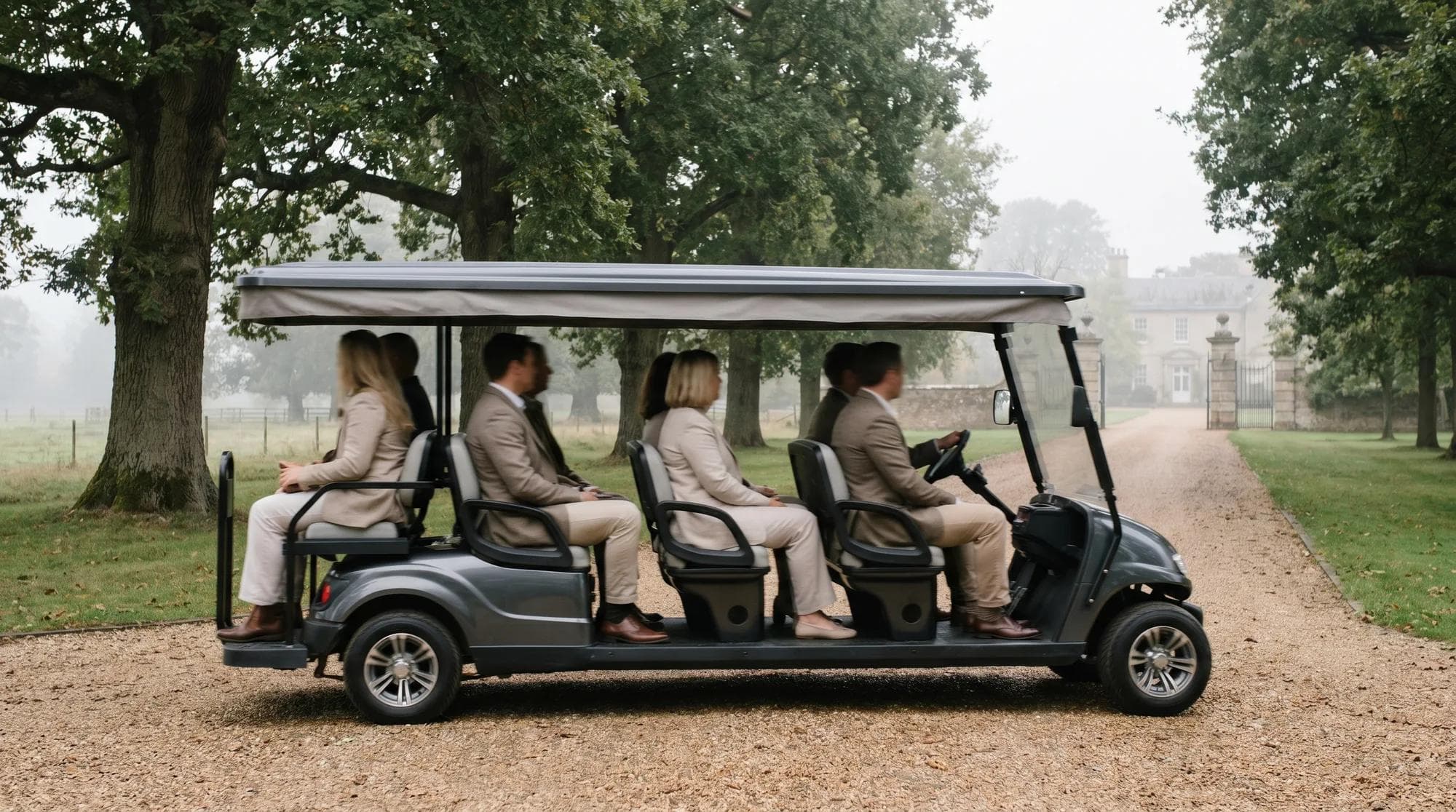
- Crew movement between the terminal, the crew room and the aircraft.
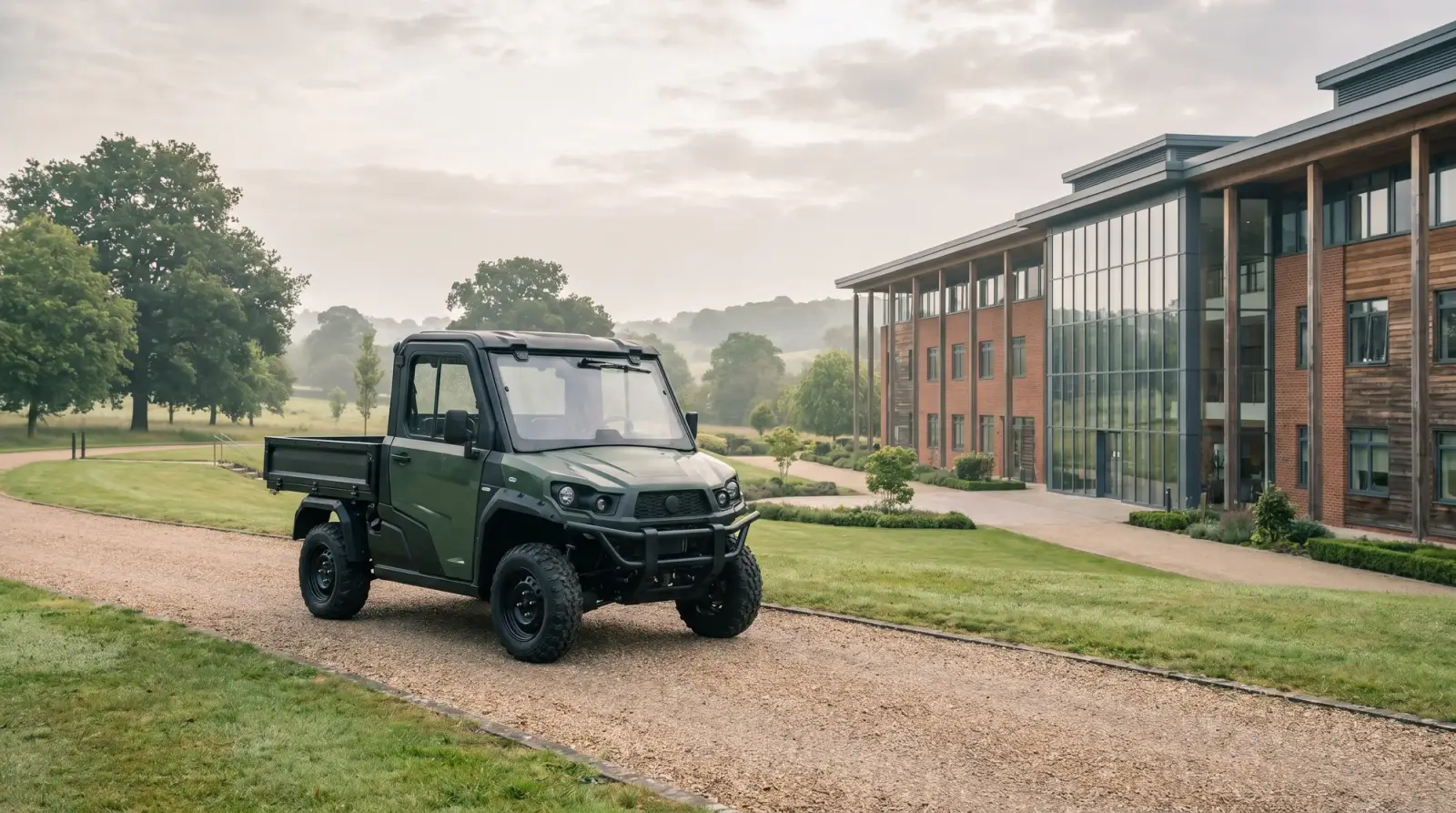
- Light utility: a load bed for tools, parts, bags and equipment when needed.
One advantage of buying to order is that the mix can match your airport rather than a catalogue. If passenger transfers are your main need and utility is occasional, the fleet can lean that way. We talk through how the same chassis serves different roles in our overview of electric people-movers and shuttles.
How to right-size the fleet
Right-sizing is about your numbers, not someone else's. The honest way to start is with the routes and the traffic, not the vehicle. How many passengers need transferring at the busiest arrival or departure, how far is the walk you are replacing, and how often does it happen? Most regional airports find that a small number of vehicles clears their busiest moment, with capacity to spare the rest of the day.
- 01
Map the busy moment
Work out the peak: how many people need moving in the busiest stretch of the day, and over what distance. Size for that, not the daily average.
- 02
Match vehicles to jobs
Decide which of the four jobs you need from day one. Special assistance is often a legal must; utility may be occasional.
- 03
Plan the charging
Map the gaps in the timetable so charging fits the quiet spells. A predictable regional schedule makes this straightforward.
- 04
Leave headroom
Allow a little spare so a vehicle off for service does not leave you short, and so you can grow without re-planning everything.
Airside rules apply at any size
A smaller fleet is not a lighter-touch fleet when it comes to safety. Any vehicle working the apron usually needs an airside vehicle permit, high-visibility livery and lighting, and a build that copes with the duty cycle. Those requirements come from your own airside operations team and, where relevant, the CAA, and they shape the vehicle before anything else. Because we build to order, those features go into the build whether you are buying two vehicles or twenty. We would always say to confirm the specifics with your operations team and the regulator early, so the spec is right first time.
Start small, grow in phases
There is no need to electrify everything at once. A phased approach lets a regional airport spread the cost and learn as it goes. Start with the clearest need, often special assistance or a single passenger-transfer route, prove it in service, and add vehicles as budget allows and confidence grows. Buying to order helps here too: a later batch can be liveried and specified to match the first, so the fleet stays consistent even though it arrived in stages.
- Up-front cost
- High
- Risk
- Higher, less room to adjust
- Best for
- Airports with a clear, fixed plan and budget
- Up-front cost
- Lower to start
- Risk
- Lower, learn before you scale
- Best for
- Most regional airports starting out
| Approach | Up-front cost | Risk | Best for |
|---|---|---|---|
| Whole fleet at once | High | Higher, less room to adjust | Airports with a clear, fixed plan and budget |
| Phased adoption | Lower to start | Lower, learn before you scale | Most regional airports starting out |
For most smaller airports, phasing is simply the lower-risk way in. You get vehicles working sooner, you learn what your duty cycle really demands, and you commit to more once it has proven itself. Our note on the environmental benefits of electric buggies covers the running-cost and emissions side if you need to build the case internally.
Right-sized fleets, built to order
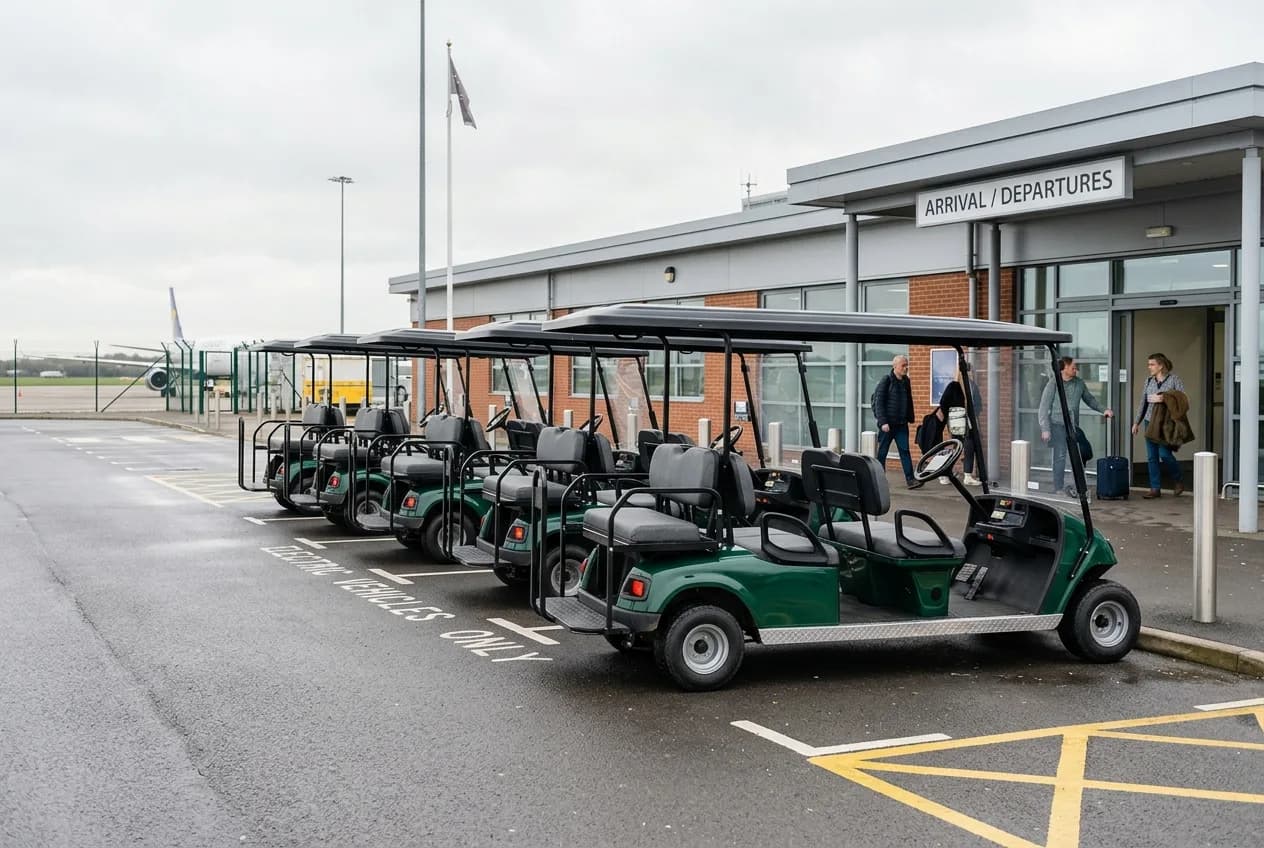
Passenger, assistance, crew and utility vehicles, sized to your airport, liveried as your own and supported by a 24-hour call-out. Start with a few and grow when you are ready.
Looking at a first electric fleet?
Tell us your routes, your busiest moment and your airside requirements. We will recommend a right-sized fleet you can start small and grow, built and liveried for your airport.
Frequently asked questions
How many vehicles does a regional airport actually need?+
Usually far fewer than people expect. The honest answer comes from your busiest arrival or departure and the distances involved. Many smaller airports start with a handful that clears the peak, then add more in phases.
Do smaller airports still have to meet airside requirements?+
Yes. Permit, high-visibility livery, lighting and duty-cycle rules apply to any vehicle on the apron, whatever the fleet size. We build those features in, and we would always confirm the specifics with your operations team and the CAA first.
Can one fleet cover passengers, assistance, crew and utility?+
At a regional scale, usually yes. Because the vehicles are built to order, the mix can lean towards your main need, and a load bed or accessible build can be specified where you need it.
Can we start small and add vehicles later?+
Yes, and for most regional airports that is the sensible route. A later batch can be liveried and specified to match the first, so a phased fleet still looks and works as one.
Will an electric fleet cope with our timetable?+
A regional timetable, with predictable quiet spells, suits a battery well. We size the battery and plan charging around your schedule so the fleet runs the operating day and charges in the gaps.
Related solutions
Ready to explore what we build?
See the vehicles and the setting this applies to, or get a tailored quote built around your site.

Ready to find the right buggy?
Tell us how and where it will work and we will specify a vehicle and a tailored quote built around you. Every build comes with a 3-year warranty and a 24-hour priority call-out.
Our guides are written and reviewed by the Hawke Electric Vehicles team, the people who specify, build, deliver and support the vehicles. We focus on honest, practical advice and flag where a figure depends on the build rather than guessing.
More guides by Hawke