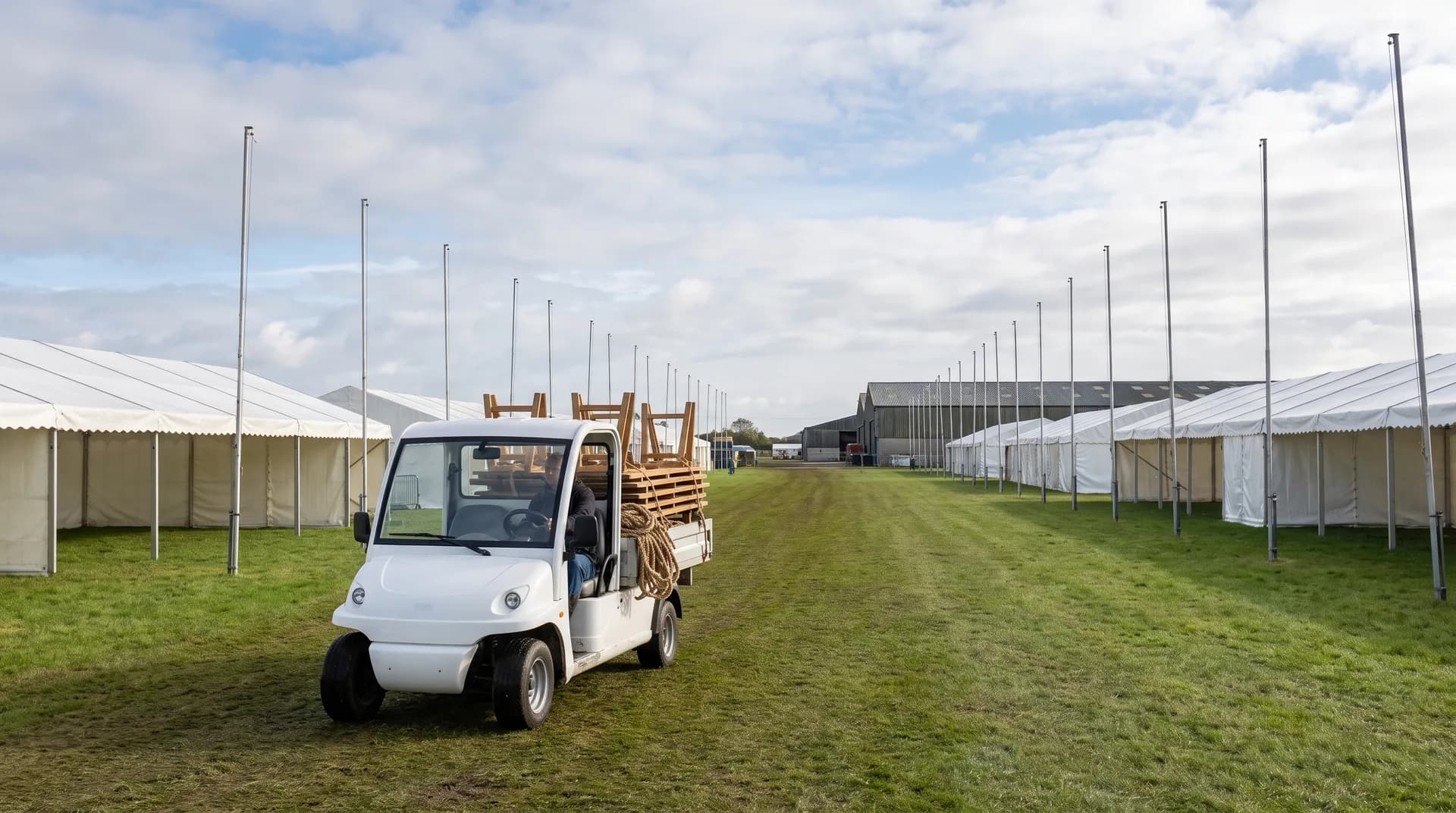
A county show is a small town that exists for three days, and it runs on wheels. Stewards need to cross a showground that can stretch over hundreds of acres, judges need to be at the cattle lines and the main ring within the same half hour, trade stands need stock moved from lorry park to pitch, and visitors with limited mobility need a way in from far-flung parking. County show buggy hire solves all of it without buying vehicles that would sit idle for the other fifty weeks of the year. This guide is for organisers and trade stand holders hiring for show week; if your showground is weighing up owning vehicles year-round for lettings and maintenance, that is a buying decision and our guide to electric utility vehicles for showgrounds covers it.
- Hire suits show week; ownership only pays when a showground uses vehicles all year.
- Plan separate vehicles for people and for loads: passenger buggies for stewards and shuttles, utility beds for build-up.
- The hire window should cover build-up and breakdown, not just the open days.
- Show season is concentrated into a few summer months, so firm numbers early and book ahead.
- Day rates vary with vehicle size, season and distance, so a quote against your dates is the only real number.
What county show buggy hire covers
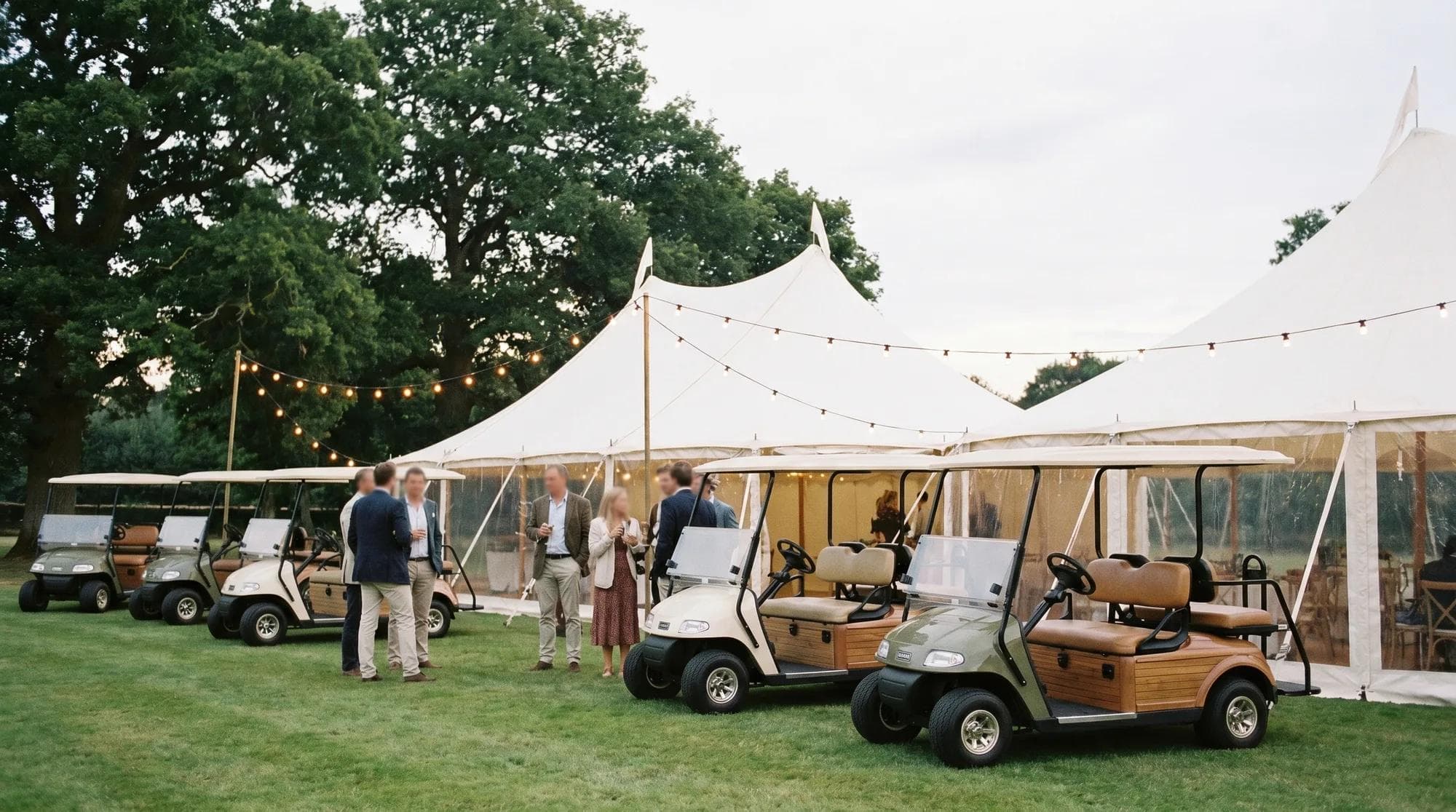
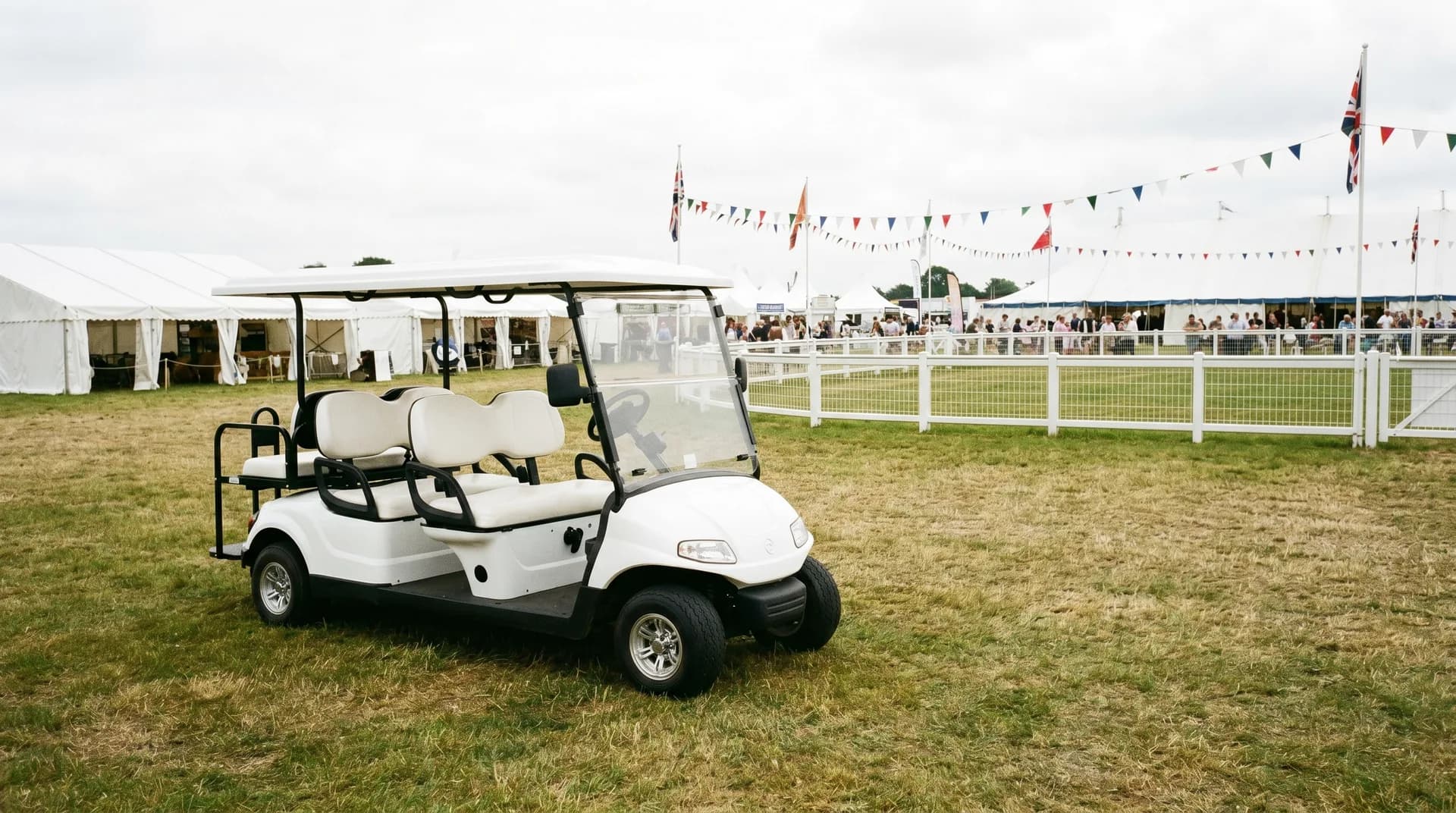
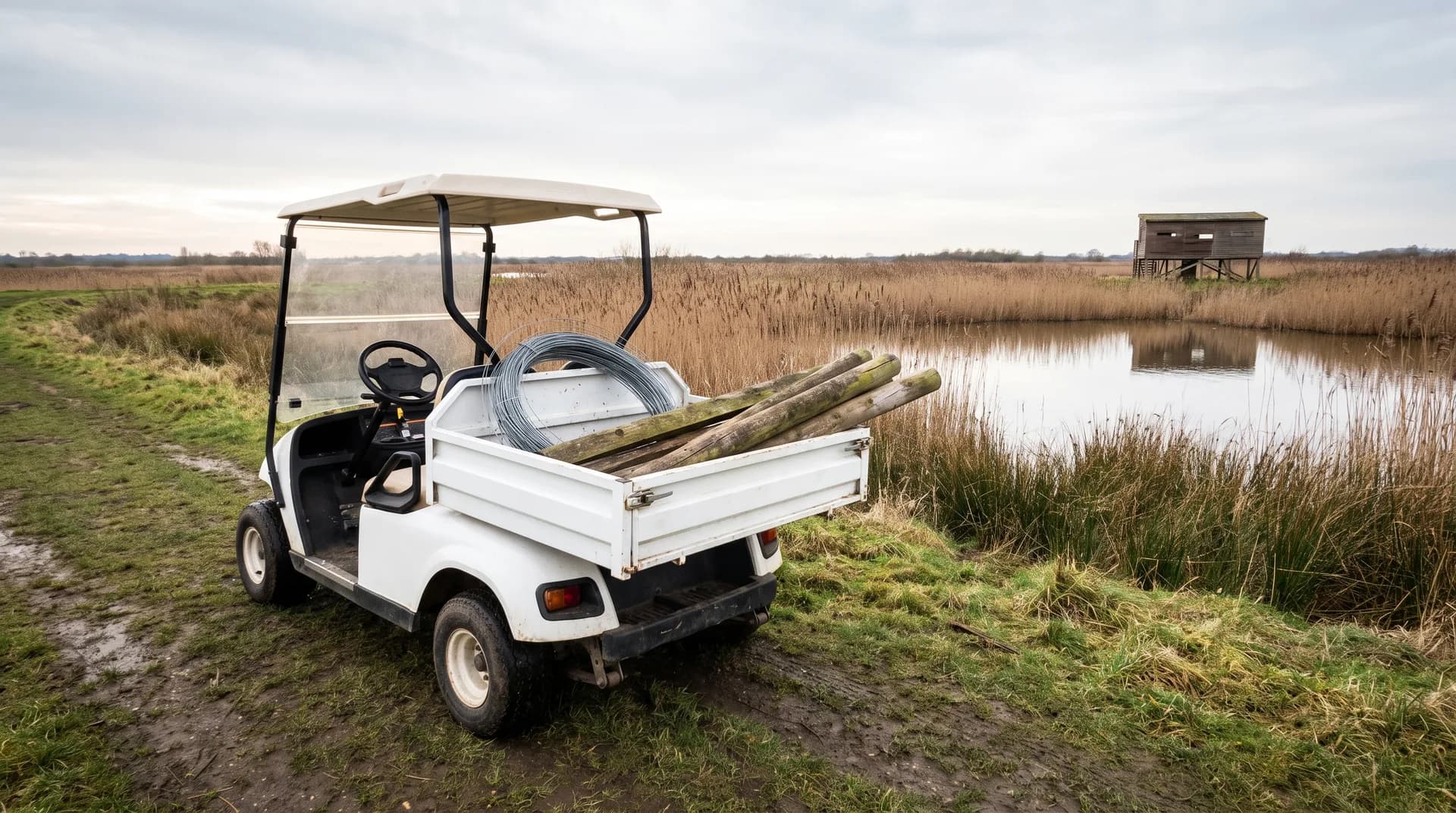
A typical show fleet splits into two kinds of vehicle doing very different work. Passenger buggies, from two seats up to six and eight, move stewards, judges, officials, sponsors and press around the ground quickly, and run accessibility shuttles from the car parks to the gates. Utility vehicles with load beds do the physical work: barriers, straw bales, signage, water and stock for trade stands during build-up, then bins and lost property during the show itself. Most organisers hire a mix, weighted towards utility vehicles during build-up and passenger vehicles on open days. Our guide to how event buggy hire works walks through the mechanics of delivery, handover and collection.
How many buggies does a county show need?
There is no single formula, because a two-hundred-acre show with livestock lines and a shuttle commitment needs more vehicles than a compact one-day event. The honest method is to list the jobs, chief steward, ring stewards, veterinary and safety officers, accessibility shuttle, hospitality runs, trade support, and ask which genuinely need dedicated wheels and which can share. Shared pool vehicles work for occasional errands; a shuttle or a safety role needs its own machine. Our worked guide on how many buggies your event needs sets out the method, and the event buggy hire calculator turns your numbers into an indicative figure in a couple of minutes.
- Hiring for the show
- Organisers and trade stands at annual shows
- Owning year-round
- Showgrounds with lettings all year
- Hiring for the show
- Day rates for the days you need
- Owning year-round
- Capital outlay plus upkeep
- Hiring for the show
- None, delivered and collected
- Owning year-round
- Sheds, charging and servicing yours
- Hiring for the show
- Scale the fleet to each event
- Owning year-round
- Fixed fleet whatever the event
| Hiring for the show | Owning year-round | |
|---|---|---|
| Suits | Organisers and trade stands at annual shows | Showgrounds with lettings all year |
| Cost shape | Day rates for the days you need | Capital outlay plus upkeep |
| Storage and upkeep | None, delivered and collected | Sheds, charging and servicing yours |
| Flexibility | Scale the fleet to each event | Fixed fleet whatever the event |
Trade stands: hiring your own wheels
Trade stand holders are often better served hiring their own vehicle than waiting on a stretched organiser pool. A single utility buggy turns restocking from a trolley slog across rutted grass into a five-minute run, and at agricultural machinery shows a smart electric vehicle doubles as a way to move staff and customers between pitches. Two cautions: confirm with the show organiser what vehicles trade stands may operate on site and during which hours, since movement is usually restricted while the public are on the ground, and book against your stand build dates rather than the open days, because the work is heaviest during build-up.
Show season, lead times and booking
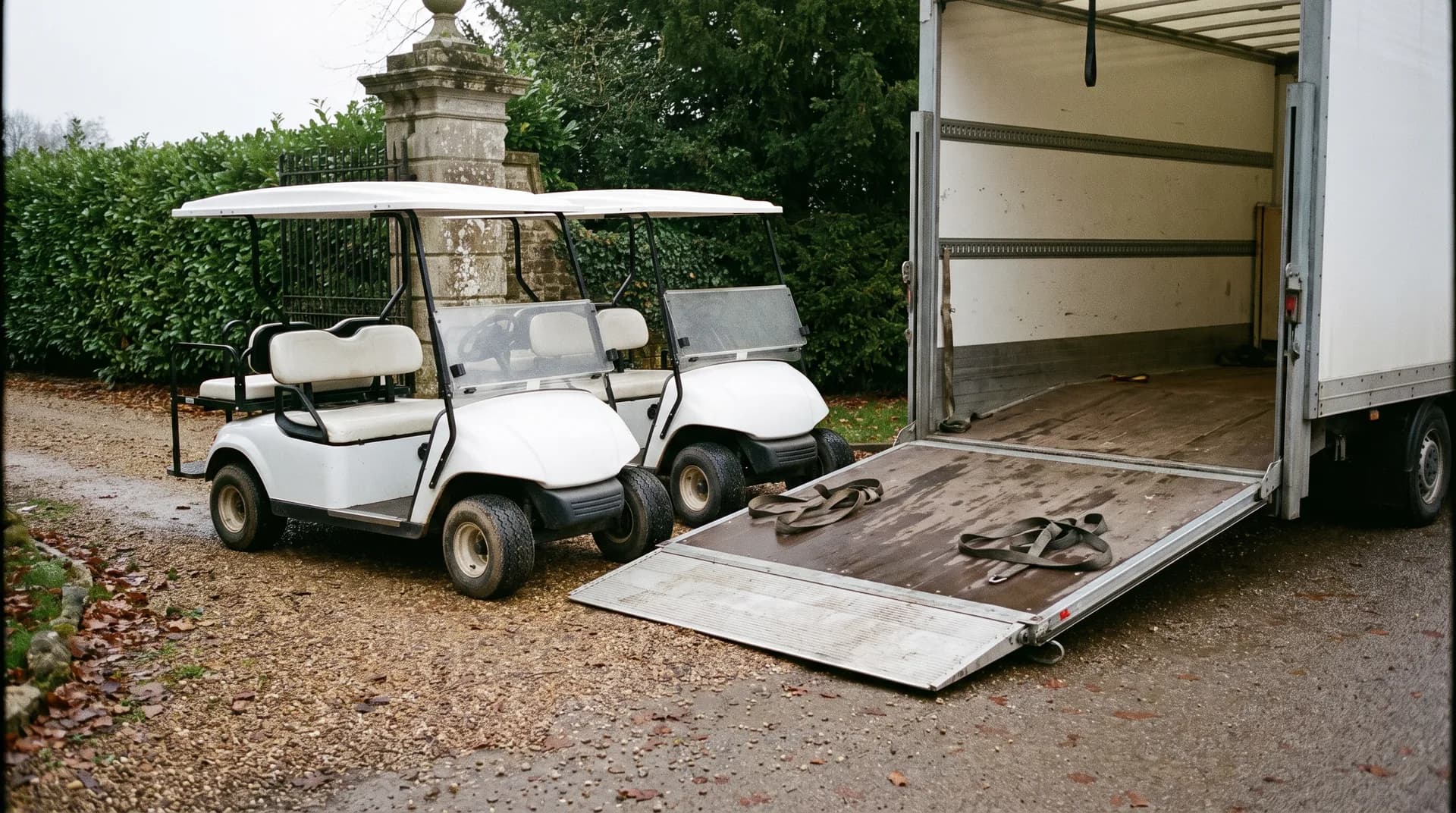
The county show calendar is compressed: the bulk of the season runs through late spring and summer, and every show in a region tends to want vehicles in the same few weeks. That makes timing the organiser's main risk. Firm up your fleet numbers when your steward plan is settled, book well ahead of show week rather than weeks out, and make sure the hire window covers build-up and breakdown days, when the utility vehicles actually work hardest. Day rates vary with vehicle size, season and distance, so treat any generic figure sceptically and get a quote against your actual dates and delivery postcode. On site, charging is straightforward, showground vehicles run on ordinary sockets overnight, and our guide to powering event buggies on site covers generators, distribution and charging discipline for a multi-day show.
Getting county show buggy hire right on the day
The shows that run smoothly share habits. They name a vehicle controller so buggies are assigned, not grabbed. They brief every driver, walking pace around the public, no passengers on load beds, keys out when parked. They keep pedestrian-dense hours for essential movements only, and they check with the showground about any routes vehicles must avoid, livestock lines and rings have their own rules. None of it is complicated, and all of it is easier when the vehicles arrive charged, on time, with a handover briefing, which is the standard we hold ourselves to on buggy hire deliveries.
Frequently asked questions
How far in advance should a county show book buggy hire?+
As soon as your steward plan and site map are settled. Show season concentrates demand into a few summer months, and vehicles are booked against the same weeks by every event in the region, so early bookings get the pick of the fleet.
What does county show buggy hire cost?+
Day rates vary with vehicle size, season and distance to the showground, so there is no honest flat number. List the vehicles and dates you need and request a quote, or use the event hire calculator for an indicative figure.
Can trade stands hire a buggy directly?+
Yes, and it is often the fastest way to keep a stand stocked. Confirm with the show organiser what vehicles trade stands may operate on site and during which hours before you book.
How do the buggies charge on a showground?+
From ordinary sockets overnight, whether mains or generator-fed distribution. A multi-day show simply needs a plan for where each vehicle plugs in; we advise on this at handover.
Should the hire cover build-up days?+
Yes. Utility vehicles work hardest during build-up and breakdown, moving barriers, signage and trade stock, so a hire window that only covers the open days misses the days you need the load beds most.
Wheels for your show week
Tell us your showground, dates and steward plan, and we will help you size the fleet, then deliver charged vehicles to the gate and collect after breakdown.
Related solutions
Ready to explore what we build?
See the vehicles and the setting this applies to, or get a tailored quote built around your site.

Ready to find the right buggy?
Tell us how and where it will work and we will specify a vehicle and a tailored quote built around you. Every build comes with a 3-year warranty and a 24-hour priority call-out.
Our guides are written and reviewed by the Hawke Electric Vehicles team, the people who specify, build, deliver and support the vehicles. We focus on honest, practical advice and flag where a figure depends on the build rather than guessing.
More guides by Hawke