The first question site managers ask about an electric hire fleet is usually some version of "will they last the day, and what do I plug them into?" Both deserve straight answers, because a buggy that dies at 4pm on show day is worse than no buggy at all. The short version: on a typical event day, a charged electric buggy lasts the day comfortably, and it recharges overnight from an ordinary socket. The longer version, including generator sites, multi-day rotas, winter and the sites where electric genuinely is not the right tool, is below.
- A fully charged buggy handles a normal event day of intermittent use comfortably; hard continuous hauling drains it faster.
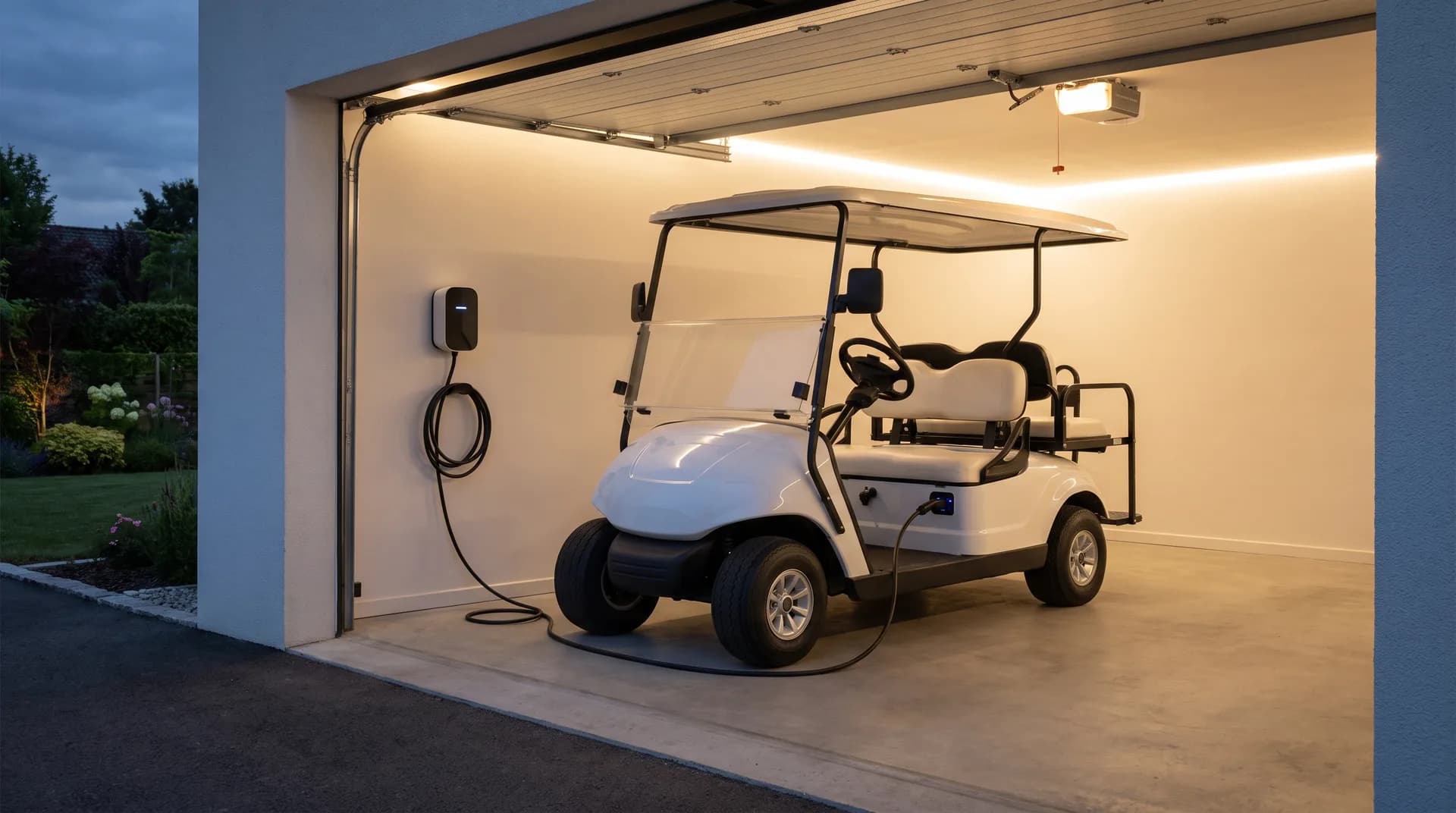
- Overnight charging needs nothing exotic: a standard socket per vehicle and a dry space.
- Generator-powered sites can charge buggies too, schedule charging while the generator is already running.
- Multi-day festivals run best on a simple charging rota, plugged in every night, no exceptions.
- Where power is genuinely impossible, our fleet includes petrol and diesel 4x4 options.
Run time: the honest picture
Event use is intermittent, a run to the gate, a wait, a loop of the site, another wait, and that is exactly what suits an electric buggy, because unlike an engine it uses nothing while standing. Under that pattern, a fully charged vehicle handles a long event day without drama, which is why electric makes up most of our fleet. What drains a battery faster is the other pattern: continuous heavy work, towing and hauling up slopes on soft ground all day, or a shuttle looping without pause for 12 hours. Those jobs are still very often fine, but they are the ones to tell us about at the quote stage, so we can size the fleet, plan a midday top-up, or spec a different vehicle. The variables that matter are load, terrain, hills and hours, not mystery.
Overnight charging from a standard socket
No charging infrastructure is required. Each buggy charges from an ordinary UK socket with its supplied charger, and an overnight stint, event close to morning gates, is comfortably enough time; our guide to how long a buggy takes to charge has the detail. What the fleet actually needs from you is simple: one socket per vehicle within cable reach, somewhere dry for the connections, and circuits that are not already carrying the catering. Chargers draw modest power, similar in scale to household appliances rather than car chargers, but a fleet of them on one strained circuit is how trips happen, so spread them out. A marquee corner, a barn, a lockable compound with a distribution board, all work fine.
Mains or generator?
If your site has mains power, use it, cheaper, quieter, simpler. But most greenfield event sites run on generators, and buggies fit into that fine. The one piece of planning that matters is scheduling: charge the fleet during the hours the generator is already running for the event, or overnight if it runs overnight, rather than asking for it to be kept alive solely for the buggies. Tell your power contractor the fleet size and charging window and they will barely notice the additional load alongside stages and catering. What does not work is the plan nobody made, a fleet arriving on a site where the generator shuts down at midnight and nobody owns the question. Five minutes with the power plan solves it.
Multi-day festivals: run a charging rota
Single-day events rarely think about charging at all, delivered charged, used, collected. Multi-day events live or die by one habit: every vehicle goes on charge every night, no exceptions, owned by a named person. The failure mode is always the same, a crew member parks a buggy behind the stage at 2am, nobody plugs it in, and by day three it is a very stationary asset. A simple rota fixes it: vehicles return to the charging compound at close, someone walks the line confirming every charger is on, and the fleet starts each day full. If part of your fleet must run around the clock, say so at the quote stage, that is solved with extra vehicles rotating through charge, not by hoping.
When power is impossible: petrol and diesel 4x4s
Some jobs sit beyond any charging plan: a remote site build before the power contractor arrives, a vehicle stationed away from the compound for days, or heavy towing across a soaked field in week-one mud. Our fleet is mostly electric, but it includes petrol and diesel 4x4 options for exactly these cases, refuelled from a can, indifferent to the power plan, and better suited to sustained heavy traction. Many larger events run a sensible mix: electric for people-moving and general site work, a 4x4 or two for the rough end. Tell us the site honestly and we will spec the mix rather than force one answer.
Cold weather
Batteries give a little less in the cold, and winter events tend to be dark, wet and heavier on lifts. The practical adjustments are small: expect somewhat less run time per charge than in July, charge somewhere sheltered rather than in the open, and if the event runs long winter days, size the fleet with that margin in mind. It is a planning note, not a reason to avoid electric, winter weddings and Christmas events run on our electric fleet all season. Wherever you site the charging, keep it inside your secure line: our guide to event buggy security and overnight storage explains why the compound and the charging area should be the same place, and why build nights carry more risk than show nights.
Frequently asked questions
Will an electric buggy last a full event day on one charge?+
For normal event use, intermittent journeys with waiting between them, yes, comfortably, because an electric buggy uses nothing while standing. Continuous heavy hauling, steep ground or round-the-clock shuttling drain it faster, so mention those patterns at the quote stage and we will plan for them.
What power supply do hire buggies need at an event?+
A standard UK socket per vehicle, somewhere dry, on circuits that are not already heavily loaded. The supplied chargers draw modest power and an overnight window is enough for a full charge. No special charging infrastructure is needed.
Can you charge golf buggies from a generator?+
Yes. Buggy chargers are a small load alongside a typical event's stages and catering. The only planning needed is scheduling, charge during hours the generator already runs, and letting your power contractor know the fleet size and charging window.
How do multi-day festivals keep a buggy fleet charged?+
With a simple rota: every vehicle returns to the charging compound at close, goes on charge every night without exception, and one named person confirms it. Fleets that skip this discover a flat buggy on day three; fleets that do it never think about power again.
What if my site has no power at all?+
Then we spec accordingly. Our fleet is mostly electric but includes petrol and diesel 4x4 options that refuel from a can and suit heavy towing on rough ground. Many events run a mix: electric for people and general work, a 4x4 for the rough end.
Tell us about your site
Power, terrain, hours, we will spec a fleet that lasts the event. Start with an instant estimate from the calculator.
Related solutions
Ready to explore what we build?
See the vehicles and the setting this applies to, or get a tailored quote built around your site.

Ready to find the right buggy?
Tell us how and where it will work and we will specify a vehicle and a tailored quote built around you. Every build comes with a 3-year warranty and a 24-hour priority call-out.
Our guides are written and reviewed by the Hawke Electric Vehicles team, the people who specify, build, deliver and support the vehicles. We focus on honest, practical advice and flag where a figure depends on the build rather than guessing.
More guides by Hawke