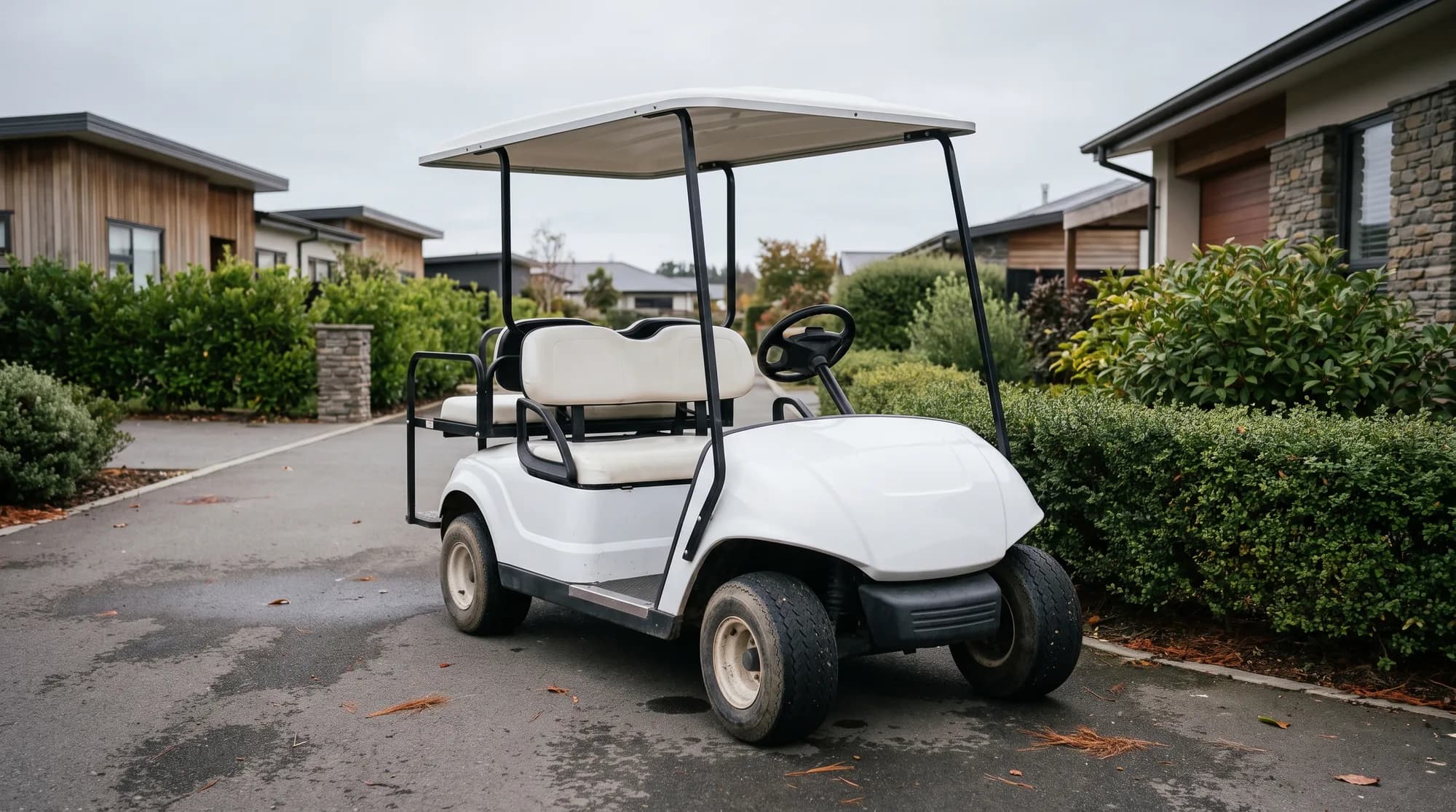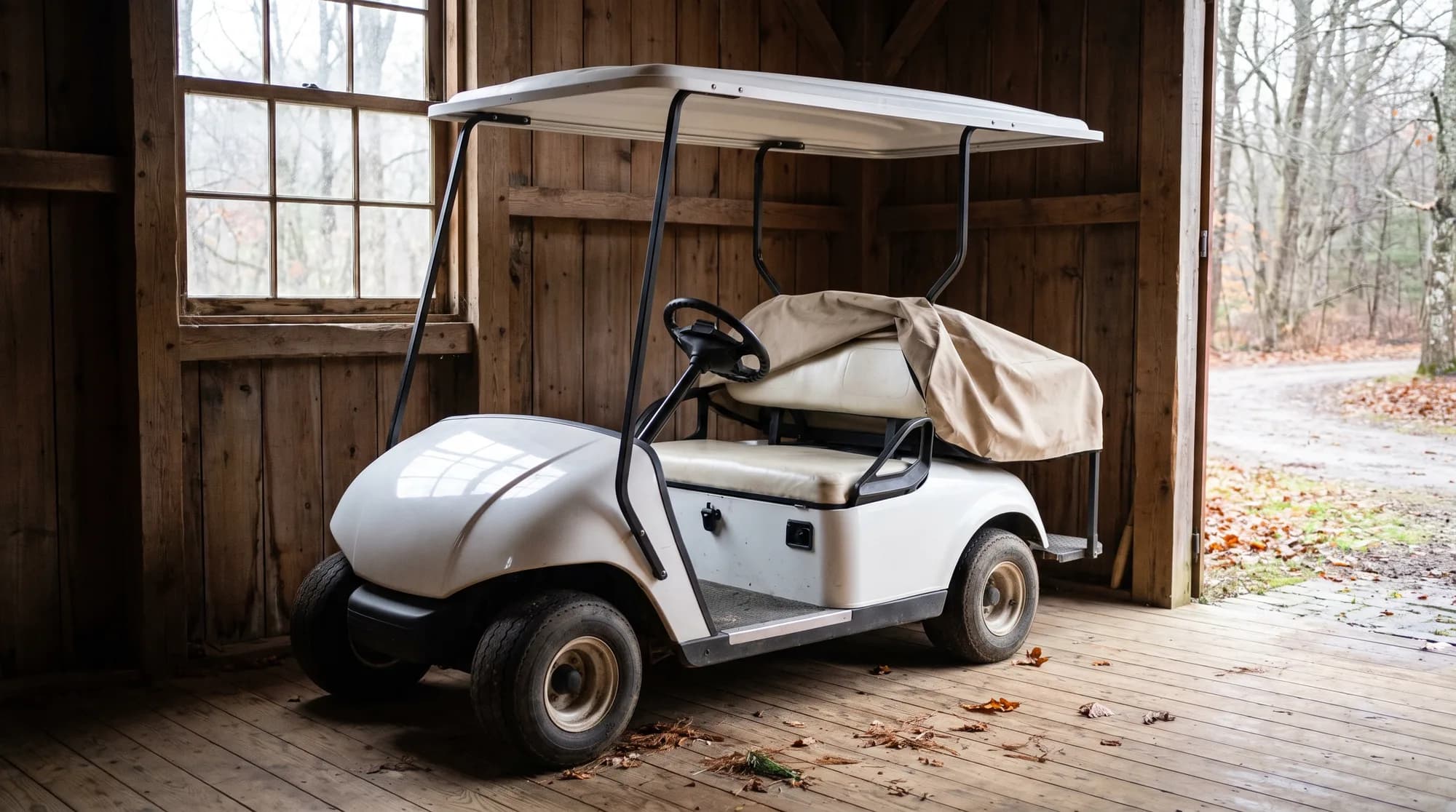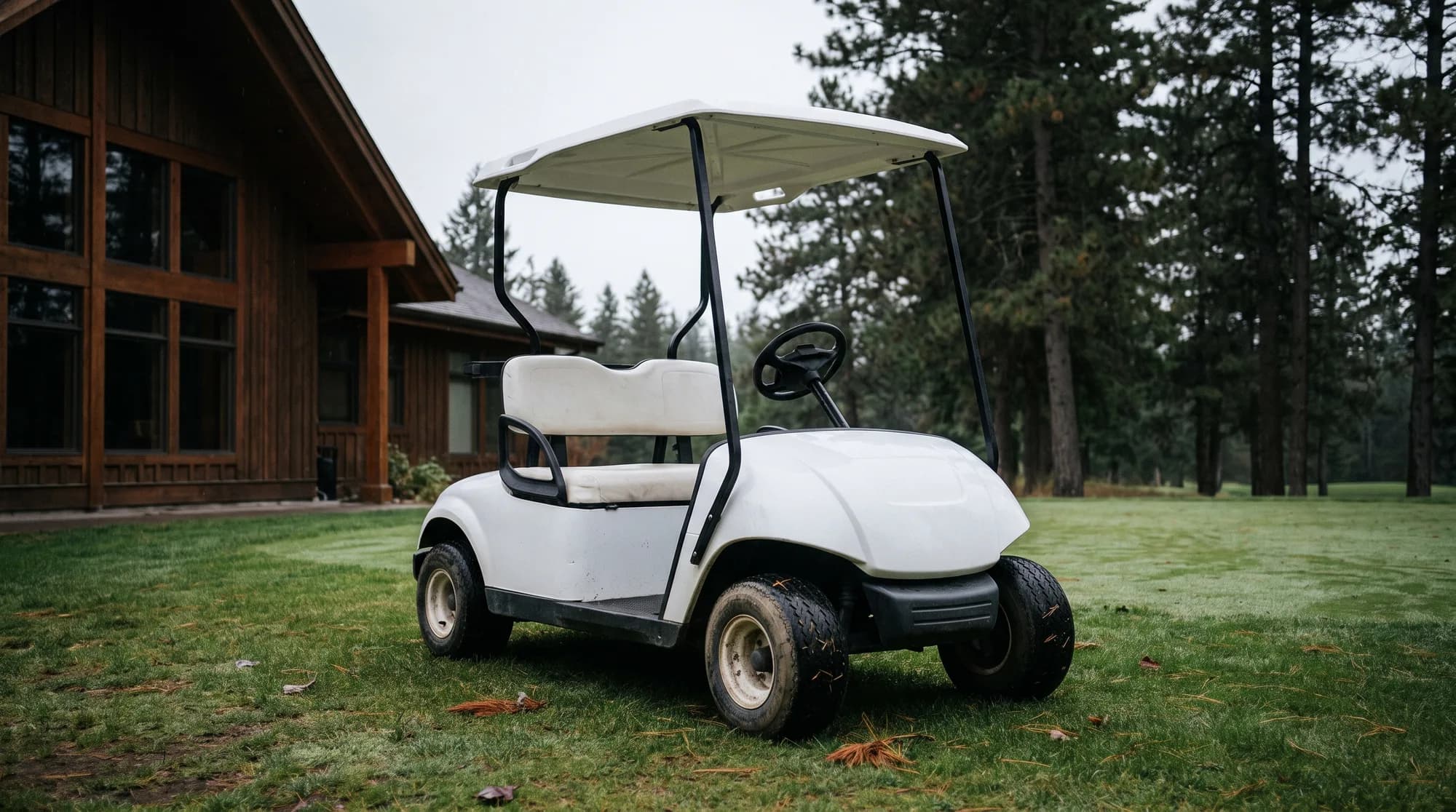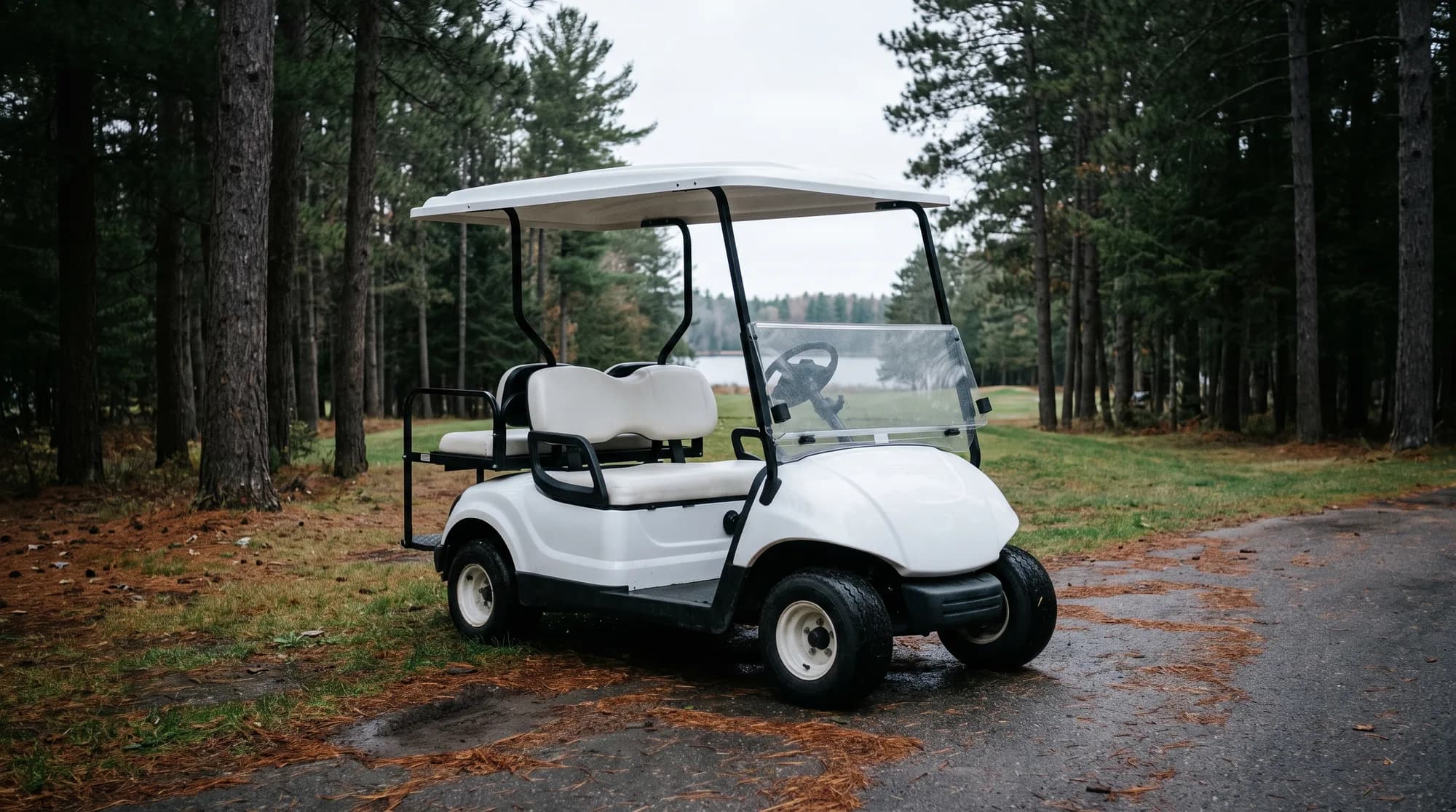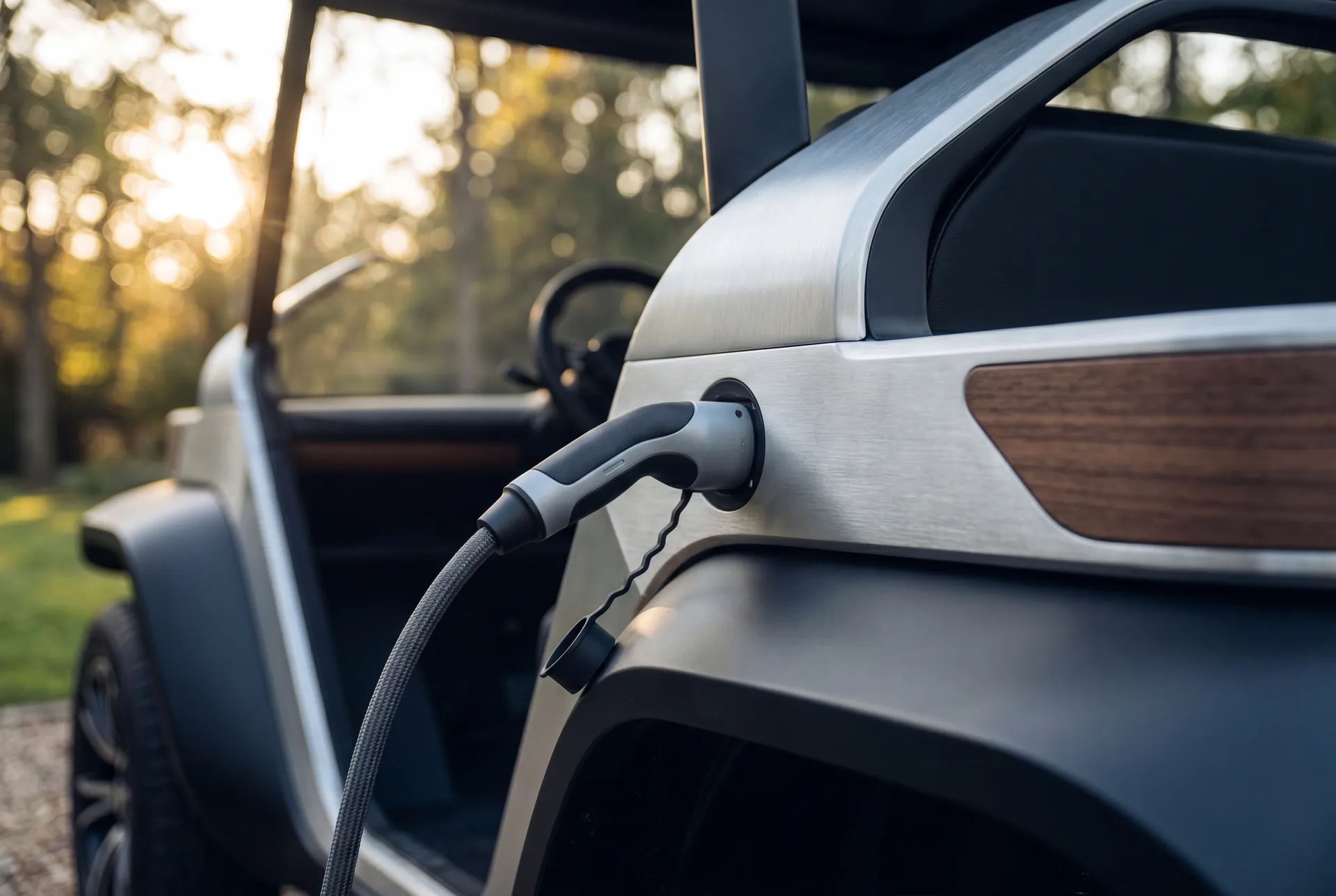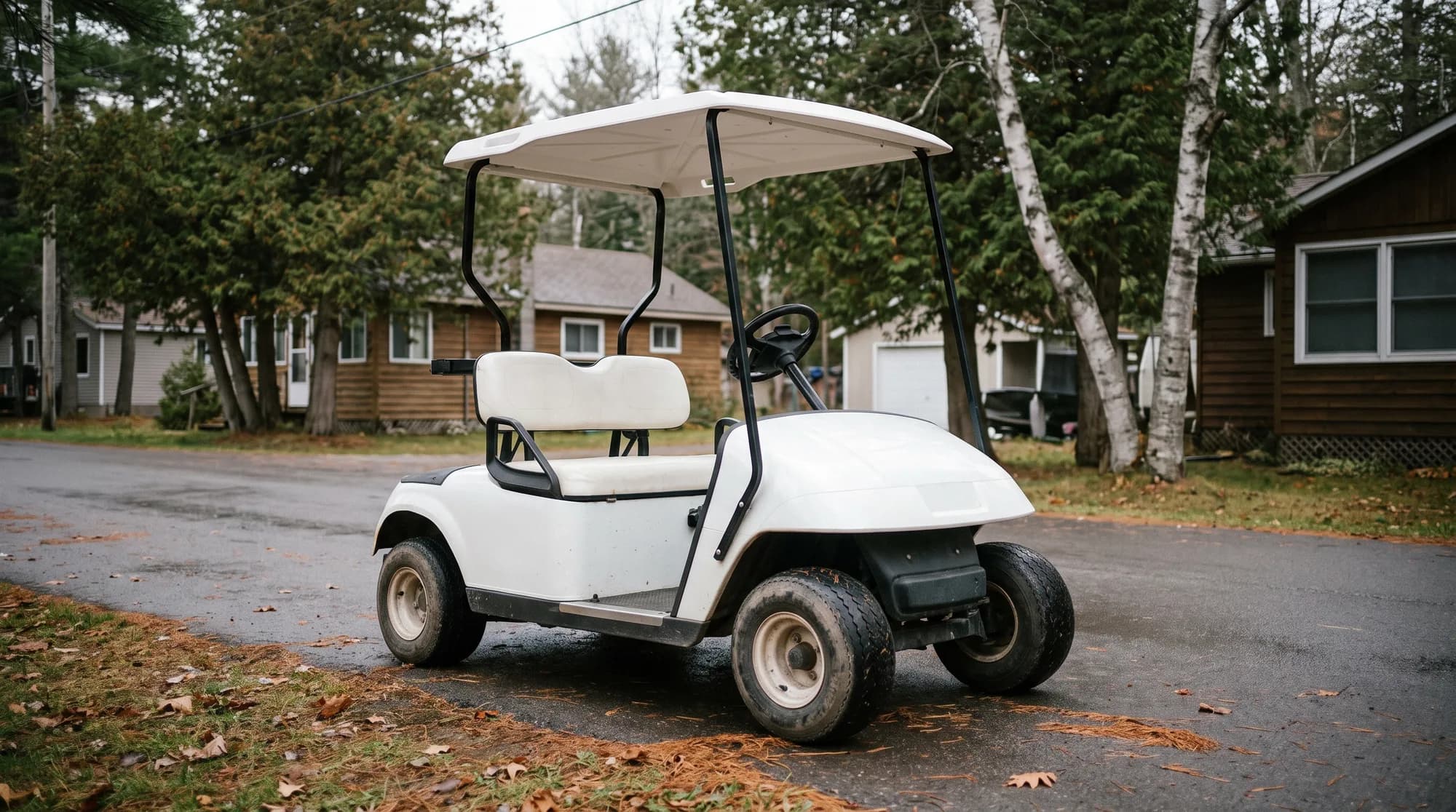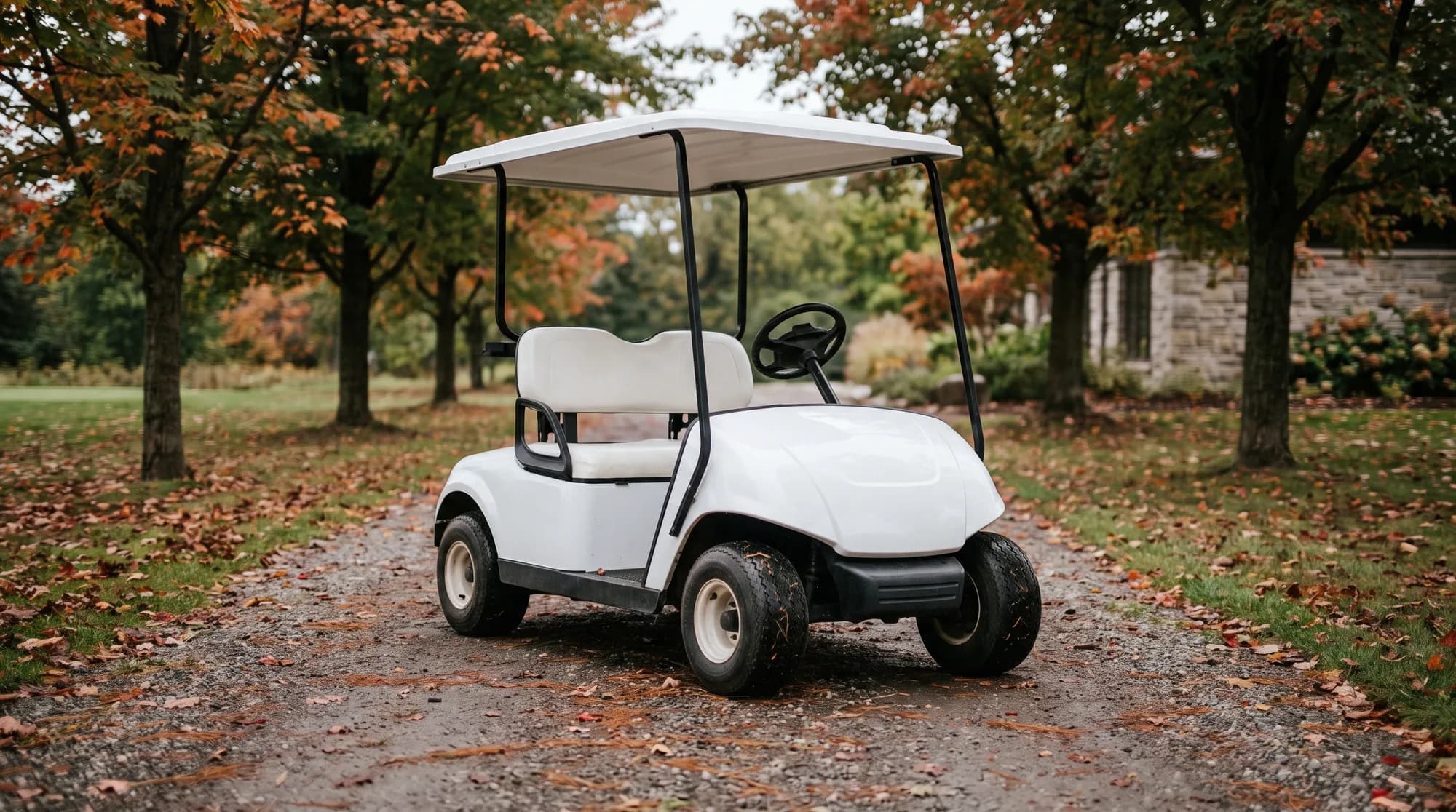
Quebec has no golf cart pilot programme, no municipal opt-in framework and no general road access for carts. Under the Highway Safety Code, an ordinary golf cart is not a road vehicle you can register, which means public roads are off the table across the province. What Quebec does have is a clear split: complete freedom on private property, and a separate, tightly regulated category of low-speed vehicles (véhicules à basse vitesse) that can be registered through the SAAQ and driven on certain roads. If you are shopping for a cart in Quebec, understanding that split will save you from an expensive mistake.
- Ordinary golf carts cannot be registered for road use in Quebec and are not permitted on public roads.
- Private property is the legal home for carts: golf courses, campgrounds, resorts and large rural properties.
- Quebec recognises low-speed vehicles (LSVs), fully electric vehicles with a top speed of 32 to 40 km/h, which can be registered and driven on roads posted at 50 km/h or less if they comply with the LSV regulation.
- The SAAQ administers registration, and only vehicles meeting the standards (including braking, lighting and seat belt requirements) qualify; standard golf carts do not.
- Some golf courses in Quebec operate cart crossings of public roads; how these are authorized varies locally, so confirm with the municipality and the SAAQ rather than assuming.
- Criminal Code impaired driving rules apply to carts even on private land.
Why golf carts fail Quebec's road test
The Highway Safety Code builds road access on registration, and registration on vehicle standards. A golf cart, built for turf at 20 km/h with no seat belts, windshield wipers or road-grade lighting, does not meet those standards and cannot complete the paperwork. There is no equivalent of Ontario's golf cart pilot or Alberta's municipal opt-in: Quebec simply has not created a legal category for ordinary carts on public roads. Driving one on a street anyway risks fines for an unregistered, uninsured vehicle and leaves you personally exposed if anyone is hurt.
One nuance worth knowing: Quebec's public automobile insurance plan compensates bodily injury from road vehicle accidents, but that system is built around registered vehicles operating legally. Taking an unregistrable cart onto a road puts you outside the system's design, which is exactly where you do not want to be in a dispute.
Where carts are fully legal: private property
None of the above touches private land. Golf courses across Quebec run large cart fleets, and campgrounds, ski resorts in summer mode, vineyards and cottage properties in the Laurentians and Eastern Townships use carts for exactly what they are good at: quiet, low-cost transport over private ground. No licence, no minimum age under the Code, no registration. The practical limits are set by the property owner, your own judgment with young drivers, and one hard legal line: impaired driving provisions in the Criminal Code apply to motor vehicles on private property too.
The low-speed vehicle route
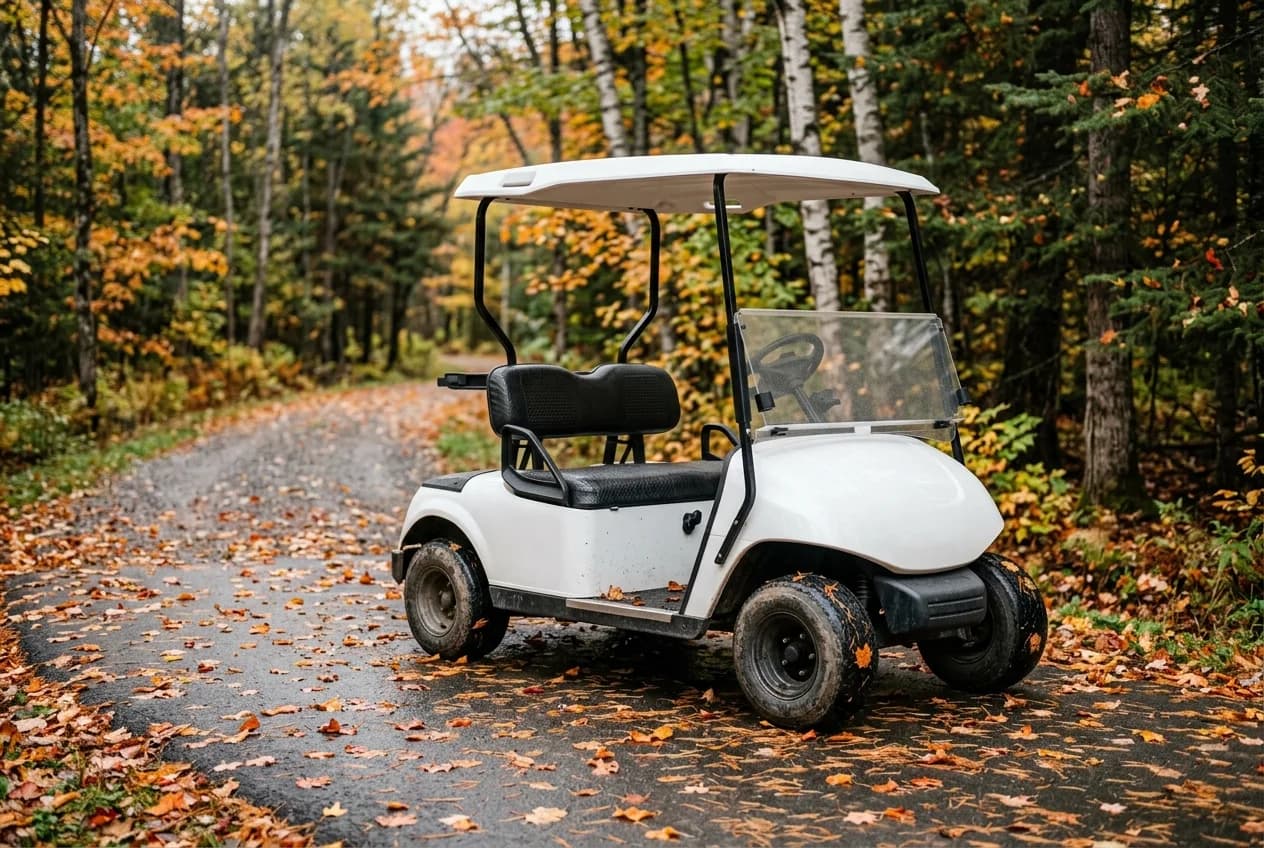
Quebec's answer to street-legal cart-style transport is the low-speed vehicle category. An LSV is a fully electric, four-wheeled vehicle with a top speed between 32 and 40 km/h, built to the federal standard with seat belts, lights, mirrors and a windshield. Quebec's Regulation respecting low-speed vehicles adds provincial requirements on top, notably around braking systems, lighting and visibility equipment, and seat belt anchoring. A compliant LSV can be registered with the SAAQ and driven on public roads where the posted limit is 50 km/h or less.
In practice the gate is narrow. The SAAQ recognises a short list of vehicle models as meeting the requirements, and a standard golf cart is not on it and cannot be modified onto it. If street use in Quebec is genuinely what you need, buy a certified LSV from the outset; if your use is a course, a campground or your own land, a purpose-built cart is the better and cheaper tool.
- Ordinary golf cart
- Not permitted
- Registered LSV
- Roads posted 50 km/h or less
- Ordinary golf cart
- Not possible
- Registered LSV
- Required, compliant models only
- Ordinary golf cart
- Not required on private land
- Registered LSV
- Valid licence required
- Ordinary golf cart
- Turf specification
- Registered LSV
- Seat belts, road lighting, mirrors, windshield
- Ordinary golf cart
- Courses, campgrounds, private land
- Registered LSV
- Short road trips in town at low speed
| Ordinary golf cart | Registered LSV | |
|---|---|---|
| Public roads | Not permitted | Roads posted 50 km/h or less |
| SAAQ registration | Not possible | Required, compliant models only |
| Driver's licence | Not required on private land | Valid licence required |
| Equipment | Turf specification | Seat belts, road lighting, mirrors, windshield |
| Best for | Courses, campgrounds, private land | Short road trips in town at low speed |
Golf courses and road crossings
Plenty of Quebec courses are split by public roads, and carts visibly cross them every day in season. These crossings are managed locally, typically with signage and arrangements involving the municipality, rather than through a general provincial right for carts to enter the road. If you operate a course or live in a golf community with a crossing, treat it as a specific authorization to verify, not a precedent that carts may use the road network. When in doubt, the municipality and the SAAQ are the two bodies that can give you a definitive local answer.
What Quebec buyers should actually do
- Buying for a course, campground or private property: any quality cart is legal there; prioritise build, batteries and winter storage.
- Wanting street transport in a town or village: look only at SAAQ-registrable low-speed vehicles, and confirm the specific model qualifies before paying.
- Running a golf community with a road crossing: verify the authorization behind the crossing and keep signage and insurance current.
- Any use: arrange liability cover through your insurer, since private land use is typically outside the public auto insurance plan's road regime.
Could Quebec change its mind?
Quebec has a track record of testing new mobility through formal pilot projects, as it has done with electric scooters and other devices, so a future golf cart pilot is not unthinkable. But nothing of the kind was in force for carts as of 2026, and Quebec's road safety culture leans cautious: the province's own commentary on low-speed vehicles stresses that vehicles designed for closed environments do not mix easily with faster, heavier traffic. Buyers should plan around the rules as they are, not as they might become. If the province ever opens a municipal route the way Alberta and Saskatchewan have, it will arrive as a published regulation with conditions attached, not as a quiet change, and this guide will be updated when it does.
In the meantime, the sensible reading of Quebec law for a cart owner is straightforward: enjoy the cart hard on private ground, keep it off the pavement, and let a registered low-speed vehicle or the family car handle anything involving a public road. Owners who respect that line have essentially nothing to worry about from the Highway Safety Code.
Frequently asked questions
Can I drive a golf cart on the road in Quebec?+
No. Ordinary golf carts cannot be registered under the Highway Safety Code and are not permitted on Quebec public roads. They are legal on private property such as golf courses, campgrounds and your own land.
Does Quebec have a golf cart pilot programme like Ontario or Alberta?+
No. As of 2026 Quebec has no golf cart pilot and no municipal opt-in framework for carts. Its street-legal route is the separate low-speed vehicle category administered through the SAAQ.
What is a low-speed vehicle in Quebec?+
A fully electric, four-wheeled vehicle with a top speed between 32 and 40 km/h, meeting federal and Quebec LSV standards including seat belts, road lighting and specified braking. Compliant models can be registered with the SAAQ and driven on roads posted at 50 km/h or less.
Do I need a licence to drive a golf cart at a Quebec golf course or campground?+
The Highway Safety Code does not require a licence on private property. The property operator sets its own rules, and many courses set their own minimum ages for cart rental.
Can a golf cart cross a public road at a Quebec golf course?+
Many courses operate managed crossings arranged locally with the municipality. These are specific, local authorizations rather than a general right, so confirm the arrangement for your course rather than assuming carts may enter the road.
Choosing a cart for Quebec?
Tell us where it will run, the course, the campground or the family property, and we will build to order with batteries and storage advice matched to Quebec winters.
Related solutions
Ready to explore what we build?
See the vehicles and the setting this applies to, or get a tailored quote built around your site.
Ready to find the right buggy?
Tell us how and where it will work and we will specify a vehicle and a tailored quote built around you. Every build comes with a 3-year warranty and a 24-hour priority call-out.
Our guides are written and reviewed by the Hawke Electric Vehicles team, the people who specify, build, deliver and support the vehicles. We focus on honest, practical advice and flag where a figure depends on the build rather than guessing.
More guides by Hawke