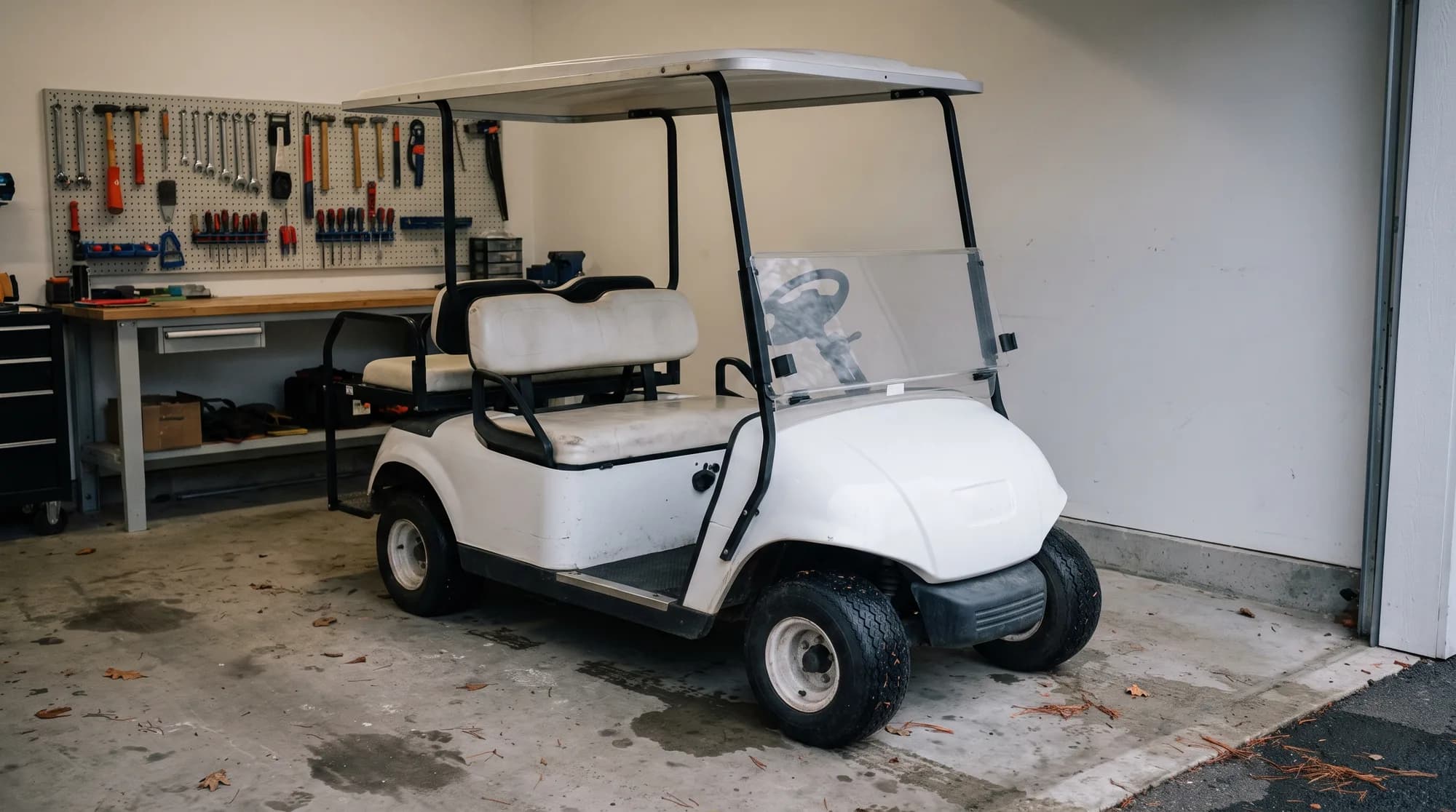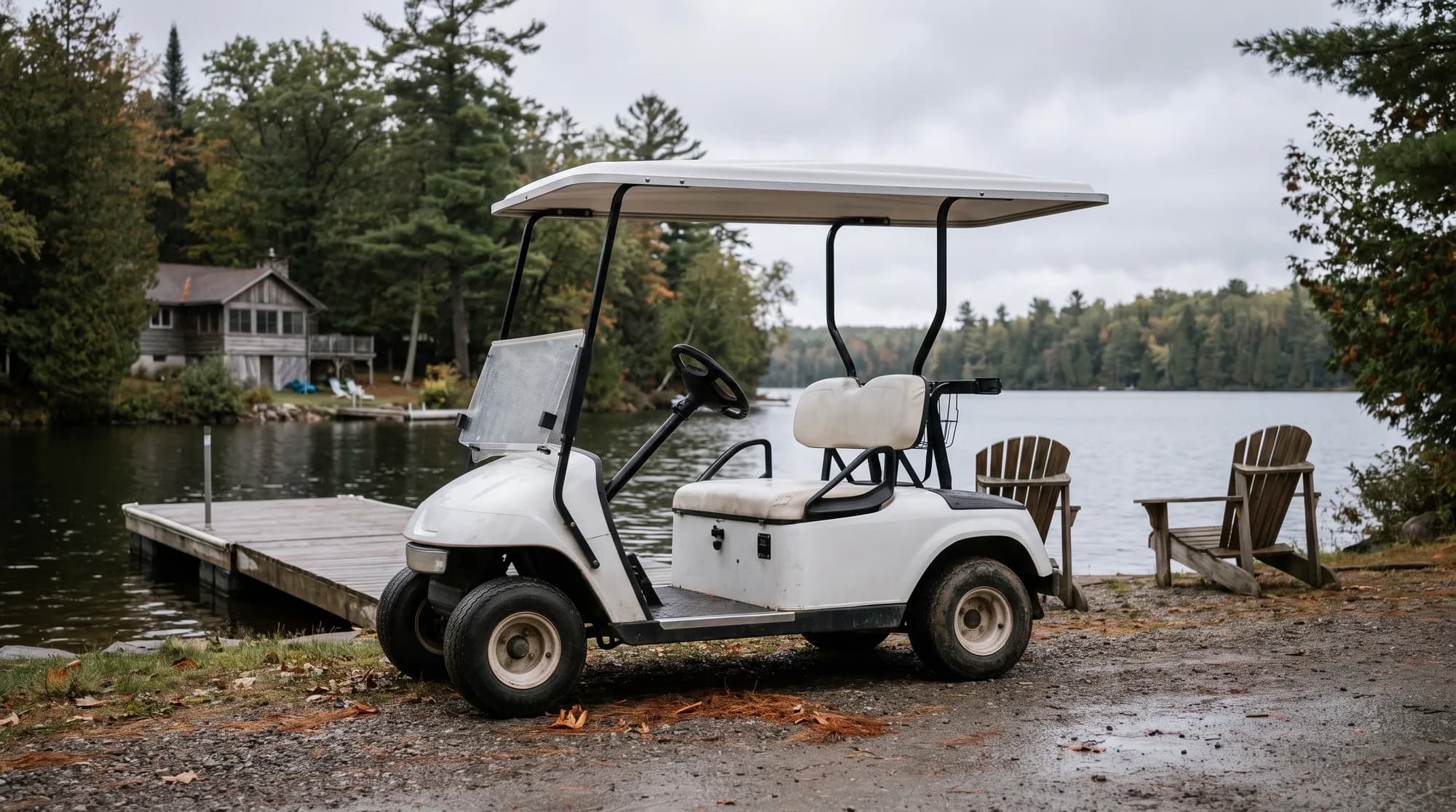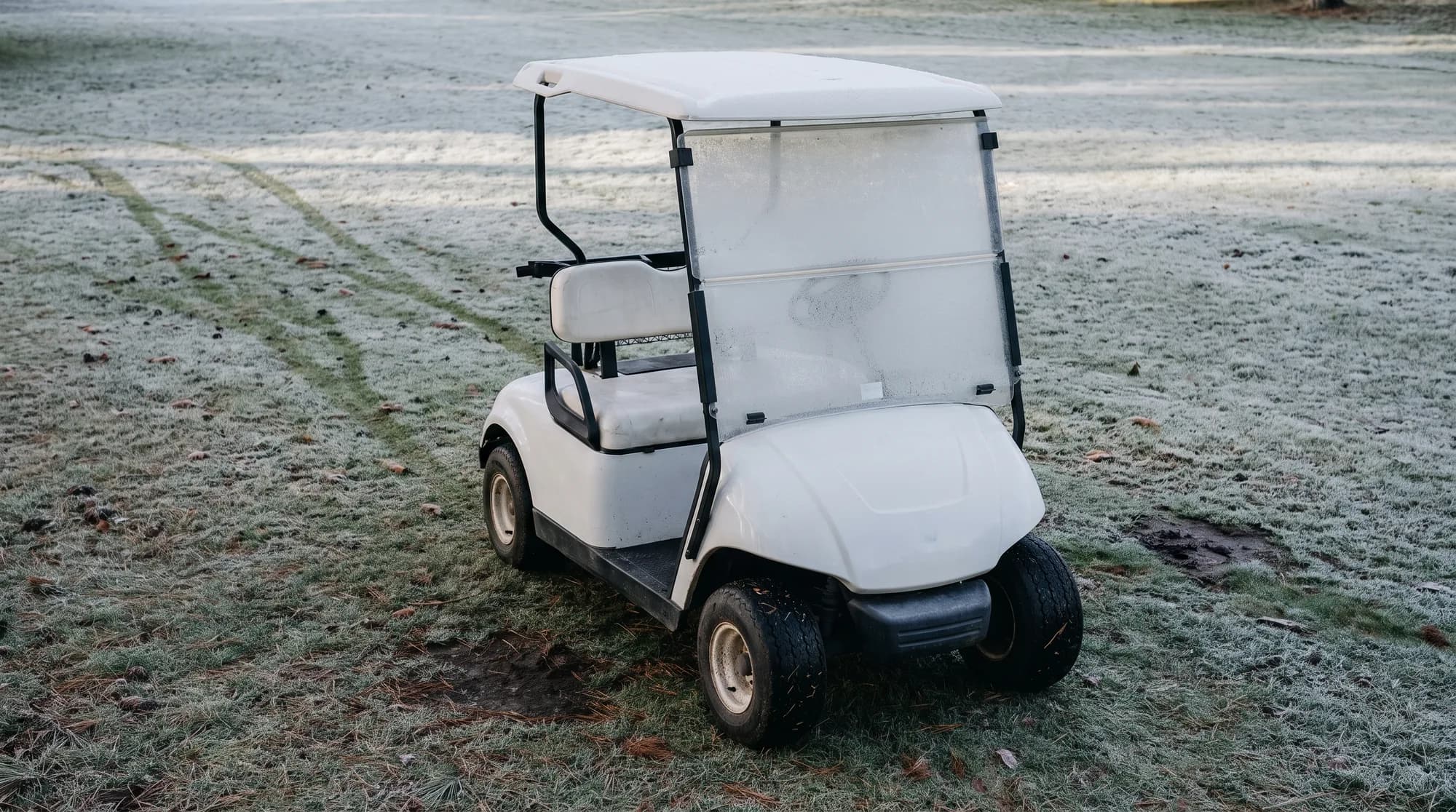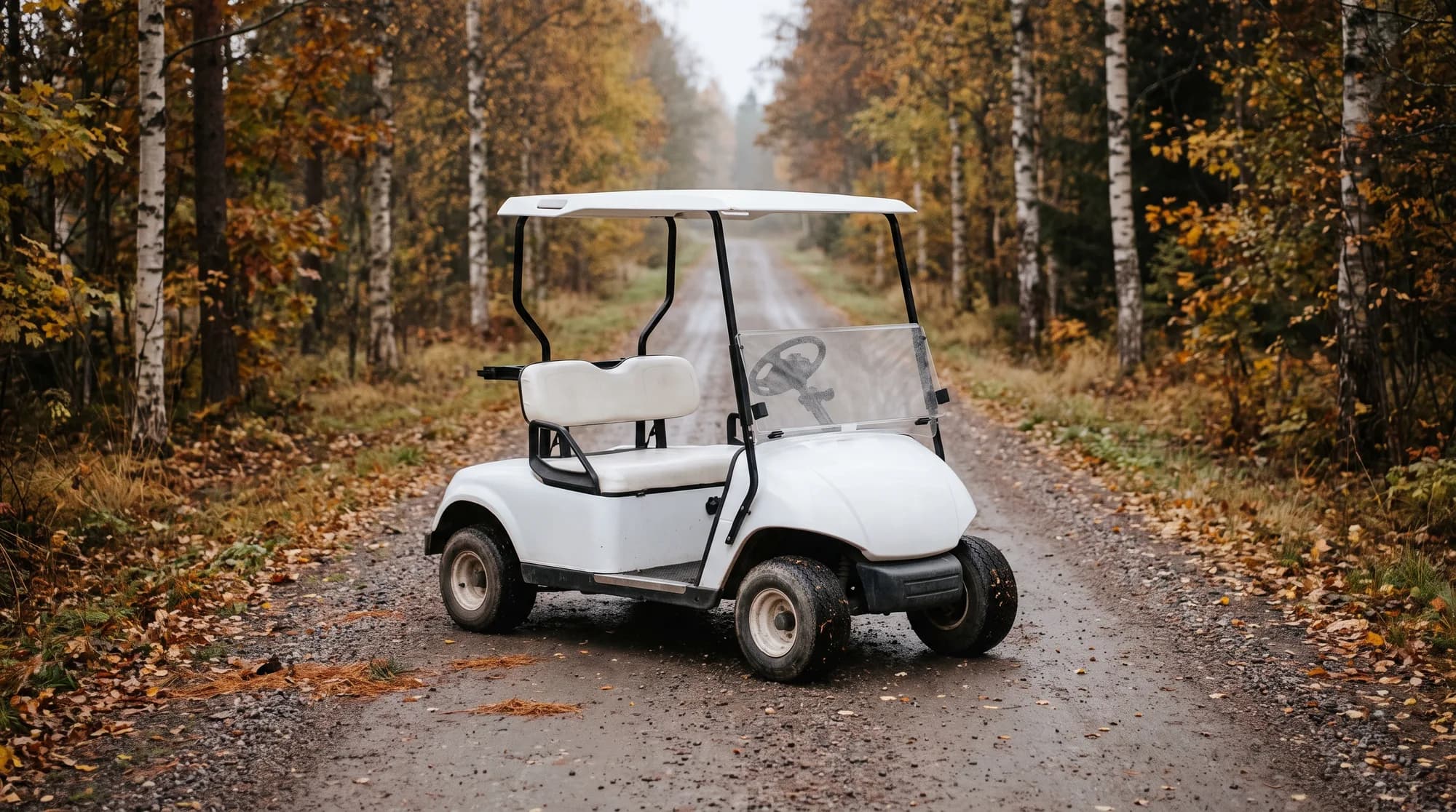
Golf cart tires look like an afterthought, four small doughnuts under a slow vehicle, and most owners treat them that way. Yet tires decide the cart's grip, ride, range and even battery life, and in Canada they face a harder year than the brochure imagined: gravel lanes, frost heave, cottage mud, five months of cold storage and pressure swings with every cold snap. This guide covers the tire types that matter, how to read the sizes, what pressures to actually run as seasons change, when a tire is finished, and what replacement really costs in CAD.
- Three tread families cover almost every cart: turf for grass and pavement, all-terrain for gravel and rural ground, and street tread for smooth-surface communities.
- The standard size on classic carts is 18x8.50-8. Lifted carts run larger diameters, commonly on 10, 12 or 14 inch wheels.
- Golf cart tires run low pressures, typically in the 15 to 25 psi band. The number moulded on your sidewall or in the manual wins, not a generic figure.
- Cold drops pressure, roughly one psi for every five to six degrees Celsius, so a correct September pressure can be badly low by November.
- Age kills cart tires before tread wear does. Cracked sidewalls on a seven-year-old tire mean replacement even with deep tread.
- Budget roughly CA$70 to CA$150 per tire for common sizes, more for premium all-terrain, plus fitting unless you do it yourself.
The three tread families
Turf tires are the smooth-treaded standard fitted to most carts from new, designed to protect grass and run quietly on pavement. On the surfaces they are made for, they are ideal: gentle, efficient and long-lived. Off those surfaces, they give up quickly, packing with mud and skating on snow. All-terrain tires bring open, knobby tread that bites into gravel, dirt and light snow, at the cost of a slightly firmer, noisier ride and marginally higher rolling resistance. They are the natural choice for Canadian rural and cottage properties, and the near-universal choice on lifted carts. Street tires carry car-like ribbed tread for carts that live on smooth pavement in communities and resorts, giving the best ride and cornering on hard surfaces. Some owners in snowy regions keep two sets on their own wheels, turf or street for the season and aggressive tread for the shoulder months, exactly like winter tires on a Canadian car; our guide to golf carts in snow covers that winter side in full.
Reading the size, and what fits
Cart tire sizes read like 18x8.50-8: overall diameter in inches, then width, then wheel diameter. The classic fitment on standard-height carts is exactly that 18x8.50-8, while lifted carts commonly run 20, 22 or 23 inch overall diameters on 10, 12 or 14 inch wheels. Two cautions before upsizing. Larger diameters without a lift can rub the body through suspension travel and steering lock, so confirm clearance or fit a lift first. And bigger tires effectively raise the gearing, trading a little acceleration and hill-climbing torque for top speed, which matters on hilly ground with a lead-acid cart already working hard in the cold. When replacing like for like, match the moulded size and fit tires in pairs per axle at minimum, so grip and diameter stay even.
Pressures: the cheapest performance upgrade in Canada
Golf cart tires run far lower pressures than car tires, typically somewhere in the 15 to 25 psi band, and the correct number for your tire is moulded on its sidewall or printed in the cart manual. Treat that number as the answer and a monthly check as the habit. Underinflation is the common failure: it scrubs the tread edges, blunts the steering, and adds rolling resistance that quietly taxes range and battery life, a real cost on an electric cart in a cold climate. Overinflation crowns the tread, hardens the ride and cuts grip on loose ground. Canada adds a seasonal twist that catches people every autumn: pressure falls with temperature, roughly one psi for every five to six degrees Celsius, so tires set correctly in a warm September will read badly low after the first hard frost. Check when seasons turn, and set storage pressure slightly above normal before a winter layup so months of slow seepage and cold do not leave the tires flat-spotted by spring, as covered in our winter storage guide.
When a tire is finished
- Tread depth: once the pattern is worn smooth or below roughly 2 millimetres at its shallowest, grip on wet grass, gravel and snow is largely gone.
- Sidewall cracking: fine crazing that deepens into visible cracks means the rubber has aged out, common on Canadian carts that sit through freeze-thaw cycles. Age, not mileage, retires most cart tires, often around the five to eight year mark.
- Flat spots: a cart stored all winter on soft tires can develop persistent flat spots that thump at speed. Mild ones drive out; permanent ones mean replacement.
- Uneven wear: one shoulder worn far faster than the other points at alignment, worn steering components or chronic misinflation. Fix the cause or the new tire repeats the pattern, a point our maintenance schedule expands on.
- Damage: cuts to the cords, bulges, or repeated slow leaks around the bead on a corroded wheel all end a tire's service life.
What replacement costs in CAD
Cart tires are refreshingly cheap next to car rubber. Common turf and street sizes typically run about CA$70 to CA$120 per tire in Canada, with quality all-terrain tread more like CA$100 to CA$180, and complete pre-mounted wheel-and-tire combos commonly CA$400 to CA$800 for a set of four depending on wheel style and size. Fitting loose tires to your existing wheels is a manageable DIY job with tire levers, soapy water and patience, though small shops will mount and balance them inexpensively, and balancing matters more on street-tire carts driven at higher speeds. When pricing a used cart, treat a worn or aged set of tires as a CA$400 to CA$700 line item in the negotiation, alongside the battery checks in our used cart inspection checklist. And when speccing a new build, choose the tread for the ground the cart will actually live on rather than the showroom floor. As a brand building to order for Canadian customers, tires are one of the first questions we ask, because they are the cheapest thing on the cart to get exactly right.
Spec the right tires from day one
Tell us your surfaces and seasons and we will build your cart on the tread, wheels and stance that suit them, priced honestly in CAD.
Frequently asked questions
What pressure should golf cart tires be?+
Most golf cart tires run between 15 and 25 psi, but the correct figure is the one moulded on the sidewall or printed in your cart's manual. Check monthly with a proper gauge, and recheck whenever the temperature drops sharply.
How long do golf cart tires last?+
Often five to eight years, with age and sidewall cracking retiring them before tread wear does on most private carts. Carts on abrasive gravel or pavement wear tread faster, and poor storage or chronic underinflation shortens life further.
Can I put bigger tires on my golf cart?+
Usually, within limits. Modestly larger sizes may clear on a standard cart, but bigger jumps need a lift kit to avoid rubbing, and larger diameters trade some hill-climbing torque for speed. Confirm clearance at full steering lock and suspension travel.
Are golf cart tires good in snow?+
Turf and street tires are poor on snow. All-terrain tread handles a few centimetres over a firm base, and tire chains on the driven wheels are the strongest option for packed snow and ice. No tire makes a cart a deep-snow vehicle.
How much do golf cart tires cost in Canada?+
Roughly CA$70 to CA$120 per tire for common turf and street sizes, CA$100 to CA$180 for quality all-terrain tread, and about CA$400 to CA$800 for a pre-mounted set of four wheels and tires, plus fitting if a shop does the work.
Related solutions
Ready to explore what we build?
See the vehicles and the setting this applies to, or get a tailored quote built around your site.
Ready to find the right buggy?
Tell us how and where it will work and we will specify a vehicle and a tailored quote built around you. Every build comes with a 3-year warranty and a 24-hour priority call-out.
Our guides are written and reviewed by the Hawke Electric Vehicles team, the people who specify, build, deliver and support the vehicles. We focus on honest, practical advice and flag where a figure depends on the build rather than guessing.
More guides by Hawke