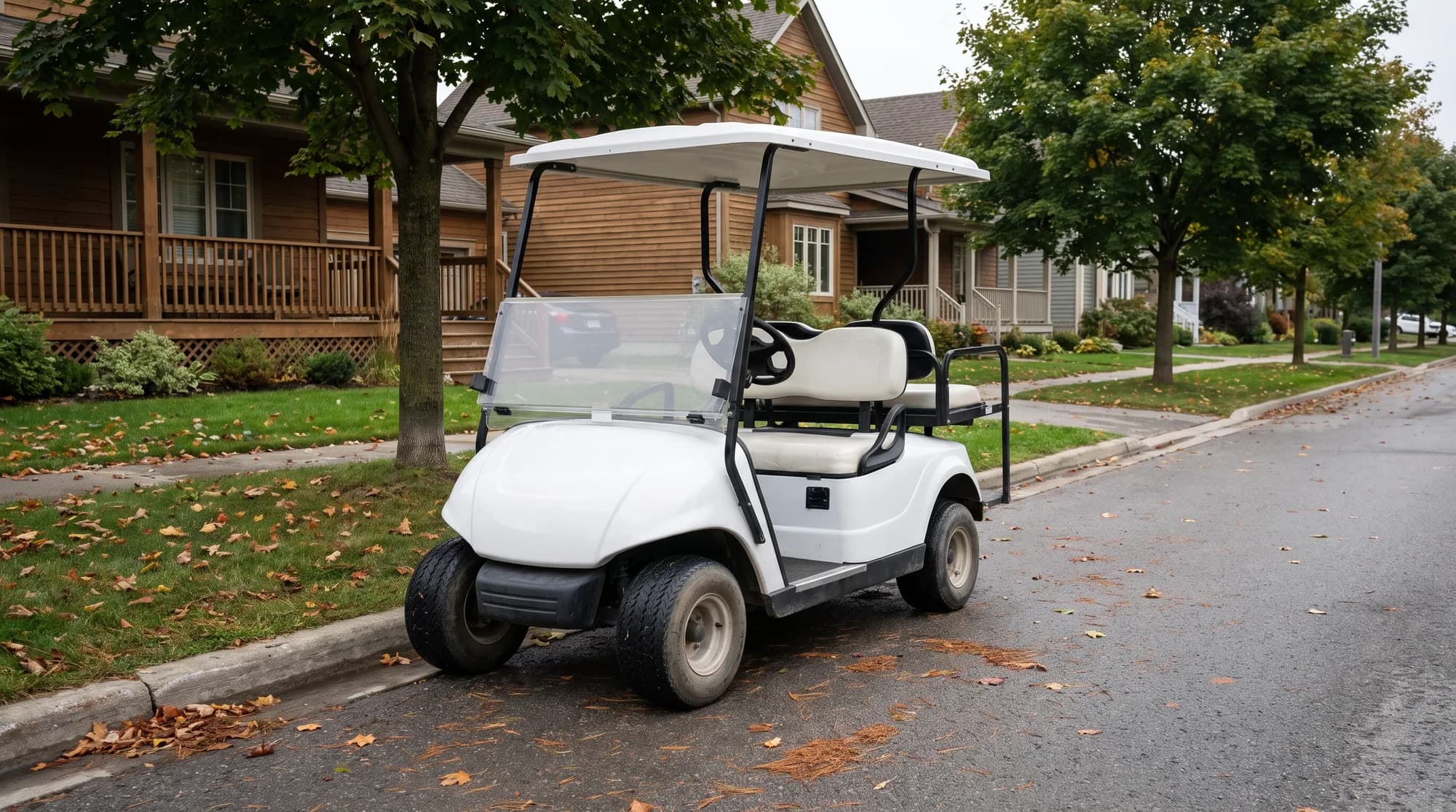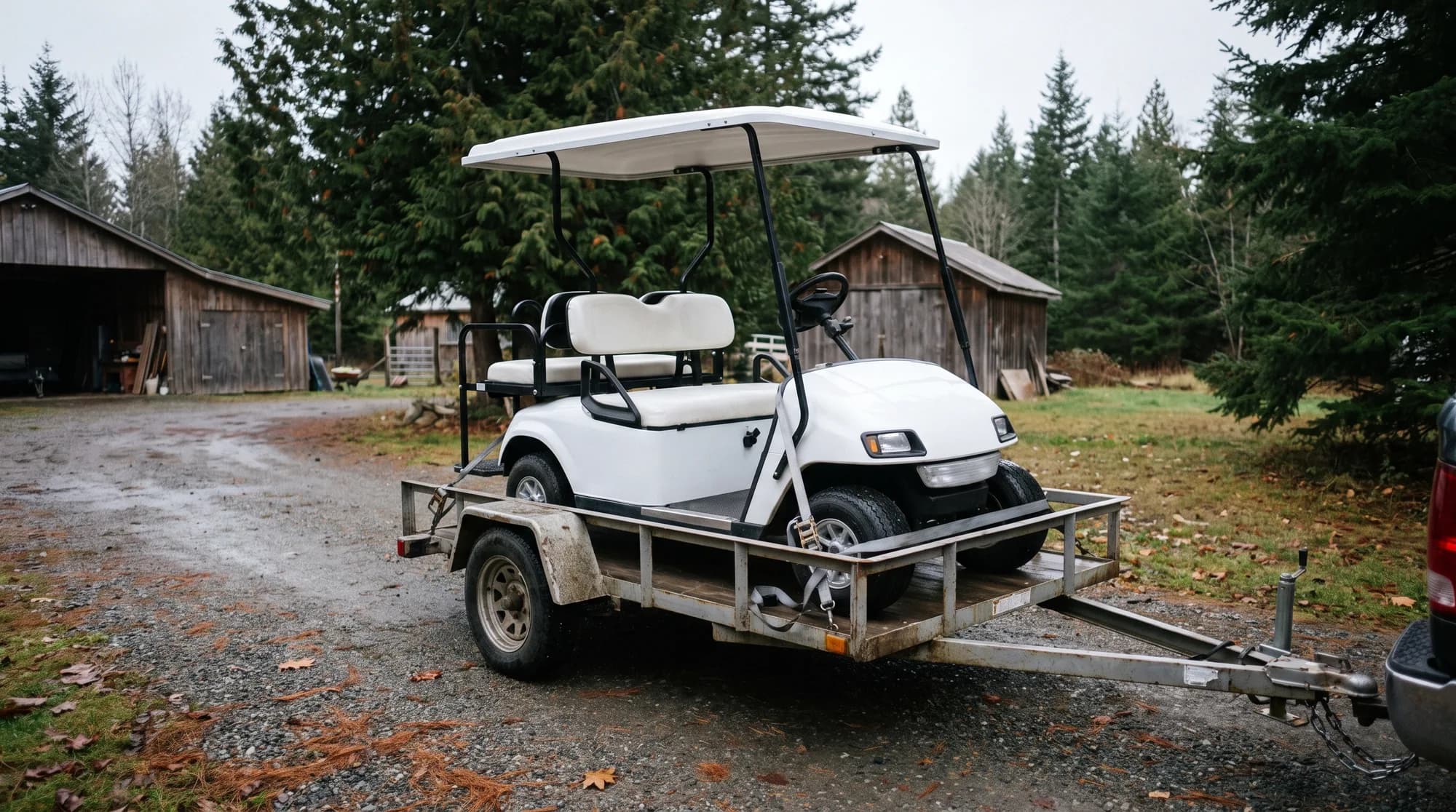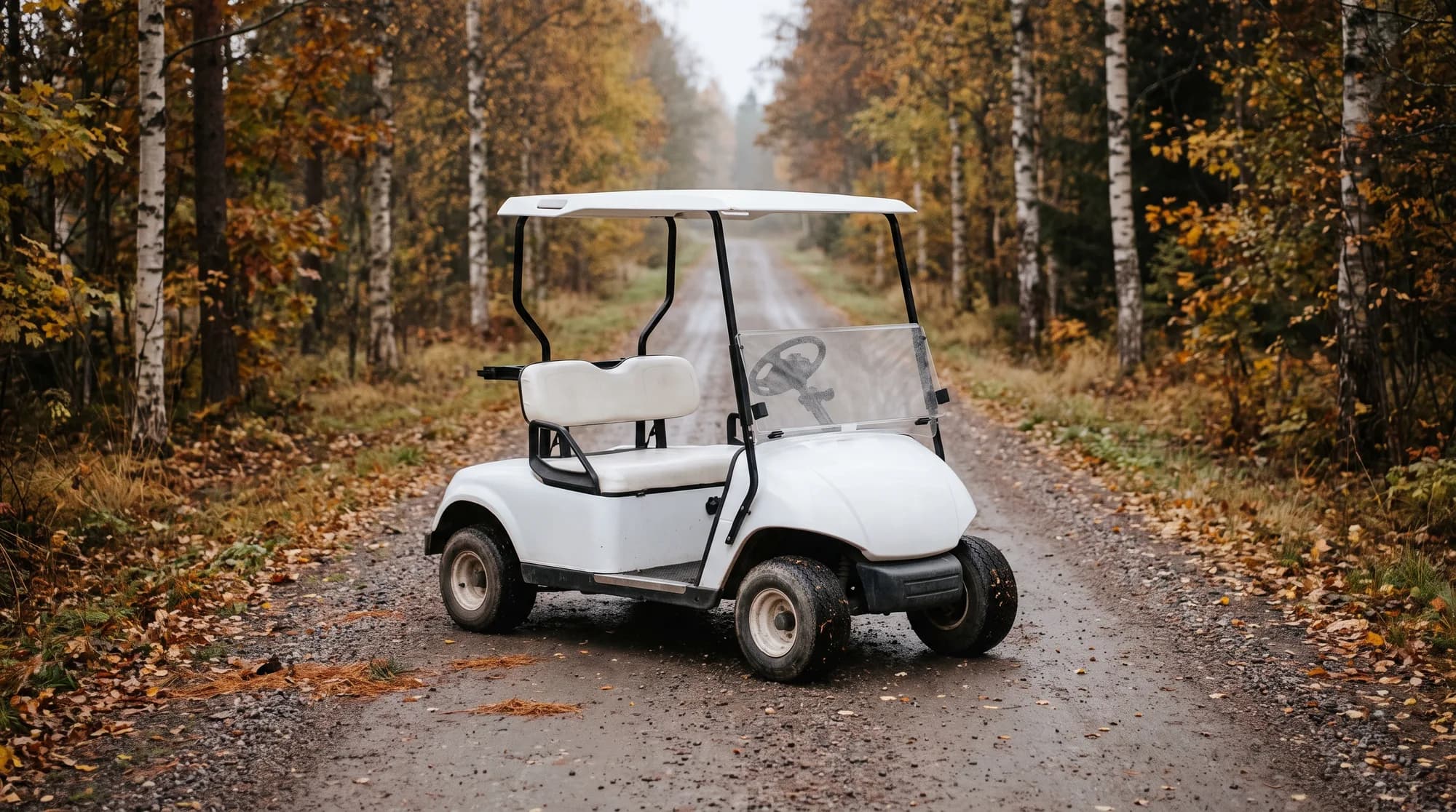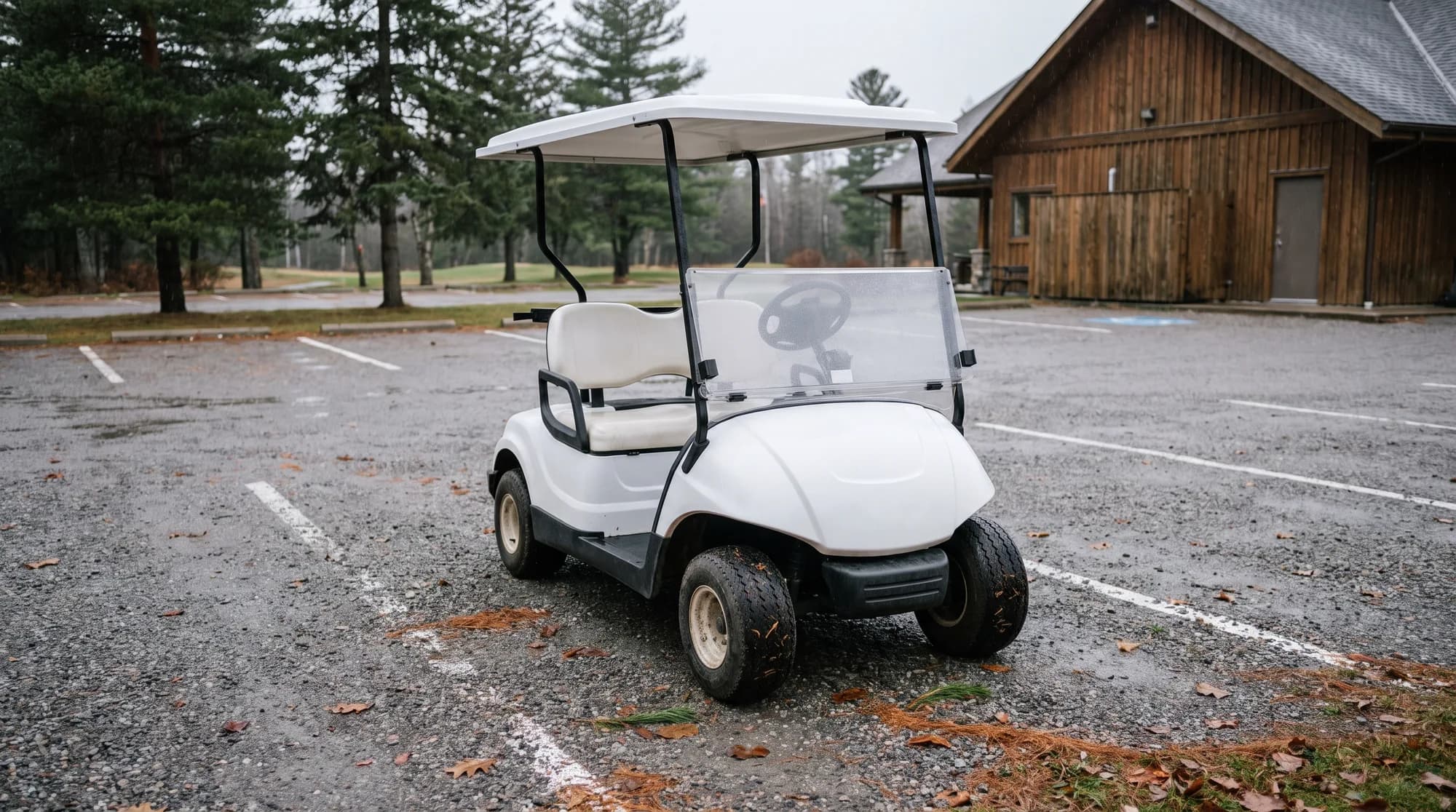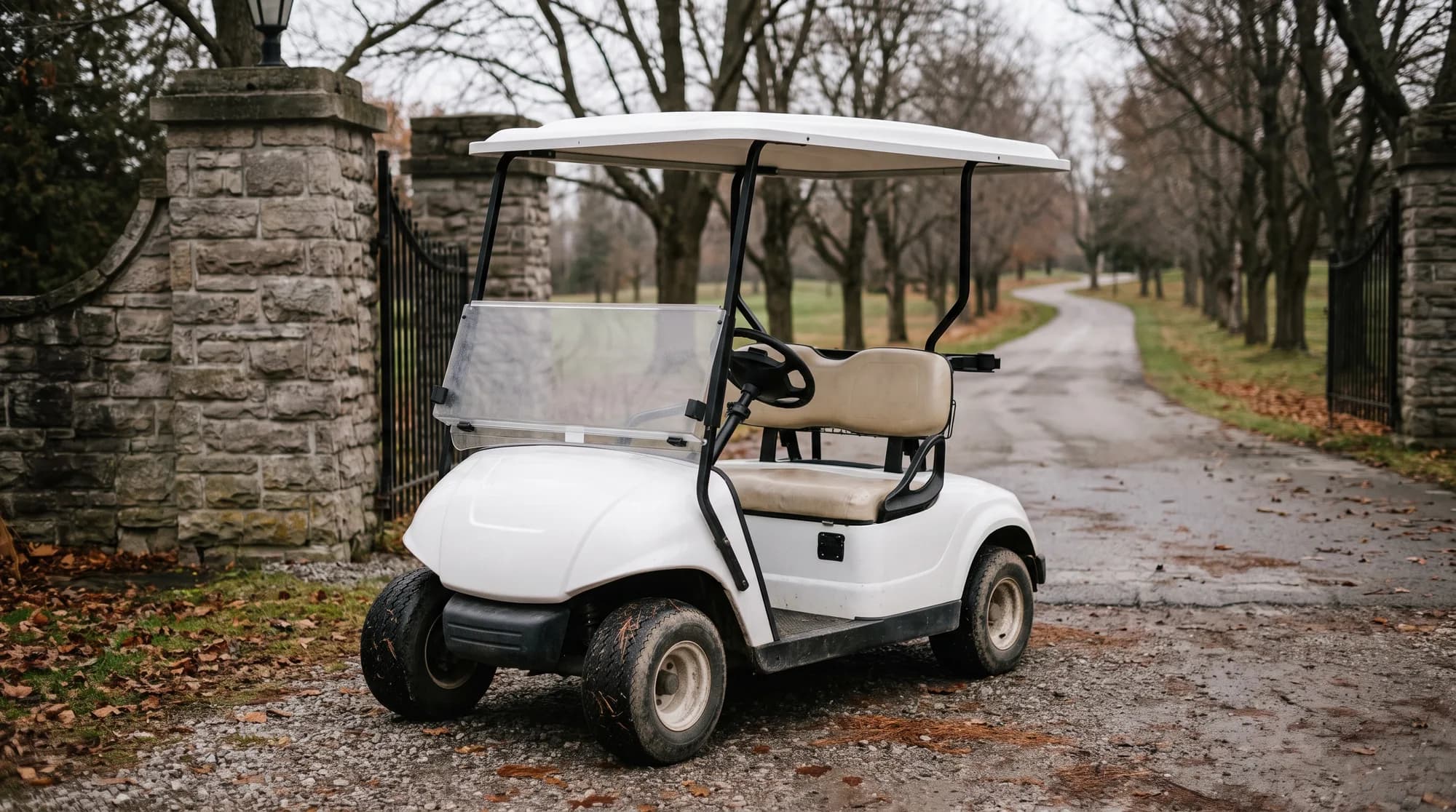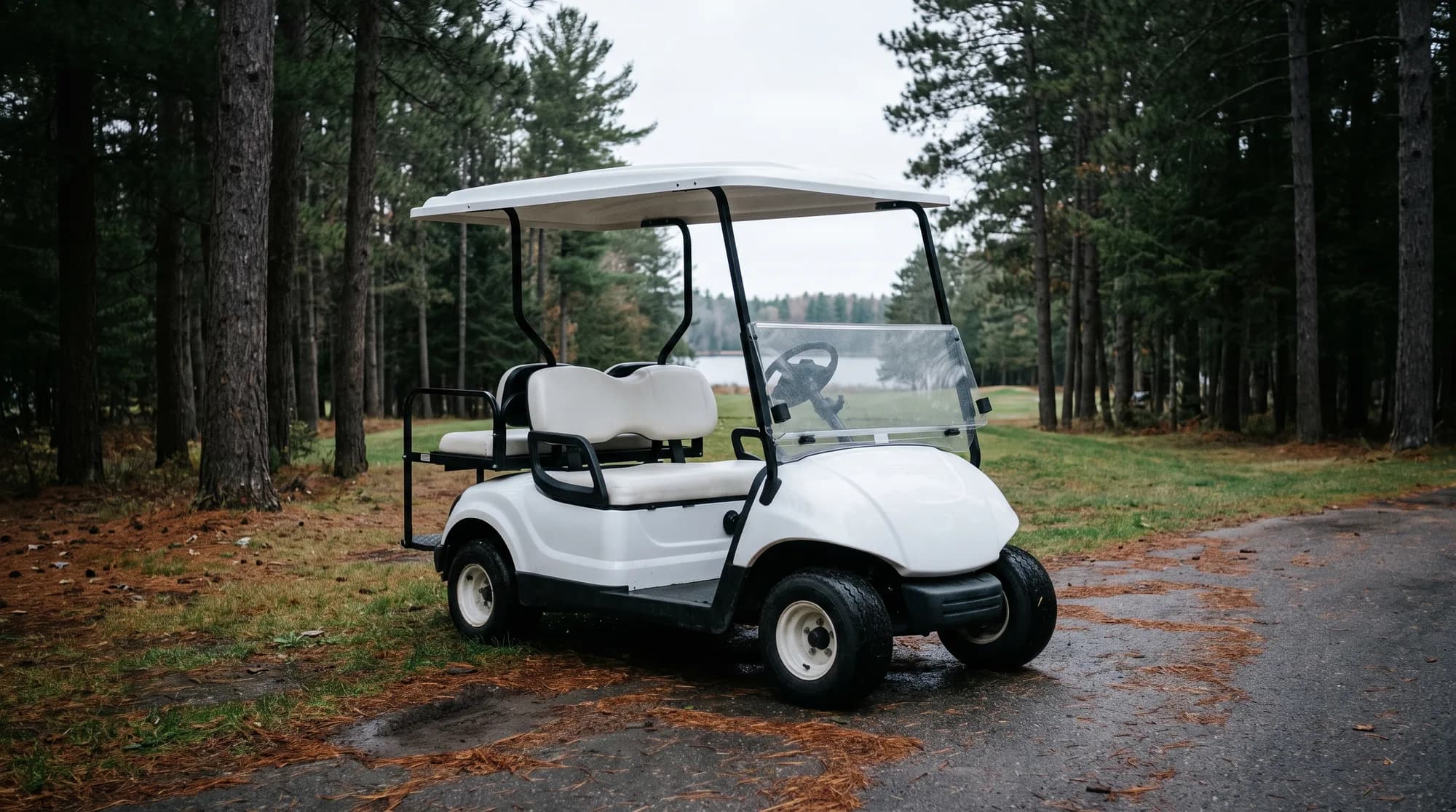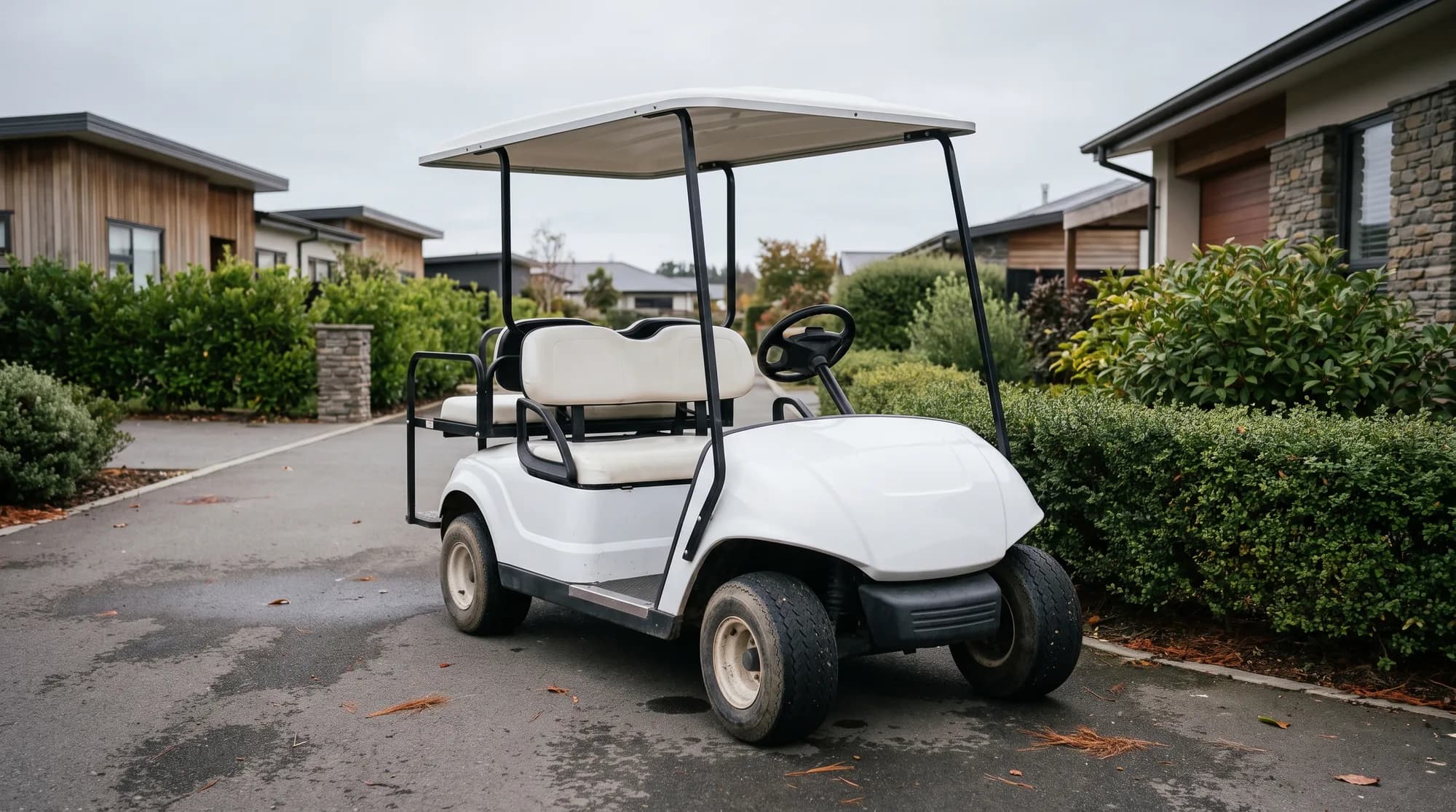
If you want cart-style electric transport that can legally use a Canadian street outside a golf cart pilot community, the low-speed vehicle is the category that matters. LSVs sit in an unusual spot in Canadian law: defined federally by Transport Canada, but switched on (or not) province by province, and often street by street through municipal bylaws. This guide explains what an LSV actually is, what equipment it must carry, how it differs from a golf cart, and where you can realistically drive one in 2026.
- Transport Canada defines an LSV as a four-wheeled vehicle powered by an electric motor, producing no emissions, with an attainable speed above 32 km/h but not more than 40 km/h on a paved level surface.
- LSVs must carry road equipment including headlights, tail and brake lights, turn signals, mirrors, a windshield, a parking brake, seat belts and a vehicle identification number.
- A golf cart is not an LSV and cannot be converted into one; certification happens at manufacture.
- Provinces decide road access: BC allows registered NZEVs on roads posted 40 km/h or less (50 with a bylaw or permit), Quebec registers compliant LSVs for roads up to 50 km/h, and Ontario runs an LSV pilot requiring a full G licence and CA$1 million liability cover.
- Speed limits cap LSV usefulness by design: they are neighbourhood vehicles, not highway vehicles, and are banned from high-speed roads everywhere.
- Always confirm the current provincial rules and your municipal bylaw before buying; several frameworks are pilots with end dates.
The federal definition: what makes an LSV an LSV
Under the federal Motor Vehicle Safety Regulations, a low-speed vehicle is a vehicle, other than an all-terrain vehicle or truck, that is powered by an electric motor, produces no emissions, runs on four wheels, and can attain more than 32 km/h but not more than 40 km/h on a paved level surface. Three parts of that definition do real work. Electric only: there is no such thing as a gas LSV in Canada. The speed window: a vehicle limited below 32 km/h (like most golf carts) is not an LSV, and one capable of more than 40 km/h falls into ordinary passenger vehicle territory with full crash standards. And the certification: a compliant LSV leaves the factory with a VIN and a Canadian compliance label, which is what provinces rely on when they register it.
The equipment an LSV must carry
- Headlights, tail lights and brake lights
- Turn signals and reflectors
- Rear-view mirrors
- A windshield
- A parking brake
- Seat belts for each seating position
- A vehicle identification number (VIN) and compliance labelling
Province by province: where LSVs can actually drive
Federal certification makes an LSV registrable in principle; provincial law decides where it may drive. The three provinces with the clearest frameworks are BC, Quebec and Ontario, and they take three different approaches.
British Columbia: the NZEV framework
BC calls them neighbourhood zero-emission vehicles. A registered, insured NZEV can be driven on municipal roads with a speed limit of 40 km/h or less, and municipalities can extend that to roads posted up to 50 km/h by bylaw. In unorganized areas the same 40 km/h baseline applies, with road use permits available for 50 km/h roads. Registration and insurance run through ICBC, and a normal driver's licence is required. This is the most settled LSV regime in Canada.
Quebec: registered LSVs on 50 km/h roads
Quebec's Regulation respecting low-speed vehicles layers provincial requirements (braking, lighting and visibility, seat belt anchorage) on top of the federal standard. Compliant vehicles are registered through the SAAQ and may use public roads where the posted limit is 50 km/h or less. The SAAQ recognises a specific list of qualifying models, so in Quebec the practical first question about any LSV is whether that exact model is on the list.
Ontario: a pilot with real teeth
Ontario permits LSVs under a pilot regulation (O. Reg. 215/17) rather than permanent law. The conditions are the strictest of the three: LSVs may only drive on roads posted at 50 km/h or less, only where a municipal bylaw permits them (Ottawa and a number of smaller municipalities have passed one), the driver needs a full Class G licence or higher, and the vehicle must carry at least CA$1 million in third-party liability insurance. The pilot was scheduled to run to mid-2027, so anyone buying an LSV for Ontario streets in 2026 should confirm the programme's current status with the Ministry of Transportation first.
The rest of Canada
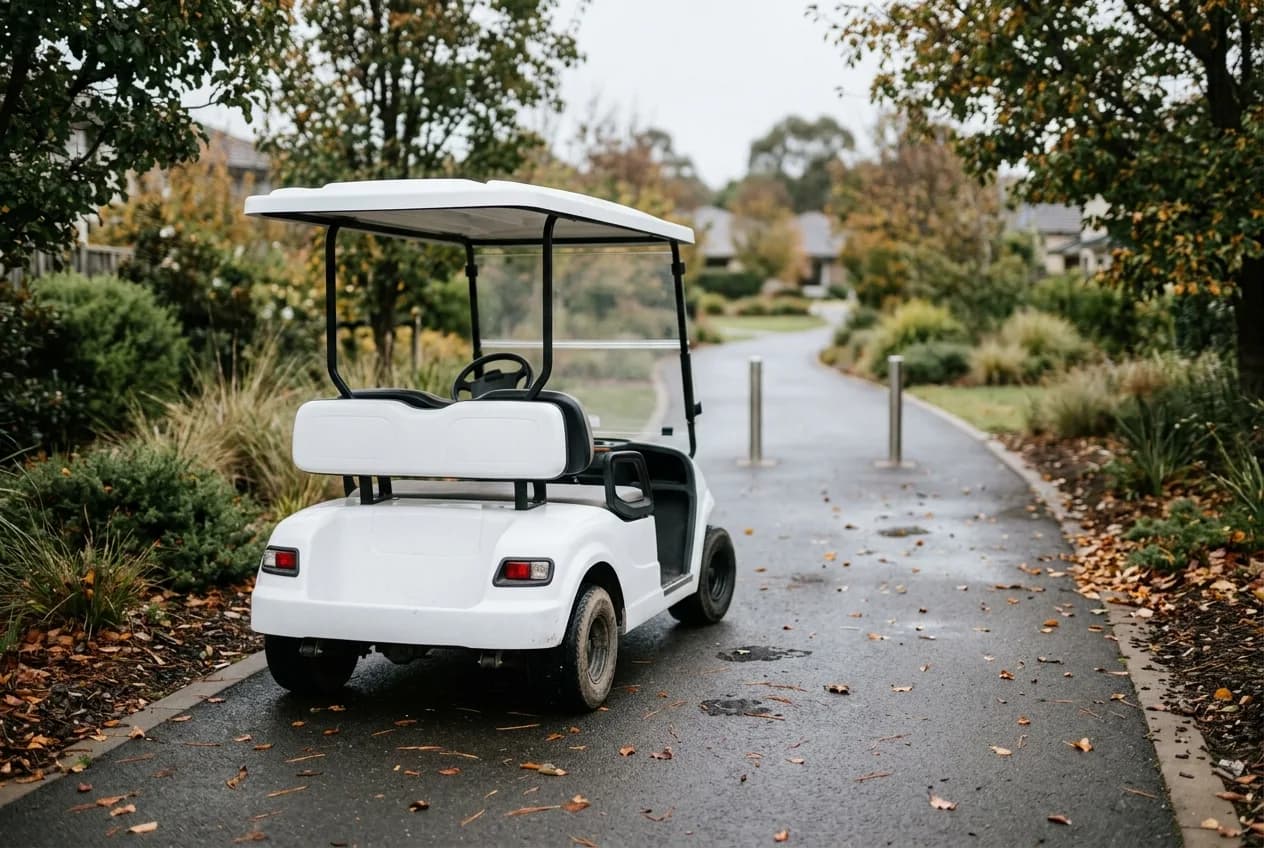
Elsewhere the picture is patchier. Some provinces have limited or municipal-level provisions, others have effectively no on-road framework for LSVs, and rules genuinely change as pilots open and close. If you are outside BC, Quebec or Ontario, treat the provincial transportation ministry and your municipal office as the source of truth before committing money.
LSV or golf cart: which do you actually need?
- Low-speed vehicle
- Yes, where the province and bylaw allow
- Golf cart
- Only in specific pilot communities
- Low-speed vehicle
- 32 to 40 km/h
- Golf cart
- Typically under 32 km/h
- Low-speed vehicle
- Required, like any road vehicle
- Golf cart
- Usually none for private land use
- Low-speed vehicle
- Generally from around CA$20,000 upward
- Golf cart
- Roughly CA$10,000 to CA$20,000 well specified
- Low-speed vehicle
- Short legal road trips at low speed
- Golf cart
- Courses, acreages, resorts, cottages
| Low-speed vehicle | Golf cart | |
|---|---|---|
| Street use | Yes, where the province and bylaw allow | Only in specific pilot communities |
| Top speed | 32 to 40 km/h | Typically under 32 km/h |
| Registration and insurance | Required, like any road vehicle | Usually none for private land use |
| Price band (new) | Generally from around CA$20,000 upward | Roughly CA$10,000 to CA$20,000 well specified |
| Best at | Short legal road trips at low speed | Courses, acreages, resorts, cottages |
The honest test is your route map. If every journey is on private ground, a golf cart does the job for less money and with less paperwork. If you need to cover public streets in a province with a live framework, an LSV is the legal tool. One Canadian wrinkle worth weighing: LSVs are electric by definition, and cold cuts battery range meaningfully, often by a fifth to a third in deep winter. A vehicle whose ceiling is 40 km/h and whose winter range is reduced needs to fit genuinely short, local journeys to make sense in January.
Buying an LSV in Canada: three checks before you pay
- Certification: confirm the vehicle carries a Canadian compliance label and VIN as a low-speed vehicle, not a US-market golf cart being sold as street legal. Imports that were never certified for Canada cannot be fixed after the fact.
- Registrability where you live: in Quebec, check the specific model is on the SAAQ's recognised list; in BC, confirm ICBC will register it as an NZEV; in Ontario, confirm your municipality has an enabling by-law and the pilot is still in force.
- Winter fitness: ask about battery chemistry, cold-weather range and whether the cabin is enclosed. A vehicle you cannot comfortably use from November to March needs to justify itself on the other seven months.
Frequently asked questions
What qualifies as a low-speed vehicle in Canada?+
A four-wheeled vehicle powered by an electric motor with no emissions, capable of more than 32 km/h but not more than 40 km/h on a paved level surface, and built with required road equipment including seat belts, lights, mirrors, a windshield and a VIN.
Are LSVs legal in every province?+
No. Federal certification makes a vehicle registrable in principle, but each province decides road access. BC, Quebec and Ontario have the clearest frameworks; elsewhere provisions are limited or absent, so check your provincial ministry.
Can LSVs drive on the highway?+
No. Every Canadian framework restricts LSVs to low-speed roads, typically posted at 40 or 50 km/h or less, and keeps them off provincial highways.
Do LSVs need insurance?+
Yes, as registered road vehicles. In BC that means ICBC; in Quebec, registration through the SAAQ with civil liability cover; in Ontario's pilot, at least CA$1 million in third-party liability insurance.
Is a golf cart with lights and seat belts an LSV?+
No. LSV status is set by certification at manufacture, including the 32 to 40 km/h speed capability and a compliance label. Aftermarket equipment does not change a golf cart's legal category.
Not sure which category fits?
Describe where you need to drive and we will tell you honestly whether a cart or an LSV is the right tool, then quote a build in CAD with cold-weather batteries done properly.
Ready to find the right buggy?
Tell us how and where it will work and we will specify a vehicle and a tailored quote built around you. Every build comes with a 3-year warranty and a 24-hour priority call-out.
Our guides are written and reviewed by the Hawke Electric Vehicles team, the people who specify, build, deliver and support the vehicles. We focus on honest, practical advice and flag where a figure depends on the build rather than guessing.
More guides by Hawke