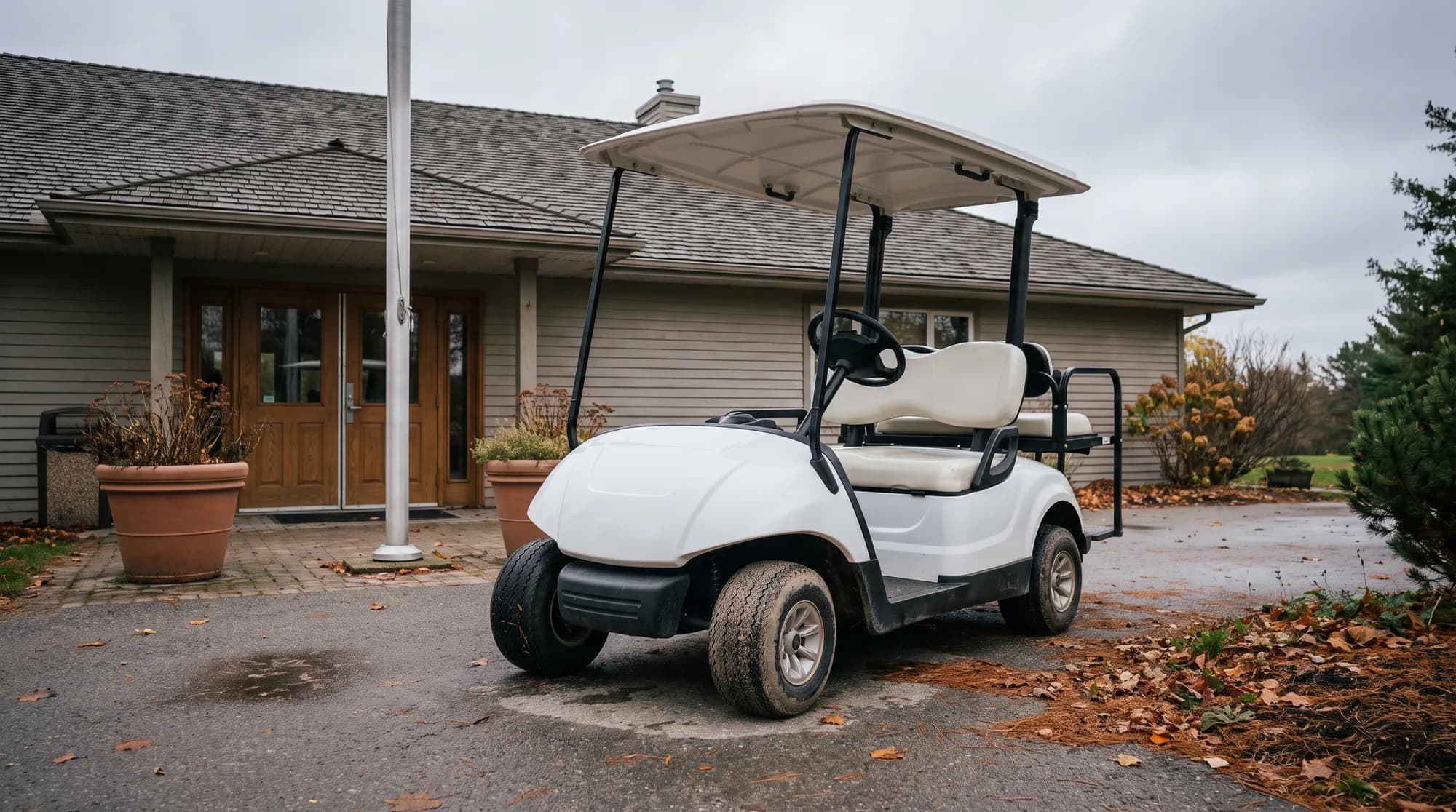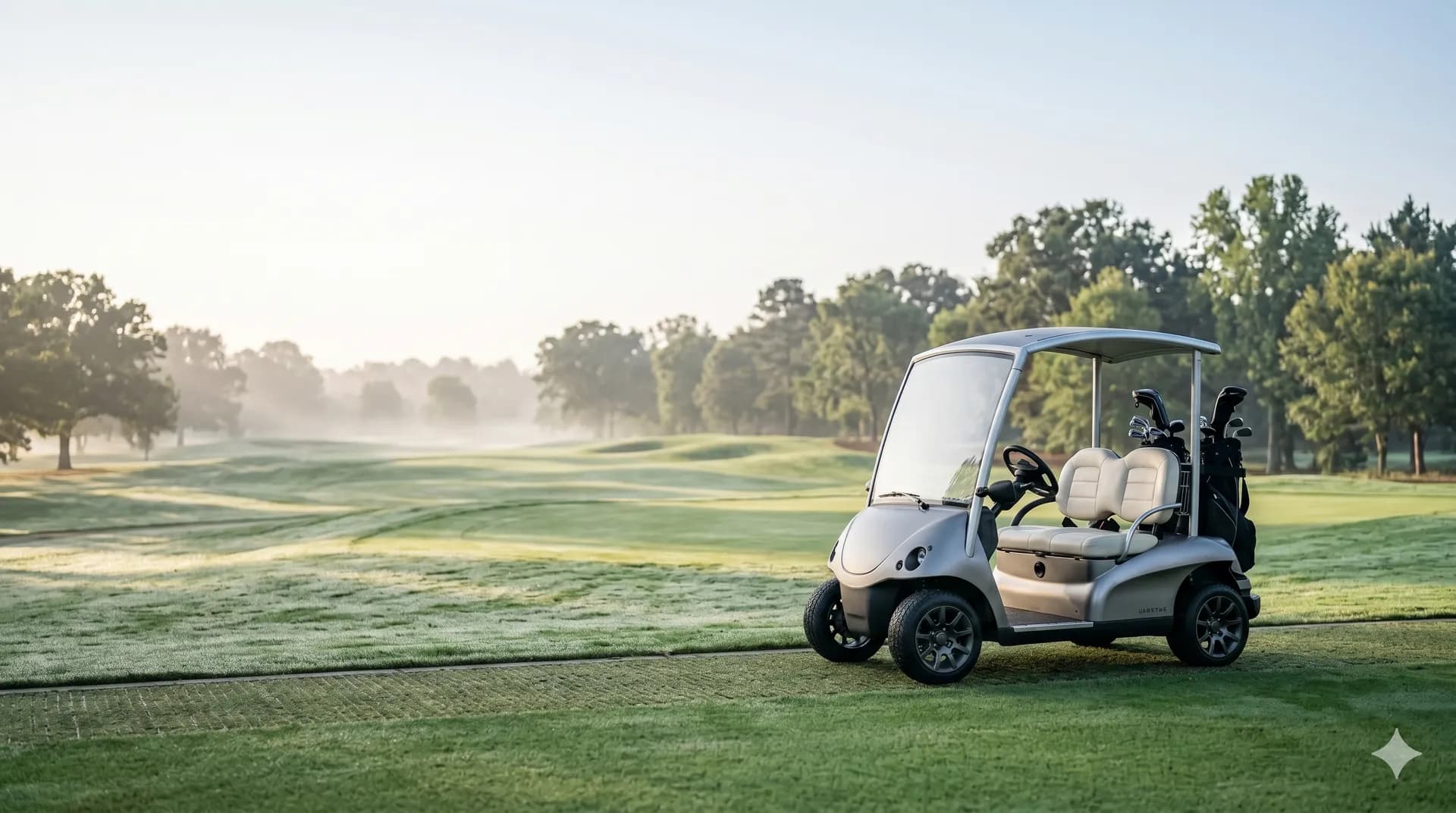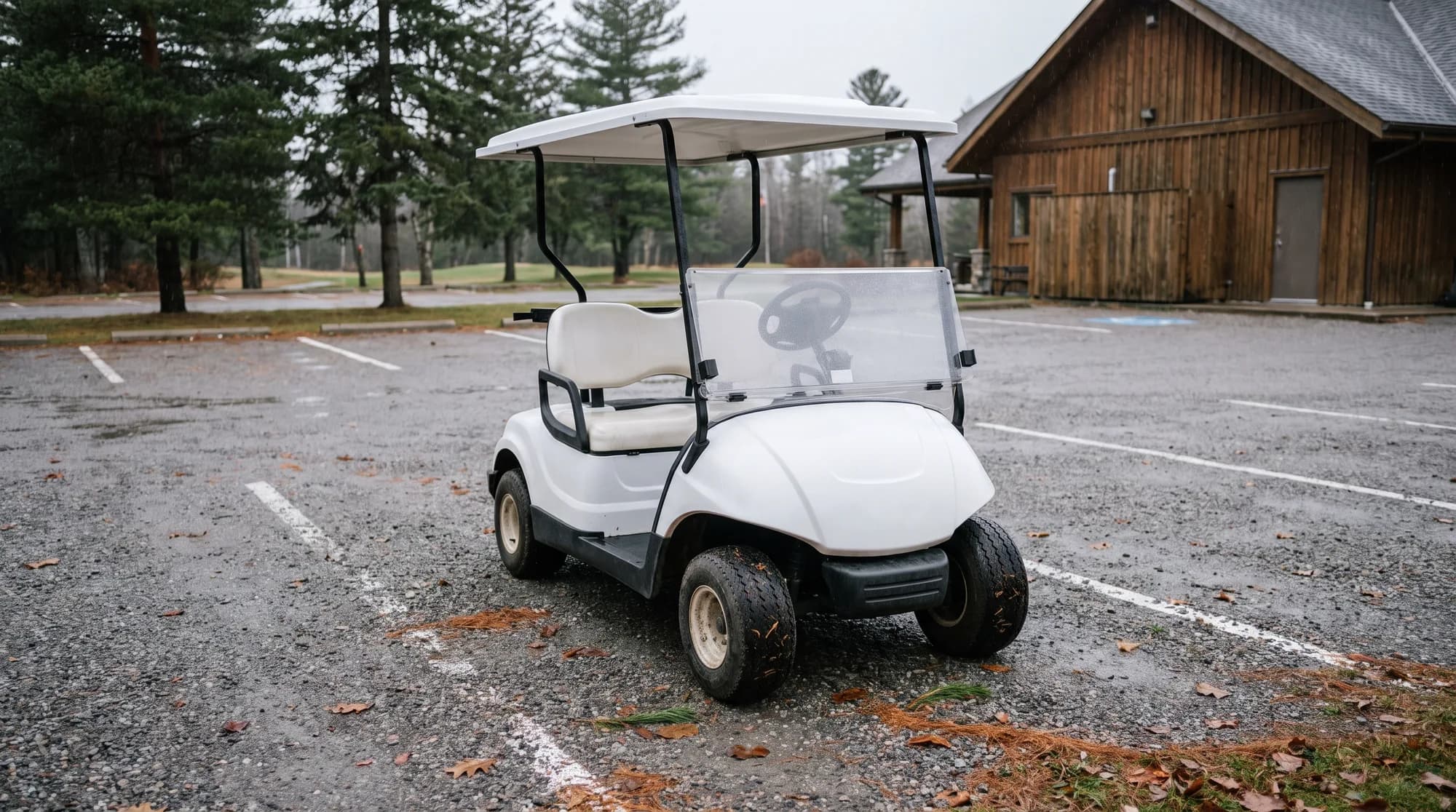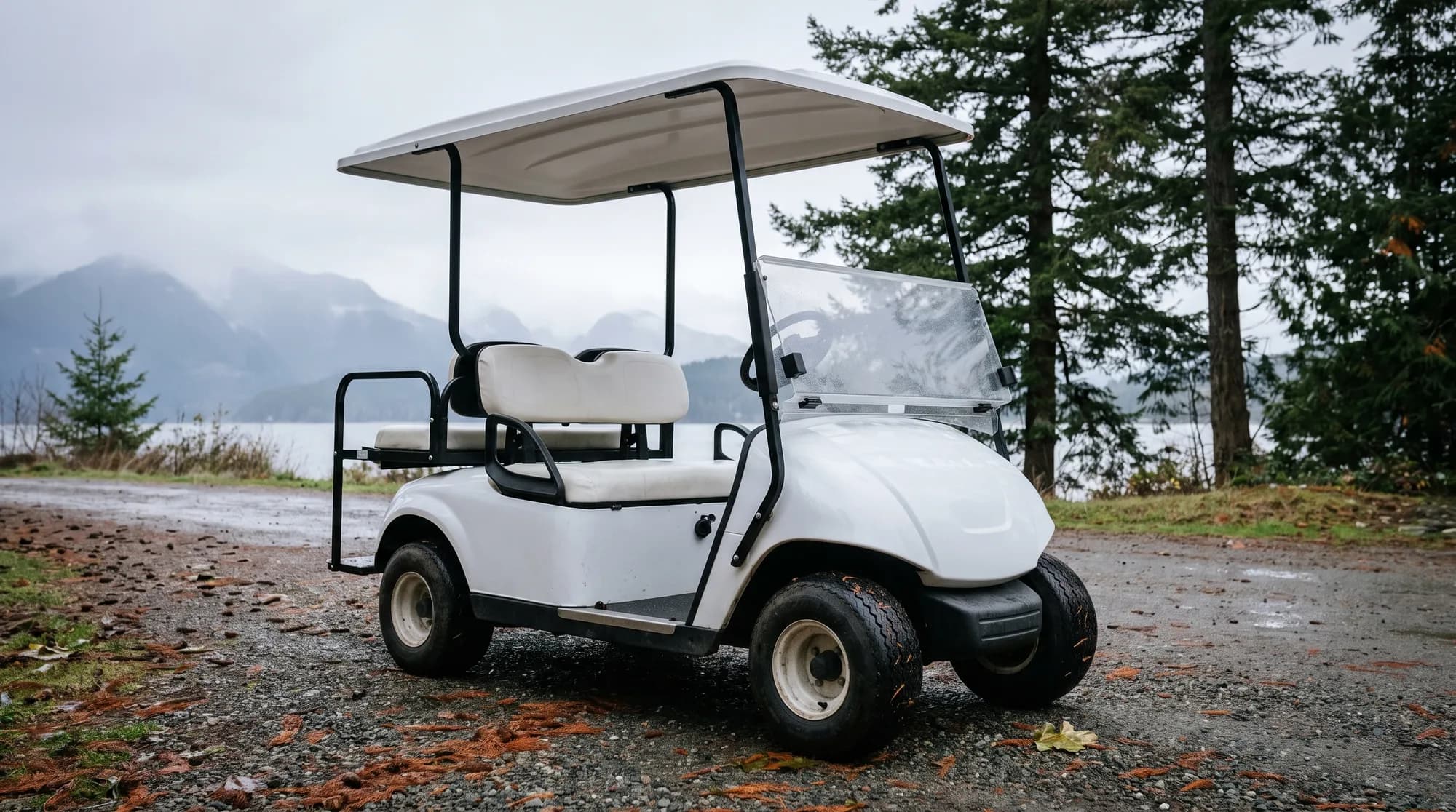
Ask what a golf cart costs in Canada and you will get answers ranging from four thousand dollars to more than thirty, because a tired used two-seater and a lifted lithium six-seater are barely the same product. The honest answer is a range, and where you land inside it depends on four things: new or used, lead-acid or lithium, how many seats you need, and whether the cart has to survive a Canadian winter outdoors. This guide gives realistic 2026 figures in Canadian dollars for each route, then walks through the costs the sticker price hides, including the cold-climate ones that catch buyers in Ontario, Alberta and cottage country every year.
- A new entry-level electric golf cart in Canada typically runs CA$8,000 to CA$13,500; a well-equipped four-seat lithium model CA$14,000 to CA$18,000.
- Lifted, six-seat or premium builds commonly sit between CA$18,000 and CA$33,000 at Canadian dealers.
- A clean refurbished used cart usually sells for CA$4,000 to CA$7,000; recent low-hours lithium examples can ask CA$10,000 or more.
- Lithium adds roughly CA$2,000 to CA$4,000 up front but handles Canadian winters and seasonal storage far better than lead-acid.
- Budget for delivery, GST or HST, a charger, insurance and winter storage on top of the advertised price.
New golf cart prices in Canada for 2026
At Canadian dealerships in 2026, most new electric golf carts are advertised between roughly CA$8,000 and CA$18,000. The bottom of that range buys a straightforward two-seat cart with a lead-acid battery pack, the kind of machine that is perfectly good for a flat course or a small property. The middle of the range, roughly CA$12,000 to CA$16,000, is where most private buyers actually land: a four-seat cart with a lithium battery, decent tires and weather protection. Above CA$18,000 you are into lifted carts, six-seat configurations and premium trims, and it is not unusual to see fully specified builds advertised past CA$30,000.
Two specification choices move the number more than anything else. The first is battery chemistry. A lithium pack typically adds CA$2,000 to CA$4,000 over the equivalent lead-acid cart, and in Canada that premium earns its keep, because lithium tolerates months of winter storage and cold-morning starts far better than flooded lead-acid. The second is road readiness. If your municipality permits carts or low-speed vehicles on certain roads, the lights, mirrors, seatbelts and signals required add real cost. If the cart will only ever run on private land, a course or cottage trails, you can skip most of that.
Used golf cart prices in Canada
The used market is where most first-time Canadian buyers shop, and it is wide. Refurbished carts from the big fleet names commonly change hands between CA$4,000 and CA$7,000, usually ex-course machines that have been repainted and given fresh batteries. Private listings on classified sites can dip under CA$3,000, but at that money you are almost always inheriting a worn lead-acid pack, and a replacement set of six or eight batteries can run CA$1,200 to CA$2,500 fitted. A recent low-hours cart with a healthy lithium pack holds its value hard and can still ask CA$10,000 or more used.
- New
- CA$8,000 to CA$13,000
- Used
- CA$3,000 to CA$6,000
- New
- CA$12,000 to CA$18,000
- Used
- CA$5,000 to CA$9,000
- New
- CA$18,000 to CA$33,000
- Used
- CA$9,000 to CA$16,000
- New
- New, full warranty
- Used
- The single biggest risk, test it
| New | Used | |
|---|---|---|
| 2-seat electric | CA$8,000 to CA$13,000 | CA$3,000 to CA$6,000 |
| 4-seat electric | CA$12,000 to CA$18,000 | CA$5,000 to CA$9,000 |
| Lifted / 6-seat builds | CA$18,000 to CA$33,000 | CA$9,000 to CA$16,000 |
| Battery condition | New, full warranty | The single biggest risk, test it |
The costs the sticker price hides
The purchase price is only part of the story, and in Canada the extras are a little different from the ones American guides list. Plan for these from the start so the real budget is honest.
- Sales tax: 5% GST plus provincial sales tax or HST depending on your province, which can add 5% to 15% to the price.
- Delivery: commonly CA$200 to CA$800 depending on distance, and more for barge or island delivery in cottage country.
- A quality charger if one is not included, and an outdoor-rated outlet where the cart lives.
- Insurance: required where carts are permitted on public roads, and sensible everywhere for theft and liability.
- Winter storage: a battery maintainer at minimum, or paid heated storage if you have nowhere dry to keep it.
- Accessories: enclosure, windshield, cargo box, heater kit and winter-appropriate tires all add up.
How prices shift across Canada
Where you buy moves the number too. Tax is the obvious one: Alberta buyers pay only the 5% GST, while HST provinces like Ontario and the Atlantic provinces add 13% to 15% to the same sticker. Freight is the quieter one; dealers cluster around southern Ontario, the Lower Mainland and the Prairie cities, so buyers in northern or coastal communities should expect meaningfully higher delivery charges, and island or boat-access properties need barge costs in the budget from the start. There is also a seasonal rhythm worth knowing. Demand peaks from May to July when everyone wants a cart for the summer that has already started, and softens in fall, which is when dealers clear stock and factory rebates appear; buyers who order in autumn for spring delivery consistently pay less than buyers who walk in on a long weekend in June.
Why cold-climate spec is worth paying for
In most of Canada a golf cart works for six to eight months and sits for the rest, and that idle period is where cheap specifications get expensive. Lead-acid batteries self-discharge through winter and need monthly attention or a maintainer; a lithium pack can be stored part-charged and largely ignored. Expect any battery to give up 20% to 40% of its usual range in genuinely cold weather, so if your property needs eight kilometres of range in October, buy a cart that does comfortably more than that on paper. An enclosure and a small heater kit, perhaps CA$800 to CA$1,500 together, extend the usable season by weeks at each end and cost far less than upgrading the whole cart later.
So what should you actually budget?
For a household wanting a reliable electric cart for a cottage, acreage or community, plan on CA$12,000 to CA$18,000 new with lithium, or CA$5,000 to CA$9,000 for a clean used four-seater, then add roughly CA$1,500 to CA$3,000 for tax, delivery and the extras above. If you are financing, typical Canadian terms put a mid-range cart at a few hundred dollars a month. And if you want a precise figure for a specification built around your property and your winters, we are happy to put real numbers against it. Hawke is a premium British brand serving Canada, building each cart to order, so the quote reflects the exact spec rather than whatever is on a forecourt.
Frequently asked questions
How much is a golf cart in Canada on average?+
Most new electric carts at Canadian dealers sit between CA$8,000 and CA$18,000 in 2026, with well-equipped four-seat lithium models around CA$12,000 to CA$16,000. Clean used carts typically sell for CA$4,000 to CA$9,000.
Why are some golf carts over CA$25,000?+
Higher prices reflect six-seat configurations, lithium packs, lift kits, premium trim, enclosures and road-ready equipment. Fully specified builds at Canadian dealers are commonly advertised between CA$18,000 and CA$33,000.
Is lithium worth the extra cost in Canada?+
Usually, yes. Lithium adds roughly CA$2,000 to CA$4,000 up front but tolerates seasonal storage, charges faster and typically lasts far longer than lead-acid, which suits the Canadian pattern of heavy summer use and long winter layup.
How much does tax add to a golf cart purchase?+
You pay 5% GST plus any provincial sales tax or HST, so the total tax ranges from 5% to 15% depending on your province. On a CA$14,000 cart that is roughly CA$700 to CA$2,100.
What does a golf cart cost to run per year?+
Electricity is minor, usually well under CA$100 a year for typical private use. The real annual costs are insurance, storage, tires and a share of eventual battery replacement, commonly a few hundred dollars a year all in.
Get a real price for your build
Tell us how and where you will use the cart, including your winters, and we will quote an honest Canadian-dollar figure for a specification that fits.
Related solutions
Ready to explore what we build?
See the vehicles and the setting this applies to, or get a tailored quote built around your site.
Ready to find the right buggy?
Tell us how and where it will work and we will specify a vehicle and a tailored quote built around you. Every build comes with a 3-year warranty and a 24-hour priority call-out.
Our guides are written and reviewed by the Hawke Electric Vehicles team, the people who specify, build, deliver and support the vehicles. We focus on honest, practical advice and flag where a figure depends on the build rather than guessing.
More guides by Hawke