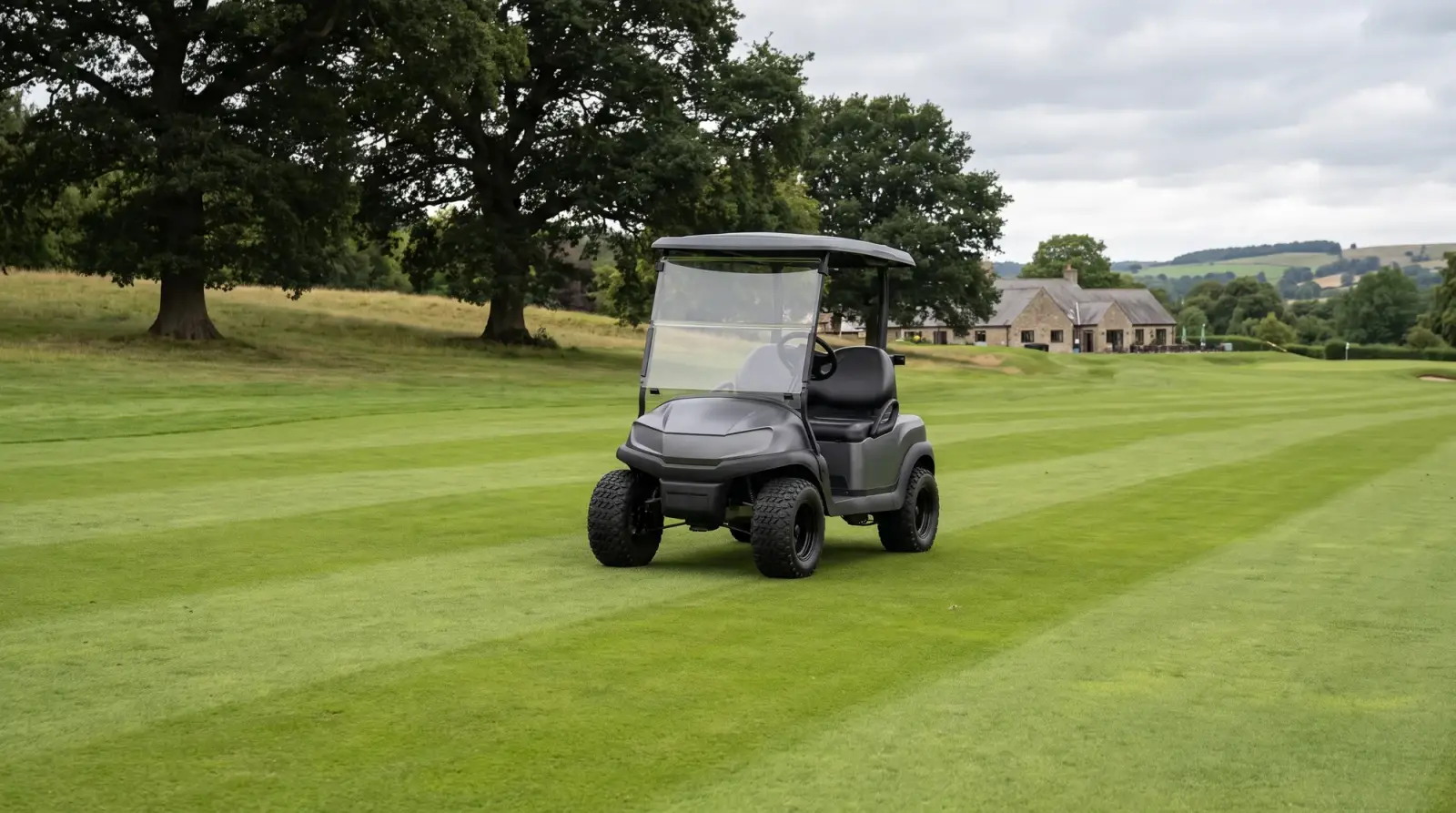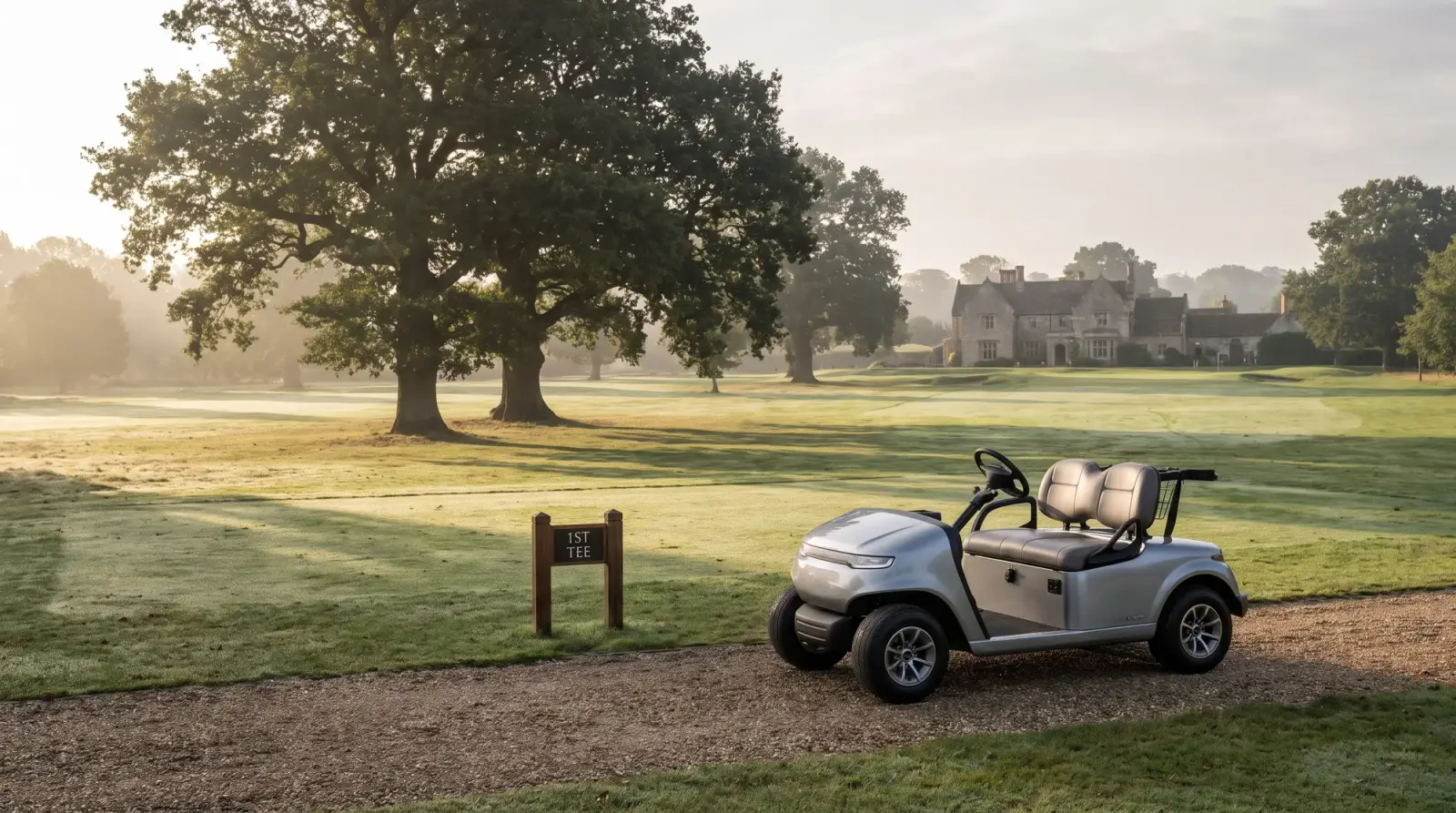
A cricket ground buggy is not a luxury, it is the vehicle that stops your groundskeeper and your committee walking miles every Saturday. At most clubs one machine ends up doing four jobs: hauling covers, boundary boards and kit across the ground, carrying members who can no longer manage the walk around the boundary, running teas and hospitality out to marquees on matchdays, and doing the daily grounds round. This guide sets out how golf buggies for cricket clubs actually get used, what protects the outfield while they do it, and how to choose between a passenger buggy, a pickup and simply hiring for finals day. It is a companion to our broader guide to utility vehicles for sports club grounds, which covers multi-sport sites; this one is about the specific rhythms of a cricket ground.
- One electric buggy typically covers kit moves, boundary transport, hospitality runs and the grounds round.
- Turf tyres and a light footprint matter more at a cricket ground than almost anywhere else, and the square is always off limits.
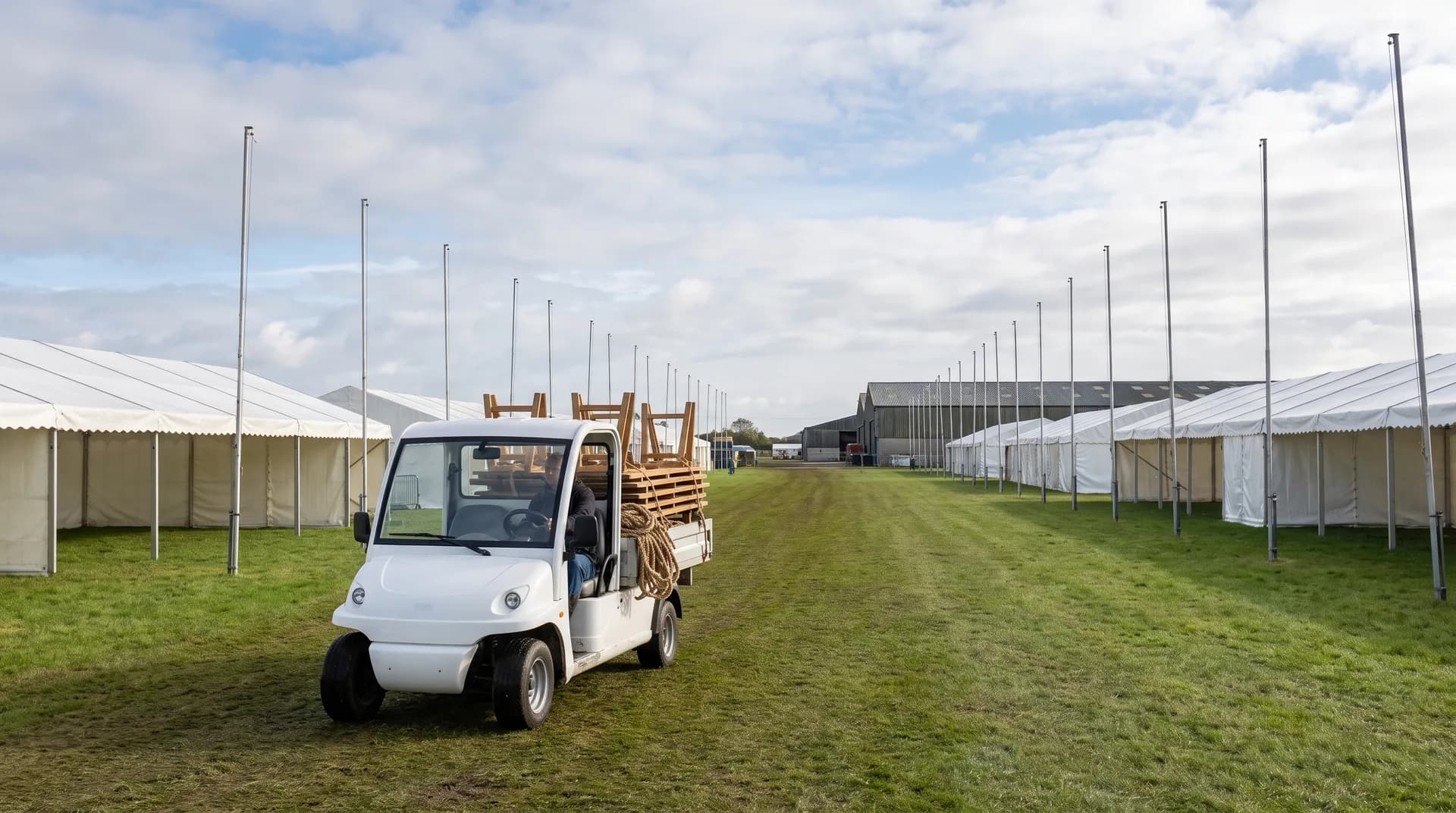
- A pickup-style buggy suits cover and sight screen work; a passenger model suits members and matchday hospitality.
- Electric drive means no fuel cans in the pavilion shed, no exhaust over the teas and near-silent running during play.
- Buy for the season if the buggy works weekly; hire for a festival week or finals day if it does not.
What a golf buggy does at a cricket ground
Cricket grounds are deceptively large. From the pavilion to the far sight screen and back is a long walk with empty hands, and a punishing one with a scarifier, a roll of boundary rope or six bags of kit. A buggy collapses those distances. On a typical week it shifts covers on and off ahead of the weather, ferries the mower fuel, line marker and tools for the grounds round, moves sight screens and boundary boards at the start and end of the season, and carries the heavy, awkward loads, batting cages, netting, drinks crates, that otherwise take two people and half an hour. On matchdays it changes character: it becomes the hospitality runner and the members' shuttle, which is where a passenger layout starts to matter.
Covers, sight screens and equipment moves
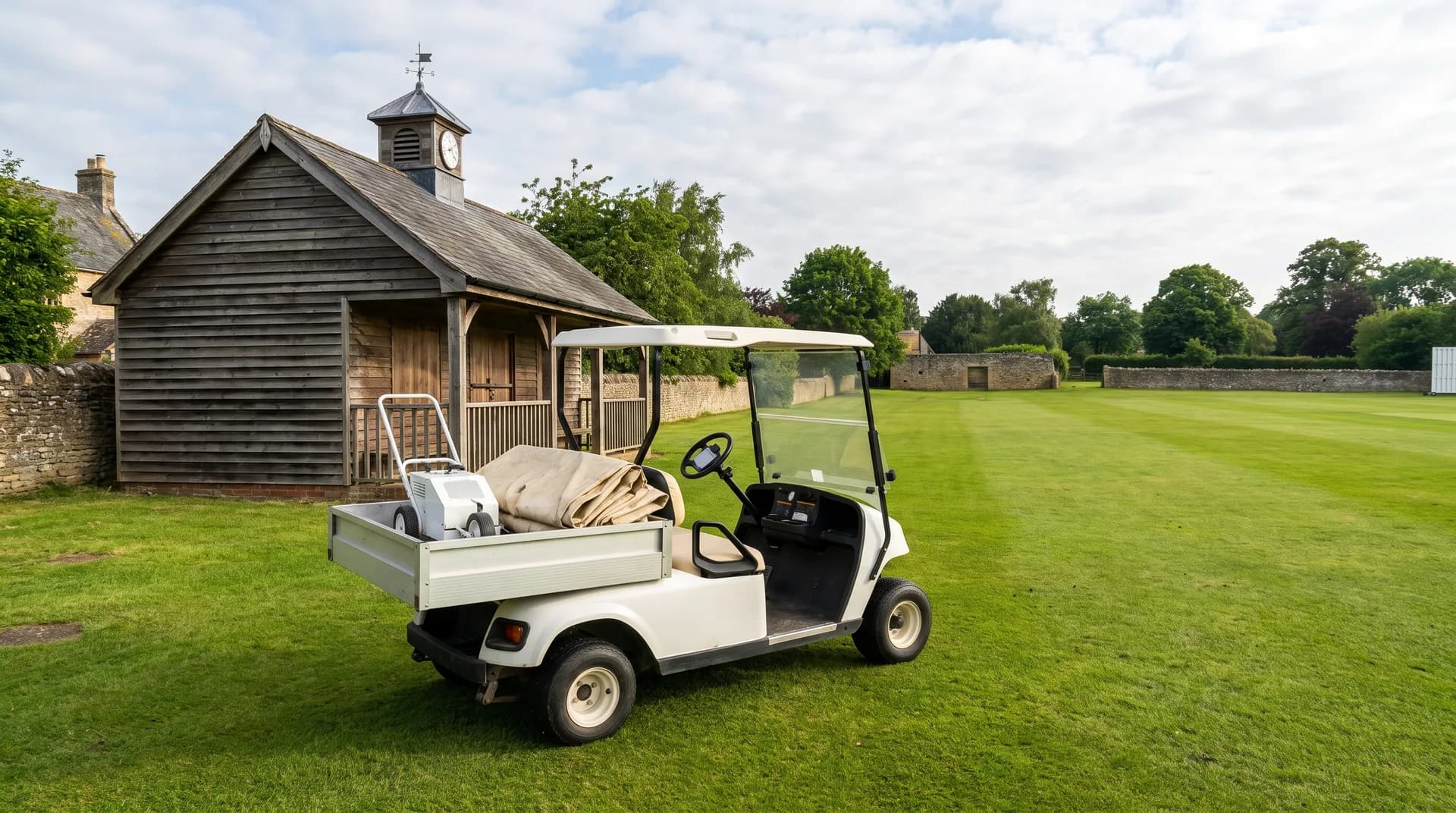
The single job that sells a buggy to most cricket clubs is the covers. Getting flat sheets and mobile covers on ahead of a shower, quickly and with two people rather than six, decides whether play resumes in twenty minutes or is lost for the afternoon. A pickup-style machine with a load bed, our S2 Pickup starts at £15,900, carries folded sheets, pegs and tools in one trip, and can gently tow wheeled covers into position where the club's procedures allow it. Check the rated load and towing figures against your kit before you buy; our guide to how much weight a buggy can carry explains ratings honestly. The rule that never bends: the vehicle stays off the square. Plan routes around the table, always.
Boundary transport, members and matchday hospitality
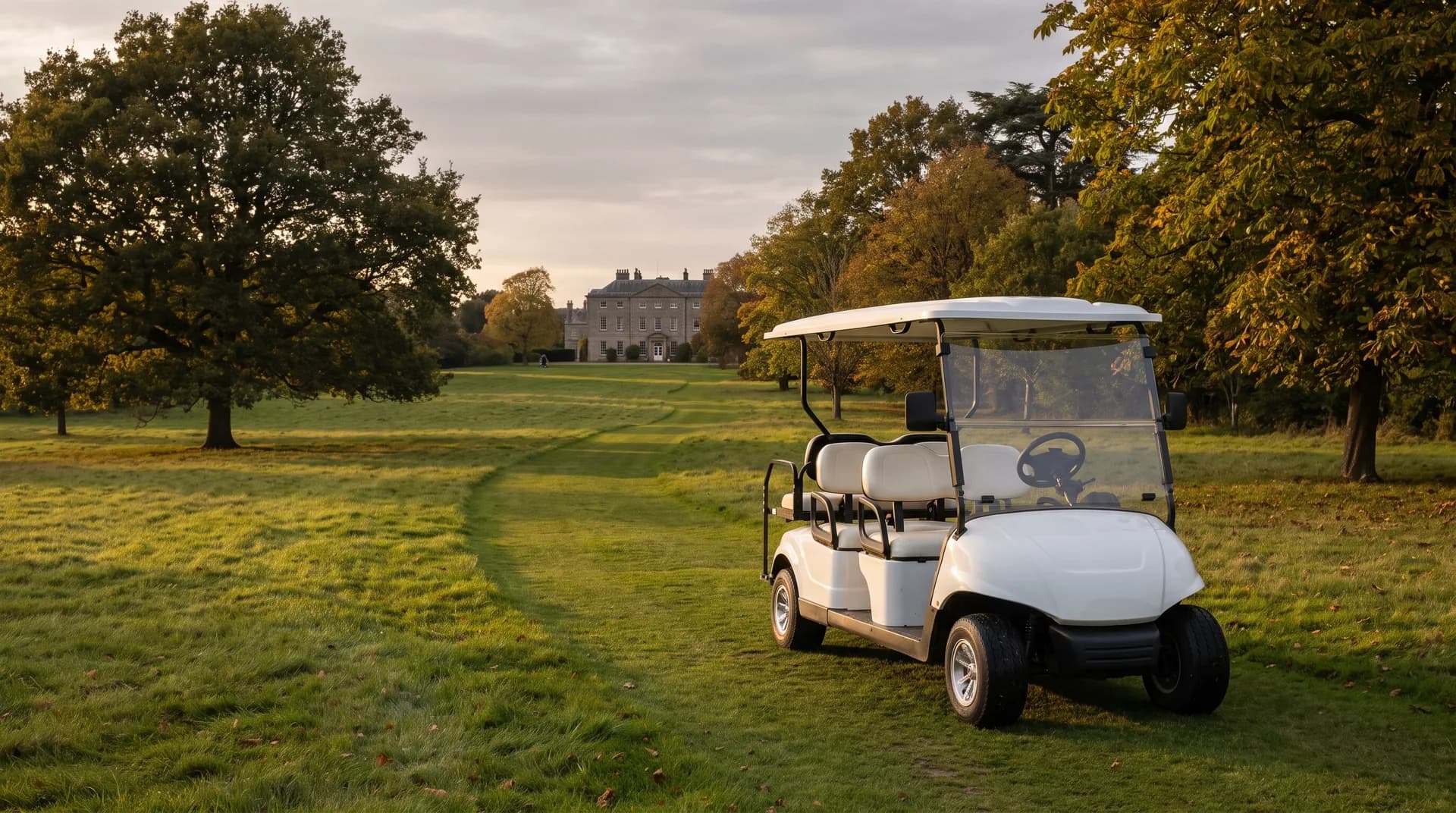
The second life of a cricket ground buggy is people. Many clubs have loyal older members and players with limited mobility for whom the walk from the car park to the far side of the boundary is the difference between coming and staying home. A two- or four-seat buggy running a quiet shuttle along the boundary path solves that with dignity, and accessibility is often the strongest part of the case you make to the committee. On matchdays the same machine runs teas, urns and hospitality out to marquees and sponsors' gazebos, and because it is electric it does so silently, without an engine idling behind the bowler's arm or exhaust drifting over the tea table.
Protecting the square and outfield: tyres and ground care
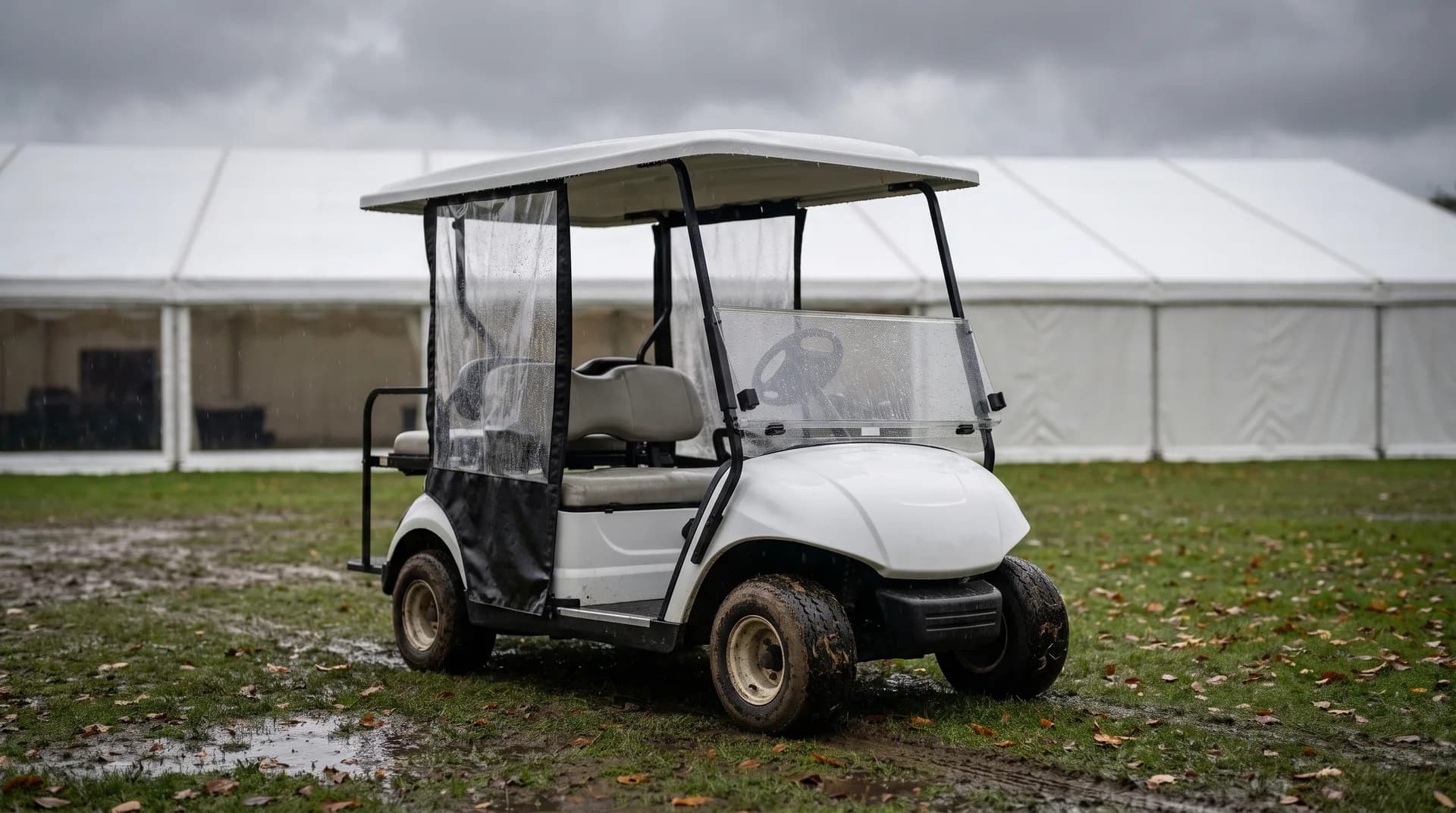
No groundskeeper will thank you for a vehicle that marks the outfield, so specification matters. Turf tyres spread the vehicle's weight over a wider, smoother contact patch and are the right choice for a cricket ground; an electric buggy is also several hundred kilograms lighter than a van or 4x4 doing the same jobs. Sensible habits do the rest: vary your routes so wear lines never form, avoid tight turns on wet grass, keep off the ground entirely in a thaw or after prolonged rain, and treat the square as a no-go area in all conditions. Our guide on whether buggies damage grass covers the ground-care detail, and the short answer is that a light electric vehicle on turf tyres, driven thoughtfully, leaves nothing behind.
- Passenger buggy
- Members' transport, hospitality
- Pickup / utility buggy
- Covers, kit and the grounds round
- Matchday hire
- Finals day or festival week only
- Passenger buggy
- 2 to 4 people
- Pickup / utility buggy
- Driver, passenger and a load bed
- Matchday hire
- Whatever the day needs
- Passenger buggy
- From £11,500 (S2) or £14,900 (S4)
- Pickup / utility buggy
- From £15,900 (S2 Pickup)
- Matchday hire
- Day rate, no ownership costs
- Passenger buggy
- People are the main job
- Pickup / utility buggy
- Kit is the main job
- Matchday hire
- The need is a few days a year
| Passenger buggy | Pickup / utility buggy | Matchday hire | |
|---|---|---|---|
| Best for | Members' transport, hospitality | Covers, kit and the grounds round | Finals day or festival week only |
| Carries | 2 to 4 people | Driver, passenger and a load bed | Whatever the day needs |
| Cost shape | From £11,500 (S2) or £14,900 (S4) | From £15,900 (S2 Pickup) | Day rate, no ownership costs |
| Makes sense when | People are the main job | Kit is the main job | The need is a few days a year |
Choosing the right buggy for a cricket club
Start from the dominant job. If the machine will mostly move kit and covers, a pickup layout is right, and its bench seat still handles the members' shuttle at a push. If people and hospitality dominate, a two-seat S2 from £11,500 or four-seat S4 from £14,900 with turf tyres is the better shape, and a canopy and screen make it usable in April and September, not just July. Think about charging, a standard socket in the mower shed is all it takes, and about storage, since a dry shed extends battery life. Our overview of electric vehicle sizes and payloads helps place your workload on the range, and you can browse the whole range to compare layouts. If the honest answer is that the club only needs a vehicle for a festival week or a cup final, hire it for those days instead and spend the capital on the square.
Frequently asked questions
Will a golf buggy damage a cricket outfield?+
Specified and driven properly, no. Choose turf tyres, keep the vehicle light, vary routes so wear lines never form, and stay off the ground in very wet conditions or a thaw. The square is off limits to any vehicle at all times.
Can a buggy move our covers and sight screens?+
A pickup-style buggy carries folded sheets, pegs and tools in one trip, and many models can gently tow wheeled covers within their rated limits. Check the load and towing ratings against your actual kit before buying.
What does a buggy for a cricket club cost?+
Our two-seat S2 starts at £11,500, the four-seat S4 at £14,900 and the S2 Pickup with a load bed at £15,900. The right figure depends on tyres, canopy and specification, so we quote to your ground.
Petrol or electric for a cricket ground?+
Electric suits cricket unusually well: near-silent running during play, no exhaust around spectators and teas, no fuel storage in the pavilion shed, and overnight charging from a standard socket.
Should a small club buy or hire?+
If the buggy would work most weeks through the season, ownership usually wins. If the need is really a festival week, a cup final or one big fundraiser, hire for those days and avoid the capital outlay.
Put a buggy on your ground
Tell us about your ground, your covers and how your matchdays run, and we will specify a machine with the right tyres and layout, then price it to your club.
Related solutions
Ready to explore what we build?
See the vehicles and the setting this applies to, or get a tailored quote built around your site.

Ready to find the right buggy?
Tell us how and where it will work and we will specify a vehicle and a tailored quote built around you. Every build comes with a 3-year warranty and a 24-hour priority call-out.
Our guides are written and reviewed by the Hawke Electric Vehicles team, the people who specify, build, deliver and support the vehicles. We focus on honest, practical advice and flag where a figure depends on the build rather than guessing.
More guides by Hawke