Electric utility vehicle sizes cluster into three broad classes: compact machines around 1.2 to 1.4 metres wide with payloads of roughly 250 to 500 kg, mid-size vehicles around 1.4 to 1.6 metres wide carrying roughly 500 to 800 kg, and full-size machines at 1.5 metres and over rated towards a tonne or more. The class you need is decided by two measurements you already own: the tightest gap on your site and the heaviest load you regularly move. This guide puts honest numbers on the classes, explains what actually fits through gates and corridors, and covers the bed dimensions and trade-offs that catch buyers out. If you are still working out whether this is the right vehicle family at all, start with what a utility vehicle is.
- Three broad classes: compact (about 1.2–1.4 m wide, 250–500 kg), mid (about 1.4–1.6 m, 500–800 kg), full-size (1.5 m plus, towards a tonne or more).
- Measure your tightest gap first: a standard single pedestrian gate at around a metre rules out almost everything but the narrowest compacts.
- Payload is a total: driver, passenger, fuel for the job and the load all count against the rating.
- Bed dimensions decide whether sheet material, pallets and wheelie bins travel flat, at an angle, or not at all.
- Payload, towing and passenger capacity trade off against each other on the same chassis; specify for the duty you do most.
The three size classes of electric utility vehicle
Compact machines are the narrow end of the market: roughly 1.2 to 1.4 metres wide, 2.5 to 3.2 metres long and under 2 metres tall, so they clear standard door apertures and can work indoors. Payloads typically run 250 to 500 kg. Mid-size machines, around 1.4 to 1.6 metres wide and 3 to 3.7 metres long, are the general-purpose workhorses, typically carrying 500 to 800 kg with a usefully bigger bed. Full-size machines at 1.5 to 1.7 metres wide or more push towards a tonne of payload and serious towing, at the price of access: they are yard and track vehicles, not corridor vehicles. Note these are honest generic ranges across the market; any individual model needs checking against its own plate.
Will it fit? Gates, corridors and doorways
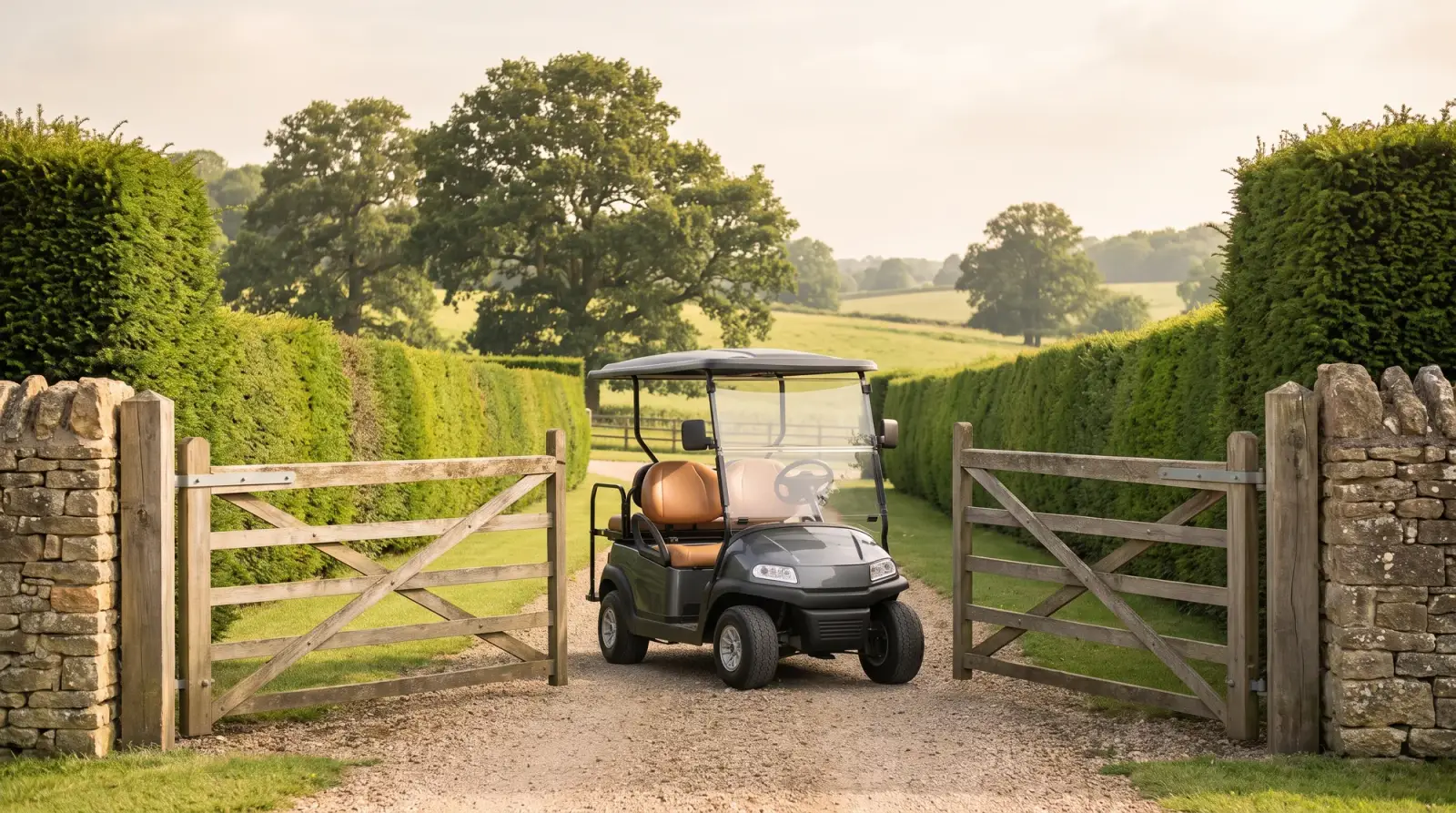
The measurements that matter are not the vehicle's alone but the site's. A standard single pedestrian gate or garden gate is often only around a metre wide, which excludes nearly every utility vehicle; if that is your constraint you are shopping at the very narrowest end of the compact class, or reconsidering the route. Double doors and service corridors commonly offer 1.4 to 1.8 metres, which admits compacts comfortably and mid-size machines with care. Field gates at 3 metres and up admit anything. Remember to measure the pinch point, not the opening: hinges, latches, kerbs and turning geometry all steal width, and a vehicle that fits through a gap straight-on may not fit turning into it. Height matters too wherever barns, undercrofts or car parks are on the route. The same discipline applies to buggies, as our dimensions guide shows, but with a work vehicle the consequences of a wrong measurement are dearer.
Electric utility vehicle payload: what the rating really covers
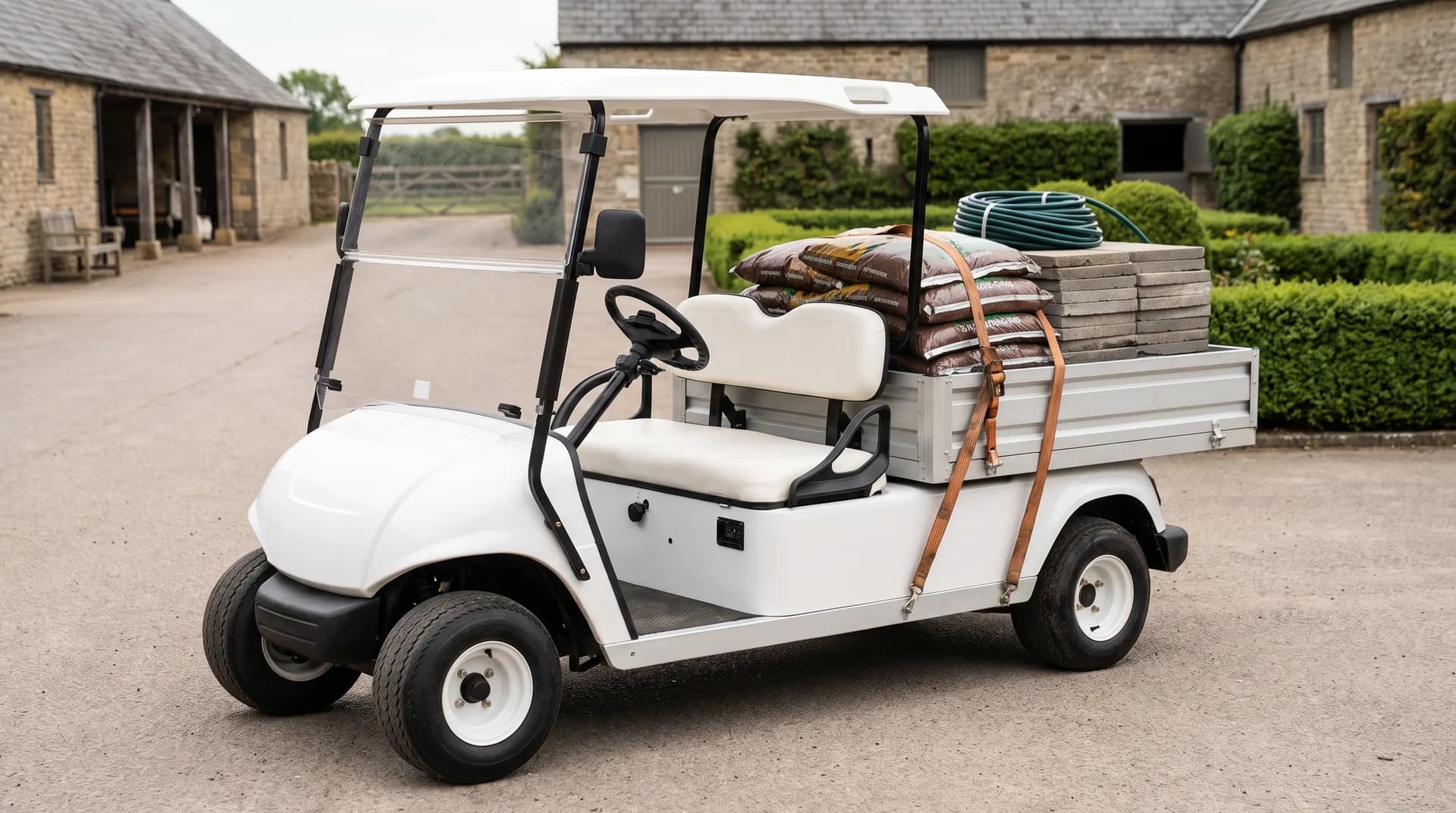
Payload is the total the vehicle is rated to carry, and everything counts against it: driver, passenger, toolboxes, a full water bowser, the load itself. A 500 kg rating with two occupants aboard can leave barely 300 kg for cargo. Weigh or honestly estimate your regular worst-case load, add the people, and buy the class above the answer rather than the class that just scrapes it: a vehicle cruising at 70 per cent of its rating lasts longer, stops better and holds its range. Towing is rated separately, and drawbar weight comes off payload too. For the general principles of weight ratings, how much weight a buggy can carry covers the same physics at the lighter end.
Bed dimensions that matter
Bed length and width decide what travels flat. A standard 8x4 sheet of plywood at 2440 by 1220 mm will not lie flat in any compact bed and only in the longest full-size beds; most sites carry sheets at an angle over a dropped tailgate, so check the bed with the tailgate down. A UK standard pallet at 1200 by 1000 mm fits flat in many mid-size and full-size beds but almost no compact ones; a Euro pallet at 1200 by 800 mm squeezes into more. Two 240-litre wheelie bins sit happily in most mid-size beds. Sides and tailgates that drop, and a bed floor at a sensible loading height, matter as much as the raw dimensions, and if loose material features in your week a tipping bed, like our compact electric tipper, changes the job more than an extra 200 mm of bed ever will.
Payload vs towing vs passengers: the trade-off
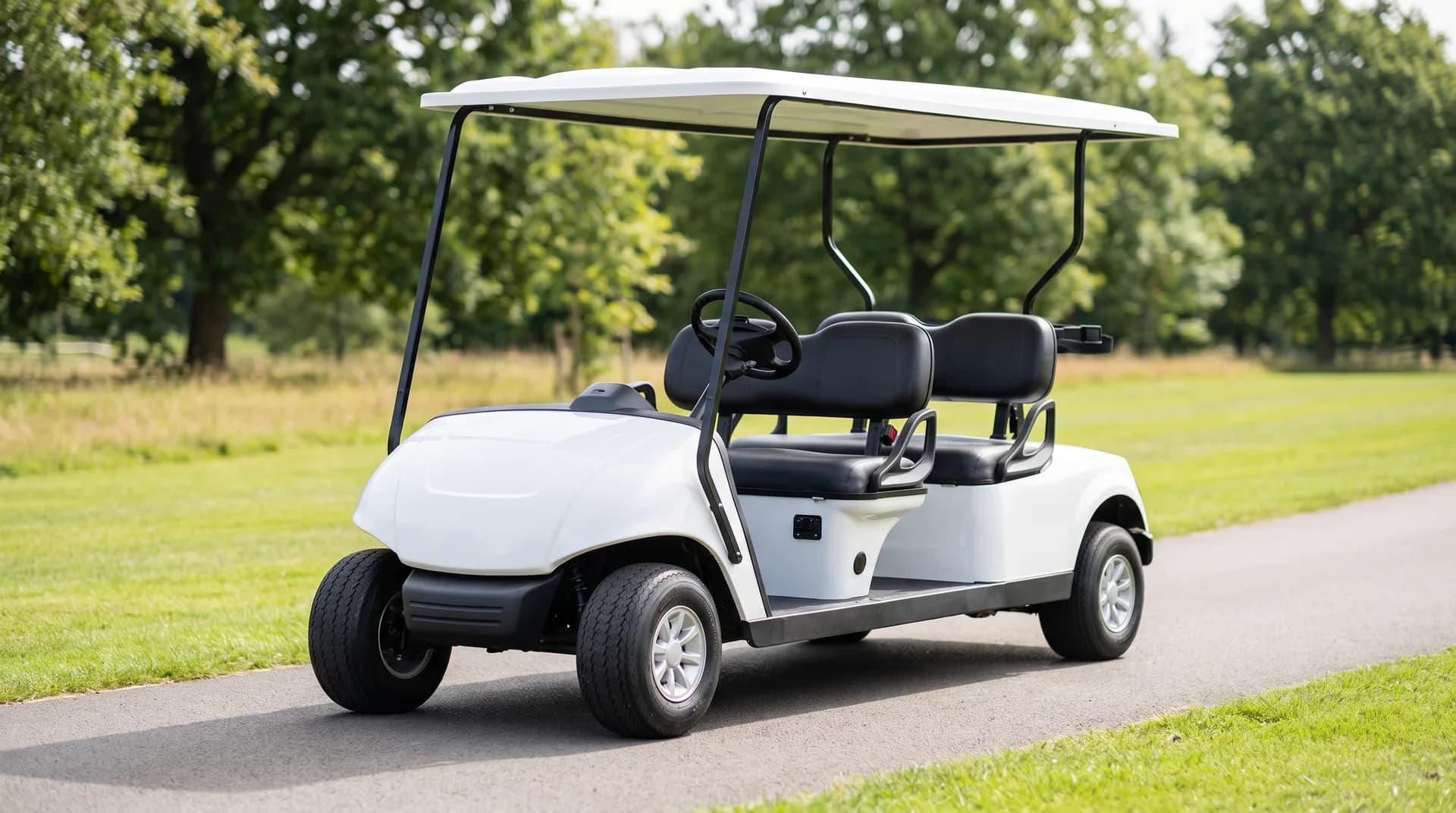
On any given chassis, capability is shared, not stacked. Add a second row of seats and the bed shrinks and the payload is consumed by people; hang a heavy trailer on the hitch and the drawbar load comes off the bed rating; load the bed to the plate and the towing margin narrows. So specify for the duty you do most: a crew carrier that occasionally shifts bags of compost is a different vehicle from a load-lugger that occasionally carries a colleague. The honest sequence is gap first, load second, people and towing third, and if two duties genuinely conflict, that is usually the signal for two smaller vehicles rather than one compromised large one. You can compare the size classes side by side across electric utility vehicles in our range.
- Compact
- About 1.2–1.4 m
- Mid-size
- About 1.4–1.6 m
- Full-size
- About 1.5–1.7 m+
- Compact
- About 2.5–3.2 m
- Mid-size
- About 3–3.7 m
- Full-size
- About 3.5 m+
- Compact
- Roughly 250–500 kg
- Mid-size
- Roughly 500–800 kg
- Full-size
- Towards 1,000 kg+
- Compact
- Double doors, wide paths
- Mid-size
- Yard gates, wide corridors
- Full-size
- Field gates, yards
- Compact
- Rarely
- Mid-size
- Often (check dims)
- Full-size
- Usually
| Compact | Mid-size | Full-size | |
|---|---|---|---|
| Typical width | About 1.2–1.4 m | About 1.4–1.6 m | About 1.5–1.7 m+ |
| Typical length | About 2.5–3.2 m | About 3–3.7 m | About 3.5 m+ |
| Typical payload | Roughly 250–500 kg | Roughly 500–800 kg | Towards 1,000 kg+ |
| Fits through | Double doors, wide paths | Yard gates, wide corridors | Field gates, yards |
| Pallet in bed | Rarely | Often (check dims) | Usually |
Frequently asked questions
What sizes do electric utility vehicles come in?+
Broadly three classes: compacts around 1.2 to 1.4 metres wide with 250 to 500 kg payloads, mid-size machines around 1.4 to 1.6 metres wide carrying 500 to 800 kg, and full-size vehicles from about 1.5 metres wide rated towards a tonne or more. Individual models vary, so always check the plate.
Will a utility vehicle fit through a standard gate?+
Through a field gate or yard gate, yes. Through a standard single pedestrian gate at around a metre wide, almost never: that constraint points you to the very narrowest compacts or a rethink of the route. Measure the pinch point, including hinges and turning space, not just the opening.
Does the driver count against payload?+
Yes. Payload is the total of occupants, equipment and cargo. Two people aboard a 500 kg-rated machine can leave barely 300 kg for the load, so specify against people plus cargo, not cargo alone.
What bed size do I need for pallets or sheets?+
A UK pallet at 1200 by 1000 mm needs a mid-size or full-size bed to sit flat; an 8x4 sheet at 2440 by 1220 mm travels at an angle over a dropped tailgate on almost everything. Check bed dimensions with the tailgate down, not the closed figure.
Is bigger safer as a default?+
No. Oversizing costs access, money and manoeuvrability, and a machine that cannot reach the job is no use however much it carries. Size to the tightest gap first, then the load, with a sensible margin.
Size it against your site, not a brochure
Send us your tightest gate, your typical loads and where the vehicle has to work, and we will confirm the right size class and price it.
Related solutions
Ready to explore what we build?
See the vehicles and the setting this applies to, or get a tailored quote built around your site.

Ready to find the right buggy?
Tell us how and where it will work and we will specify a vehicle and a tailored quote built around you. Every build comes with a 3-year warranty and a 24-hour priority call-out.
Our guides are written and reviewed by the Hawke Electric Vehicles team, the people who specify, build, deliver and support the vehicles. We focus on honest, practical advice and flag where a figure depends on the build rather than guessing.
More guides by Hawke