Every UK outdoor event is planned around weather that has not happened yet, and buggy hire sits right in the middle of that uncertainty. The good news is that the vehicles themselves cope with British weather far better than most organisers assume: an electric buggy is designed to work outdoors in the wet, and rain alone is rarely the problem. The problems are elsewhere, in ground that turns, in a site that becomes unsafe, in a postponement decision made at four in the morning, and in a hire agreement nobody read before the forecast changed. This guide separates what weather actually does to a buggy hire from what people fear it does, sets out what your agreement is likely to say, and lays out the contingency choices worth making while the sun is still out.
- Rain is rarely the issue; ground condition and site safety are what actually stop a buggy operation.
- Cancelling because of weather is normally still a cancellation under the agreement unless a specific clause says otherwise.
- Specify for weather at booking: canopies, screens, weather protection and the right tyres cost far less than improvising.
- Agree decision points and deadlines with your supplier in advance, including who calls it and by when.
- Postponement is usually easier to negotiate than cancellation, and easier still if you ask early.
What bad weather actually does to a buggy operation
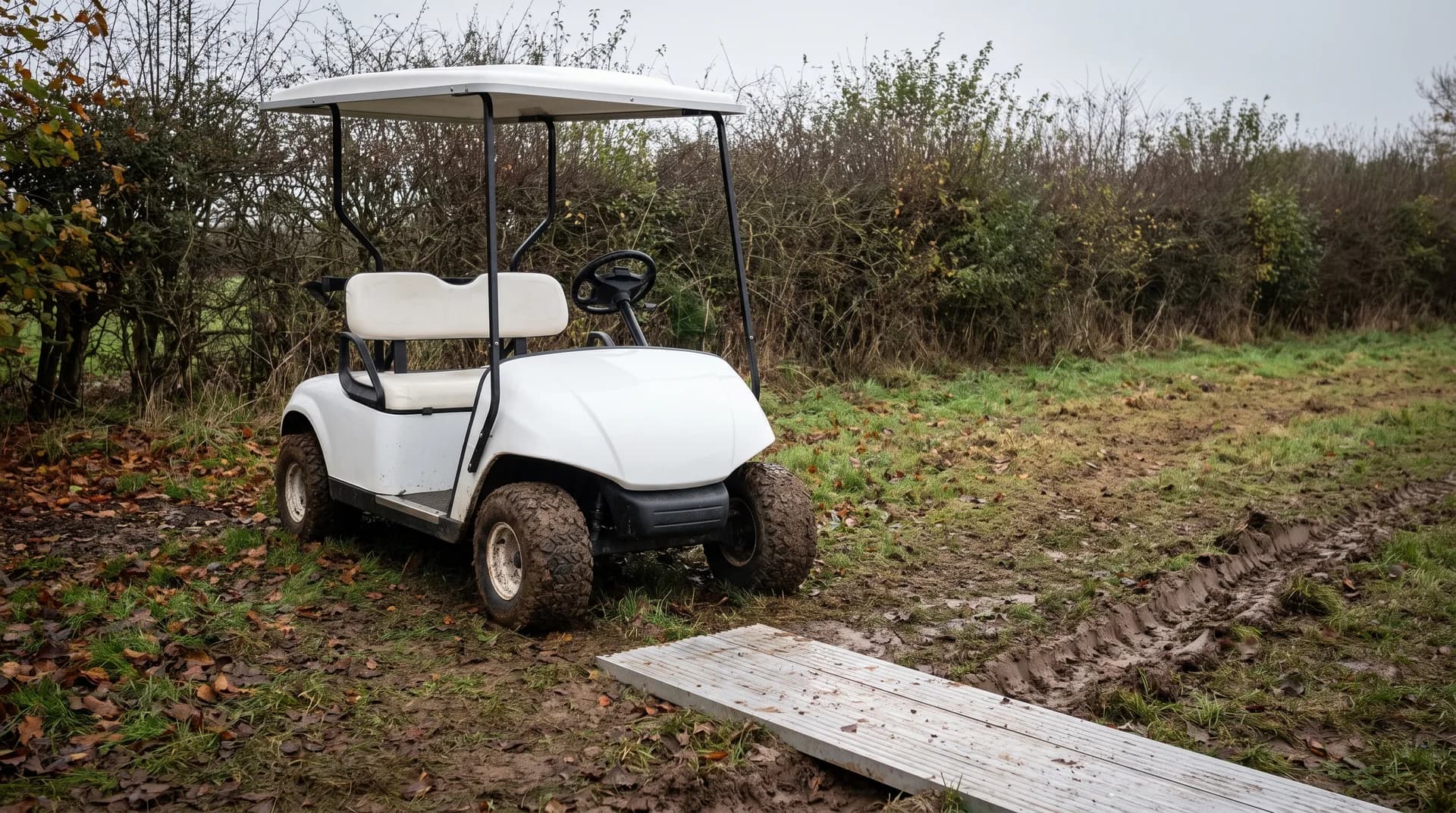
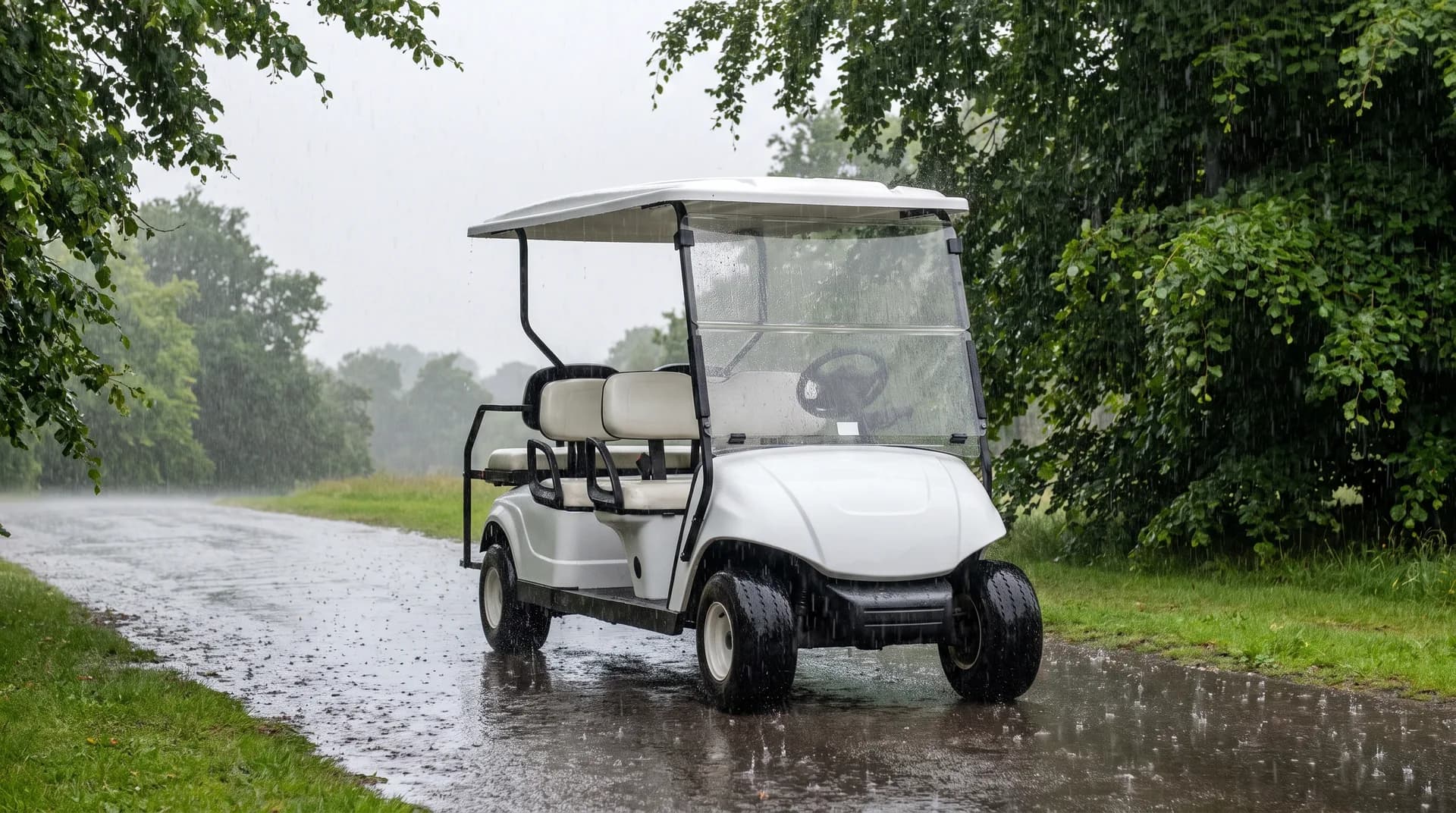
Start with what does not happen. A modern electric buggy is not put out of action by rain; the vehicles work outdoors for a living and are built for it, as our guide on using an electric buggy in the rain explains in detail. What genuinely degrades is everything around the vehicle. Grass that carried a laden buggy on Thursday becomes greasy on Friday and rutted by Saturday afternoon, and traction, not power, is what fails first. Visibility drops, so speeds must drop with it. Passengers in event clothing become far less willing to ride an open vehicle, which quietly halves your effective capacity just as demand for lifts doubles. And wind, rather than rain, is what most often forces real decisions on an event site, because it affects structures, not vehicles. Understanding that hierarchy, ground first, visibility second, passenger comfort third, rain last, is what lets you plan proportionately instead of catastrophising.
What your hire agreement is likely to say about weather
Here is the sentence that surprises people: cancelling your event because of the weather is normally still a cancellation. Unless your agreement contains a specific weather or force majeure clause that says otherwise, the cancellation schedule applies in the usual way, scaling with how much notice you give. That is not a supplier being unsympathetic; the vehicles were reserved, other work was turned away, and transport was scheduled. What you can do is read the clause before you need it, ask directly what happens if the event is postponed rather than cancelled, and ask whether a date transfer is possible and on what notice. Postponement is very often easier to accommodate than cancellation, and dramatically easier if you raise it days rather than hours out. Our hire terms guide walks through the cancellation and change clauses in full.
Specifying a hire for British weather
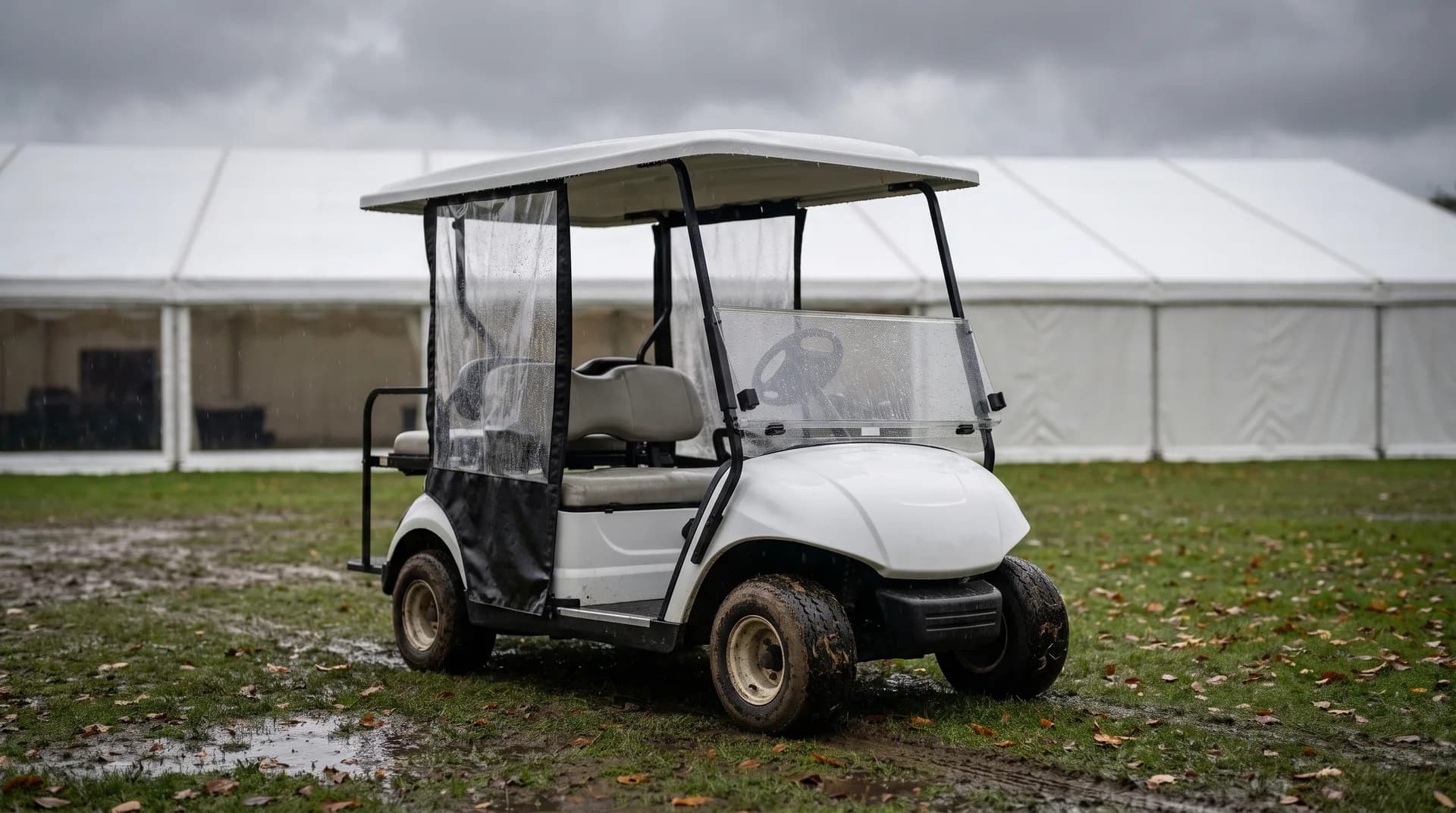
The cheapest weather contingency is bought at the quote stage, not on the day. Four specification choices do most of the work. Canopies and full weather protection, side screens and a windscreen, transform whether guests will actually get in the vehicle when it is raining, and they are trivial to add at booking and impossible to add at eight on a Saturday morning. Tyre choice matters more on wet grass than any other single factor. Lighting matters because bad weather brings early darkness, and a shuttle that becomes invisible at four in the afternoon is a safety problem, as our night-time hire guide covers. And an honest conversation about ground conditions lets the supplier bring the right vehicles rather than the standard ones. Tell your supplier the surface is grass, tell them what it does when it rains, and let them specify for it.
- What it affects
- Passenger willingness, visibility
- Sensible response
- Canopies and screens, slower speeds, more patience
- What it affects
- Traction and rutting on grass
- Sensible response
- Tyre choice, route changes, trackway on key runs
- What it affects
- Structures and site safety, not the vehicles
- Sensible response
- Follow the site safety decision, park the fleet if told
- What it affects
- Visibility of the shuttle to pedestrians
- Sensible response
- Lighting, high-visibility, marshalled crossings
- What it affects
- Battery load, passenger comfort, demand for lifts
- Sensible response
- Canopies, charging plan, more capacity at peaks
- What it affects
- Grip on hard standing and slopes
- Sensible response
- Reduce routes, avoid gradients, brief drivers
| What it affects | Sensible response | |
|---|---|---|
| Steady rain | Passenger willingness, visibility | Canopies and screens, slower speeds, more patience |
| Prolonged wet ground | Traction and rutting on grass | Tyre choice, route changes, trackway on key runs |
| High wind | Structures and site safety, not the vehicles | Follow the site safety decision, park the fleet if told |
| Early darkness | Visibility of the shuttle to pedestrians | Lighting, high-visibility, marshalled crossings |
| Heat and sun | Battery load, passenger comfort, demand for lifts | Canopies, charging plan, more capacity at peaks |
| Frost and ice | Grip on hard standing and slopes | Reduce routes, avoid gradients, brief drivers |
Event buggy hire in bad weather: building a contingency plan
A useful contingency plan is short, specific and agreed in advance. It answers five questions in writing. Who makes the call on whether the buggy operation runs, degrades or stops, and by when? What is the reduced service, because the answer is rarely all-or-nothing, and a shortened route on hard standing keeps the most important journeys running when the full loop is unusable? Which routes are protected, since accessibility runs and medical access should be the last things to stop and the first to be reinstated? Where do vehicles park safely if you suspend operations? And who tells the public, because an unannounced suspended shuttle generates more complaints than a clearly announced one. Write it on one page, share it with your supplier, and put it next to your traffic management plan, which our event traffic management guide covers.
Talking to your supplier when the forecast turns
Ring early. That is the whole advice, and it is worth more than any clause. A supplier who hears from you on Wednesday about a Saturday forecast has options: different tyres, an extra vehicle, an earlier delivery to beat the ground going off, a revised route, a postponement slot. The same supplier hearing from you at seven on Saturday morning has almost none. Be specific about what you are worried about, ground, access, guest comfort, a possible postponement, rather than simply forwarding a weather app screenshot, and ask what they would do in your position; a supplier who runs event fleets every week has usually seen your exact situation. And if the decision is genuinely to cancel, say so as early as you know, because the cancellation schedule rewards notice and because it frees vehicles for someone else, which is the kind of thing suppliers remember when you book next season.
Plan the weather in at the quote stage
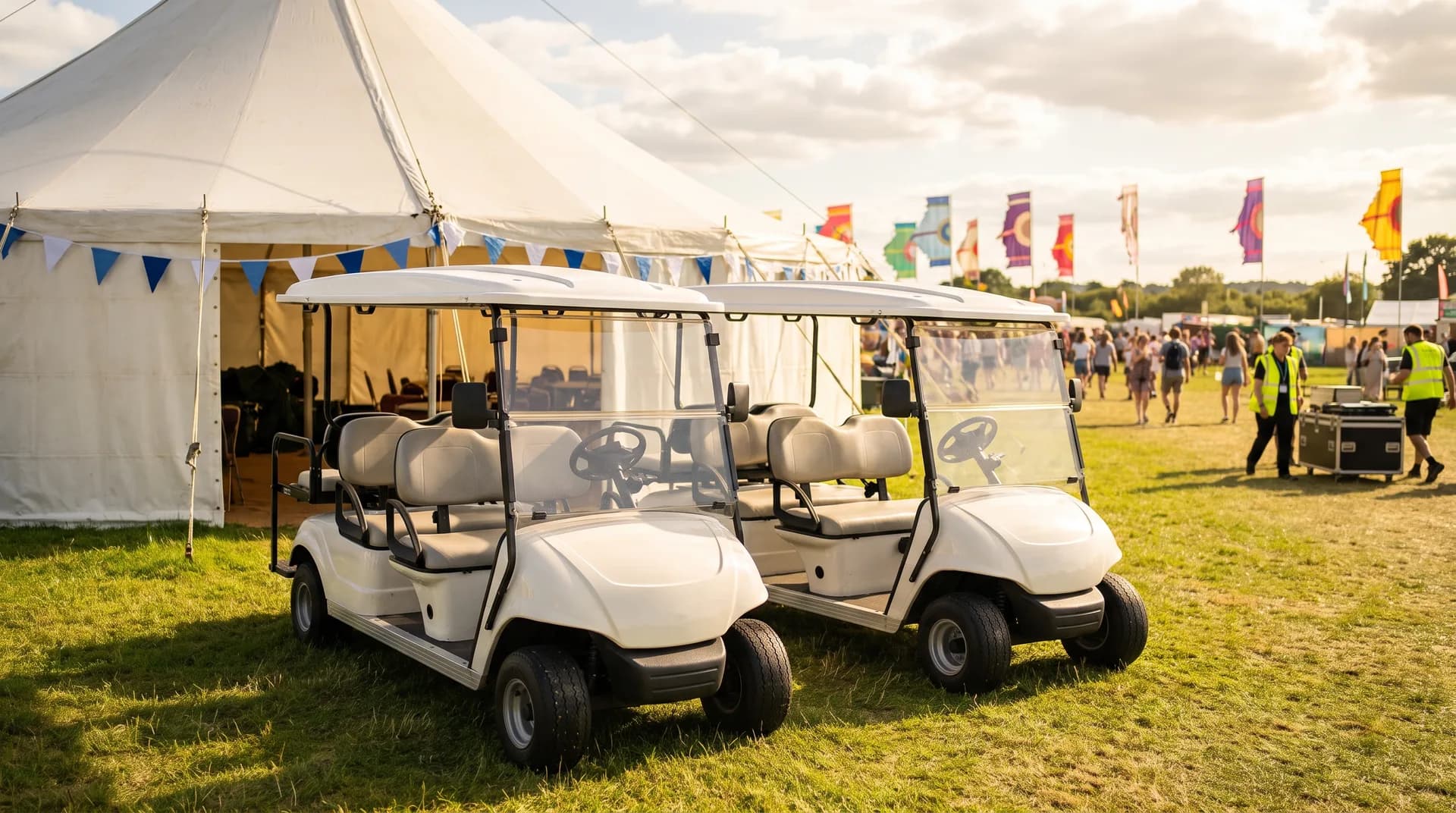
Weather is not a risk you can remove from a British outdoor event, but it is one you can specify around, price into a budget and plan a proportionate response to. Do that work in the calm weeks before the event: get the vehicles specified for the ground and the season, read the cancellation and change clauses, write the one-page contingency plan, and agree who calls it and when. Tell us what your site does when it rains and we will specify the fleet for it and set out the terms plainly in your hire quote, so that when the forecast wobbles the only decision left is the one that actually needs a human. Weather-exposed events feel this most: see our pages for festivals, county and agricultural shows and equestrian events.
Frequently asked questions
Can you use hire golf buggies in the rain?+
Yes. Electric buggies are built to work outdoors and rain alone rarely stops them. What changes is grip on wet grass, visibility, and whether guests in event clothing are willing to ride an open vehicle, which is why canopies and screens are worth specifying at booking.
What happens to my buggy hire if my event is cancelled for weather?+
Unless the agreement contains a specific weather clause, cancelling for weather is normally treated as a cancellation like any other, with the schedule scaling by notice given. Ask about postponement instead, which is very often easier to accommodate, especially with several days' notice.
Should I add canopies and weather protection to an event hire?+
For any UK outdoor event outside high summer, almost always. Weather protection is inexpensive to specify at booking, impossible to add on the morning, and it is the difference between guests using the shuttle and walking. It also protects the operation on hot, sunny days.
Will buggies cope with a muddy field?+
It depends on how wet and how rutted, and on tyre choice more than power. Tell the supplier the surface is grass and what it does after rain, so the right vehicles and tyres are specified. For badly affected sites, trackway on the key runs is usually cheaper than a recovery.
Who decides whether the buggy shuttle keeps running in bad weather?+
You should agree that in advance and write it down: who makes the call, by when, what the reduced service looks like, which routes are protected, and where vehicles park if you suspend. That one page prevents most bad-weather decisions being made badly at short notice.
Specify for the weather before you need to
Tell us what your ground does when it rains and we will specify canopies, screens and tyres to match, and set the terms out plainly in the quote.
Related solutions
Ready to explore what we build?
See the vehicles and the setting this applies to, or get a tailored quote built around your site.

Ready to find the right buggy?
Tell us how and where it will work and we will specify a vehicle and a tailored quote built around you. Every build comes with a 3-year warranty and a 24-hour priority call-out.
Our guides are written and reviewed by the Hawke Electric Vehicles team, the people who specify, build, deliver and support the vehicles. We focus on honest, practical advice and flag where a figure depends on the build rather than guessing.
More guides by Hawke