The right way to choose an electric utility vehicle is to define the job it must do before you look at any spec sheet, then work outwards from there: payload and load bed, terrain and gradients, how many people it carries, the battery that suits your shift pattern, and whether it needs to travel on the public road. Get that order right and the shortlist almost writes itself. Get it wrong and you end up paying for capability you never use, or worse, buying something that cannot do the work.
- Define the job first: carrying, towing, moving people, or a mix of all three.
- Size payload, bed and towing to your heaviest realistic day, not your average one.
- Match terrain and gradients honestly: yard, mixed site, or steep and rough ground.
- Choose the battery around shift length and charging windows, not just the headline.
- Confirm road-legal needs early, as they shape the whole specification.
- Compare quotes like-for-like and judge on total cost of ownership, not the sticker.
Step 1: define the job before anything else
Almost every buying mistake traces back to skipping this step. A utility vehicle is a tool, and tools are chosen by task. Spend an hour watching what the vehicle will actually replace or support across a normal week, and write down what it moves, how heavy that is, how far, how often, and over what ground.
- 01
Name the primary job
Is the core task carrying loads, pulling trailers or trolleys, moving people, or a genuine mix? The primary job sets the vehicle class before you compare any two models.
- 02
Map the secondary jobs
Most vehicles do more than one thing. A groundskeeping truck also ferries staff at events; a factory carrier occasionally tows. List these so you can weigh compromise later.
- 03
Record the real numbers
Heaviest single load, typical daily distance, busiest shift length, and the worst ground it will cross. These four figures drive payload, battery and drivetrain decisions.
- 04
Note the constraints
Doorway and gate widths, storage footprint, turning space, and whether it ever needs to cross or travel along a public road. Constraints quietly rule models in or out.
Step 2: payload, load bed and towing
Payload is the total weight the vehicle can carry, and it includes passengers, tools, fuel for any equipment, and the load itself. It is easy to underestimate, so add everything up honestly. A bed that looks generous is no use if the rated payload is reached before it is full.
- Rated payload: confirm it covers people plus cargo together, not cargo alone.
- Bed dimensions and sides: match them to the shape of what you carry, whether that is pallets, bins, tools or bagged materials.
- Tipping: a tipper bed saves real time if you move loose materials like soil, gravel or waste; a flat pickup bed suits boxed or palletised loads.
- Towing: if you pull trailers, trolleys or a gang mower, confirm the towing rating and hitch type, and remember towing on a slope demands far more than towing on the flat.
- Load security: anchor points, tailgate design and bed lining all affect how quickly and safely you can work.
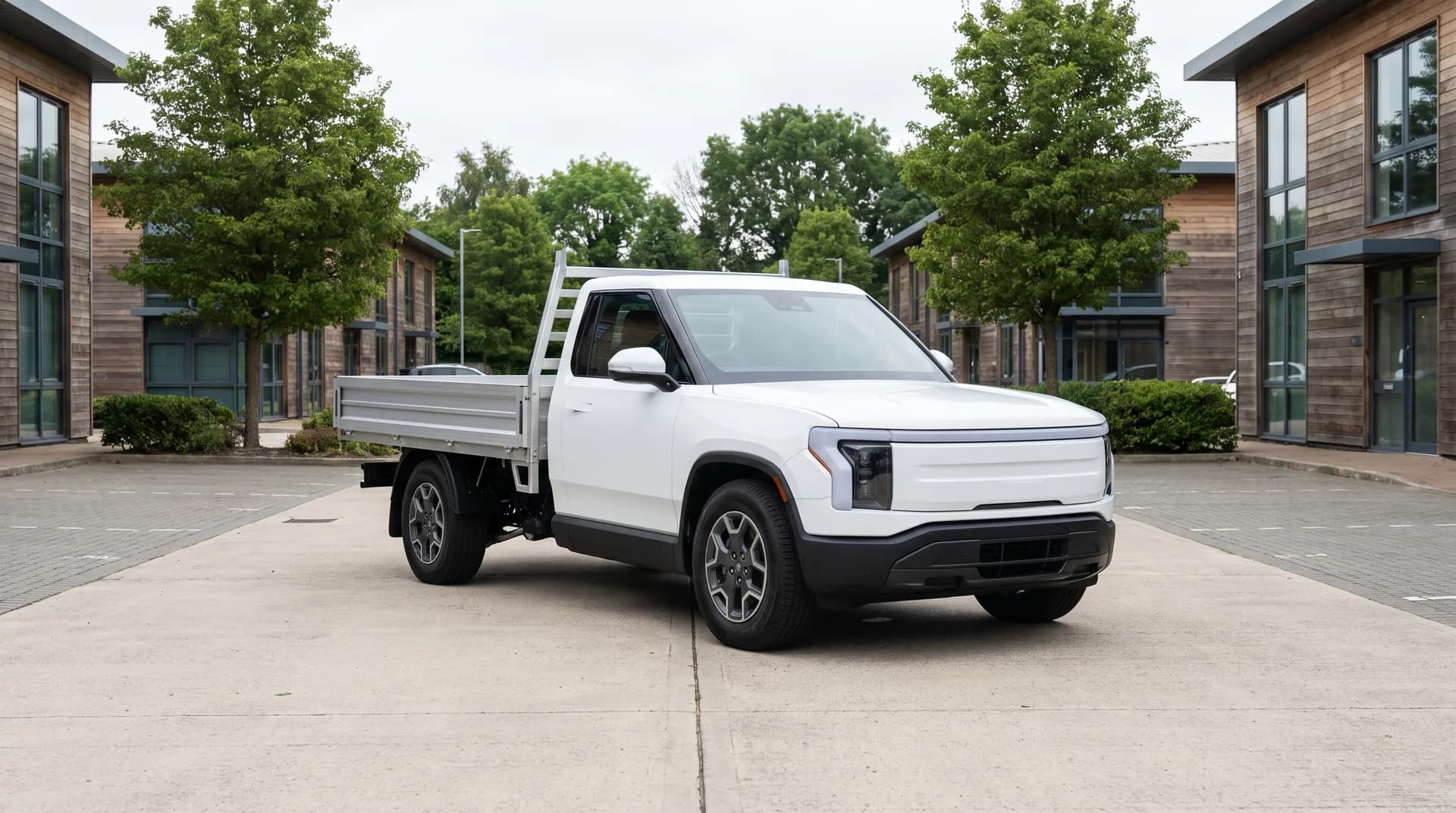
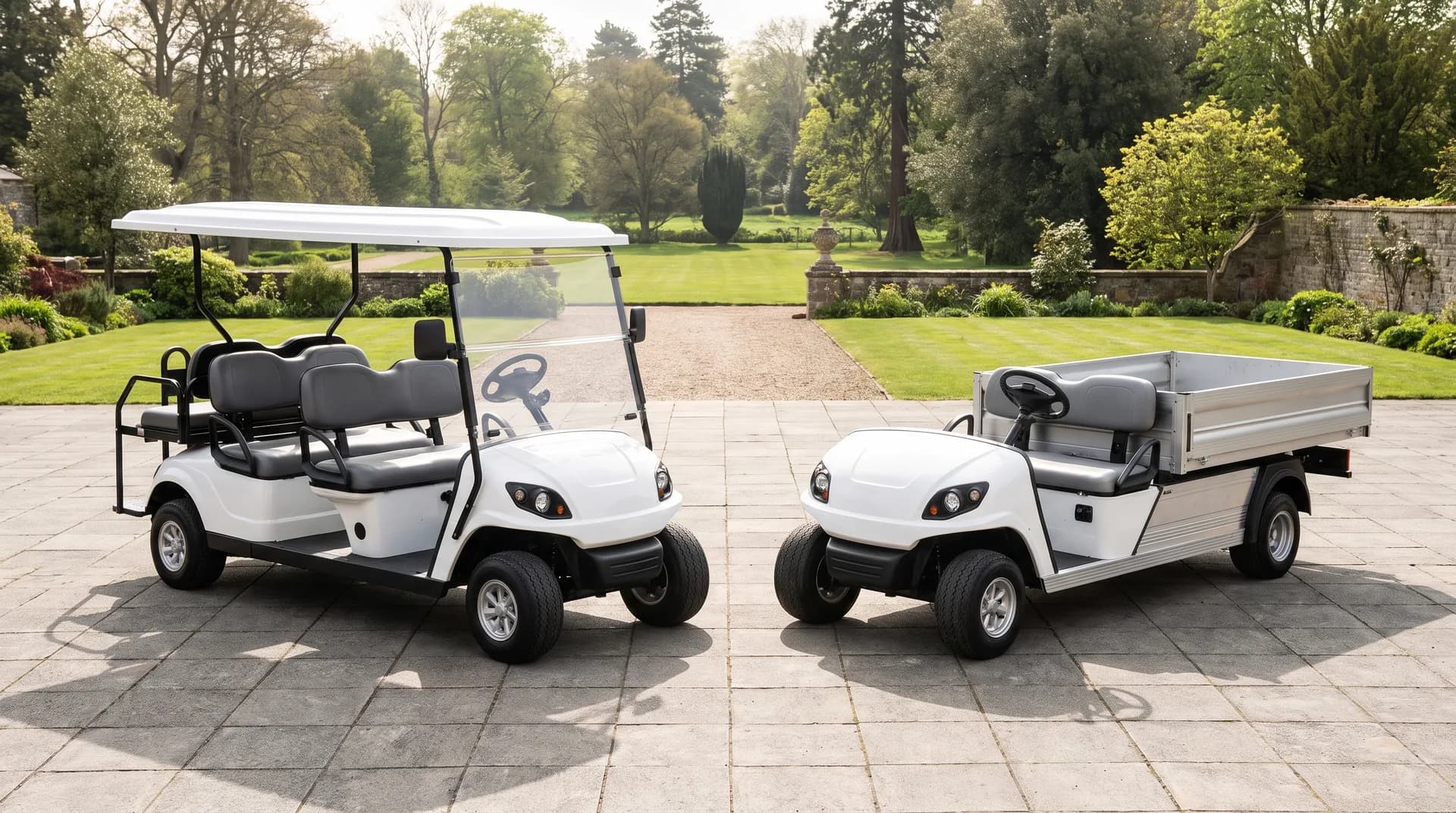
The Hawke utility range illustrates the point. The U1 is built around an 800 kg utility truck brief, while the U2 steps up to a one-tonne truck, and the S2 comes as both a pickup and a tipper. The right choice is simply the one whose payload and bed match the heavy day you defined in step one.
Step 3: terrain, gradients and drivetrain
Where the vehicle works matters as much as what it carries. A smooth warehouse or clubhouse yard asks very little of a drivetrain. A mixed site with kerbs, grass and the odd muddy stretch asks more. Steep, rough or loose ground asks a great deal, especially when the vehicle is loaded.
- Flat, hard ground: modest power and standard tyres are usually plenty; prioritise comfort and payload.
- Mixed sites: look for reserves of torque, sensible ground clearance and tyres suited to grass and gravel as well as tarmac.
- Slopes and rough terrain: gradient performance under load is the real test; ask specifically about climbing a loaded gradient, not an empty one.
- Ground protection: on turf and fine surfaces, tyre choice and weight distribution decide whether you leave marks behind.
Step 4: seats, crew and versatility
Decide how many people the vehicle carries as standard and at its busiest. Two-seat trucks maximise load space; crew layouts carry more staff but trade away bed length. If the vehicle doubles as personnel transport at events or across a large site, that dual role belongs in the specification rather than being discovered later.
Think about access too. Frequent hop-on, hop-off work rewards low step-in heights, grab handles and doors or openings that suit the way your team moves. Small ergonomic details compound over hundreds of daily stops.
Step 5: choosing the battery
Battery choice is where buyers most often over or under specify. The honest comparison is between lead-acid and lithium, and the right answer depends on your shift pattern and charging windows rather than on which technology sounds more modern.
- Lead-acid
- Lower
- Lithium
- Higher
- Lead-acid
- Heavier
- Lithium
- Lighter
- Lead-acid
- Slower; benefits from a full charge and rest
- Lithium
- Faster; tolerates opportunity top-ups
- Lead-acid
- Best kept above a partial discharge
- Lithium
- More of the capacity is usable
- Lead-acid
- May need periodic checks depending on type
- Lithium
- Typically lower upkeep
- Lead-acid
- Predictable single shifts with overnight charging
- Lithium
- Long shifts, multi-shift use or quick turnarounds
| Lead-acid | Lithium | |
|---|---|---|
| Up-front cost | Lower | Higher |
| Weight | Heavier | Lighter |
| Charging | Slower; benefits from a full charge and rest | Faster; tolerates opportunity top-ups |
| Usable capacity | Best kept above a partial discharge | More of the capacity is usable |
| Maintenance | May need periodic checks depending on type | Typically lower upkeep |
| Best suited to | Predictable single shifts with overnight charging | Long shifts, multi-shift use or quick turnarounds |
Work through it practically. If the vehicle does one predictable shift a day and charges overnight, lead-acid can be the sensible, economical choice. If it runs long hours, works across more than one shift, or needs quick top-ups between jobs, lithium usually earns its higher up-front cost through convenience and working availability. Whichever you choose, match battery capacity to your busiest shift with headroom to spare, and confirm the charger, the charging time and where charging will physically happen. Hawke offers both lithium and lead-acid options, so the decision can follow the work rather than the catalogue.
Step 6: road-legal considerations
If the vehicle will only ever operate on private land, road-legal status may not apply. The moment it needs to travel along or cross a public road, even briefly, the requirements change and they shape the whole specification, so raise this early rather than at the end.
UK rules in this area are detailed and can change, and the correct classification depends on how and where the vehicle is used. Rather than rely on assumptions, confirm your specific situation against current guidance and with your supplier before you commit. A good supplier will ask how and where you intend to use the vehicle and advise on what a compliant specification looks like for that use, including lighting, registration and any equipment involved. Treat road use as a design input, not an afterthought.
Step 7: build quality, warranty and aftercare
A utility vehicle earns its keep over years, so the things that keep it working matter as much as the day-one spec. Cheap purchases often become expensive to run when parts are slow to arrive or support is hard to reach. Weigh build quality, warranty and the strength of the aftercare network alongside price.
- Warranty: how long, and what it actually covers, including the battery.
- Servicing: is there a genuine UK-wide service and parts network, and how quickly can a fault be attended to?
- Parts availability: common wear items should be stocked and quick to obtain.
- Support responsiveness: for business-critical vehicles, a priority call-out arrangement limits costly downtime.
- Configurability: can the vehicle be specified, branded and adapted to your work rather than forcing you to adapt to it?
As a reference point, Hawke vehicles are a British brand, assembled in the UK to a premium finish, configured and branded to specification with bespoke builds available, and backed by UK-wide servicing, parts, a 24-hour priority call-out and a three-year warranty. Whoever you buy from, look for that combination of build quality and dependable aftercare.
Step 8: compare suppliers and quotes like-for-like
Two quotes are rarely comparable at face value. One may include delivery, charger, battery upgrade and warranty, while another strips those out to reach a lower headline. Put every quote onto the same basis before you judge it.
- 01
Fix the specification
Agree one specification, payload, battery type and capacity, bed configuration and any road-legal requirements, then ask every supplier to quote that same brief.
- 02
Itemise inclusions
Confirm what is in the price: delivery, charger, battery, warranty term, and any accessories or branding. Exclusions are where headline savings hide.
- 03
Weigh the aftercare
Factor in servicing coverage, parts availability and response times. A slightly higher price with real support often costs less over the life of the vehicle.
- 04
Ask for like-for-like
A confident supplier will happily match quotes on a genuine like-for-like basis. Hawke, for instance, aims to beat any genuine like-for-like quote, which only works once the specifications truly match.
Step 9: total cost of ownership, not headline price
The purchase price is only the start. The number that matters is what the vehicle costs to own and run across its working life. Electric utility vehicles typically shine here because energy and maintenance costs tend to be lower than petrol equivalents, but the full picture is what counts.
- Energy: electricity to charge is generally cheaper and steadier than petrol or diesel.
- Maintenance: fewer moving parts usually means less routine servicing, though battery care still matters.
- Downtime: strong aftercare reduces the hidden cost of a vehicle that cannot work.
- Battery lifespan: choosing the right chemistry and sizing it correctly protects long-term value.
- Residual value: a well-built, well-supported vehicle from a known brand holds its worth better.
A vehicle that costs a little more up front but runs cheaply, stays available and lasts longer is almost always the better buy than the lowest sticker price. Do the sums over years, not on the day of purchase.
Ready to match a vehicle to your job?
Explore the electric utility range or see how UK suppliers compare, then request a like-for-like quote built around the work you actually do.
When you are ready to price a specification, a short consultative conversation is usually quicker and more accurate than a configurator, because payload, terrain and road-legal needs interact.
Get a specification and quote
Tell us the job, the ground and the shift pattern, and we will specify a vehicle around it and quote on a genuine like-for-like basis.
Frequently asked questions
How do I choose an electric utility vehicle?+
Define the job first, whether it is carrying, towing, moving people or a mix, then match payload and bed, terrain and gradients, seats, battery type and any road-legal needs to that job. Compare quotes like-for-like and judge on total cost of ownership rather than the headline price.
How much payload do I actually need?+
Add up the heaviest realistic load including passengers, tools and the cargo itself, then choose a rating with headroom above that peak. Specifying against your busiest day rather than your average one gives a vehicle that lasts and feels effortless.
Should I choose lithium or lead-acid batteries?+
It depends on your shift pattern and charging windows. Lead-acid suits predictable single shifts with overnight charging and a lower up-front cost. Lithium suits long hours, multi-shift use or quick top-ups, and is lighter with more usable capacity, at a higher initial price.
Does an electric utility vehicle need to be road-legal?+
Only if it travels along or crosses a public road. Requirements in the UK are detailed and can change, and they depend on how and where you use the vehicle, so confirm your specific situation against current guidance and with your supplier before ordering.
Is the cheapest quote the best value?+
Rarely. Put every quote on the same specification and check what each includes, such as delivery, charger, battery and warranty, then weigh aftercare and running costs. A slightly higher price with strong support and lower total cost of ownership usually wins.
Related solutions
Ready to explore what we build?
See the vehicles and the setting this applies to, or get a tailored quote built around your site.

Ready to find the right buggy?
Tell us how and where it will work and we will specify a vehicle and a tailored quote built around you. Every build comes with a 3-year warranty and a 24-hour priority call-out.
Our guides are written and reviewed by the Hawke Electric Vehicles team, the people who specify, build, deliver and support the vehicles. We focus on honest, practical advice and flag where a figure depends on the build rather than guessing.
More guides by Hawke