The best way to move staff across a large site is usually a small fleet of electric passenger vehicles, sized to the routes people actually walk, because they carry tools and kit as well as people, run all day on overnight charging, and cost far less to run than anything with an engine. Minibuses, pool cars and bikes all have their place, but for the repeated short hops that define life on a campus, factory, hospital estate or distribution park, a buggy or people mover is normally the honest answer. This guide compares the options properly, including where each one loses.
- Walking time is a real cost on a large site, even before anyone measures it.
- Electric buggies and people movers suit repeated short hops; minibuses suit longer road runs.
- Bikes are cheap but carry one person, no kit, and lose out in weather and in high-vis zones.
- Duty cycle decides the vehicle: distance per day, seats per trip and shifts per day.
- Overnight charging covers most single-shift sites; multi-shift sites need a charging plan.
Why staff transport on large sites is worth solving
Walking is free until you add it up. As a purely illustrative example, and not a statistic: if a technician walks ten minutes each way between a workshop and a plant room, and makes that trip four times a shift, that is eighty minutes of walking in a day. Across a team of five, on that example arithmetic alone, roughly a working day per day is spent in transit. Your numbers will differ, which is exactly the point: time the routes your own people actually walk before you decide anything. Sites that do this almost always find a handful of repeated journeys, stores to workshop, gatehouse to office, car park to production, that account for most of the lost time, and those journeys are what a staff transport fleet exists to remove.
The options for staff transport on large sites
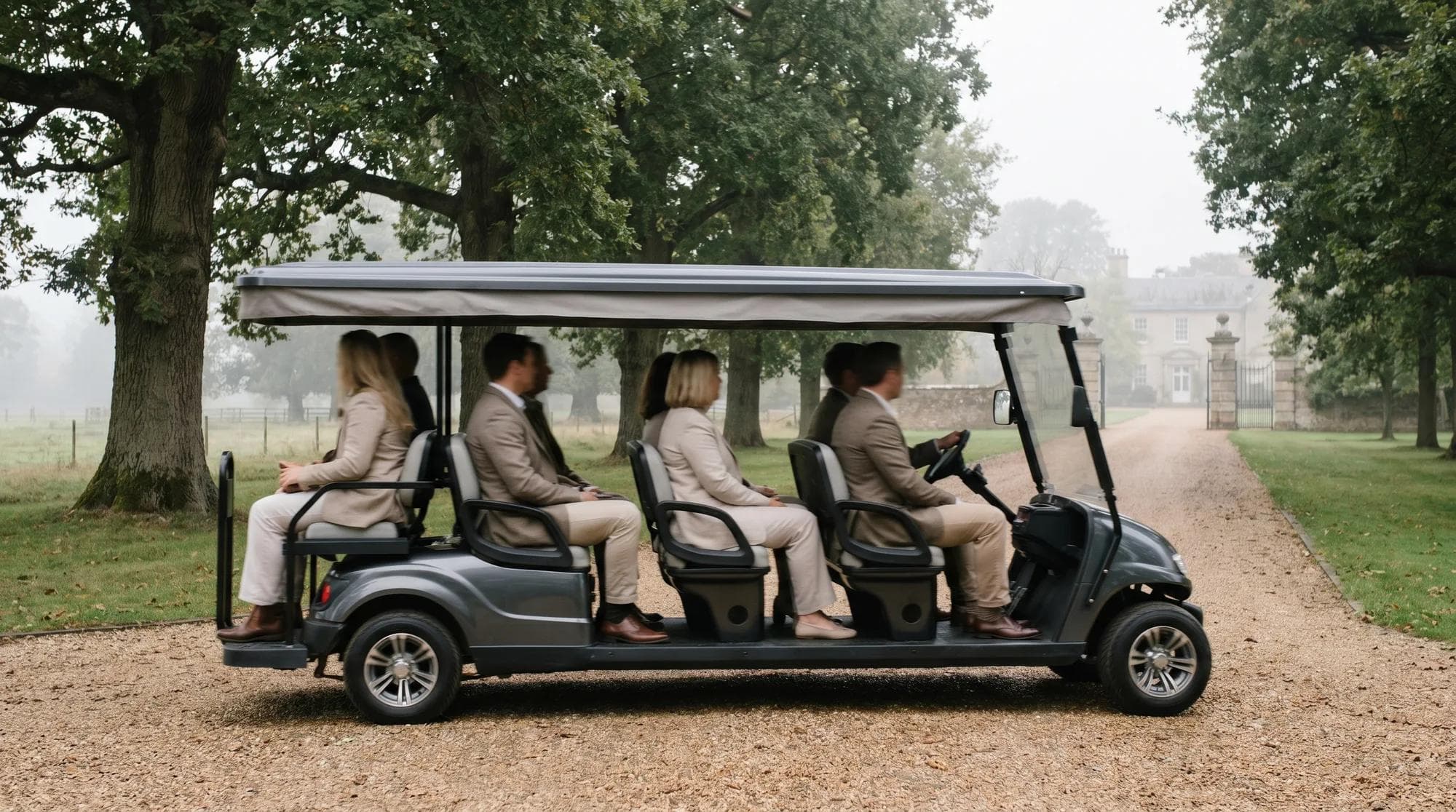
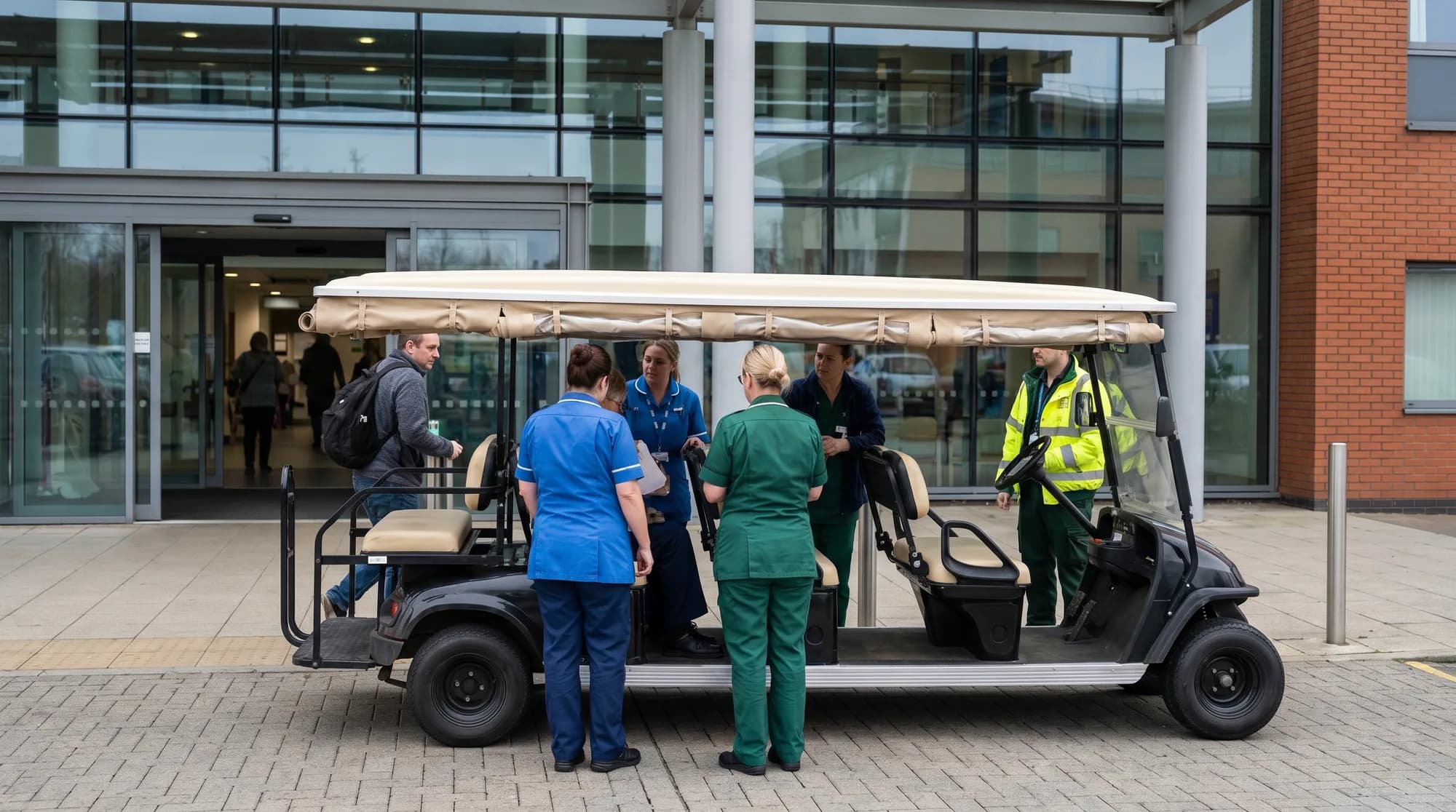
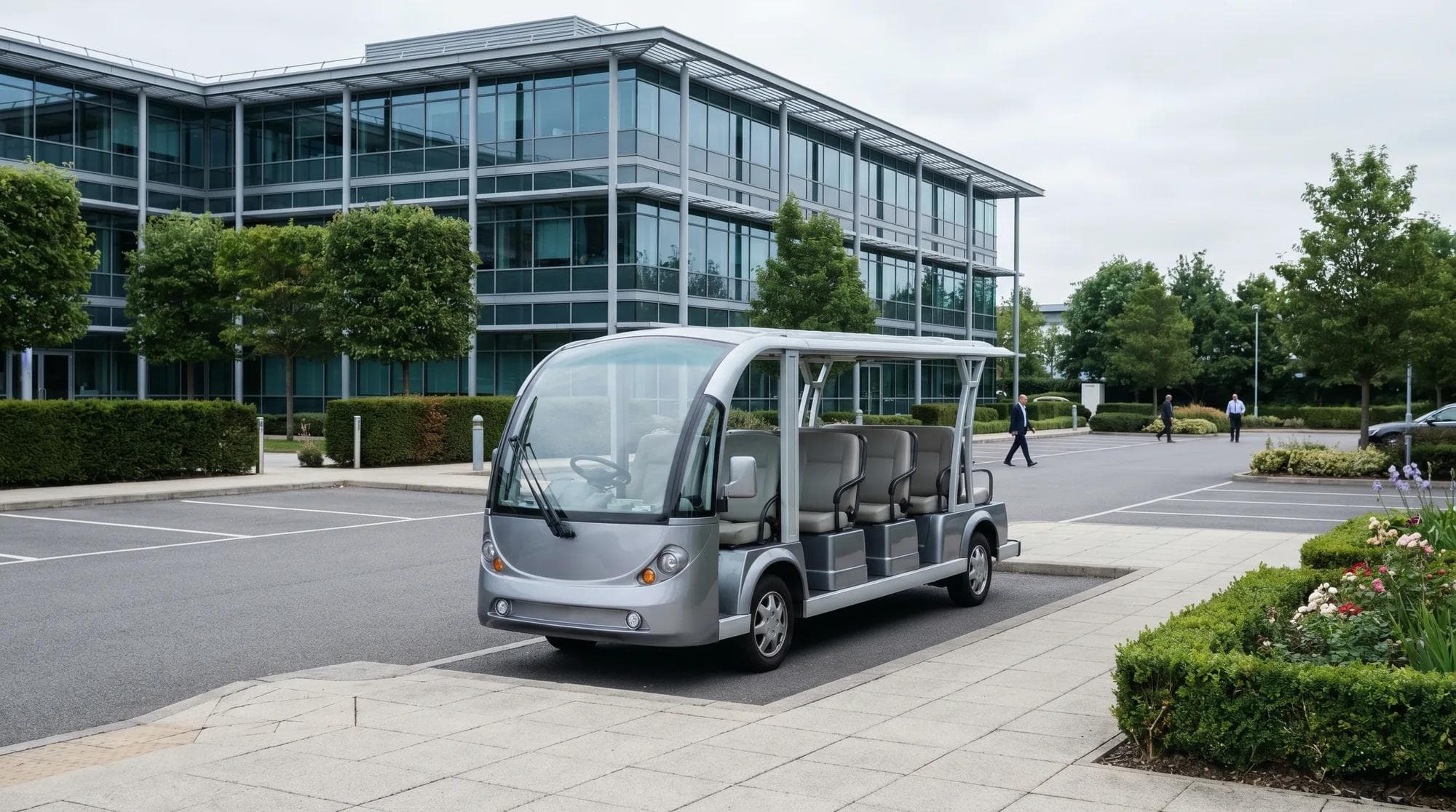
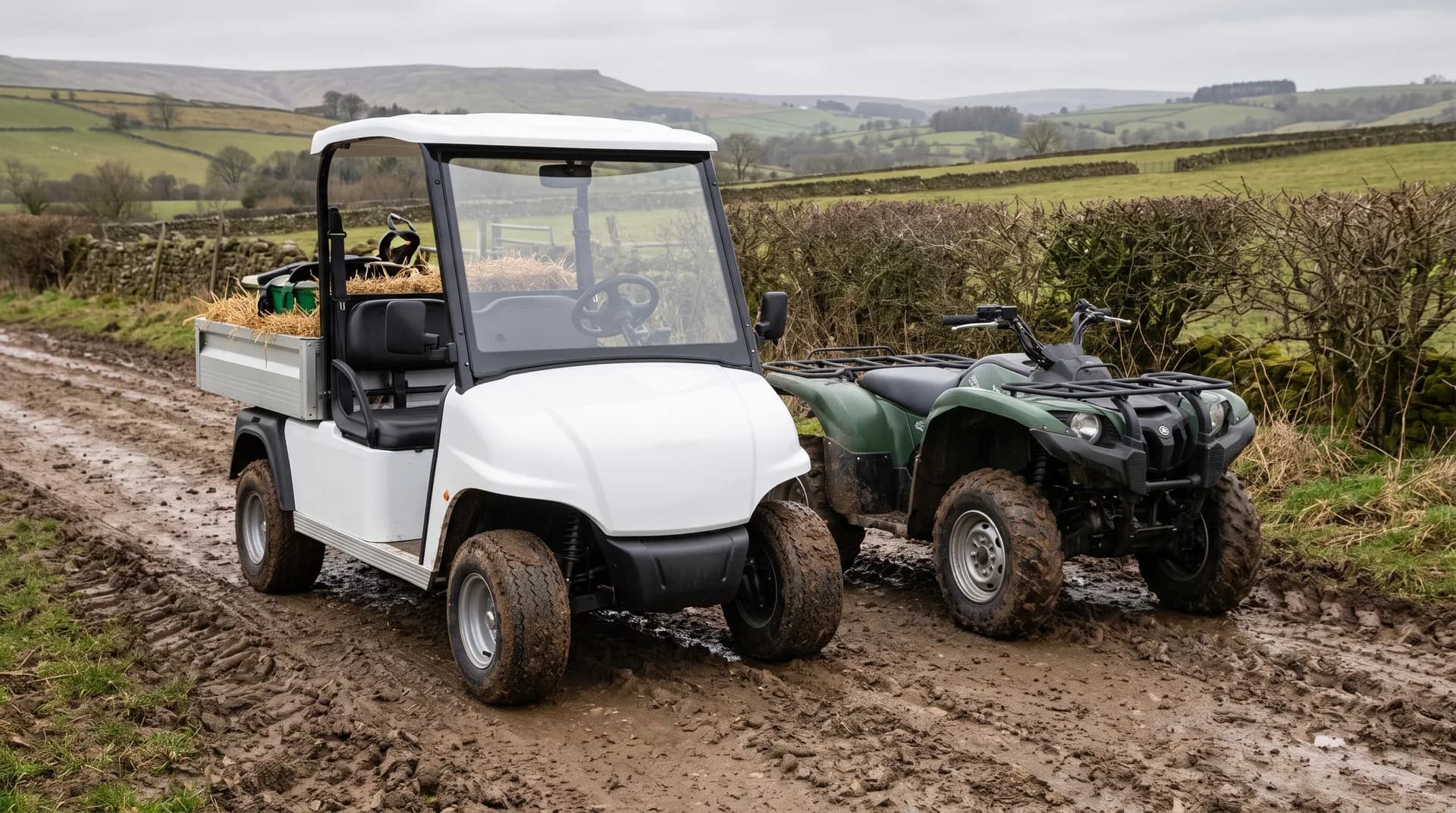
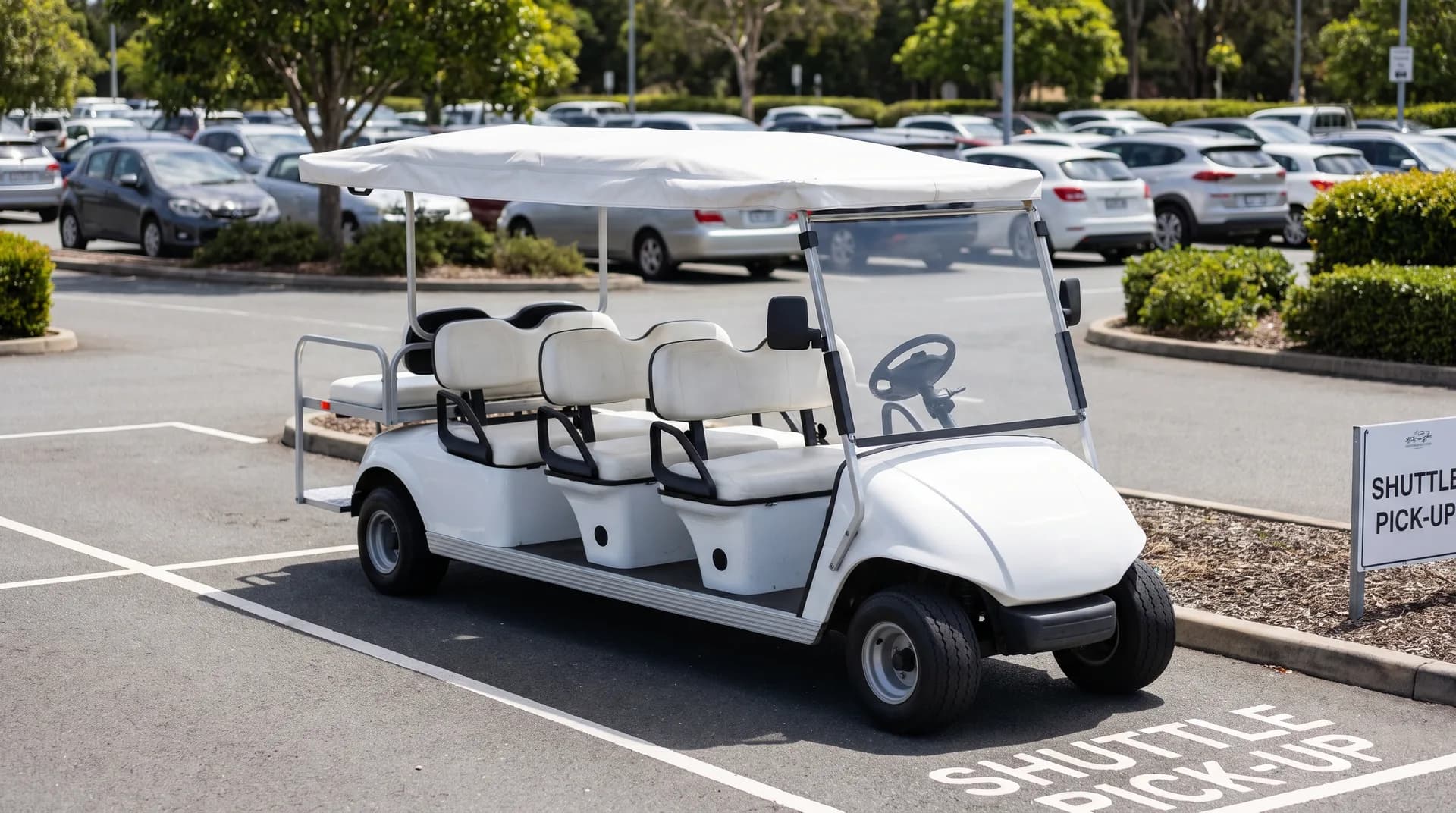
Four approaches cover almost every site. Electric golf buggies, in two to six-seat form, are the flexible workhorse: they fit paths and doorways vehicles cannot, carry a passenger and a toolbox, and need no more infrastructure than a socket. Electric people movers, typically six to eight seats or more, are the shuttle answer where whole teams or visitors move together; our people movers and shuttles guide covers them in depth, and the people mover range shows what the vehicles look like. Minibuses make sense where the journey involves public roads between separate sites, but they are licensed, insured and fuelled road vehicles, expensive to keep for internal hops, and too large for most internal routes. Bikes and e-bikes are cheap and healthy, but they move one person, carry no kit, put riders in the weather, and mix awkwardly with forklifts and HGVs in operational areas.
- Electric buggy
- 2 to 6
- People mover
- 6 to 8+
- Minibus
- 9 to 16
- Bike / e-bike
- 1
- Electric buggy
- Yes, load bed options
- People mover
- Some, luggage space
- Minibus
- Yes, but bulky access
- Bike / e-bike
- No
- Electric buggy
- Yes
- People mover
- Mostly
- Minibus
- No
- Bike / e-bike
- Yes
- Electric buggy
- Optional doors and cab
- People mover
- Optional enclosure
- Minibus
- Full
- Bike / e-bike
- None
- Electric buggy
- Low, pence in electricity
- People mover
- Low, pence in electricity
- Minibus
- Higher, fuel and servicing
- Bike / e-bike
- Minimal
- Electric buggy
- Repeated short hops
- People mover
- Team and visitor shuttles
- Minibus
- Road runs between sites
- Bike / e-bike
- Individual staff, fair weather
| Electric buggy | People mover | Minibus | Bike / e-bike | |
|---|---|---|---|---|
| Seats per trip | 2 to 6 | 6 to 8+ | 9 to 16 | 1 |
| Carries tools and kit | Yes, load bed options | Some, luggage space | Yes, but bulky access | No |
| Fits paths and tight routes | Yes | Mostly | No | Yes |
| Weather protection | Optional doors and cab | Optional enclosure | Full | None |
| Running cost per mile | Low, pence in electricity | Low, pence in electricity | Higher, fuel and servicing | Minimal |
| Best for | Repeated short hops | Team and visitor shuttles | Road runs between sites | Individual staff, fair weather |
Duty cycles, charging and multi-shift sites
The specification question is not which vehicle is nicest but what the duty cycle demands. Work out three numbers per route: miles covered in a day, people per trip at the busiest moment, and hours of operation. A single-shift site rarely troubles a modern lithium battery; the vehicle works the day and charges overnight from a standard socket. Multi-shift and 24-hour sites need more thought: either batteries sized generously enough to run through with opportunity charging at breaks, or a rotation where one vehicle charges while another works. Hospitals run exactly this pattern, and our guide to inter-site hospital shuttles shows how continuous-duty estates handle it. Plan charging points where vehicles naturally dwell, gatehouses, stores, canteens, rather than where the electrician finds it easiest.
Matching the vehicle to the job
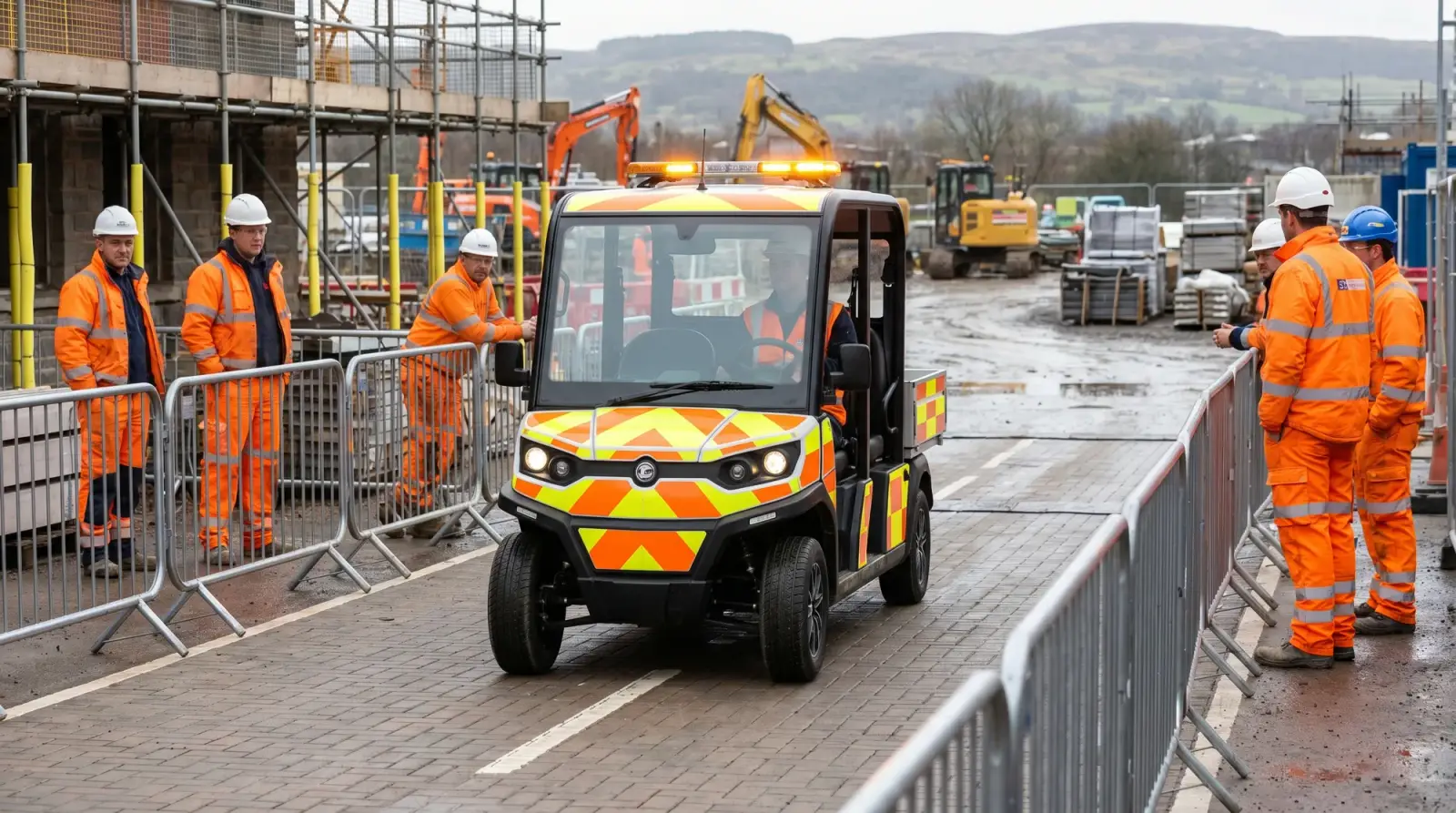
Most large sites end up with a small mixed fleet rather than one vehicle type. A pattern we see often: a two-seat buggy with a load bed for maintenance and stores runs, a four or six-seater for supervisors and escorted visitors, and a people mover on a fixed loop at shift change. As a guide to entry points, our two-seat S2 starts from £11,500, the four-seat S4 from £14,900 and the six-seat S6 from £18,900, with the final figure depending on batteries, weather protection and site fit-out. Buying suits permanent routes; hire suits seasonal peaks, trials and projects, and a short hire is also the cheapest way to prove the case to a finance director before committing to a fleet.
Frequently asked questions
What is the best vehicle for moving staff across a large site?+
For repeated short hops inside a site, a small fleet of electric buggies or people movers is usually the right answer: they fit internal routes, carry kit, and run all day on overnight charging. Minibuses earn their keep only where journeys use public roads between sites.
Do staff need a driving licence to use a site buggy?+
On private land there is generally no statutory licence requirement, but your insurer and your own safety policy will set the rules. Most sites require a full driving licence plus a short familiarisation as a condition of use, and document it.
Can electric site vehicles cope with a 24-hour operation?+
Yes, with planning. Either specify batteries generous enough to run through with opportunity charging at breaks, or rotate vehicles so one charges while another works. Lithium batteries charge quickly enough to make both approaches workable.
How many vehicles does a site need?+
Count the repeated journeys, not the acreage. Time the routes staff actually walk, work out seats needed at the busiest moment, and size to that. Many sites start with one or two vehicles and add more once the pattern is proven.
Is it better to buy or hire site transport?+
Buy for permanent, year-round routes; hire for seasonal peaks, projects and trials. A short hire is also a low-risk way to test vehicle types on your own site before specifying a purchase.
Specify staff transport for your site
Tell us your routes, your shifts and what the vehicles must carry, and we will recommend a fleet mix and price it to your specification.
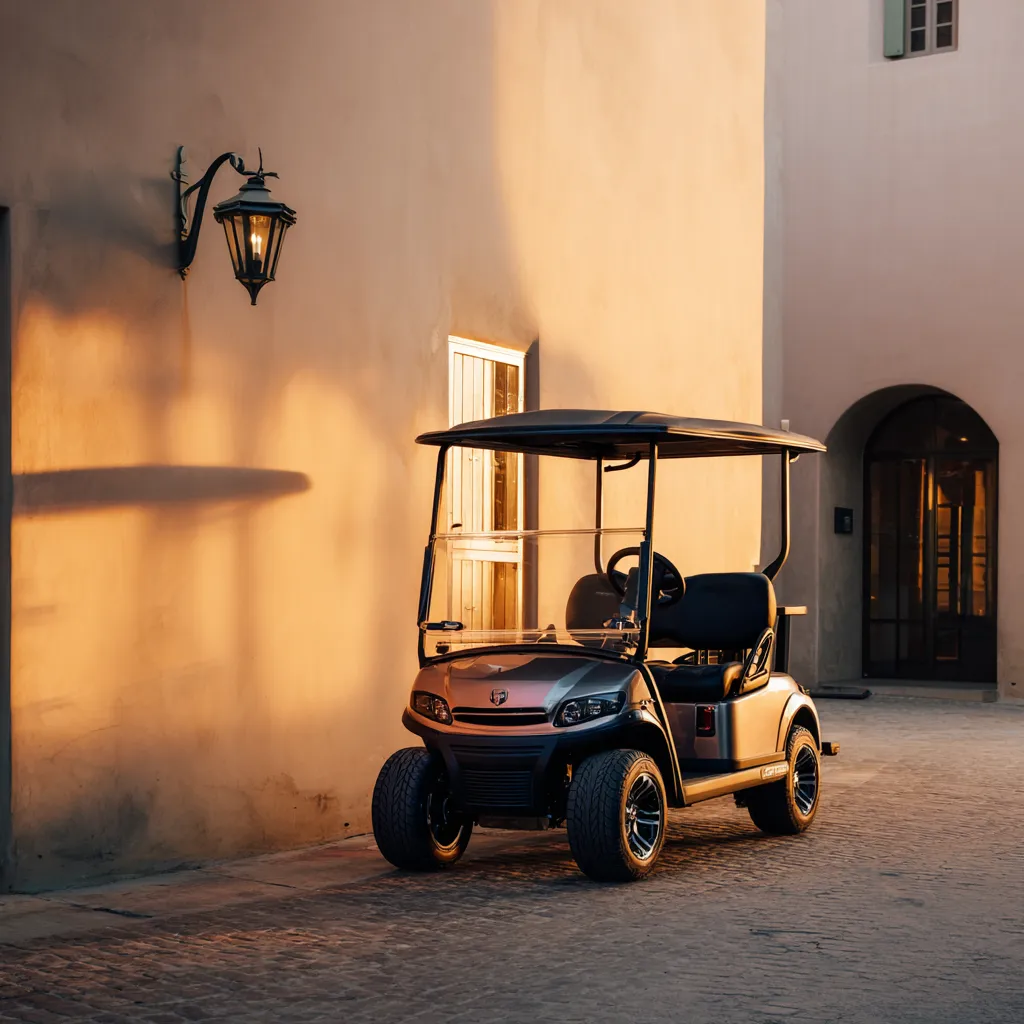
Ready to find the right buggy?
Tell us how and where it will work and we will specify a vehicle and a tailored quote built around you. Every build comes with a 3-year warranty and a 24-hour priority call-out.
Our guides are written and reviewed by the Hawke Electric Vehicles team, the people who specify, build, deliver and support the vehicles. We focus on honest, practical advice and flag where a figure depends on the build rather than guessing.
More guides by Hawke