Utility vehicle attachments and accessories are how the same base platform becomes ten different vehicles: a cab and heater turn it into a year-round machine, a hitch turns it into a tug, racks and liners shape the bed to your loads, and beacons and reversing alarms make it welcome on a managed site. The right way to choose them is from the job backwards, list what the vehicle must do in the worst week of the year, then specify the options that make each task possible, rather than ticking boxes on an options list. This guide works through the main categories, what each one actually changes, and which are worth specifying at the point of order rather than retrofitting later.
- Specify from the job backwards: the worst week of the year defines the options list.
- Cabs, doors and heaters decide whether the vehicle works in January or waits for April.
- A tow hitch is cheap capability, but towing needs the vehicle's rated capacity behind it.
- Beacons, alarms and site-safety kit are what make a vehicle acceptable on managed and public sites.
- Order structural options, cabs, tipping beds, seat conversions, with the vehicle; add small kit later.
Weather protection: cabs, doors and heaters
Nothing changes a working vehicle's usefulness in Britain like weather protection. An open vehicle is fine from May to September; a canopy and screen extend that; a full cab with doors and a heater makes the vehicle a twelve-month tool that staff will actually use in January rather than finding reasons not to. The step up matters most for vehicles with long duty cycles, security patrols, estate rounds, site-wide maintenance, where the operator is aboard for hours, and it is the clearest example of an option that should be specified at order: a factory cab is designed with the platform, sealed properly and wired cleanly, where a retrofit is rarely as good. Doors, a heated screen and wipers follow the same logic. If the vehicle will ever carry passengers as part of the job, weather protection is as much about them as the driver.
Utility vehicle attachments for carrying and towing
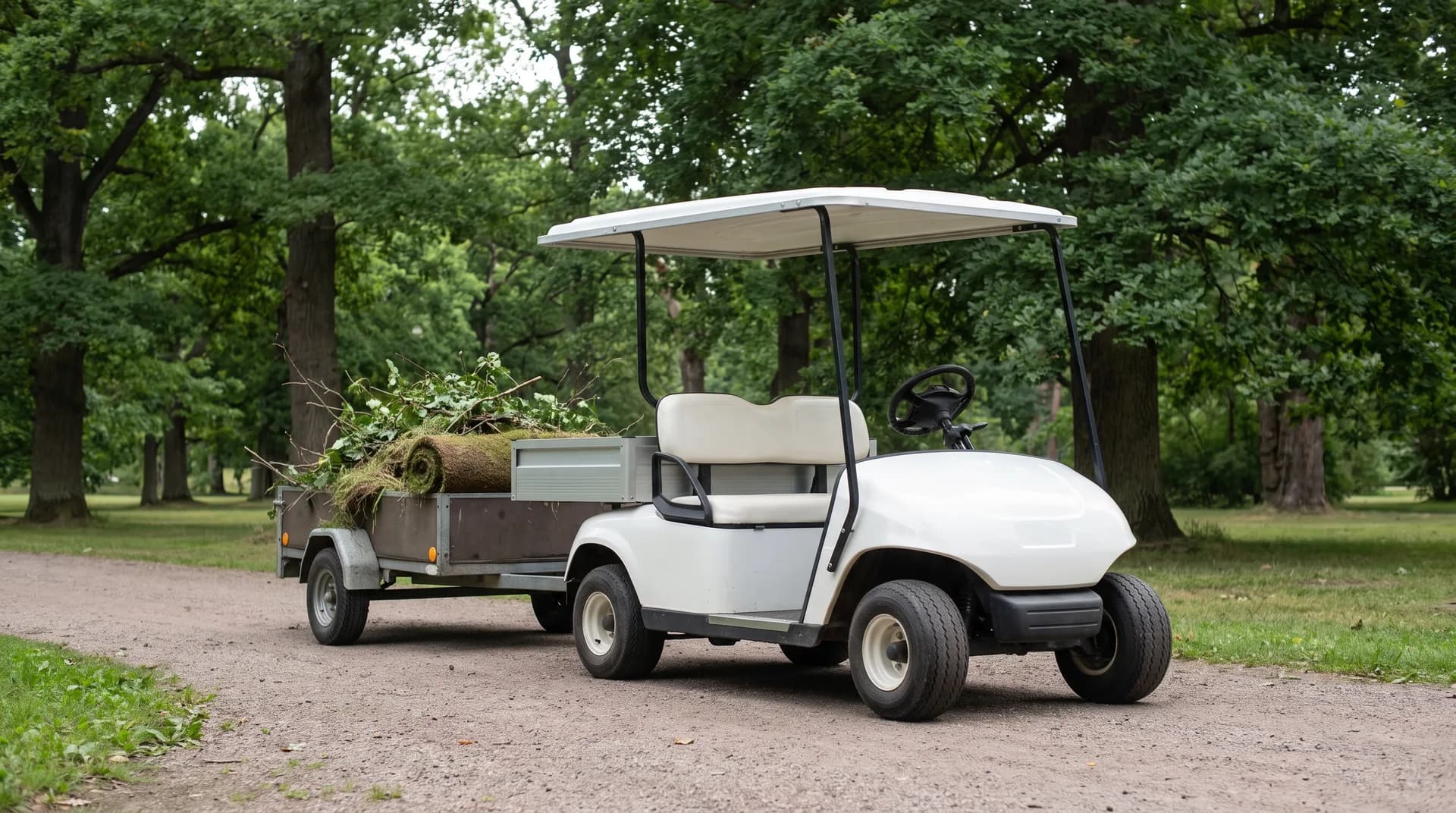
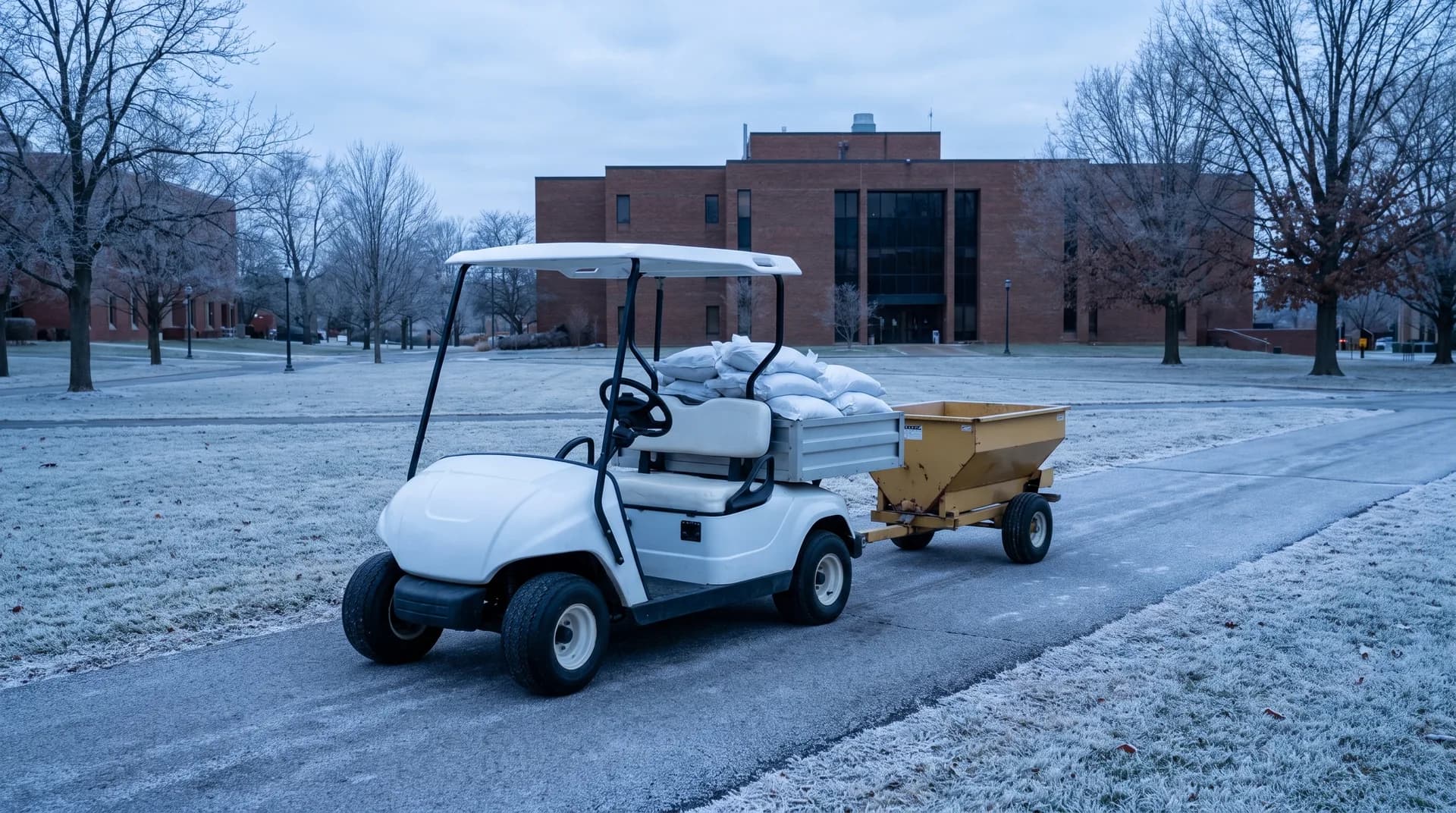
The bed and the back end are where a vehicle is really tailored to its work. A bed liner protects the deck from aggregates and tools and is cheap insurance from day one. Racks, ladder frames and cages carry long or high loads that a flat bed cannot hold safely, and mesh sides raise the effective volume for light, bulky loads such as leaves and hedge cuttings. A tow hitch is one of the least expensive options and one of the most transformative, one vehicle pulling a trailer doubles its carrying capacity on every run, but it must be backed by the platform's rated towing capacity and the discipline to respect it, which our towing guide covers in detail. Beyond that sit the genuinely task-specific attachments, gritters and spreaders for winter routes, small crane arms and loading aids for heavy single items, and tanks and bowsers for watering runs, each of which effectively creates a seasonal role for the vehicle. Where repeated towing is the whole job, a dedicated electric tow tractor is the better tool than a laden pickup with a hitch.
- Job
- Long daily hours outdoors
- Options that matter
- Full cab, doors, heater, wipers
- Job
- Loose loads, frequent unloading
- Options that matter
- Tipping bed, liner, mesh sides
- Job
- Repeated towing between points
- Options that matter
- Rated hitch, or a dedicated tow tractor
- Job
- Working among pedestrians
- Options that matter
- Beacon, reversing alarm, horn, lighting
- Job
- Ice and early starts
- Options that matter
- Gritter or spreader, cab, winter tyres
| Job | Options that matter | |
|---|---|---|
| Year-round estate or grounds rounds | Long daily hours outdoors | Full cab, doors, heater, wipers |
| Waste and materials runs | Loose loads, frequent unloading | Tipping bed, liner, mesh sides |
| Trailer and equipment moves | Repeated towing between points | Rated hitch, or a dedicated tow tractor |
| Public and managed sites | Working among pedestrians | Beacon, reversing alarm, horn, lighting |
| Winter routes | Ice and early starts | Gritter or spreader, cab, winter tyres |
Site safety kit: beacons, alarms and lighting
On any site where vehicles and pedestrians mix, campuses, attractions, hospitals, events, the safety options are what make a utility vehicle acceptable to the people who manage the risk. An amber beacon makes the vehicle visible across a site; a reversing alarm covers its quietest manoeuvre, which on an electric vehicle is genuinely silent otherwise; road-style lighting, indicators and mirrors matter wherever the vehicle shares routes with other traffic; and speed limiting can be set to match site rules. None of these is expensive, and specifying them up front is far easier than negotiating access for a vehicle that lacks them. Treat them as part of the vehicle, not extras: for many estates and public-facing operators they are conditions of use, and they are also simply good practice around pedestrians.
Choosing utility vehicle attachments and accessories by the job
Some options change the vehicle's whole shape. Seats-to-load conversions, fold-flat or removable rear seats over a load deck, let one vehicle carry a crew out in the morning and materials all afternoon, and are popular with grounds teams who would otherwise need two vehicles. The rule of thumb for the whole options list is structural versus bolt-on: cabs, tipping beds, seat conversions and hitch mounting points belong on the order, because they are engineered into the build, while beacons, liners and racks can be added later without penalty, though buying them with the vehicle is usually cheaper and better integrated. Every option should trace back to a task, and the utility vehicle range is quoted exactly that way: platform first, then the options your jobs demand, priced as one build. For a wider view of what can be tailored, our guide to bespoke buggy customisation shows how far a specification can go.
Frequently asked questions
What attachments are available for electric utility vehicles?+
Weather protection (canopies, full cabs, doors, heaters), bed equipment (liners, racks, mesh sides, tipping beds), towing gear (hitches, and dedicated tow tractors for repeated towing), site-safety kit (beacons, reversing alarms, lighting, speed limiting) and task-specific attachments such as gritters, tanks and loading aids.
Which options should be ordered with the vehicle?+
Structural options: cabs and doors, tipping beds, seats-to-load conversions and hitch mounting points. These are engineered into the build and rarely retrofit as well. Beacons, liners and racks can be added later, though ordering together is usually cheaper.
Do I need a beacon and reversing alarm?+
On managed and public sites, usually yes, and often as a condition of access. Electric vehicles are near-silent, so a reversing alarm and amber beacon are basic good practice wherever pedestrians share the space.
Can a utility vehicle tow with a hitch fitted?+
Yes, within the platform's rated towing capacity, which the hitch does not increase. Match trailer weight to the rating, brake and descend accordingly, and where towing is the main job all day, consider a dedicated tow tractor instead.
How do I decide which accessories are worth it?+
Work from the job backwards: list what the vehicle must do in its worst week, and specify the option that makes each task possible. An option that does not trace to a task is cost and weight the vehicle carries for nothing.
Build the vehicle around the job
Tell us the tasks, the site and the season, and we will specify the platform and the options together, priced as one build.
Related solutions
Ready to explore what we build?
See the vehicles and the setting this applies to, or get a tailored quote built around your site.

Ready to find the right buggy?
Tell us how and where it will work and we will specify a vehicle and a tailored quote built around you. Every build comes with a 3-year warranty and a 24-hour priority call-out.
Our guides are written and reviewed by the Hawke Electric Vehicles team, the people who specify, build, deliver and support the vehicles. We focus on honest, practical advice and flag where a figure depends on the build rather than guessing.
More guides by Hawke