Every buggy we build is built to order, so the question isn't really whether you can customise it. It's how far you want to take it. A bespoke electric buggy starts from a proven platform and then becomes yours: the colour, the seats, the layout, the roof, the wheels, the fit-out, the branding. Some choices are small finishing touches. Others change what the vehicle is for. This guide runs through what's actually on the table, and how the process works once you've decided.
Where do you start with a bespoke build?
You start with the job, not the paint. The most useful thing you can tell us is what the buggy is for: who rides in it, what it carries, where it works and how it should feel to the people using it. A guest shuttle for a country hotel wants a very different character from a workhorse on a working estate. Once the purpose is clear, the choices below stop being a menu and start being decisions with obvious answers. If you'd rather see it take shape as you go, build your own and the spec comes together in front of you.
Start with what the buggy is for, and the rest of the build more or less designs itself.
Colour and finish
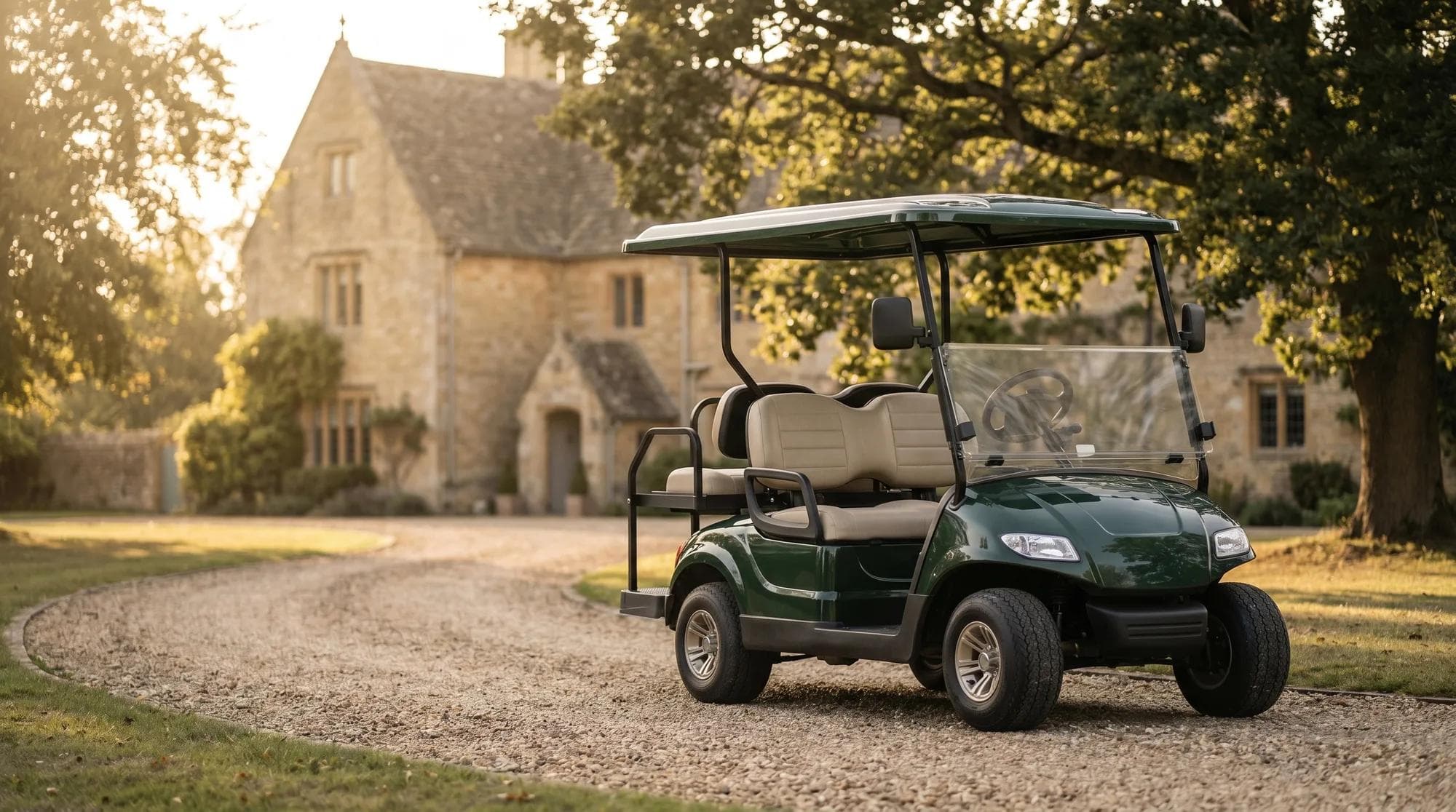
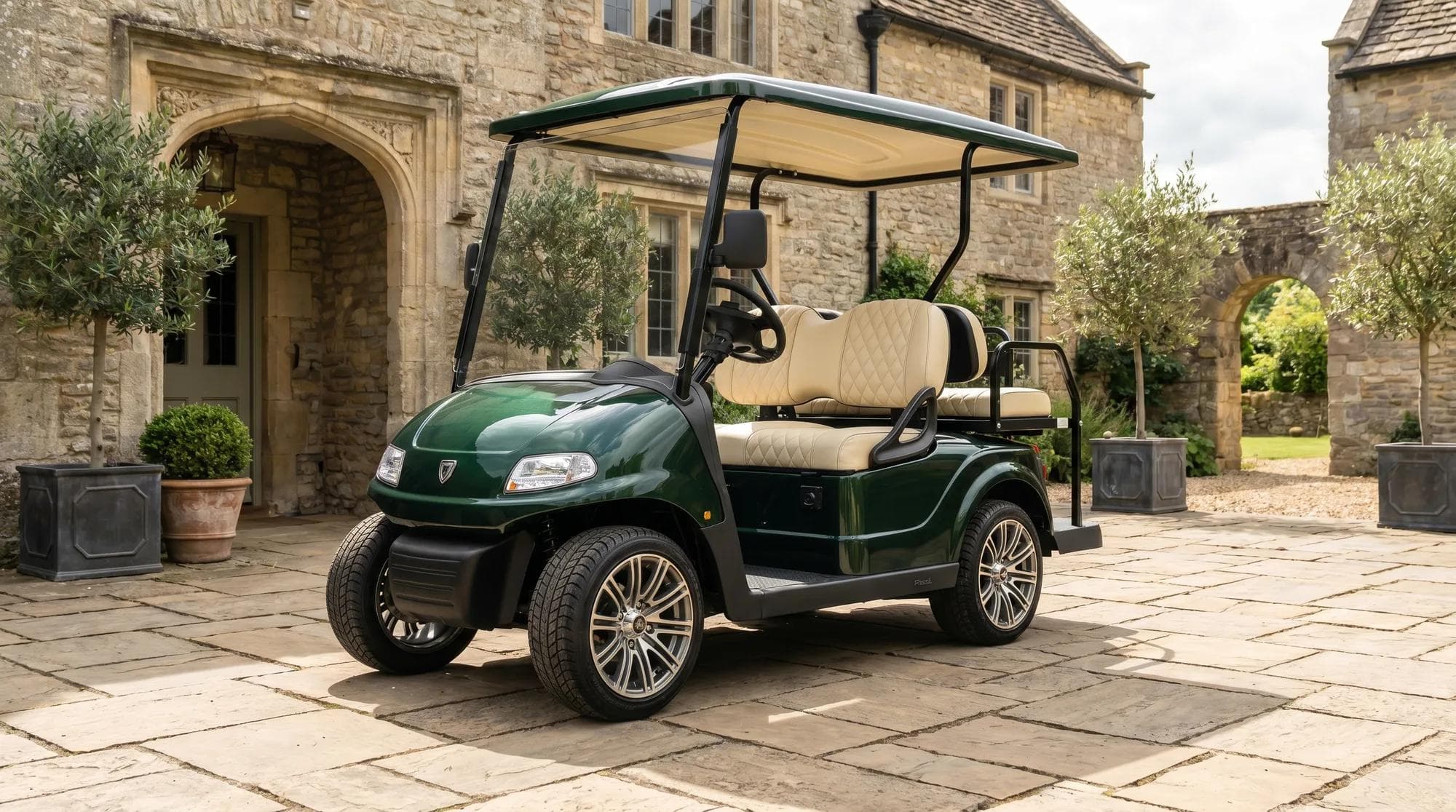
Colour is where most people begin, and it carries more weight than you'd think. You're not picking from a short list of stock shades. We can match a house colour, an estate livery, a brand palette or simply the look you want, in gloss, satin or a deeper metallic finish. A matched body colour is the single quickest way to make a buggy feel considered rather than off-the-shelf, and it's the foundation everything else sits on. Get the colour right first, then choose the trim and wheels to set it off.

Trim and upholstery
Upholstery is where a buggy stops feeling like equipment and starts feeling like a vehicle you'd choose. Seats can be specified in a range of colours and materials, from hard-wearing weatherproof finishes for outdoor work to softer, premium trim for a guest-facing build. Stitching, piping and contrast detail all sit in your hands. So do the smaller touches: the dash, the grab rails, the steering wheel, the floor. None of it is loud on its own, but together it's the difference between a buggy that looks bought and one that looks commissioned.
Seating and layout
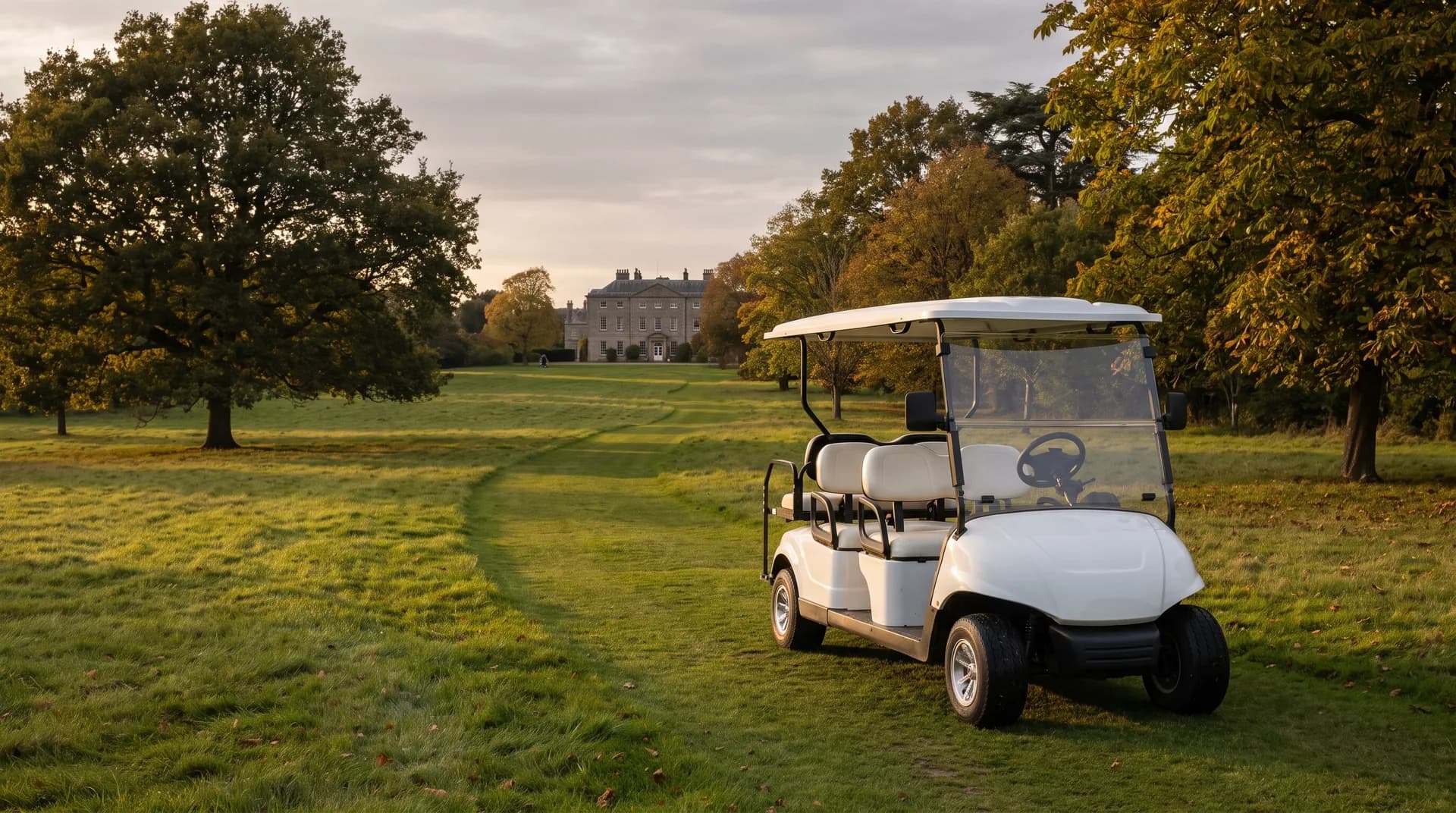
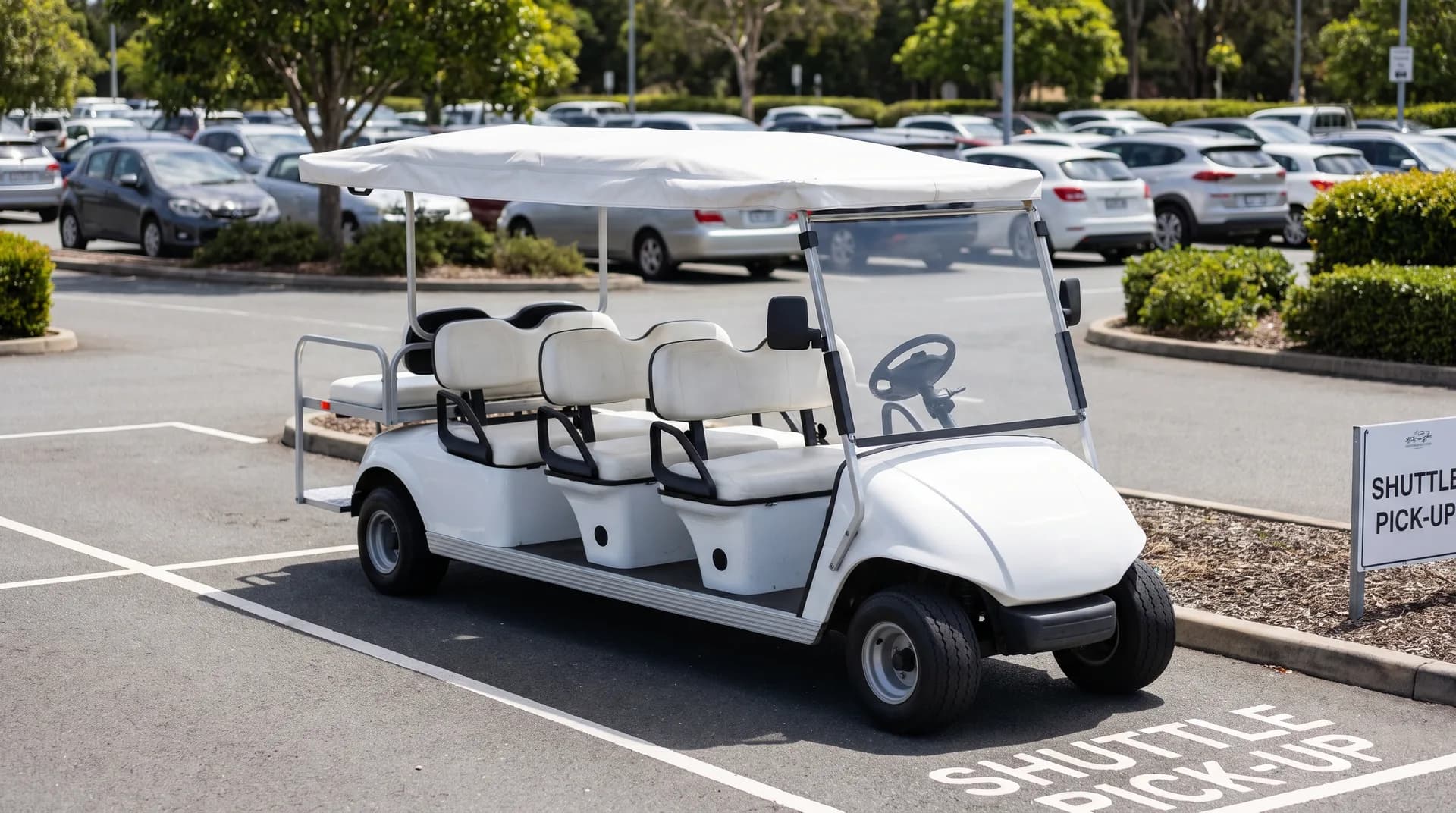
Seating isn't only about how many people fit. It's about how the vehicle is laid out. Across the range you can move between two, four, six and eight seats, the Hawke S2 to the Hawke S8, with people movers from eleven to twenty-three seats above them, and a bespoke build lets you go further: forward-facing rows, rear-facing benches, a mix of seats and cargo, or a flat load bed where seats would normally go. A utility layout (the Hawke S2 Pickup) trades passengers for payload. If you're weighing how many seats you actually need, our buyers' guide walks through sizing to your busiest day rather than your average one.
Layout is also where mixed-use buggies come into their own. Plenty of operators want a vehicle that carries guests one day and kit the next, so we can specify removable seats, a convertible rear, or a split of seating and load space that flexes with the week. Tell us the heaviest regular job and the most people you'll ever carry at once, and we'll build the layout around both.
Roof, screen and weather protection
In the UK this matters more than people admit. A proper roof, a windscreen and side protection turn a fair-weather buggy into something you'll use in November. You can specify the roof colour and style, add a screen with a wiper, fit doors or weather curtains, and choose lighting to suit early starts and dark afternoons. For year-round work, weather kit isn't a luxury, it's what keeps the vehicle earning its keep through a British winter.
Wheels and stance
Wheels do two jobs: they change how the buggy looks, and they change where it can go. On the visual side, alloy designs and finishes set the whole stance of the vehicle and tie the build together. On the practical side, tyre choice decides the terrain. Smooth tyres suit tarmac and resort paths, while a chunkier, lifted setup handles grass, gravel and wet tracks. A lift kit raises ground clearance for rougher ground. Picture where the buggy spends its day, then choose wheels and tyres for that, not for the showroom.
Fit-out and accessories
This is the long tail of a bespoke build, and it's often what makes the vehicle genuinely useful. Cargo beds, tool racks, cool boxes, gun slips, ball washers, sand bottles, lockable storage, USB charging, sound systems, extra lighting, towing kit: the list is as long as the job. Each one is small. Together they turn a generic platform into a vehicle that fits exactly how your team works. The trick is to fit what you'll genuinely use and leave off the rest, so the buggy stays clean and quick to maintain.
Branding and livery
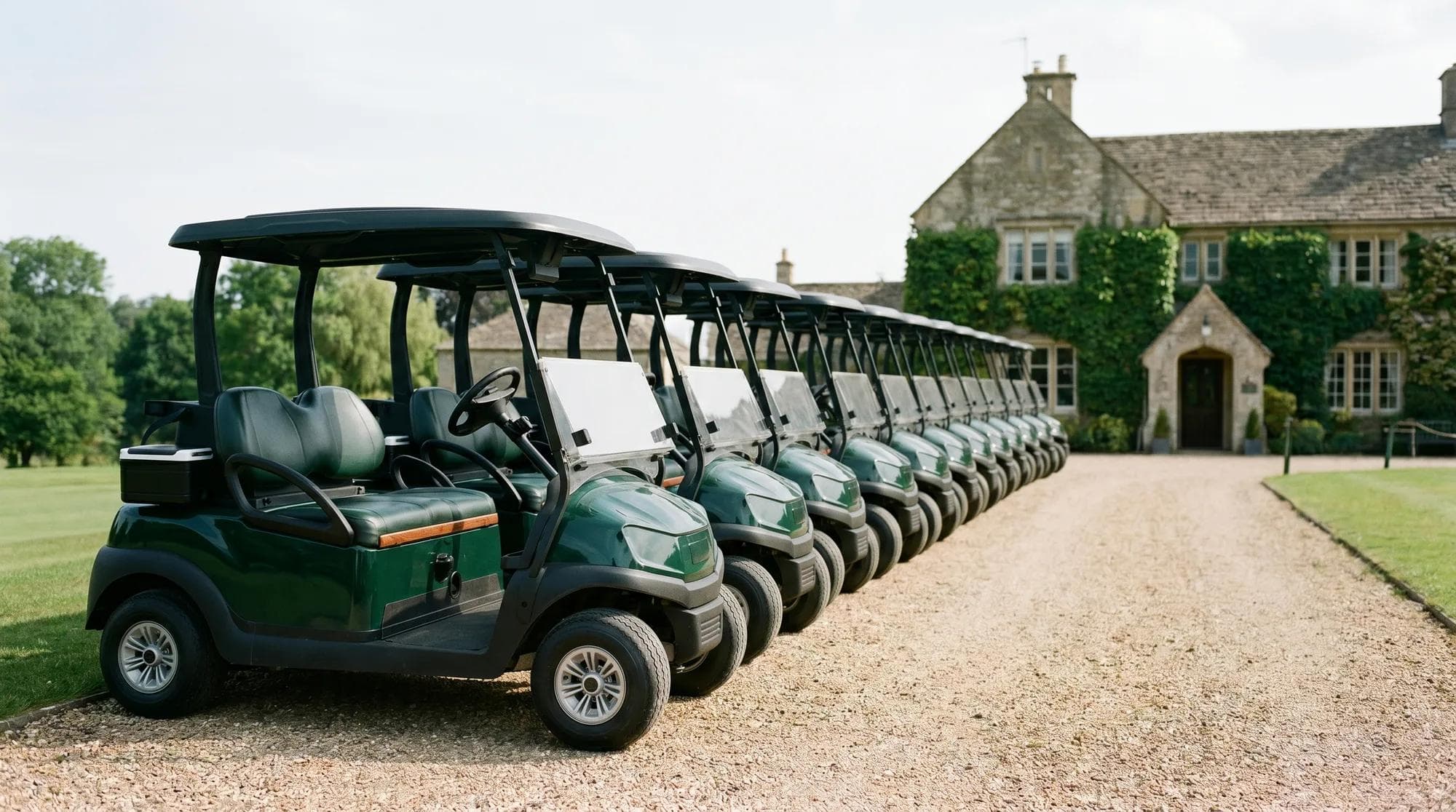
If the buggy is going to be seen by guests, members or the public, it's a moving piece of your brand. We can finish a vehicle in your colours and apply logos, crests, vehicle numbers and full livery so a fleet looks deliberate rather than assembled. A matched, branded fleet reads as care and quality before a single guest has stepped aboard. For the detail on getting a whole fleet consistent, see our guide to custom fleet branding for golf buggies.
Special-purpose builds
Beyond the usual choices, a bespoke buggy can be built for a specific job that no stock vehicle covers. We've quoted for everything from luggage and shuttle layouts for hotels to ranger and patrol setups for large estates, accessible designs for easier boarding, and discreet, camera-friendly builds for film and television. If a job has unusual needs, that's exactly where bespoke earns its name. The honest caveat: some special builds take longer to specify and source, so the more detail you give us early, the smoother it goes.
- What you can choose
- Matched colours, gloss, satin or metallic
- What you can choose
- Seat material, colour, stitching and detail
- What you can choose
- 2 to 8 seats, cargo, convertible layouts
- What you can choose
- Roof, screen, doors, curtains, lighting
- What you can choose
- Alloys, tyre type, lift kits for terrain
- What you can choose
- Racks, storage, charging, towing, extras
- What you can choose
- Logos, crests, numbers, full fleet livery
| Area | What you can choose |
|---|---|
| Colour and finish | Matched colours, gloss, satin or metallic |
| Trim and upholstery | Seat material, colour, stitching and detail |
| Seating and layout | 2 to 8 seats, cargo, convertible layouts |
| Roof and weather | Roof, screen, doors, curtains, lighting |
| Wheels | Alloys, tyre type, lift kits for terrain |
| Fit-out | Racks, storage, charging, towing, extras |
| Branding | Logos, crests, numbers, full fleet livery |
How does the bespoke electric buggy process work?
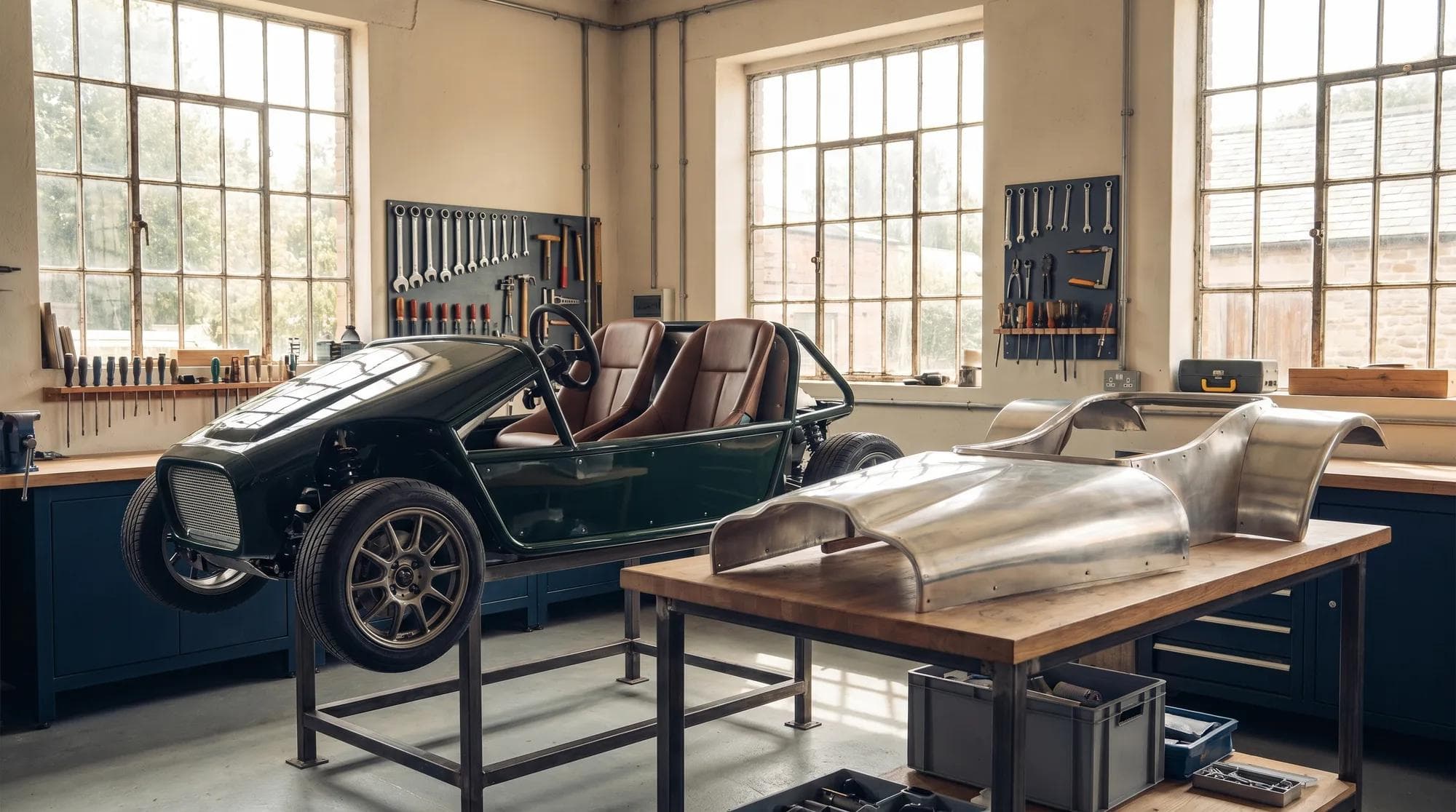
It starts with a conversation, not a checkout. You tell us the purpose and the look you're after, we suggest a platform and specification, and we confirm a tailored price for the build you've chosen. From there the vehicle is made to your spec, finished, and delivered and commissioned, in the UK or worldwide. Every build carries a 3-year warranty and a 24-hour VIP call-out. For a closer look behind the scenes, read how a bespoke electric buggy is made.
On lead times, be honest about your deadline early. A straightforward build with stock colours and trim moves faster than a heavily customised or special-purpose vehicle that needs unusual parts. We'll always give you a realistic timeline for your exact spec when we quote, rather than a headline figure that won't apply to your build. If there's a date you need it by, an event, a season opener, a handover, say so up front and we'll plan to it.
Design your bespoke buggy
Tell us what it's for and how you want it to look, and we'll specify a build and confirm a tailored price. Or start the design yourself and carry it straight into a quote.
Frequently asked questions
What can you customise on a bespoke electric buggy?+
Almost everything: the colour and finish, the trim and upholstery, the seating and layout, the roof and weather protection, the wheels and tyres, the fit-out and accessories, and any branding or livery. Special-purpose builds go further again. Because every vehicle is built to order, the build is shaped around your exact use.
Can I get a golf buggy in any colour?+
Yes. Rather than a short stock list, we can match a house colour, a brand palette or an estate livery in gloss, satin or metallic finishes. A matched body colour is the quickest way to make a buggy feel commissioned rather than off-the-shelf, and it sets the tone for the trim and wheels.
Can you put my company logo or branding on a buggy?+
Yes. We can finish a vehicle in your colours and apply logos, crests, vehicle numbers and full livery, and keep a whole fleet consistent. It's easiest to get perfect when it's planned from the start of the build, so bring your colours and logos to the first conversation.
How much does a bespoke golf buggy cost?+
Bespoke pricing is on request, because the figure depends on the platform, the finish and how far the customisation goes. We confirm a tailored price for your exact build when we quote.
How long does a bespoke buggy take to build?+
It depends on the spec. A straightforward build with stock colours and trim is quicker than a heavily customised or special-purpose vehicle that needs unusual parts. Tell us any deadline early and we'll give you a realistic timeline for your exact build when we quote.
Ready to find the right buggy?
Tell us how and where it will work and we will specify a vehicle and a tailored quote built around you. Every build comes with a 3-year warranty and a 24-hour priority call-out.
Our guides are written and reviewed by the Hawke Electric Vehicles team, the people who specify, build, deliver and support the vehicles. We focus on honest, practical advice and flag where a figure depends on the build rather than guessing.
More guides by Hawke