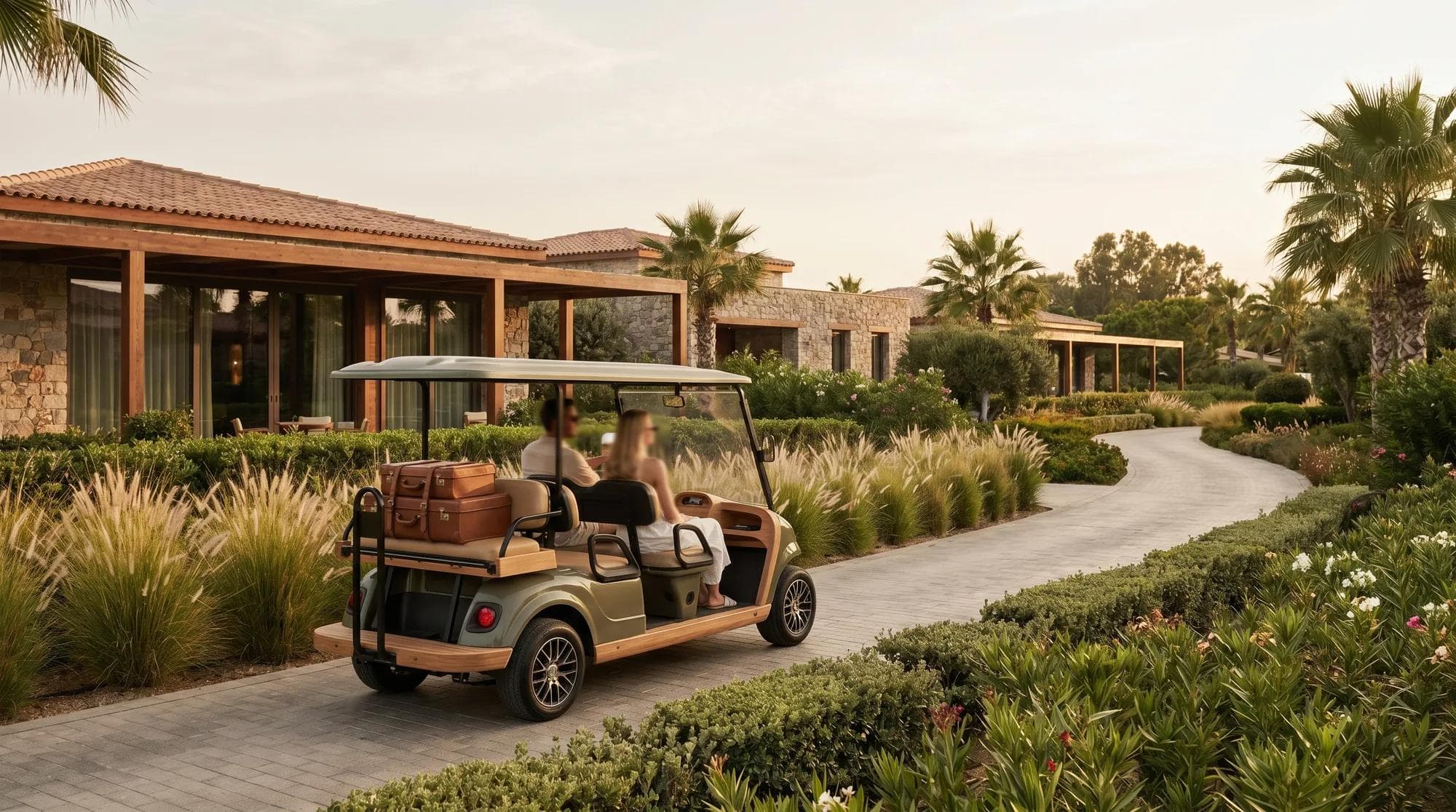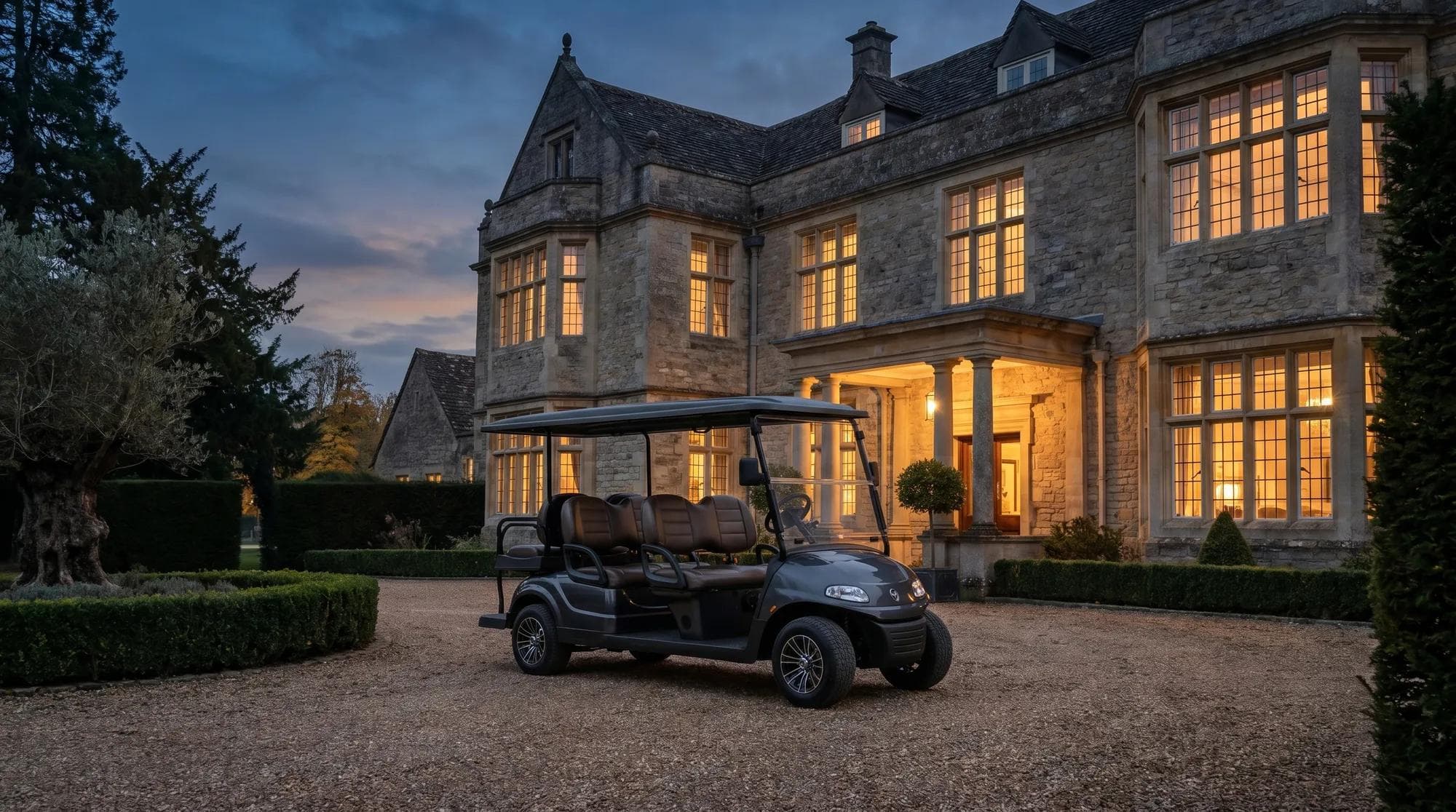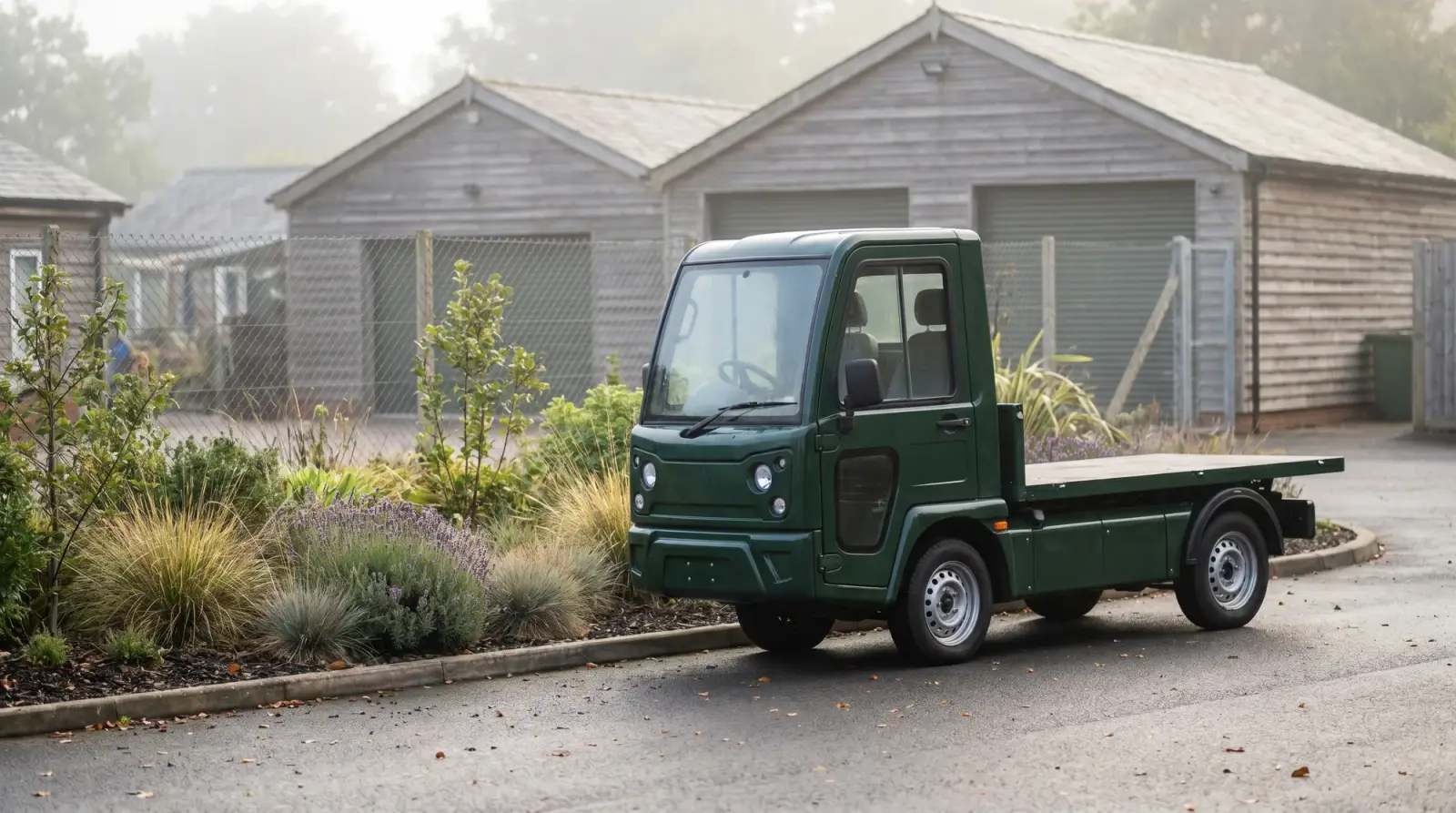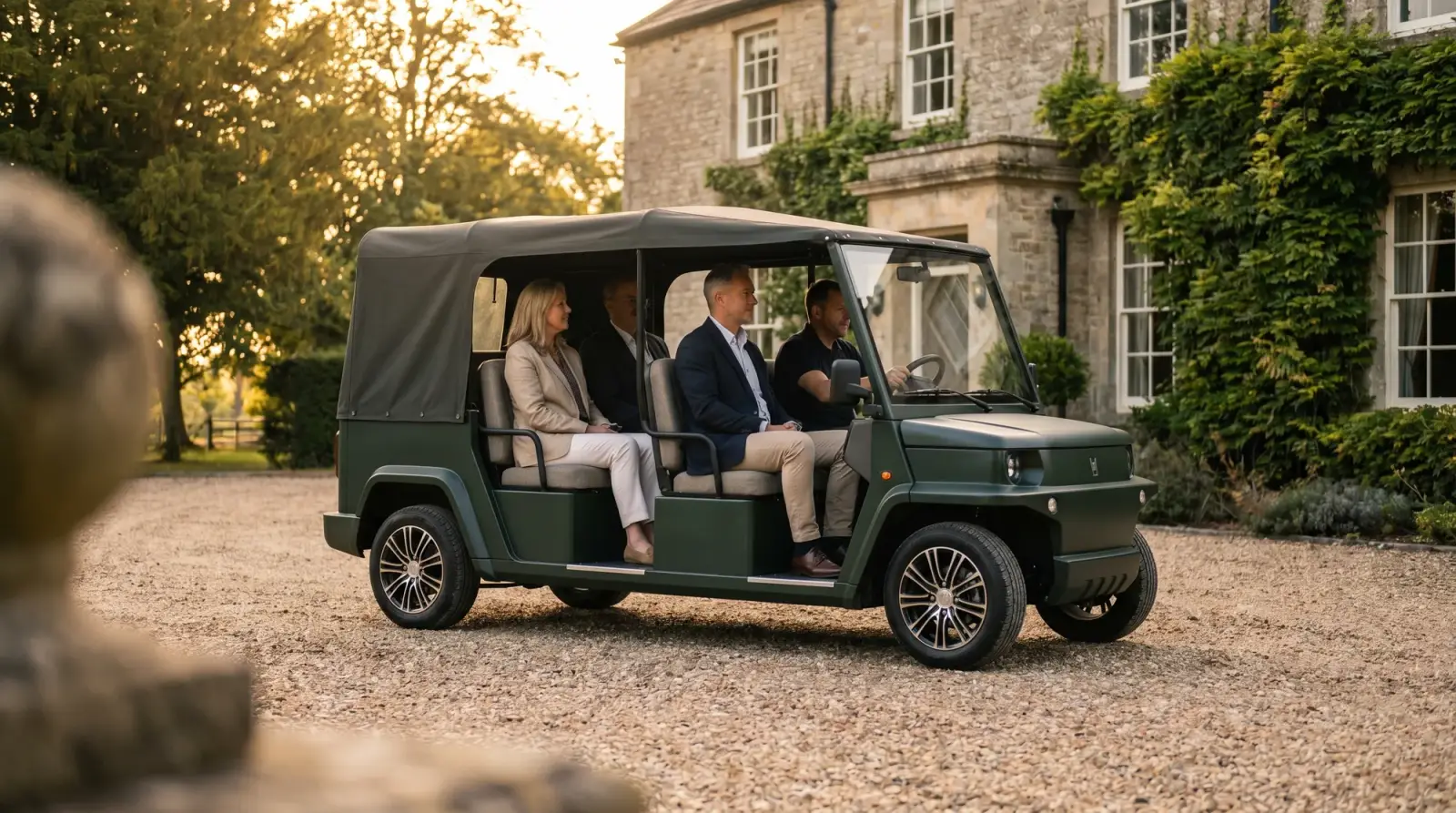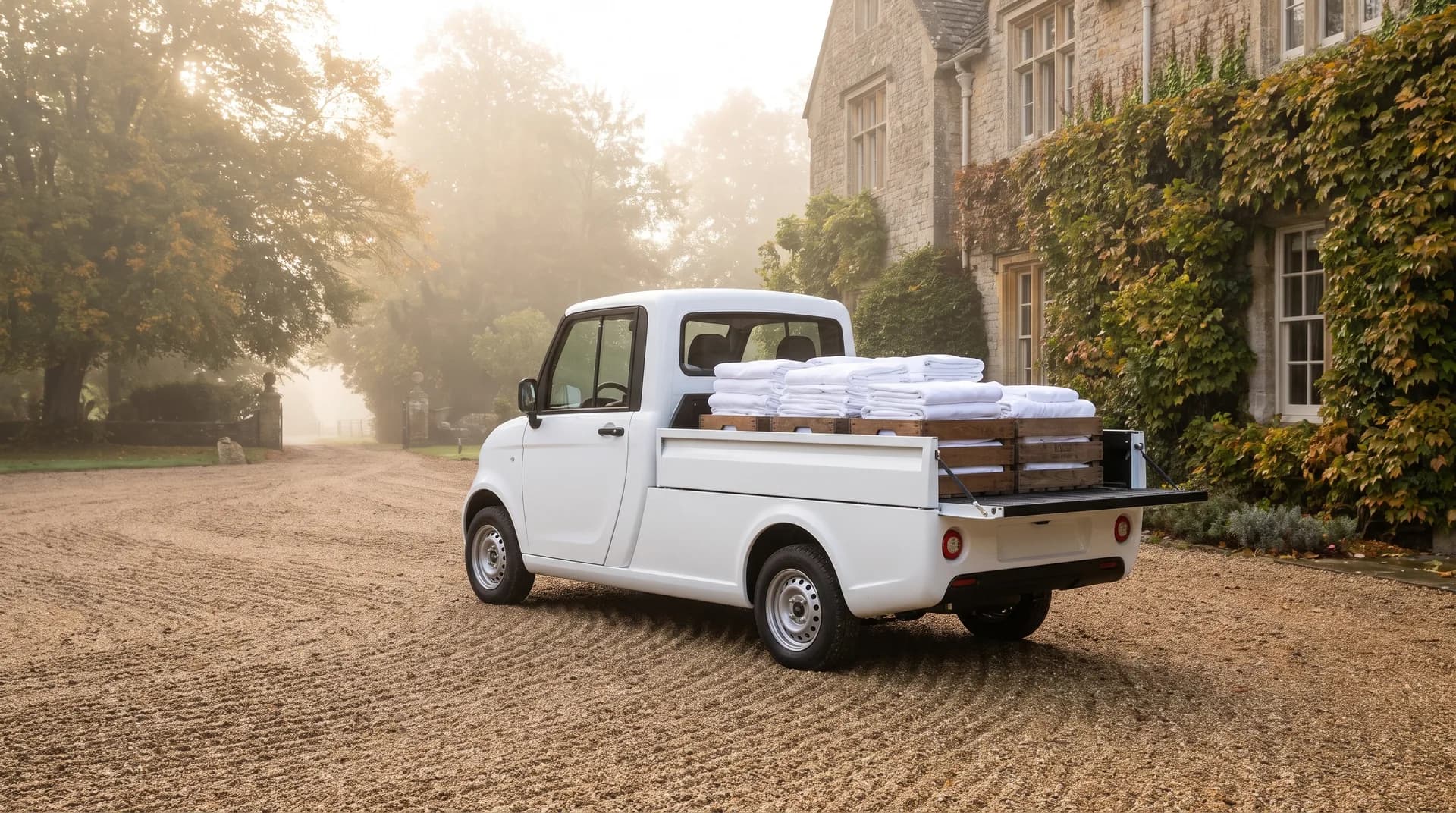
Hotels run on vehicles guests never see. Behind the arrivals shuttle and the golf-style guest buggies sits the harder-working half of the fleet: the machines that move linen carts to outlying lodges, luggage from reception to rooms, a plumber and toolbox to a far wing, and covered meals from a central kitchen to a spa or restaurant across the grounds. The best utility vehicle for hotels is chosen for exactly that work: a compact electric pickup or box-bodied vehicle, sized for service paths, quiet enough for early starts, with the body matched to each department's cargo. Our S2 Pickup, from £15,900, is the natural starting point for most properties. This guide is the back-of-house companion to our guide on electric buggies for hotels and resorts, which covers the guest-facing passenger side; here we deal with the vehicles that do the work.
- Choose body-first: open bed for maintenance and grounds, enclosed box for linen and food, tipper for landscaping waste.
- Measure the service routes before shortlisting: the narrowest gate or corridor on the busiest run sets your maximum width.
- Electric drive suits hotels precisely because it is silent and fume-free: dawn housekeeping runs stop waking guests.
- Payload honesty matters: a laden linen cage or a stocked maintenance load is heavier than teams estimate, so specify with margin.
- Most properties end up with a small mixed fleet, and charging overnight in the service yard from standard supplies keeps it simple.
Back of house, not front of house
It is worth being precise about the split, because the two halves of a hotel fleet are specified on different logic. Front of house is about guest experience: passenger seating, weather protection, brand livery, a driver in uniform; our resorts and hotels buyer's guide covers that fleet properly. Back of house is about work: payload, body type, route width, turnaround time and total cost per year. A property that buys one all-purpose vehicle usually gets a machine that does neither job well: a pickup pressed into guest transfers looks wrong, and a passenger buggy on linen runs carries too little and gets shabby fast. Specify the working fleet on its own terms.
The best utility vehicle for hotels: the jobs list
Walk the property with the heads of housekeeping, maintenance, food and beverage and grounds, and write down what actually moves. Housekeeping moves linen cages, amenity stock and cleaning trolleys between laundry, stores and rooms or lodges, often on a tight morning schedule. Porters move luggage, several parties' worth at checkout time. Maintenance moves an engineer, tools, ladders and parts to wherever the fault is. Kitchens move covered food, crockery and stores between production and outlying service points, spas, pool bars, lodge breakfasts. Grounds moves green waste, gravel, planters and machinery. Each flow has a natural vehicle, matched in the table below; across most properties one or two compact pickups plus a box vehicle covers the estate, the mixed-fleet logic our guide to utility vehicles in resort operations explores in depth.
- What it moves
- Linen cages, amenities, cleaning trolleys
- Body that fits
- Enclosed box: dry, secure, presentable
- What it moves
- Luggage between reception and rooms
- Body that fits
- Open bed with rails, or box in wet climates
- What it moves
- Engineer, tools, ladders, parts
- Body that fits
- Open pickup bed with tie-downs
- What it moves
- Covered meals, crockery, dry stores
- Body that fits
- Enclosed box, easy-clean interior
- What it moves
- Green waste, gravel, planters
- Body that fits
- Tipping bed earns its keep
| What it moves | Body that fits | |
|---|---|---|
| Housekeeping | Linen cages, amenities, cleaning trolleys | Enclosed box: dry, secure, presentable |
| Porterage | Luggage between reception and rooms | Open bed with rails, or box in wet climates |
| Maintenance | Engineer, tools, ladders, parts | Open pickup bed with tie-downs |
| Food and beverage | Covered meals, crockery, dry stores | Enclosed box, easy-clean interior |
| Grounds | Green waste, gravel, planters | Tipping bed earns its keep |
Hotel utility vehicle payload, body type and hygiene
Two specification points deserve honesty. First, payload: laden linen cages, a stocked maintenance load or a bed of wet green waste weigh more than teams guess, so ask departments to weigh a typical worst-case load and specify with margin rather than to the average, because a vehicle worked at its limit daily ages quickly. Second, hygiene and presentation: anything carrying food or clean linen wants an enclosed, easy-clean body that keeps weather, dust and prying hands out, and it is worth keeping food and waste flows on separate vehicles or at minimum separate bodies. Open beds should get tie-down points and, in this climate, a cover. None of it is exotic, but it separates a fleet the operation trusts from one it quietly stops using.
Width, quiet and the service yard
Hotels, especially older and country-house properties, are mazes of narrow gates, courtyard arches and paths never designed for vehicles, so measure the narrowest pinch point on each key route before shortlisting anything; a compact utility vehicle around 1.2 to 1.4 metres wide threads routes a van never could. Then there is noise, which in a hotel is a commercial issue rather than a comfort one. Housekeeping and kitchen runs start at dawn, exactly when guests are asleep with windows open, and an electric vehicle does those rounds in near silence, with no clatter off courtyard walls and no fumes near terraces or in service corridors. Spa and country-house properties feel this most keenly, as our guide to country house hotel and spa buggies sets out: the quiet is part of the product, and the working fleet must not spend it.
Fleet size, charging and getting to a price
Most properties do not need many vehicles: a compact pickup for maintenance, a second for grounds or porterage and a box vehicle for housekeeping and food covers a substantial estate, and departments sharing a well-managed pool beats every department owning an underused machine. Charging is straightforward: vehicles return to the service yard overnight and charge from standard supplies, ready by the morning shift, at electricity costs that undercut fuel comfortably and with far less to service than engined equivalents. On price, our S2 Pickup starts at £15,900, box bodies and tippers are quoted to specification, and fleet quantities move the numbers, so the fastest route to a real figure is to tell us the jobs, the routes and the fleet size you have in mind. The full electric utility vehicle range shows the platforms and bodies available.
Frequently asked questions
What is the best utility vehicle for hotel housekeeping?+
An enclosed box-bodied electric utility vehicle: it keeps linen and amenities dry, secure and presentable between laundry, stores and rooms, and its quiet running suits early-morning schedules. Size the box to your linen cages and check it fits the narrowest service route.
Why electric rather than a small van or petrol UTV?+
Width, silence and air. A compact electric utility vehicle threads paths and arches a van cannot, works at dawn without waking guests, and produces no fumes in courtyards or service corridors. Running costs per mile are also well below fuel, with less to service.
Can one vehicle serve both guests and back-of-house?+
It rarely works well. Guest transport wants seats, presentation and livery; back-of-house wants payload and a work body. A shared machine compromises both and tends to be in the wrong place at peak times. Specify the two fleets separately, even if each is small.
How many utility vehicles does a hotel need?+
Fewer than departments first claim. A pickup for maintenance, a second vehicle for grounds or porterage and a box vehicle for housekeeping and food covers most substantial properties, run as a shared, managed pool. Start lean; adding a vehicle later is easy.
What do hotel utility vehicles cost?+
Our S2 Pickup starts at £15,900, with enclosed box and tipper configurations quoted to specification, and fleet pricing available. The honest total-cost picture should include the low electric running costs and reduced servicing against any engined alternative.
Specify your back-of-house fleet
Tell us the departments, the routes and what has to move each day, and we will configure the right mix of bodies and price the fleet to your specification.
Related solutions
Ready to explore what we build?
See the vehicles and the setting this applies to, or get a tailored quote built around your site.
Ready to find the right buggy?
Tell us how and where it will work and we will specify a vehicle and a tailored quote built around you. Every build comes with a 3-year warranty and a 24-hour priority call-out.
Our guides are written and reviewed by the Hawke Electric Vehicles team, the people who specify, build, deliver and support the vehicles. We focus on honest, practical advice and flag where a figure depends on the build rather than guessing.
More guides by Hawke