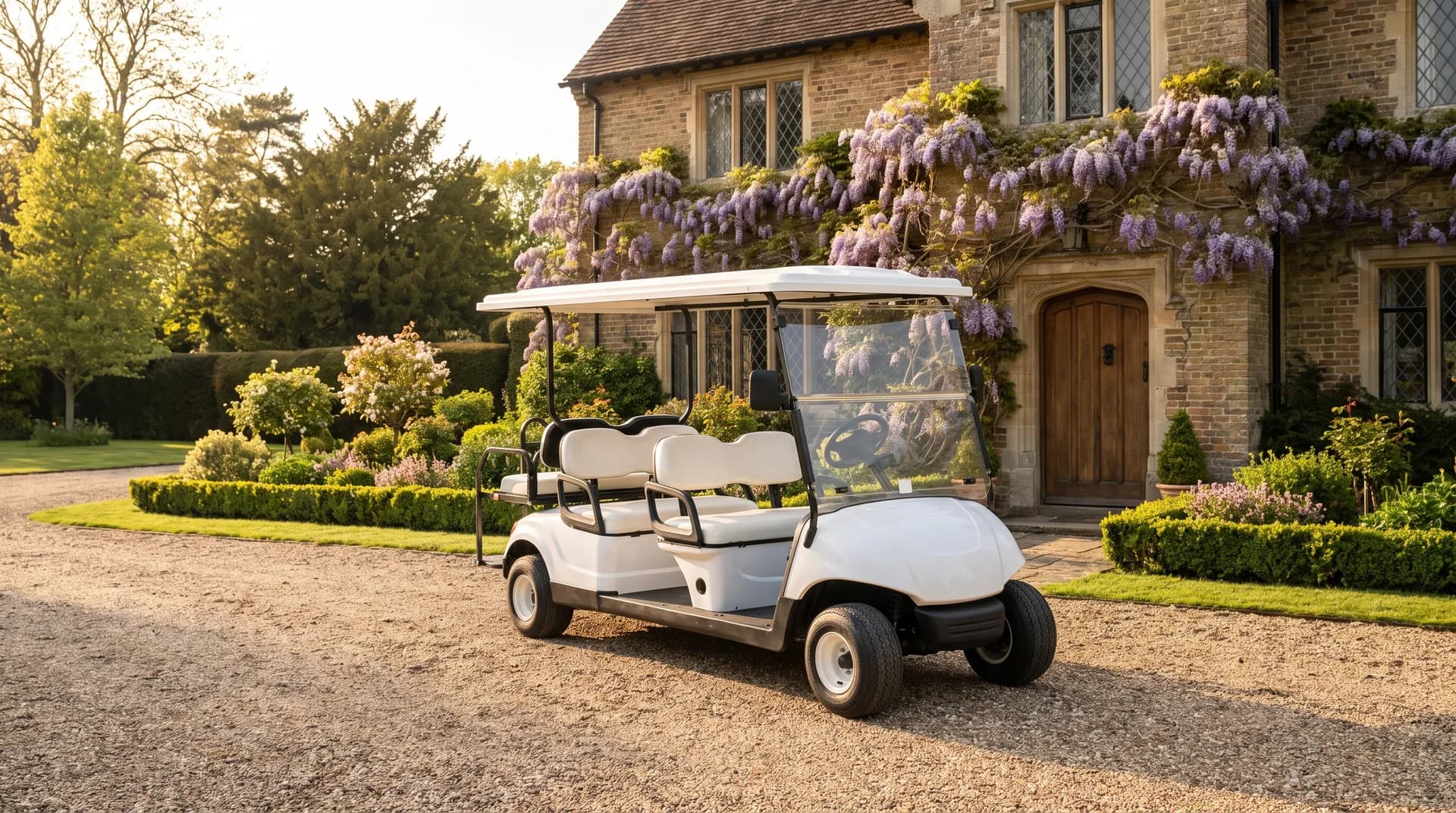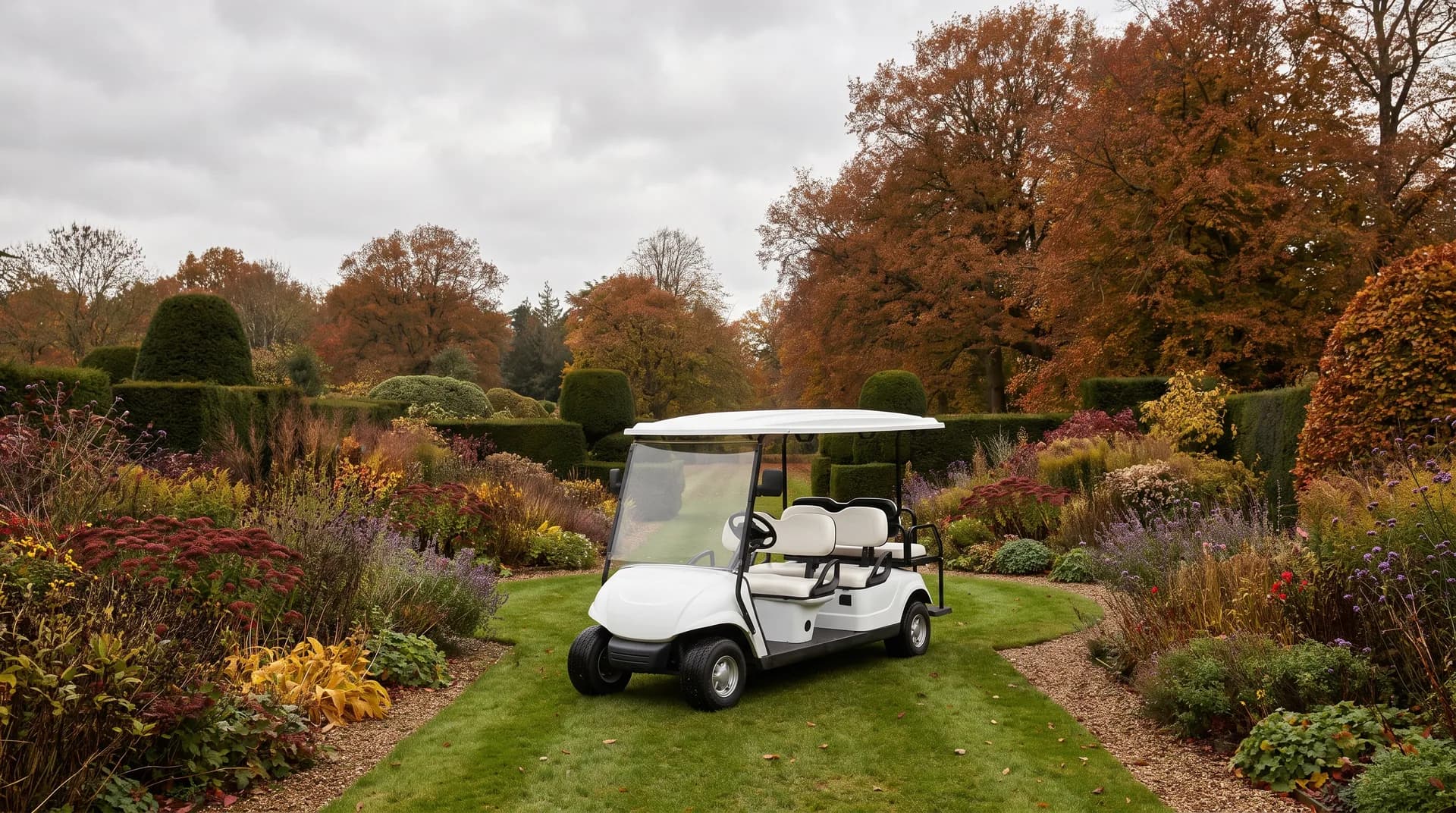
Once the wheelbarrow run to the compost heap takes ten minutes, or a visitor cannot comfortably walk from the house to the far end, an electric buggy becomes the tool that makes a large garden manageable. The choice comes down to the job. If the main task is moving people, family, older relatives, guests, a compact two-seater like our S2, from £11,500, is the answer. If the main task is moving stuff, compost, logs, prunings, tools, feed, an electric pickup like our S2 Pickup, from £15,900, with its load bed does the work a barrow cannot. Both run near-silently, tread lightly on lawns and charge overnight from a household socket. This guide is about choosing the vehicle; for the rules and ownership side, our guide to buggies on private property covers what you can and cannot do.
- Choose by cargo: seats for moving people, a pickup bed for moving garden material, and be honest about which job dominates.
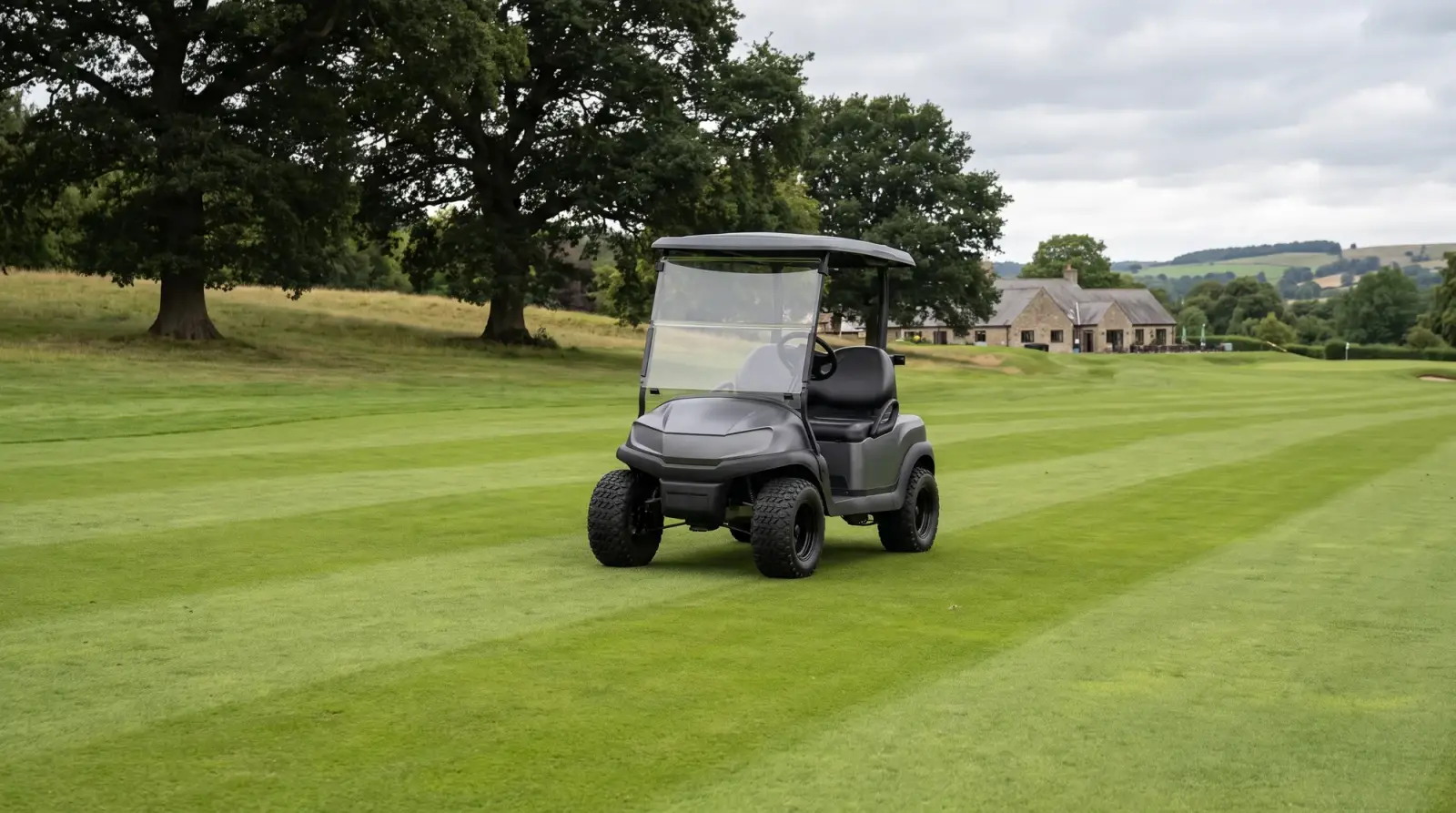
- Turf tyres and a light footprint mean a buggy can cross a lawn a quad bike or small tractor would mark.
- Electric drive is quiet enough for early mornings, close neighbours and wildlife, with no fumes in sheds or courtyards.
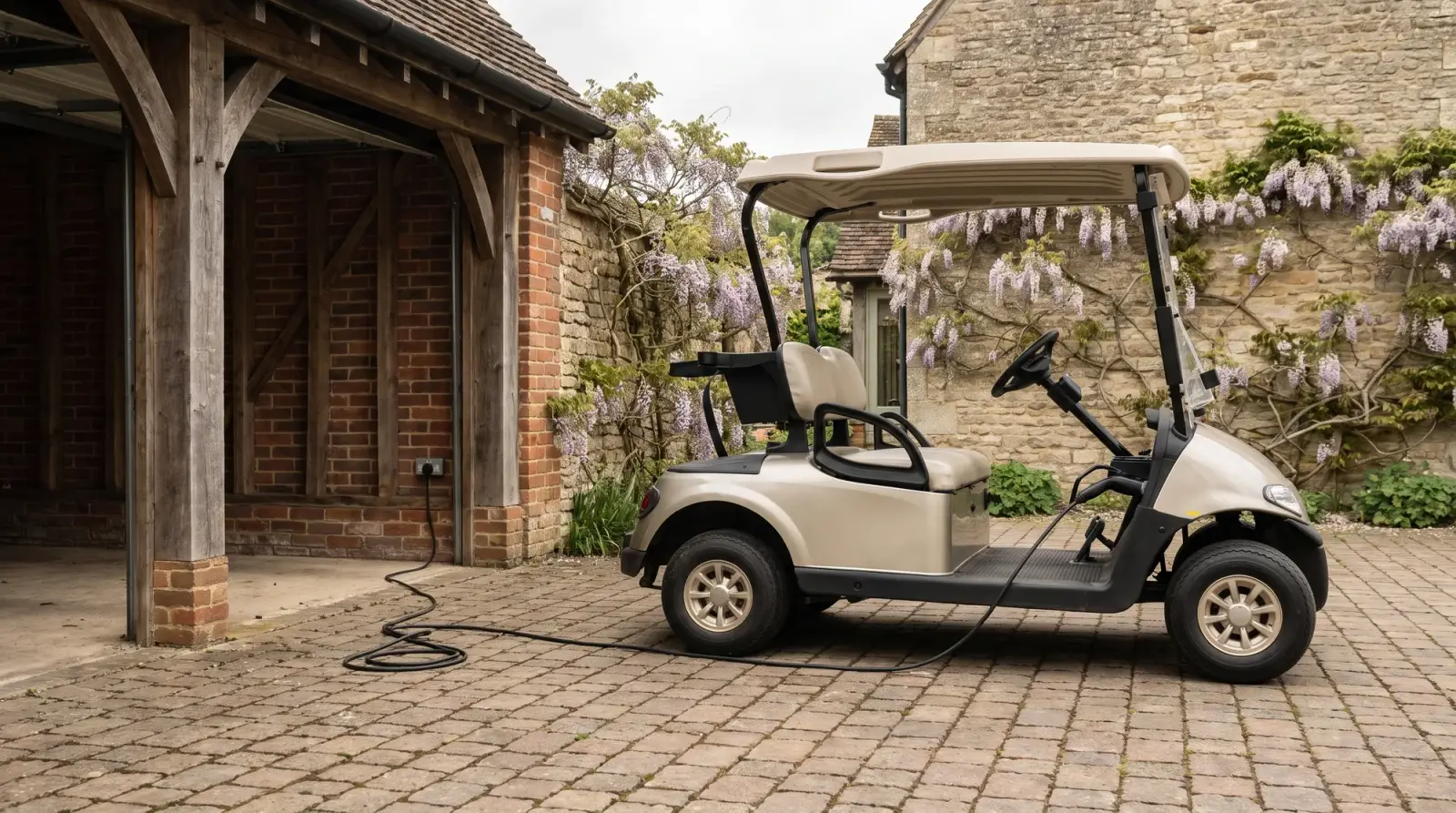
- Charging is a household socket and an overnight lead: no fuel cans, no trips out, pennies per mile.
- On private land there is no licence, tax or MOT to worry about, though insurance is still worth having.
Passenger buggy, utility pickup or both
Start with an honest week in the garden. If the main work is carrying people, less-mobile family, guests, the evening loop, a passenger buggy is right, and its small load space handles a trug and a toolbox. If the main work is material, compost in spring, logs in autumn, clippings weekly, you want a load bed and payload, the pickup's territory, and its passenger seat still carries a helper. Plenty of large gardens genuinely need both jobs done; if the budget runs to one machine, buy for the heavier, more frequent job and accept compromise on the other, because a pickup can carry a passenger but a passenger buggy cannot carry a bed-load of bark.
The best electric buggy for a large garden treads lightly
Lawns are the asset a garden vehicle can most easily ruin, and the good news is that a properly specified electric buggy is among the gentlest powered vehicles you can put on grass. The combination that matters is turf tyres, wide and gently treaded so weight spreads and the surface is not torn, and smooth electric power delivery, which avoids the wheel-spin moment that petrol machines produce on damp grass. Discipline does the rest: vary routes, stay off waterlogged ground, and keep to paths in winter. Our guide on whether buggies damage grass goes into the turf science, but the short version is that golf courses run fleets over their most precious surfaces daily, and a garden can too.
- S2 passenger buggy
- £11,500
- S2 Pickup utility
- £15,900
- S2 passenger buggy
- Moving people around the garden
- S2 Pickup utility
- Compost, logs, tools and materials
- S2 passenger buggy
- Two seats plus small rear rack
- S2 Pickup utility
- Passenger seat plus proper load bed
- S2 passenger buggy
- Excellent on turf tyres
- S2 Pickup utility
- Excellent on turf tyres, mind heavy loads on soft ground
- S2 passenger buggy
- Light towing
- S2 Pickup utility
- The stronger tow vehicle of the two
| S2 passenger buggy | S2 Pickup utility | |
|---|---|---|
| From price | £11,500 | £15,900 |
| Best at | Moving people around the garden | Compost, logs, tools and materials |
| Carrying | Two seats plus small rear rack | Passenger seat plus proper load bed |
| Lawn manners | Excellent on turf tyres | Excellent on turf tyres, mind heavy loads on soft ground |
| Towing a garden trailer | Light towing | The stronger tow vehicle of the two |
Quiet matters more than you think
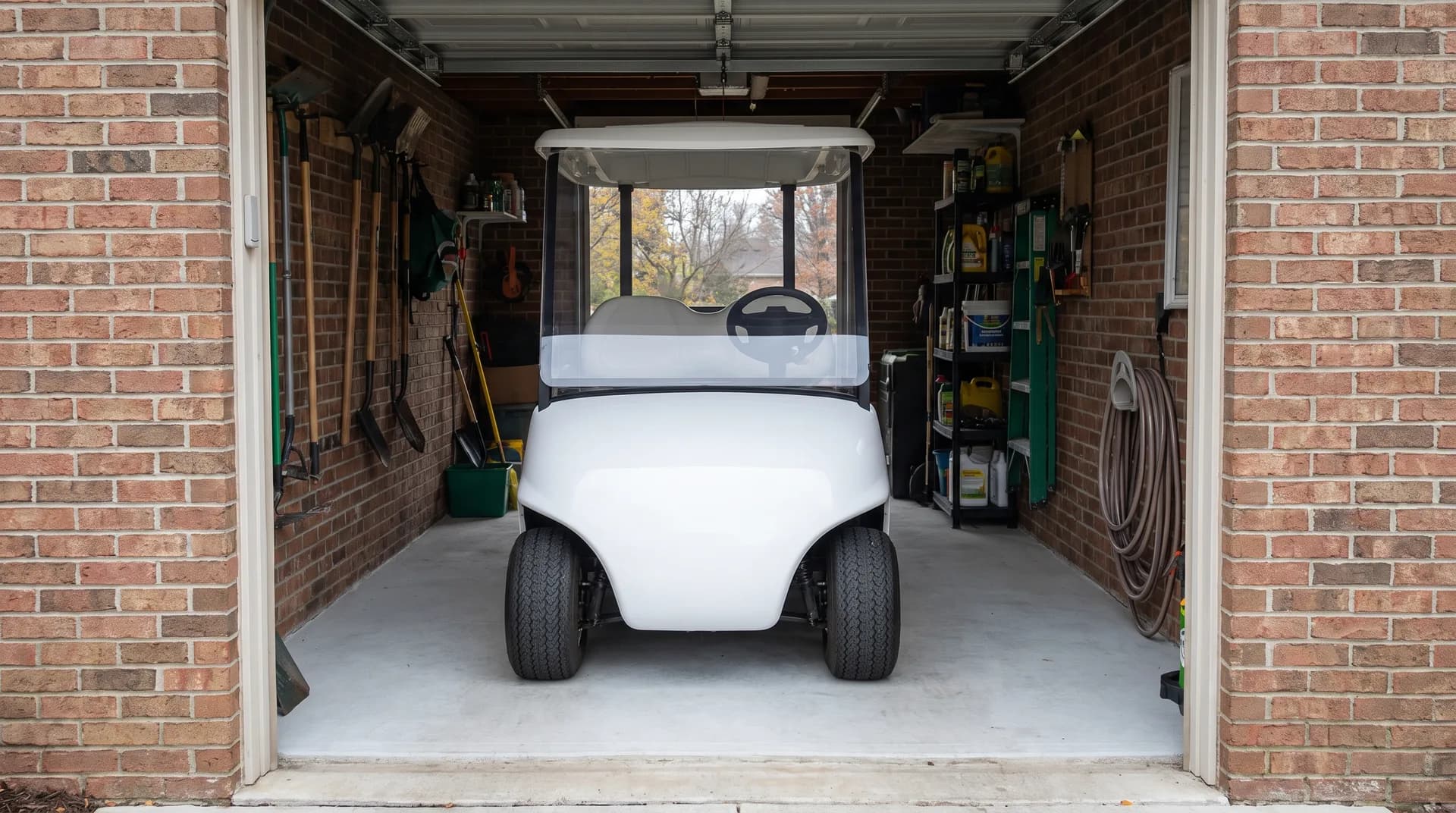
The pleasure of an electric garden vehicle is mostly acoustic. There is no engine to start at seven on a Sunday morning, no two-stroke whine drifting over the neighbour's fence, and no diesel idle scattering the birds you planted the garden to attract. In practice the loudest thing about an electric buggy at garden speeds is its tyres on gravel: early starts become unremarkable, conversations continue, and wildlife largely ignores a machine that arrives quietly. For gardens near neighbours, or gardens run partly as habitat, this is not a soft benefit but the deciding one, and our guide to quiet electric vehicles for private estates covers the noise question in more depth. The absence of exhaust also means the machine can live in, and be loaded inside, a shed or barn without fume worries.
Charging an electric garden buggy from the house
Charging is the easiest part of ownership. A garden buggy plugs into a standard 13-amp household socket, charges overnight, and costs pennies per mile in electricity; there is no fuel to store in the shed and no trips to a filling station with a can. The practical points are simple: give the machine a dry parking spot with a socket within reach of its lead, ideally a wall-mounted charger position so cables stay off the floor, and let it charge overnight after working days rather than running the pack low over weeks. A couple of hours of garden work uses only a fraction of a charge, so most owners plug in once or twice a week. Our guide to charging a buggy at home covers sockets, costs and good habits in detail.
Slopes, wet grass and when a garden becomes an estate
British gardens are rarely flat or dry, and the specification should respect that. Electric drive delivers its pull smoothly from a standstill, which is exactly what wet grass on a slope wants, and regenerative braking holds the machine back on descents rather than relying on brakes alone. If your ground includes steep banks, long rough grass or genuinely soft going, say so at quote stage, because tyre choice and drive configuration should follow the ground. And if your place has drifted from garden to smallholding or estate, with paddocks, heavy hauling and multiple users, the calculation changes toward larger utility machines, and the full electric utility vehicle range shows what the step up looks like.
Frequently asked questions
Will an electric buggy damage my lawn?+
On turf tyres, driven with a little care, no. Smooth electric power avoids wheel-spin, the tyres spread the load, and varying routes prevents wear lines. The exceptions are waterlogged ground and heavy loads on soft lawns, where any vehicle will mark; use paths in the wettest months.
Do I need a licence or insurance for a buggy in my own garden?+
On genuinely private land there is no licence, road tax or MOT requirement. Insurance is not legally required on private land but is sensible for theft and liability, especially if guests or family drive the machine. If the vehicle will ever touch a public road, different rules apply entirely.
Can I charge it from a normal socket?+
Yes. A standard 13-amp household socket and the supplied lead are all a garden buggy needs, with a full overnight charge costing roughly a pound or two at typical domestic rates. No special wiring is required, though a dedicated socket in dry reach of the parking spot makes life tidy.
Should I buy the passenger buggy or the pickup?+
Buy for the dominant job. Mostly moving people: the passenger buggy. Mostly moving compost, logs and tools: the pickup, which still seats a passenger. If both jobs are heavy and constant, that is the point at which two machines or a larger utility vehicle earn their keep.
How much garden justifies a buggy?+
There is no threshold acreage; the test is time and effort. If barrow runs, tool ferrying or getting people to the far end of the garden costs real effort every week, a buggy pays its way in use. Gardens from a couple of acres upward are where owners most often make that call.
Match a machine to your garden
Tell us about your ground, the jobs and who will drive, and we will recommend the right configuration, seats, pickup bed or both, and price it to your specification.

Ready to find the right buggy?
Tell us how and where it will work and we will specify a vehicle and a tailored quote built around you. Every build comes with a 3-year warranty and a 24-hour priority call-out.
Our guides are written and reviewed by the Hawke Electric Vehicles team, the people who specify, build, deliver and support the vehicles. We focus on honest, practical advice and flag where a figure depends on the build rather than guessing.
More guides by Hawke