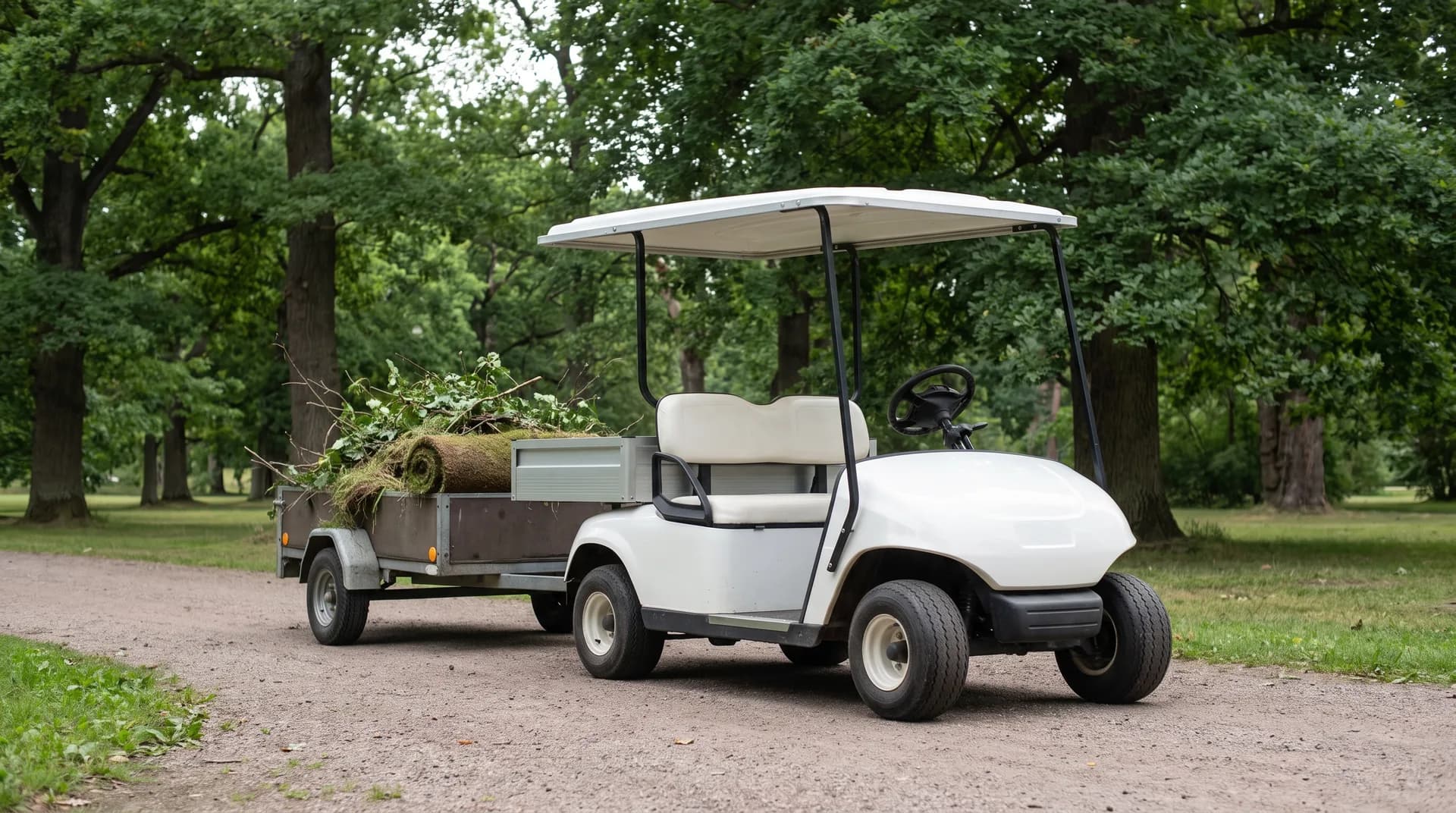
An electric utility vehicle tows more than most buyers expect: compact machines typically manage a few hundred kilograms of trailer, mid-size machines commonly 500 to 1,000 kg, and full-size machines 1,000 to 2,000 kg on level ground, with dedicated tow tractors rated in the multiple tonnes beyond that. Electric drive actually suits towing, because full torque from a standstill is exactly what getting a loaded trailer moving demands. The craft is in matching trailer, hitch and gradient to the rating, understanding what towing does to range, and recognising the point at which a utility vehicle stops being the right tool and a tow tractor becomes it. This guide covers all four, honestly.
- Honest typical towing: compacts a few hundred kg, mid-size roughly 500–1,000 kg, full-size roughly 1,000–2,000 kg, tow tractors multiple tonnes.
- The rating assumes level, firm ground: gradients, grass and gravel all cut what you should hang on the hitch.
- On private land you set the standard: braked trailers, sound tyres and secured loads are good practice even where no road rules apply.
- Towing costs range; expect noticeably fewer miles per charge with a loaded trailer, more again on hills.
- If towing is the vehicle's main job rather than an occasional one, buy a tow tractor, not a bigger utility vehicle.
What electric utility vehicles realistically tow
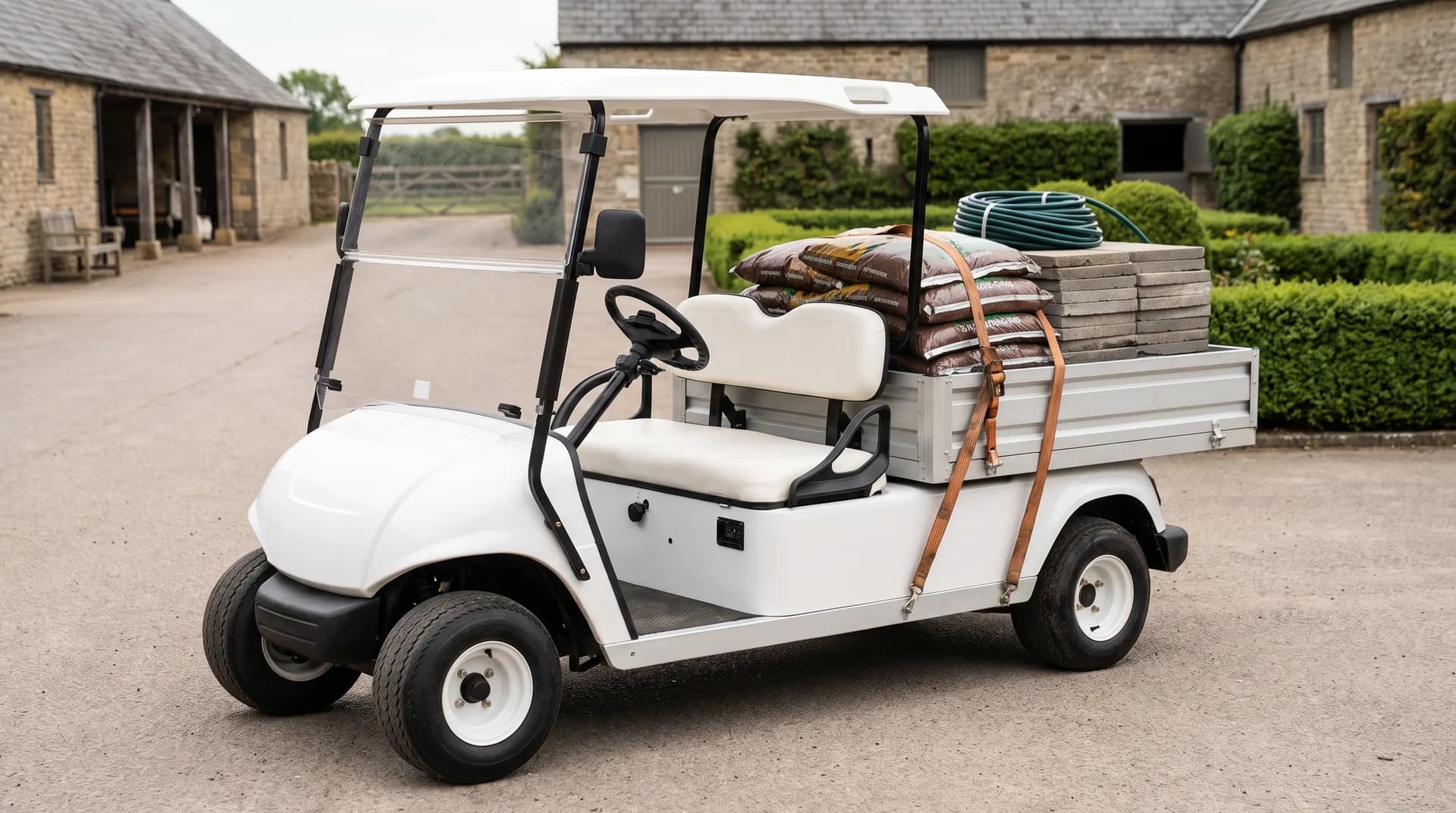
Ratings vary by model, so treat these as honest market-typical ranges rather than promises for any one machine. Compact utility vehicles are usually rated for light trailers, think a few hundred kilograms, a small flatbed of tools or a garden trailer of green waste. Mid-size machines commonly carry ratings in the 500 to 1,000 kg region, which covers a decent site trailer, hurdles and equipment, or a water bowser. Full-size utility vehicles push into 1,000 to 2,000 kg on firm level ground. Two caveats apply everywhere. First, the plated figure for the specific model is the only number that matters; demand it in writing. Second, drawbar weight, the downward load the trailer puts on the hitch, counts against the vehicle's payload, so a heavily nose-weighted trailer quietly eats bed capacity. Our guide on whether a golf buggy can tow a trailer covers the lighter end of the same question.
Braked, unbraked and trailer basics on private land
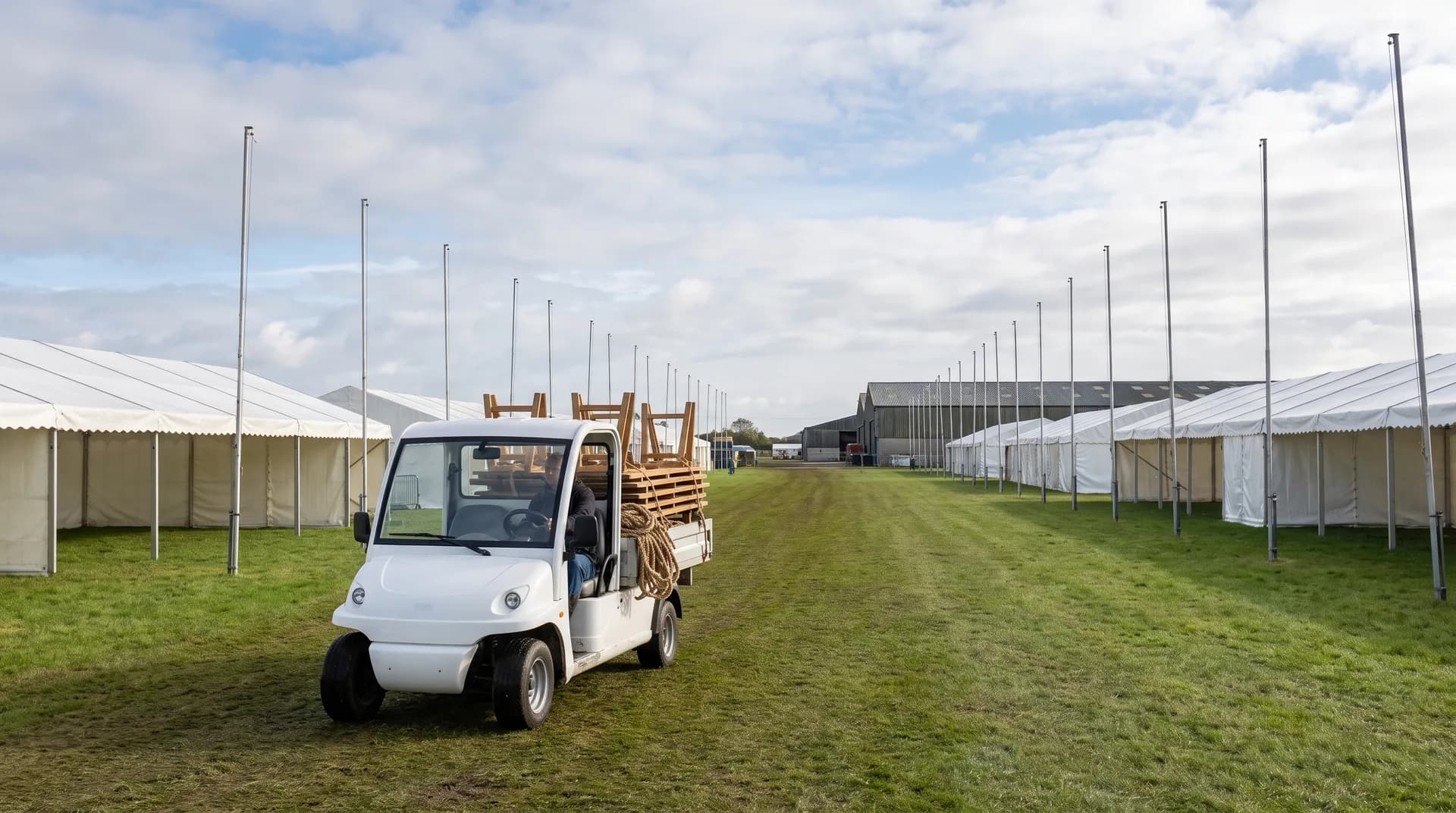
Most utility vehicle towing happens on private land, estates, farms, showgrounds, works sites, where road towing law does not bite. That freedom is worth respecting rather than exploiting. An unbraked trailer is fine for light loads at site speeds on level ground; once the trailer and load weigh anything like as much as the vehicle towing them, an overrun-braked trailer is the sensible standard, because the vehicle's own brakes were specified for the vehicle, not for a tonne pushing it downhill. On any gradient, the trailer's brakes, not the vehicle's, are what keep the combination honest. The rest is unglamorous discipline: tyres inflated and sound, loads strapped, weight over the axle with modest nose weight, hitch pins secured, and speed matched to the worst surface on the route. If the vehicle ever tows on or across a public road, road rules on registration, braking and lighting come into play, and that is a different and stricter conversation.
Hitches and how vehicles connect
Three fittings cover almost all of it. The 50 mm ball hitch is the garden and estate standard, matching most small trailers. The pin-and-clevis hitch is the agricultural and industrial pattern, a jaw and pin through a trailer eye, crude, strong and quick, and the natural choice where trailers already live on pin eyes. Combination hitches offer both faces on one casting, which is worth specifying on a mixed site. Height matters more than buyers expect: a trailer towed nose-up or nose-down handles badly and loads the hitch wrongly, so match hitch height to your trailers or choose an adjustable mount. If you plan to daisy-chain multiple trailers, luggage-train style, stop: that is tow tractor territory, with couplings and steering geometry designed for it, as our guide to what a tow tractor is explains.
How towing affects range
Pulling a trailer costs energy, and it is better to plan for that than be surprised by it. Expect a loaded trailer to cut a meaningful share of the vehicle's range, and hills to cut more; a machine that comfortably does a full day solo may want a lunchtime top-up in a heavy towing week. The practical answers are simple: specify the larger battery option if towing is regular, plan towing routes around gradients where the site allows, and remember that electric drive gives some energy back on descents. Cold weather stacks its own reduction on top, so the honest test of any machine is winter range, laden, with the trailer you actually own; the running costs guide puts the energy cost itself in context, and it is small.
When a tow tractor is the right tool instead
A utility vehicle tows as a sideline; a tow tractor tows as its whole purpose, and the difference shows the moment towing becomes the main job. If the vehicle will spend most of its day pulling, moving luggage trains, waste trailers, production line feeds, multiple linked trailers, then ballasted weight, purpose-designed couplings and drawbar-rated drivetrains beat any utility vehicle's towing package. The decision logic is the same as choosing between a tow tractor and a forklift: buy the machine whose primary duty matches yours. If the honest answer is that the trailer comes out twice a week and the bed works every day, buy the utility vehicle and enjoy the towing as a bonus; if the trailer is the job, buy the tractor.
- Compact UTV
- A few hundred kg
- Mid-size UTV
- Roughly 500–1,000 kg
- Full-size UTV
- Roughly 1,000–2,000 kg
- Tow tractor
- Multiple tonnes
- Compact UTV
- Garden/light site trailer
- Mid-size UTV
- Site trailer, bowser
- Full-size UTV
- Heavy site trailer
- Tow tractor
- Trains of trailers
- Compact UTV
- Rarely needed
- Mid-size UTV
- Sensible above light loads
- Full-size UTV
- Yes for heavy loads
- Tow tractor
- Purpose-designed
- Compact UTV
- Occasional bonus
- Mid-size UTV
- Regular sideline
- Full-size UTV
- Serious capability
- Tow tractor
- The entire job
| Compact UTV | Mid-size UTV | Full-size UTV | Tow tractor | |
|---|---|---|---|---|
| Typical towing | A few hundred kg | Roughly 500–1,000 kg | Roughly 1,000–2,000 kg | Multiple tonnes |
| Trailer type | Garden/light site trailer | Site trailer, bowser | Heavy site trailer | Trains of trailers |
| Trailer brakes | Rarely needed | Sensible above light loads | Yes for heavy loads | Purpose-designed |
| Towing is… | Occasional bonus | Regular sideline | Serious capability | The entire job |
Frequently asked questions
How much can an electric utility vehicle tow?+
Typically a few hundred kilograms for compact machines, 500 to 1,000 kg for mid-size, and 1,000 to 2,000 kg for full-size vehicles on firm level ground, with individual models varying. The plated figure for the specific machine is the only number to rely on; get it in writing.
Do I need a braked trailer on private land?+
Legally, private land is largely your call, but once the loaded trailer approaches the towing vehicle's own weight, or any real gradient is involved, an overrun-braked trailer is the sensible standard. The vehicle's brakes were sized for the vehicle, not for a tonne behind it.
Does towing reduce range?+
Yes, meaningfully. A loaded trailer cuts a noticeable share of range and hills cut more, with cold weather stacking on top. If towing is regular, specify the larger battery and judge the machine on winter, laden, trailer-attached range.
What hitch should I specify?+
A 50 mm ball for garden and estate trailers, pin-and-clevis for agricultural and industrial eyes, or a combination hitch on mixed sites. Match hitch height to your trailers so they tow level, and never daisy-chain trailers behind a utility vehicle.
When should I buy a tow tractor instead?+
When towing is the vehicle's main duty rather than an occasional one: trailer trains, constant drawbar work, or loads beyond about two tonnes. A dedicated tow tractor is designed, ballasted and rated for exactly that, and does it better than any utility vehicle.
Tell us what the trailer weighs
Give us the trailer, the load and the worst gradient on the route, and we will match a vehicle, or a tow tractor, with a rating that covers it properly.
Related solutions
Ready to explore what we build?
See the vehicles and the setting this applies to, or get a tailored quote built around your site.
Ready to find the right buggy?
Tell us how and where it will work and we will specify a vehicle and a tailored quote built around you. Every build comes with a 3-year warranty and a 24-hour priority call-out.
Our guides are written and reviewed by the Hawke Electric Vehicles team, the people who specify, build, deliver and support the vehicles. We focus on honest, practical advice and flag where a figure depends on the build rather than guessing.
More guides by Hawke