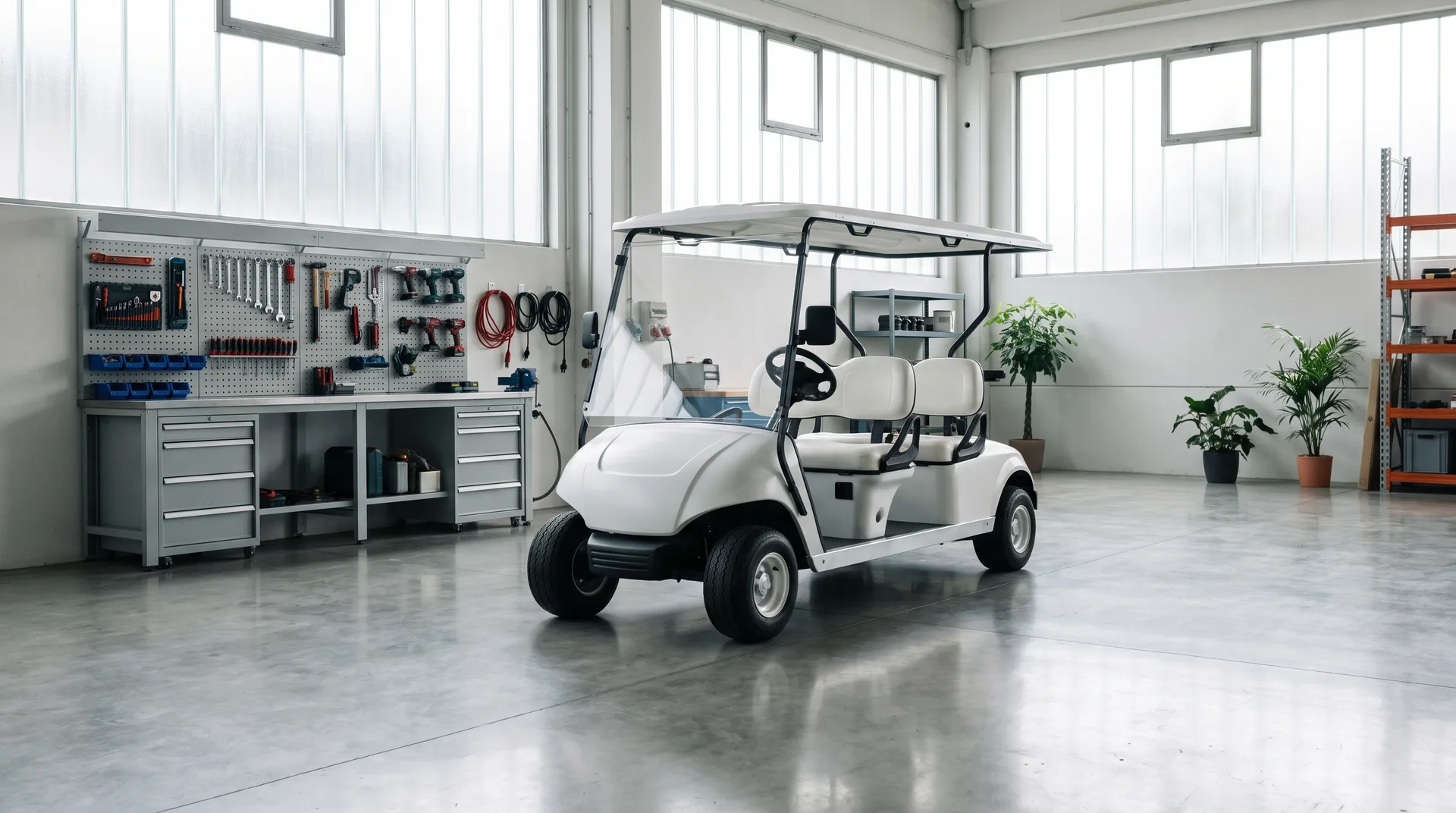
A golf driving range uses electric buggies as its daily workhorses: carrying crates of balls between the washer, the dispenser and the outfield, supporting the ball-picking operation, moving mats, dividers, targets and signage, and running the opening and closing routine across a site that is longer than it looks. Larger ranges and golf entertainment venues add a passenger buggy to shuttle customers and staff between car parks, bays and teaching studios. Because most UK ranges sit close to housing and operate into the evening under floodlights, the quiet, zero-emission electric drivetrain is not a nice-to-have but part of staying a good neighbour. Here is how the vehicles fit the operation.
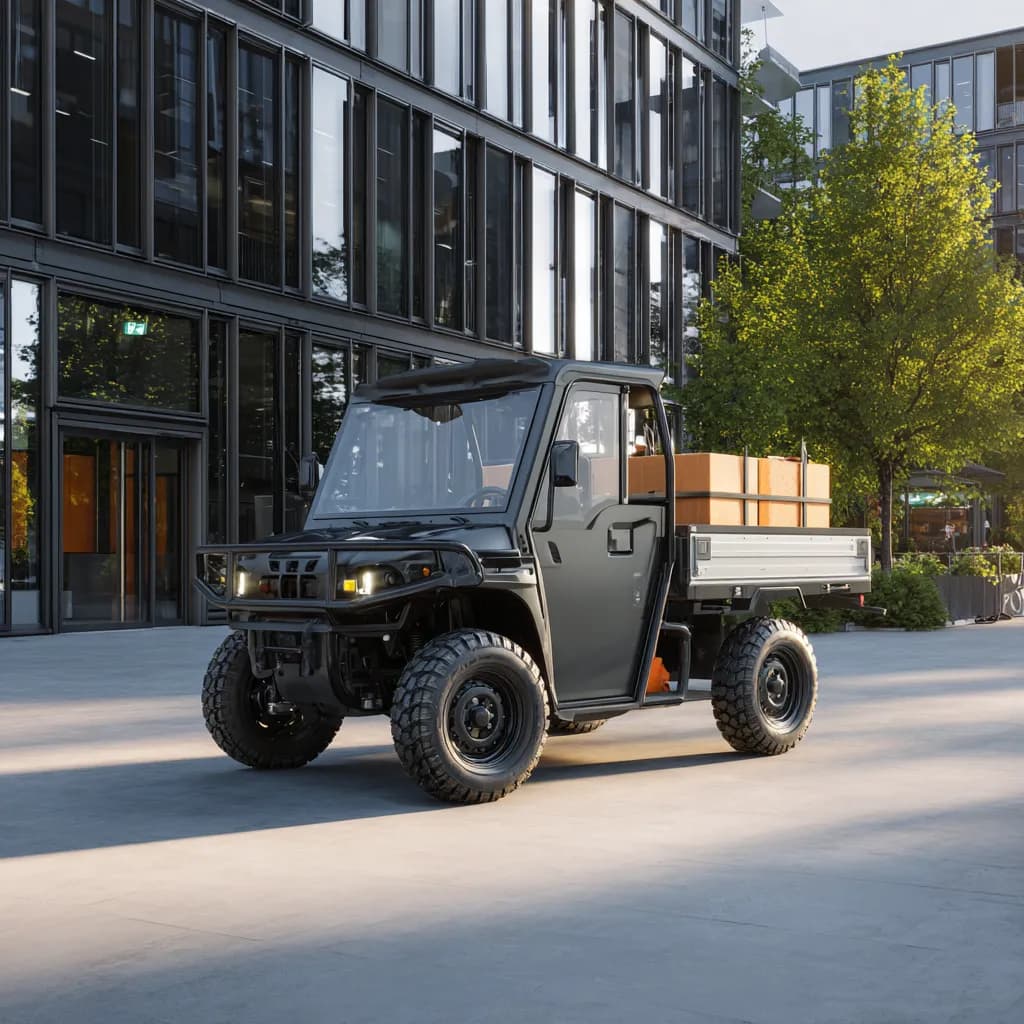
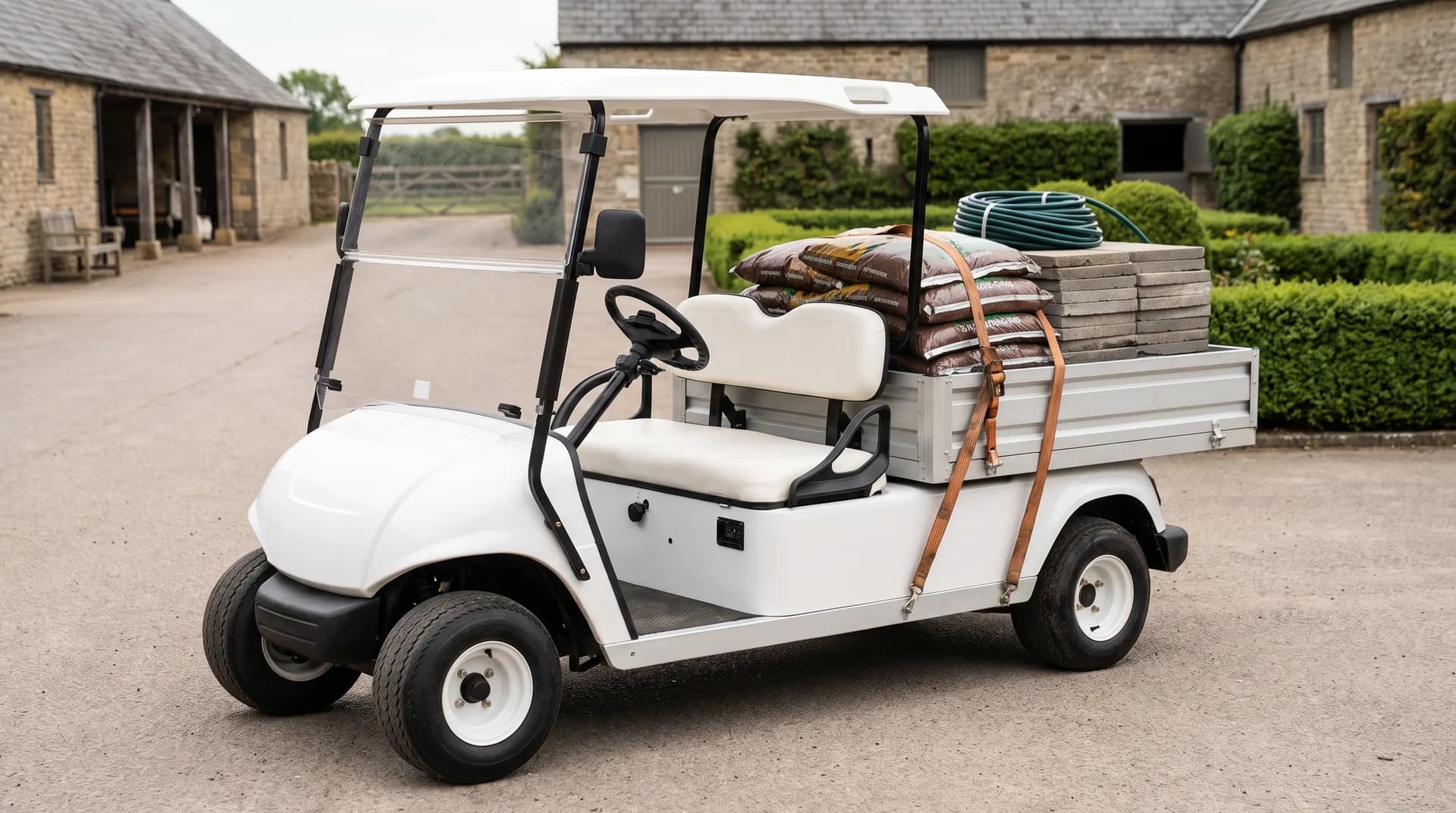
- A utility buggy with a load bed is the core range vehicle: balls, mats, targets and tools all travel by the crate.
- Buggies support ball collection, running crates and covering areas the picker misses, rather than replacing a dedicated picker.
- Opening and closing routines across a long outfield go faster on a vehicle than on foot.
- Quiet electric drive suits evening, floodlit operation near housing.
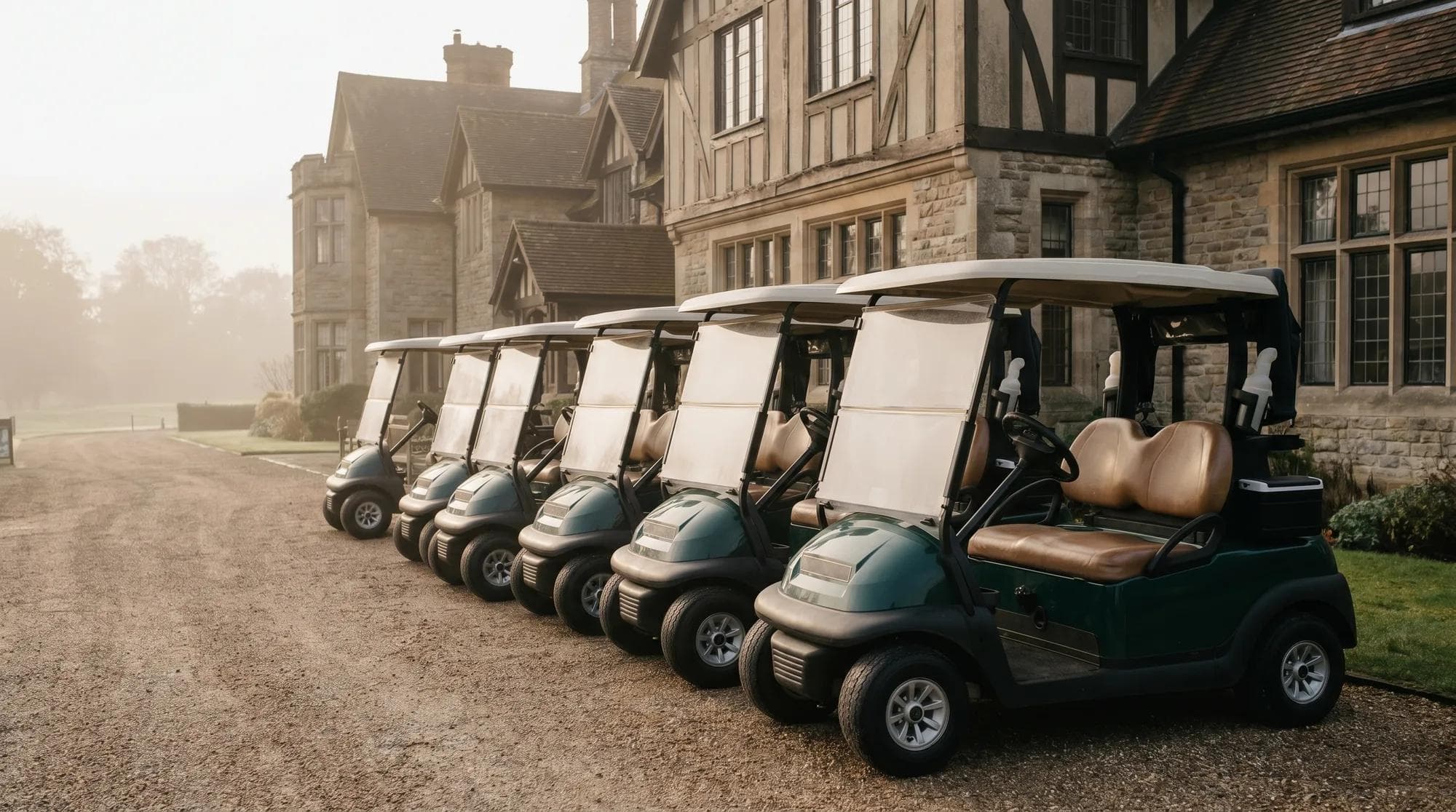
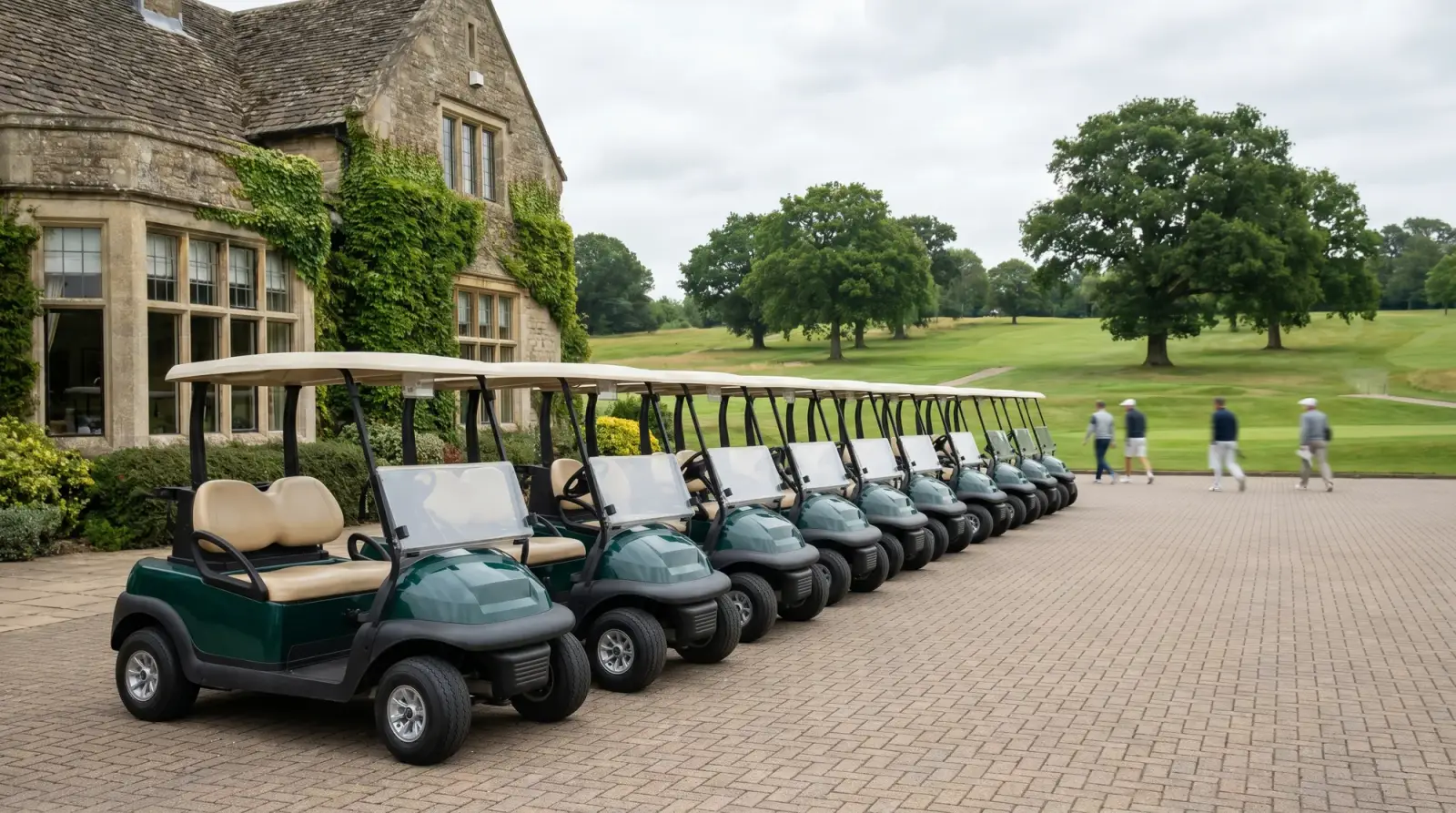
- Big ranges add a passenger buggy for customer and staff shuttles.
The daily jobs at a driving range
Range work is repetitive logistics. Balls cycle constantly from outfield to picker to washer to dispenser, and every stage involves moving heavy crates: a few thousand range balls weigh a serious amount, and a utility buggy's load bed carries in one trip what would take a staff member many barrow runs. Around that core loop sit the daily chores: swapping worn mats, repositioning distance targets and flags, refilling the dispenser float, carrying tools and spares to a broken bay divider, and litter runs along the tee line. A buggy rated for the load does all of it without strain; our guide on how much weight a golf buggy can carry is worth a read before you spec the bed, and payload is the first question to answer.
Ball collection: where a buggy fits alongside the picker
Most established ranges run a dedicated ball picker, and a general-purpose buggy does not replace a purpose-built gang picker on a large outfield. Where the buggy earns its place is around the picker: ferrying full crates back to the washer so the picker keeps picking, collecting from the corners, banks and netting lines the gangs miss, and doing light hand-collection sweeps at smaller ranges or short-game areas where a full picker is overkill. Some operators tow picking attachments behind a utility vehicle as part of the routine. The honest framing for anyone searching for ball picker alternatives is this: at low volumes a buggy-and-crate routine can carry the job, and at high volumes the buggy is the support vehicle that makes the picker efficient.
Open, close and the shape of a driving range day
Ranges open early and close late, and the routine at each end is a circuit: unlock, position signage, check the outfield and netting, set targets, count the float, then reverse it all under floodlights at close. On foot, at a site whose outfield alone may run several hundred metres, that circuit eats staff time twice a day, every day. On a buggy it takes minutes, and the same vehicle then stands ready all day for the errands in between. This is the same fleet logic that golf clubs apply to their grounds operations, which we cover in our guide to UK golf clubs' electric grounds fleets, but a range is its own animal: fewer acres than a course, far more repetition, and a public operation running into the night.
- Utility buggy with bed
- Crates, mats, targets, tools
- Passenger buggy
- Customer and staff shuttles
- Dedicated ball picker
- High-volume ball collection
- Utility buggy with bed
- Whole site, all day
- Passenger buggy
- Car park, bays, studios
- Dedicated ball picker
- Outfield only
- Utility buggy with bed
- Crate runs, edges, small sweeps
- Passenger buggy
- None
- Dedicated ball picker
- The main harvest
- Utility buggy with bed
- Every range
- Passenger buggy
- Larger ranges and venues
- Dedicated ball picker
- Mid-size and large ranges
| Utility buggy with bed | Passenger buggy | Dedicated ball picker | |
|---|---|---|---|
| Core job | Crates, mats, targets, tools | Customer and staff shuttles | High-volume ball collection |
| Where it works | Whole site, all day | Car park, bays, studios | Outfield only |
| Ball collection role | Crate runs, edges, small sweeps | None | The main harvest |
| Who needs one | Every range | Larger ranges and venues | Mid-size and large ranges |
Quiet and zero-emission: the good-neighbour case
Driving ranges live close to people. Many sit on the urban fringe with housing over the netting, and the busiest hours are evenings and weekends, exactly when neighbours are home. An electric fleet removes engine noise from the open-close circuit and the outfield runs, and removes exhaust from a site where staff work around the vehicles all day. For floodlit venues operating late, that quietness is a practical part of planning-condition and neighbour relations, not just a green talking point. Electric running costs also suit the range's high-repetition duty cycle: short trips all day are exactly what batteries and overnight charging handle well. When you are ready to look at machines, our electric utility vehicles page covers the work-first platforms, with load beds sized for exactly this kind of duty.
Frequently asked questions
What vehicles does a driving range need?+
Almost every range needs a utility buggy with a load bed for balls, mats, targets and tools. Mid-size and large ranges add a dedicated ball picker, and big venues add a passenger buggy for customer and staff shuttles.
Can a buggy replace a ball picker?+
At small ranges and short-game areas a buggy-and-crate routine can carry the job. At volume, no: the buggy is the support vehicle that keeps a dedicated picker efficient by running crates and covering the edges the gangs miss.
How much weight do range balls add up to?+
Enough to take seriously: balls move by the crate and a full load is heavy, which is why payload rating is the first specification question. Check the vehicle's rated capacity against your largest routine load before buying.
Why electric rather than petrol for a range?+
Ranges run early, late and close to housing. Electric vehicles remove engine noise and exhaust from the site, cost little to run on a high-repetition duty cycle, and charge overnight between shifts.
Is this different from a golf club fleet?+
Yes. A club fleet serves a course and its members across many acres; a range fleet serves a compact site with far more repetition and a public, often floodlit operation. The vehicles overlap but the duty cycle differs.
Spec a range workhorse
Tell us your site length, your ball volumes and what the vehicle must carry, and we will specify the bed, battery and tyres to suit, then quote it properly.
Related solutions
Ready to explore what we build?
See the vehicles and the setting this applies to, or get a tailored quote built around your site.
Ready to find the right buggy?
Tell us how and where it will work and we will specify a vehicle and a tailored quote built around you. Every build comes with a 3-year warranty and a 24-hour priority call-out.
Our guides are written and reviewed by the Hawke Electric Vehicles team, the people who specify, build, deliver and support the vehicles. We focus on honest, practical advice and flag where a figure depends on the build rather than guessing.
More guides by Hawke