- Size a fleet from your busiest realistic days, then add a little headroom for charging and maintenance.
- Member demand is steady; visitor and society demand spikes, so plan for the peaks not the average.
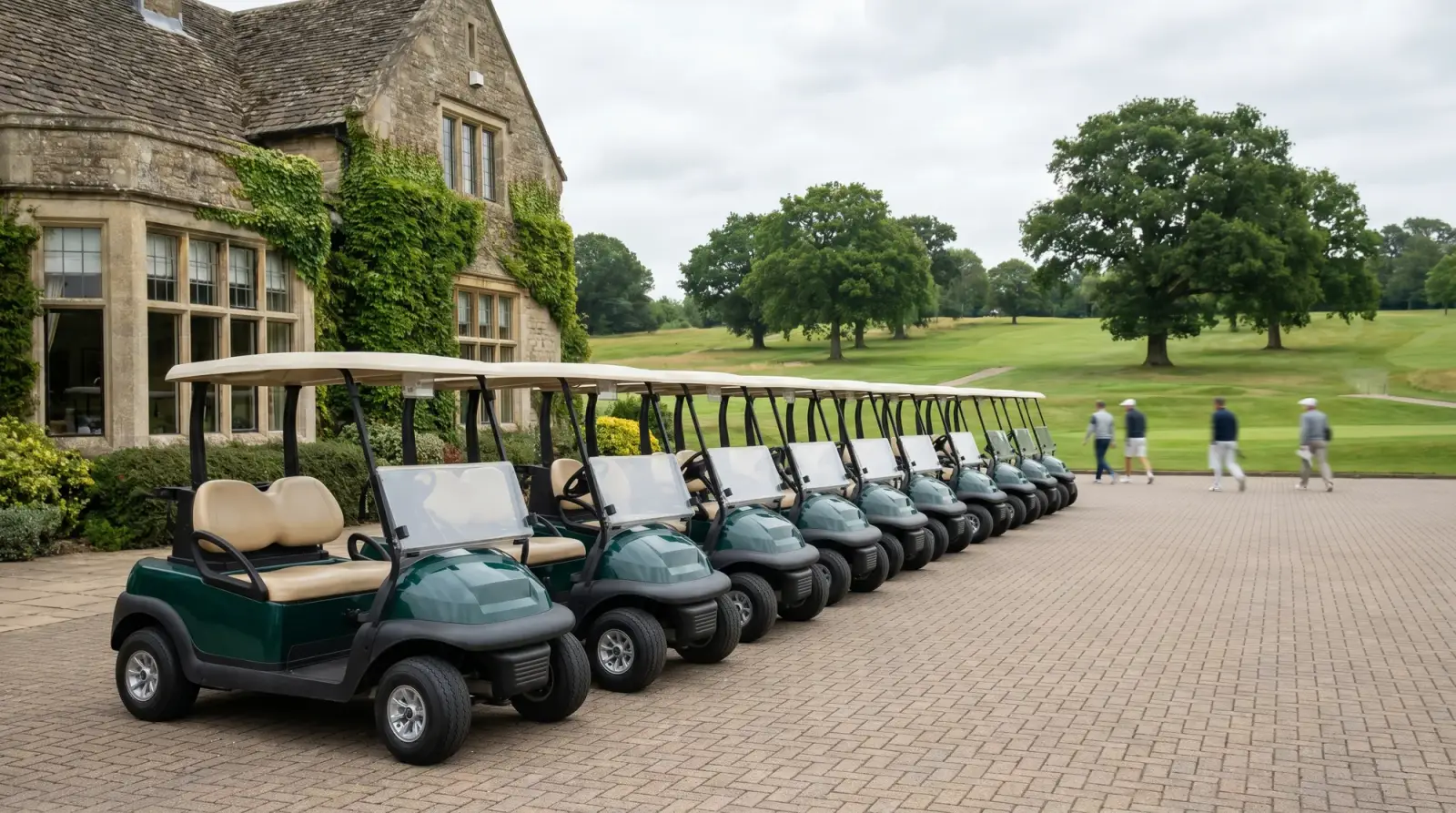
- Matched, branded buggies present the club well and reinforce a consistent standard.
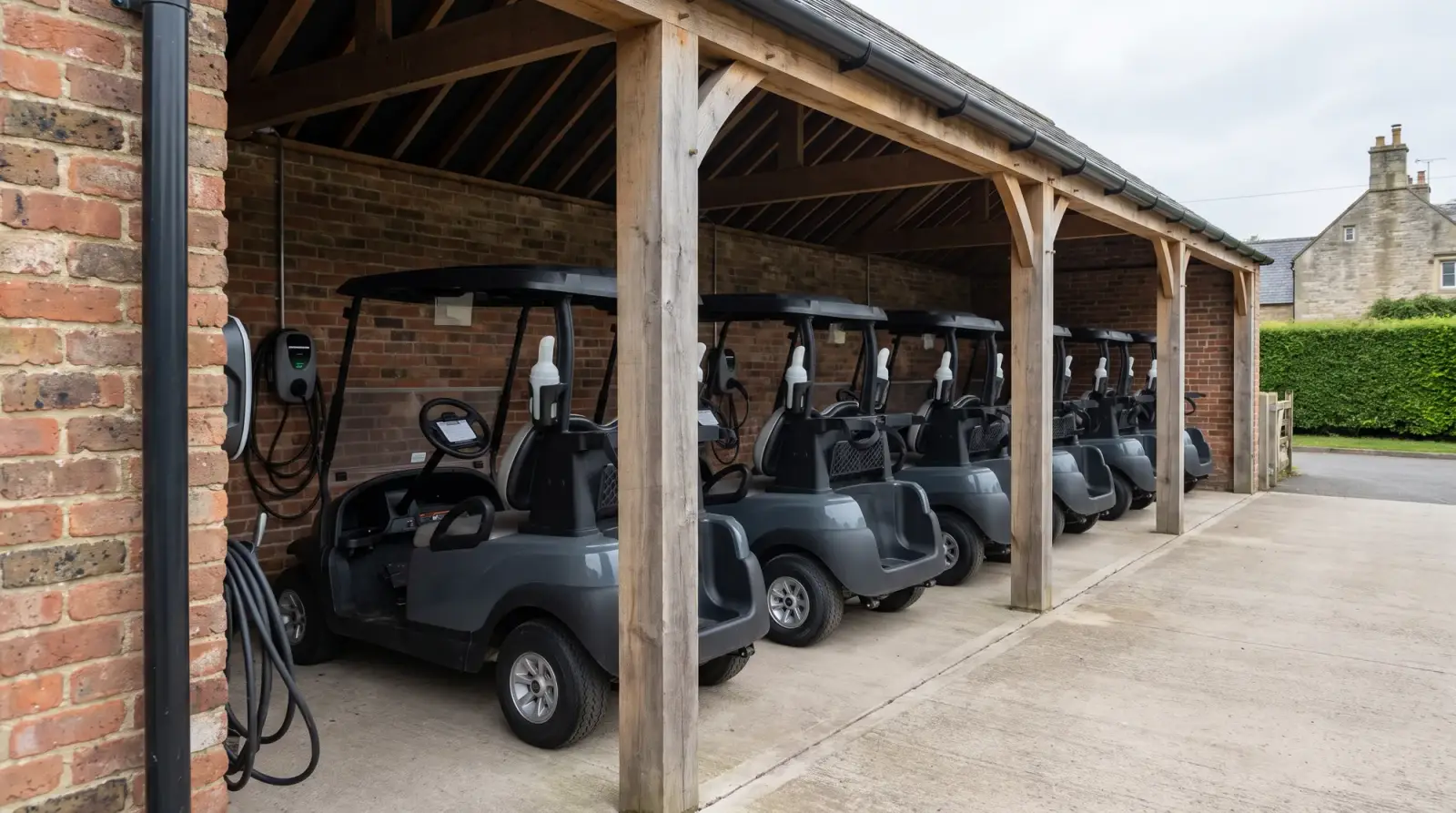
- Charging logistics and storage matter as much as the buggies themselves for a fleet.
- A custom fleet can be specified and branded to the club and ordered as a matched set.
How many golf buggies does a UK club need? Enough to cover your busiest realistic days, with a little headroom for charging and the occasional buggy out of service, rather than enough for an average Tuesday. Sizing a fleet well is the difference between buggies sitting idle most of the week and members and visitors turned away on the days that matter. This guide sets out how to think about fleet size, the member versus visitor split, branding and the practical side of running buggies day to day. Browse the range for the vehicles, and the rest of our guides for the detail.
Start with demand, not a round number
It is tempting to pick a fleet size that sounds tidy. The better approach is to look at your own booking data and ask when demand actually peaks and how high it goes. A club that sizes to its peak open days and busy society weekends will rarely disappoint, while one that sizes to the average will be caught short exactly when it matters most.
- 01
Look at your peaks
Identify your busiest days: open competitions, society visits, summer weekends and corporate days.
- 02
Estimate peak buggy demand
Work out how many buggies are wanted at once on those days, not across the week.
- 03
Add headroom
Allow for buggies on charge, in service or being cleaned, so the usable number meets demand.
- 04
Plan the split
Decide how many are reserved for members versus available to visitors and societies.
Member versus visitor demand
The two main sources of demand behave differently, and a good fleet plan accounts for both. Member use tends to be steady and predictable through the season, while visitor, society and event use arrives in spikes that can far exceed a normal day.
- Members
- Steady, predictable
- Visitors and societies
- Spiky, event-driven
- Members
- Base load
- Visitors and societies
- Peak capacity
- Members
- Often regular
- Visitors and societies
- Often grouped on the day
- Members
- Familiar with the club
- Visitors and societies
- First impressions count
| Aspect | Members | Visitors and societies |
|---|---|---|
| Pattern | Steady, predictable | Spiky, event-driven |
| Planning | Base load | Peak capacity |
| Booking | Often regular | Often grouped on the day |
| Presentation | Familiar with the club | First impressions count |
Some clubs reserve a portion of the fleet for members and release the rest for visitor and society bookings, which protects the member experience while still earning from peak demand. The right balance depends on your membership and your events calendar.
The visitor experience
For many visitors and society guests, the buggy is part of their day out and part of how they judge the club. A buggy that is clean, comfortable, weather-protected and ready when promised leaves a good impression and supports the green fee. One that is tired, grubby or unavailable does the opposite, and on the days you most want to show the club well, those are the days the fleet is under most pressure. Sizing and presentation are not separate concerns; they meet exactly when it matters.
It is worth thinking about the handover too. A quick, friendly process to get visitors into a ready buggy, with the basics explained, sets the tone. Weather protection earns its place here as well, because a guest who stays dry on a wet round remembers the club kindly. The hills and wet weather guide covers the spec side of keeping buggies usable in poor conditions.
Branding and presentation
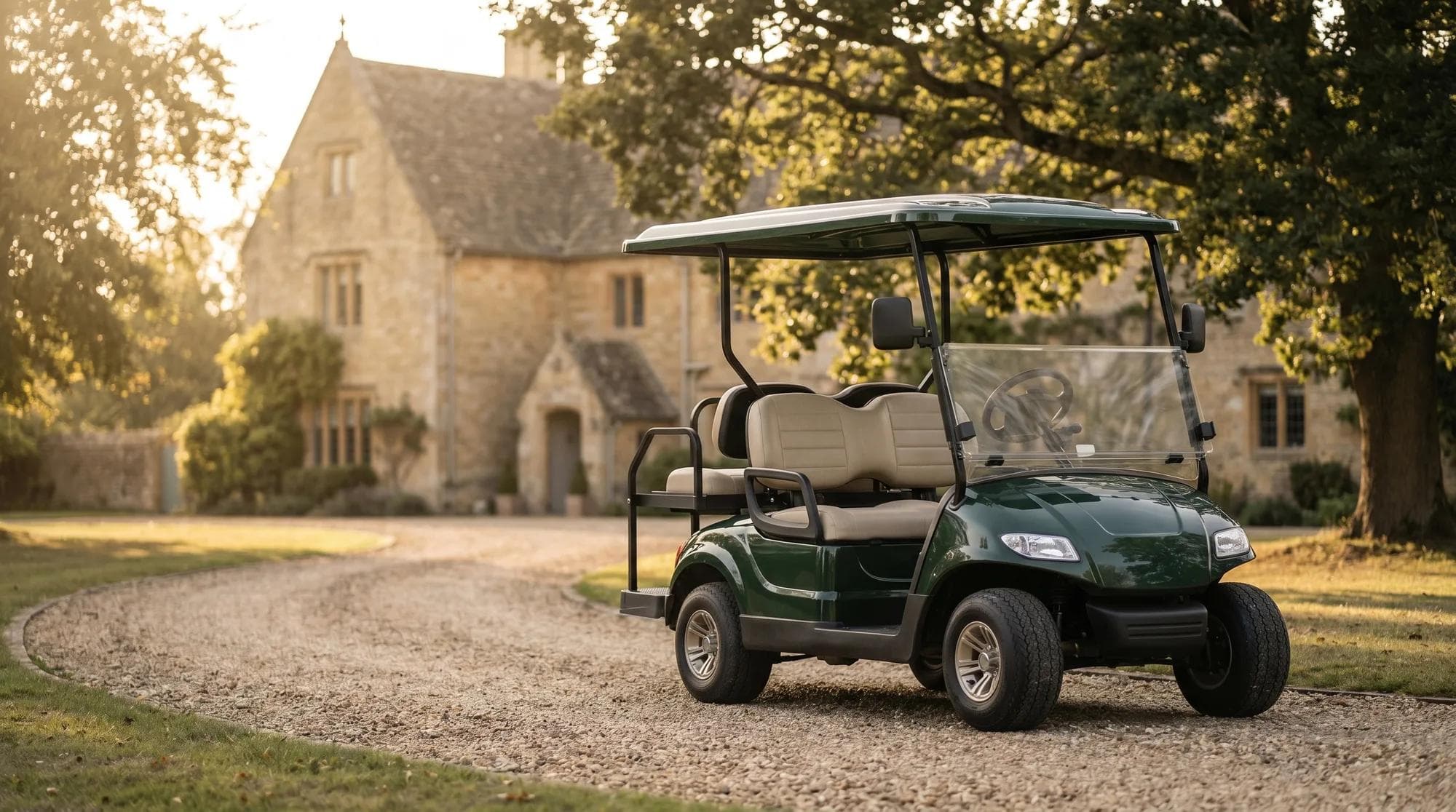
A fleet is one of the most visible things a club owns. Matched buggies in the club's colours, with consistent finish and branding, present a standard that members notice and visitors remember. Building to order means a fleet can be specified as a matched set and finished in the club's livery, rather than assembled from mismatched vehicles bought piecemeal over the years.
Plan a fleet for your club
Tell us your peak demand, your member and visitor split and your branding, and we will scope a matched fleet and quote for it as a set.
Running the fleet day to day
The buggies are only half the job. A working fleet needs somewhere to store and charge overnight, a routine for cleaning and checks, and a sensible booking system so the right number are ready each morning. Charging logistics in particular catch clubs out, because a fleet needs the power and the space to charge together.
- Storage: secure, weather-protected space for the whole fleet.
- Charging: enough points and power to charge overnight ready for the day.
- Maintenance routine: regular checks, cleaning and servicing to keep buggies available.
- Booking and handover: a clear process so members and visitors get a ready buggy.
For the charging side specifically, our guide to batteries and charging is worth a read. If demand is seasonal or you want to test numbers before committing, our guide to hiring versus buying covers the flexible options, and grounds teams may also find our estate and grounds buggies guide useful for non-golf vehicles on site.
Frequently asked questions
How many golf buggies does a golf club need?+
Size to your busiest realistic days, such as open competitions and society weekends, then add headroom for buggies on charge or in service. Sizing to the average day leaves you short when it matters.
Should we split the fleet between members and visitors?+
Many clubs do. Member demand is steady and visitor or society demand is spiky, so reserving a portion for members protects their experience while still earning from peak event demand.
Can the fleet be branded to our club?+
Yes. Made to order, the buggies can be specified as a matched set in your colours and livery, which presents one consistent standard to members and visitors alike.
What do we need to run a fleet beyond the buggies?+
Secure, weather-protected storage, enough charging points and power to charge overnight, a maintenance and cleaning routine, and a clear booking and handover process.
Can we hire to cover peak demand?+
Hiring can cover seasonal spikes or let you test numbers before committing to a full fleet. Our guide to hiring versus buying weighs up when each makes sense.
Related solutions
Ready to explore what we build?
See the vehicles and the setting this applies to, or get a tailored quote built around your site.
Ready to find the right buggy?
Tell us how and where it will work and we will specify a vehicle and a tailored quote built around you. Every build comes with a 3-year warranty and a 24-hour priority call-out.
Our guides are written and reviewed by the Hawke Electric Vehicles team, the people who specify, build, deliver and support the vehicles. We focus on honest, practical advice and flag where a figure depends on the build rather than guessing.
More guides by Hawke