Here is the uncomfortable truth about the refurbished golf buggy market: the word refurbished has no agreed definition. One seller's refurb is a genuine rebuild, new or load-tested batteries, a checked controller and charger, fresh tyres, brakes stripped and reset, and a written warranty behind it. Another seller's refurb is a pressure wash, a respray and a new seat cover on a machine that is mechanically exactly what it was the day it left a golf club's fleet. Both are advertised with the same word at surprisingly similar prices. So the new versus refurbished question is really two questions: what did this particular refurb actually cover, and does the saving against new survive once you know? This guide gives you the questions that separate a rebuilt machine from a paint job, and an honest view of when each route wins.
- Refurbished is an unregulated word: it can mean a rebuild with warranty or little more than paint and a valet.
- The battery is the tell. A refurb that does not document battery age or replacement is a used buggy in disguise.
- Ask for the works list in writing: what was replaced, what was tested, and what is warranted for how long.
- A genuine refurb with a real warranty can beat a used-as-seen buggy comfortably; it rarely beats new on whole-life cost for heavy use.
- Compare the refurb price with the new from-price before deciding; the gap is often smaller than the advert implies.
What a refurbished golf buggy actually covers
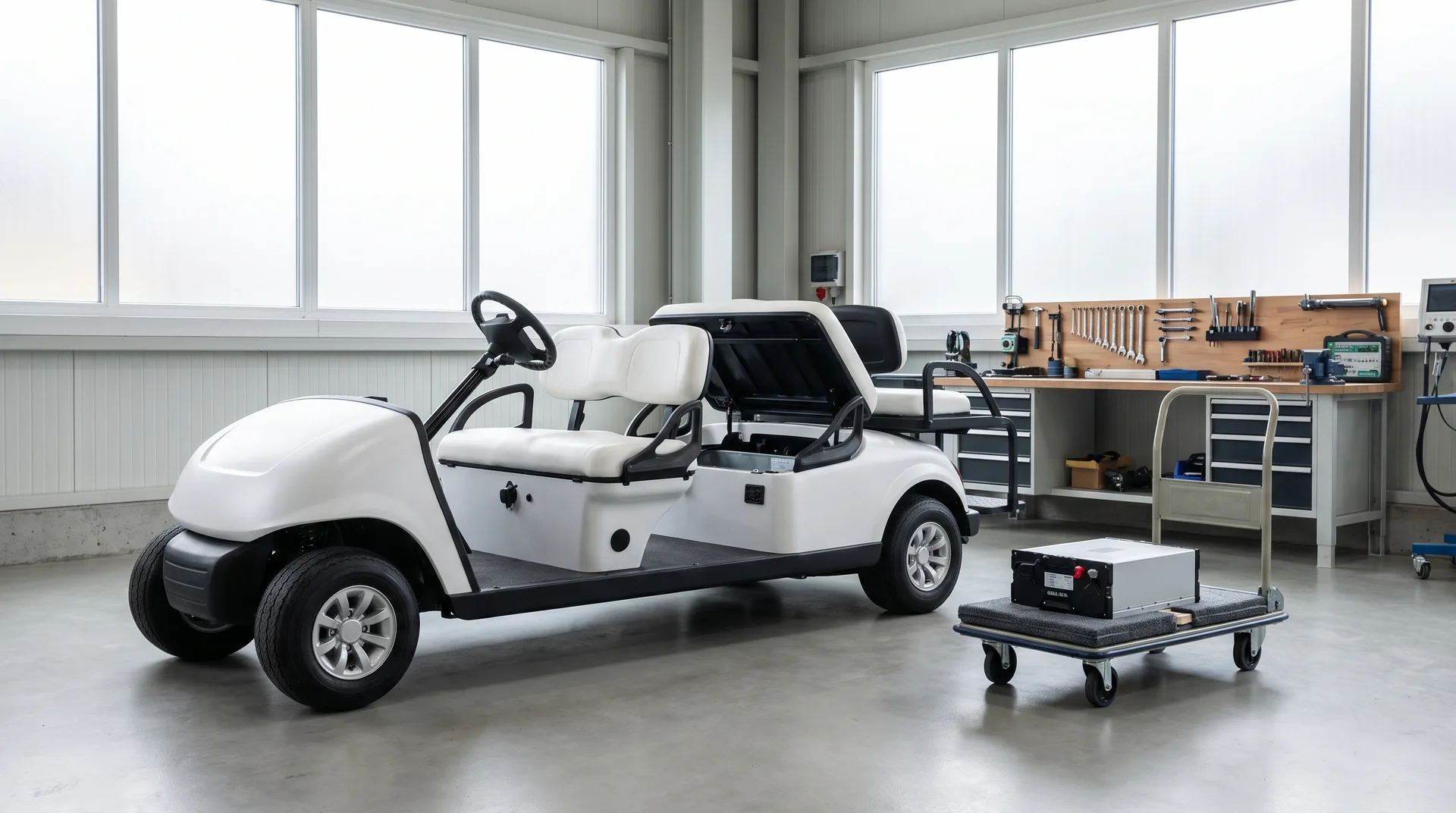
A proper refurbishment works from the components that wear and fail outwards. Batteries first, because they are the most expensive consumable on the vehicle: a genuine refurb either fits a new pack or documents the existing pack's age and tested capacity. Then the electrical heart, the controller, solenoid, charger and wiring, checked and repaired rather than just wiped down. Then the running gear: brakes stripped and adjusted, bushes and bearings checked, tyres replaced if worn, steering checked for play. Cosmetics, the respray, new seats and a polished canopy, come last and cost the refurbisher the least, which is exactly why a cosmetics-only refurb is such good business for the seller and such poor value for the buyer. The spread between these two versions of the same word is enormous, and nothing on the advert reliably tells you which one you are looking at.
Questions that expose a paint-job refurb
Five questions do most of the work. First, what is the battery's age and chemistry, and was it replaced or retained? A seller who cannot answer precisely has answered. Second, can you have the works list in writing, an itemised note of what was replaced, what was tested and what was simply cleaned? A genuine refurbisher keeps this anyway. Third, what is warranted and for how long, and does the warranty cover the batteries, the controller and the motor or just manufacturing defects in the parts they fitted? Fourth, what did the machine do in its previous life, a gentle private estate or five years of daily golf club hire? Our guide to buying a used golf buggy covers the inspection side in detail, and every check in it applies to a refurb too. Fifth, ask for a range test or a documented capacity reading, because tired batteries under fresh paint are the single most common refurb disappointment, and a replacement pack is a significant cost to discover you have bought.
- New
- New pack, full life ahead
- Genuine refurb
- New or documented and tested
- Used as seen
- Unknown, often the weak point
- New
- Full manufacturer-backed warranty
- Genuine refurb
- Limited, varies by refurbisher
- Used as seen
- Usually none
- New
- Highest up front
- Genuine refurb
- Middle ground
- Used as seen
- Lowest up front
- New
- Lowest
- Genuine refurb
- Depends entirely on the works list
- Used as seen
- Highest, priced accordingly
- New
- Daily or business use
- Genuine refurb
- Budget buyers who verify the work
- Used as seen
- Confident buyers who can inspect and repair
| New | Genuine refurb | Used as seen | |
|---|---|---|---|
| Battery condition | New pack, full life ahead | New or documented and tested | Unknown, often the weak point |
| Warranty | Full manufacturer-backed warranty | Limited, varies by refurbisher | Usually none |
| Price | Highest up front | Middle ground | Lowest up front |
| Risk | Lowest | Depends entirely on the works list | Highest, priced accordingly |
| Best for | Daily or business use | Budget buyers who verify the work | Confident buyers who can inspect and repair |
Warranty is where new and refurbished really part company
The warranty difference matters more than the price difference. A new buggy from an established dealer carries a multi-year warranty and a service network behind it; every Hawke vehicle carries a three-year warranty, and our warranty and aftercare guide explains what good cover looks like. Refurb warranties are shorter and narrower, commonly a few months to a year, and often exclude the batteries, which is precisely the component you most want covered. That is not sharp practice in itself, a refurbisher cannot sensibly guarantee cells they did not fit, but it means the headline saving carries risk that new does not. Price that risk honestly: a refurb saving that would be wiped out by one battery pack is not a saving, it is a bet.
New or refurbished golf buggy: when each wins
A genuine refurb wins when your budget is firm, your use is light to moderate, and you have verified the works list and warranty, it is meaningfully safer than used-as-seen for similar money. New wins when the buggy has a job to do, daily golf, a business, a site, where downtime costs money and a full warranty earns its keep, and it wins more often than the adverts suggest once you compare real numbers: our two-seat S2 starts from £11,500 new, and refurbished machines from reputable sellers are frequently advertised at a large fraction of that with a fraction of the cover. This decision sits alongside, not instead of, the broader new versus used question; a refurb is best understood as the managed middle of that spectrum. Browse the used buggies we prepare and warrant ourselves if you want the middle ground with the checks already done.
Frequently asked questions
Is a refurbished golf buggy as good as new?+
Only the works list can answer that. A genuine rebuild with a new battery pack, tested electronics and fresh wear items can be excellent value, but the word refurbished is unregulated, so quality varies from full rebuilds to little more than paint. Judge the documentation, not the description.
What should a refurbished golf buggy include?+
As a minimum: a new or documented and capacity-tested battery pack, checked controller, charger and wiring, brakes and steering inspected and adjusted, worn tyres replaced, and a written warranty. Cosmetic work is the least important part, though it is the most visible.
How long should a refurb warranty be?+
Anything from a few months to a year is common, and longer is a good sign. Read what it covers as carefully as how long it lasts: a warranty that excludes batteries, the controller and the motor covers very little of what actually fails on an electric buggy.
Is refurbished better than buying used privately?+
A genuine refurb usually is, because the wear items have been dealt with and there is some warranty behind the machine. A paint-job refurb is worse than honest used, because you pay a refurb premium for work that was never done. The questions in this guide tell you which you are looking at.
When is new clearly the better buy?+
When the buggy will work regularly, for daily golf, a business or a site, and downtime matters. A full multi-year warranty, a fresh battery pack and a dealer network behind the machine tend to repay the higher purchase price across years of ownership.
Compare the refurb against a real new price
Tell us how the buggy will be used and we will quote a new machine with a three-year warranty, so you can weigh any refurb offer against a real number rather than a guess.
Related solutions
Ready to explore what we build?
See the vehicles and the setting this applies to, or get a tailored quote built around your site.
Ready to find the right buggy?
Tell us how and where it will work and we will specify a vehicle and a tailored quote built around you. Every build comes with a 3-year warranty and a 24-hour priority call-out.
Our guides are written and reviewed by the Hawke Electric Vehicles team, the people who specify, build, deliver and support the vehicles. We focus on honest, practical advice and flag where a figure depends on the build rather than guessing.
More guides by Hawke