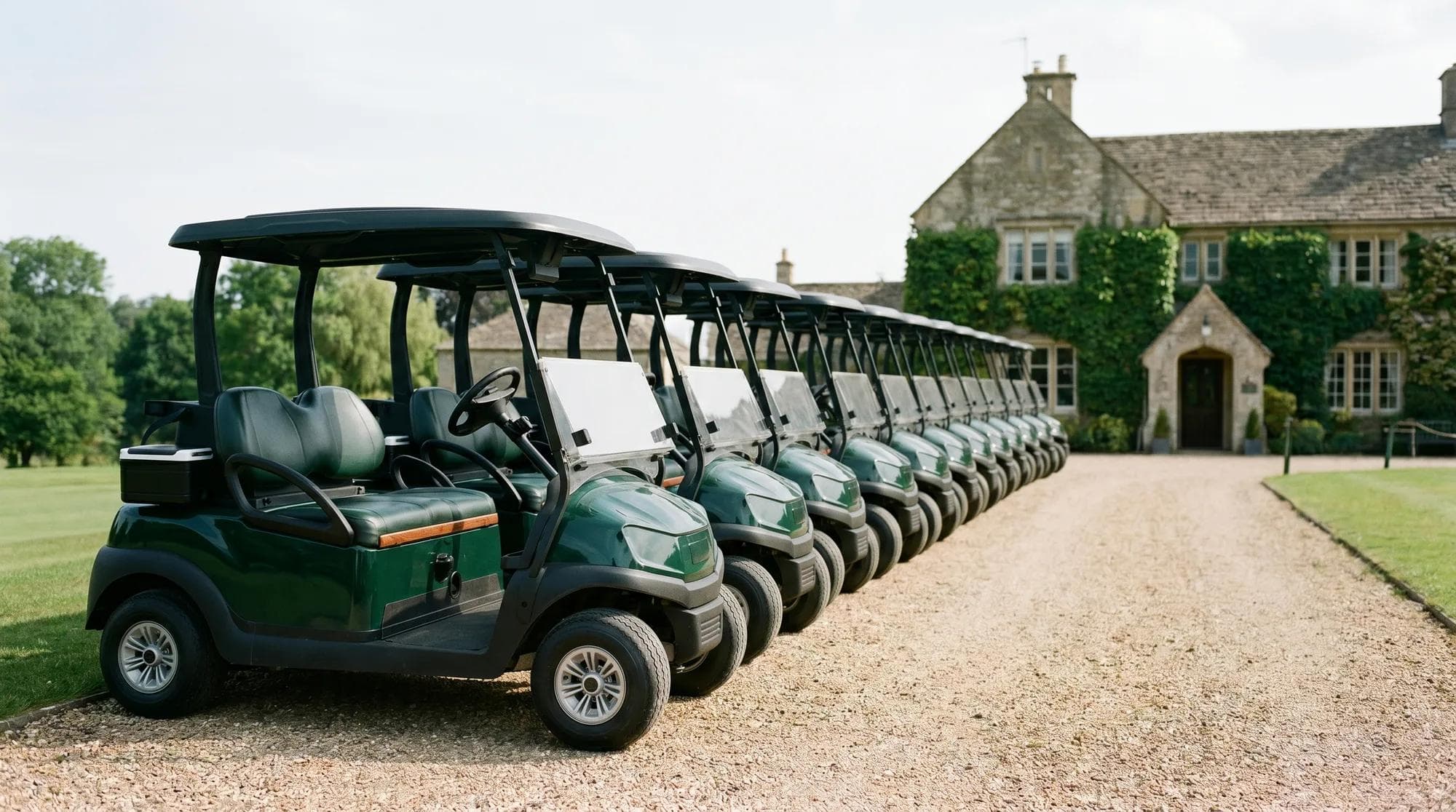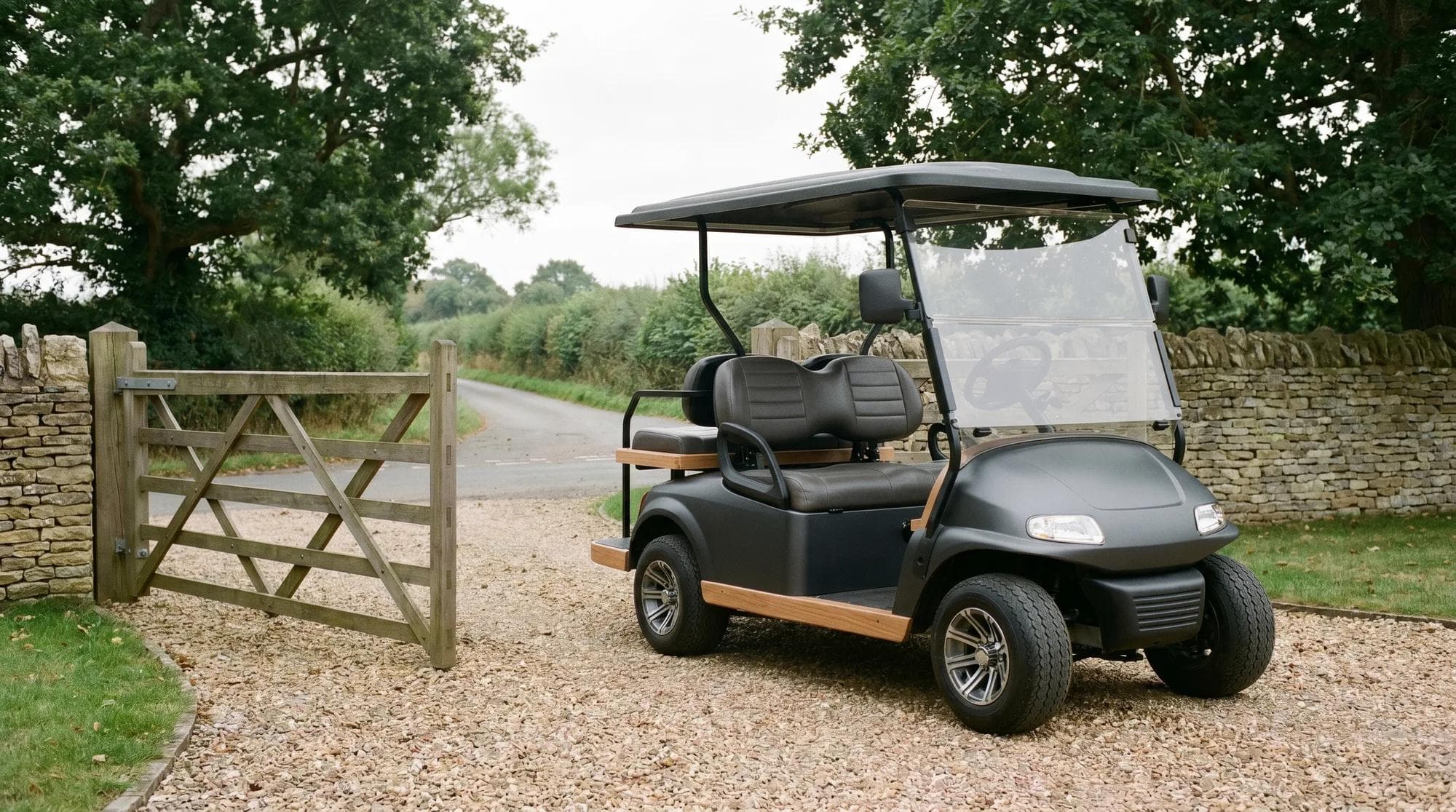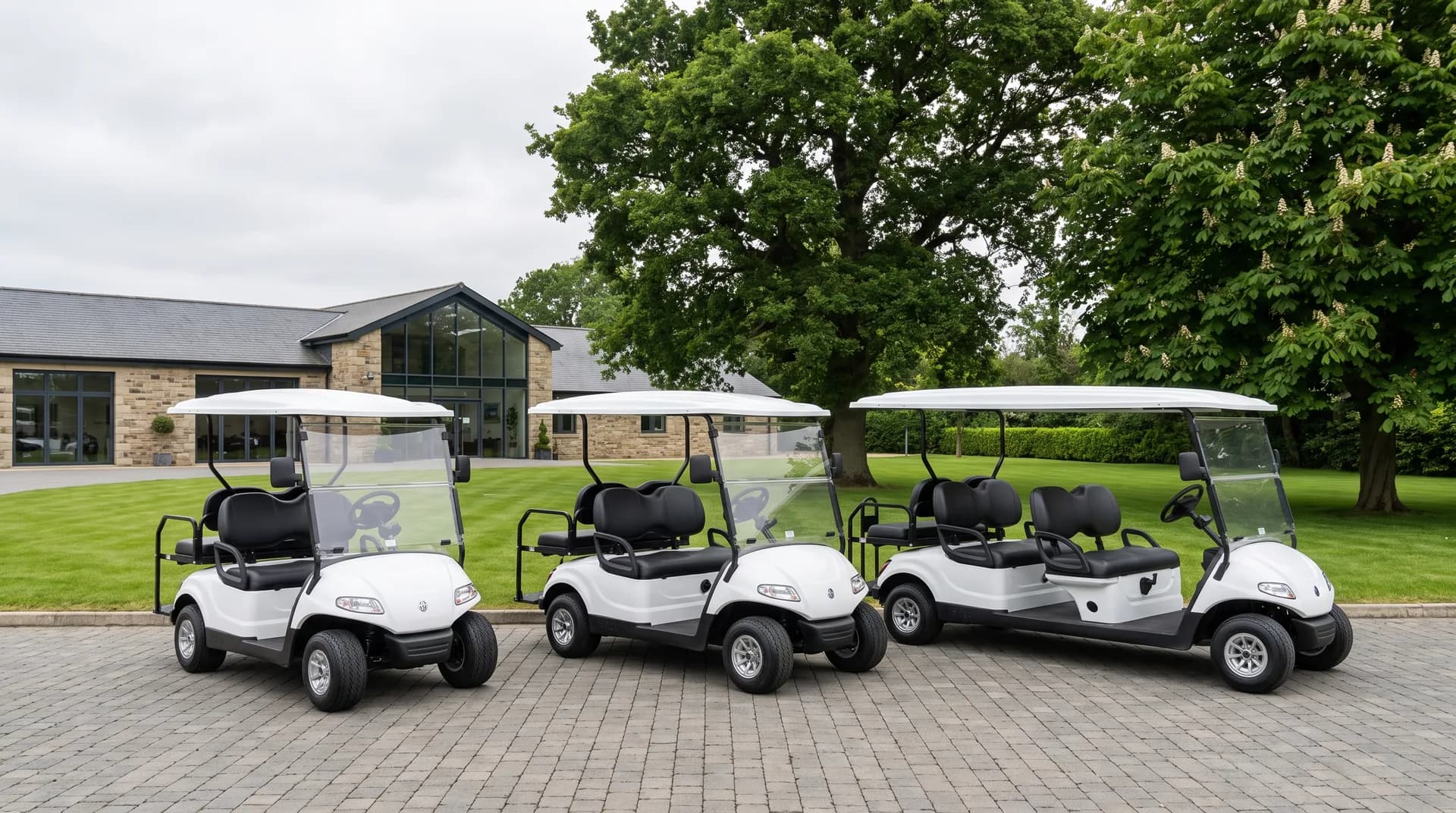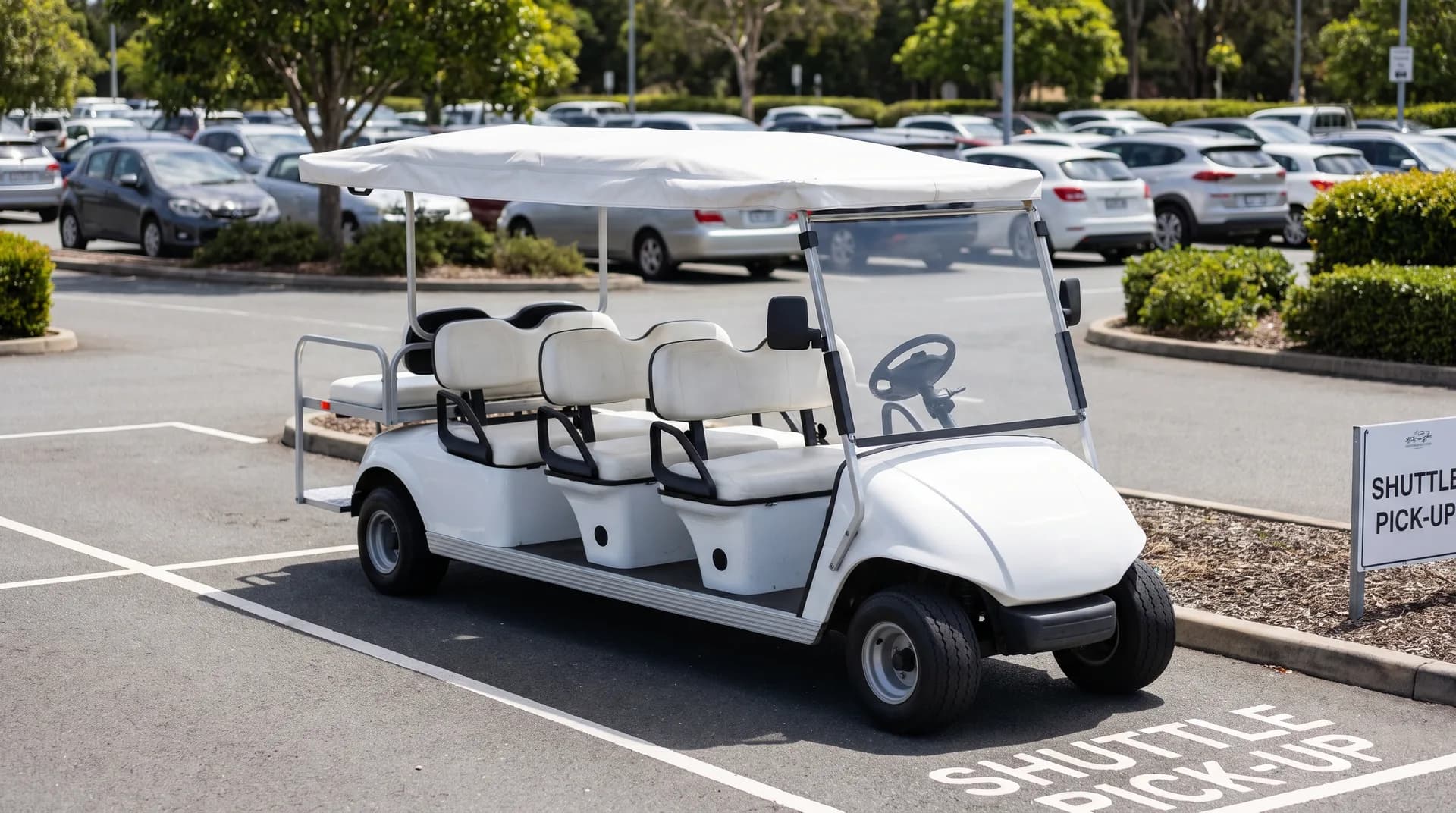
Property developers use electric buggies for a simple commercial reason: on a large development, distance kills viewings. A four or six seat buggy waiting outside the marketing suite turns the ten-minute trudge to a far plot into a two-minute chauffeured tour, keeps buyers dry and unhurried, and lets a sales negotiator show three house types in the time a walking tour shows one. The same vehicles do quiet, useful work behind the scenes: site-manager rounds across phases, snagging visits, and errand runs before the roads are adopted. And at launch weekends, a liveried buggy in the developer's colours is a piece of moving marketing parked at the kerb. Here is how developers get the most from them.
- A show-home shuttle lets negotiators tour buyers across large developments quickly, dry and in comfort.
- Site managers use the same vehicles for rounds, snagging visits and phase-to-phase errands.
- Unadopted roads are typically private, but confirm the status of every route with your site team before operating.
- Branded, liveried buggies double as marketing at launches and add kerb appeal outside the marketing suite.
- Quiet electric drive suits selling: buyers hear the development, not an engine.
Why property developers put buggies on large developments
A modern development of several hundred plots is built in phases over years, and the plots that need selling hardest are usually the ones furthest from the marketing suite. Asking a buying couple, perhaps with children or limited mobility, to walk the spine road in the rain past parked contractor vans is how viewings go flat. A shuttle changes the experience: the negotiator drives, talks and points out the play area, the school route and the plot orientations on the way, and the buyers arrive at the show home ready to be sold to rather than ready to leave. The quiet electric drivetrain matters here in a way petrol never could: the tour is a conversation, and buyers hear the birdsong and the quiet street, which is exactly what they are being asked to imagine owning.
Site rounds, snagging and the working week
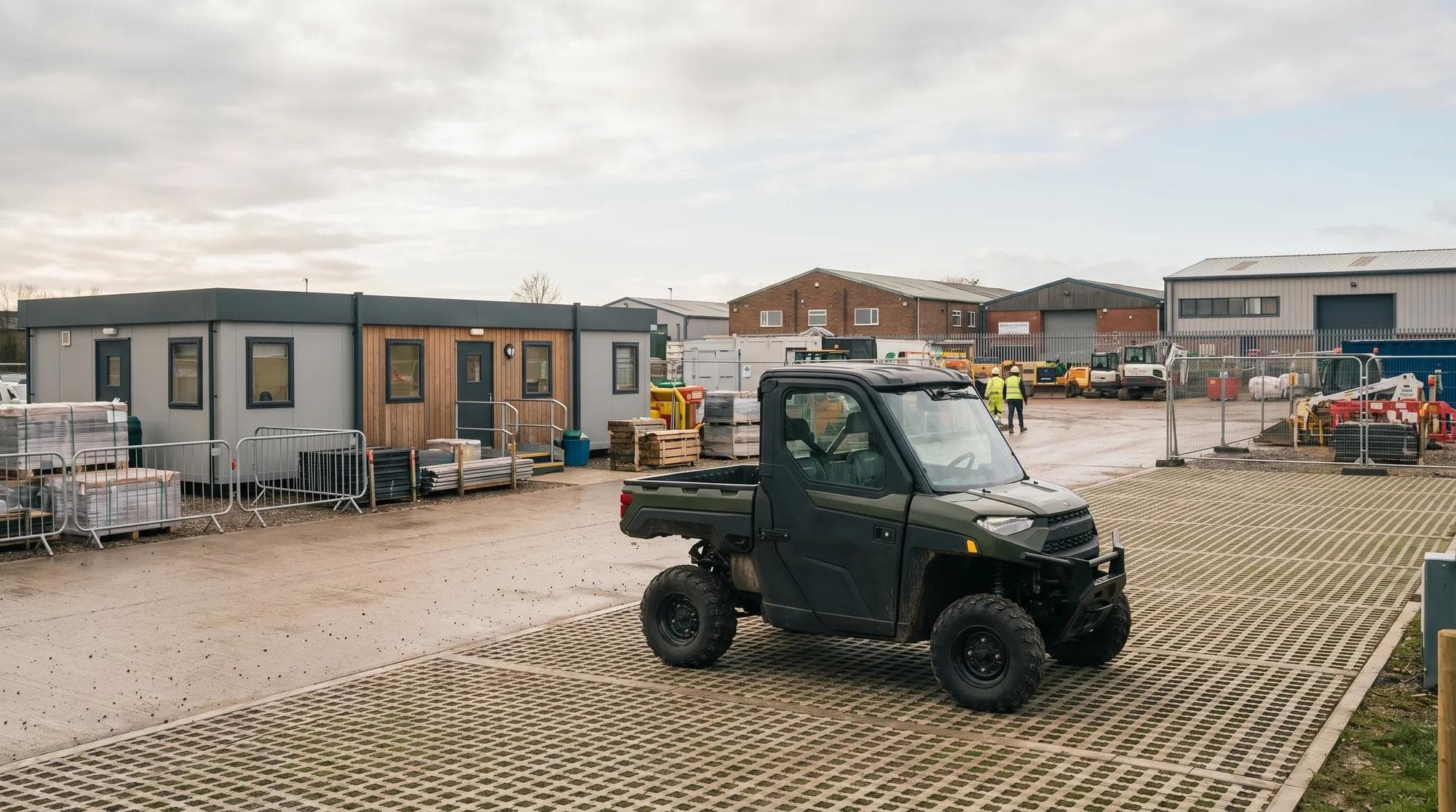
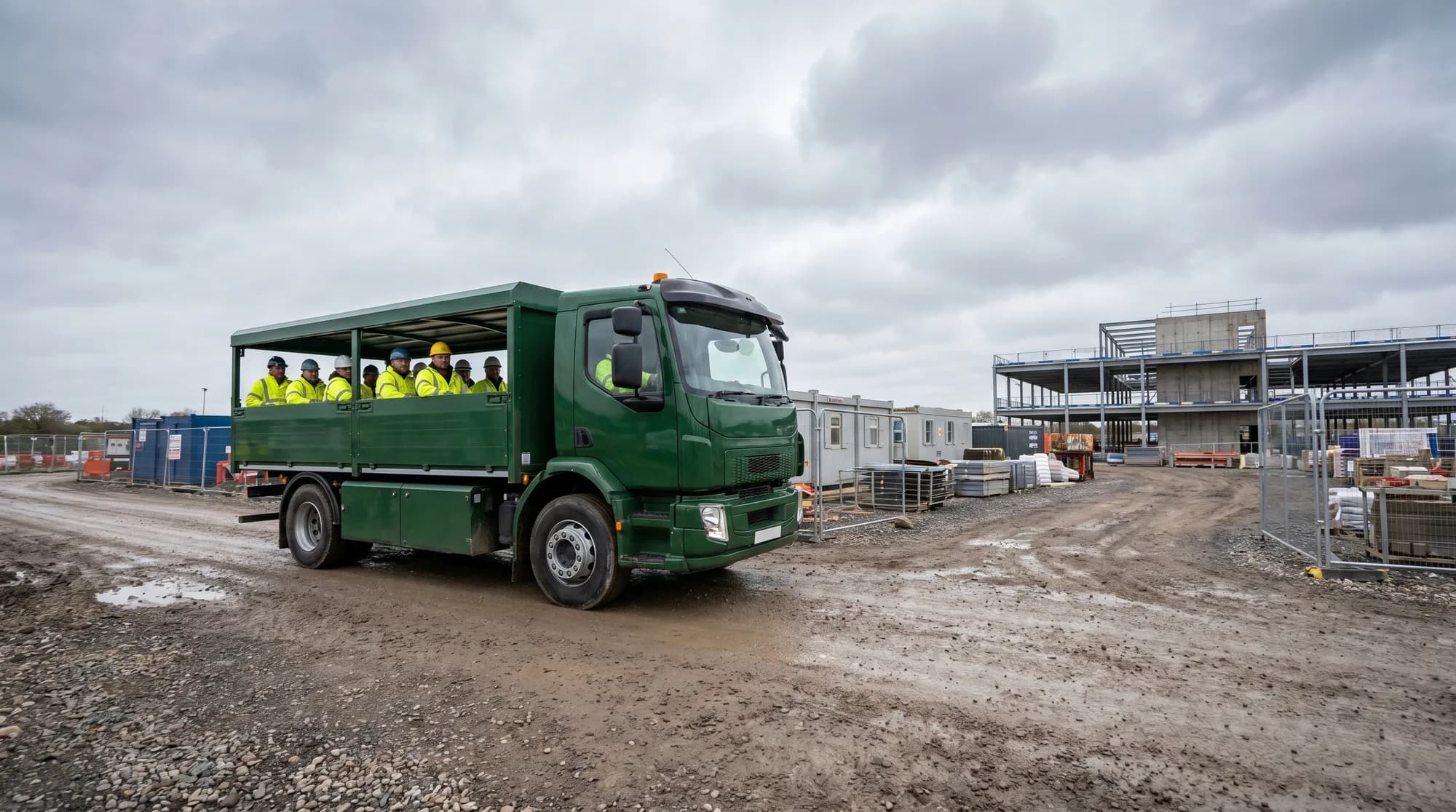
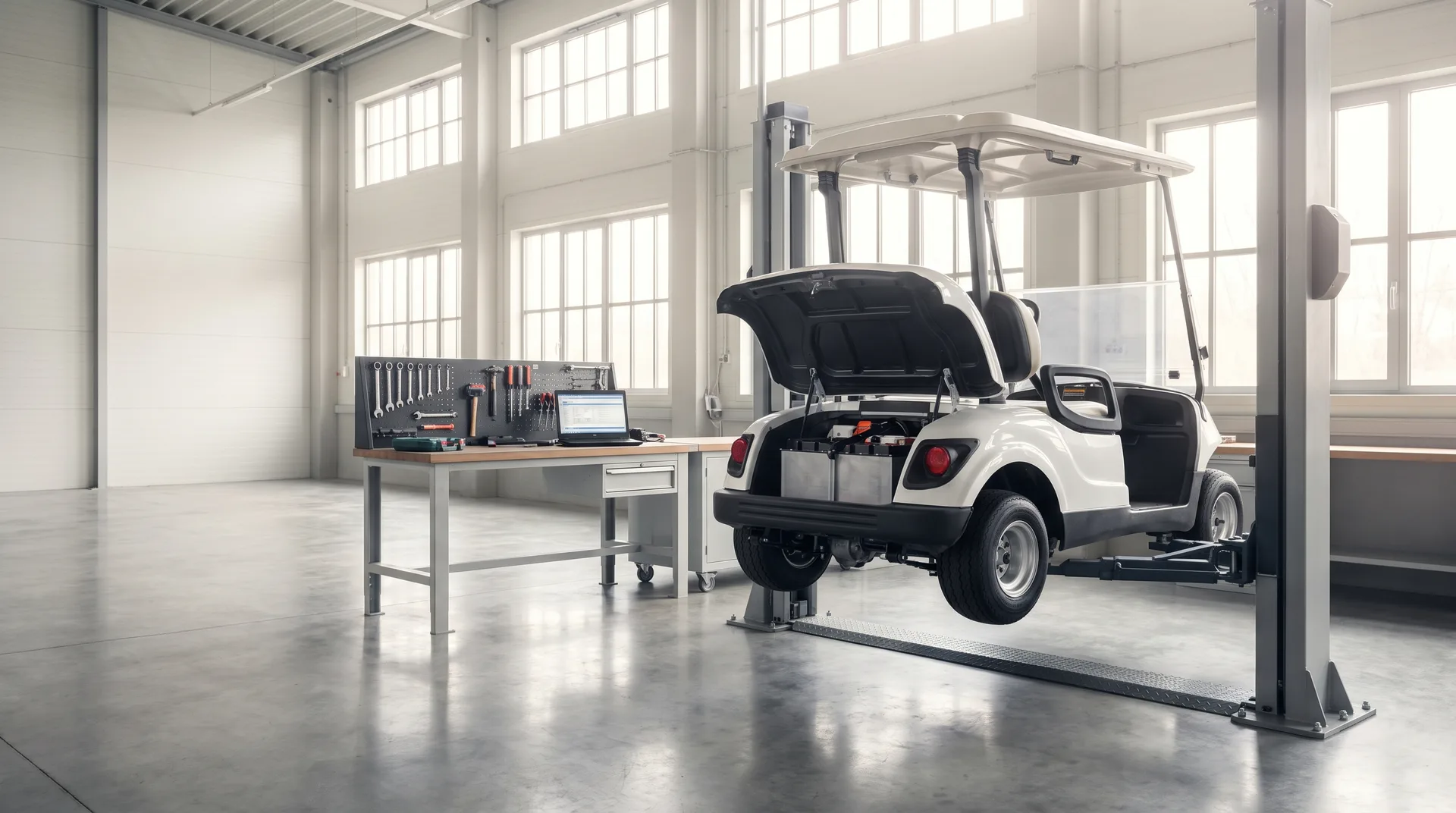
Between viewings the same vehicles earn their keep operationally. A site manager covering multiple phases does rounds faster by buggy than by car, with none of the mud-on-tarmac and parking friction of moving a pickup around finished streets. Customer-care teams use them for snagging visits to occupied plots, moving a technician and tools without putting a van on a resident's new drive. A utility variant with a load bed runs materials, signage and landscaping sundries around the site. Where the vehicle strays into live construction areas rather than finished streets, the rules of the compound apply, and our guide to electric buggies for construction sites covers that side, including site-transport planning and driver rules.
Unadopted roads: the road-legal question, answered carefully
New development roads are usually unadopted for a period after completion, and unadopted roads are typically private, which is what makes buggy operation on them workable. But this is a status to verify, not assume: adoption timing varies, some routes may already be public highway, and public rights of way can cross a site. Confirm the status of every route with your site team and legal advisers before operating, and treat any genuinely public road as off-limits to an unregistered buggy. The wider legal position, including what registration for road use would involve, is set out in our guide to whether golf buggies are road legal in the UK. Sensible developers also write buggies into their site rules: named drivers, walking pace near pedestrians and show areas, and defined routes that keep vehicles clear of anything public.
- Sales shuttle
- 4 to 6 seat passenger buggy
- Site operations
- 2 seat or utility with load bed
- Launch and marketing
- Liveried passenger buggy
- Sales shuttle
- Viewing tours, show-home runs
- Site operations
- Manager rounds, snagging, errands
- Launch and marketing
- Launch weekends, kerb presence
- Sales shuttle
- Comfort, weather cover, quiet
- Site operations
- Payload, robustness
- Launch and marketing
- Branding, finish, first impressions
- Sales shuttle
- S4 from £14,900, S6 from £18,900
- Site operations
- S2 Pickup from £15,900
- Launch and marketing
- Quoted with livery
| Sales shuttle | Site operations | Launch and marketing | |
|---|---|---|---|
| Vehicle | 4 to 6 seat passenger buggy | 2 seat or utility with load bed | Liveried passenger buggy |
| Typical use | Viewing tours, show-home runs | Manager rounds, snagging, errands | Launch weekends, kerb presence |
| What matters | Comfort, weather cover, quiet | Payload, robustness | Branding, finish, first impressions |
| Sanctioned from-price | S4 from £14,900, S6 from £18,900 | S2 Pickup from £15,900 | Quoted with livery |
Branded fleets: property developers' moving billboards
A buggy in developer livery, parked at the marketing suite entrance or gliding past a viewing, is advertising that also does a job. Wraps and liveries carry the development's branding, plot-availability messaging or simply the developer's colours, and the same fleet moves between launches as phases complete and new sites open, which spreads the cost across a pipeline rather than a single outlet. Our guide to custom fleet branding covers what is possible, from simple decals to full wraps. For a developer weighing up numbers: the S4 starts from £14,900 and the six-seat S6 from £18,900, with livery, weather protection and any utility variants quoted to specification, and you can see the platforms in the range. For a single launch weekend rather than a pipeline, short-term hire is also an option worth pricing.
Frequently asked questions
Why do developers use buggies for viewings?+
Distance kills viewings on large developments. A shuttle turns the walk to a far plot into a short, comfortable, guided tour, keeps buyers dry and lets negotiators show more house types per appointment.
Can you drive a buggy on a new development's roads?+
Unadopted roads are typically private, which usually makes buggy operation workable, but adoption status varies and public rights of way can cross a site. Confirm the status of every route with your site team before operating, and keep unregistered buggies off public highway.
What size buggy suits a show-home shuttle?+
A four-seater covers most viewing parties; a six-seater suits launch weekends and larger groups. The S4 starts from £14,900 and the S6 from £18,900, with weather protection well worth specifying for year-round viewings.
Can the buggies carry our branding?+
Yes. Decals, part-wraps and full livery in your brand colours are all available, and a branded fleet moves between launches as phases complete, spreading the cost across your pipeline.
Should a developer buy or hire?+
Buy if the fleet will move across a pipeline of sites over years; hire if you need vehicles for a single launch weekend or a short selling season. Many developers start with hire and buy once the fleet proves itself.
Put a shuttle outside the marketing suite
Tell us the size of the development, the fleet jobs and your branding, and we will specify and price a fleet that sells houses and runs the site.

Ready to find the right buggy?
Tell us how and where it will work and we will specify a vehicle and a tailored quote built around you. Every build comes with a 3-year warranty and a 24-hour priority call-out.
Our guides are written and reviewed by the Hawke Electric Vehicles team, the people who specify, build, deliver and support the vehicles. We focus on honest, practical advice and flag where a figure depends on the build rather than guessing.
More guides by Hawke