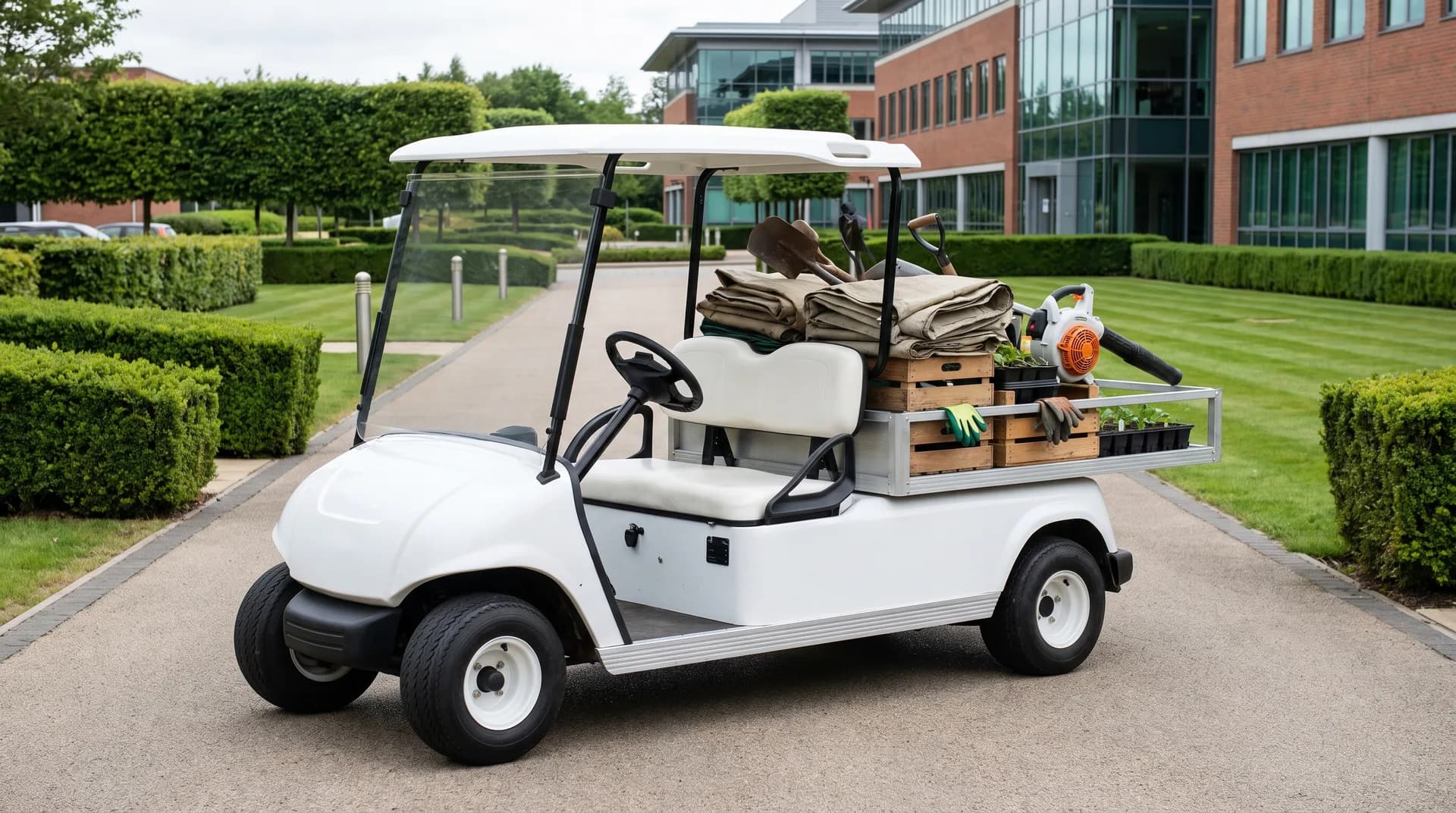
The best small electric utility vehicle for a UK site is the one whose payload class, bed type, width and working-day range match the job you actually do, not the one with the biggest headline number. A grounds team, a hotel back-of-house crew and an estate manager all search the same phrase and need genuinely different machines. This guide works through picks by job: the specification that suits each role, why, and the verified figures you should demand from any supplier before you sign. On price, compact machines typically sit in the low-to-mid teens of thousands of pounds new, and our own Hawke S2 Pickup starts at £15,900, so you can sanity-check quotes against a real published figure.
- Match four things to the job: payload class, bed type (pickup, tipper or box), overall width and range at working load.
- Grounds teams usually want a tipper bed and turf-friendly tyres; hotels want a box body and quiet running; estates want a pickup bed and towing.
- Width decides where the vehicle can go: anything much over 1.4 metres starts to rule out garden paths and service corridors.
- Judge range at working load across a full shift, not the unladen brochure figure.
- Demand plated payload, laden range, width with mirrors and warranty terms in writing from any supplier.
What counts as a small electric utility vehicle?
By small we mean a compact battery-electric work vehicle, typically around 1.2 to 1.5 metres wide, with a load bed or box behind two seats and a rated payload somewhere between roughly 250 kg and 800 kg. It runs at site speeds, works indoors and out, and charges from an ordinary socket overnight. It is not a road-going electric van and not a golf buggy with pretensions: the chassis, brakes and payload rating are designed for daily carrying. Our guide to the types of electric work vehicle maps the wider family, from burden carriers to tow tractors, if you are not yet sure a utility vehicle is the right shape at all.
The criteria that separate small electric utility vehicles
Four criteria do most of the deciding. First, payload class: weigh a realistic worst-case load, tools, materials, water, waste, and add a margin, because a vehicle worked at its limit every day ages fast. Second, bed type: an open pickup bed is the versatile default, a tipper earns its keep wherever loose material is shovelled out by hand, and an enclosed box suits secure or weather-sensitive loads. Third, width: measure your tightest gate, path or doorway and buy against that number, not the car park. Fourth, range: a full working day of stop-start runs at working load, with enough left that nobody thinks about the battery until the plug goes in at night. Battery chemistry sits underneath all of this, and for daily use lithium usually justifies its higher up-front cost through range, charge speed and lifespan.
For grounds and sports-field teams
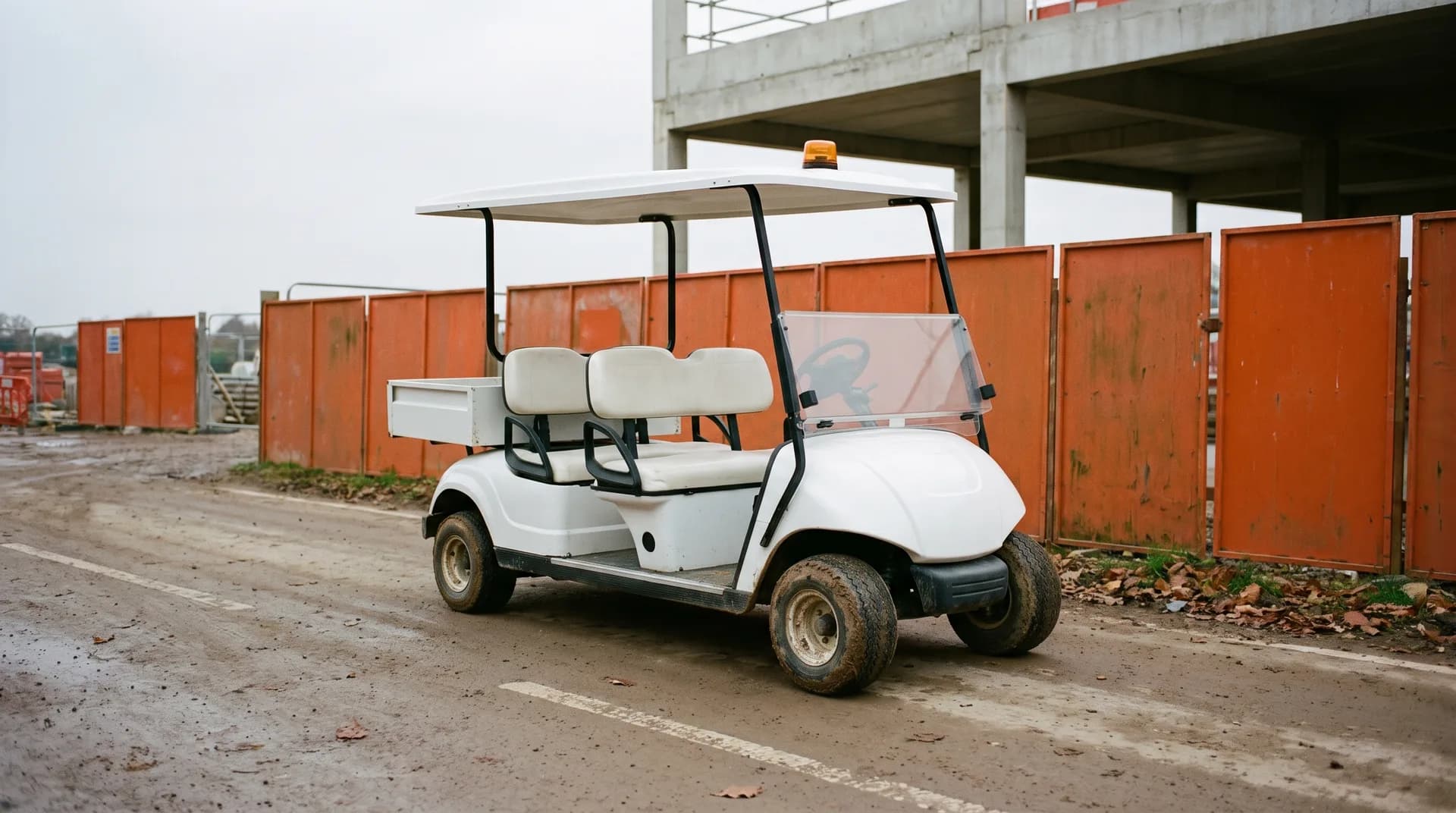
Grounds maintenance is loose material and constant mounting and dismounting: green waste, topdressing, tools, line-marking kit, endless short runs. The pick here is a compact machine with a tipping bed and turf tyres. A compact electric tipper turns every unloading stop from ten minutes of shovelling into a ten-second tip, which across a season is a genuine labour saving, and low-pressure turf tyres let the vehicle cross a wet outfield or fine lawn without leaving a mark. Payload in the 300 to 500 kg class covers most grounds work; quiet running means the team can work alongside players, guests or a school day without complaint.
For hotel and venue back-of-house
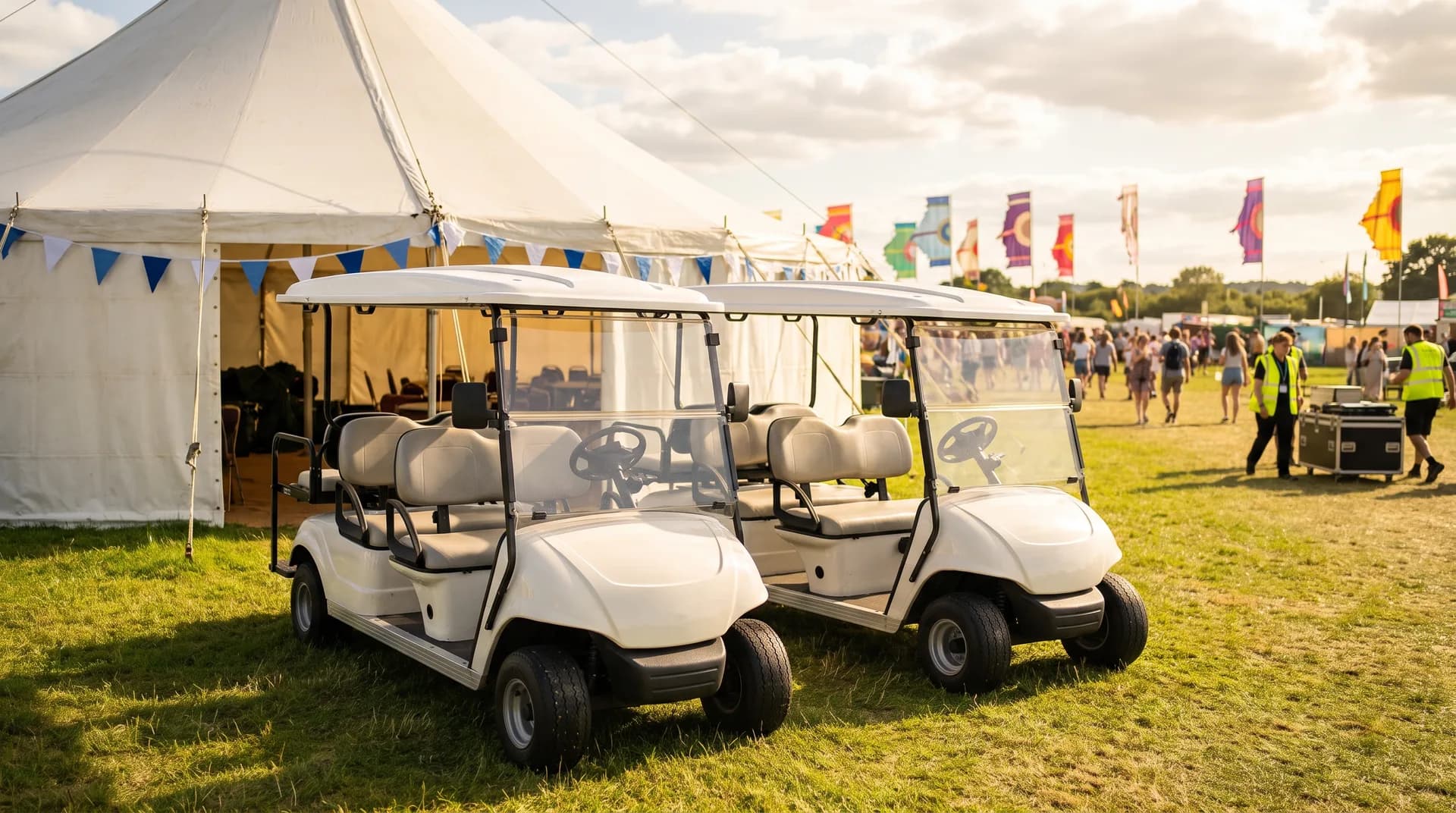
Back-of-house work is about width, security and silence. Linen, food and beverage, luggage and waste all move along service corridors and between buildings, often past guests, so the pick is the narrowest machine that carries your trolley or cage sizes, usually with an enclosed box body to keep loads dry, secure and out of sight. Check door apertures, service lifts and ramp gradients before shortlisting anything, and favour a walk-speed-capable vehicle with good all-round visibility. Because these routes are short, range matters less than manoeuvrability; a modest battery that charges in a plant room overnight is usually plenty. The compact end of the utility range is built around exactly these constraints.
For estate rounds and yard work
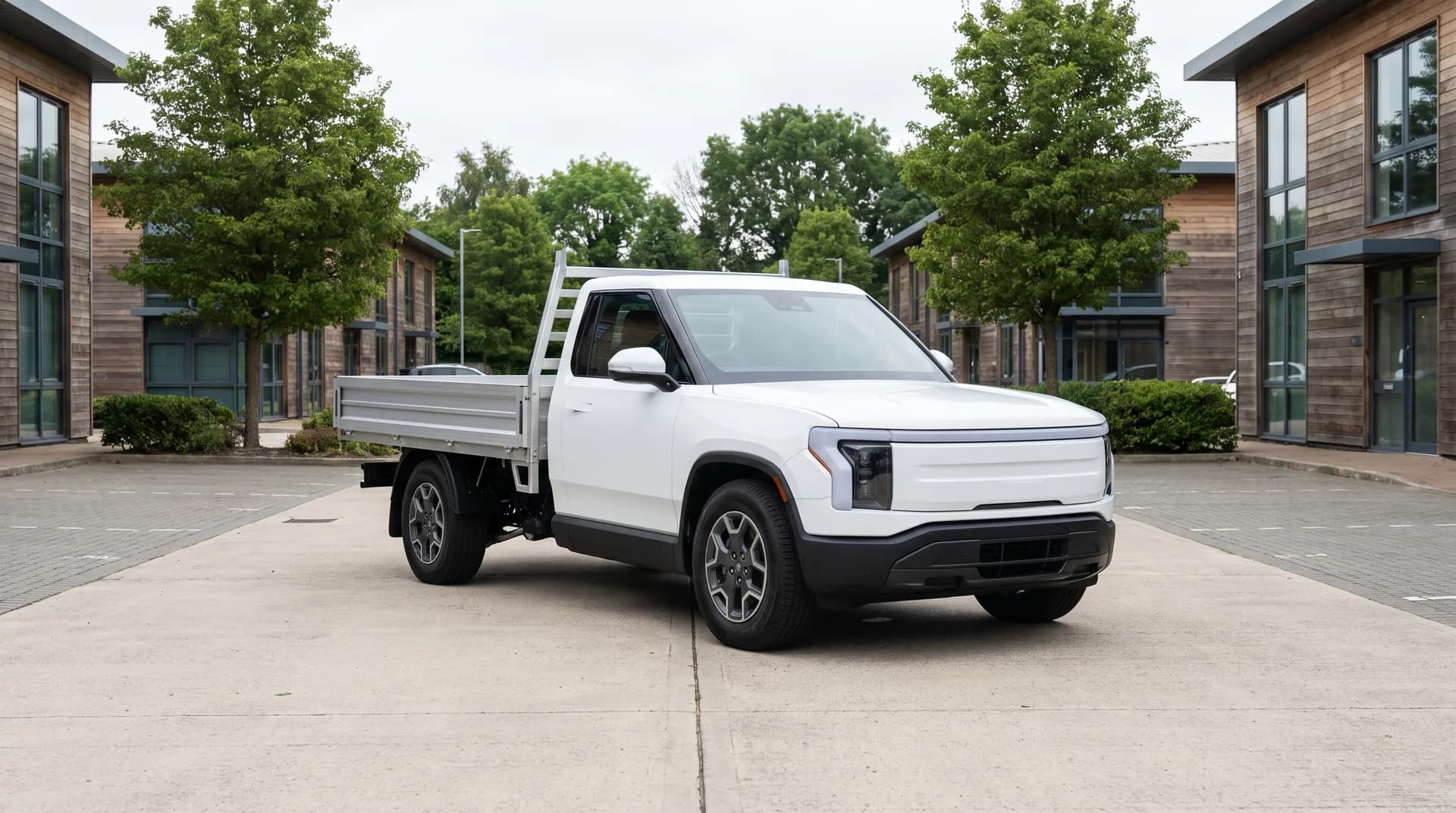
Estate and yard work is the broadest brief: fencing runs, feed, firewood, tools, the daily circuit of a large property, plus a trailer when needed. The pick is a compact pickup, an open bed you can throw anything into, sides you can drop, and a tow hitch for a trailer or implement. Ground clearance and tyre choice matter more here than in any other role, because tracks, mud and slopes are part of the week. This is the class our S2 Pickup sits in, from £15,900, and it is the configuration we would point most mixed-use buyers to first, simply because an open bed with a hitch refuses the fewest jobs.
Verified figures to demand from any supplier
Whichever pick fits, make the supplier put numbers in writing: the plated payload (on the vehicle, not just the brochure), range at a stated working load rather than unladen, overall width including mirrors, towing capacity if you will use it, gradeability for your steepest route, and warranty terms including who actually does the servicing. A supplier confident in the machine will answer quickly; evasion on any of these is information in itself. Our guide on how to choose an electric utility vehicle turns this into a full checklist, and the running costs guide covers what the vehicle will cost you after the invoice.
- Grounds team
- Typically 300–500 kg
- Hotel back-of-house
- Typically 250–400 kg
- Estate and yard
- Typically 500–800 kg
- Grounds team
- Tipper
- Hotel back-of-house
- Enclosed box
- Estate and yard
- Open pickup bed
- Grounds team
- Paths and gateways
- Hotel back-of-house
- Corridors and lifts, critical
- Estate and yard
- Tracks, less critical
- Grounds team
- Full shift, stop-start
- Hotel back-of-house
- Short runs, modest
- Estate and yard
- Full day plus margin
- Grounds team
- Turf tyres, quiet running
- Hotel back-of-house
- Walk speed, visibility
- Estate and yard
- Tow hitch, ground clearance
| Grounds team | Hotel back-of-house | Estate and yard | |
|---|---|---|---|
| Payload class | Typically 300–500 kg | Typically 250–400 kg | Typically 500–800 kg |
| Bed type | Tipper | Enclosed box | Open pickup bed |
| Width priority | Paths and gateways | Corridors and lifts, critical | Tracks, less critical |
| Range need | Full shift, stop-start | Short runs, modest | Full day plus margin |
| Worth specifying | Turf tyres, quiet running | Walk speed, visibility | Tow hitch, ground clearance |
Frequently asked questions
What is the best small electric utility vehicle in the UK?+
There is no single answer: the right machine depends on the job. Grounds teams are usually served by a compact tipper on turf tyres, hotels by a narrow box-bodied vehicle, and estates and yards by a compact pickup with a tow hitch. Match payload, bed type, width and laden range to your own site and the shortlist writes itself.
How much does a small electric utility vehicle cost?+
Compact machines typically sit in the low-to-mid teens of thousands of pounds new, moving with payload, battery and body type. Our S2 Pickup starts at £15,900. Specification drives the figure, so a quote against your actual requirement beats any list price.
What payload do I actually need?+
Weigh a realistic worst-case load, including tools, water and waste, and add a working margin. Most grounds and hospitality work sits comfortably under 500 kg; estate and yard work more often justifies the 500 to 800 kg class.
Will a small electric utility vehicle last a full working day?+
A properly specified one should, at working load, with charge to spare. The key is to judge range laden and stop-start, not against the unladen brochure figure, and to charge overnight so every shift starts full.
Tipper, pickup or box body?+
Tipper if you regularly shovel loose material out by hand; box if loads need to be secure, dry or out of sight; open pickup for everything else, because it refuses the fewest jobs.
What warranty and support should a small utility vehicle come with?+
Expect the warranty term in writing and a clear answer on who attends when something stops. As a benchmark, our own vehicles carry a 3-year warranty with 24-hour call-out; any supplier serving working sites should be able to state their equivalent terms just as plainly.
Get a pick for your job, priced
Tell us the site, the loads and the tightest gap the vehicle has to pass, and we will recommend a specification and price it properly.
Related solutions
Ready to explore what we build?
See the vehicles and the setting this applies to, or get a tailored quote built around your site.

Ready to find the right buggy?
Tell us how and where it will work and we will specify a vehicle and a tailored quote built around you. Every build comes with a 3-year warranty and a 24-hour priority call-out.
Our guides are written and reviewed by the Hawke Electric Vehicles team, the people who specify, build, deliver and support the vehicles. We focus on honest, practical advice and flag where a figure depends on the build rather than guessing.
More guides by Hawke