Electric work vehicles fall into a handful of clear categories, and each one is built around a single job: carrying loads, pulling loads, moving your workforce or moving your guests. Once you know which of those jobs matters most on your site, the right category almost picks itself. This guide explains each type in plain terms, shows you how to tell them apart, and links through to the specialist page for every one.
- Utility vehicles (UTVs) carry loads and crew together on a load bed with seating.
- Tow tractors, also called tugs, are built to pull wheeled loads rather than carry them.
- Burden carriers focus on carrying heavy loads on a flat bed, with minimal seating.
- Personnel carriers move groups of workers around large sites quickly and safely.
- Carriage vehicles, or people movers, shuttle guests and visitors in comfort.
- Golf buggies and pickup or tipper variants cover lighter mixed-use and grounds work.
The fastest way to narrow the field is to ask what the vehicle spends most of its day doing. Carrying a payload points to a utility vehicle or burden carrier. Pulling trailers, trolleys or bins points to a tow tractor. Moving people splits again into staff, where a personnel carrier fits, and guests, where a comfortable carriage vehicle wins. Very few sites need only one behaviour, so the real skill is matching the category to your dominant task and letting configuration cover the rest.
Utility vehicle (UTV): carry loads and crew
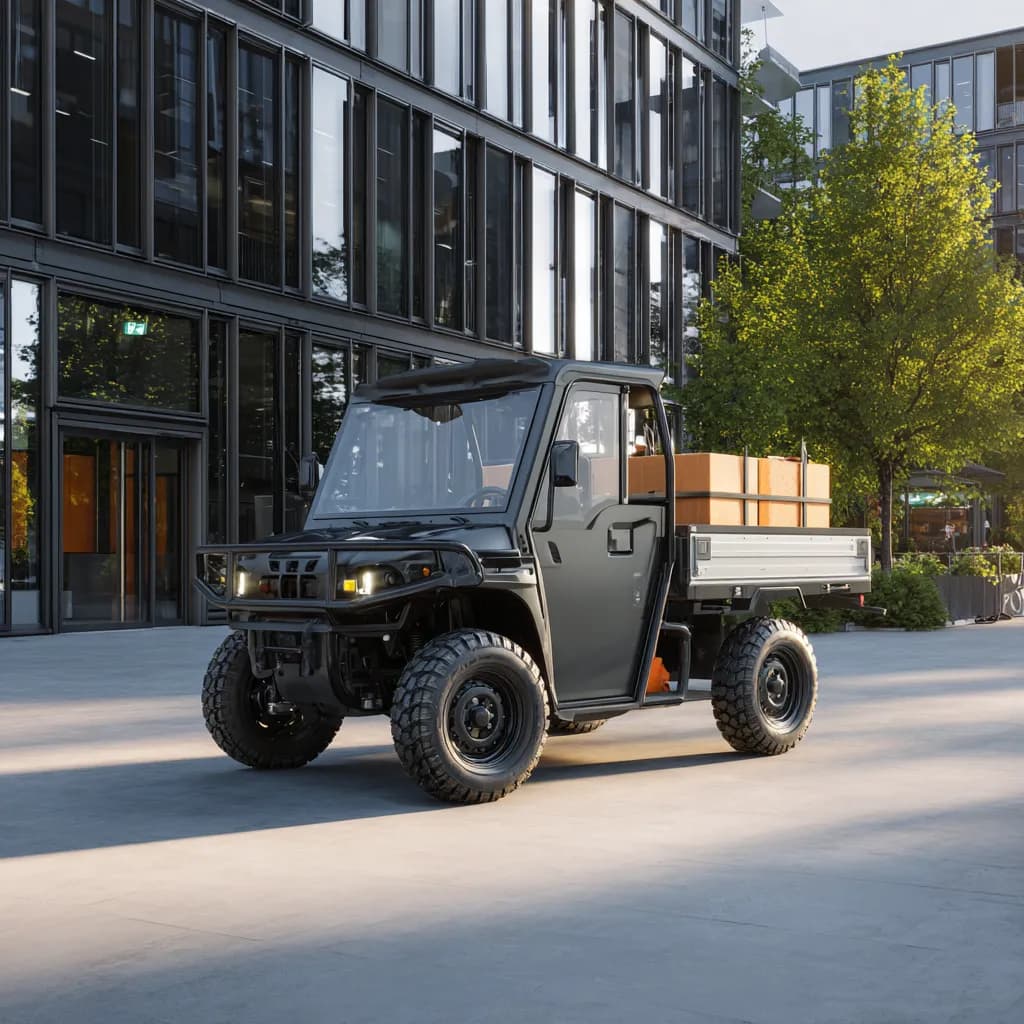
The utility vehicle, or UTV, is the all-rounder. It combines a load bed with a two, four or six-seat cab, so it carries both a payload and the people who need it in one trip. That flexibility makes it the default choice for estates, farms, holiday parks, warehouses, facilities teams and construction sites where the same vehicle might move tools in the morning and materials in the afternoon. Hawke's U1 and U2 are purpose-built electric utility trucks in this class, quiet enough for early starts and clean enough to run indoors.
Choose a UTV when your work mixes carrying with getting a small crew from A to B, and when you value one vehicle that adapts rather than several that each do one thing. If you rarely carry crew and mostly shift heavy loads, a burden carrier may suit you better. If you almost never carry a payload and mostly tow, look at a tow tractor instead.
See the electric utility vehicle range
Load bed plus crew seating, configured to your site and payload.
Tow tractor (tug): pull loads, not carry them
A tow tractor, sometimes called a tug, is designed to pull wheeled loads rather than carry them on a bed. It is compact and low, with the traction and torque to move trolleys, trailers, baggage carts, laundry cages or line-side stock trains. You see them across airports, hospitals, factories and distribution centres, anywhere loads already sit on wheels and just need to be moved efficiently and repeatedly.
The reason tugs exist as a separate category is simple: pulling and carrying are different engineering problems. A tow tractor puts its effort into draw-bar pull and manoeuvrability, not payload volume. If your loads are already on castors or in trailers, a tug will almost always beat a load-carrying vehicle on throughput and floor space.
Electric tow tractors built for repetitive haulage
Move trolleys, trailers and stock trains cleanly and quietly, all day.
Burden carrier: carry loads on a bed
A burden carrier is all about the load. It offers a large, robust flat bed and the payload capacity to match, with only minimal seating for a driver and perhaps one passenger. Where a UTV balances crew and cargo, a burden carrier tips the balance firmly towards cargo. That makes it ideal for internal logistics, mail and parcel runs, stores replenishment, and moving heavy or awkward items around a campus or plant.
Pick a burden carrier when your priority is moving as much as possible per trip and crew capacity is a secondary concern. If you find yourself wanting to carry both a full load and several people at once, step up to a utility vehicle so nobody ends up walking.
Explore electric burden carriers
Maximum bed, minimum fuss, for heavy internal loads.
Personnel carrier: move the workforce
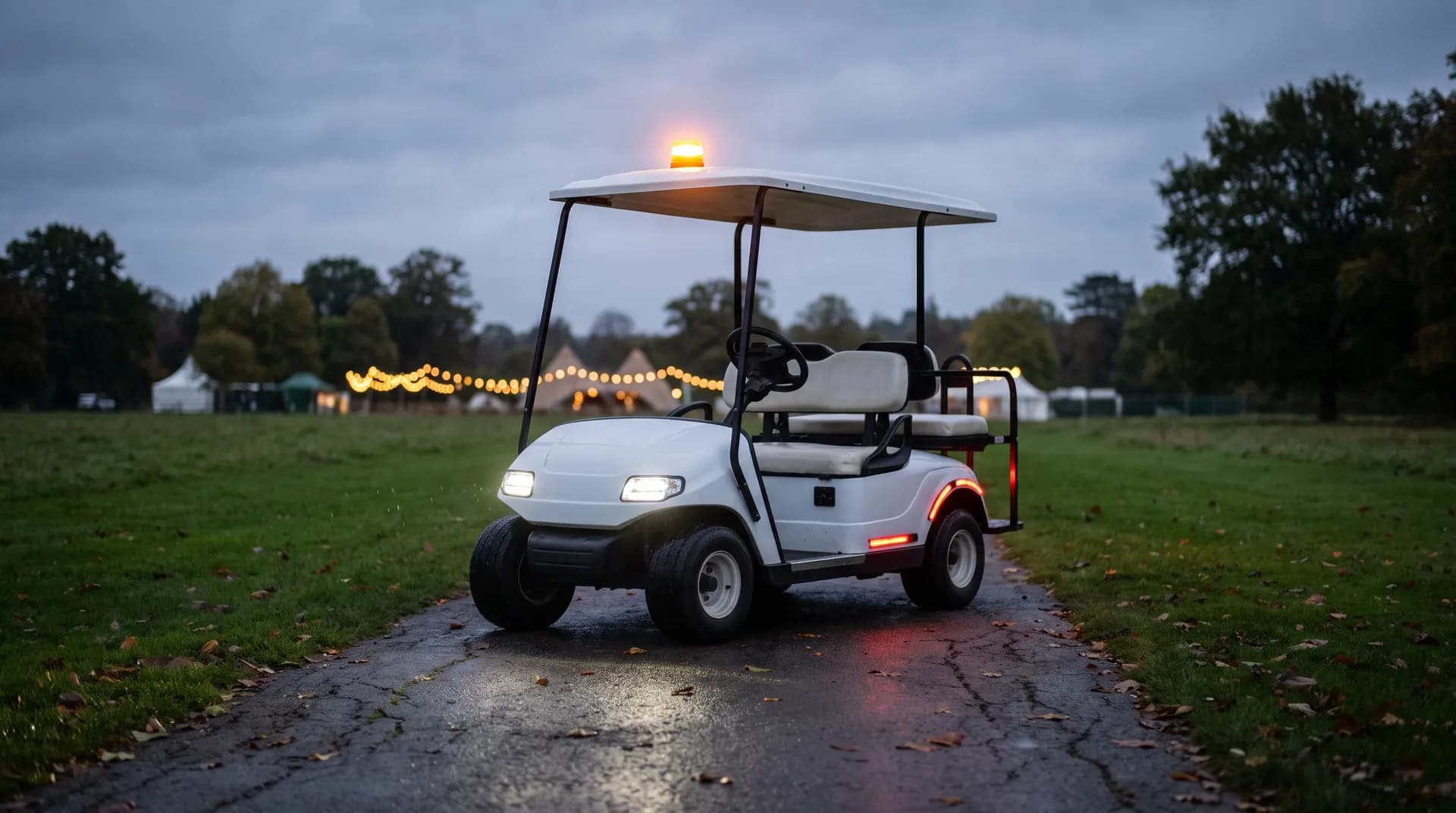
A personnel carrier is built to move your own people, not goods. It seats a group of staff and gets them across a large site quickly, safely and without the fatigue of walking long distances between buildings, gates or work areas. Manufacturing plants, warehouses, ports, campuses and events teams use them to keep shifts moving and to cut the dead time lost to foot travel across sprawling footprints.
The distinction from a carriage vehicle is about audience and finish. A personnel carrier is a practical, hard-wearing workhorse for employees. If the passengers are paying guests or visitors you want to impress, a more refined carriage vehicle is the better fit.
See electric personnel carriers
Get shifts across big sites without the walk.
Carriage vehicle and people mover: move your guests
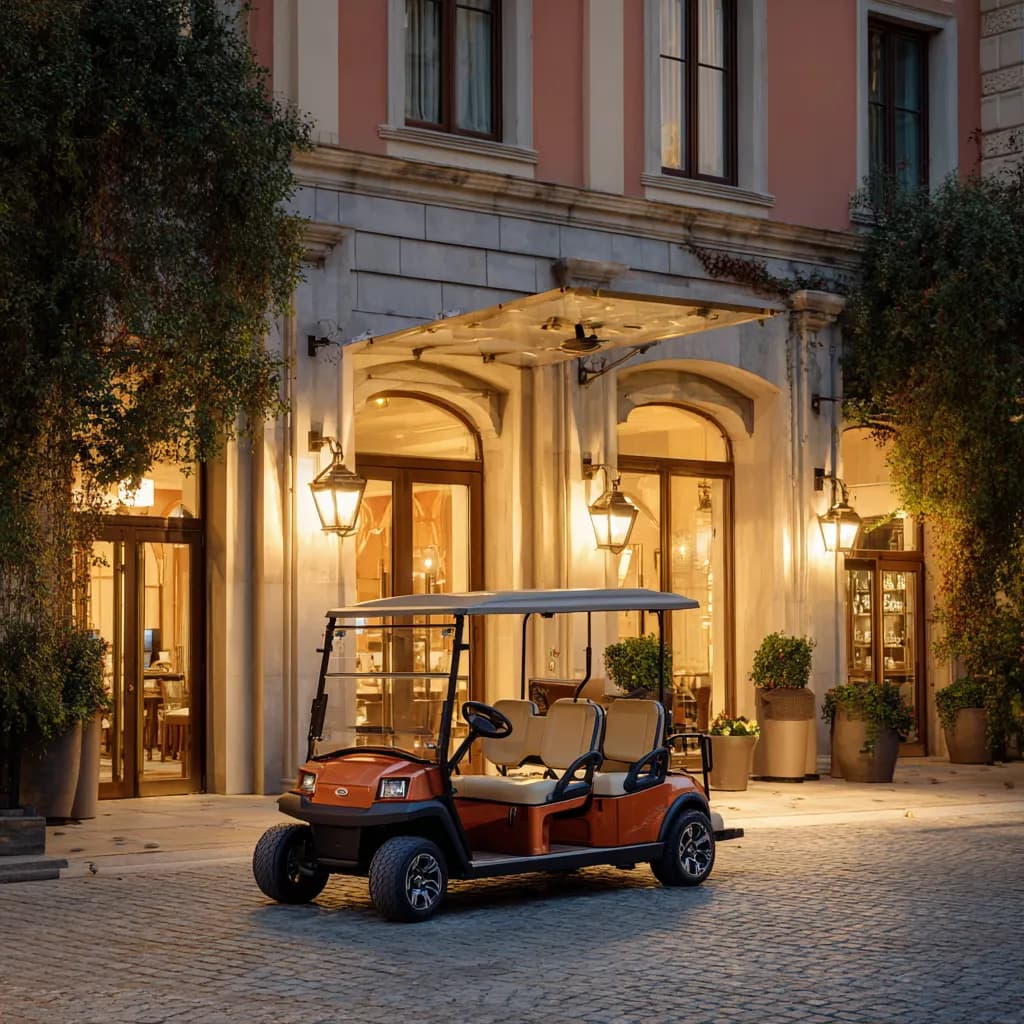
A carriage vehicle, or people mover, is the guest-facing member of the family. It carries visitors, customers and delegates in comfort and style, with a finish that reflects well on your venue. Hotels, golf resorts, wedding venues, visitor attractions, retirement communities and large events all use multi-seat shuttles like Hawke's P8, P11 and P14 to move people smoothly and quietly while adding a touch of occasion.
Choose a carriage vehicle when the passenger experience is part of your product. Comfort, low noise, easy boarding and clean presentation matter more here than raw payload or towing ability. For staff transport where ride quality is less critical, a personnel carrier does the same job for less.
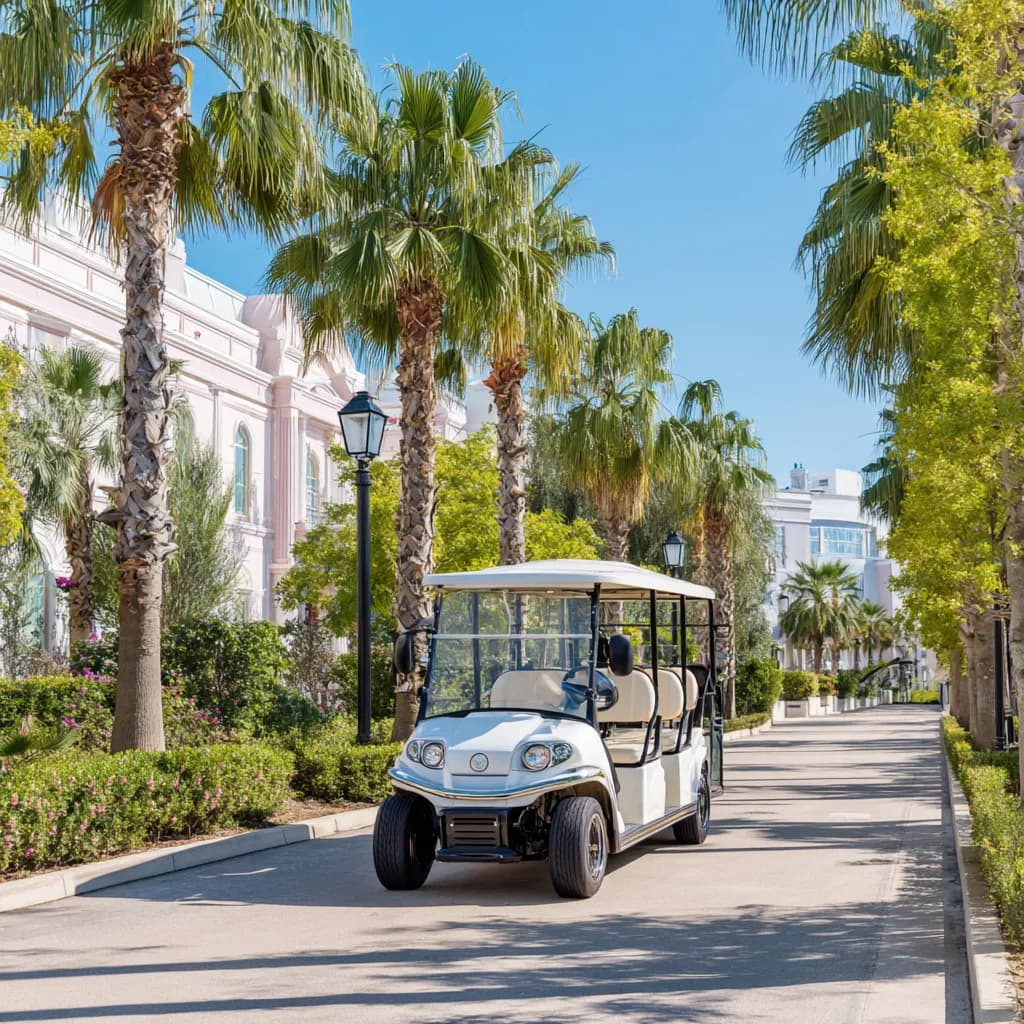
Electric carriage vehicles and people movers
Multi-seat shuttles that move guests in quiet, branded comfort.
Golf buggies, pickups and tippers: light mixed-use
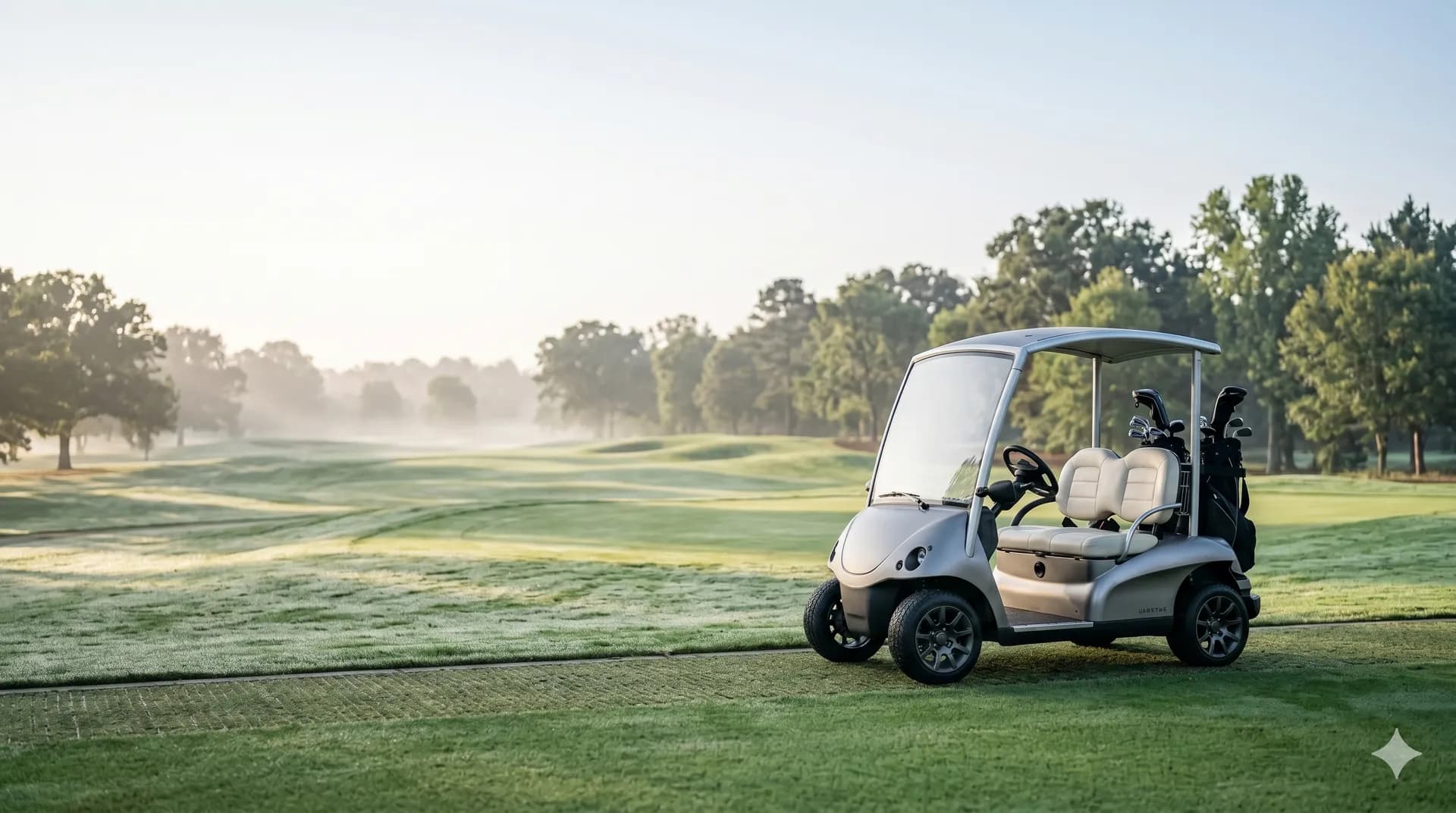
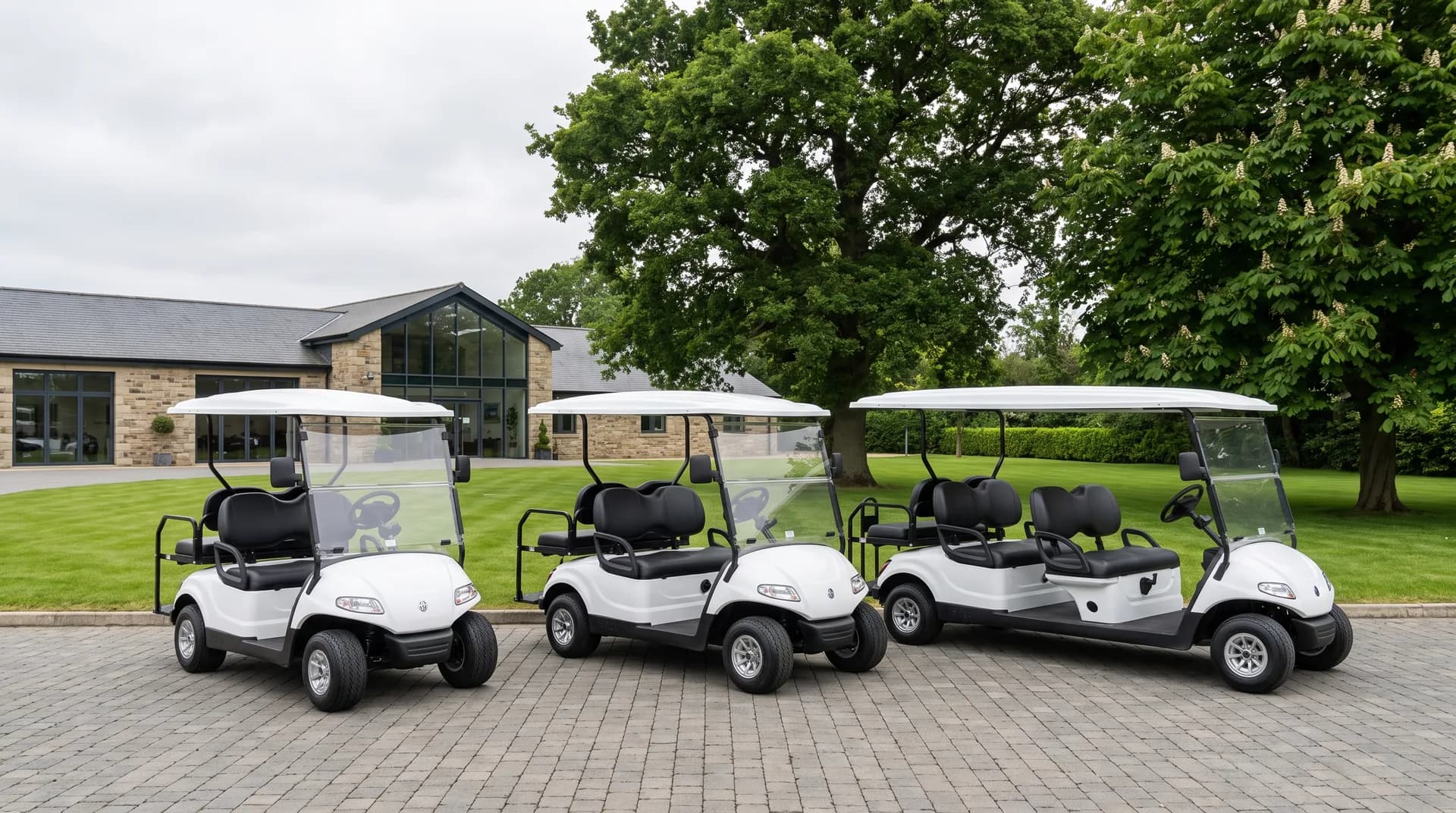
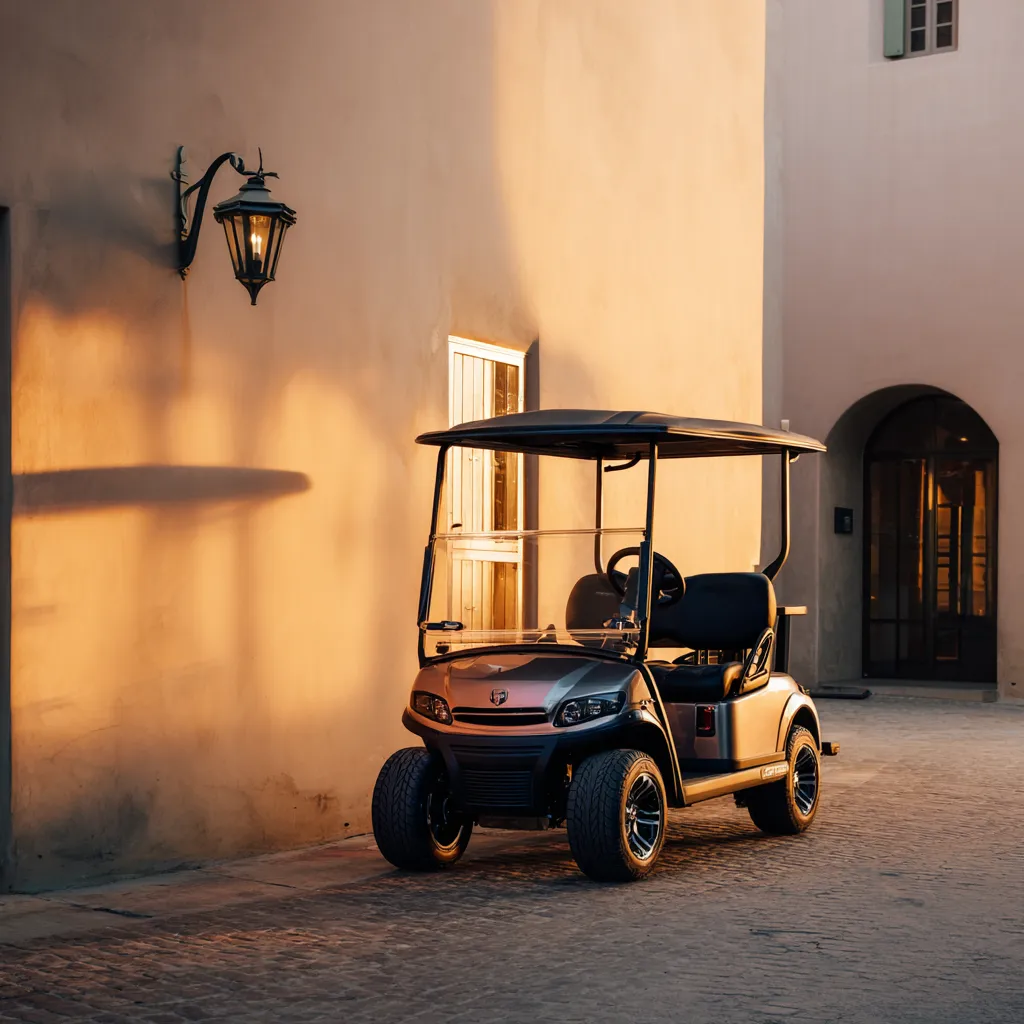
Not every job needs a dedicated work vehicle. Golf buggies and their pickup and tipper variants cover lighter, mixed-use work around courses, grounds, parks and smaller sites. A two or four-seat buggy handles quick transport and light carrying, while a pickup bed or a tipping bed adds real load ability for grounds maintenance, greenkeeping and general estate work. Hawke's S2, S4, S6 and S8 buggies, plus the S2 Pickup and S2 Tipper, sit in this space.
Treat this category as the entry point when your loads are modest and your terrain is manageable. If payloads grow or you need to tow, move up to a utility vehicle, burden carrier or tow tractor from the ranges above.
Browse the full Hawke range
Buggies, pickups, tippers, utility trucks and shuttles in one place.
How to tell the types apart at a glance
If you remember one thing, remember the verb. Carry, pull, move workers or move guests. Each category is optimised for one of those, and the comparison below lines them up so you can see which matches your dominant task.
- What it does
- Carries loads and crew together
- Best for
- Estates, farms, facilities, mixed daily tasks
- What it does
- Pulls wheeled loads
- Best for
- Airports, hospitals, factories, warehouses
- What it does
- Carries heavy loads on a bed
- Best for
- Internal logistics, stores, mail and parcels
- What it does
- Moves groups of staff
- Best for
- Large plants, ports, campuses, events crews
- What it does
- Moves guests in comfort
- Best for
- Hotels, resorts, venues, attractions
- What it does
- Light transport and carrying
- Best for
- Courses, grounds, parks, smaller sites
| What it does | Best for | |
|---|---|---|
| Utility vehicle (UTV) | Carries loads and crew together | Estates, farms, facilities, mixed daily tasks |
| Tow tractor (tug) | Pulls wheeled loads | Airports, hospitals, factories, warehouses |
| Burden carrier | Carries heavy loads on a bed | Internal logistics, stores, mail and parcels |
| Personnel carrier | Moves groups of staff | Large plants, ports, campuses, events crews |
| Carriage vehicle / people mover | Moves guests in comfort | Hotels, resorts, venues, attractions |
| Golf buggy / pickup / tipper | Light transport and carrying | Courses, grounds, parks, smaller sites |
How to pick the right one
- 01
Name the dominant task
Decide whether the vehicle mostly carries, pulls, moves staff or moves guests. That single answer sets your category.
- 02
Count the people
Work out how many people travel with the load or on their own. This chooses between two, four and six-seat layouts.
- 03
Size the payload or tow
Estimate the heaviest, bulkiest load or the trailer weight you will move regularly, and match capacity to that, not to the average.
- 04
Check the terrain and hours
Slopes, kerbs, indoor use and shift length affect drivetrain, tyres and battery choice, so factor them in early.
- 05
Choose the power source
Lithium suits heavy daily use and fast turnaround, while lead-acid can suit lighter, budget-led duty cycles. Both are options across the range.
As a British brand with vehicles assembled in the UK, Hawke backs each category with UK-wide servicing, parts and a 24-hour priority call-out, a 3-year warranty and worldwide delivery. If you are still weighing two categories, a short consultative conversation and a quote will usually settle it quickly.
Not sure which type fits? Ask us
Tell us the job and we will match the right category and configuration, and aim to beat any genuine like-for-like quote.
Frequently asked questions
What are the main types of electric work vehicle?+
The main types are utility vehicles (UTVs) that carry loads and crew, tow tractors that pull wheeled loads, burden carriers that carry heavy loads on a bed, personnel carriers that move staff, carriage vehicles or people movers that move guests, and golf buggies with pickup or tipper variants for lighter mixed-use work.
What is the difference between a utility vehicle and a burden carrier?+
A utility vehicle balances a load bed with crew seating so it carries cargo and people together. A burden carrier prioritises the load, offering a larger bed and higher payload with only minimal seating. Choose a UTV for mixed carrying and crew transport, and a burden carrier when moving maximum load per trip matters most.
When should I choose a tow tractor instead of a load carrier?+
Choose a tow tractor when your loads already sit on wheels, in trailers, trolleys, carts or bins, and simply need moving. Tugs are built for draw-bar pull and manoeuvrability rather than carrying, so they usually outperform load-carrying vehicles on repetitive haulage and save floor space.
What is the difference between a personnel carrier and a people mover?+
Both move people, but the audience differs. A personnel carrier is a practical, hard-wearing vehicle for transporting your own staff around large sites. A carriage vehicle or people mover is a more refined shuttle for guests and visitors, where comfort and presentation are part of the experience.
Can one electric vehicle cover more than one of these jobs?+
Often, yes. A utility vehicle is the most versatile because it carries both loads and crew, and configuration or bespoke builds can extend a base model to cover secondary tasks. The best approach is to match the category to your dominant job, then tailor the specification to handle the rest.
Ready to find the right buggy?
Tell us how and where it will work and we will specify a vehicle and a tailored quote built around you. Every build comes with a 3-year warranty and a 24-hour priority call-out.
Our guides are written and reviewed by the Hawke Electric Vehicles team, the people who specify, build, deliver and support the vehicles. We focus on honest, practical advice and flag where a figure depends on the build rather than guessing.
More guides by Hawke