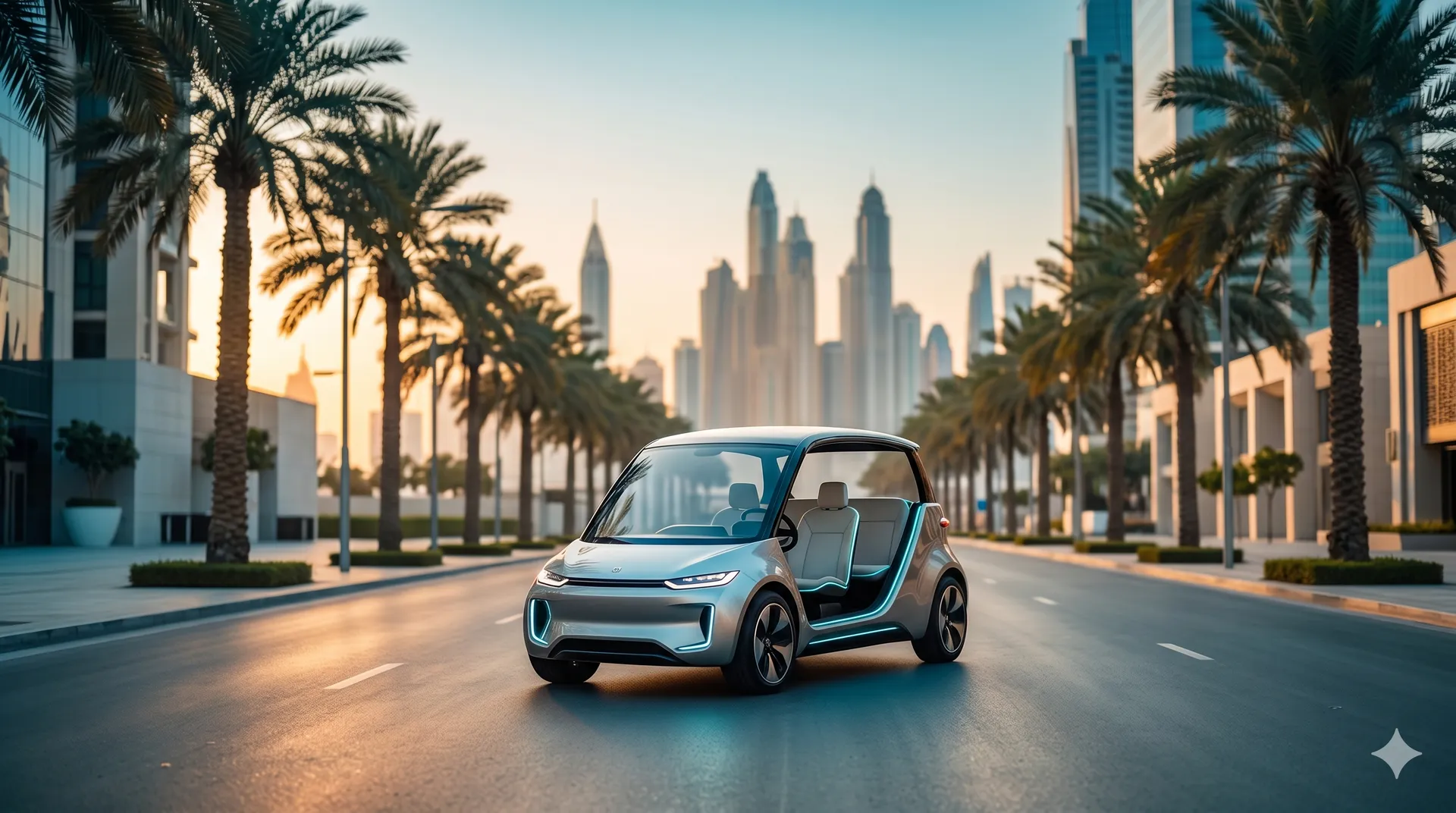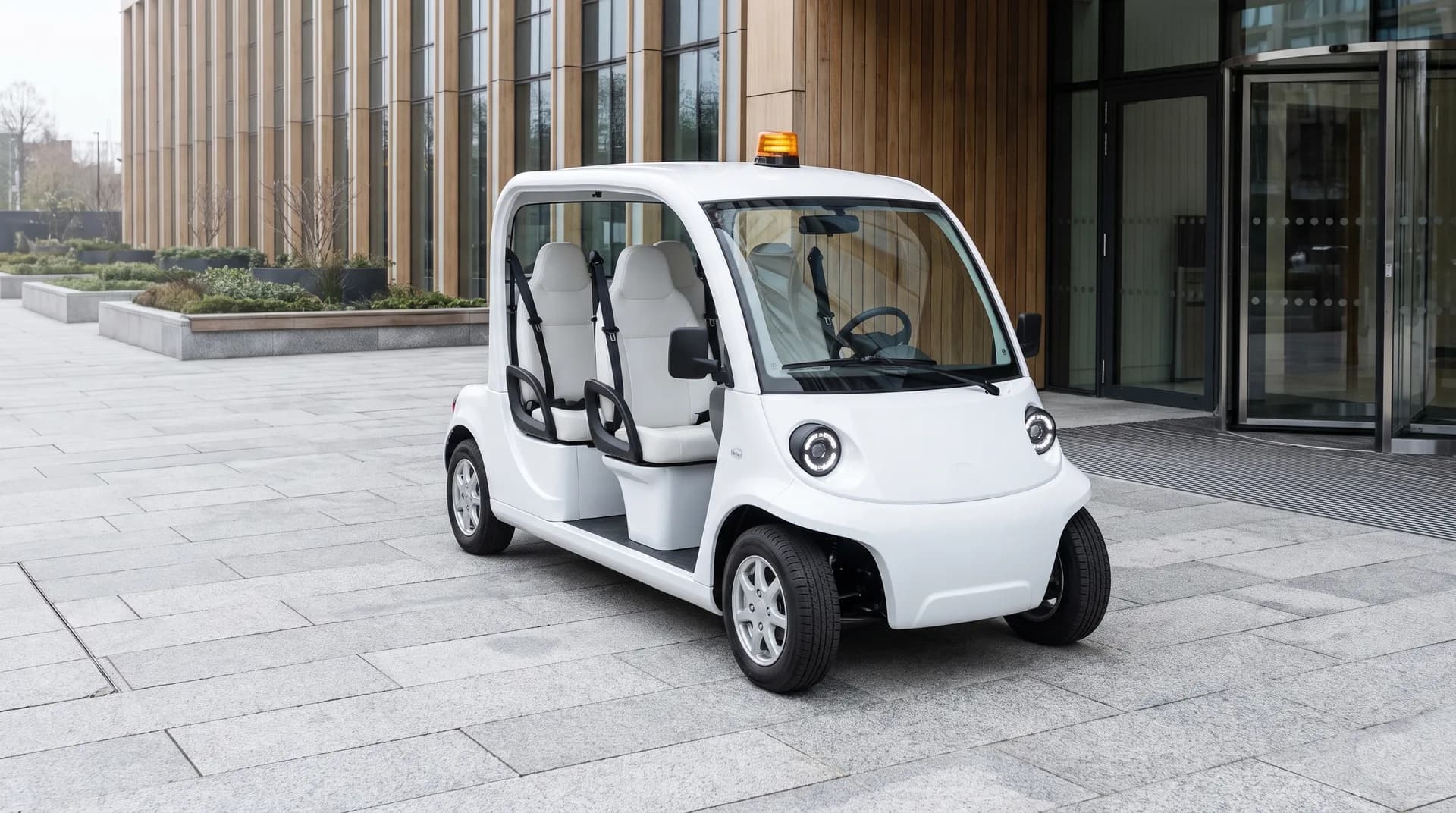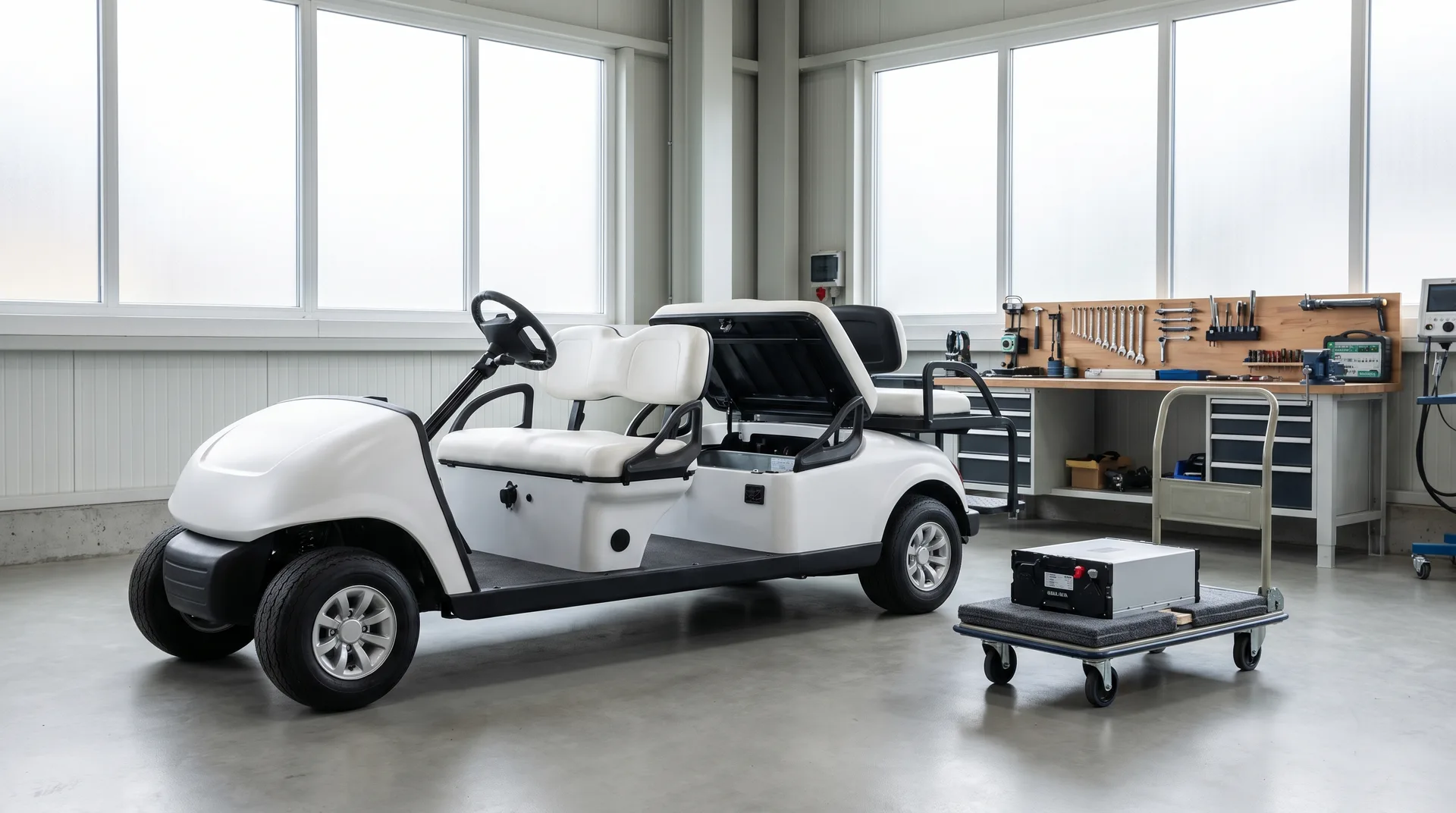
For the majority of utility work happening on a fixed site, an estate, a campus, a factory floor or anywhere near people, an electric utility vehicle is now the stronger choice. It is quieter, cheaper to run, produces no exhaust emissions and needs far less maintenance. Petrol and diesel still earn their place in genuinely remote operations, very high daily mileage, or heavy sustained towing where fast refuelling and long unbroken range matter more than running cost. This guide walks through the real trade-offs so you can match the powertrain to the job rather than the hype.
- Electric wins on running cost per mile, noise, and emissions, especially indoors or near people.
- Electric motors deliver full torque instantly, which helps on gradients, towing pull-away and loaded starts.
- Petrol and diesel refuel in minutes and suit remote sites, multi-shift running and very high daily mileage.
- Electric maintenance is far lighter: no oil, filters, belts, clutch or exhaust to service.
- Upfront cost tends to be higher for electric, but total cost of ownership often favours it over a working life.
- Decide by duty cycle: hours per shift, mileage, load, terrain, and whether you can charge overnight.
How the two options actually differ
A petrol or diesel utility vehicle burns fuel in an engine, drives through a gearbox or transmission, and needs regular servicing of oil, filters, belts and exhaust. An electric utility vehicle stores energy in a battery, drives one or more electric motors directly, and has very few wearing parts in the drivetrain. That single architectural difference is what drives almost every practical trade-off below, from noise and emissions to how and when you top it up.
Neither is universally better. The honest way to choose is to describe your duty cycle in plain terms, how many hours it runs, how far it travels, how much it carries or tows, on what terrain, and whether it can sit still and charge, then see which powertrain fits that shape with the least compromise.
Running cost per mile
Electricity per unit of work is generally cheaper than petrol or diesel, and an electric drivetrain wastes less energy as heat, so cost per mile is usually lower. On a site with its own supply or off-peak charging, the gap widens further. Fuel prices also swing with the market, whereas an electricity tariff is easier to budget and can be fixed.
The caveat is honesty about volume. A vehicle that only pings around a yard for an hour a day will take a long time to repay any price premium through fuel savings alone. A vehicle working most of a shift, most days, is where the per-mile advantage compounds into real money. We avoid quoting specific pence-per-mile figures here because they depend entirely on your tariff, fuel price and duty cycle, but the direction of travel is consistent: the more you use an electric unit, the more the running-cost case improves.
Noise, emissions and working indoors
This is where electric is often decisive rather than merely better. An electric utility vehicle runs near silently and emits nothing at the point of use, so it can work inside warehouses, food and pharmaceutical environments, hospitals, hotels and early or late shifts near residents without a noise or fumes problem. A combustion engine cannot run indoors for long without ventilation and exhaust extraction, and its noise limits when and where it can operate.
Torque, gradients and towing
Electric motors produce maximum torque from a standstill, so loaded pull-away, hill starts and steady climbs feel strong and controlled without hunting for a gear. For stop-start site work, tow-tractor duties and moving heavy burden across a campus, that instant, quiet pulling power is a genuine advantage. Petrol and diesel build torque as revs rise, which can suit sustained high-speed cruising better than a series of short heavy pulls.
For very heavy, continuous towing over long distances, a large combustion engine still has a role because it can keep delivering power hour after hour without a charging stop. For most on-site towing, personnel movement and load carrying, a well-specified electric unit handles gradients and loads comfortably. Match the vehicle to the heaviest routine task, not the rare edge case, and size the battery and motor to that.
Refuelling versus charging, range and downtime
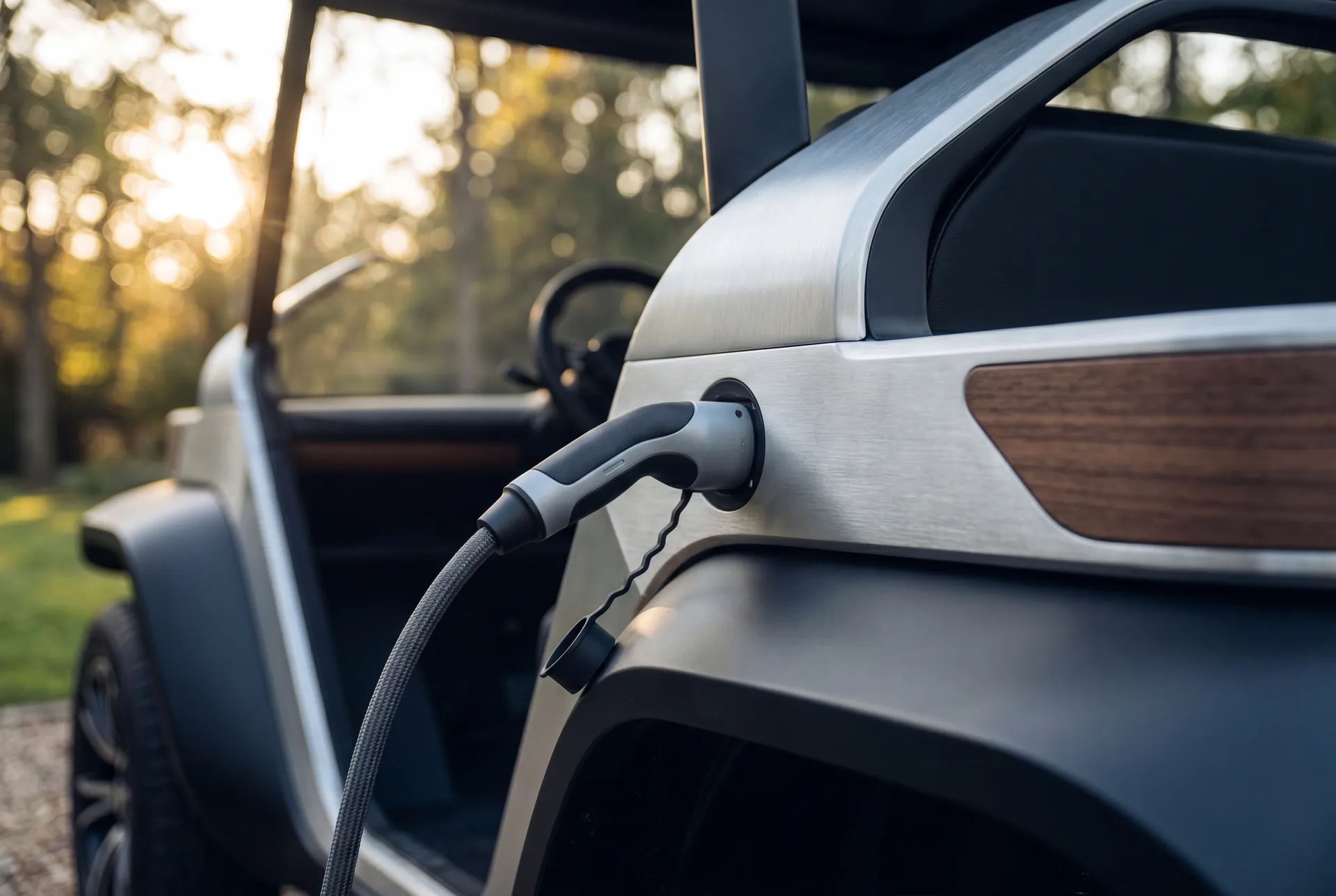
This is the strongest card combustion holds. You can refuel a petrol or diesel vehicle in minutes and keep going, which suits multi-shift operations and places with no practical charging. An electric vehicle needs time connected to a charger, so it depends on having a window, usually overnight, to recharge, and on you sizing the battery to cover a full shift with headroom.
- Electric
- Usually lower, tariff-dependent
- Petrol / diesel
- Higher, exposed to fuel prices
- Electric
- Near silent
- Petrol / diesel
- Loud, limits indoor and quiet-hours use
- Electric
- None, safe indoors
- Petrol / diesel
- Exhaust fumes, needs ventilation
- Electric
- Full torque instantly
- Petrol / diesel
- Builds with revs
- Electric
- Charge, best overnight
- Petrol / diesel
- Refuel in minutes
- Electric
- Fixed by battery, plan charging
- Petrol / diesel
- Long range, easy multi-shift
- Electric
- Minimal, no oil or exhaust
- Petrol / diesel
- Regular servicing of engine parts
- Electric
- Sites, estates, campus, indoor, near people
- Petrol / diesel
- Remote, very high mileage, heavy sustained duty
| Electric | Petrol / diesel | |
|---|---|---|
| Running cost per mile | Usually lower, tariff-dependent | Higher, exposed to fuel prices |
| Noise | Near silent | Loud, limits indoor and quiet-hours use |
| Emissions at point of use | None, safe indoors | Exhaust fumes, needs ventilation |
| Torque delivery | Full torque instantly | Builds with revs |
| Topping up | Charge, best overnight | Refuel in minutes |
| Range and shifts | Fixed by battery, plan charging | Long range, easy multi-shift |
| Routine maintenance | Minimal, no oil or exhaust | Regular servicing of engine parts |
| Best suited to | Sites, estates, campus, indoor, near people | Remote, very high mileage, heavy sustained duty |
The practical fix for range anxiety on a fleet is specification, not compromise. Choose a battery sized to your longest normal shift with margin, decide between lithium and lead-acid based on charging pattern and duty, and plan where and when vehicles charge. Where downtime is unacceptable across back-to-back shifts, combustion or a larger or swappable battery strategy may be the pragmatic answer.
Maintenance and reliability
An electric drivetrain has dramatically fewer moving parts. There is no oil to change, no filters, belts, clutch, spark plugs or exhaust, and regenerative braking can reduce brake wear. That means less scheduled servicing, fewer things to fail and less vehicle downtime, which matters as much as the cash saving when a unit is central to daily operations. The battery is the main long-term consideration, and its life depends on chemistry, charging discipline and how hard the vehicle is worked.
Combustion vehicles are a known quantity with a wide service network, but they carry the full servicing burden of an engine and its ancillaries. Whichever route you take, back it with proper support. Hawke provides UK-wide servicing, parts and a 24-hour priority call-out, plus a 3-year warranty, so a working fleet is not left stranded.
Upfront cost, resale and total cost of ownership
Electric utility vehicles usually cost more to buy, largely because of the battery. The counterweight is lower running and maintenance costs over the vehicle's life, so the fair comparison is total cost of ownership across the years you will keep it, not the sticker price alone. The more hours and miles the vehicle covers, the faster the lower running costs offset the higher purchase price.
Resale depends on condition, hours, battery health and demand, and the market for clean, quiet electric work vehicles is strengthening as more sites restrict noise and emissions. Because pricing is duty-specific, we quote rather than list, so the vehicle is configured to the job and costed honestly against how you will actually use it.
Get a like-for-like quote for your duty cycle
Tell us the hours, mileage, loads and terrain, and we will specify the right electric utility vehicle and cost it against your current running costs. We aim to beat any genuine like-for-like quote.
So which should you choose?
Choose electric if your vehicle works on a fixed site, an estate or campus, indoors, near the public or during quiet hours, does meaningful hours or mileage, and can charge overnight. In those conditions it is cheaper to run, quieter, cleaner and lower maintenance, and it usually wins on total cost of ownership. Keep petrol or diesel on the shortlist only where a real constraint demands it: remote operation with no charging, near-continuous multi-shift use, or very heavy sustained towing over long distances. Decide from the duty cycle, and the answer is usually clear.
Frequently asked questions
Are electric utility vehicles better than petrol?+
For most site, estate, campus and indoor work, yes: they are quieter, cheaper to run, emission-free at the point of use and need far less maintenance. Petrol or diesel can still be better for remote, very high-mileage or heavy sustained-duty work where fast refuelling and long unbroken range matter most.
Electric or diesel utility vehicle for towing?+
Electric motors give full torque instantly, which suits loaded pull-away and on-site tow-tractor work very well. For very heavy towing over long distances without a charging stop, a diesel can still make sense. Size the motor and battery to your heaviest routine task, not the occasional extreme.
How long does an electric utility vehicle take to charge?+
It depends on the battery size, charger and how depleted the pack is. Most fleets charge overnight so vehicles start each shift full. The key is sizing the battery to cover your longest normal shift with headroom and planning a reliable charging window.
Is an electric utility vehicle cheaper overall than petrol?+
Upfront cost is usually higher, but lower running and maintenance costs often make total cost of ownership favourable over the vehicle's working life. The more hours and miles it covers, the stronger that case becomes. Because it is duty-specific, we quote rather than list a fixed price.
Can electric utility vehicles work indoors?+
Yes. They produce no exhaust emissions at the point of use and run near silently, so they suit warehouses, food and pharmaceutical sites, hospitals and other indoor environments where a combustion engine would need ventilation and would be too loud.
Related solutions
Ready to explore what we build?
See the vehicles and the setting this applies to, or get a tailored quote built around your site.

Ready to find the right buggy?
Tell us how and where it will work and we will specify a vehicle and a tailored quote built around you. Every build comes with a 3-year warranty and a 24-hour priority call-out.
Our guides are written and reviewed by the Hawke Electric Vehicles team, the people who specify, build, deliver and support the vehicles. We focus on honest, practical advice and flag where a figure depends on the build rather than guessing.
More guides by Hawke