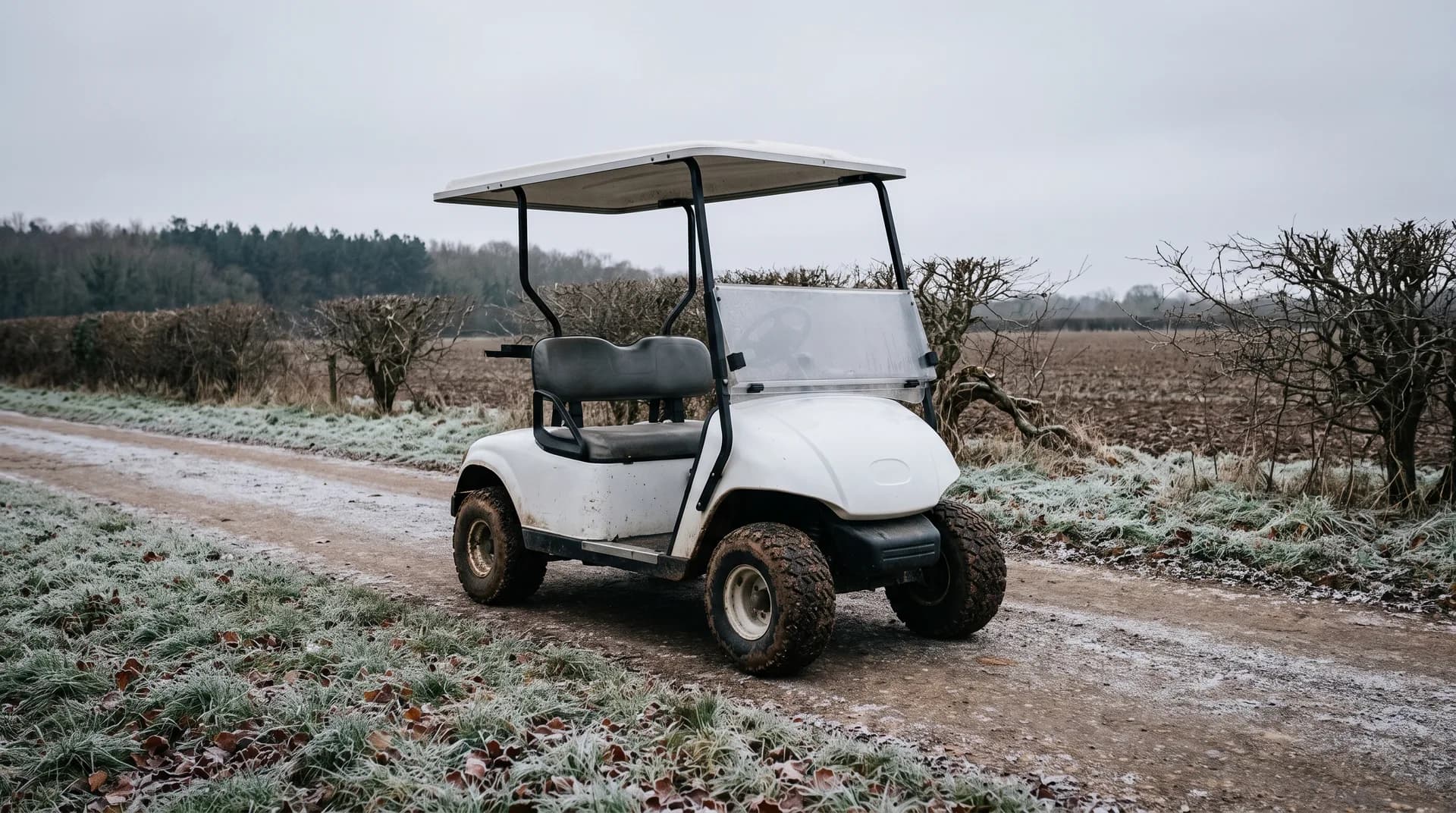
The best golf cart for a UK buyer is the one specified for the job, not the one with the longest brochure. A two-seater that suits a golfer is the wrong machine for a hotel shuttle run, and a resort people-mover is overkill on a nine-hole course. In the UK the words cart and buggy mean the same vehicle, we cover the vocabulary in our golf buggy vs golf cart guide, so this guide uses cart throughout and picks by use: course, estate, resort and utility. For each use we set out what the machine has to do, the specification that actually delivers it, and the checks worth making on any supplier before money moves.
- Pick by use, not by brand: course, estate, resort and utility carts are different specifications, not different badges.
- Demand verified specs in writing: usable range on your terrain, rated payload, gradient ability and battery chemistry.
- Lithium power suits most UK buyers now; lead-acid still makes sense for light, occasional use on a budget.
- A supplier is part of the product: warranty length, parts availability and a real service route matter as much as the cart.
- As a benchmark, our carts run from £11,500 for a two-seater to £23,500 for an eight-seater.
How to judge the best golf cart UK buyers can actually get
Ignore the marketing adjectives and score every candidate on four things. First, usable range: not the brochure figure, but what the cart covers on your ground, with your passengers, in a British winter. Second, build fit: seats, weather protection and tyres matched to where it will live. Third, battery chemistry: lithium charges faster, lasts longer and holds its range better than lead-acid, which is why it now dominates new sales, though lead-acid keeps entry prices down for light use. Fourth, support: a cart is a five-to-ten-year machine, so the warranty, the parts supply and the service arrangement decide what ownership feels like in year four. Any seller of golf carts for sale in the UK should put all four in writing without being chased.
Best golf cart by use: course, estate, resort, utility
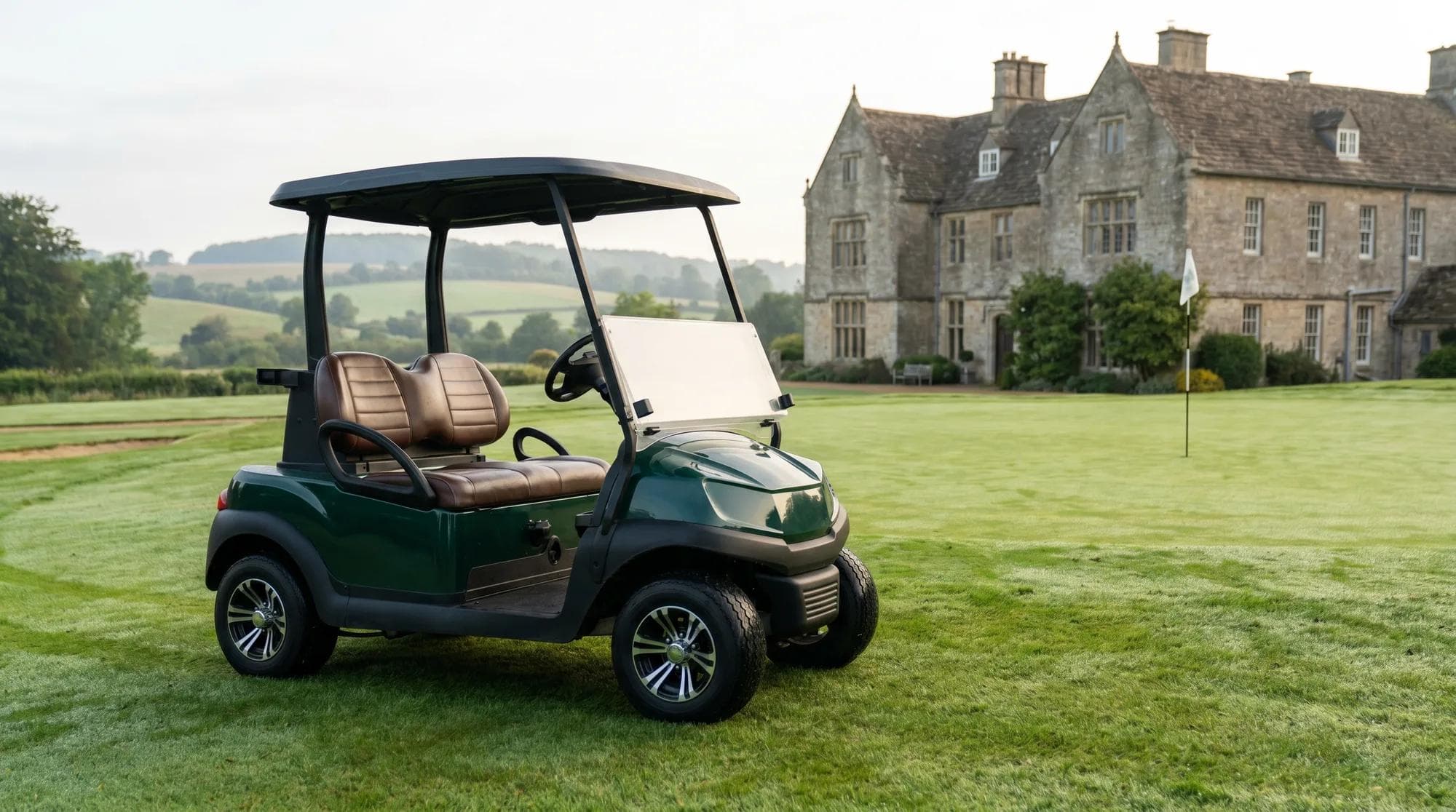
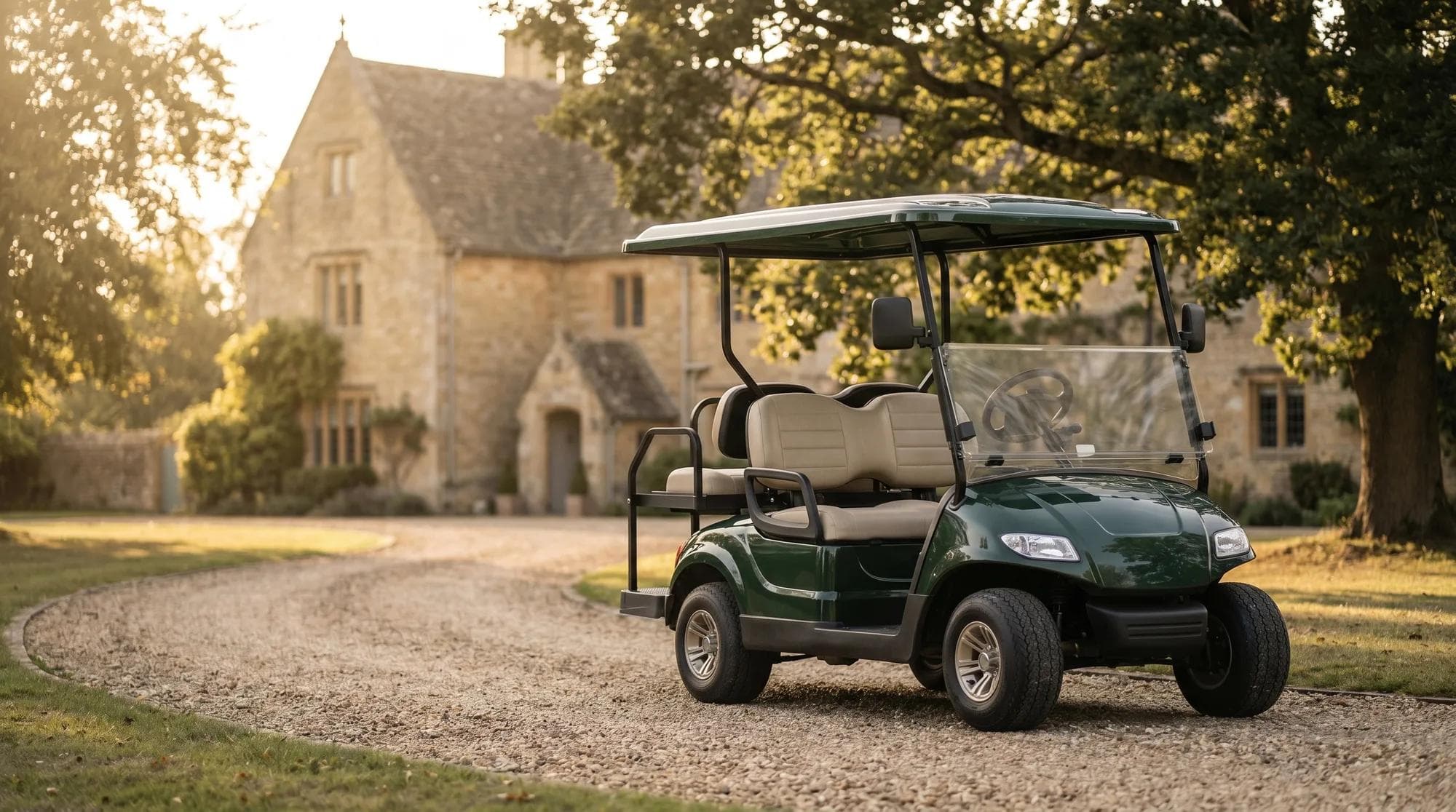
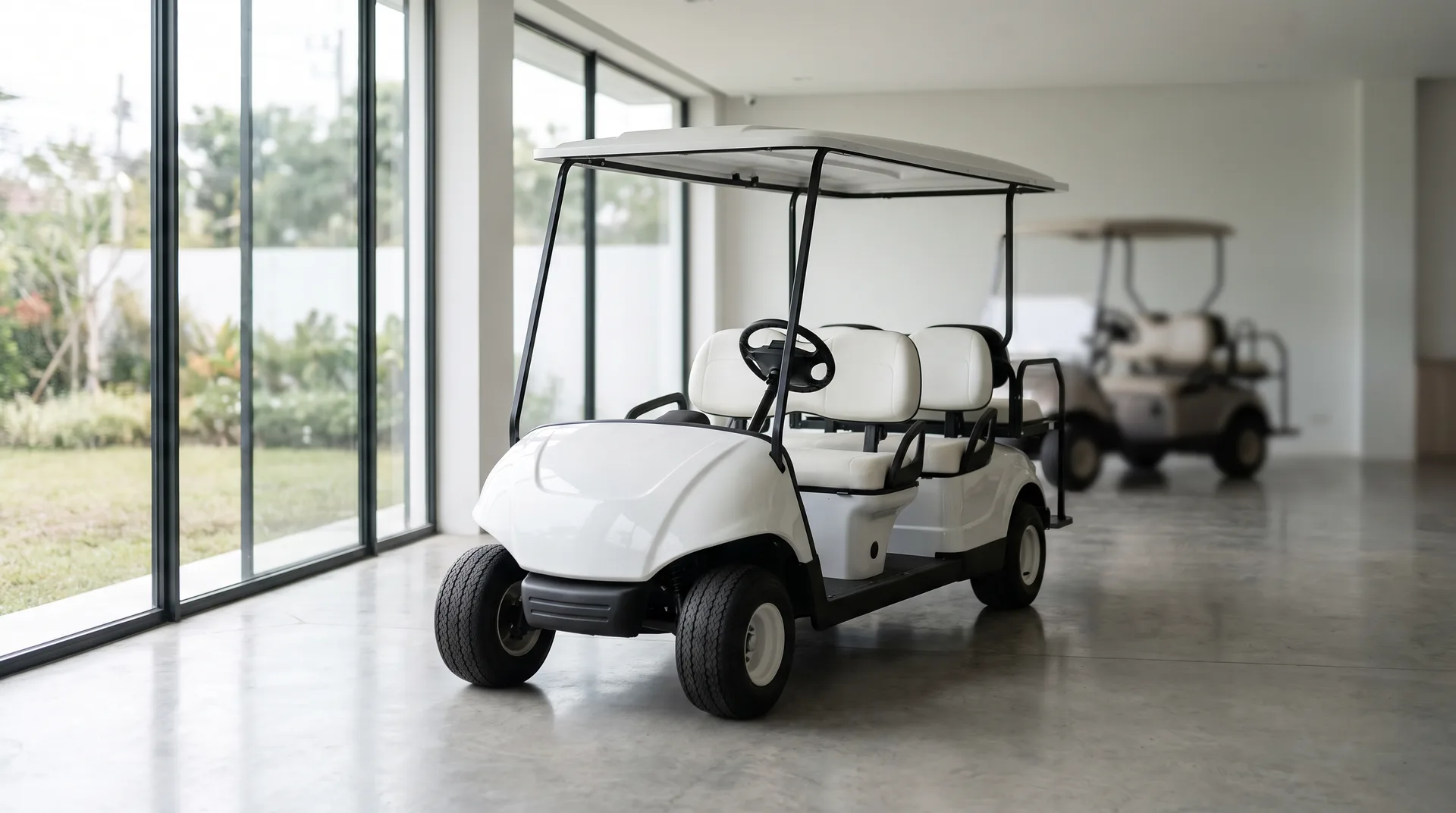
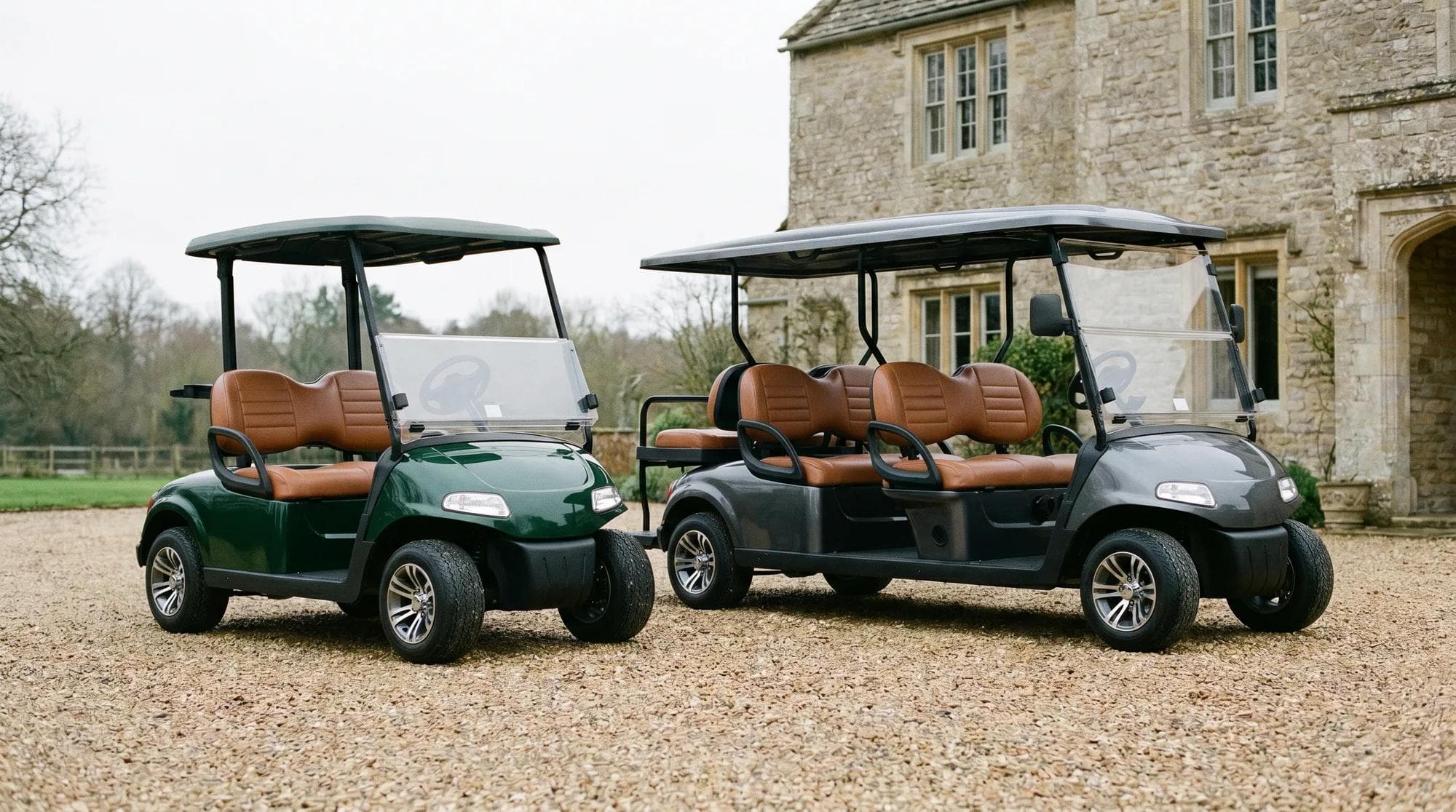
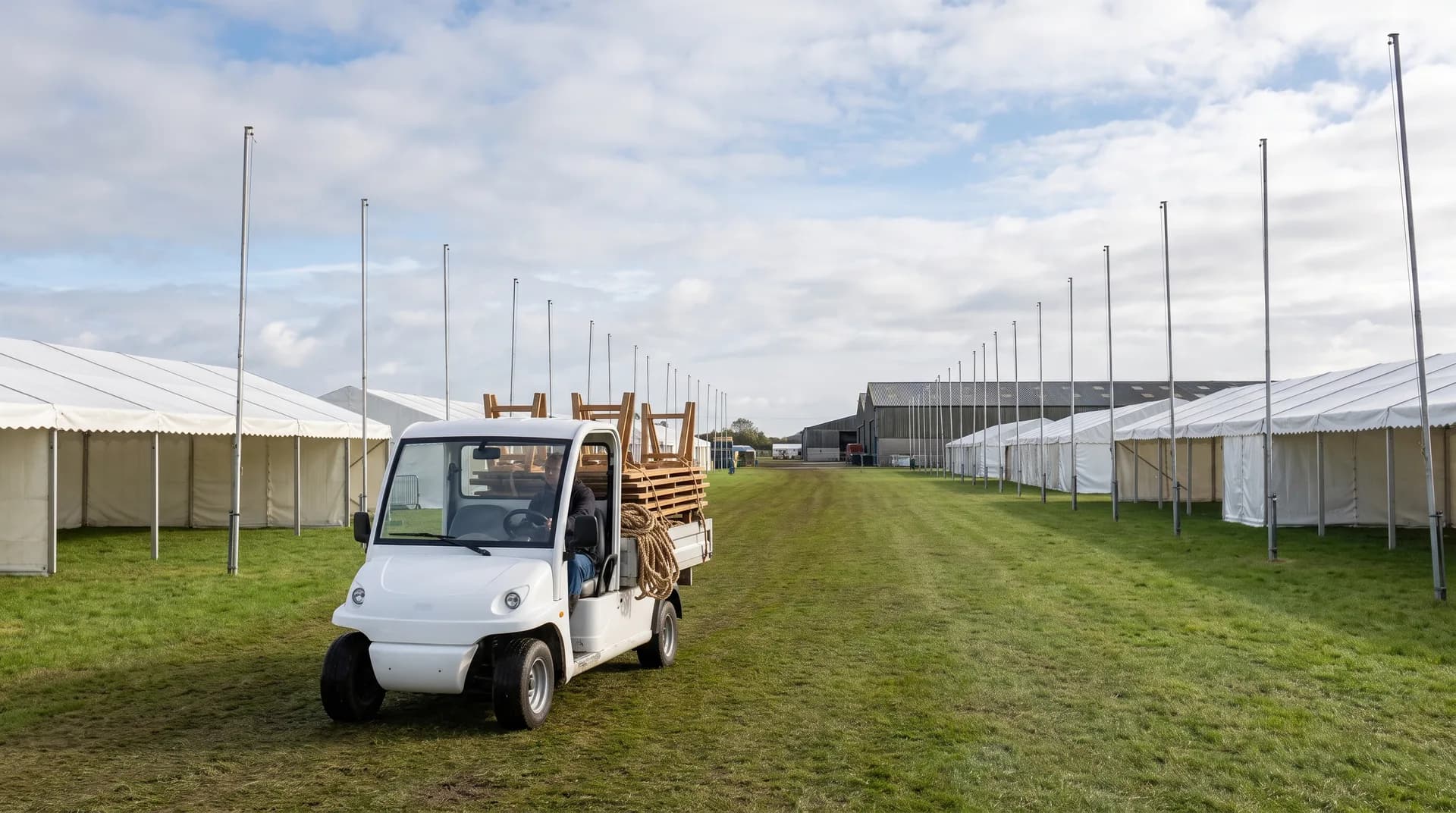
For the golf course, a two-seater is the classic answer: compact, easy to store and sized for a pair of golfers and their bags. Our S2 starts at £11,500 and a canopy is the one option almost every UK buyer should take. For a private estate or large garden, a four-seater earns its keep, because estate carts rarely carry only golfers: they carry guests, dogs, tools and shopping, so the extra bench and a small cargo well matter more than course credentials. Our S4 starts at £14,900. For hotels, resorts and venues moving people on a loop, six and eight seats are the working sizes, and weather protection stops being optional, a shuttle that cannot run in rain is not a shuttle. Our S6 and S8 start at £18,900 and £23,500. For grounds and site work, a pickup-bodied utility cart with a rated load bed replaces short van trips; our S2 Pickup starts at £15,900.
- Sensible size
- 2 seats
- Priorities
- Canopy, turf tyres, easy storage
- Sensible size
- 4 seats
- Priorities
- Cargo space, terrain tyres, weather kit
- Sensible size
- 6 to 8 seats
- Priorities
- Enclosed option, grab rails, all-day range
- Sensible size
- 2 seats + load bed
- Priorities
- Rated payload, towing, tough tyres
| Sensible size | Priorities | |
|---|---|---|
| Golf course | 2 seats | Canopy, turf tyres, easy storage |
| Estate or large property | 4 seats | Cargo space, terrain tyres, weather kit |
| Hotel, resort or venue | 6 to 8 seats | Enclosed option, grab rails, all-day range |
| Grounds and site work | 2 seats + load bed | Rated payload, towing, tough tyres |
The specs to verify before you shortlist anything
Get numbers, not adjectives. Ask for usable range at your typical load, and whether it was measured on flat ground or mixed terrain. Ask the rated payload including passengers, the gradient the cart will climb fully laden, and the battery chemistry, capacity and warranty as a separate line from the vehicle warranty. Ask charge time from flat and whether the charger runs from a standard 13-amp socket. If a seller cannot or will not answer these in writing, that tells you more than any showroom visit. Our electric golf buggy buyer's guide works through the full checklist question by question.
Supplier checks that matter as much as the cart
The UK market includes established dealers, importers of varying permanence and private sellers, and the same cart can be a good or bad buy depending on who stands behind it. Check how long the supplier has traded, whether they hold parts in the UK or order them per repair, what the warranty actually covers and for how long, and what happens when the cart needs a service or a fault develops: do they send an engineer, take the cart in, or leave it to you. A cheap cart from a seller who disappears is expensive. Our guide on choosing a golf buggy supplier sets out the questions in full, including the ones that make thin operations visibly uncomfortable.
What the best golf cart costs in the UK
As honest benchmarks from our own range: two-seaters from £11,500, four-seaters from £14,900, a pickup utility from £15,900, six-seaters from £18,900 and eight-seaters from £23,500, with options such as enclosed cabs, lithium upgrades on entry models and livery moving the figure. Across the wider market, used carts run from a few thousand pounds upwards depending on age and battery condition, and premium imported machines can go well beyond our figures. The useful discipline is to price the specification you need, then compare like for like, a cart quoted without the canopy, charger or delivery you require is not cheaper, it is incomplete.
Frequently asked questions
What is the best golf cart in the UK?+
The one specified for your use. For golf, a two-seater with a canopy. For an estate, a four-seater with cargo space. For a resort or venue, a six or eight-seater with weather protection. For grounds work, a pickup-bodied utility cart. Judge candidates on verified range, payload, battery and supplier support.
Is a golf cart the same as a golf buggy?+
Yes. Cart is the usual word in the US and increasingly common in the UK; buggy is the traditional British term. UK suppliers sell the same vehicles under both names.
Should I buy lithium or lead-acid?+
Lithium for most buyers: faster charging, longer life and steadier range, which usually makes it the better cost over the ownership period. Lead-acid still suits light, occasional use where the lower purchase price matters most.
How much should I budget?+
As a guide from our range: from £11,500 for a two-seater, £14,900 for a four-seater, £18,900 for a six-seater and £23,500 for an eight-seater. Used carts cost less but the battery condition decides whether they are a bargain.
Do I need a road-legal cart?+
Only if it will use public roads. Most UK carts live entirely on private land, where road registration is unnecessary. If your routes cross or use public roads, raise it at specification stage, because road-legal builds are a specific option, not a retrofit afterthought.
Get a cart specified for your use
Tell us where the cart will work and what it must carry, and we will recommend the right size and build, then price it to your specification.
Related solutions
Ready to explore what we build?
See the vehicles and the setting this applies to, or get a tailored quote built around your site.
Ready to find the right buggy?
Tell us how and where it will work and we will specify a vehicle and a tailored quote built around you. Every build comes with a 3-year warranty and a 24-hour priority call-out.
Our guides are written and reviewed by the Hawke Electric Vehicles team, the people who specify, build, deliver and support the vehicles. We focus on honest, practical advice and flag where a figure depends on the build rather than guessing.
More guides by Hawke