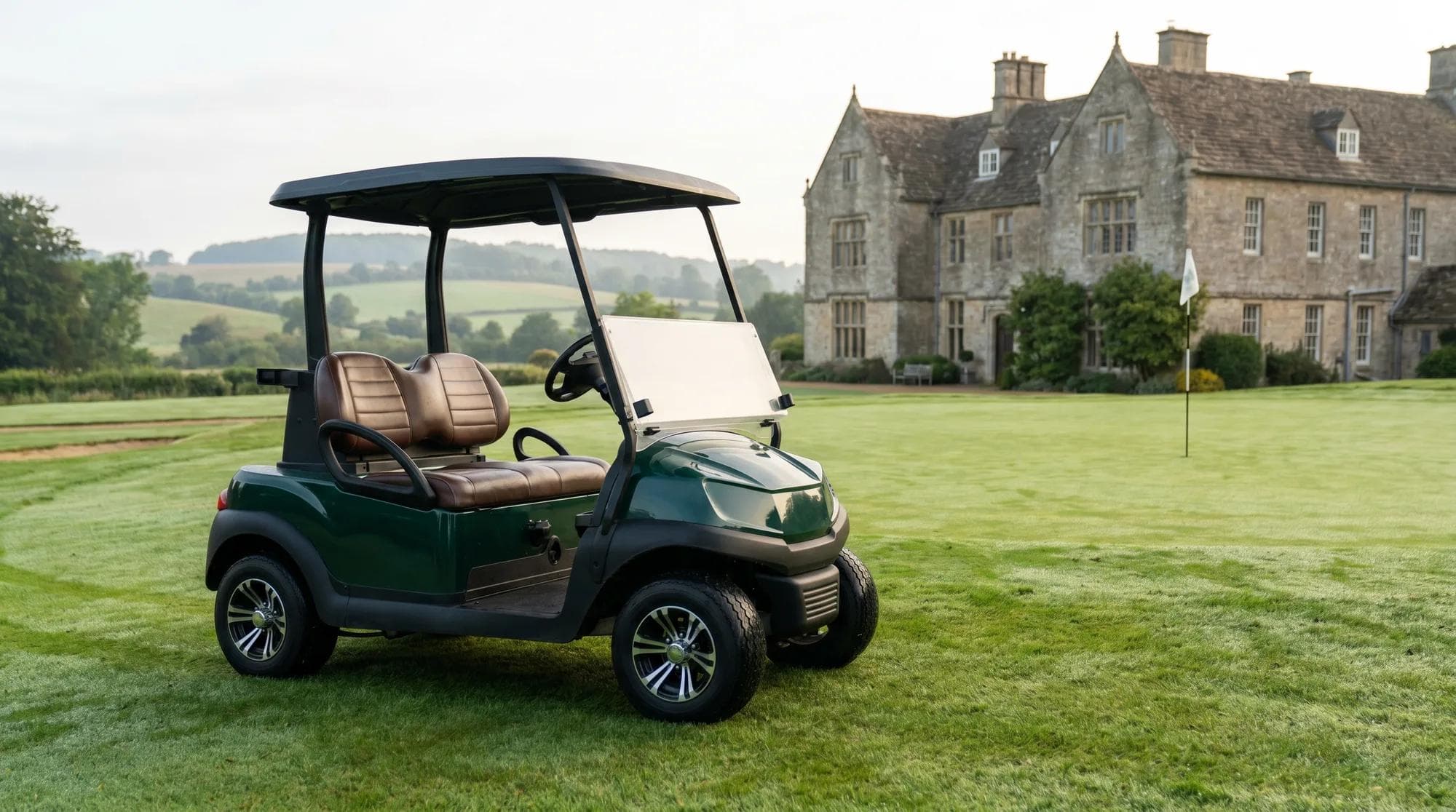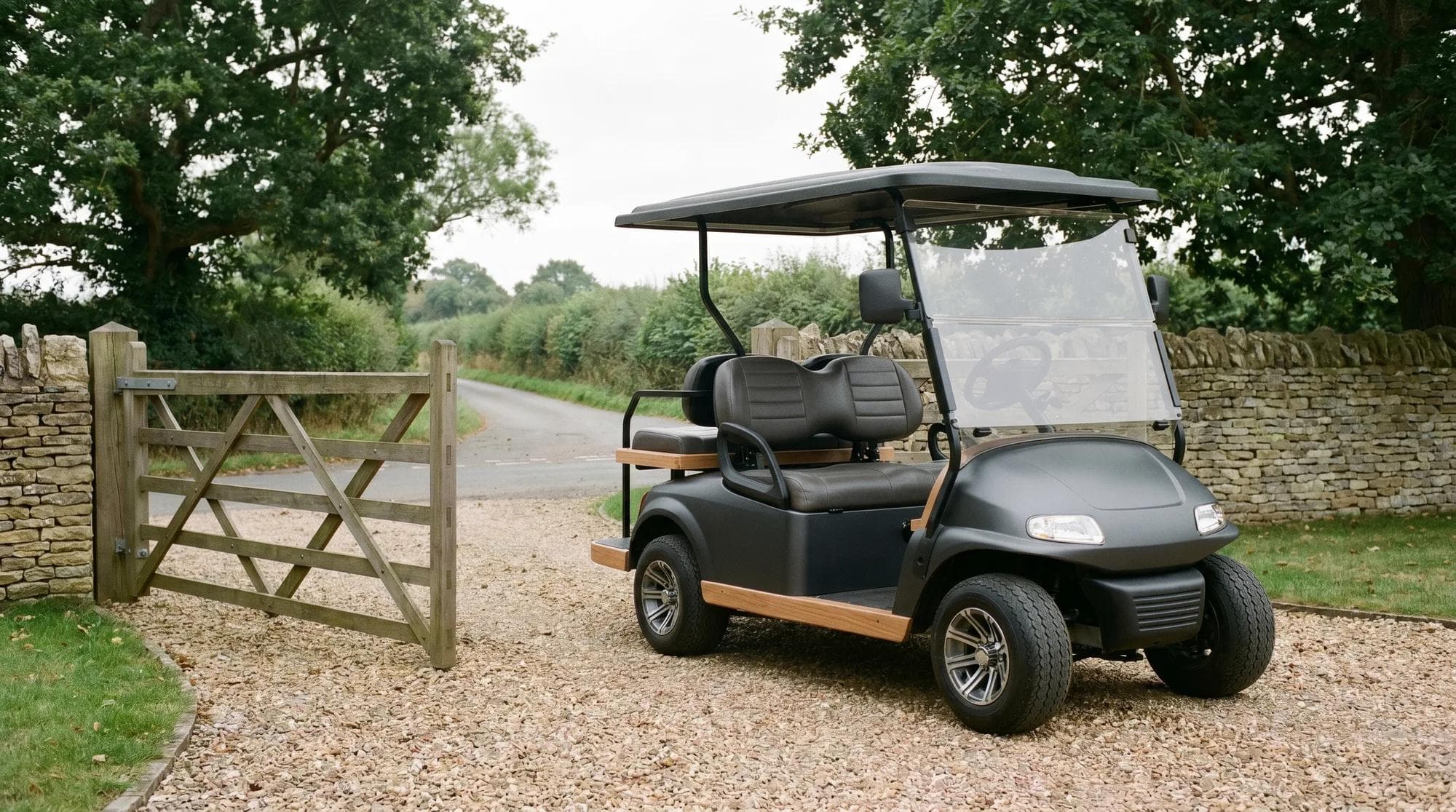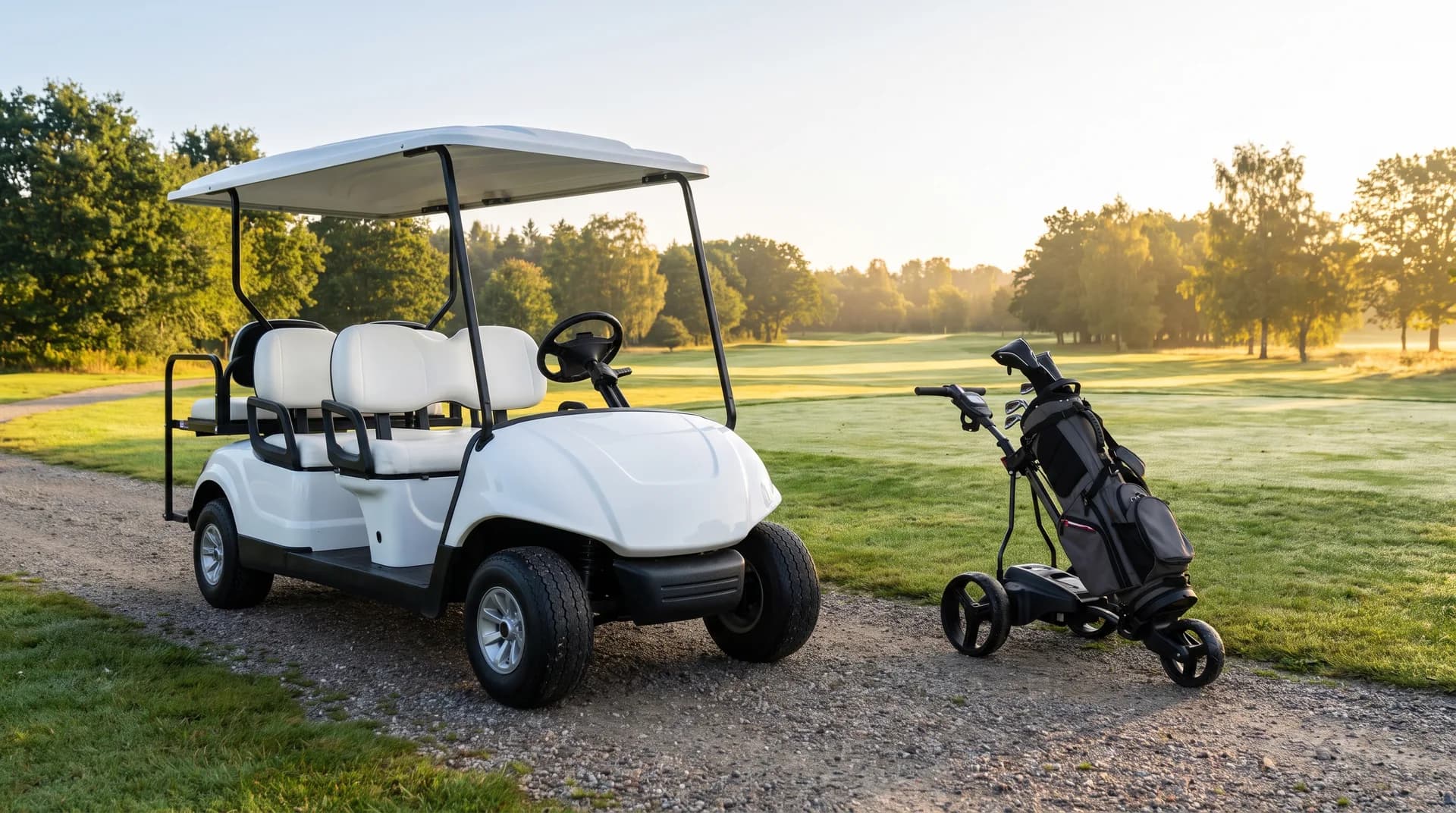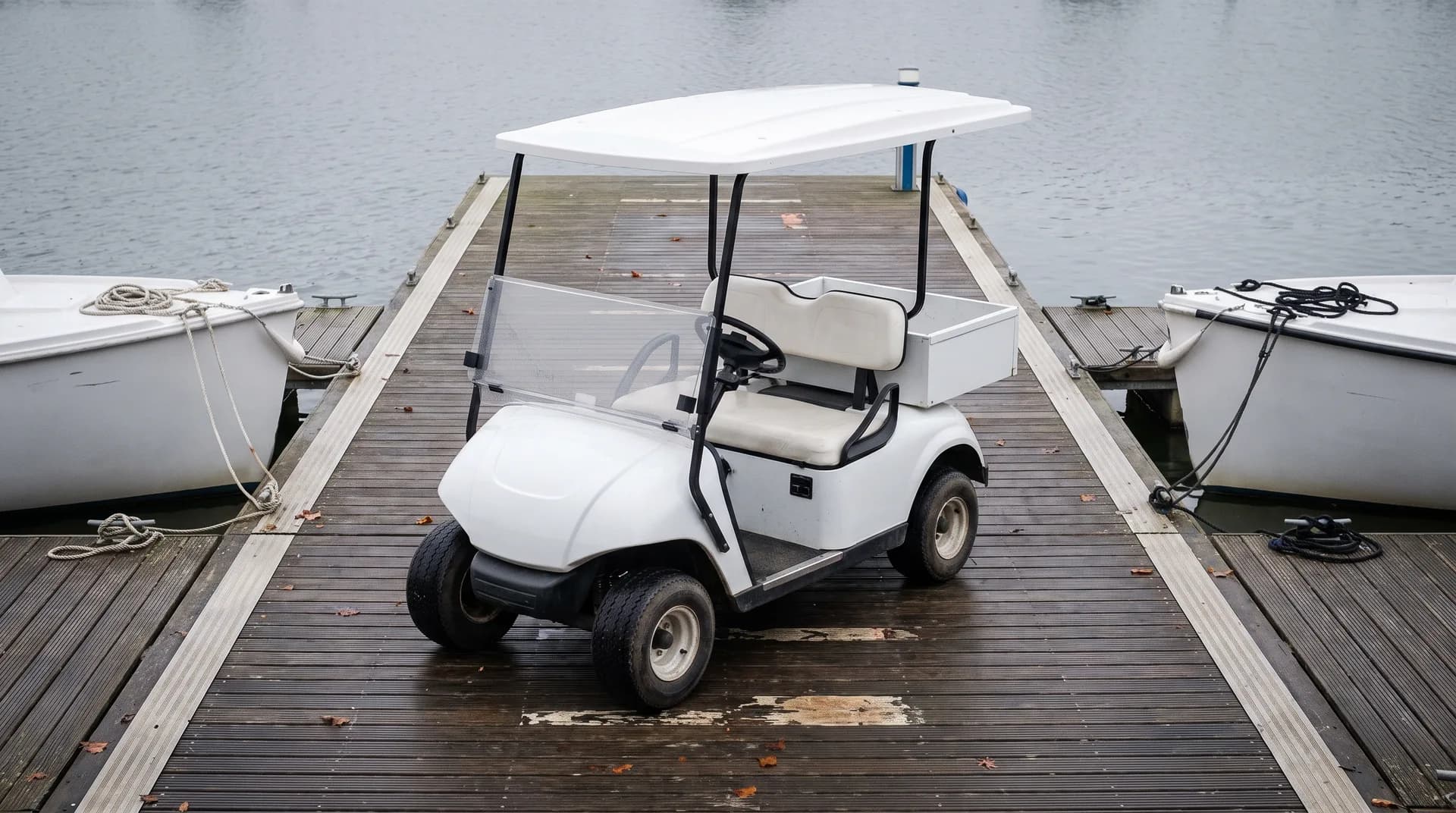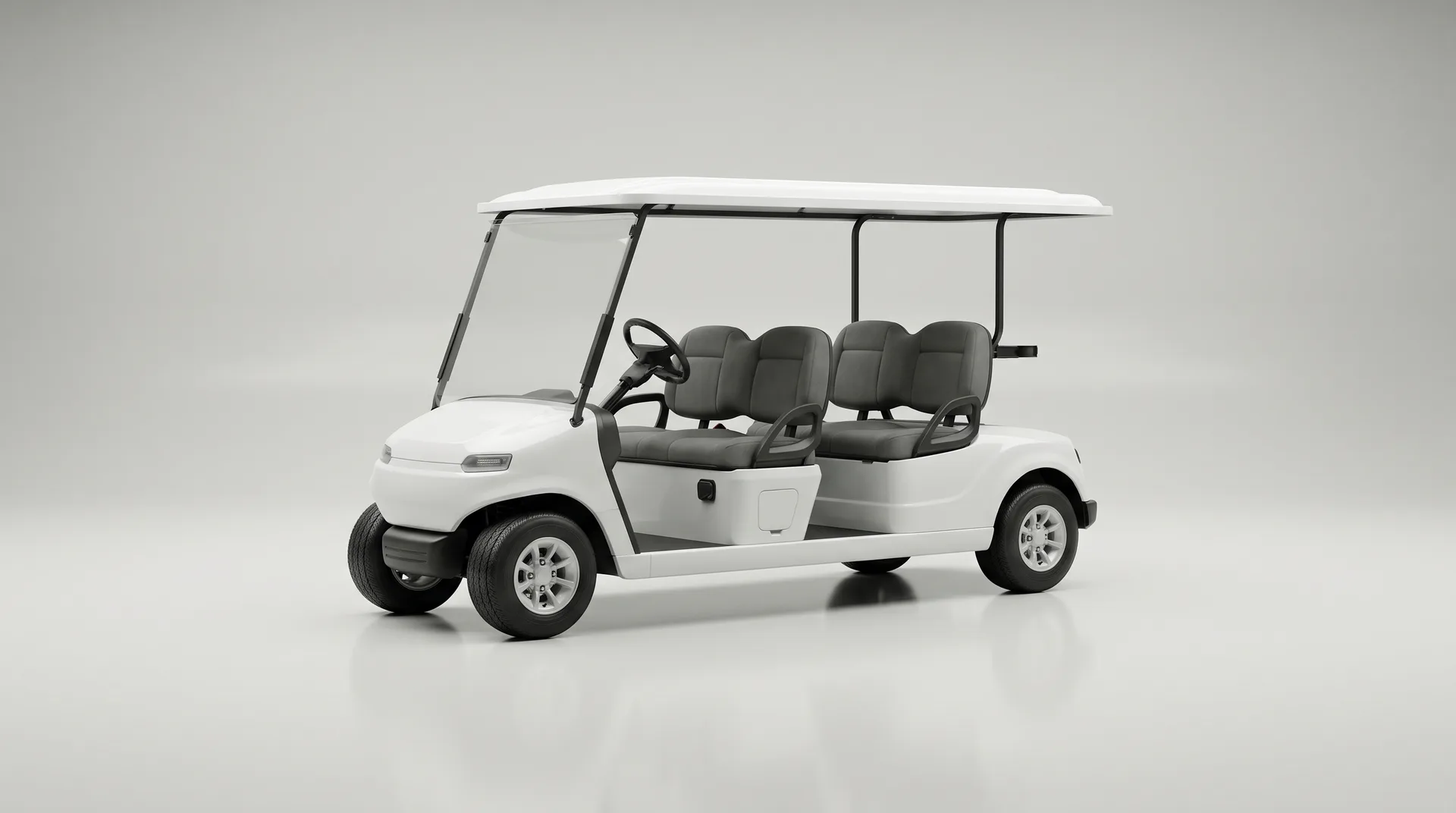
A golf buggy is a small, low-speed vehicle, usually electric, designed to carry people and their equipment short distances, originally two golfers and their bags around a course. That is the definition; the reality in 2026 is broader, because the same vehicles now shuttle hotel guests, patrol estates, carry tools around schools and move wedding parties between marquee and car park, and many buggies sold in the UK never see a fairway. This guide explains, in plain English, what counts as a golf buggy, the main types from two seats to eight, how electric compares with petrol, where you are allowed to drive one in the UK, and why the same machine is called a buggy, a cart or a golf car depending on who is speaking.
- A golf buggy is a low-speed, open-sided vehicle for carrying two to eight people short distances, typically at around 12 to 15 mph.
- The name is historical: hotels, estates, schools, venues and events are now major users alongside golf clubs.
- The main types are 2-, 4-, 6- and 8-seat passenger models, utility versions with load beds, and enclosed models with doors and heaters.
- Most new buggies in the UK are electric; petrol survives mainly in older stock and a few specialist uses.
- The default legal home of a golf buggy is private land; public-road use requires registration that most owners never need.
What is a golf buggy? The definition
Strip it back and a golf buggy is four small wheels, an electric motor or small petrol engine, bench seating for two or more, and an open-sided body with a canopy, built to move people at walking-pace-plus, typically 12 to 15 mph, over grass, paths and private roads. It is not a car: no crumple zones, no road-speed capability, no number plate by default. It is not a quad bike or UTV either, both of which trade passenger comfort for load and terrain ability. The buggy's defining virtues are simplicity and gentleness: easy to drive with two pedals and a forward-reverse switch, quiet, light enough to cross fine turf without damage, and cheap to run. If you want the deeper mechanical explanation, motors, controllers, batteries and regenerative braking, our companion guide on how electric golf buggies work covers it properly; this page stays with the plain-English picture.
The main types, from two seats to eight
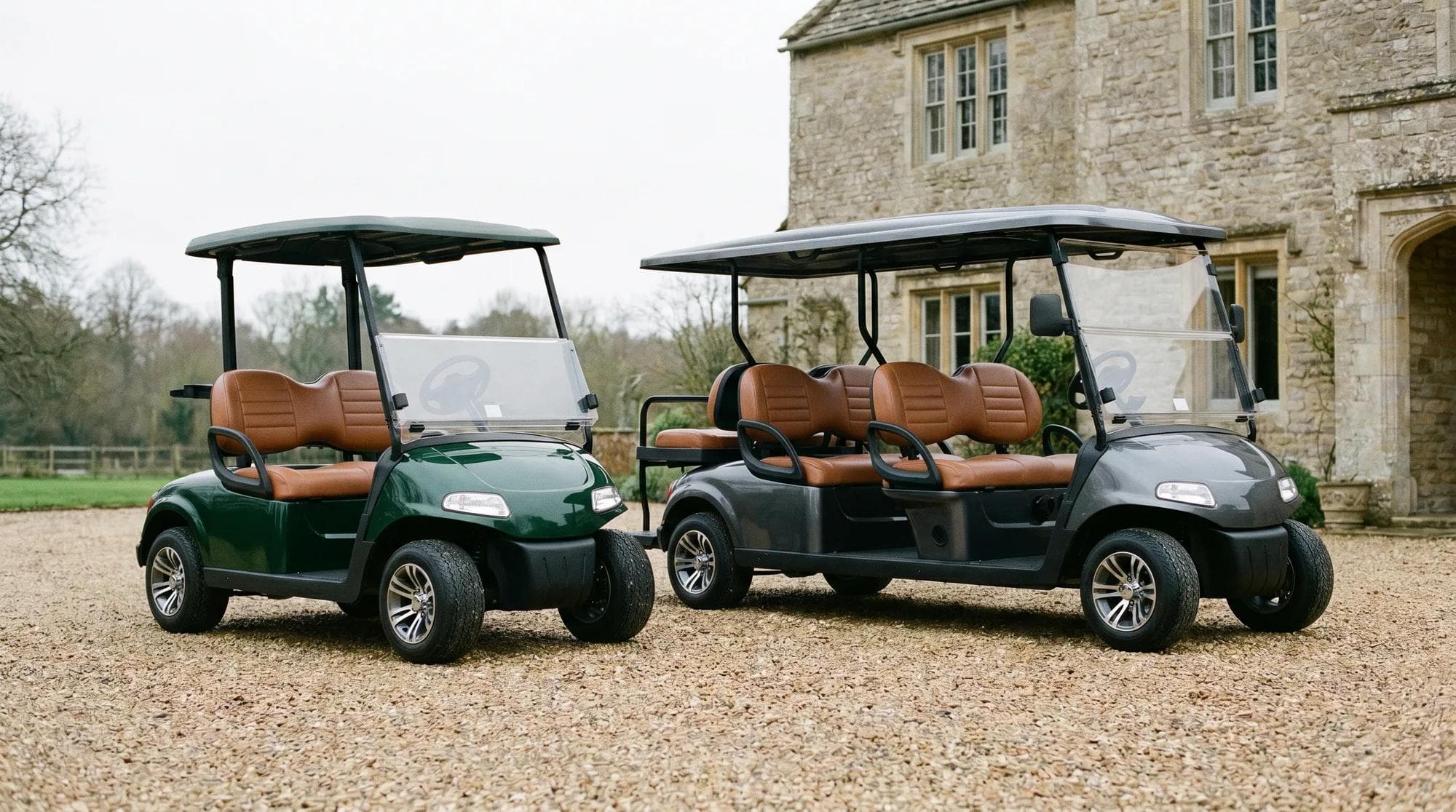
Modern ranges break down into a few clear families, and seat count is the spine of the choice. As a guide to the market, our own from-prices run from £11,500 for a 2-seater to £23,500 for an 8-seater, excluding VAT, with 4- and 6-seat models between; the full spread is browsable in our electric buggy range. The table below summarises who buys what.
- Typical use
- Golf rounds, couples, compact sites
- Good to know
- The classic layout; smallest footprint and lowest price
- Typical use
- Families, clubs, small venues
- Good to know
- Rear bench or flip-down cargo deck versions
- Typical use
- Hotels, venues, larger families
- Good to know
- Fifty per cent more capacity per trip than a 4-seater
- Typical use
- Shuttles at venues and resorts
- Good to know
- Effectively a small electric bus; one driver per group
- Typical use
- Estates, grounds teams, farms
- Good to know
- Load bed replaces rear seats; tows small trailers
- Typical use
- Winter and all-weather sites
- Good to know
- Doors, screens, sometimes heaters; year-round comfort
| Typical use | Good to know | |
|---|---|---|
| 2-seater | Golf rounds, couples, compact sites | The classic layout; smallest footprint and lowest price |
| 4-seater | Families, clubs, small venues | Rear bench or flip-down cargo deck versions |
| 6-seater | Hotels, venues, larger families | Fifty per cent more capacity per trip than a 4-seater |
| 8-seater | Shuttles at venues and resorts | Effectively a small electric bus; one driver per group |
| Utility / pickup | Estates, grounds teams, farms | Load bed replaces rear seats; tows small trailers |
| Enclosed | Winter and all-weather sites | Doors, screens, sometimes heaters; year-round comfort |
Electric vs petrol at a glance
Both drivetrains exist, but the market has largely decided. Electric buggies are quiet, clean at the point of use, cheap to run on overnight charging, and mechanically simple, with far fewer parts to service; their historic weaknesses, range and battery life, have mostly been answered by lithium batteries. Petrol buggies refuel in seconds and suit remote sites with no power supply, but they are noisier, smellier around guests, and carry engine servicing, and most UK courses and venues now prefer electric for exactly those reasons. For a buyer starting today the practical question is rarely electric versus petrol; it is lead-acid versus lithium within electric, which turns on budget and how hard the vehicle will work.
Where can you drive a golf buggy in the UK?
The default and overwhelmingly common answer is private land: golf courses, estates, hotel grounds, farms, campsites, schools and event sites, where no driving licence category, vehicle tax or MOT applies and the landowner's rules govern who drives. Public roads are a different matter, because a standard buggy is not road-registered, and using one on the highway without going through a registration process is not lawful. A minority of owners do register buggies for limited road use, crossings between parcels of land being the classic case, and the full picture, including the grey areas around footpaths and private road networks, is set out in our guide to whether golf buggies are road legal in the UK. For most buyers the summary is simple: on your own land or your club's, drive away; on the public road, assume no until you have done the paperwork.
Buggy, cart or golf car: does the name matter?
The machine is the same; the word depends on where you are standing. Britain and Ireland say golf buggy, North America says golf cart, and manufacturers sometimes prefer golf car to distinguish ride-on vehicles from push and pull trolleys, which British golfers, confusingly for Americans, also call carts. None of this changes the vehicle or the rules, but it does change search results and paperwork, so it is worth knowing all three terms when comparing suppliers or reading imported documentation. The full etymology and the regional quirks are covered in our short guide to golf buggy versus golf cart. One more near-neighbour to keep distinct: a golf trolley carries only the bag while you walk, powered or not, and is a different product entirely.
Frequently asked questions
What is a golf buggy in one sentence?+
A small, low-speed vehicle, usually electric, that carries two to eight people and their kit short distances around private land, originally and still commonly a golf course.
How fast does a golf buggy go?+
Typically around 12 to 15 mph. Speed is deliberately limited for safety on foot-traffic-heavy sites, and many operators limit their fleets further around guests and pedestrians.
Do you need a licence to drive a golf buggy?+
Not on private land, where site rules decide who may drive; clubs and venues commonly set minimum ages. Public-road use requires the vehicle to be registered, at which point normal driver licensing applies.
Is a golf buggy the same as a golf cart?+
Yes. Buggy is the British term, cart the American; golf car appears in manufacturer and regulatory language. The vehicle itself is identical.
How much does a golf buggy cost in the UK?+
New electric buggies from established suppliers typically start in the low teens of thousands; our range runs from £11,500 for a 2-seater to £23,500 for an 8-seater, excluding VAT. Used prices vary widely with battery age and condition.
See what a modern buggy looks like
Browse the range from 2-seat runarounds to 8-seat shuttles and utility models, or tell us what you need moving and we will recommend and price the right vehicle.
Related solutions
Ready to explore what we build?
See the vehicles and the setting this applies to, or get a tailored quote built around your site.
Ready to find the right buggy?
Tell us how and where it will work and we will specify a vehicle and a tailored quote built around you. Every build comes with a 3-year warranty and a 24-hour priority call-out.
Our guides are written and reviewed by the Hawke Electric Vehicles team, the people who specify, build, deliver and support the vehicles. We focus on honest, practical advice and flag where a figure depends on the build rather than guessing.
More guides by Hawke