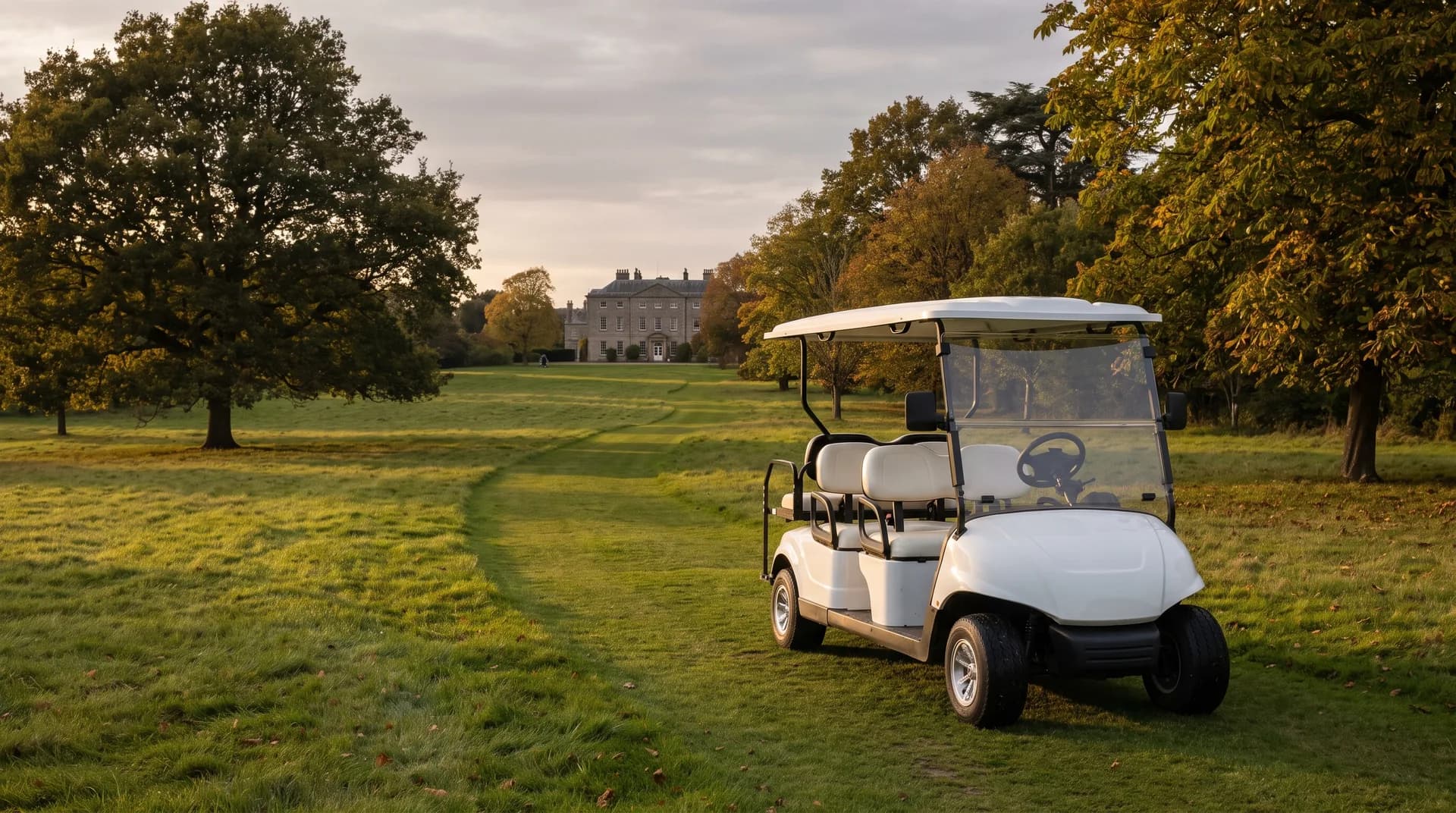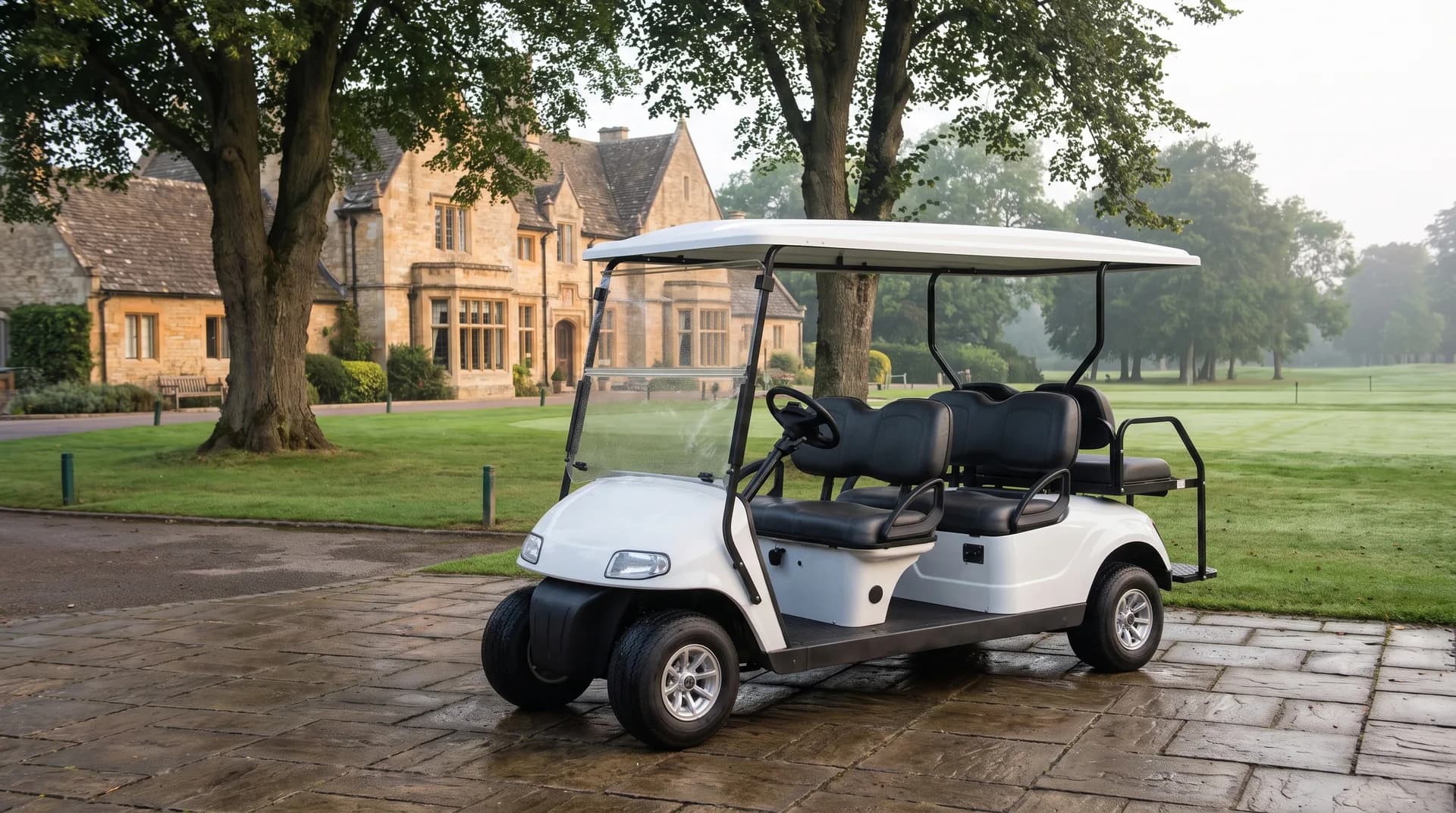
Most used golf carts in the UK come from one of three places: golf club and resort fleets being replaced, commercial auctions clearing those same fleets, and private owners selling on. Each source has a different risk profile, and in every case the battery matters more than the bodywork, because a tired battery pack can cost a meaningful slice of the cart's value to replace. This is a guide to buying well in the used market itself; if you are still weighing whether to buy used at all, our new vs used golf buggy guide covers that decision, and this one assumes you have made it.
- The three main sources are ex-club and resort fleets, commercial auctions and private sales, in roughly descending order of predictability.
- Inspect the battery before anything else: age, chemistry, charge behaviour and a loaded test drive tell you most of what matters.
- Fleet carts have high hours but usually documented servicing; private carts vary from pampered to neglected.
- A dealer-sold used cart costs more than the same cart privately, and the difference buys inspection, recourse and often a warranty.
- Price the cart as vehicle plus battery: a cheap cart needing a new pack is often dearer than an honest one that does not.
Where used golf carts in the UK come from
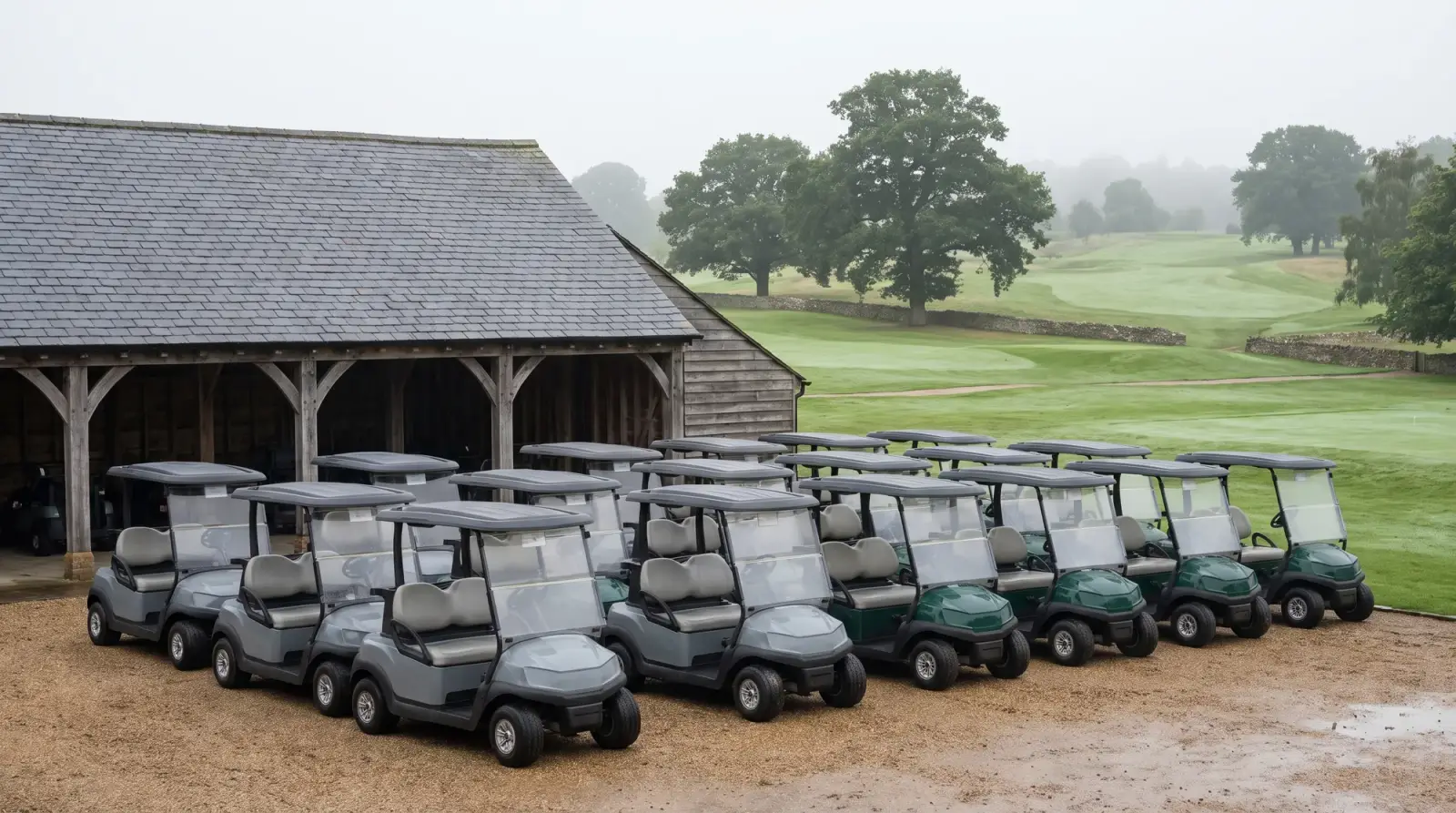
Golf clubs and resorts run carts hard for four to six seasons, then replace the fleet, and those vehicles enter the market either through dealers who refurbish them or through auction. Fleet carts carry high hours and cosmetic wear, but they were usually charged nightly on a routine and serviced on schedule, which is better history than most private machines can prove. Auctions offer the lowest headline prices with no recourse and often no chance to test drive, fine for a confident buyer with a spare battery budget, risky for anyone else. Private sales sit in between: some carts have led gentle single-owner lives on one lawn, others have been left flat in a shed for two winters, which is quietly lethal for lead-acid packs. Our guide to buying an ex-club buggy digs into the fleet route specifically.
Battery first: the inspection that decides everything
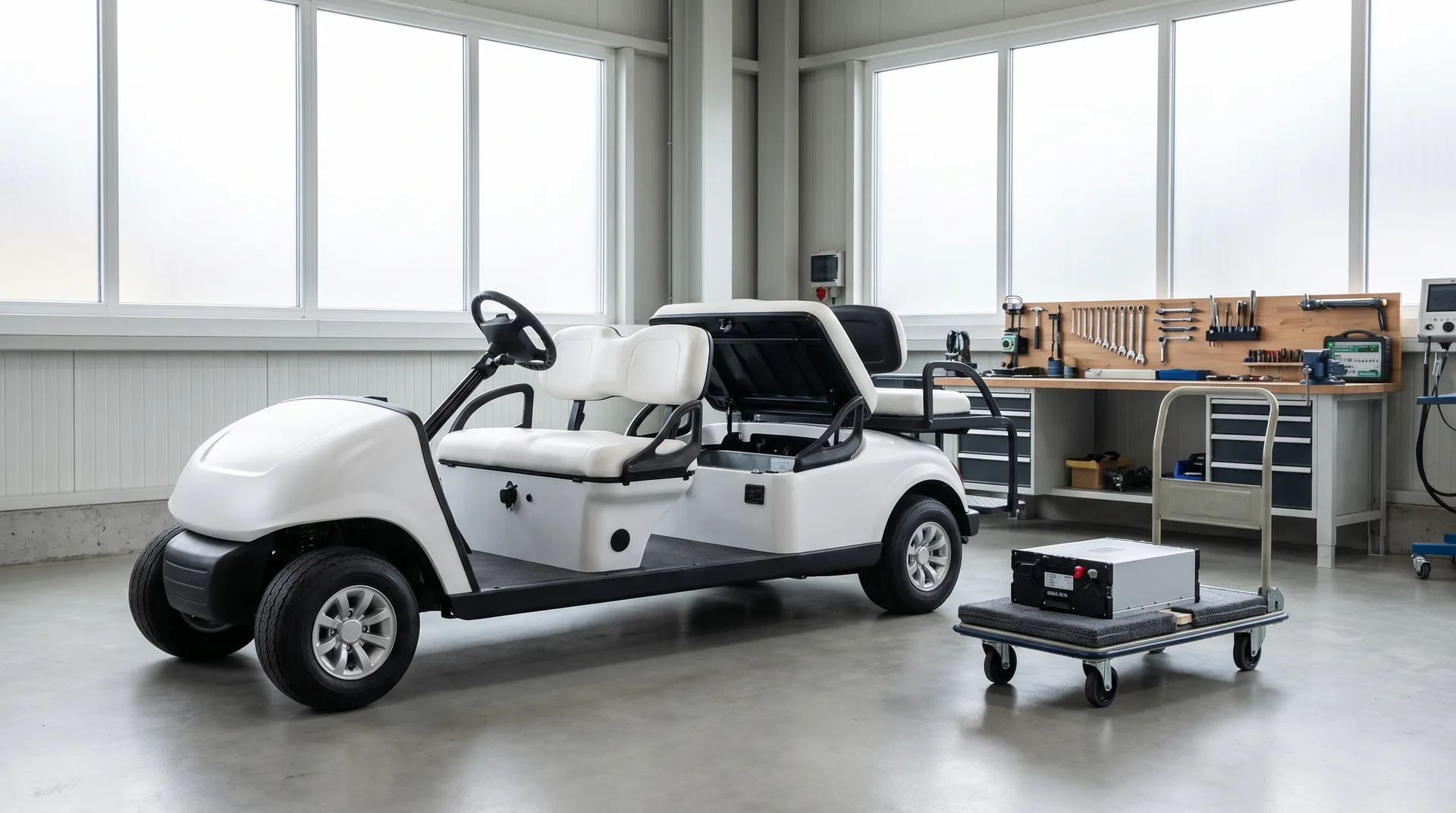
Start every viewing at the battery compartment. Ask the pack's age and chemistry: lead-acid packs typically give four to six years of regular use, lithium considerably longer, so a six-year-old cart on its original lead-acid pack is due a replacement bill whatever the seller says. Look for corrosion on terminals, mismatched batteries within a pack, a sign of piecemeal replacement, and bulging cases. Then test drive loaded, two adults, including a hill if you can find one: a healthy cart pulls a gradient without the power fading mid-climb, and a pack that sags under load will only get worse. Watch the charger connect and start charging before you pay. If the battery fails inspection, the cart is not necessarily a walk-away, but reprice it: our battery replacement cost guide gives realistic figures to deduct.
What used golf carts cost in the UK by age
Prices vary with brand, specification and above all battery state, so treat these as honest ranges rather than a price list. Late-model carts two to three years old typically fetch a clear majority of their new price, because the battery has life left and the saving over new is real but modest. Mid-life carts of four to seven years are the volume of the market, commonly low-to-mid thousands, and this is where battery diligence pays most, since the pack may be original and near the end. Older carts beyond eight years can be genuinely cheap, high hundreds to low thousands, and a mechanically sound older cart with a fresh lithium conversion is often the pick of the classifieds, while the same cart on its original pack is a project. Dating a cart accurately helps you negotiate; our what year is my golf buggy guide shows how to read serial numbers.
- Typical asking range
- Most of the new price
- What to expect
- Battery healthy, saving modest, least risk
- Typical asking range
- Low to mid £ thousands
- What to expect
- Original pack may be near end of life, inspect hard
- Typical asking range
- High hundreds to low £ thousands
- What to expect
- Price as vehicle plus new battery unless converted
| Typical asking range | What to expect | |
|---|---|---|
| 2 to 3 years | Most of the new price | Battery healthy, saving modest, least risk |
| 4 to 7 years | Low to mid £ thousands | Original pack may be near end of life, inspect hard |
| 8+ years | High hundreds to low £ thousands | Price as vehicle plus new battery unless converted |
Dealer, auction or private: who to buy from
A dealer-refurbished cart costs the most of the three routes, and the premium buys real things: the pack has been tested or replaced, faults fixed before sale, some warranty attached, and a business you can go back to. Private sales suit buyers who can inspect confidently and want a better price; the discipline is to verify everything yourself, because there is no recourse once cash changes hands. Auctions are the sharp end: lowest prices, sold-as-seen, and best treated as a source for buyers who assume every pack needs replacing and bid accordingly. Whichever route you take, compare what you are being offered against new before committing: our current UK golf carts start at £11,500 for a new two-seater with a full warranty, and a used cart only makes sense priced honestly against that.
Frequently asked questions
How much is a used golf cart in the UK?+
Broadly: two-to-three-year-old carts fetch most of their new price, four-to-seven-year-old carts commonly sit in the low-to-mid thousands, and older carts run from high hundreds up. Battery condition moves any of these figures more than age does.
Are ex-golf-club carts a good buy?+
Often, yes. They carry high hours and cosmetic wear, but were usually charged and serviced on a routine, which beats an unknown private history. Buy refurbished from a dealer for lower risk, or at auction for lower price and higher risk.
What should I check first on a used cart?+
The battery: age, chemistry, corrosion, mismatched cells and behaviour under load on a test drive with passengers aboard. Then tyres, brakes, steering play and charger operation. The battery verdict sets the price for everything else.
Is a lithium-converted older cart worth more?+
Usually. A sound older cart with a professionally fitted lithium pack has had its most expensive consumable renewed and gains range, charging speed and life. Ask who did the conversion and what warranty covers the pack.
Should I just buy new instead?+
If the used carts you can find need battery work, the gap narrows fast. Price the used cart as vehicle plus any pack it needs, then compare against a new cart with a full warranty before deciding.
What paperwork should come with a used golf cart?+
Ask for the service records, any battery purchase invoice with its date, the charger, keys and the manual. The serial number lets you verify the cart's true year against the seller's claim, and a fleet machine should come with its maintenance log. No paperwork at all is a pricing point, not necessarily a walk-away.
Weigh a used cart against new, honestly
Tell us what you have found on the used market and what it needs to do, and we will give you a straight view against a new equivalent, including a like-for-like quote.
Related solutions
Ready to explore what we build?
See the vehicles and the setting this applies to, or get a tailored quote built around your site.
Ready to find the right buggy?
Tell us how and where it will work and we will specify a vehicle and a tailored quote built around you. Every build comes with a 3-year warranty and a 24-hour priority call-out.
Our guides are written and reviewed by the Hawke Electric Vehicles team, the people who specify, build, deliver and support the vehicles. We focus on honest, practical advice and flag where a figure depends on the build rather than guessing.
More guides by Hawke