Most people buy an electric buggy once, so it's worth getting right. The good news is that the decision is simpler than it looks. Forget the spec-sheet noise for a moment and answer four questions: how many people or how much kit you need to move, which battery suits your use, whether any part of your route touches a public road, and what you want to spend. Everything else, the wheels, the roof, the colour, the trim, follows from those. This guide takes them one at a time, in plain English, with real UK prices.
- Decide seats first: four is the all-rounder most buyers choose, with two, six, eight and utility options around it.
- Lithium costs more up front than lead-acid but usually wins on total cost for regular use.
- Standard buggies are private-land only; road use needs a purpose-built, registered vehicle.
- Every buggy is built to order, so the price follows your spec; finance and leasing are available.
- Buying new gives a known battery, a full 3-year warranty and a build specified for you.
Who buys an electric buggy, and why
The buyers we talk to fall into a few camps. There are private owners with a long drive or a big garden who are tired of walking, or of starting a cold quad on a wet morning. There are golf clubs and estates running a working fleet. There are resorts, holiday parks and event teams moving guests and crew. And there are grounds and facilities teams who just need to carry tools and people across a large site quietly. The common thread is that a good buggy makes a tedious job effortless, and an electric one does it with almost no noise, no fumes and very little to service.

Start with the job, not the buggy
The single most useful thing you can do before you spend a penny is write down what the vehicle will actually do in a normal week. How many people at once? How far in a day? Tarmac, gravel, grass, or a bit of everything? Any towing or carrying? Indoors, outdoors, or both? This sounds obvious, but it's the step most people skip, and it's the one that stops you buying too much buggy or too little. A two-seater that spends its life on flat resort paths has very different needs from a utility vehicle hauling logs up a wet track.
Two, four, six or eight seats: which size?
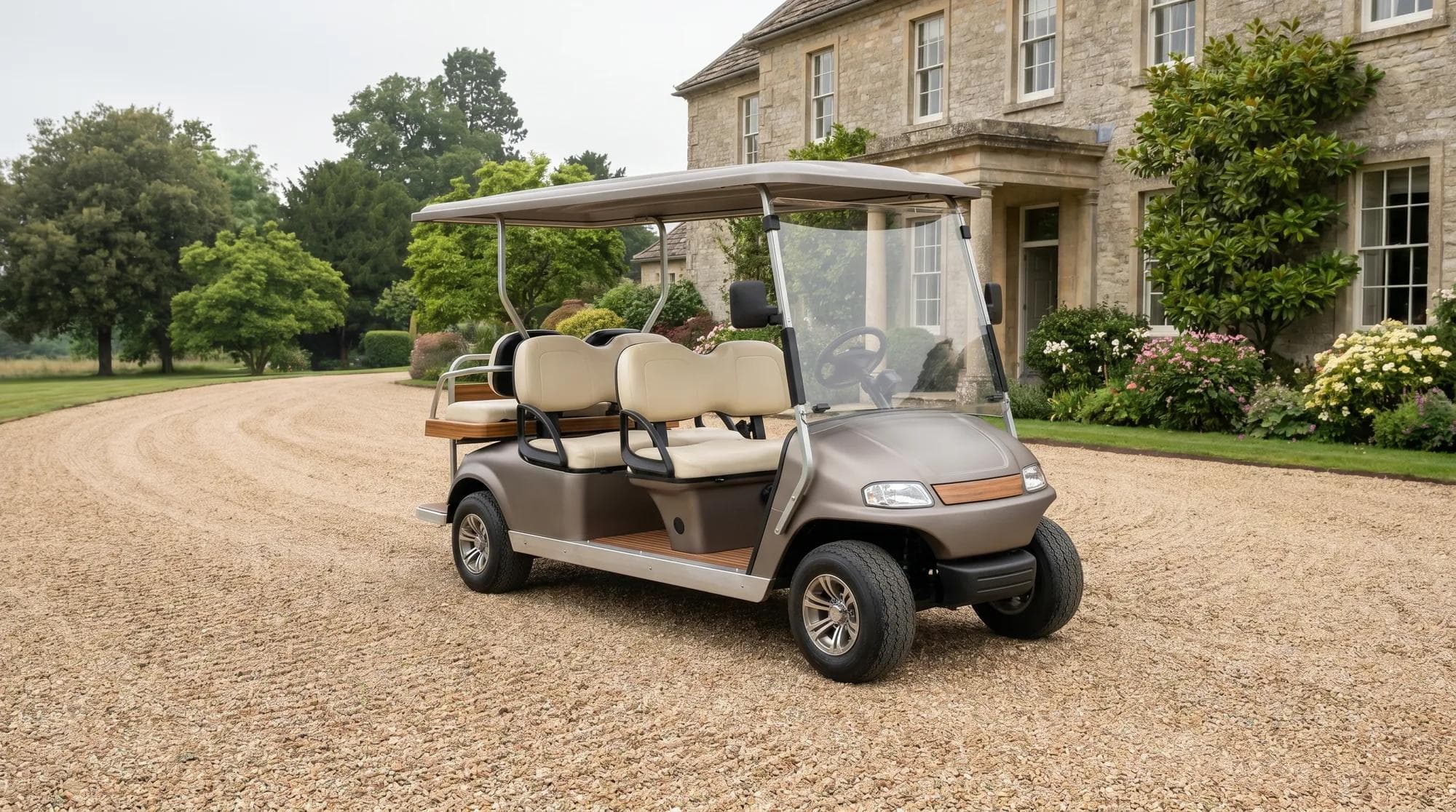
Seat count is the biggest single decision, because it sets the platform, the price and the character of the vehicle. The four seater is the all-rounder and the one most people end up choosing. Here is how the range lines up.
- Best for
- Couples, compact estates, a single staff member
- Best for
- The popular all-rounder: families, members, guests
- Best for
- Grounds, cargo, towing and year-round work
- Best for
- Larger groups and resort runs
- Best for
- Shuttle and group transport
- Best for
- Anything you can specify
| Best for | |
|---|---|
| Two seater (the Hawke S2) | Couples, compact estates, a single staff member |
| Four seater (the Hawke S4) | The popular all-rounder: families, members, guests |
| Utility (the Hawke S2 Pickup) | Grounds, cargo, towing and year-round work |
| Six seater (the Hawke S6) | Larger groups and resort runs |
| Eight seater (the Hawke S8) | Shuttle and group transport |
| Bespoke | Anything you can specify |
If you're genuinely torn between two sizes, go up rather than down. The cost difference is smaller than the regret of a buggy that's always one seat short. You can compare the full line-up and specs on our range page to see how the sizes stack up against your use.

Find the perfect buggy for your business
From a compact two seater to people movers and the Hawke S2 Pickup utility, compare the full range and specs.
The specs that actually matter
Spec sheets love to list numbers that rarely change a real buying decision. A handful genuinely do, so focus on these and let the rest be a tie-breaker.
- Battery type and capacity. This is the heart of the vehicle and the biggest lever on range, life and cost. More on it below.
- Real-world range. Ask what the buggy does on a realistic day in your conditions, not a flat-track maximum. Hills, cold and a full load all take their toll.
- Payload and towing, if you'll carry or pull anything. Be honest about the heaviest load, not the average.
- Roof and weather protection. In the UK this matters more than people admit. A proper roof and screen turn a fair-weather toy into a year-round tool.
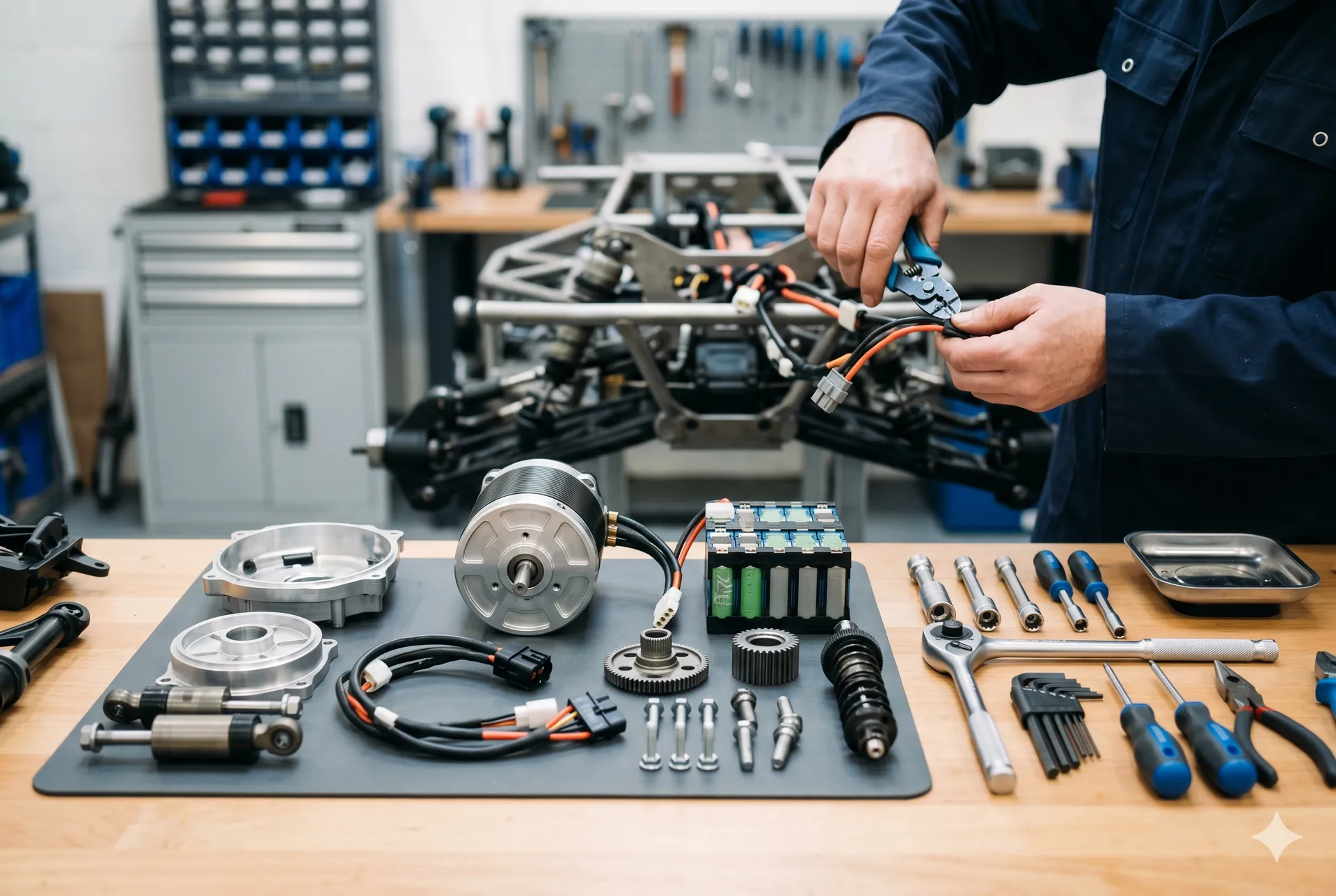
- Build quality and warranty. A buggy is a long-term purchase. A solid frame, good brakes and a real warranty save far more than a cheap sticker price.

Lithium or lead-acid?
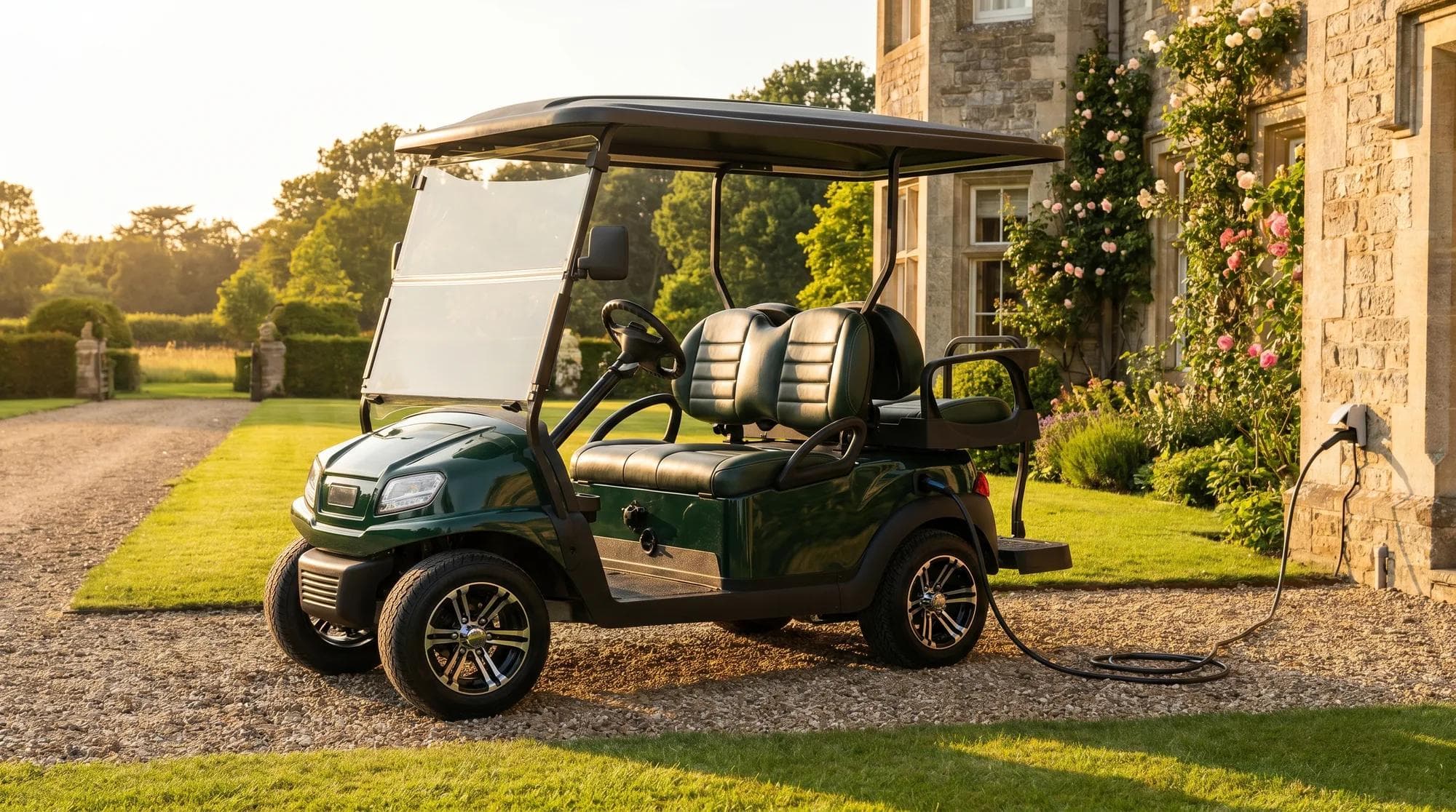
This is the question that quietly decides your ten-year cost. Lead-acid batteries are cheaper to buy, but they're heavier, slower to charge and need replacing every few years. Lithium costs more up front and rewards you with more range, faster and partial charging, far less weight and a service life of roughly eight to ten years. For anything used regularly, lithium almost always wins once you count the replacement cycles. Our full lithium versus lead-acid guide lays out the numbers side by side.
Are electric golf buggies road legal?
Short version: a standard buggy is built for private land, and that covers almost every job people buy one for. The moment any part of a journey uses a public road, the rules change completely and you need a vehicle that's been built and registered to a much higher standard. Even crossing a public road counts. This is a genuine legal point rather than a sales one, so if your route touches a road at all, read are golf buggies road legal in the UK and tell us at enquiry.
What it costs, and how to pay for it
Every buggy is built to order, so the price follows the specification: seats, battery choice, roof, wheels, upholstery and any bespoke branding all move the figure. For the full breakdown of what drives the price, see how much an electric golf buggy costs. Business buyers can spread the cost, and we'll talk you through finance and leasing when you enquire.
New or used?
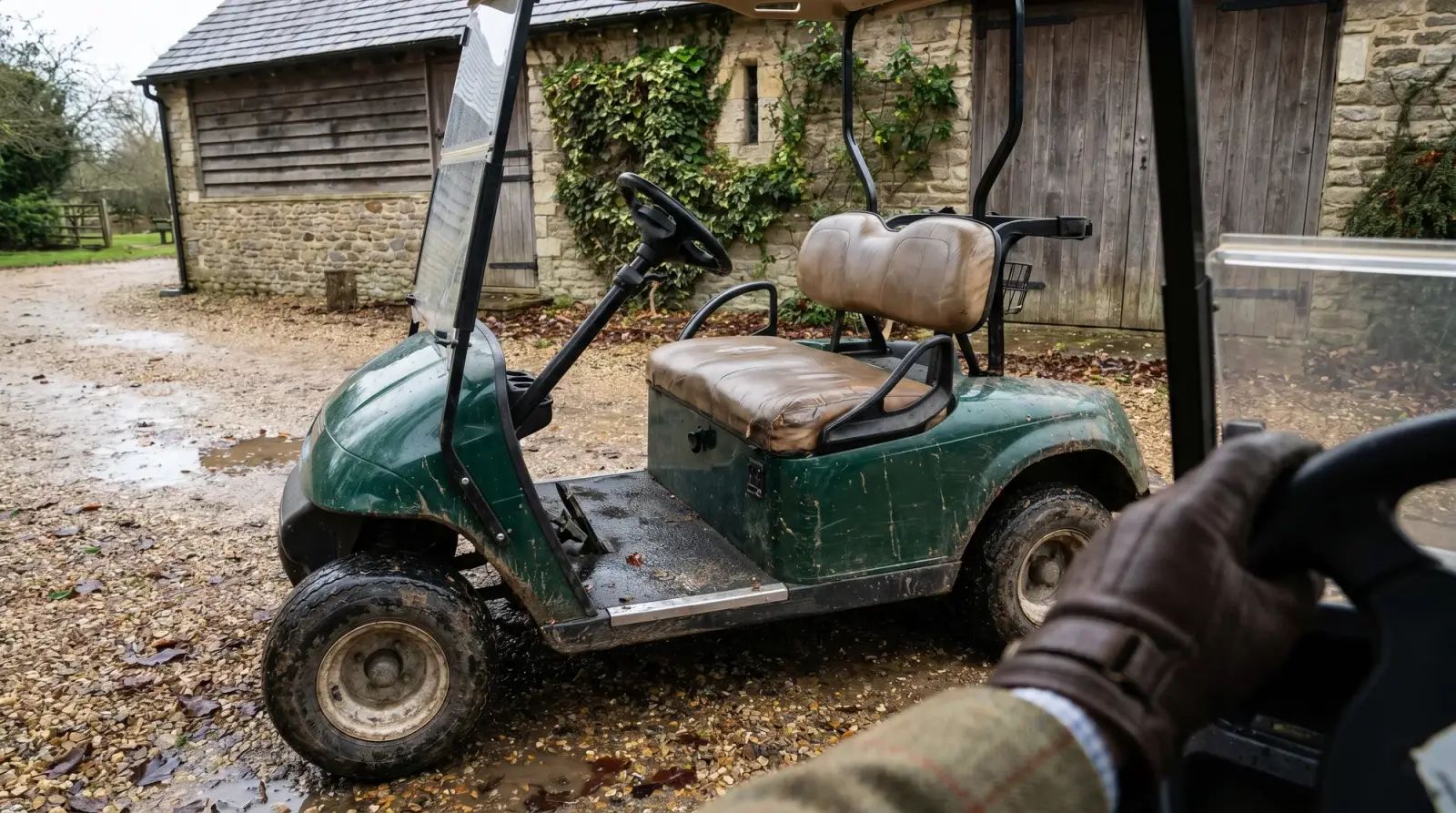
A used buggy can be a smart buy, but the part that matters most, the battery, is the part you can't see. A tired pack can turn a bargain into an expensive mistake, so if you go used, inspect the battery first and prefer a dealer with a warranty over a private sale. We cover the full checklist in buying a used electric golf buggy. Buy new and you get a known battery, a full warranty and a build specified for your exact use, which for a vehicle you'll keep for years is usually worth the difference.
How to choose, in five questions
- How many people or how much kit do I need to move at once?
- What ground will it cross, and will it ever touch a public road?
- How often will it be used, which decides lithium versus lead-acid?
- What's my budget, and do I want to buy, finance or lease?
- Do I want it branded or bespoke, now or later?
Answer those and the right buggy more or less chooses itself. If you'd rather see it take shape, build your own and the indicative total updates as you go, then carry the build straight into a quote. And if your use is occasional rather than year-round, read our hire versus buying guide before you commit.

Design your ideal electric buggy
Choose the model, seats, colour, trim and branding, and watch the price take shape, then carry your build into a tailored quote.
How to buy from us
Every vehicle is built to order, so buying starts with a conversation rather than a checkout. Tell us how and where it will work, and we'll specify a buggy around you, confirm a tailored price, and arrange delivery and commissioning, in the UK or worldwide. Every build comes with a 3-year warranty and a 24-hour VIP call-out, and the only real limit on a bespoke vehicle is your imagination.
Find the right buggy for you
Tell us how and where it will work and we'll specify a vehicle and a tailored quote built around you. Or build your own and see the price take shape.
Frequently asked questions
What should I look for when buying an electric golf buggy?+
Start with the job it has to do, then check the battery type and real-world range, the payload if you'll carry anything, the weather protection, and the build quality and warranty. Match the seat count to your busiest day, and confirm road-legal needs before you buy if your route ever touches a public road.
What size electric golf buggy do I need?+
Match seats to your busiest regular use. Two seats suit couples and compact sites, four seats are the popular all-rounder for families, members and guests, six and eight seats move larger groups, and a utility model carries tools and cargo. If you're between sizes, go up.
How much should I spend on an electric golf buggy?+
Every buggy is built to order, with seats, battery and build setting the figure. Lithium, weather protection and a real warranty cost more up front but usually lower the ten-year cost, so weigh total cost of ownership, not just the sticker price.
Are electric golf buggies any good?+
For moving people or kit across private land, yes. They're quiet, clean, cheap to run and have very little to service compared with a petrol vehicle. The main thing to get right is the battery, since it sets the range, the life and the long-term cost.
Can I try a buggy before I buy?+
Tell us your use when you enquire and we'll talk you through the right specification. Because every vehicle is built to order, we focus on getting the build exactly right for you, backed by a 3-year warranty and a 24-hour VIP call-out.
Related solutions
Ready to explore what we build?
See the vehicles and the setting this applies to, or get a tailored quote built around your site.
Ready to find the right buggy?
Tell us how and where it will work and we will specify a vehicle and a tailored quote built around you. Every build comes with a 3-year warranty and a 24-hour priority call-out.
Our guides are written and reviewed by the Hawke Electric Vehicles team, the people who specify, build, deliver and support the vehicles. We focus on honest, practical advice and flag where a figure depends on the build rather than guessing.
More guides by Hawke