Ask what a used golf buggy costs and the honest answer is that the question is underspecified. Two vehicles of the same model and year can be worth substantially different sums, and the gap is usually not the paintwork. This guide explains what actually moves the price, in rough order of importance, so you can build a number for a specific vehicle rather than rely on an average that describes nothing.
- Battery condition is the largest single variable in a used golf buggy price.
- Seat count and body type set the broad band; condition sets where you sit within it.
- Specification that is expensive to retrofit, such as a hard roof and screen, carries real value.
- Ex-fleet stock is cheaper because it has high hours, not because it is unsound.
- A price with no battery evidence behind it is a guess, whoever is quoting it.
Start with the new price, then work down
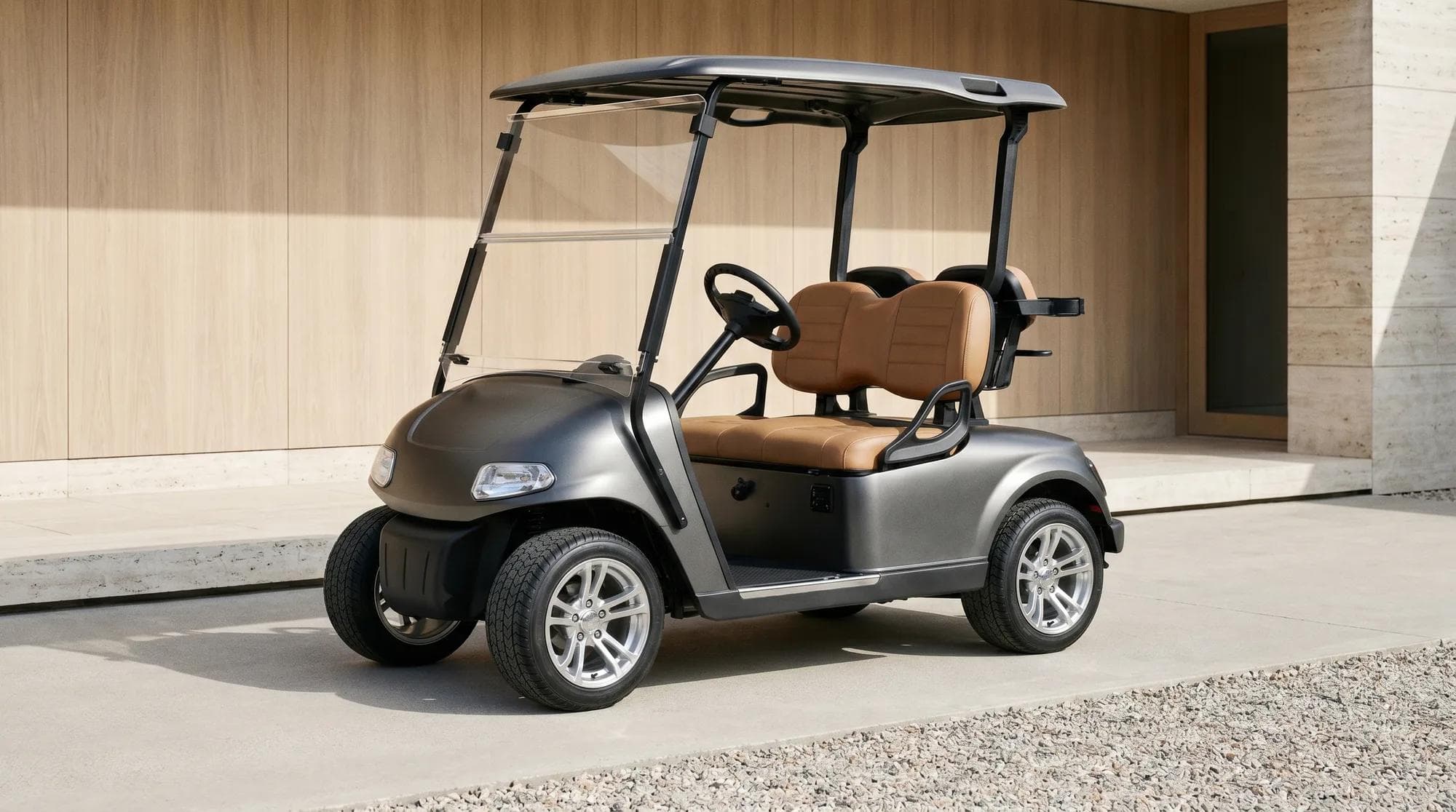
The most reliable way to sanity-check a used asking price is to anchor it against what an equivalent new vehicle costs and work down from there, rather than comparing used listings with each other. Used listings tend to cluster around whatever the market believes rather than what vehicles are worth, and in a niche this small a handful of optimistic sellers can drag the apparent going rate upwards. Our guide to how much an electric golf buggy costs sets out the new-build picture. Once you have that anchor, the used price is the new price less depreciation for age and hours, less the cost of any work the vehicle needs, less the value of any battery life it no longer has.
What moves the number, in order
- Effect on price
- Very large
- Why
- Replacement is a significant cost, so remaining life is real money
- Effect on price
- Large
- Why
- Lithium packs generally last longer and are worth more when sound
- Effect on price
- Large
- Why
- Sets the broad market band before condition is considered
- Effect on price
- Moderate
- Why
- Drives near-term spend on brakes, tyres and suspension
- Effect on price
- Moderate
- Why
- Cheap to want, expensive and fiddly to retrofit properly
- Effect on price
- Moderate
- Why
- Reduces uncertainty, which is what you are really paying for
- Effect on price
- Small
- Why
- Highly visible but cheap to improve and easy to disguise
| Effect on price | Why | |
|---|---|---|
| Battery pack condition | Very large | Replacement is a significant cost, so remaining life is real money |
| Battery chemistry | Large | Lithium packs generally last longer and are worth more when sound |
| Seat count and body type | Large | Sets the broad market band before condition is considered |
| Hours and general wear | Moderate | Drives near-term spend on brakes, tyres and suspension |
| Hard roof, screen, lights | Moderate | Cheap to want, expensive and fiddly to retrofit properly |
| Service history | Moderate | Reduces uncertainty, which is what you are really paying for |
| Paint and trim | Small | Highly visible but cheap to improve and easy to disguise |
Why the battery dominates
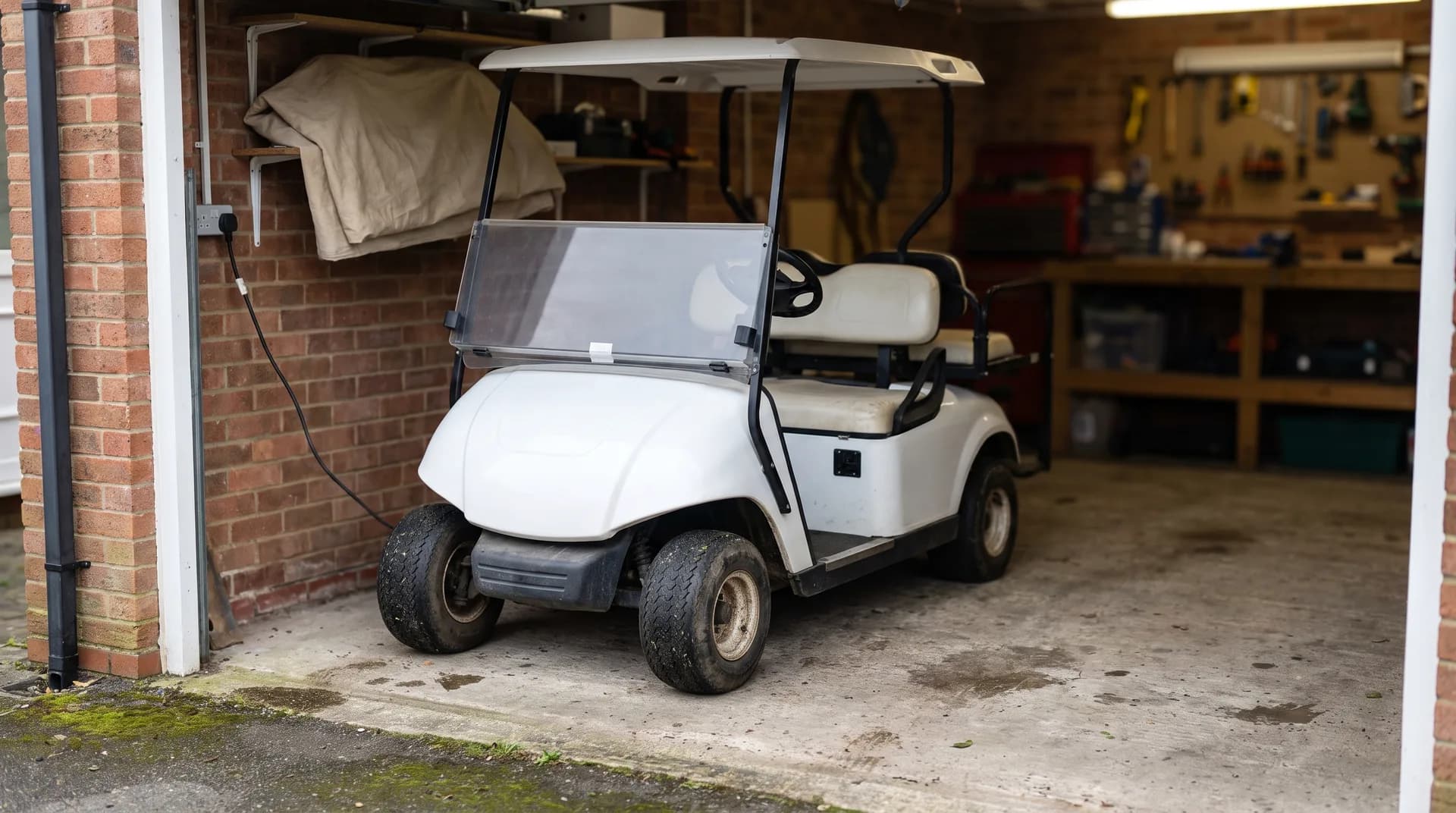
It is worth being concrete about why one component outweighs the rest. A traction pack is a consumable with a finite working life measured in charge cycles, and it degrades on a calendar too, so a lightly used buggy that has stood for years is not carrying a fresh pack. When the pack reaches the end of its life the vehicle does not fail gracefully, it simply stops covering the distance you need, and the fix is a replacement rather than a repair. That means the remaining life in the pack is a genuine asset with a cash value, and its absence is a genuine liability. A used buggy with a pack fitted last season and a healthy measured capacity is worth materially more than the identical vehicle with an original pack of unknown age, and any price that does not reflect that is mispriced in one direction or the other.
Ex-fleet pricing and why it looks cheap
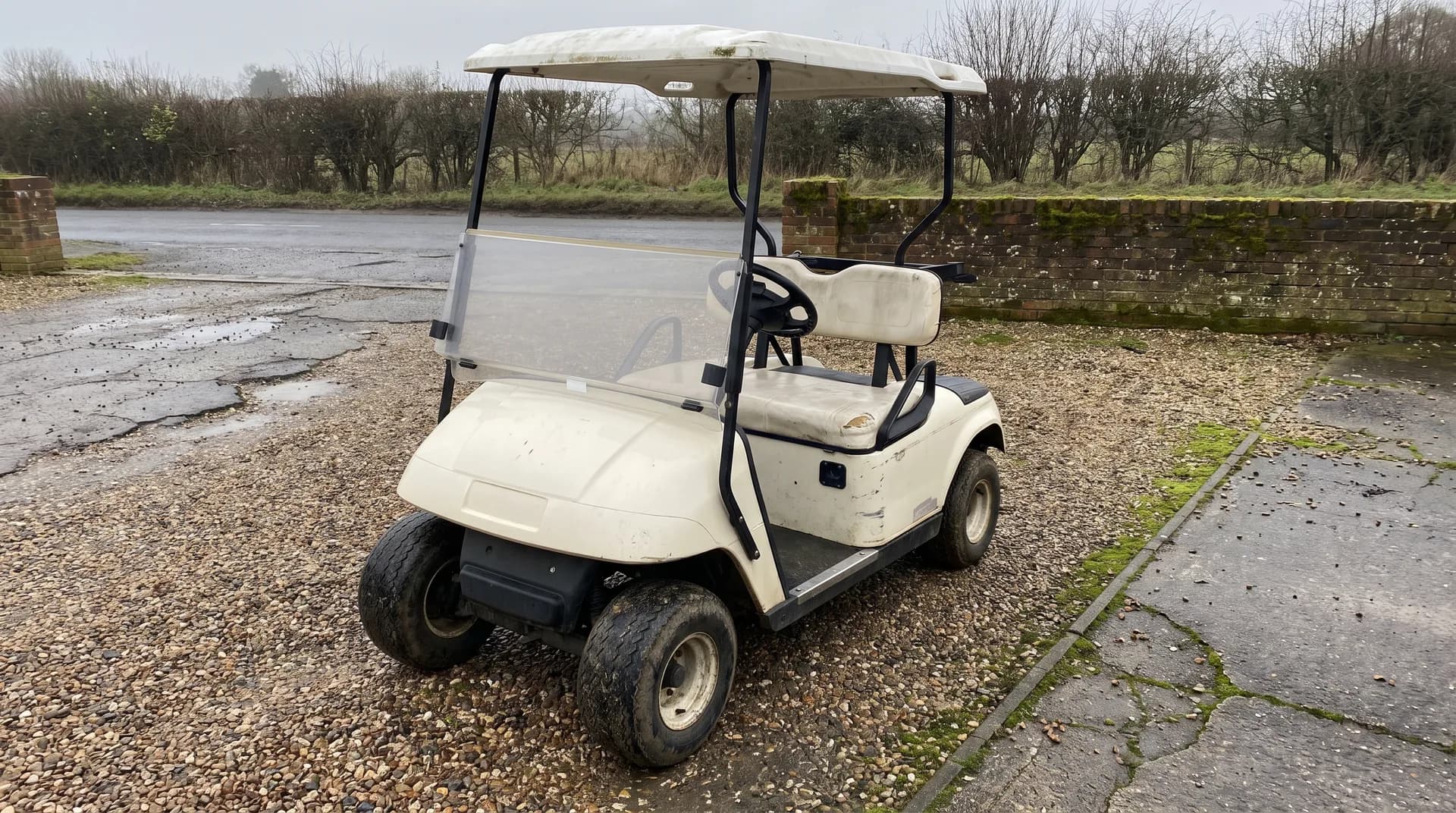
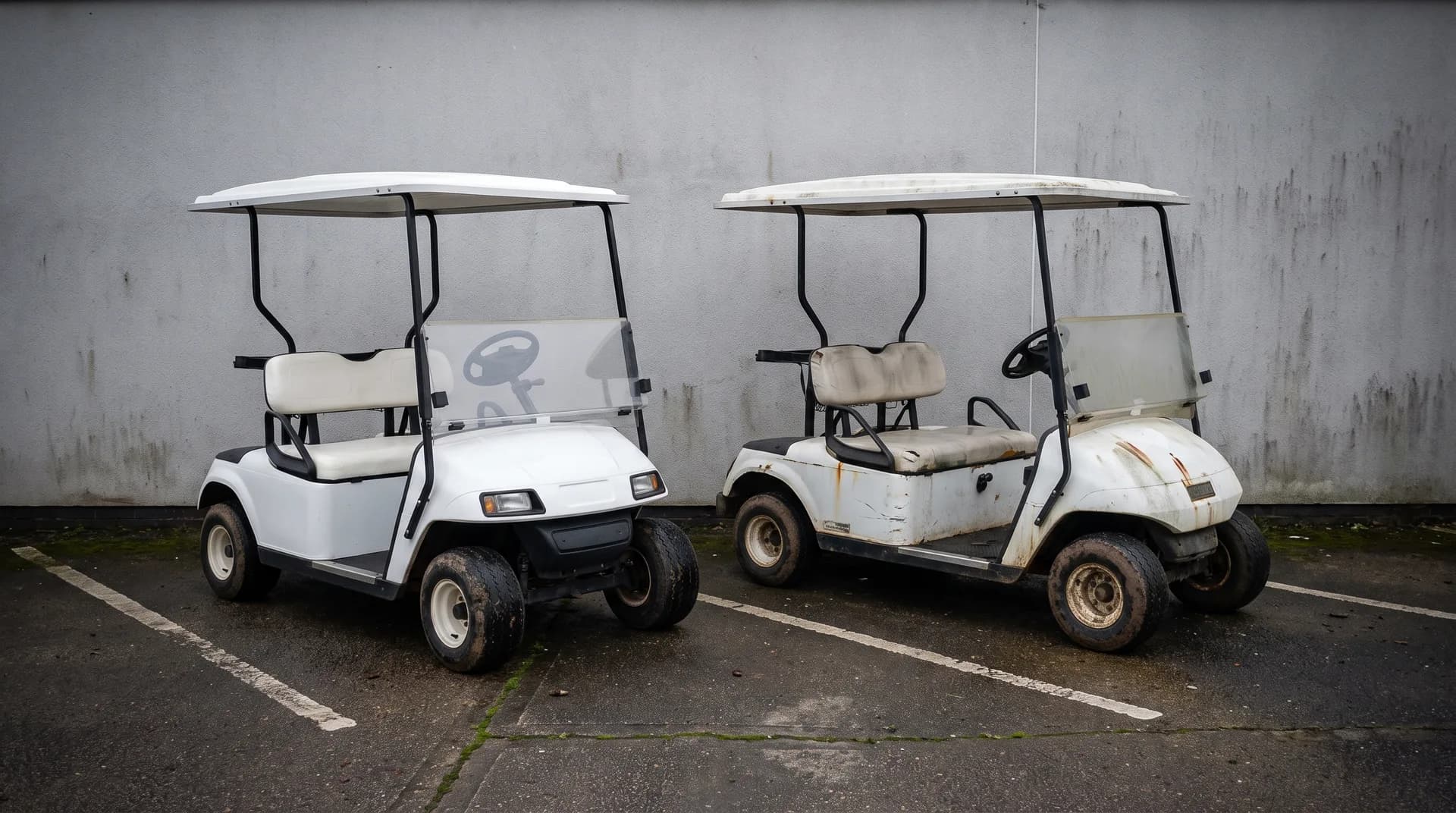
Ex-golf-club fleet buggies are consistently the cheapest sound used vehicles on the UK market, and buyers often assume there is a catch. Usually there is not, in the sense that the vehicles are structurally fine. What you are buying is a machine that has done a great many hours in a short span, generally maintained on a schedule because a club cannot run unreliable vehicles, and replaced on a cycle rather than because it failed. The price reflects the hours, the cosmetic condition and, very often, a pack that is at or near the end of its life, since clubs typically replace vehicles rather than re-pack them. Bought with that understood and budgeted, ex-fleet is often the best value on the board. Bought expecting a nearly new buggy, it disappoints. Our guide to ex-fleet golf buggies goes into how that market works.
Specification: what is worth paying for
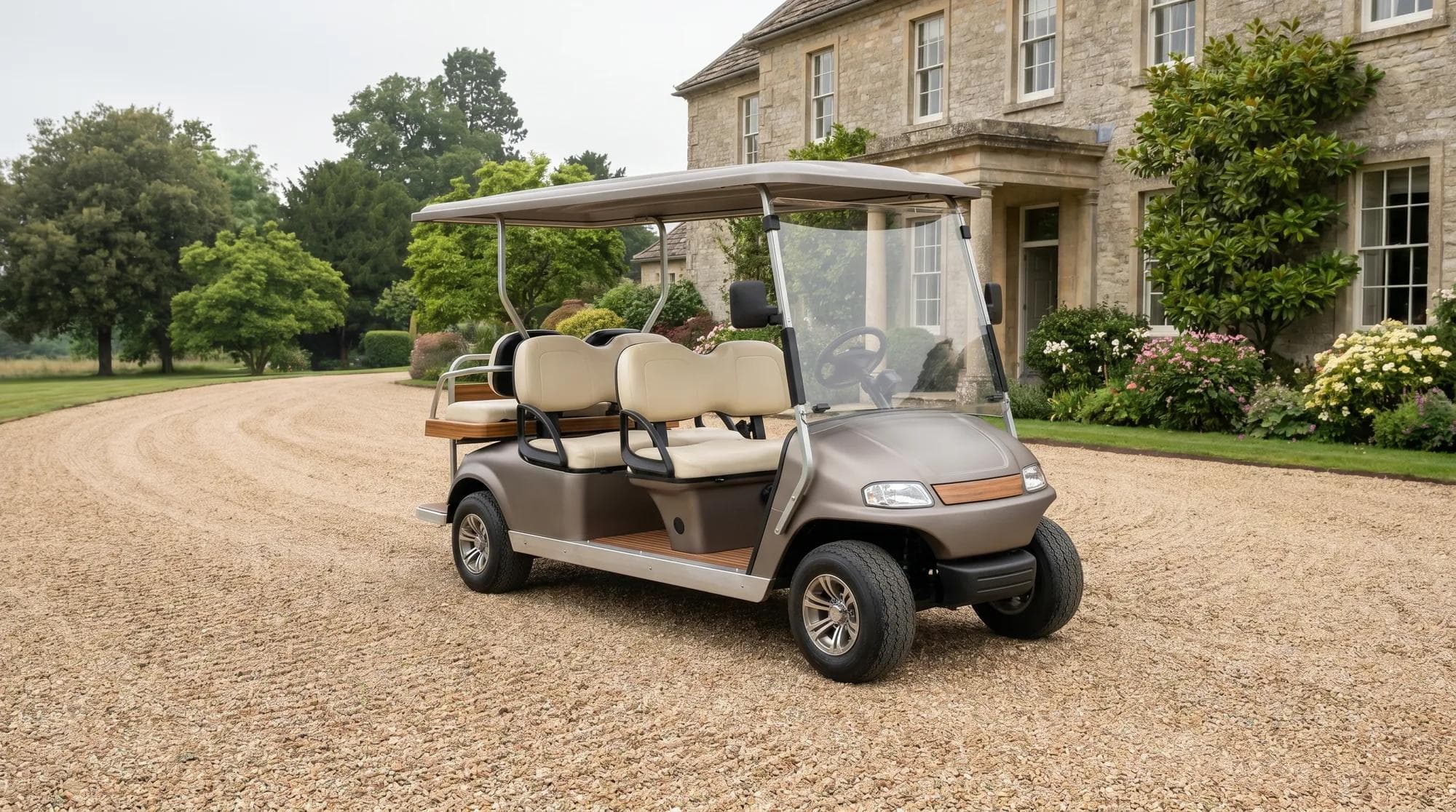
Some specification is worth paying a premium for because retrofitting it properly is disproportionately expensive or simply not practical. A factory hard roof, a laminated screen, proper lighting, a decent seat specification and, where relevant, a cargo box or flip seat all fall into this group. Other specification is cosmetic and should not move your offer much, because you can address it cheaply if you care and ignore it if you do not: a tired canopy, faded decals, scuffed body panels, worn seat covers. The trap is that the cosmetic items are the ones photographs make salient, so listings that look expensive often are not, and plain-looking vehicles with good hardware often are.
Selling rather than buying
If you are on the other side of this and trying to work out what your own vehicle is worth, the same logic applies in reverse, and the single most valuable thing you can do is evidence the battery. A measured state of health, the pack's installation date and any service records will do more for your price than a valet and a fresh set of decals, because they remove the uncertainty that makes buyers discount. If you would like a starting figure, our golf buggy valuation tool gives an indicative range based on the vehicle's details.
Frequently asked questions
How much does a used golf buggy cost in the UK?+
There is no single figure, because pack condition can move the value of the same model and year substantially. Anchor against the equivalent new price, then deduct for age, hours, work needed and any battery life the vehicle no longer has.
Do golf buggies hold their value?+
The vehicle structure holds value reasonably well because it is simple and durable, but the battery pack does not, since it is a consumable with a finite life. That combination is why used prices spread so widely for the same model.
Is a used lithium buggy worth more than lead-acid?+
Generally yes when the lithium pack is sound, because it typically offers a longer service life and better usable capacity. As always the value is in the measured condition of the specific pack rather than the chemistry in the abstract.
Why are ex-fleet golf buggies so much cheaper?+
They have covered a great many hours in a short period and are usually cosmetically tired, and their packs are often near the end of their life because clubs replace vehicles rather than re-pack them. The structure is normally sound.
How do I know if an asking price is fair?+
Build it from the new price downwards rather than comparing used adverts, and treat the battery as a separate line with its own value. If the seller cannot evidence pack health, price as though it needs replacing.
Want an honest figure on a used buggy?
Tell us the vehicle you are looking at, or the one you are selling, and we will tell you what it is realistically worth and what to check before you commit.
Related solutions
Ready to explore what we build?
See the vehicles and the setting this applies to, or get a tailored quote built around your site.

Ready to find the right buggy?
Tell us how and where it will work and we will specify a vehicle and a tailored quote built around you. Every build comes with a 3-year warranty and a 24-hour priority call-out.
Our guides are written and reviewed by the Hawke Electric Vehicles team, the people who specify, build, deliver and support the vehicles. We focus on honest, practical advice and flag where a figure depends on the build rather than guessing.
More guides by Hawke