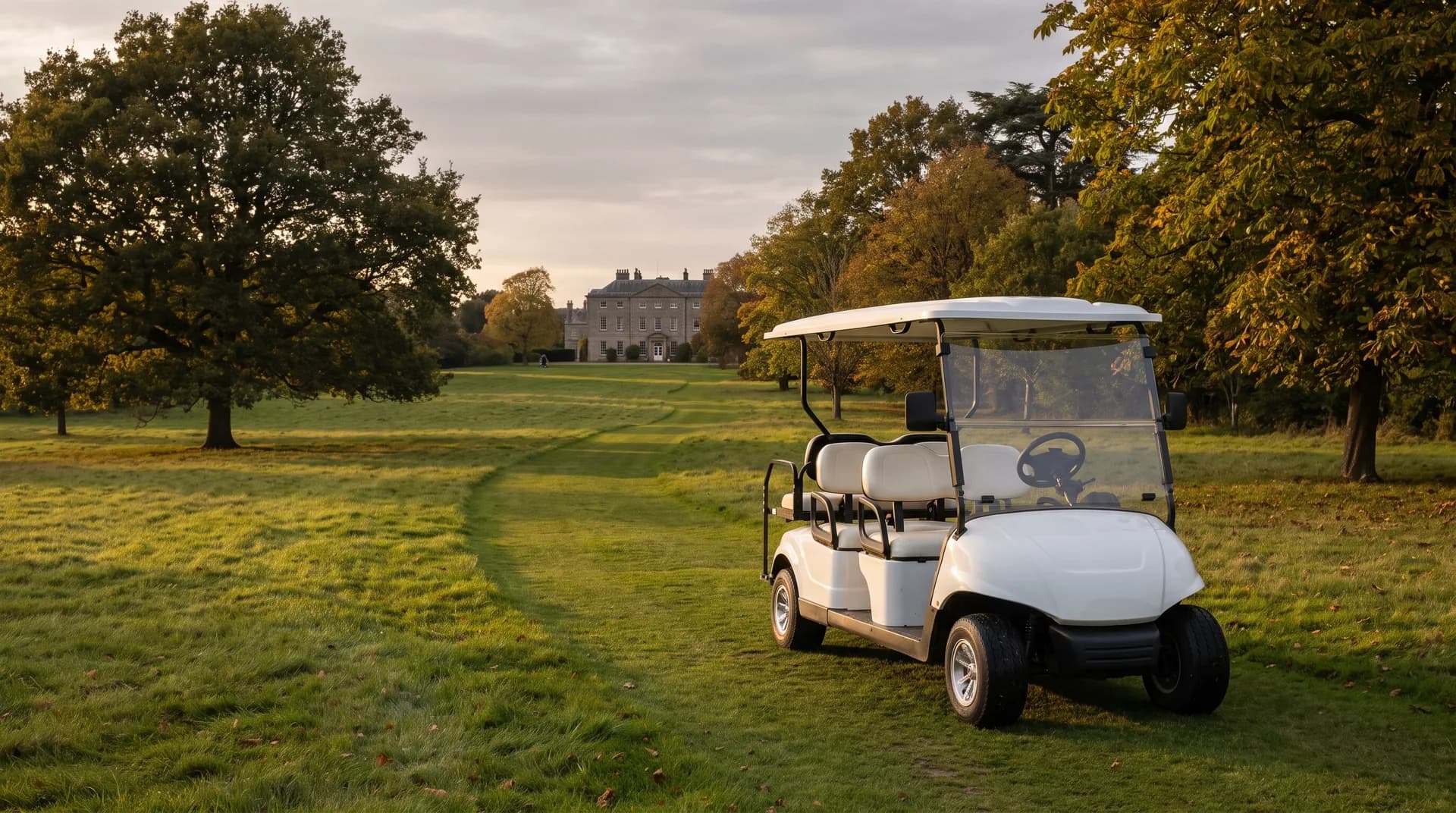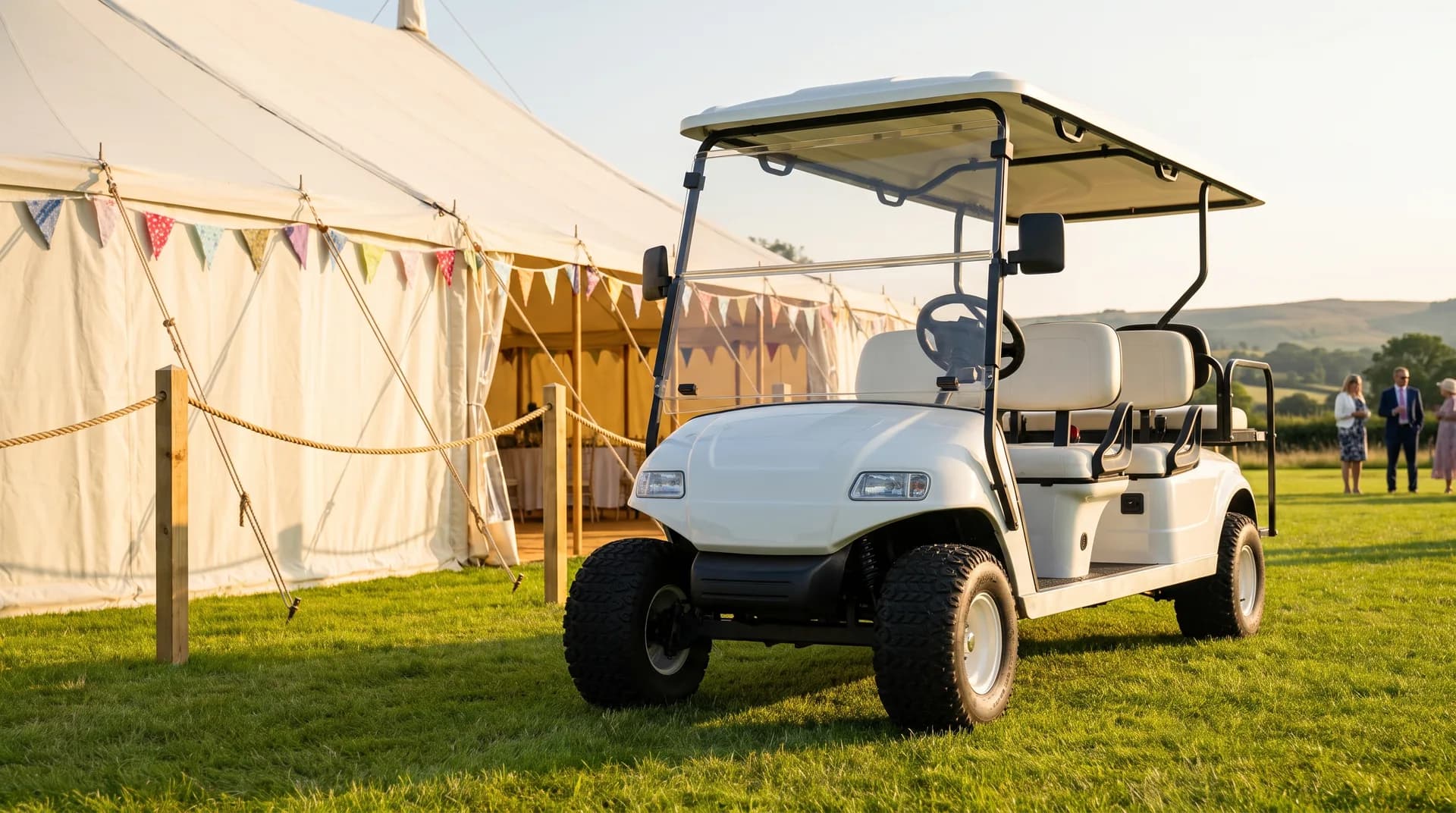
Long-term golf buggy hire means vehicles on your site for a season, a run of months or a year, rather than a weekend. The buggies work as if they were yours, guests and staff will not know the difference, but they stay on the hirer's books: servicing is included, a vehicle that develops a fault is swapped, and when the season ends the fleet goes back. For a venue that needs buggies for six months of the year, or is not yet sure it needs them at all, that is a genuinely different proposition from ownership, and from day hire too. This guide covers who long-term hire suits, what changes compared with short hire, and the point at which buying becomes the better answer. If it is the cost breakdown you want, our seasonal hire cost guide covers the numbers side; this is the how and the when.
- Long-term hire suits seasonal operations and venues testing demand before committing to a purchase.
- Unlike day hire, servicing, breakdown response and swap-outs are part of the arrangement.
- Delivery and collection happen twice, not weekly, which changes the economics of the hire.
- A season of hire is also a season of data: it tells you exactly what fleet to buy, if you buy at all.
- When the need is year-round and permanent, ownership usually overtakes hire; run that comparison honestly.
Who long-term golf buggy hire suits
Three kinds of operation get the most from it. The first is genuinely seasonal: golf clubs whose buggy demand runs spring to autumn, holiday parks and glamping sites with a defined season, visitor attractions that are quiet from November to March. Owning vehicles that sit idle half the year is poor use of capital, and the seasonal-versus-year-round question is one our guide on seasonal versus year-round buggy fleets works through properly. The second is the venue testing demand: a hotel wondering whether guests would actually use a shuttle, a course unsure whether members will pay for buggies, an estate opening to visitors for the first time. A season of hire answers the question with real bookings rather than projections, and if the answer is yes, you now know exactly which vehicles to buy. The third is the bridge: a venue that has decided to buy but has a season to cover before new vehicles arrive, or one waiting on next year's capital budget while this year's guests still need moving.
What changes versus day hire
Day and weekend hire is priced around the event: delivery, a short working window, collection. Hold vehicles for months and the shape of the arrangement changes. Delivery and collection happen once each, so their share of the cost shrinks. Servicing moves inside the hire: scheduled maintenance is the hirer's responsibility, and a vehicle that develops a fault is swapped rather than leaving you a buggy down in August. Your side of the bargain is day-to-day care, charging correctly, keeping the vehicles clean and reporting problems early, and providing secure storage and a charging point. Terms are typically monthly or seasonal rather than daily, and as with all hire the pricing is quote-based: rates vary with vehicle size, dates, season and distance, and the length of the commitment shapes the terms, so enquire with the full window you need rather than a month at a time.
Long-term golf buggy hire or buying: where the threshold sits
Hire and ownership each win in different territory, and the honest dividing line is permanence. If the need is seasonal, uncertain or temporary, hire wins: capital stays free, maintenance is someone else's problem, and you can hand the fleet back if the season disappoints. If the need is year-round, proven and permanent, ownership usually overtakes hire over a horizon of a few years, because you stop paying for flexibility you no longer need, and our hire versus buying guide works that comparison through step by step. The practical wisdom is to let a season of hire make the decision for you: it generates utilisation data, revenue figures and guest feedback that turn the buy decision from a guess into arithmetic. Hospitality operators weighing the same question across a wider fleet will find the hospitality hire-or-buy guide useful, and when the answer is buy, the range is the place to start specifying.
- Day/weekend hire
- Events and one-offs
- Long-term hire
- Seasons, trials and bridges
- Buying
- Permanent year-round need
- Day/weekend hire
- Rarely arises
- Long-term hire
- Included, with swap-outs
- Buying
- Your cost and your problem
- Day/weekend hire
- None
- Long-term hire
- None
- Buying
- Purchase or finance
- Day/weekend hire
- Total
- Long-term hire
- Hand back at season end
- Buying
- Sell to exit
- Day/weekend hire
- Highest
- Long-term hire
- Lower across a season
- Buying
- Lowest once utilisation is high
| Day/weekend hire | Long-term hire | Buying | |
|---|---|---|---|
| Best for | Events and one-offs | Seasons, trials and bridges | Permanent year-round need |
| Servicing | Rarely arises | Included, with swap-outs | Your cost and your problem |
| Capital tied up | None | None | Purchase or finance |
| Flexibility | Total | Hand back at season end | Sell to exit |
| Cost per week over time | Highest | Lower across a season | Lowest once utilisation is high |
Setting a long-term hire up well
A good long-term hire is specified like a purchase. Be honest about the ground, the daily mileage and who will drive, so the vehicles are specified for the site rather than the brochure. Sort storage and charging before delivery: a dry, secure space with a standard supply is all most fleets need, but it has to exist on day one. Agree the care split in writing, who charges, who cleans, what gets reported and how fast a swap arrives, and name a person on your side who owns the fleet day to day, because vehicles that are everyone's job are no one's. Finally, put a review date in the diary before the season ends: that is the moment to extend, hand back or start the purchase conversation, with a season of real data on the table. The buggy hire team can set the terms around your season from the outset.
Frequently asked questions
How long can you hire a golf buggy for?+
From a month to a full season or a year, with terms shaped to the need. Long-term arrangements are quoted individually; rates vary with vehicle size, dates, season and distance.
Who services the buggies on a long-term hire?+
The hirer. Scheduled servicing and breakdown response are part of the arrangement, and a vehicle with a persistent fault is swapped rather than leaving you short in peak season.
Is long-term hire cheaper than repeated day hire?+
Across a season, holding vehicles on a long-term arrangement is normally the more efficient way to buy the same weeks, because delivery happens twice rather than weekly and terms reflect the commitment. Get both quoted for your dates and compare.
When does buying beat long-term hire?+
When the need is permanent, year-round and proven. At that point ownership usually wins over a few years because you stop paying for flexibility you no longer use. A season of hire is the cleanest way to prove the case first.
What do we need to provide on site?+
Secure, dry storage, a standard charging supply, day-to-day care such as charging and cleaning, and a named person who owns the fleet and reports issues early.
Scope a seasonal or monthly hire
Tell us the site, the season and the job, and we will propose a fleet, terms and a review point that lets the season decide what happens next.
Related solutions
Ready to explore what we build?
See the vehicles and the setting this applies to, or get a tailored quote built around your site.
Ready to find the right buggy?
Tell us how and where it will work and we will specify a vehicle and a tailored quote built around you. Every build comes with a 3-year warranty and a 24-hour priority call-out.
Our guides are written and reviewed by the Hawke Electric Vehicles team, the people who specify, build, deliver and support the vehicles. We focus on honest, practical advice and flag where a figure depends on the build rather than guessing.
More guides by Hawke