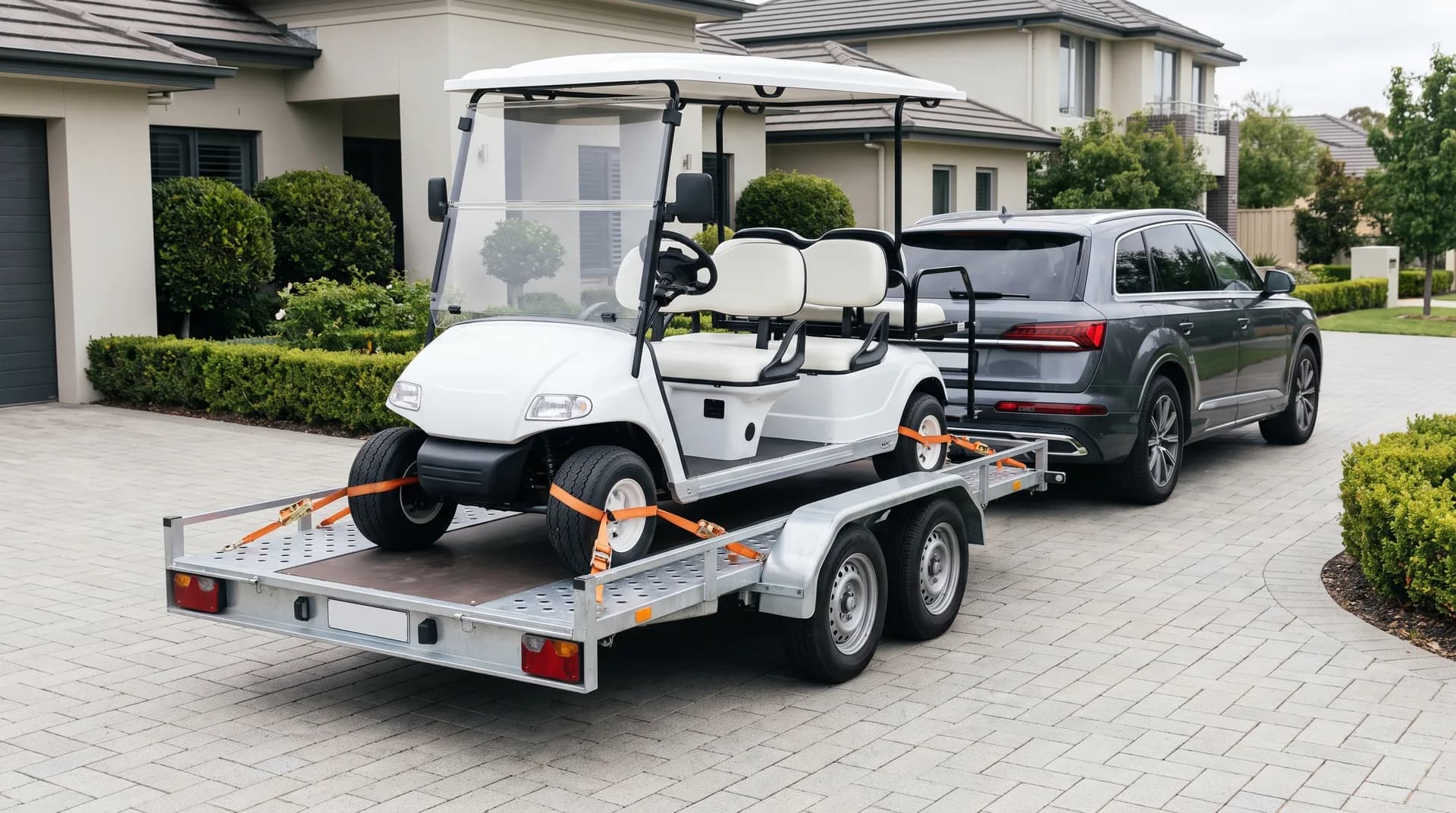
Golf buggy delivery in the UK normally means the vehicle arriving by transporter or trailer, being offloaded either at the kerbside or driven to where it will live, then commissioned before the driver leaves: charge state confirmed, controls demonstrated, and the handover paperwork signed. Done properly, the whole visit is unhurried but efficient, and you are left with a charged, working machine and a clear idea of how to look after it. Done badly, a buggy is dropped on a pallet at the end of the drive and the van is gone. This guide explains the difference, what commissioning should actually cover, and what to prepare at your end so the day goes smoothly.
- Kerbside delivery ends at the roadside; positioned delivery puts the buggy where it will actually live. Confirm which you are getting before the day.
- Commissioning is not a formality: charge, controls, brakes, lights and charger operation should all be checked and demonstrated.
- Prepare access, a dry storage spot and a socket for the charger before the vehicle arrives.
- Walk through the controls with the driver and do not sign until you have seen the buggy drive.
- Delivery timing is agreed when you order and confirmed on your quotation, so there is no ambiguity about the day itself.
What golf buggy delivery day looks like
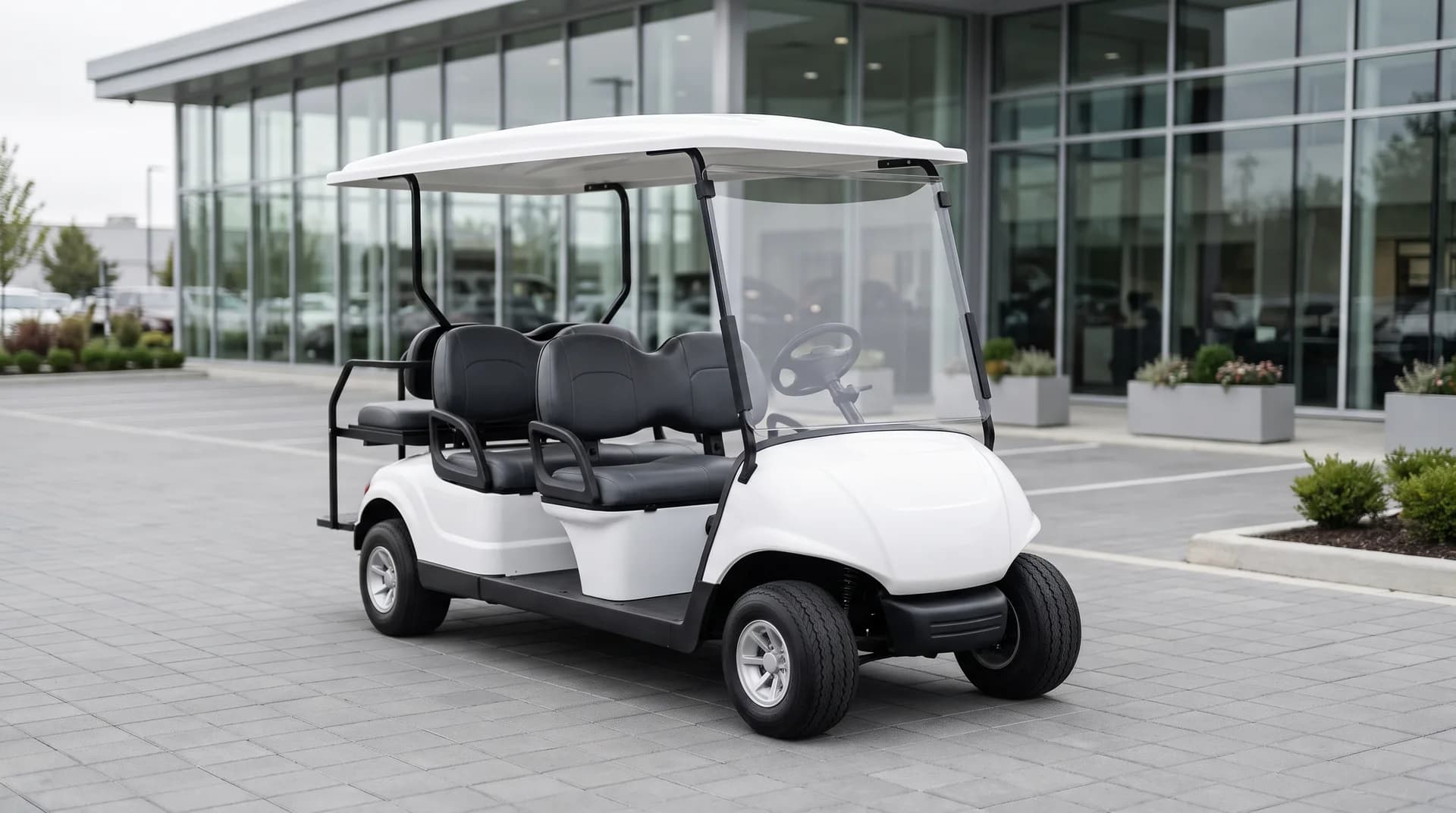
Most buggies travel to their new home on a flatbed transporter or a plant trailer, strapped at the chassis with the key isolator off. On arrival the driver offloads via ramps or a tail lift, and what happens next depends on the service you have agreed. A kerbside service ends at the roadside: the buggy comes off the vehicle and the rest, the driveway, the gate, the shed, is your problem. A positioned service, which is how we deliver, means the vehicle is driven to where it will be kept, whether that is a garage at home, a buggy store at the club, or an outbuilding on an estate. If you are arranging your own transport instead, our guide on how to transport an electric golf buggy covers trailers, ramps and strapping points in detail.
- Kerbside delivery
- At the roadside or gate
- Positioned delivery
- Where the buggy will actually be kept
- Kerbside delivery
- You
- Positioned delivery
- The delivery driver or engineer
- Kerbside delivery
- Often none, it is haulage only
- Positioned delivery
- Charge, controls, brakes and charger demonstrated
- Kerbside delivery
- Rarely included
- Positioned delivery
- Included, with paperwork signed on the day
- Kerbside delivery
- Trade moves between sites
- Positioned delivery
- First delivery of a vehicle you have just bought
| Kerbside delivery | Positioned delivery | |
|---|---|---|
| Where it ends | At the roadside or gate | Where the buggy will actually be kept |
| Who moves it the last 50 metres | You | The delivery driver or engineer |
| Commissioning checks | Often none, it is haulage only | Charge, controls, brakes and charger demonstrated |
| Handover walkthrough | Rarely included | Included, with paperwork signed on the day |
| Best suited to | Trade moves between sites | First delivery of a vehicle you have just bought |
Golf buggy commissioning: the checks that matter
Commissioning is the short inspection and setup that turns a delivered machine into a working one, and it is worth insisting on wherever you buy. The battery should arrive with a healthy state of charge and be checked on arrival, then the charger should be connected in front of you so you see it start a cycle on your own supply, not just in a workshop. The driver or engineer should demonstrate the key or code, forward and reverse selection, the hill response, the parking brake and the lights if fitted, then drive the vehicle briefly and let you do the same. Tyre pressures, seat and canopy fixings and any accessories fitted to your specification should be given a final once-over. None of this takes long, but it catches transit knocks and charger or socket problems on day one, while the person who can fix them is still standing on your drive.
What to prepare before your buggy is delivered to home
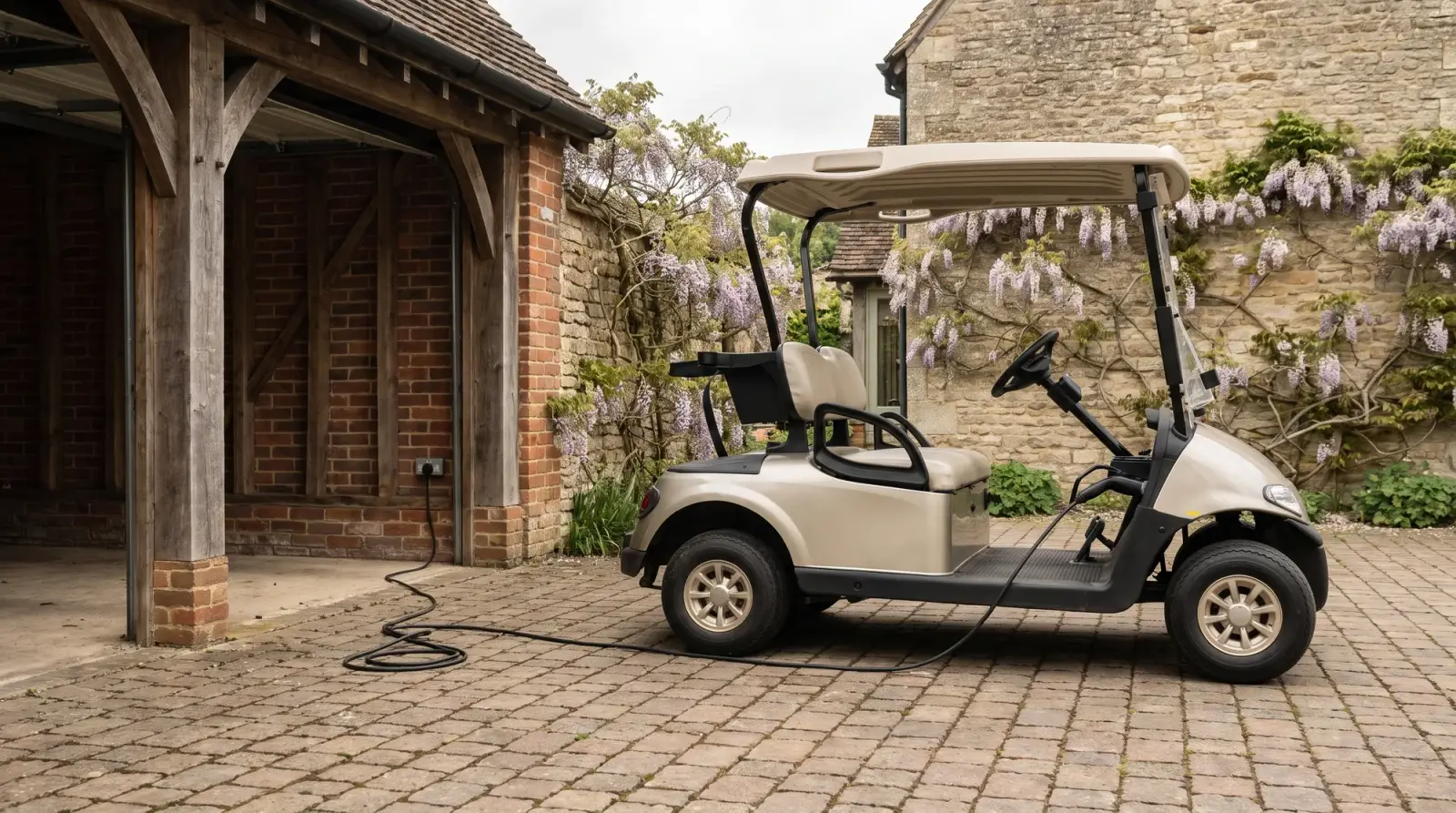
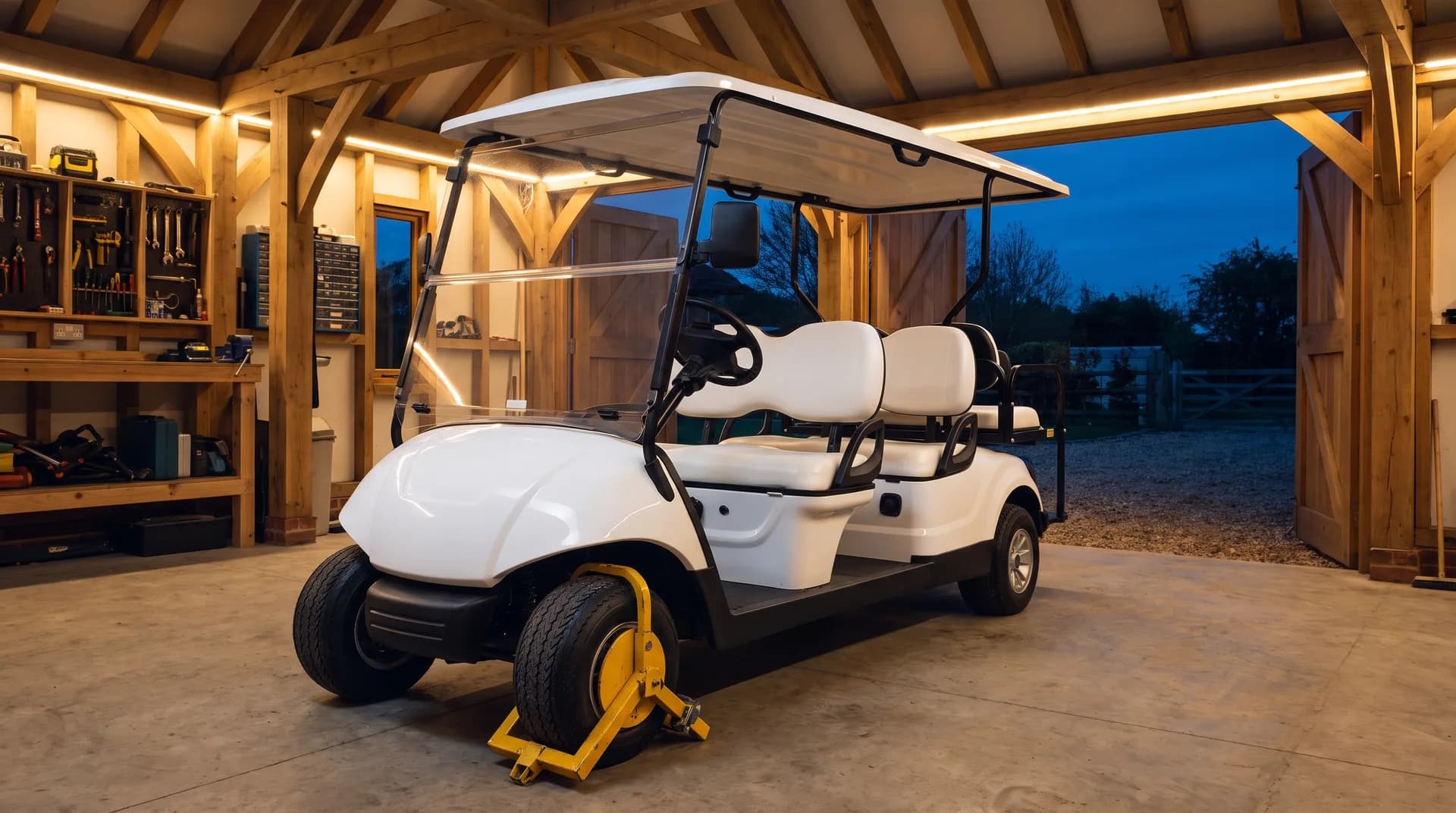
A little preparation makes delivery day simple. First, access: a transporter needs somewhere to stop and room to drop ramps, so think about parked cars, narrow lanes, gravel gradients and gate widths, and tell your supplier in advance if access is tight. Second, storage: decide where the buggy will live before it arrives, ideally somewhere dry, secure and out of direct weather, our guide on storage and security covers the options. Third, charging: you need a standard socket within reach of the parking spot, on a circuit in good condition, and it is worth reading up on charging a golf buggy at home before the day so the routine is already familiar. If any of those three are unresolved, sort them before delivery rather than after; a buggy with nowhere to charge is just furniture.
The handover checklist
Before the driver leaves, run through a simple checklist. Walk around the vehicle and check the bodywork, seats and canopy for transit damage while it can still be noted on the paperwork. See the buggy drive, and drive it yourself, even just up and down the drive. Watch the charger begin a charge on your socket. Confirm you have both keys or the access code, the charger and its lead, the handbook, and the warranty documents. Ask how servicing is arranged and who to call if something goes wrong, with us that is a 24-hour priority call-out line, and make sure the number is written down somewhere better than the back of an envelope. Finally, sign the delivery note only when you are satisfied. If you are still comparing suppliers, our guide on questions to ask when buying an electric golf buggy includes the delivery and aftercare questions worth asking before you order, and you can see the vehicles themselves in our range.
Frequently asked questions
Is golf buggy delivery to a home address possible?+
Yes. Buggies are delivered to private homes routinely, by transporter or trailer. The practical questions are access for the delivery vehicle, somewhere dry and secure for the buggy to live, and a socket within reach for the charger. We deliver and commission UK-wide, including to home addresses.
What does commissioning a golf buggy involve?+
Confirming the state of charge, demonstrating the controls, checking brakes, lights and fixings, connecting the charger on your own supply so you see it working, and a short test drive. It is the stage that catches transit damage and setup problems while the delivering engineer is still there.
What should I check before signing the delivery note?+
Bodywork and trim for transit damage, that the buggy drives and the charger charges on your socket, and that you have the keys, charger, handbook and warranty documents. Note anything you are unsure about on the paperwork before you sign.
Do I need a special charging point installed?+
Usually not. Most electric golf buggies charge from a standard socket in good condition. What matters is that the socket is within reach of where the vehicle parks and is not shared with a daisy-chain of extension leads.
When will my buggy be delivered?+
Delivery is arranged when you order, and the timing is confirmed on your quotation. In-stock vehicles move quickly; vehicles built to your specification take longer, and your quotation is the honest place to see the date rather than a generic promise.
Delivery and commissioning included, UK-wide
Every vehicle we sell is built to specification, delivered and commissioned anywhere in the UK, and backed by a 3-year warranty with a 24-hour priority call-out line. Tell us what you need and we will put a written, itemised quotation together.
Related solutions
Ready to explore what we build?
See the vehicles and the setting this applies to, or get a tailored quote built around your site.

Ready to find the right buggy?
Tell us how and where it will work and we will specify a vehicle and a tailored quote built around you. Every build comes with a 3-year warranty and a 24-hour priority call-out.
Our guides are written and reviewed by the Hawke Electric Vehicles team, the people who specify, build, deliver and support the vehicles. We focus on honest, practical advice and flag where a figure depends on the build rather than guessing.
More guides by Hawke