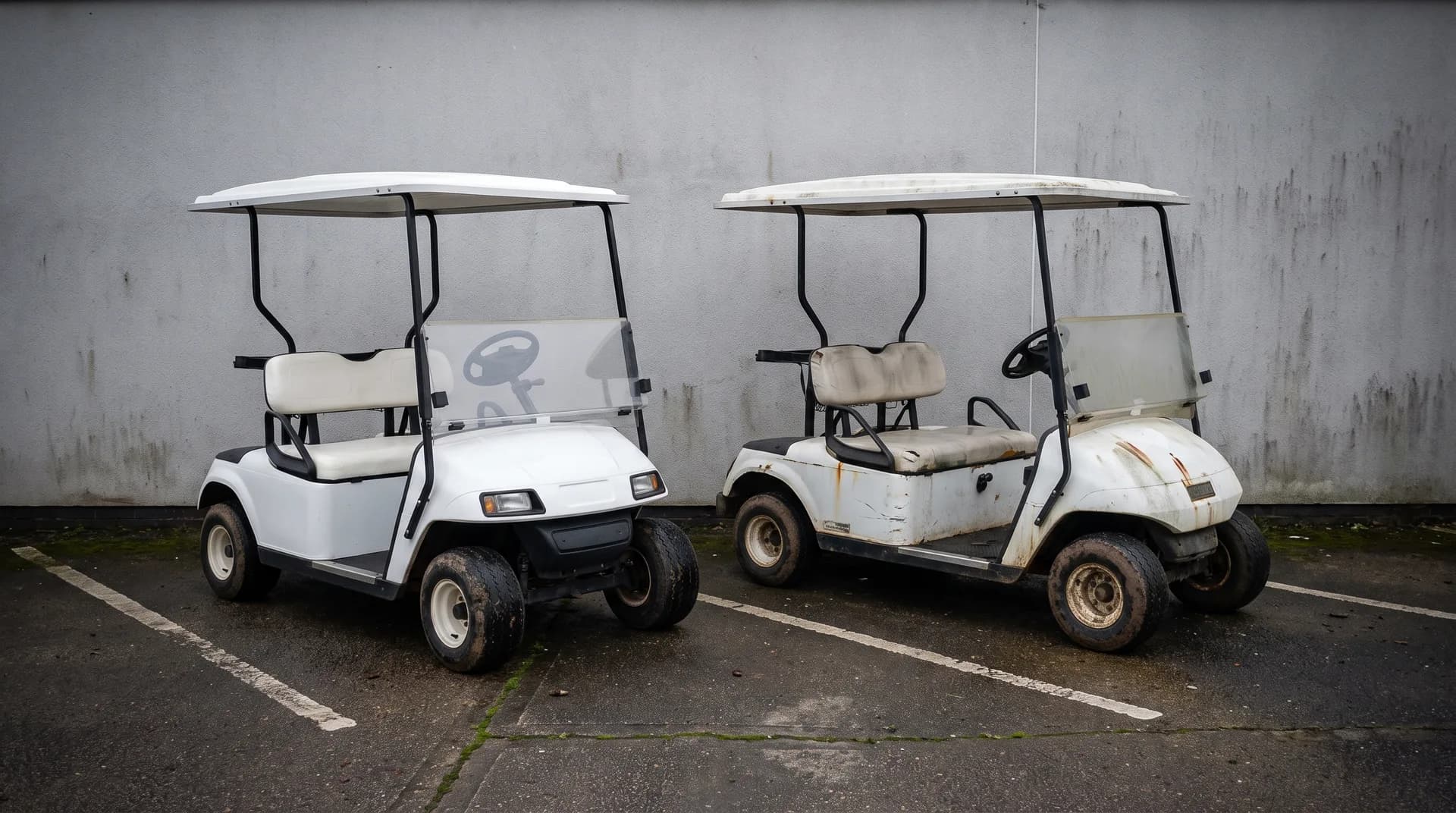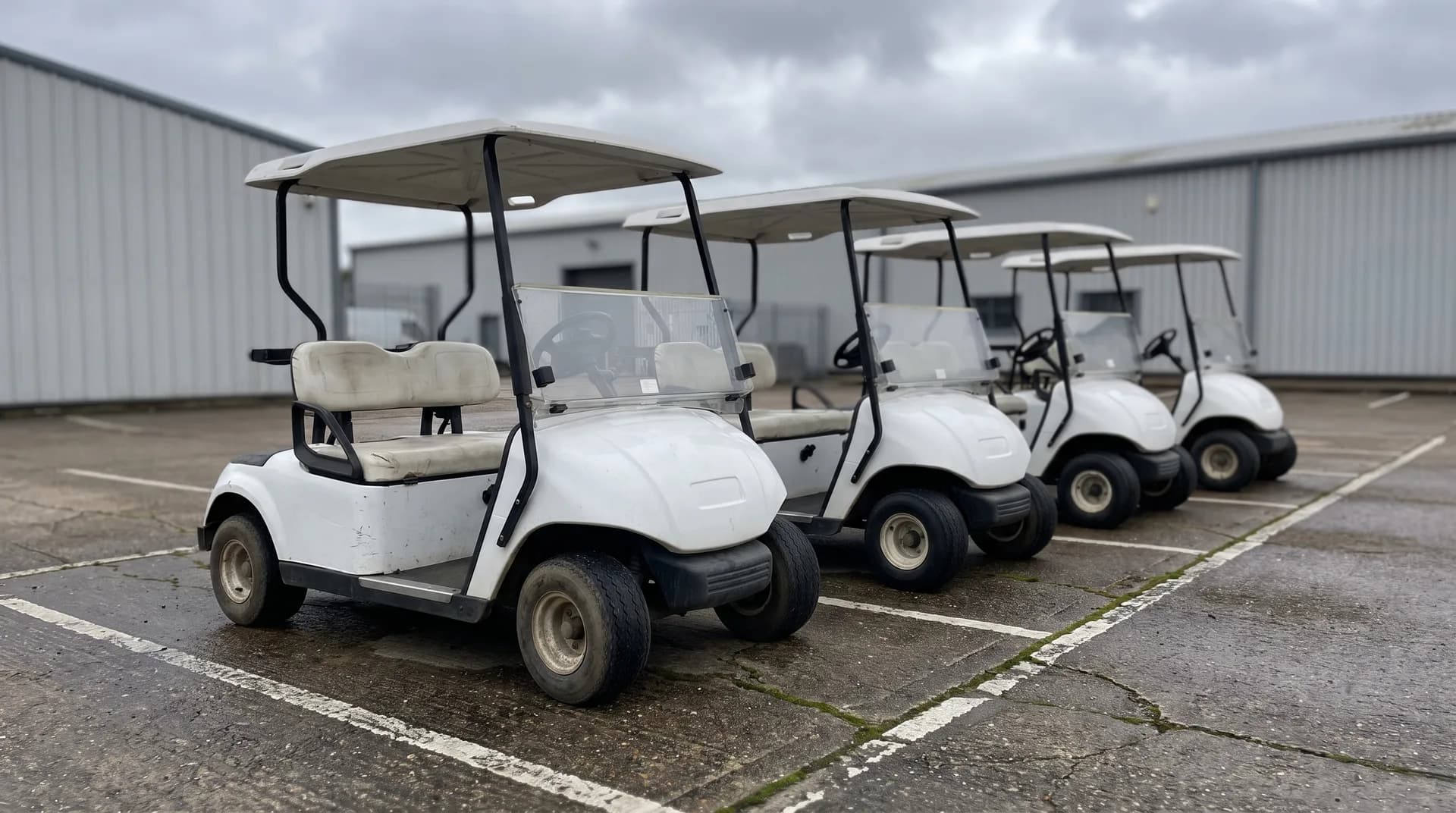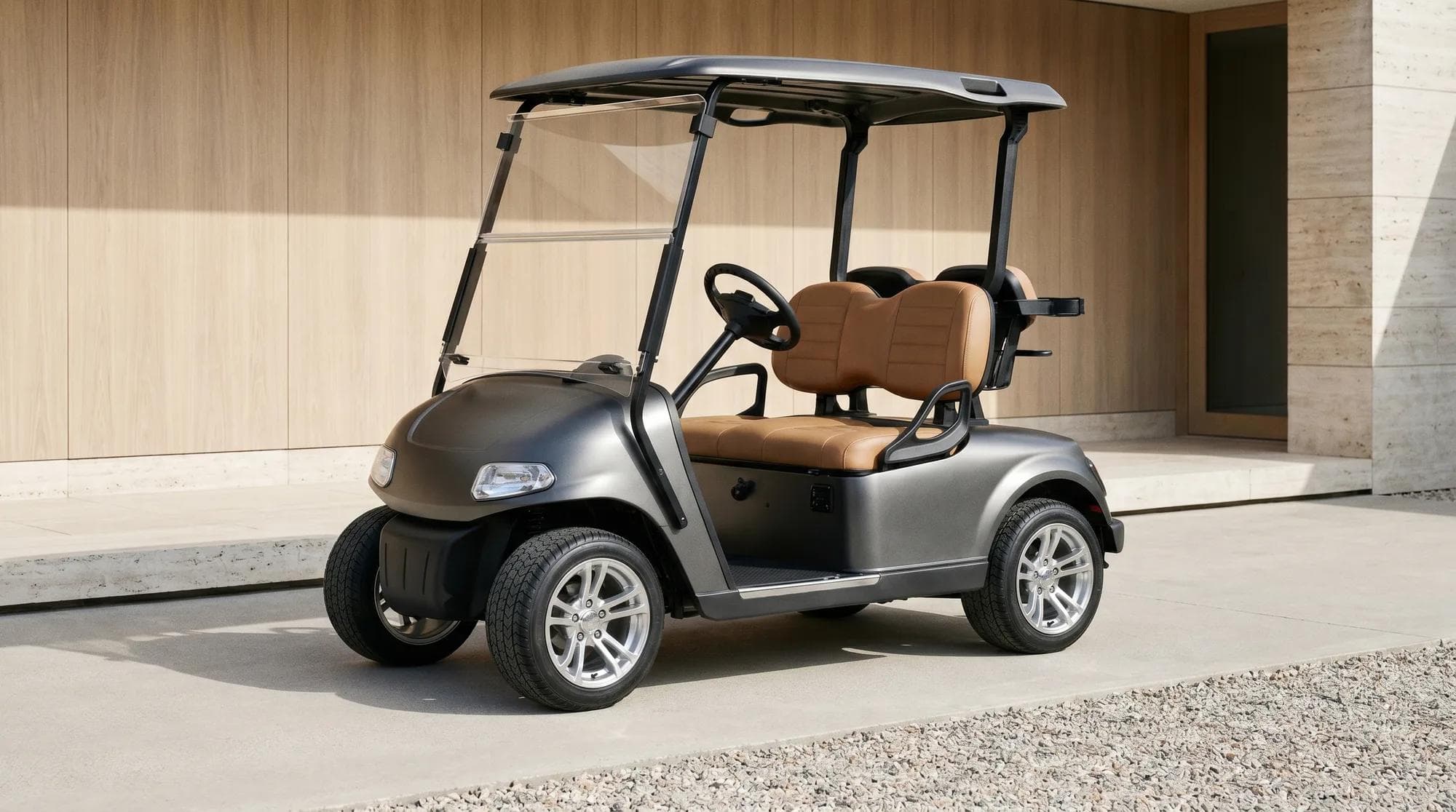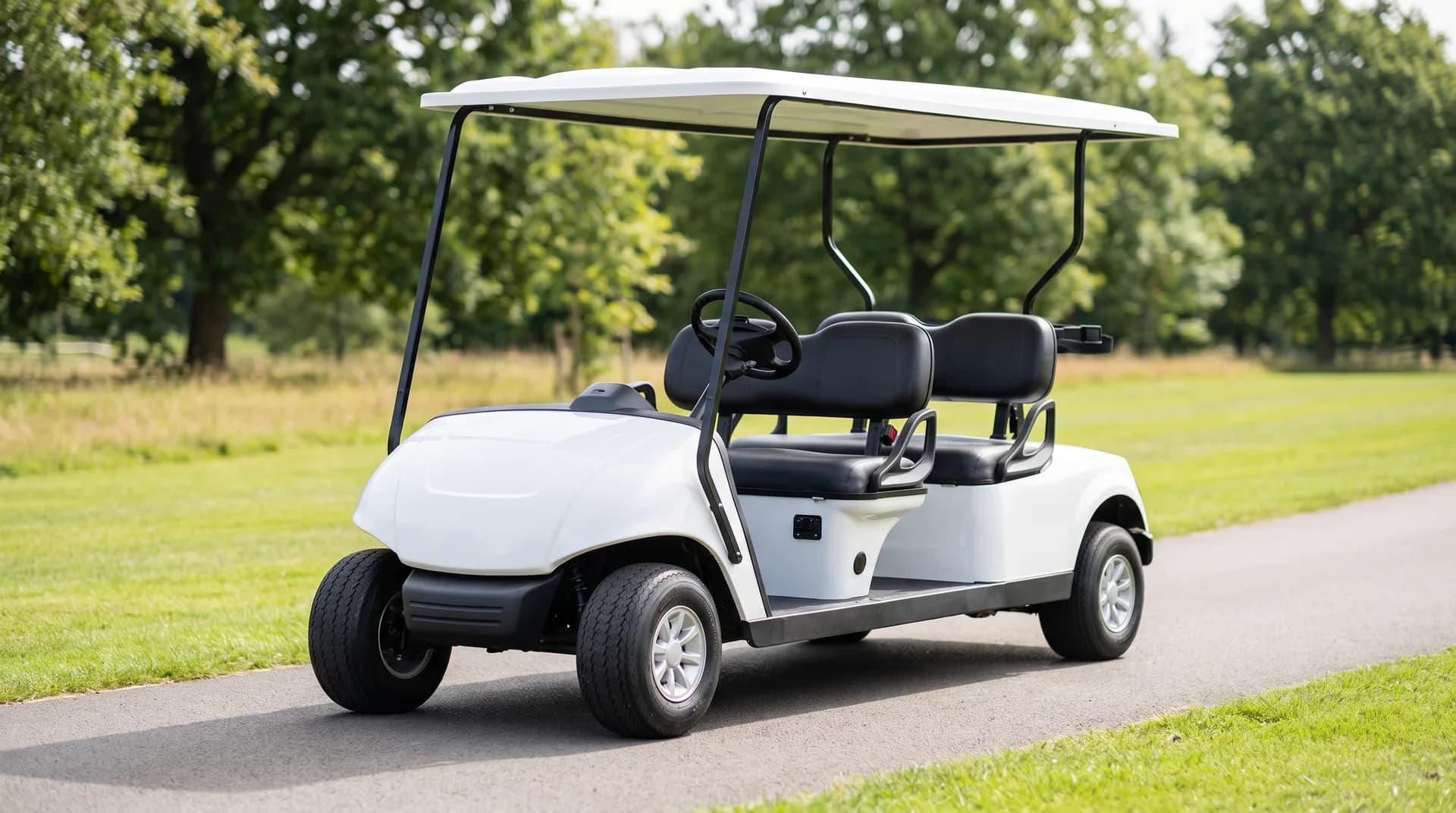
A second-hand golf buggy is one of the few vehicle purchases where the visible condition tells you almost nothing about the value. A buggy can look immaculate, drive smoothly around a car park and still be within months of needing a battery pack that costs a meaningful fraction of what you paid for the whole vehicle. Equally, a scuffed ex-fleet machine with faded paint can be the better buy by a wide margin if its pack is healthy and it has been maintained. This guide sets out how the UK used market actually works, what to look at in what order, and how to judge whether a given buggy is worth the asking price.
- Battery condition decides the value of a used golf buggy more than age, mileage or bodywork.
- Most UK used stock is ex-golf-club fleet, ex-demonstrator or private resale, and each has a different risk profile.
- Hours matter more than years, but neither is recorded consistently, so measurement beats paperwork.
- A buggy sold without any battery-health evidence should be priced as though the pack needs replacing.
- Buying from a dealer costs more than a private sale and carries meaningfully more protection.
Where used golf buggies come from
Understanding the source tells you most of what you need to know about the risk. UK used stock arrives through four broad channels, and they are not equivalent. Ex-fleet buggies come off golf club or resort fleets, usually in batches, at a set replacement interval. They have worked hard but predictably, and they have generally been serviced on a schedule because a club cannot afford unreliable vehicles on a busy tee sheet. Ex-demonstrator and ex-hire vehicles have covered far less ground but have had many different drivers. Private resales are the widest range of all, from a barely used estate buggy to something that has sat unloved in a barn for three winters. Trade and auction stock is the cheapest and the least documented, and is bought on inspection rather than description.
- Typical condition
- High hours, regular servicing, cosmetically tired
- Main risk
- Battery pack near the end of its working life
- Who it suits
- Buyers who want a sound vehicle and will budget for batteries
- Typical condition
- Low hours, good cosmetics, recent specification
- Main risk
- Limited history if it moved between sites
- Who it suits
- Buyers wanting near-new for less
- Typical condition
- Moderate hours, hard-wearing specification
- Main risk
- Cosmetic wear and many different drivers
- Who it suits
- Sites needing robust vehicles rather than showpieces
- Typical condition
- Anything from excellent to neglected
- Main risk
- Standing damage from long periods unused
- Who it suits
- Buyers able to inspect properly, or take an engineer
- Typical condition
- Sold as seen, often unstarted
- Main risk
- No recourse and no history at all
- Who it suits
- Trade buyers and people who can rebuild
| Typical condition | Main risk | Who it suits | |
|---|---|---|---|
| Ex-golf-club fleet | High hours, regular servicing, cosmetically tired | Battery pack near the end of its working life | Buyers who want a sound vehicle and will budget for batteries |
| Ex-demonstrator | Low hours, good cosmetics, recent specification | Limited history if it moved between sites | Buyers wanting near-new for less |
| Ex-hire | Moderate hours, hard-wearing specification | Cosmetic wear and many different drivers | Sites needing robust vehicles rather than showpieces |
| Private resale | Anything from excellent to neglected | Standing damage from long periods unused | Buyers able to inspect properly, or take an engineer |
| Auction and trade | Sold as seen, often unstarted | No recourse and no history at all | Trade buyers and people who can rebuild |
The battery is the deal
If you take one thing from this guide, take this. On an electric golf buggy the traction battery pack is the single largest wearing component, it degrades whether or not the vehicle is used, and replacing it is a substantial cost against the price of a used machine. That makes battery condition the dominant variable in any used valuation, and it is the variable sellers are least able or willing to evidence. A pack that has been deeply discharged repeatedly, left flat over a winter, or simply reached the end of its cycle life will hold enough charge to feel fine on a short test drive and then fall over on the second nine. The only reliable answer is measurement under load, not a look at the terminals and not a seller's assurance. Our guide to golf buggy battery warning signs covers what a failing pack does, and how long golf buggy batteries last sets out realistic service lives.
Hours, years and what neither tells you
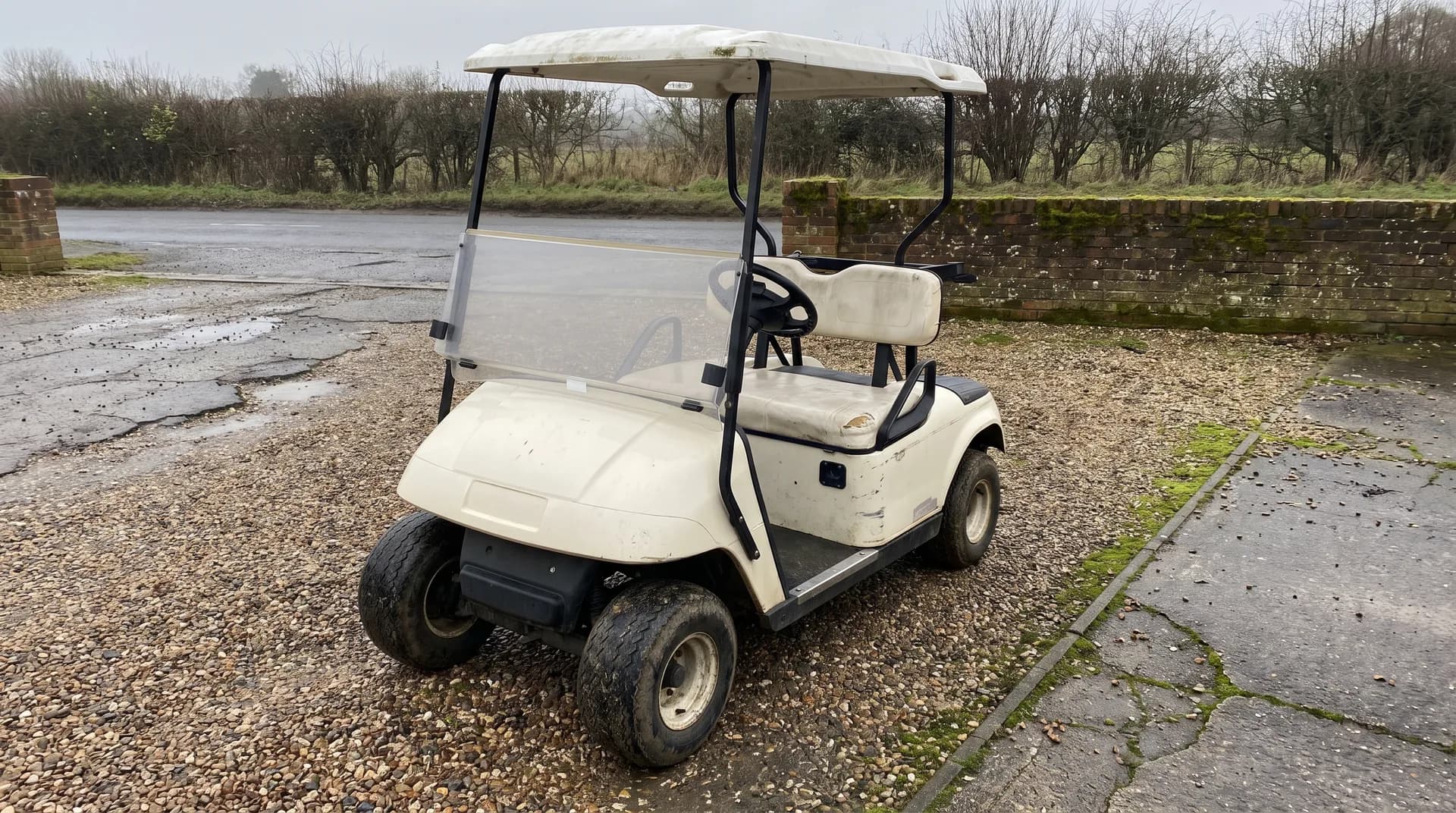
Golf buggies do not carry an odometer in the way a car does, and where an hour meter is fitted it is not always working or original. Age is easier to establish but is a poor guide on its own: a five-year-old estate buggy used twice a week is a different vehicle from a five-year-old club buggy that has done thirty rounds a week every season. What you are really trying to estimate is cycle count on the battery and load hours on the motor, brakes and suspension. In practice you triangulate. Look at the wear points that cannot be tidied up cheaply, because they tell the truth when the paintwork does not: the driver's seat base and the step plate, the brake pedal rubber, the steering wheel finish, the tyre shoulders, and the state of the battery terminals and tray.
- Driver's seat base compression and the step plate on the driver's side
- Brake pedal rubber and the pedal pivot
- Steering wheel wear at the ten and two positions
- Tyre shoulder wear and the date codes on the tyres themselves
- Corrosion in the battery tray and on the terminals and interconnects
- Frame and suspension mounting points, particularly on coastal or farm vehicles
Reading a used listing honestly
Used golf buggy listings tend to describe the things that are easy to describe. Colour, seat count, a canopy, a windscreen, new tyres. What matters is usually absent, and the absence is the information. A listing that gives the battery type, the pack's installation date and a measured state of health is telling you the seller has nothing to hide. A listing built entirely from photographs of clean bodywork at flattering angles, with the phrase runs and drives doing a great deal of work, is telling you something too. Ask three questions before you travel: what is fitted, lead-acid or lithium, and when was it installed; what is the measured capacity or state of health today; and can you see it fully charged and then driven for a sustained period rather than a lap of the yard.
Dealer or private: what you give up
A private sale is cheaper and that discount is real, but it is a discount against risk rather than a bargain. Buying privately from a non-trader gives you very limited protection if the vehicle turns out not to be as described, and effectively none for wear that emerges afterwards. A dealer sale costs more and brings consumer protections, usually an inspection, often a warranty, and someone to call when something does not work. On a vehicle where the main risk sits in a component you cannot see, that difference is worth more than it is on, say, a used trailer. Whichever route you take, our pre-purchase inspection checklist is the practical walkthrough to do on the day, and buying a used golf buggy privately covers where you stand legally.
What a fair price looks like
There is no single used price for a golf buggy, because the same model in the same year can be worth very different sums depending on pack condition and specification. What you can do is build the number up rather than accept it. Start from what an equivalent new build costs, take off for age and hours, then treat the battery as a separate line: a pack with years of life left is worth what it would cost to fit, and a pack that is due is a liability you are inheriting. Specification matters too, and unevenly. A hard roof, a screen, lights and a decent set of tyres are cheap to want and expensive to add later. A tired canopy is cosmetic. Our guide to used golf buggy prices works through the bands in detail.
Frequently asked questions
Is a second-hand golf buggy a good idea?+
It can be very good value when the battery pack is sound and the vehicle has been maintained, and poor value when neither is true. The deciding factor is almost always the pack rather than the age or the bodywork, so buy on measured battery health rather than appearance.
How old is too old for a used golf buggy?+
Age matters less than hours and battery condition. A well-maintained older buggy with a recently replaced pack can outlast a younger one that has been run flat repeatedly. Judge each vehicle on its measured condition rather than its year.
What should I check before buying a second-hand buggy?+
Battery type, installation date and measured state of health first, then brakes, tyres, steering, the controller's behaviour under sustained load, and the frame and battery tray for corrosion. Drive it for long enough to load the pack properly, not just around a yard.
Can I get a warranty on a used golf buggy?+
From a dealer, usually yes, and the terms vary considerably, so read what is actually covered and for how long, particularly whether the battery pack is included. Private sales normally carry no warranty at all.
Is it cheaper to buy used or hire?+
It depends entirely on how often you need a vehicle. Occasional or seasonal use is usually better served by hire, while regular year-round use tends to favour ownership. Our hire pages set out the day and week rates if you want to compare the two honestly.
Looking for an approved used buggy?
Tell us what you need and your budget. We supply inspected pre-owned, ex-demonstrator and ex-fleet electric buggies with measured battery health and a warranty, and we will tell you honestly when new is the better buy.
Related solutions
Ready to explore what we build?
See the vehicles and the setting this applies to, or get a tailored quote built around your site.

Ready to find the right buggy?
Tell us how and where it will work and we will specify a vehicle and a tailored quote built around you. Every build comes with a 3-year warranty and a 24-hour priority call-out.
Our guides are written and reviewed by the Hawke Electric Vehicles team, the people who specify, build, deliver and support the vehicles. We focus on honest, practical advice and flag where a figure depends on the build rather than guessing.
More guides by Hawke