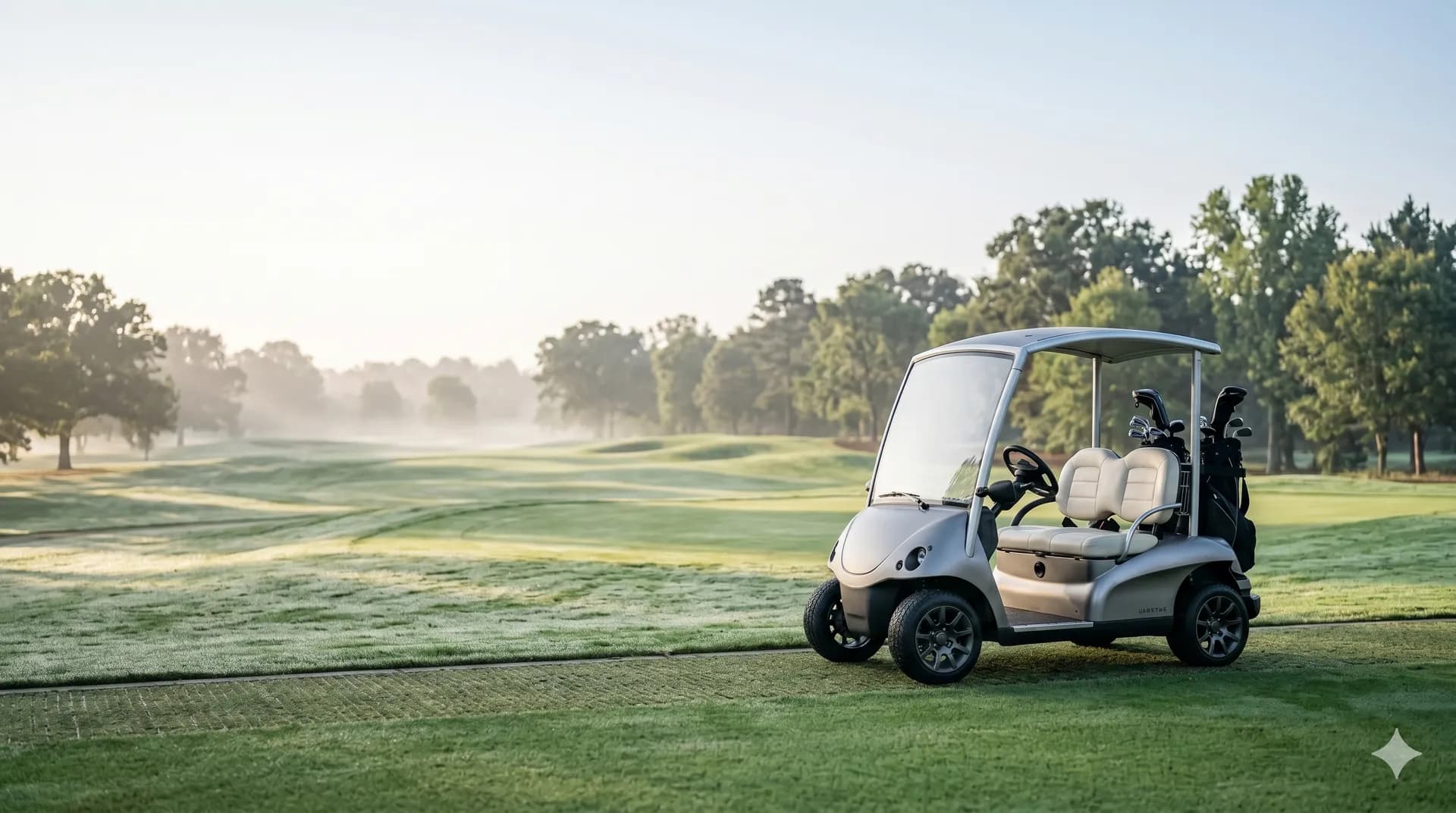
The costliest mistake in private buggy ownership is not buying the wrong machine, it is buying the right machine for a club that will not let you use it. Clubs are private ground with their own rules, and those rules vary wildly: some welcome private buggies, some tolerate them with conditions, some mandate that you hire theirs, and some ban private machines outright. Storage sheds have waiting lists that at popular clubs run to years, insurance mandates are common, and winter bans apply to your buggy just as they do to the hire fleet. Whether you are eyeing a single-seater, a compact two-seater or anything else, this is the homework to do before you spend a pound, and it all starts with one conversation.
- Get written permission from your club before buying; some clubs ban private buggies or mandate hiring theirs.
- Buggy-shed storage often has a waiting list and an annual fee; know both before you commit.
- Most clubs require proof of public liability insurance for private buggies.
- A medical exemption certificate is usually needed for competition use.
- Winter and wet-weather bans apply to owned buggies too, so budget for rounds you cannot ride.
Permission first, purchase second
Write to the secretary or manager before you shop, and get the answer in writing. Ask the direct question: are members permitted to use privately owned buggies on the course? The answers span the full range. Many clubs say yes with conditions, registration, insurance, sometimes an annual permit fee. Some restrict private buggies to golfers holding a medical exemption certificate. Some mandate hiring the club's own fleet, because hire income matters to them, and a few ban private machines entirely, citing course wear, liability or storage. If the answer is a refusal and you have a genuine medical need, the conversation is not necessarily over, clubs owe reasonable adjustments under the Equality Act, and our guide to those duties explains what a club may and may not lawfully do, but you want that established before your money leaves your account, not after.
Storage: the waiting list nobody mentions
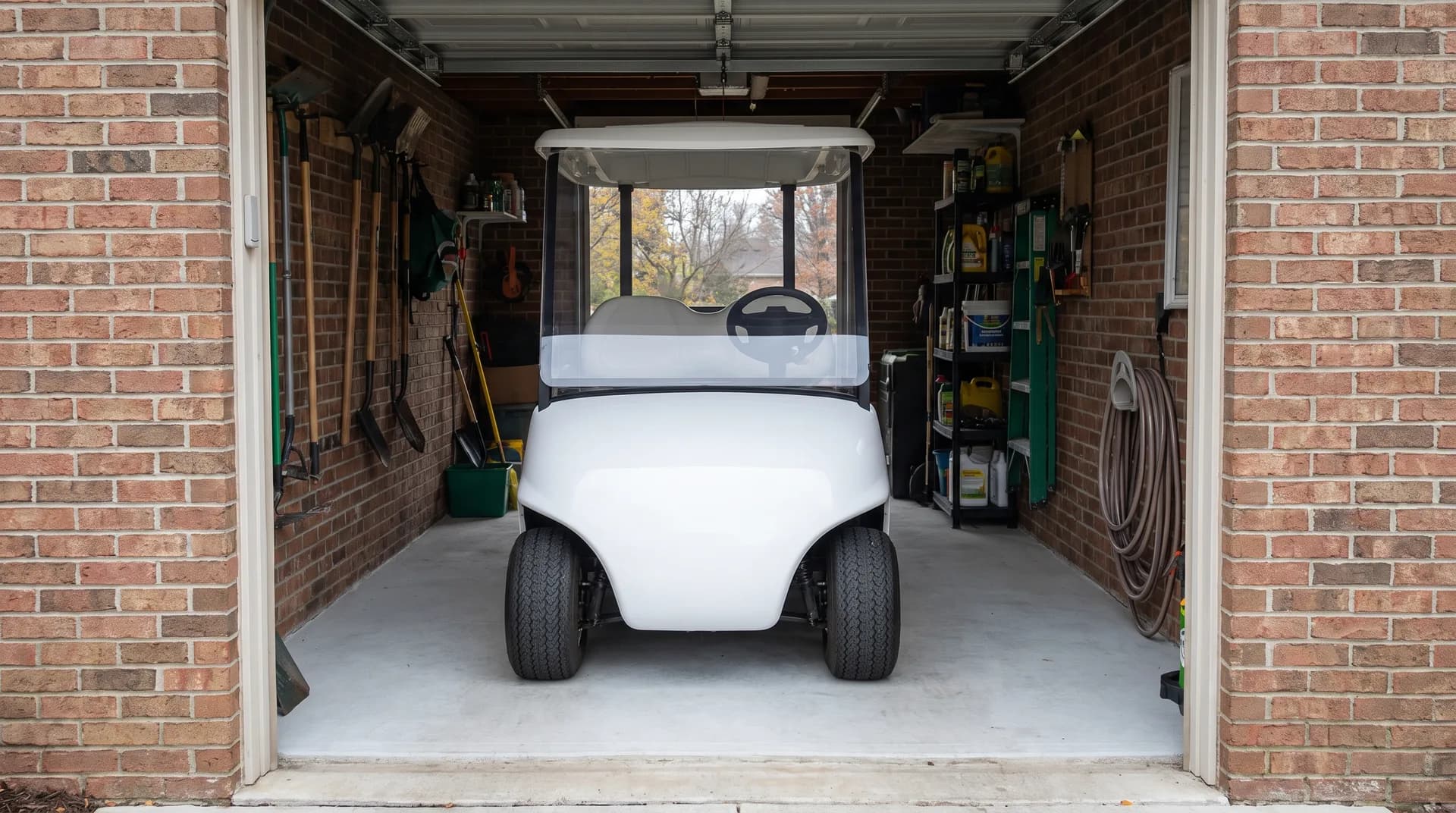
If the club allows your buggy, the next question is where it lives. A space in the buggy shed or trolley store, ideally with charging, is the gold standard: the machine never travels, never gets lifted, and is always ready. It is also scarce. Sheds were sized for a handful of machines decades ago, demand has grown, and waiting lists at busy clubs are commonly measured in seasons and sometimes years. Expect an annual storage fee on top of the wait, often broadly comparable to a trolley-store fee but set entirely by the club. Ask three things: how long is the list, what does a space cost per year, and does it include charging. If storage is years away, your machine must travel in your car every round in the meantime, which changes what you should buy, weight and boot fit suddenly lead the spec sheet, as our single-seater buyer's guide explains, or it points you towards hiring until a space comes up.
Insurance, certificates and the club's conditions
Almost every club that permits private buggies attaches conditions, and the near-universal one is insurance. Expect to show proof of public liability cover for the buggy, clubs commonly ask for cover in the millions, with £5 million a figure that appears often, before you are allowed on the course. Specialist buggy and mobility policies are inexpensive relative to the machine and sometimes bundle breakdown cover; some household policies can extend, but get the club's required limit in writing and match it exactly. Competition play usually needs a medical exemption certificate lodged with the club, whatever your ownership status. And expect house rules: paths-only holes, keep-off zones around greens and tees, speed expectations, sometimes a driver age or competence condition. None of this is onerous once known; all of it is better known before buying.
Winter bans and charging: the running realities
Two operational realities catch new owners. First, winter. When ground conditions close the course to buggies, whether a blanket seasonal ban or a traffic-light call made morning by morning, the restriction applies to your machine exactly as it does to the hire fleet. Owning a buggy does not buy access to a waterlogged fairway, though exemption-certificate holders often retain path-only access on marginal days. Read our guide to winter buggy bans and ask how your club handles them, then budget honestly for the rounds you will not ride. Second, charging. If the buggy stores at the club, confirm there is a socket at your space, whether charging is included in the fee or metered, and whether the club has rules about charger types, lithium packs charge faster and are the easier ask. If the machine lives at home, you need the same answers about your own garage and the car journey in between.
Taking your buggy to other courses
Permission at your home club does not travel with you. Every course you visit sets its own policy on visitors' machines, and plenty of venues that happily hire you a buggy will not allow a private one onto the course at all, sometimes for insurance reasons, sometimes because hire income is part of the green fee economics. Before an away day or an open, contact the host club in advance, ask specifically about privately owned buggies rather than buggies in general, and be ready to send your exemption certificate and insurance documents ahead of the day. Societies and county events usually resolve this through the organiser, and the better-run venues have a clear written answer either way. If the answer is no, most will offer a hire buggy instead, often with priority for certificate holders, so the golf still happens, just not on your machine. Build this into your expectations at purchase: a private buggy is at its best as a home-club machine, and the more you roam, the more the hire route earns its keep.
The questions-to-ask checklist
- Are privately owned buggies permitted on the course, and is that policy in writing?
- Is permission conditional on a medical exemption certificate?
- Is there buggy storage, how long is the waiting list, and what is the annual fee?
- Does storage include charging, and are there rules on chargers or battery types?
- What public liability insurance limit must I show, and to whom?
- Is there an annual permit or registration fee for private buggies?
- Can I use the buggy in competitions, and what certificate must be lodged?
- How do winter and wet-weather restrictions work, and what do exemption holders keep?
- Are there paths-only holes or no-go areas I should know about?
- If I sell or replace the buggy, does permission transfer to the new machine?
Frequently asked questions
Can a golf club stop me using my own buggy?+
Yes, clubs set their own rules and some ban private buggies or mandate hiring theirs. If you have a genuine medical need the club owes reasonable adjustments under the Equality Act, so a blanket refusal is challengeable, but always establish the position in writing before buying.
How much does buggy storage at a club cost?+
It is set entirely by the club, typically an annual shed fee, sometimes with charging included and sometimes metered. The bigger issue is availability: waiting lists at busy clubs can run to years, so ask about the list before the fee.
Do I need insurance for a private golf buggy?+
Almost certainly. Most clubs require proof of public liability cover, commonly in the millions, before a private buggy goes on the course. Specialist buggy policies are inexpensive; get the club's required limit in writing and match it.
Can I use my own buggy in club competitions?+
Usually only with a medical exemption certificate lodged with the club, in line with the competition rules the club plays under. The certificate is straightforward to obtain with genuine need, and worth arranging before the season starts.
Do winter buggy bans apply to buggies members own?+
Yes. Ground-condition restrictions apply to all buggies, private and hire alike, although many clubs give medical exemption holders path-only access on marginal days. Buying a buggy does not guarantee year-round use, so budget for it.
Buying once the club side is settled?
Tell us your club's rules, your storage situation and how you play, and we will specify the right machine and build your quote.
Related solutions
Ready to explore what we build?
See the vehicles and the setting this applies to, or get a tailored quote built around your site.
Ready to find the right buggy?
Tell us how and where it will work and we will specify a vehicle and a tailored quote built around you. Every build comes with a 3-year warranty and a 24-hour priority call-out.
Our guides are written and reviewed by the Hawke Electric Vehicles team, the people who specify, build, deliver and support the vehicles. We focus on honest, practical advice and flag where a figure depends on the build rather than guessing.
More guides by Hawke