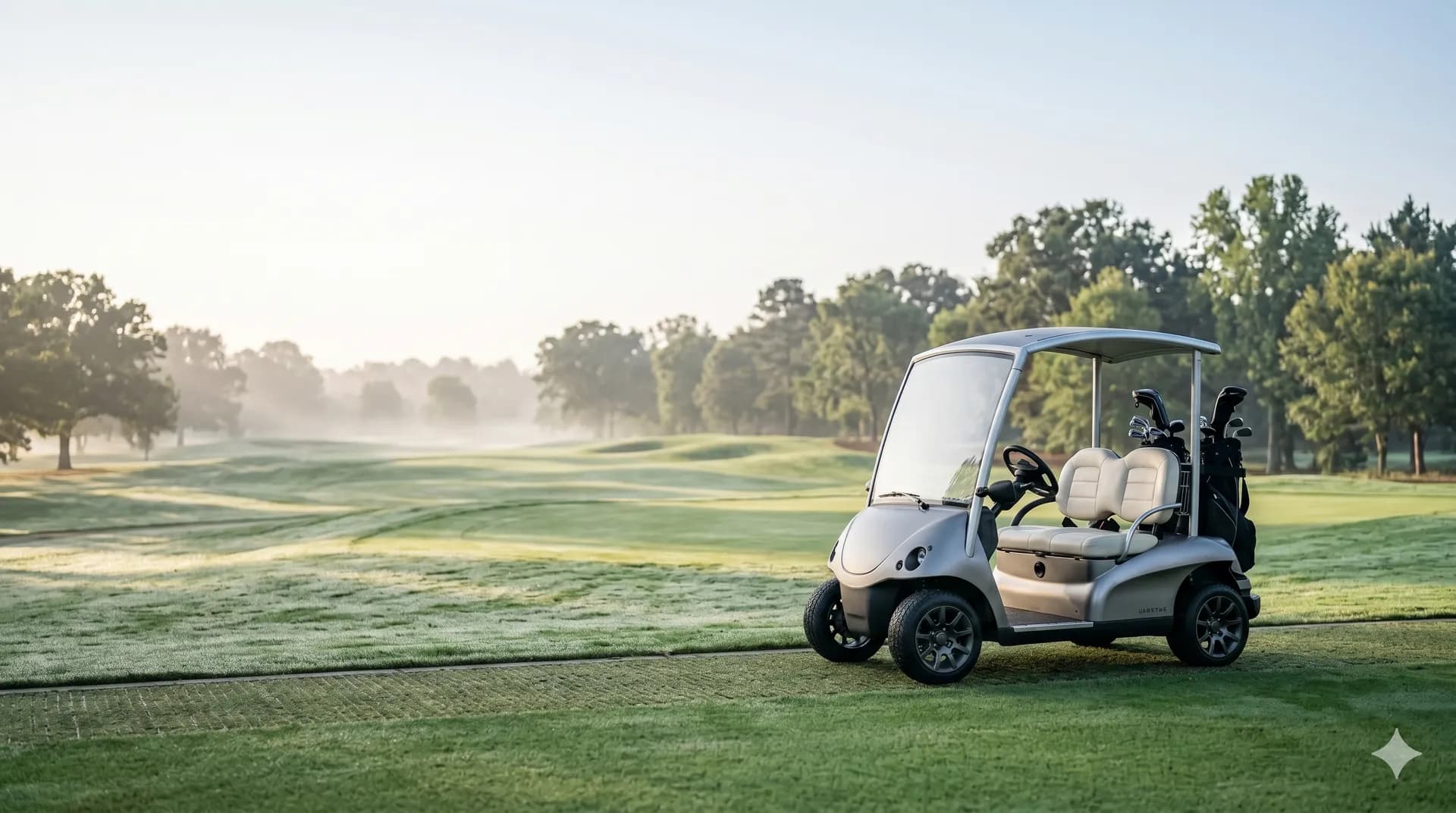
A single-seater golf buggy is the machine that keeps a golfer with a worn knee, a replaced hip or a long-term condition playing eighteen holes when walking them is no longer realistic. It is a small, personal ride-on, narrow enough to thread along paths, light enough for one person to manage, and in the UK it is a genuine niche with its own brands, its own second-hand market and its own pitfalls. Grasshopper, Patterson and PowaKaddy-style machines dominate the clubhouse recommendations, most sell for somewhere between two and five thousand pounds, and the buying decisions that matter are not the ones the brochures lead with. This guide works through them in the order experienced owners would tell you to.
- Four wheels beat three for stability on slopes; tip-overs are the documented risk with trikes.
- Weight and boot fit decide whether you can actually use the buggy, measure before you buy.
- Lithium batteries transform weight and range; retrofitting lithium is the common fix for a tired used machine.
- Ask your club about permission and storage before you spend a penny, waiting lists are real.
- Winter buggy bans apply to owned buggies too; buying one does not guarantee you can use it year round.
Who a single-seater suits
The typical buyer is a golfer who can still swing but cannot walk the course: arthritis, a knee or hip waiting for surgery or recovering from it, MS, heart or lung conditions, or simply age catching up with distance. If that is you, a single-seater is often the difference between playing twice a week and giving the game up. It suits golfers who play most of their rounds at one club, have somewhere to keep the machine or a car that can carry it, and want something personal rather than the club's hire fleet. If you regularly play with a partner, carry a passenger, or want a vehicle with a dealer network behind it, keep reading, because the answer changes.
Three wheels or four: stability first
This is the first question seasoned owners ask, and their answer is consistent: four wheels. Three-wheeled single-seaters are lighter and turn tightly, but a trike carrying a seated adult across a wet side slope has a documented tendency to feel nervous, and tip-overs on banks and greenside slopes are the incident owners actually talk about. A four-wheel layout puts a wheel at each corner of you, keeps the machine planted when the ground falls away, and matters more the hillier your course is. If your home course is flat parkland a trike can serve well; if it has any serious slopes, buy four wheels and do not look back.
Weight and boot fit: will it go in your car?
Unless your club stores the buggy, it lives at home and travels in your car, so weight and dimensions are not spec-sheet trivia, they decide whether you can use the thing at all. Before you buy, measure three figures on any machine you are considering: the total weight, the weight of the heaviest single piece once it is split down, and the folded or dismantled dimensions of the largest piece. Then open your boot with a tape measure: aperture width and height, load-floor length with the seats as you would actually have them, and the lip height you must lift over. Many single-seaters split into around three pieces for transport, and the difference between a machine you can load and one you cannot is usually the heaviest piece, not the total. Lead-acid models concentrate their battery weight into exactly that piece, which is why owners describe wrestling them up ramps; if you will load and unload alone, or your strength is part of why you are buying a buggy, a lithium machine or one with a genuinely light heaviest section is worth paying for. Folding ramps and hitch-mounted carriers exist, but they are workarounds for a machine that is too heavy, not substitutes for choosing a manageable one.
Batteries: lithium, lead-acid and the retrofit route
Battery chemistry shapes everything about owning one of these machines. Lead-acid is the traditional fit and keeps used prices low, but the packs are heavy, fade over their life, dislike being left part-charged, and are the main reason older buggies are brutal to lift and short on range by the back nine. Lithium is lighter, holds its performance, charges faster and tolerates the stop-start life of a golf buggy far better. On the used market, the standard community fix for a tired but mechanically sound machine is a lithium retrofit: replacing the lead-acid pack with a lithium one, typically through a specialist who supplies the pack and a matched charger. It can transform a good older buggy, but have it done properly, the charger must match the pack, and a botched conversion is a fire and warranty risk. If you are buying used, a machine already converted by a reputable specialist is worth a premium over one still on original lead-acid.
Club permission and storage: ask before you buy
Here is the gotcha that catches more buyers than any spec decision: some clubs do not allow private buggies at all, and many that do have storage waiting lists measured in years. Before you spend anything, ask your club in writing whether private buggies are permitted, whether there is buggy shed or trolley store space and what the wait and annual fee are, whether the club requires proof of public liability insurance, and whether a medical certificate is needed for competition use. We cover the whole conversation in our guide to taking your own buggy to the golf club. If storage is years away, your buying criteria change completely, because the buggy must now travel in your car every round, which brings you straight back to weight and boot fit.
When a compact two-seater is the better buy
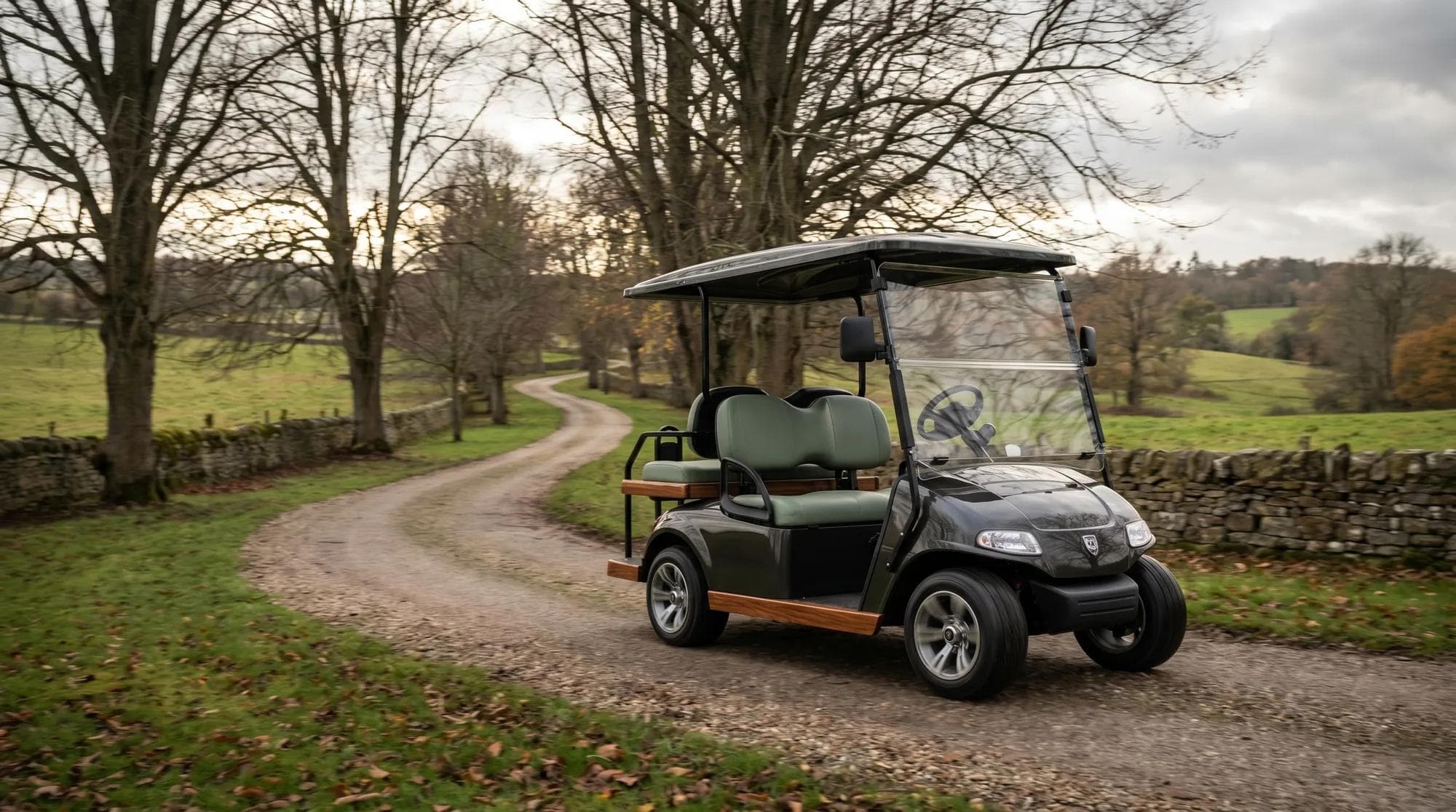
We will be straight with you: Hawke does not sell a single-seater, and this guide exists because the niche deserves honest coverage anyway. But there is a genuine fork in the road here. Single-seaters are mostly sold by small specialists or imported privately, which can mean thin dealer networks, patchy parts supply and a warranty that depends on one small firm staying in business. If you have somewhere to keep a vehicle at the club or at home, play with a partner or grandchildren, or simply want a machine with a proper service network behind it, a compact two-seater such as our S2 is the alternative worth pricing: a full-size build in a small footprint, lithium power, a 3-year warranty and nationwide support. It will not fold into a hatchback, so it is the answer for golfers who can store rather than transport, but for them it is often the better long-term buy. Our buyer's guide to electric golf buggies covers that route in full.
VAT relief: what actually qualifies
Budget for the VAT. A standard single-seat buggy does not qualify for disabled VAT relief, and HMRC says so explicitly: zero-rating requires equipment designed solely for disabled people, and a machine marketed to golfers in general fails that test however much it helps you. The legitimate route is a buggy substantially and permanently adapted for your disability, where the adaptation is what earns the relief. Our guide to VAT relief on golf buggies for disabled buyers sets out exactly where the line sits. Read it before you order, and treat any seller who waves a declaration form around as a red flag rather than a bargain.
Frequently asked questions
How much does a single-seater golf buggy cost in the UK?+
Typically around £2,000 to £5,000 new depending on brand, battery and spec, with used machines below that. A lithium battery adds to the price but transforms weight, range and battery life. Budget for VAT on top: a standard buggy does not qualify for disabled VAT relief, whatever its size.
Are three-wheel single-seaters safe?+
On flat ground, generally yes, but four wheels are markedly more stable on slopes and cambers, and tip-overs on banks are the documented concern with trikes. If your course has meaningful slopes, buy a four-wheel machine.
Will a single-seater buggy fit in my car?+
Many split into around three pieces and fit a medium estate or SUV, but check the folded dimensions of the largest piece against your boot aperture, and the weight of the heaviest piece against what you can genuinely lift. Lead-acid models are much harder to load than lithium ones.
Can I put a lithium battery in an older buggy?+
Usually yes, a lithium retrofit through a specialist is the common fix for a tired used machine, replacing the lead-acid pack with a lighter, longer-lived lithium one and a matched charger. Have it done professionally rather than improvised.
Do I need my club's permission to use my own buggy?+
Almost always. Some clubs ban private buggies, many require registration, proof of public liability insurance and sometimes a medical certificate, and storage space often has a waiting list. Ask in writing before you buy.
Want the supported alternative?
If a compact two-seater with a 3-year warranty and a real service network sounds like the better route, tell us how you play and we will build your quote.
Related solutions
Ready to explore what we build?
See the vehicles and the setting this applies to, or get a tailored quote built around your site.
Ready to find the right buggy?
Tell us how and where it will work and we will specify a vehicle and a tailored quote built around you. Every build comes with a 3-year warranty and a 24-hour priority call-out.
Our guides are written and reviewed by the Hawke Electric Vehicles team, the people who specify, build, deliver and support the vehicles. We focus on honest, practical advice and flag where a figure depends on the build rather than guessing.
More guides by Hawke