Yes, you can charge a golf buggy from solar panels, and for the buggy that lives in a barn three fields from the nearest socket, it is often the neatest answer there is. But the honest UK picture has two very different versions of solar charging in it: small roof-mounted panels that trickle a top-up into the battery through the day, and a proper off-grid array at the barn that charges the buggy the way a socket would. They are not the same thing, and this guide covers both plainly, including the safety line: fixed electrical installations are a qualified electrician's job, not a weekend wiring project.
- Yes, two ways: roof-top trickle kits, or a proper off-grid array at the building.
- A roof kit tops up and offsets; it does not replace overnight charging on a working buggy.
- A sized barn array with a charge controller charges properly, off grid.
- British sun is seasonal: winter yield is a fraction of summer's, so size honestly.
- Fixed installs belong to a qualified electrician; no DIY mains wiring.
The roof kit: a trickle, honestly described
The solar option most people meet first is a slim panel mounted on the buggy's canopy, feeding the battery through a small controller as the vehicle sits and works in daylight. Honestly described, it is a top-up: it slows the discharge through a working day, stretches range at the margin, and keeps a lightly-used buggy healthy between outings. What it will not do is replace proper charging on a hard-working vehicle; British daylight through a panel that size simply is not an overnight socket, as the arithmetic in our charging guide makes clear. Useful, yes; magic, no.
The barn array: proper off-grid charging
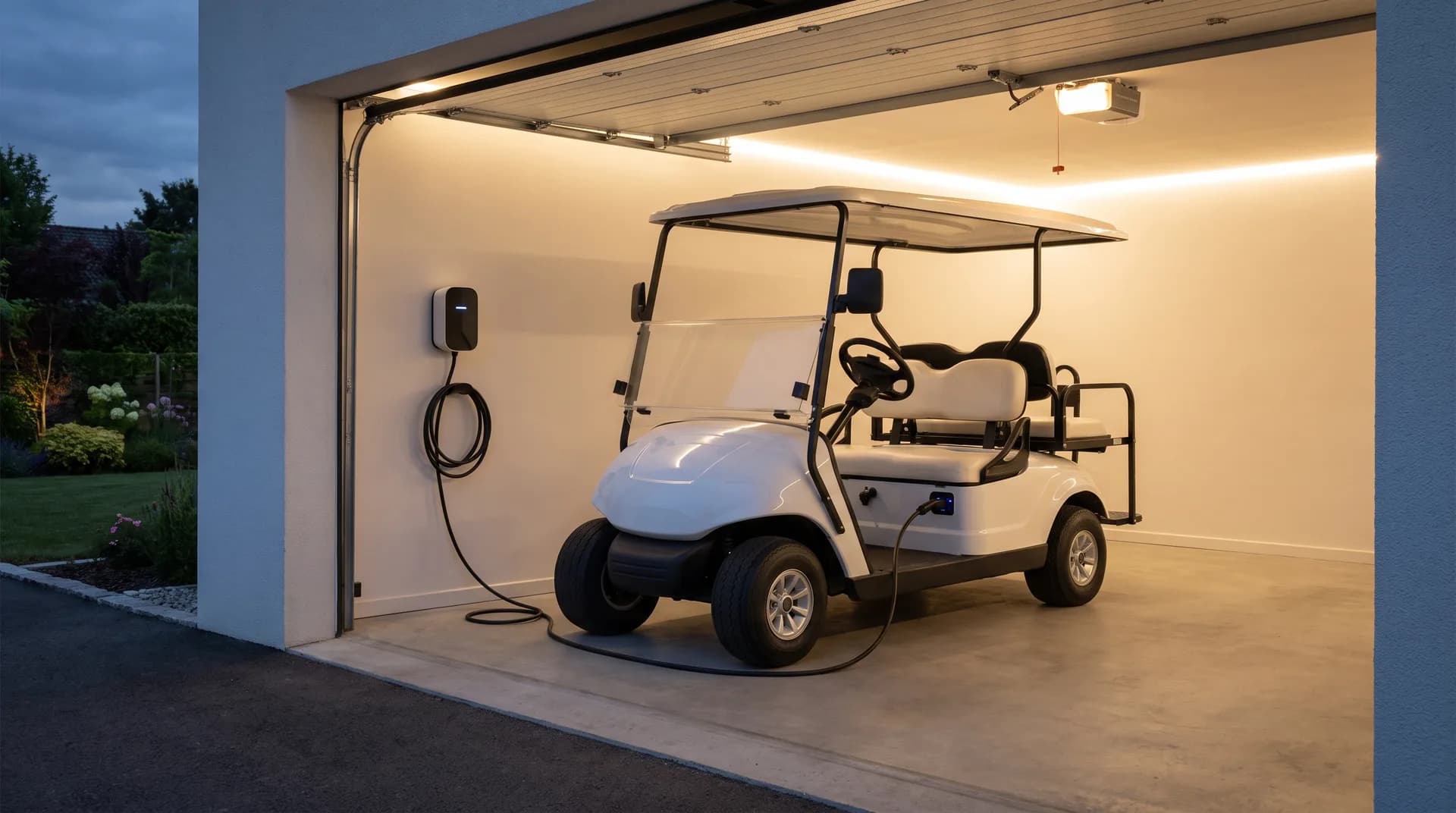
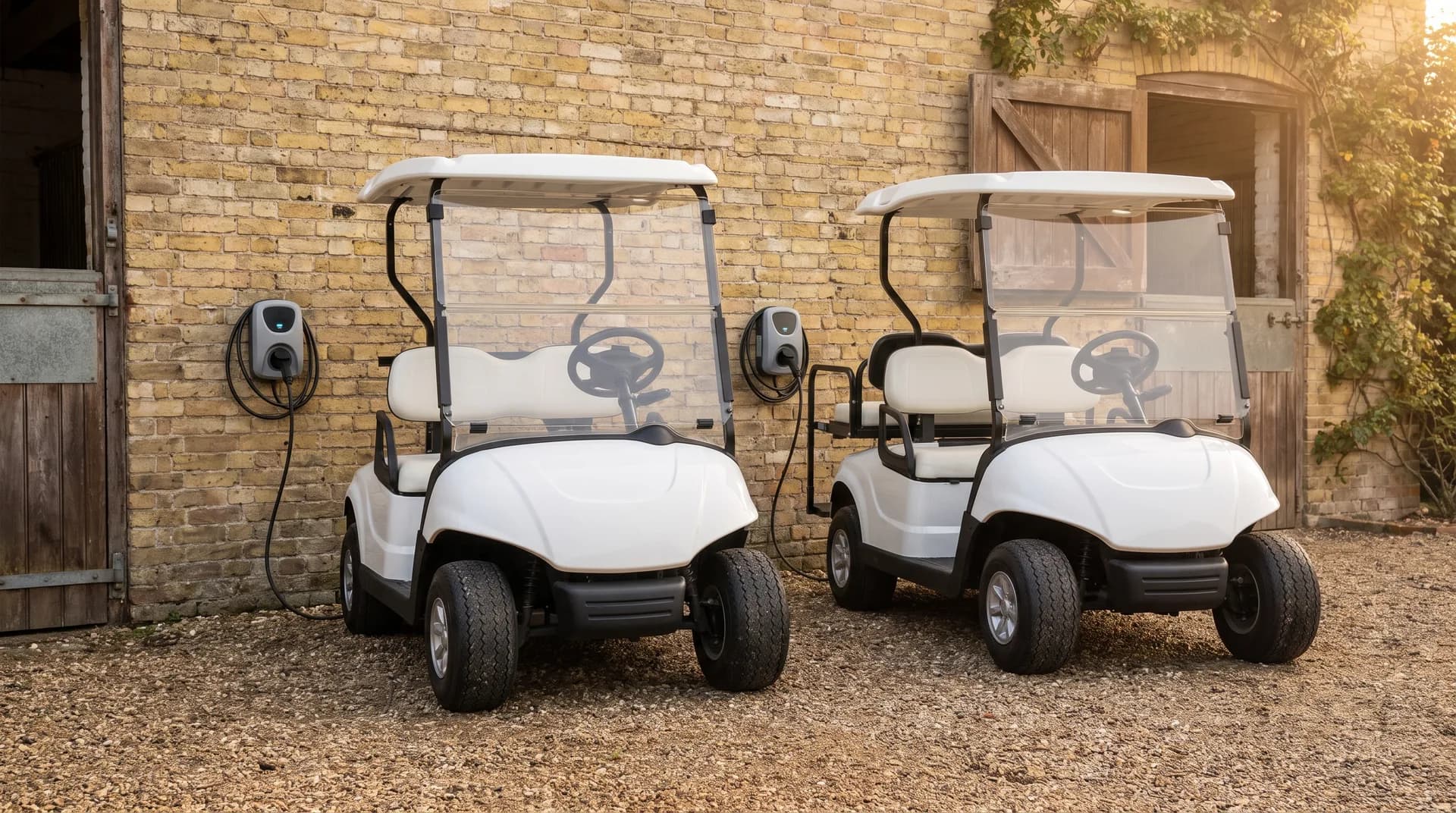
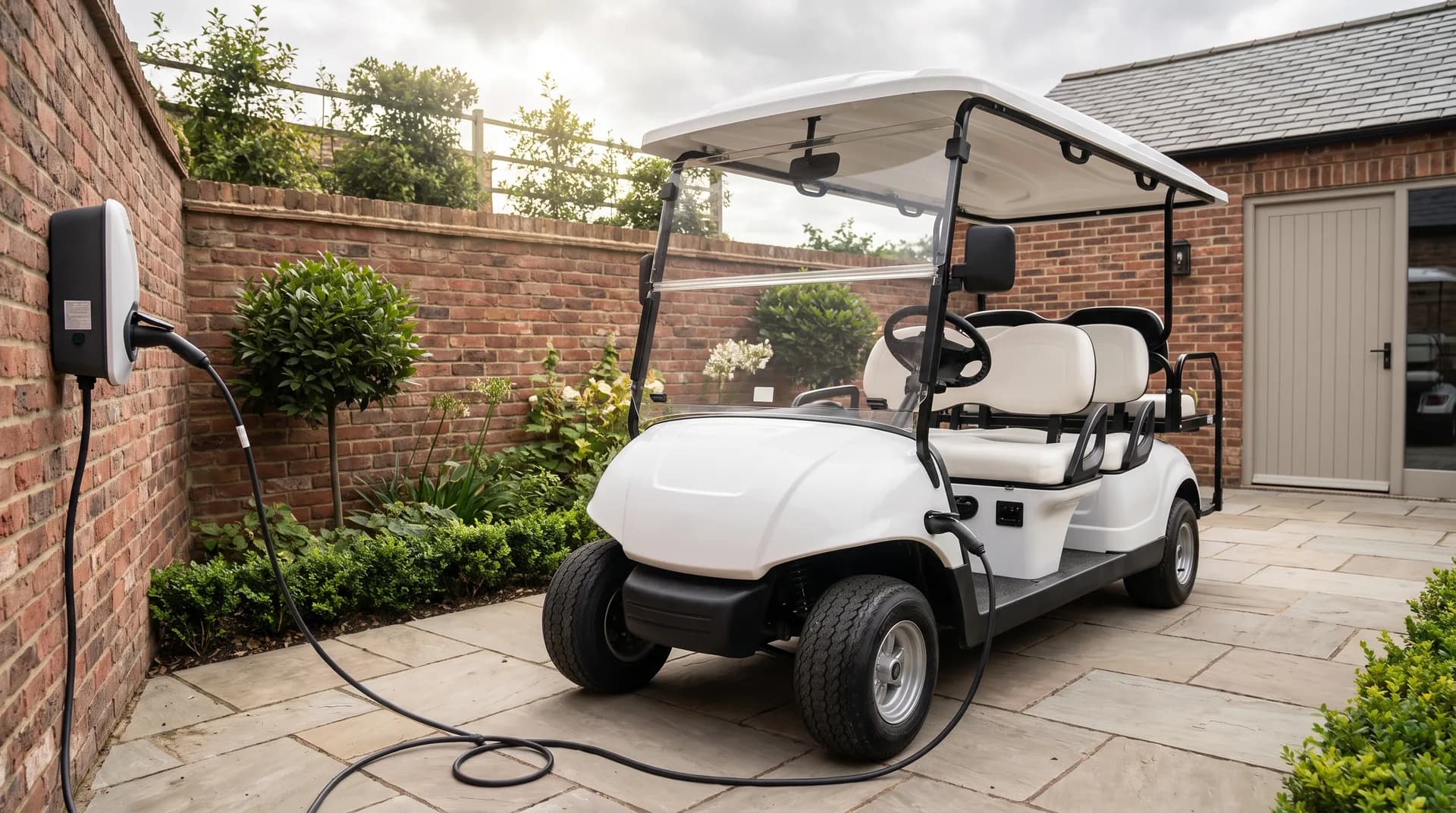
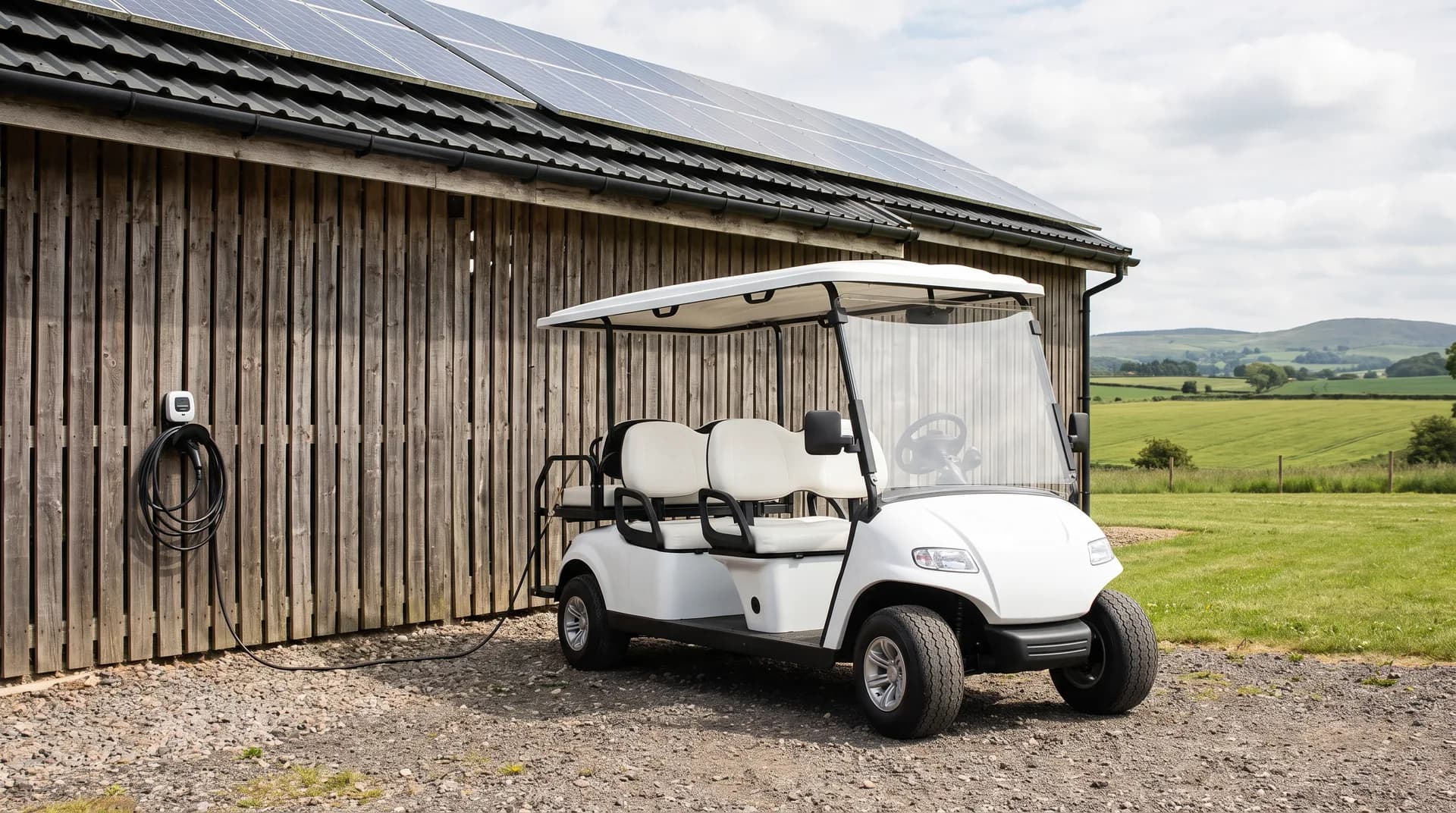
The setup that genuinely frees a buggy from the grid is different: panels on the barn or shelter roof, a charge controller, and a battery-and-inverter arrangement sized so the buggy's charger runs from stored solar power exactly as it would from the mains. Done properly, it is how remote yards, far paddocks and off-grid estates run vehicles all season, and it pairs naturally with the charging-point planning in our estate charging guide. The sizing must respect British winters, December yields a fraction of June, and the design and installation of a fixed system is a job for a qualified installer working to the wiring regulations, full stop.
Doing it safely and sensibly
The safety picture is simple and worth stating plainly. Batteries, chargers and generation equipment are not a place for improvised wiring: use proper charge controllers rather than wiring panels straight to batteries, keep connections dry and sound, exactly the outdoor-electrics care our rain guide describes, and have any fixed installation designed and fitted by a qualified electrician. Beyond safety, the economics are cheerful: a buggy already costs pennies to charge, as our running-costs guide shows, and solar takes even those pennies off the bill while freeing the vehicle to live where the work is.
Frequently asked questions
Can you charge a golf buggy with solar panels?+
Yes, two ways: a roof-mounted panel kit that trickles a top-up into the battery through the day, or a properly sized off-grid array at the barn that runs the buggy's charger just as the mains would. They suit different needs and we describe both honestly.
Will a roof solar panel keep a buggy charged?+
On a lightly used buggy, it meaningfully helps: it slows discharge, stretches range at the margin and keeps the battery healthy between outings. On a hard-working vehicle it is a top-up, not a substitute for proper charging; British daylight through a canopy-sized panel is not an overnight socket.
What does proper off-grid solar charging need?+
Panels sized for honest winter yield, a charge controller, and battery-and-inverter storage so the buggy's own charger runs normally. It is how remote barns and off-grid estates run vehicles all season, designed and installed by a qualified professional.
Is solar charging safe to set up myself?+
Portable roof kits with proper controllers are made for owner fitting. Fixed installations, wiring at a building, storage batteries, inverters, are a qualified electrician's job under the wiring regulations, and improvised battery wiring is where the danger lives. We say that plainly because it matters.
Is it worth it in the UK climate?+
For a buggy that lives away from a socket, very often yes: it solves the location problem entirely. Size for December rather than June, treat roof kits as top-ups, and the seasonal maths works honestly.
Charge where the work is
Tell us where your buggy lives and how hard it works, and we will advise honestly on solar top-ups, off-grid charging and the right specification, and prepare a grounded quote.
Related solutions
Ready to explore what we build?
See the vehicles and the setting this applies to, or get a tailored quote built around your site.

Ready to find the right buggy?
Tell us how and where it will work and we will specify a vehicle and a tailored quote built around you. Every build comes with a 3-year warranty and a 24-hour priority call-out.
Our guides are written and reviewed by the Hawke Electric Vehicles team, the people who specify, build, deliver and support the vehicles. We focus on honest, practical advice and flag where a figure depends on the build rather than guessing.
More guides by Hawke