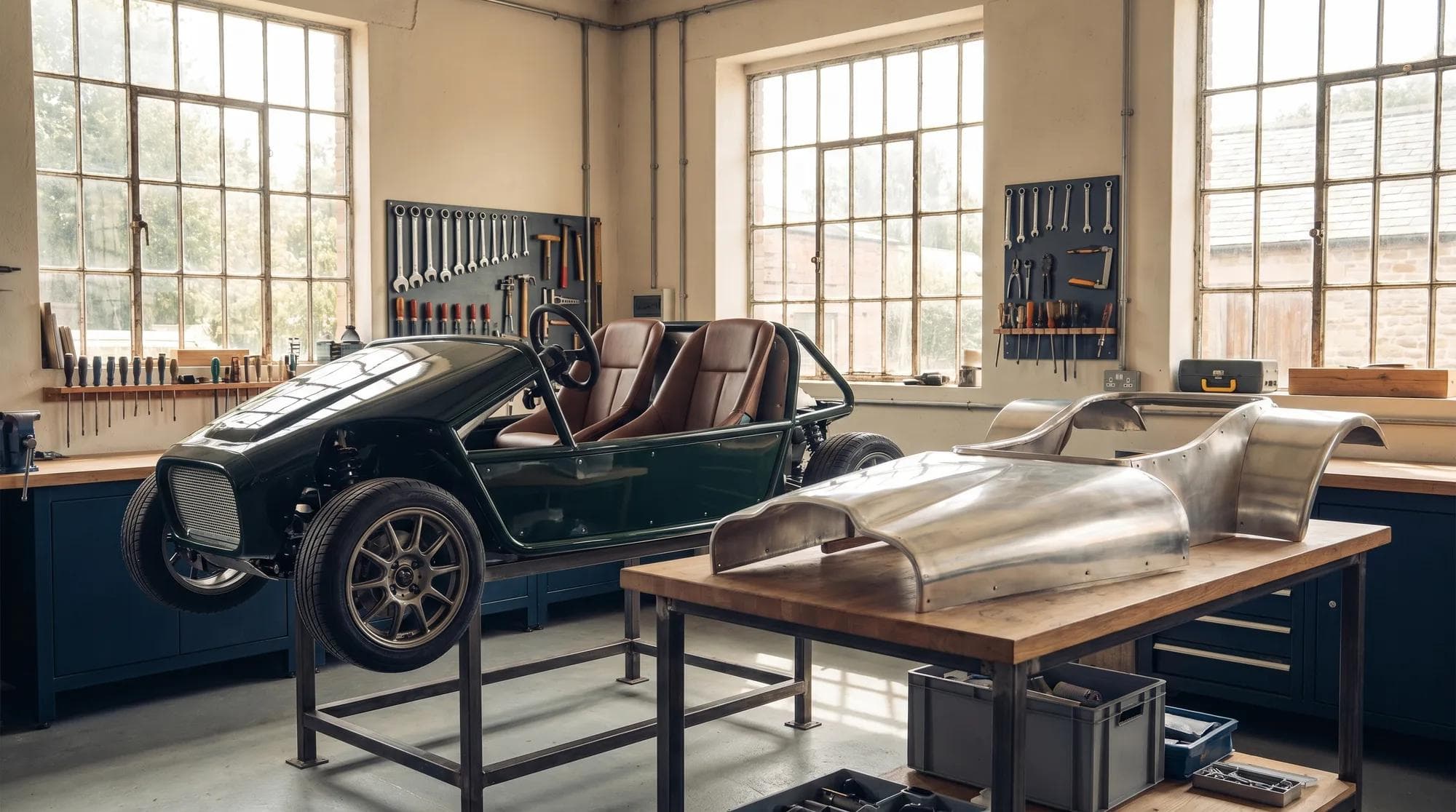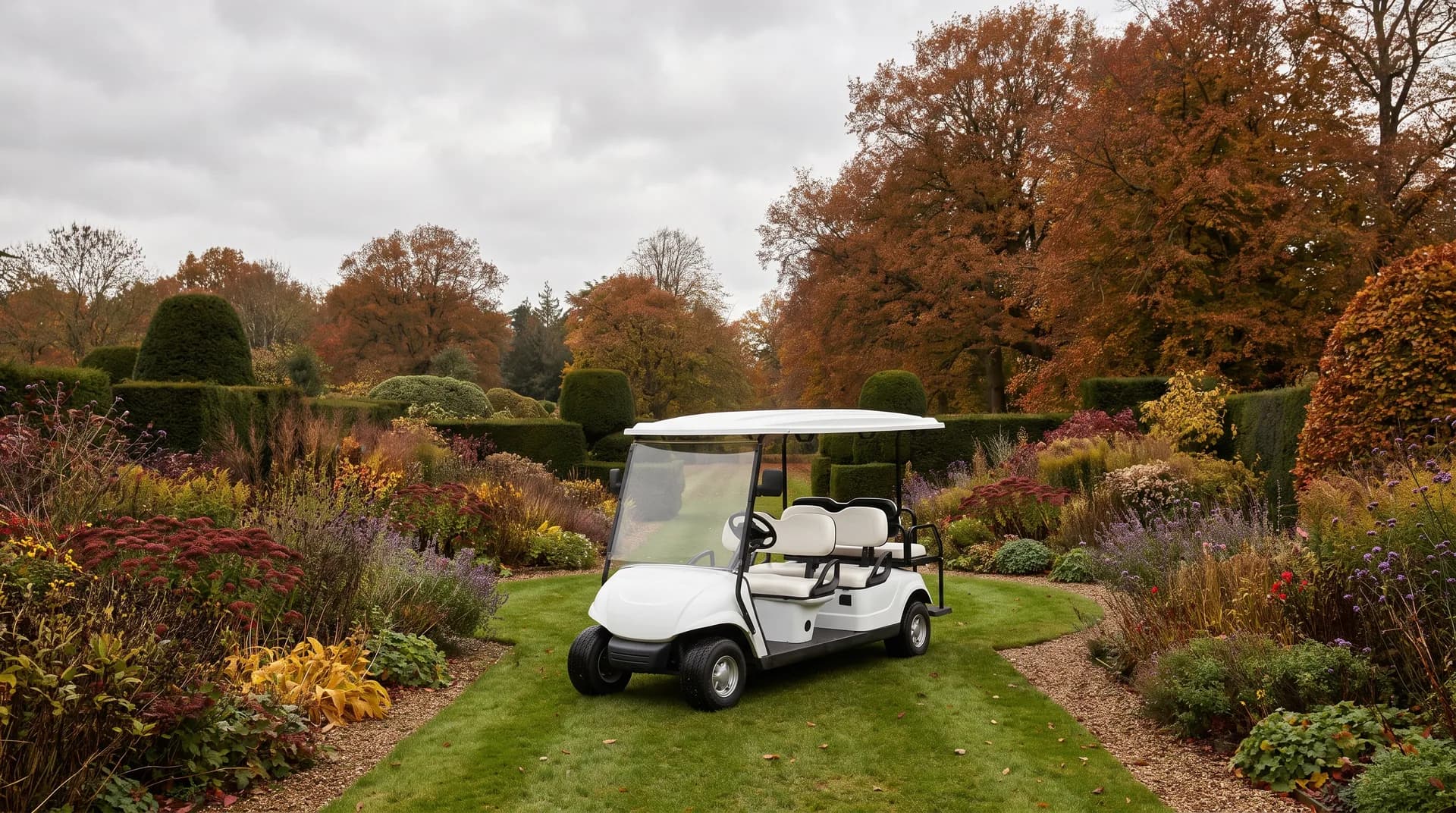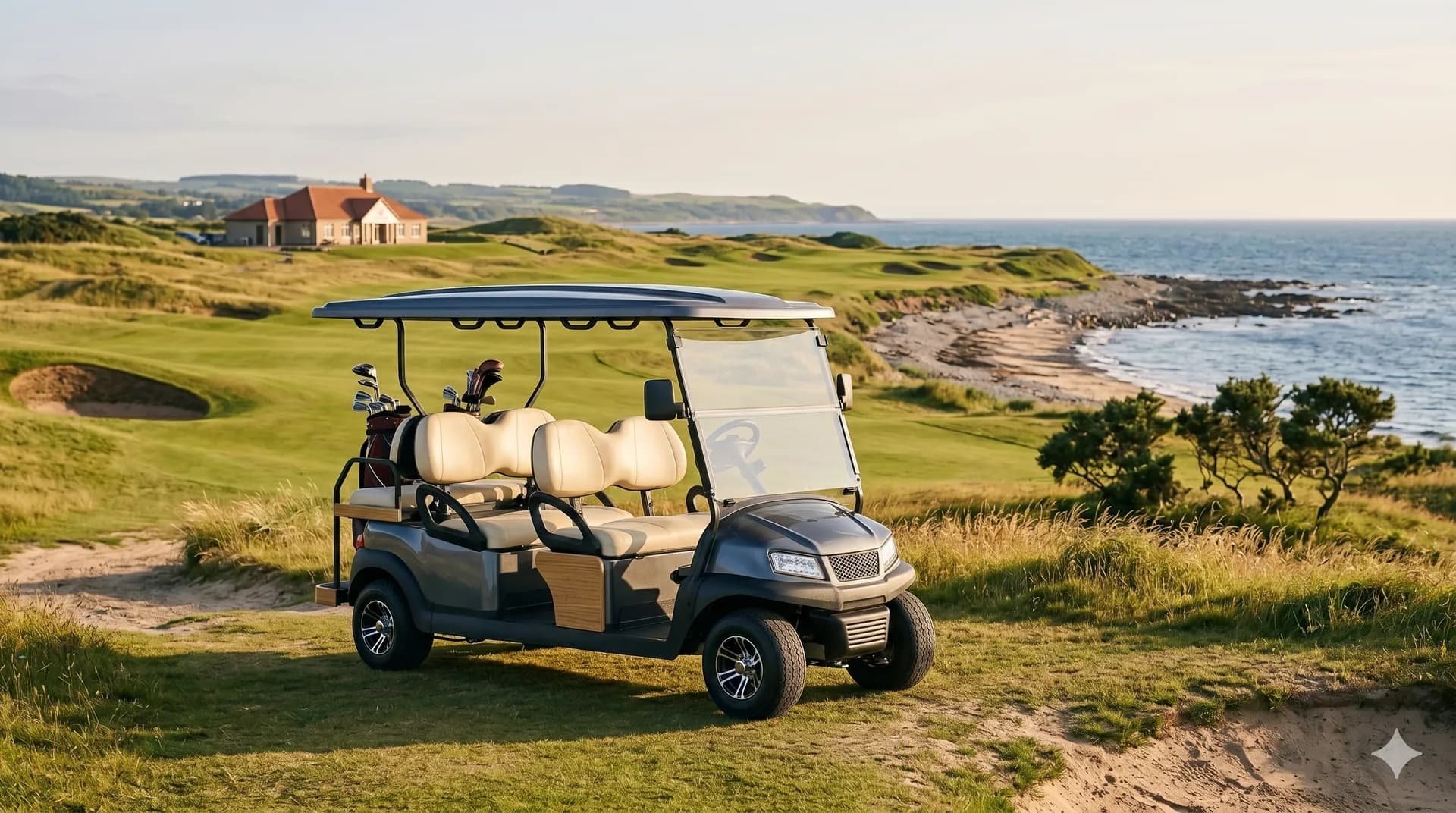
When the walking goes but the golf does not, three different machines compete for your money, and they are genuinely different answers, not three sizes of the same thing. The dedicated single-seater is a small personal buggy built for one golfer and a bag. The ride-on trolley, the E-Caddy style trike that club golfers rave about, is a powered trolley you sit or perch on. And the compact two-seat buggy is a proper golf buggy in its smallest form. Each has a fan club, each has trade-offs the fan club plays down, and the right choice depends on your body, your course, your car and your budget. Here is the honest comparison.
- Ride-on trolleys are the cheapest and most portable, but stability and comfort are their weak points.
- Single-seaters are the purpose-built middle ground: proper seat, small footprint, but often thin dealer support.
- A compact two-seater gives the most comfort, stability and support network, but needs storage, not a car boot.
- Four wheels beat three for slope stability in every category.
- Decide storage and transport first; it eliminates options faster than any spec comparison.
The three contenders, briefly
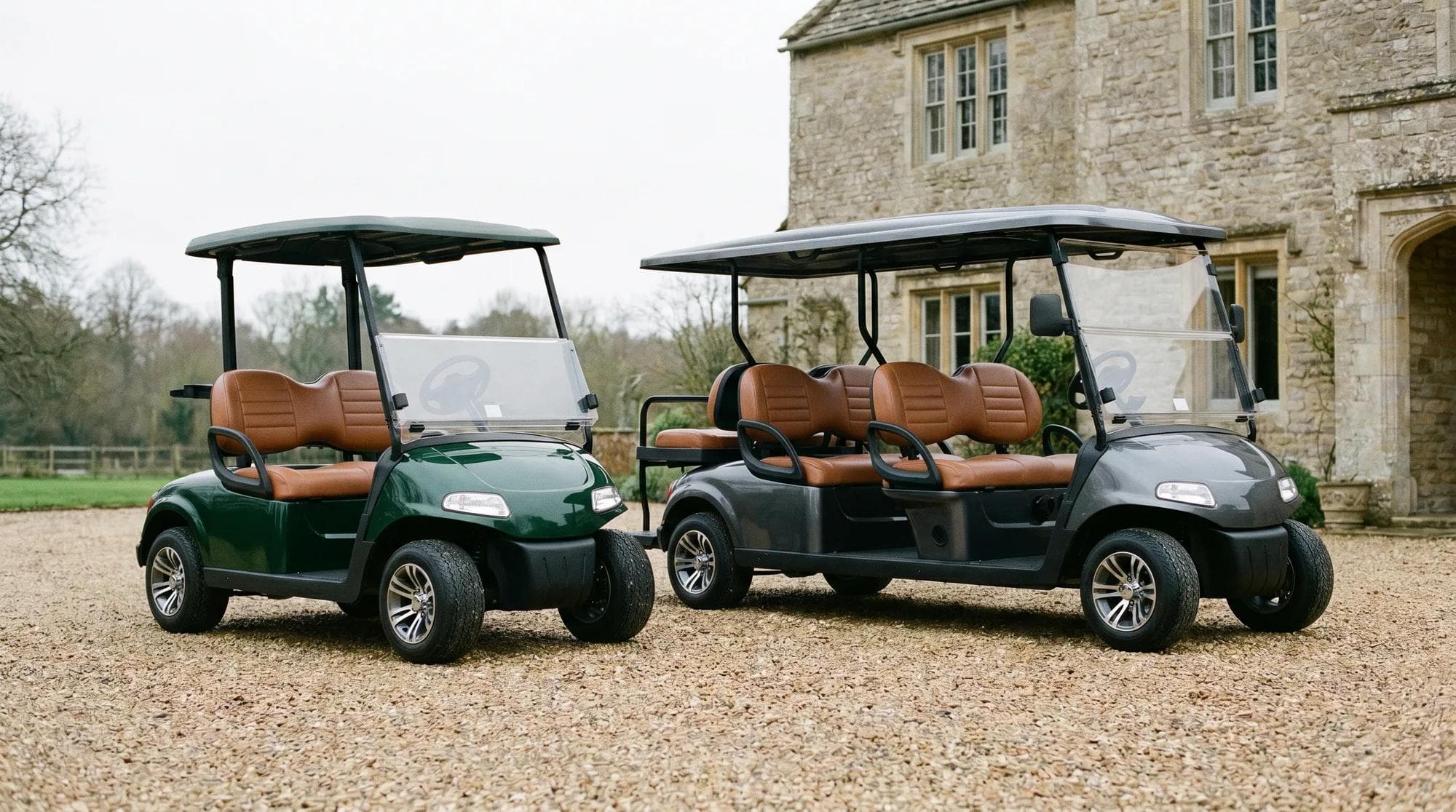
The ride-on trolley is essentially your golf trolley grown strong enough to carry you too, usually three-wheeled, light, and dismantles or folds into a car boot more easily than anything else here. Typical money is low thousands. The single-seater, the Grasshopper and Patterson territory covered in our full buyer's guide, is a purpose-built miniature buggy with a real seat, a canopy on some models, and typically around £2,000 to £5,000 new. The compact two-seater is a full golf buggy in its smallest footprint, our S2 is one, with car-like seating, weather protection available, lithium power and, bought from an established dealer, a warranty and service network. It costs more, it will not go in a boot, and it carries a playing partner.
- Ride-on trolley
- Lowest, low thousands
- Single-seater
- Typically around £2,000 to £5,000
- Compact two-seater
- Highest, proper-buggy money
- Ride-on trolley
- Weakest, most are trikes
- Single-seater
- Good, choose four wheels
- Compact two-seater
- Best, widest track and four wheels
- Ride-on trolley
- Basic perch or saddle
- Single-seater
- Real seat, modest suspension
- Compact two-seater
- Full seat, most weather protection
- Ride-on trolley
- Yes, the most portable
- Single-seater
- Often, in around three pieces
- Compact two-seater
- No, needs storage or a trailer
- Ride-on trolley
- No
- Single-seater
- No
- Compact two-seater
- Yes
- Ride-on trolley
- Brand-dependent, often small firms
- Single-seater
- Specialist or import, often thin
- Compact two-seater
- Dealer-backed warranty and servicing
| Ride-on trolley | Single-seater | Compact two-seater | |
|---|---|---|---|
| Typical new cost | Lowest, low thousands | Typically around £2,000 to £5,000 | Highest, proper-buggy money |
| Stability on slopes | Weakest, most are trikes | Good, choose four wheels | Best, widest track and four wheels |
| Comfort over 18 holes | Basic perch or saddle | Real seat, modest suspension | Full seat, most weather protection |
| Fits in a car boot | Yes, the most portable | Often, in around three pieces | No, needs storage or a trailer |
| Carries a partner | No | No | Yes |
| Support network | Brand-dependent, often small firms | Specialist or import, often thin | Dealer-backed warranty and servicing |
Stability and comfort: the honest bit
Stability separates these machines more than price does. Most ride-on trolleys are trikes, and a light three-wheeler with an adult perched high on it is the least planted thing on a wet slope; owners learn to respect cambers quickly, and the documented tip-over concern in the single-seater world applies doubly here. Single-seaters on four wheels are markedly better, and a compact two-seater, with the widest track and lowest-slung seating of the three, is the most stable by a distance. Comfort follows the same order. A trolley you perch on is fine for nine flat holes and tiring for eighteen; a single-seater's proper seat changes that; a two-seater adds space, back support and real weather protection, which matters more in a British October than any test drive in July suggests. If your condition means a jolt or a slide has consequences, weight stability and comfort accordingly, this is not the place to save money.
Cost, storage and the support question
On pure price the trolley wins, the single-seater sits in the middle and the two-seater costs the most, but purchase price is the start, not the story. Trolleys and single-seaters travel in your car, which saves club storage fees but means lifting, and lead-acid versions of either are heavy enough to make that the daily grind of ownership. The two-seater needs a buggy shed space or storage at home with a way to get it to the course, which is a real constraint, ask about waiting lists before you commit, as our club permission guide urges. Then there is support, the quietest but perhaps most important difference. Much of the trolley and single-seater market is small specialists and private imports: excellent while all is well, difficult when you need a controller, a charger or a warranty honoured years later. An established dealer network behind a compact buggy, with servicing, parts and a warranty measured in years, is worth real money to anyone who intends to rely on the machine for their golf. Whichever route you take, do not budget on VAT relief: a standard buggy of any size does not qualify, and only a substantially and permanently adapted one can.
Batteries and the used market
One thread runs through all three categories: the battery decides more about daily life with the machine than almost any other component. Lead-acid keeps purchase prices down, and dominates the older used market in every category, but it is heavy in exactly the pieces you have to lift, fades over its life, and is the usual reason a cheap used machine disappoints by the fifteenth hole. Lithium costs more up front and repays it in weight, range and lifespan, and in the single-seater and trolley world a lithium retrofit is the standard way to revive a mechanically sound older machine. If you shop used, which is a sensible way into any of these categories, ask the battery's age and chemistry before anything else, price a replacement pack into any lead-acid bargain, and treat a machine already converted to lithium by a reputable specialist as the pick of the classifieds. A ten-year-old buggy with a fresh lithium pack is often a better buy than a five-year-old one on tired lead-acid.
Who should pick which
Pick the ride-on trolley if budget leads, your course is reasonably flat, you can lift moderate weights into a car, and you accept basic comfort as the price of maximum portability. Pick the single-seater if you play most golf at one club, want a real seat and a machine built for exactly this job, can solve storage or transport, and go in with eyes open about small-supplier support; four wheels, always, on a hilly course. Pick the compact two-seater if you have or can get storage, play with a partner or want to, value comfort, stability and weather protection, and want a warranty and service network standing behind the machine you now depend on. And if none of the sums work yet, hiring per round remains a perfectly good answer while you decide, our hire versus buy guide covers when it stops being one.
Frequently asked questions
What is the cheapest way to ride the course?+
A ride-on trolley is the cheapest machine to buy and the easiest to transport, with basic comfort and trike stability as the trade-offs. Per-round hire is cheaper still if you play occasionally.
Are ride-on trolleys stable?+
They are the least stable of the three options, as most are light three-wheelers with a high perch. On flat courses in dry conditions they are fine; on slopes and wet cambers they demand respect. Four-wheel machines of any type are markedly more planted.
Why buy a two-seater if I play alone?+
Stability, comfort, weather protection and dealer support, plus the option of a partner, a grandchild or a caddie beside you. The trade-off is storage: a compact two-seater needs a shed space or trailer, not a car boot.
Is dealer support really worth paying for?+
If the machine is what keeps you playing, yes. Much of the single-seater and trolley market is small specialists and imports, where parts and warranty depend on one firm. An established service network means the machine is repaired, not retired, when something fails.
Can I try before choosing?+
Sensible buyers do. Hire a club buggy for a few rounds to learn what you value, seek demonstrations of any single-seater or trolley on your own course if the seller offers them, and test the loading and lifting, not just the driving.
Weigh up the compact buggy route
Tell us your course, your storage situation and how you play, and we will give you an honest view of whether a compact two-seater fits, then build your quote.
Ready to find the right buggy?
Tell us how and where it will work and we will specify a vehicle and a tailored quote built around you. Every build comes with a 3-year warranty and a 24-hour priority call-out.
Our guides are written and reviewed by the Hawke Electric Vehicles team, the people who specify, build, deliver and support the vehicles. We focus on honest, practical advice and flag where a figure depends on the build rather than guessing.
More guides by Hawke