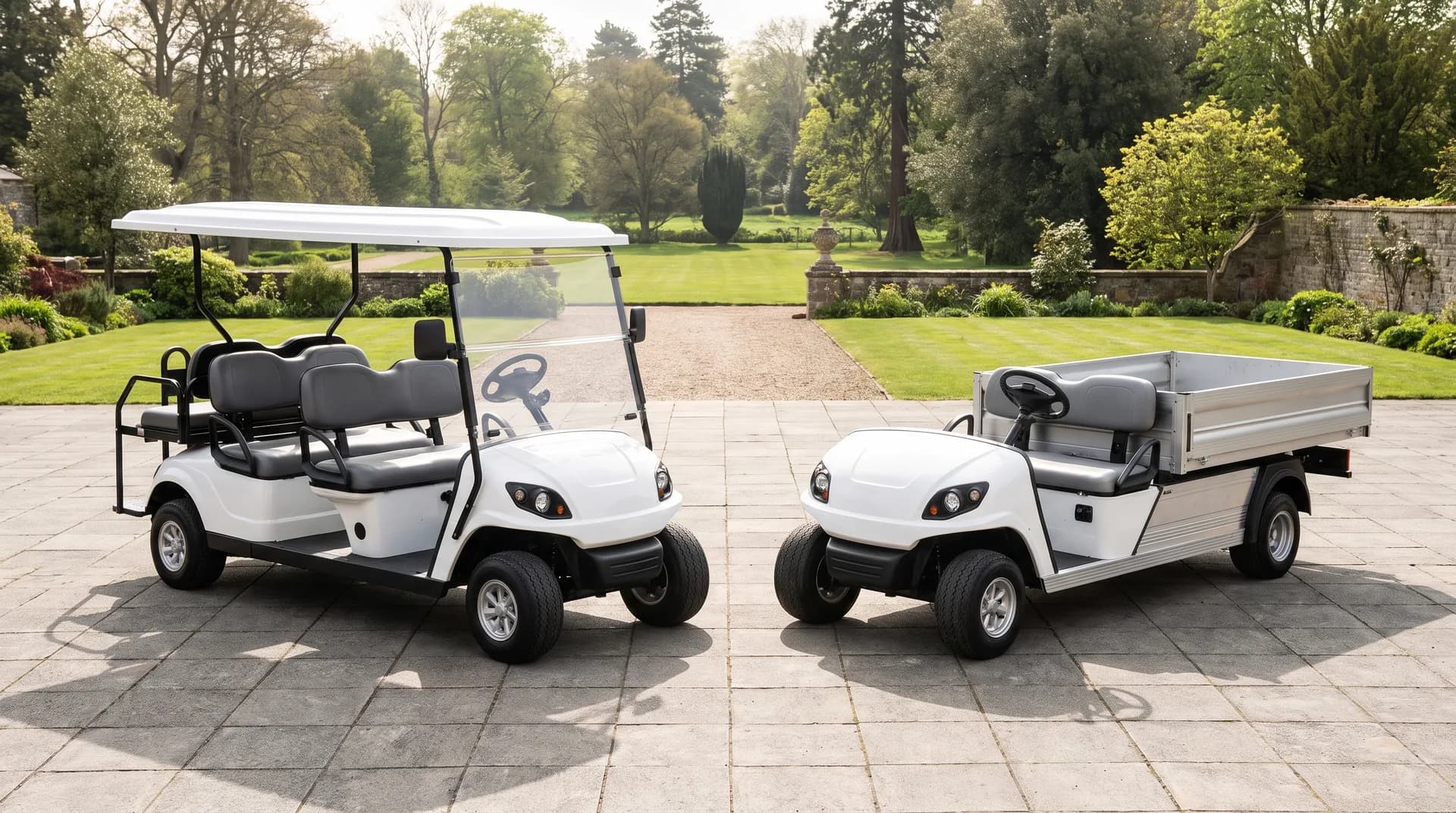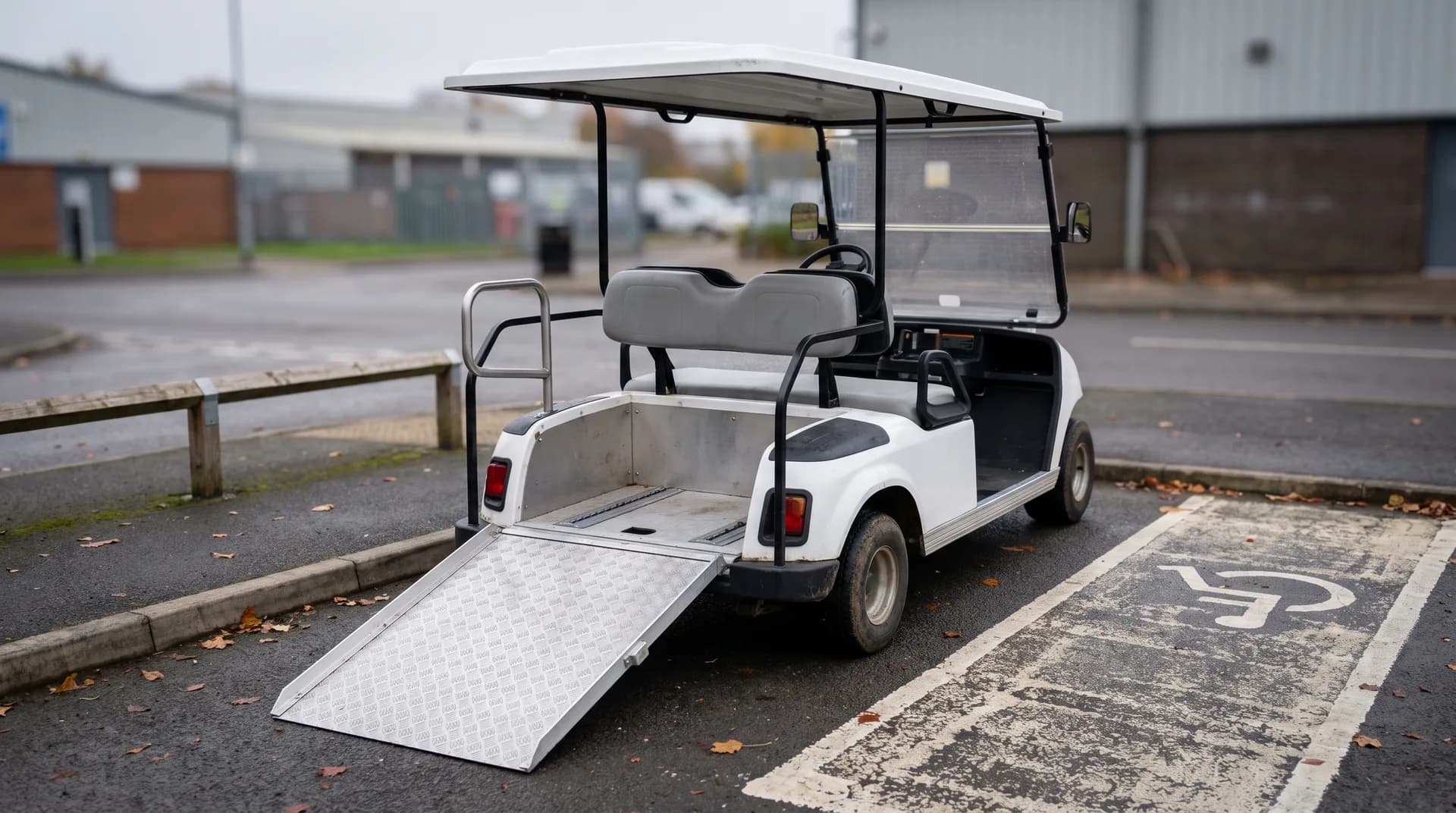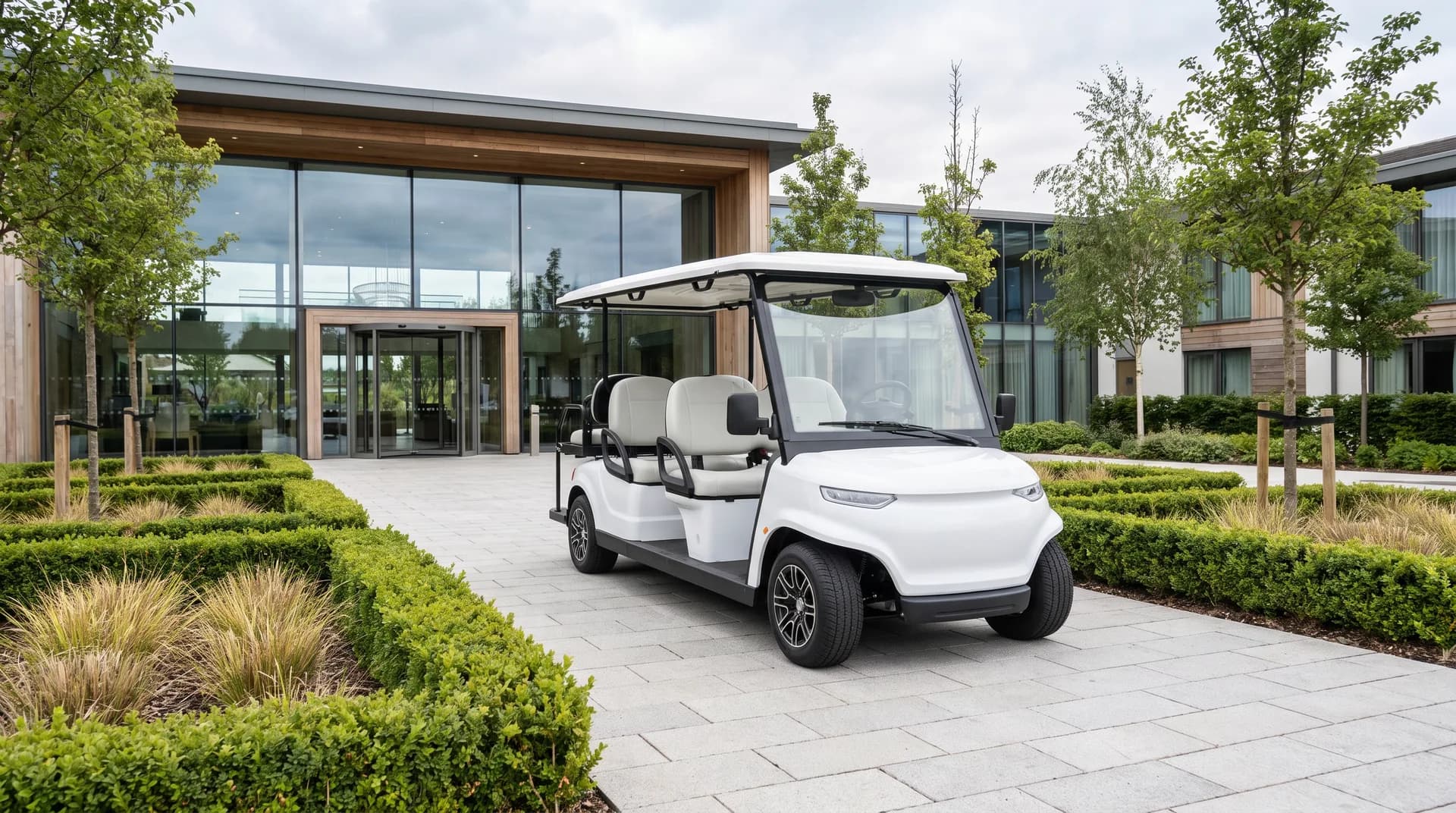
This guide is about ride-on passenger buggies for a site, the kind that carry people, staff and loads, not the electric trolley that carries a golf bag round the course. Whether one is worth it for a business depends on how you will use it, but for most UK clubs, estates, resorts and venues the case is strong and getting stronger. The honest way to answer it is to weigh what you get, low running costs, quiet clean operation, little to maintain, against the up-front price and the one or two cases where petrol still fits. This guide does exactly that, without overselling, so you can judge it for your own use.
- Running costs are low: charging costs a fraction of petrol per mile, with little to service.
- Quiet, fume-free operation suits sites where people are never far away.
- An electric drivetrain has far less to go wrong, so downtime is lower.
- The up-front price is higher than a basic petrol buggy, but total cost usually favours electric.
- Petrol still fits a very long, remote duty cycle with nowhere to charge.
What you get for the money
The value is in the ownership, not just the purchase. Charging overnight costs a fraction of petrol per mile, there is no fuel to buy or store, and an electric drivetrain has no oil, filters or fuel system to service, so both running cost and downtime are low. Add quiet, fume-free operation that suits sites full of people, and a fleet that keeps working, and the case builds from the everyday rather than the headline. Our running-costs guide sets out the ongoing side.
The honest counter-case
Electric is not the answer to every situation, and we would rather say so. A basic petrol buggy is cheaper to buy, and for a very long, remote duty cycle with nowhere to charge, petrol's quick refuel still helps. For the great majority of UK sites, though, those cases are rare, and the everyday advantages of electric outweigh them. Our electric versus petrol running-cost guide compares the two directly.
When it is clearly worth it
For a club, estate, resort, venue or business that uses a buggy regularly across a site with people around, electric is usually the clear choice: the running savings compound, the quiet suits the setting, and the low maintenance keeps it available. The heavier and more regular the use, the stronger the case, because that is where the low running cost and reliability pay back the up-front price.
Frequently asked questions
Are electric golf buggies worth the money?+
For most UK clubs, estates and businesses, yes. Low running costs, quiet clean operation and little to maintain usually outweigh the higher up-front price over the years of ownership, especially with regular use. We will give an honest view for your own use.
Are they cheaper than petrol overall?+
Usually. The purchase price is higher than a basic petrol buggy, but charging costs a fraction of fuel per mile and servicing is lower, so the total cost of ownership tends to favour electric on a vehicle used regularly.
When is petrol still a better choice?+
For a very long, remote duty cycle with nowhere to charge, petrol's quick refuel can still help. For most UK sites this is rare, and the everyday advantages of electric win.
Do they hold up to daily use?+
Yes. An electric drivetrain has far fewer moving parts and no fuel system, so there is less to go wrong. A 3-year warranty and 24-hour priority call-out keep a fleet you depend on available.
How do I know if it is worth it for us?+
Weigh the running savings and the quiet, low-maintenance operation against the up-front price for your use. We are happy to work that through with you honestly rather than push one option.
Weigh it up for your site
Tell us how you will use the buggy and we will give an honest view of whether electric is worth it for you, and quote it properly.
Related solutions
Ready to explore what we build?
See the vehicles and the setting this applies to, or get a tailored quote built around your site.

Ready to find the right buggy?
Tell us how and where it will work and we will specify a vehicle and a tailored quote built around you. Every build comes with a 3-year warranty and a 24-hour priority call-out.
Our guides are written and reviewed by the Hawke Electric Vehicles team, the people who specify, build, deliver and support the vehicles. We focus on honest, practical advice and flag where a figure depends on the build rather than guessing.
More guides by Hawke