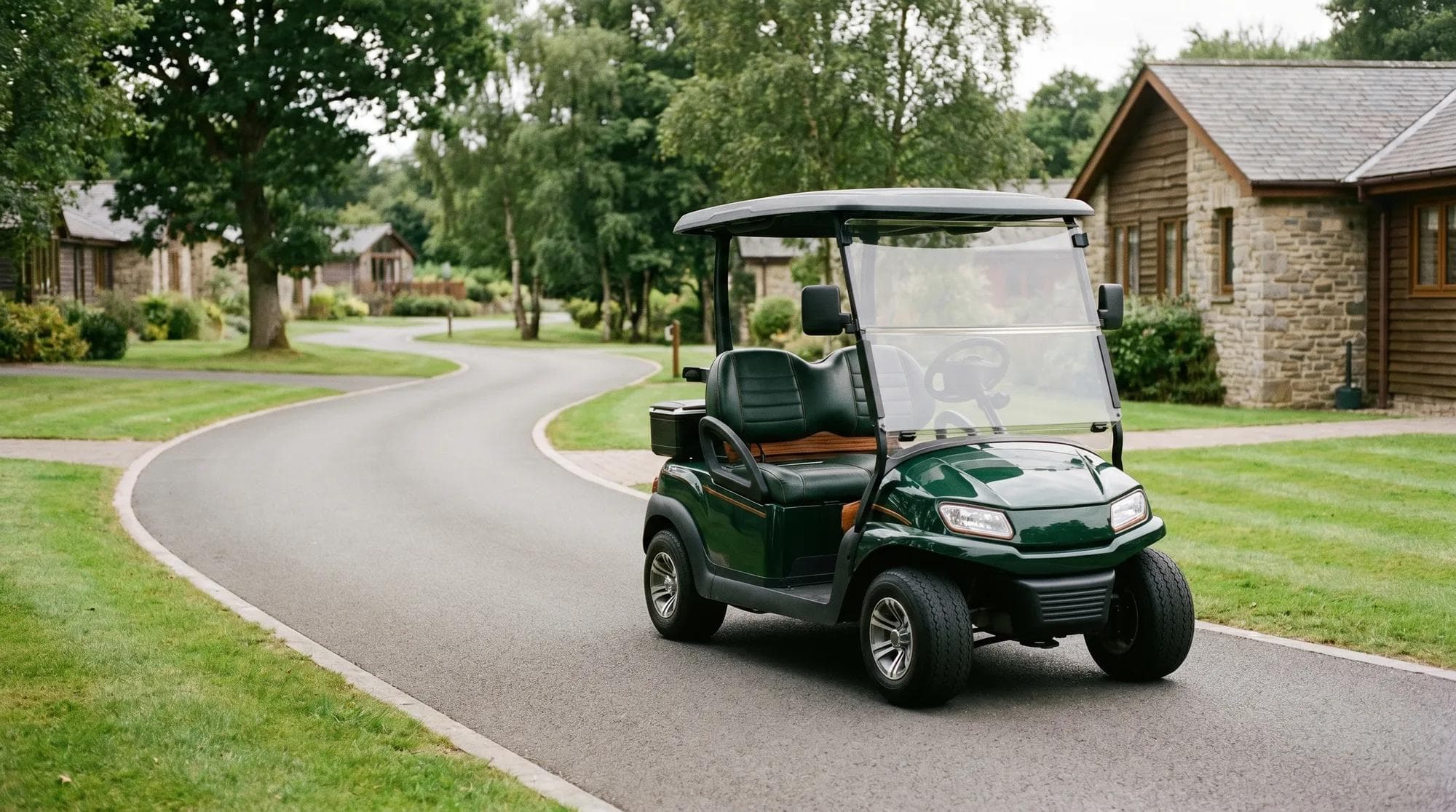
- Most sites have a steady base of demand all year and a sharp peak for a few months; the fleet should reflect both, not just the peak.
- Own the core you use every week, and hire a seasonal top-up for the May to September rush rather than buying vehicles that sit idle all winter.
- Find the split by looking at your quietest sustained month against your busiest realistic week.
- Owning for a two-week peak is the most expensive way to run a fleet; the capital sits still for ten months.
- Plan the hire early, because the same peak that stretches you stretches every supplier's stock.
Almost every site we work with has the same shape to its year. There is a steady level of demand that runs week in, week out, and then a season when it spikes hard: the summer at a holiday park, the wedding and events calendar at a venue, the show season at a sporting estate. The question is not how many buggies you need at the peak. It is how to cover the peak without paying to own vehicles that do nothing for the rest of the year.
The answer, for a seasonal golf buggy fleet, is almost always a split: own a core that earns its keep all year, and hire a top-up for the months that need it. This guide shows how to work out where that line sits, what it costs, and how to handle the logistics so the busy season runs smoothly.
The trap: buying for the peak
It is an easy mistake to make, because the peak is what hurts. You remember the Saturday in August when guests were queueing and two buggies were not enough, so you resolve to buy four. But a vehicle you own costs money every month whether it moves or not: capital tied up, storage, insurance, charging kept warm, servicing on a schedule. Buy four to cover a fortnight and for the other fifty weeks you are paying to keep idle vehicles in a shed. Sizing the owned fleet to the peak is the most expensive way to do it.
Find your two numbers
Right-sizing comes down to two figures: your sustained base demand and your seasonal peak demand. The base is what you need on an ordinary week in your quieter months, the level you genuinely use all year. The peak is your busiest realistic week. The owned fleet should cover the base. The gap between the two is what you hire.
- 01
Map a year of demand
Look back over the last twelve months and note how many vehicles you actually used each week. A rough chart is enough to see the shape.
- 02
Set the base line
Take a typical week in your quieter season. The number of vehicles in steady use there is your year-round core, the fleet worth owning.
- 03
Set the peak line
Take your busiest realistic week, not a one-off freak day. That total is what you need at full stretch.
- 04
The gap is your hire
Subtract the base from the peak. That difference is the seasonal top-up to hire, only for the weeks it is needed.
- 05
Add a small spare to the core
Keep one extra in the owned fleet so a service or breakdown never leaves you short on an ordinary day.

What owning the core gets you
There are good reasons to own the base fleet rather than hire everything. Owned vehicles are there on a Tuesday in February when you need one at short notice. They are built and liveried as yours, so they look the part and your team knows them inside out. And because we build to order, the core fleet can be specified exactly for your site and your everyday jobs. For the demand you have every week, ownership is the steady, sensible choice.
Our fleet management guide goes deeper on keeping an owned fleet serviced, charged and reliable through the year, which matters most for the core you lean on daily.
What hiring the peak gets you
Hire flips the maths on the part of demand you cannot justify owning. You pay only for the weeks the vehicles are on site, with no winter storage, no idle capital, and no servicing bills out of season. If a wet summer means a quieter year, you simply hire less. It is the flexible layer on top of a fixed base, and it is what stops a seasonal operation buying for its busiest fortnight. Our guide to hiring for events covers how short-term hire works in practice.
- Own (core fleet)
- Steady demand every week, all year
- Hire (seasonal top-up)
- Sharp peaks of a few weeks or months
- Own (core fleet)
- Upfront capital, lower ongoing cost
- Hire (seasonal top-up)
- Pay only for the weeks in use
- Own (core fleet)
- You absorb it
- Hire (seasonal top-up)
- None; vehicles go back after the season
- Own (core fleet)
- Fully yours, built to order
- Hire (seasonal top-up)
- Standard or lightly branded for the period
| Factor | Own (core fleet) | Hire (seasonal top-up) |
|---|---|---|
| Best for | Steady demand every week, all year | Sharp peaks of a few weeks or months |
| Cost shape | Upfront capital, lower ongoing cost | Pay only for the weeks in use |
| Idle time | You absorb it | None; vehicles go back after the season |
| Branding and spec | Fully yours, built to order | Standard or lightly branded for the period |
The logistics of a seasonal top-up
A hired peak only works if it arrives on time and ready. The main things to get right are timing, delivery and charging. Book early, because your busy season is everyone's busy season and stock is finite. Agree delivery and collection dates that bracket your peak with a little slack. And make sure your charging and storage can take the extra vehicles, since a top-up fleet needs somewhere to plug in too. None of it is difficult, but it pays to plan it months ahead rather than weeks.
Reviewing the split each year
The right split is not fixed forever. As a site grows, demand that used to be a seasonal spike can become a year-round level, at which point part of the hired fleet is worth bringing into ownership. Equally, a quiet patch might mean trimming the core and leaning more on hire. We suggest reviewing the numbers once a year, after your peak, while it is fresh. A short look at what you actually used keeps the fleet honest.

A core fleet built to order
Own the everyday vehicles, specified and liveried as your own, and we will help you hire the seasonal top-up when the peak comes.
Get the split right for your season
Send us a rough idea of your year, the steady weeks and the busy ones, and we will help you size a core fleet to own and a seasonal top-up to hire, with no pressure to over-buy.
Frequently asked questions
How do I decide what to own and what to hire?+
Own the demand you use every week through your quieter months, and hire the gap up to your busiest realistic week. Map a year of actual usage, set a base line and a peak line, and the difference between them is your seasonal hire.
Is hiring really cheaper than buying for the peak?+
For a peak of only a few weeks, almost always. An owned vehicle costs capital, storage, insurance and servicing whether it moves or not. Hire means you pay only for the weeks the extra vehicles are on site.
When should I book a seasonal top-up?+
As early as you can, ideally the season before. Your peak is every operator's peak, so stock is finite. Early booking secures the vehicles and lets you sort delivery dates and charging in good time.
Can hired vehicles match my owned fleet?+
They can be specified to suit and lightly branded for the period, so they sit alongside your core fleet sensibly. The everyday core is fully built to order and liveried as yours.
Should I review the split each year?+
Yes. Demand shifts as a site grows. Look at what you actually used after each peak; a seasonal spike that becomes a year-round level may be worth owning, while a quiet year may mean leaning more on hire.
Related solutions
Ready to explore what we build?
See the vehicles and the setting this applies to, or get a tailored quote built around your site.

Ready to find the right buggy?
Tell us how and where it will work and we will specify a vehicle and a tailored quote built around you. Every build comes with a 3-year warranty and a 24-hour priority call-out.
Our guides are written and reviewed by the Hawke Electric Vehicles team, the people who specify, build, deliver and support the vehicles. We focus on honest, practical advice and flag where a figure depends on the build rather than guessing.
More guides by Hawke