- The golf buggy hire vs buy question has no single answer; it turns on how many weeks a year you really run the fleet.
- Buying wins on cost per day once a vehicle is used heavily across most of the year, because the price is spread over a long working life.
- Hiring wins when demand is short or spiky, since you pay only for the weeks you need and hand the upkeep back.
- Look at total cost of ownership over three to five years, not the sticker price: charging, servicing, storage, insurance and downtime all count.
- Most hospitality sites land on a split: own a core fleet for year-round use and hire extra for the peak season.
Sooner or later every hotel, resort or venue that moves guests by buggy asks the same thing: do we buy these or hire them? It is the right question, and the honest answer depends on your year. A site that runs buggies daily from March to October uses them very differently from one that needs a handful for a six-week summer peak, and the maths follows suit.
This guide sets out the golf buggy hire vs buy decision the way we would talk it through with you. We look at the real cost of ownership over three to five years, the cost of hiring across a season, and the point where one tips into the other. There is no sales angle here; for plenty of sites a split between the two beats committing fully to either.
Count the weeks before you count the cost
Before any numbers, work out how many weeks a year the fleet actually earns its keep. A buggy sitting in a store for eight months is still costing you in capital, depreciation and insurance, even when it is not turning a wheel. The more of the year a vehicle works, the more sense it makes to own it. The fewer weeks it runs, the more sense it makes to hire and let someone else carry it through the quiet months. Our resorts and hotels buyers' guide walks through how to map your demand across the year.
What buying really costs
The purchase price is only the start. To compare fairly, spread the cost of owning a buggy across its working life and add everything you carry as the owner. Over three to five years that means servicing and parts, charging, insurance, off-season storage, and the cost of a vehicle being off the road when it needs work. Set against all that is the resale value at the end, and the simple fact that a well-built buggy used heavily for years has a low cost per day.
- Purchase and finance: the up-front price, or the monthly cost if you fund it.
- Servicing and parts: routine maintenance plus the odd repair across the years.
- Charging: the electricity to keep the fleet running, modest but real.
- Insurance and storage: cover all year, and somewhere dry to keep vehicles off-season.
- Downtime and residual value: the cost of a vehicle off the road, offset by what it is worth when you sell it.
What hiring really costs
Hiring flips the model. You pay a rate for the weeks you need and the supplier carries the rest: servicing, storage, insurance on the asset and the depreciation. There is no capital tied up, nothing sitting idle in winter, and a breakdown is the supplier's problem to fix or swap out. The trade is simple. Per day, a hire vehicle costs more than one you own and run hard, because that convenience and flexibility is priced in. Over a short season that premium is well worth paying; over a full year, used daily, it adds up.
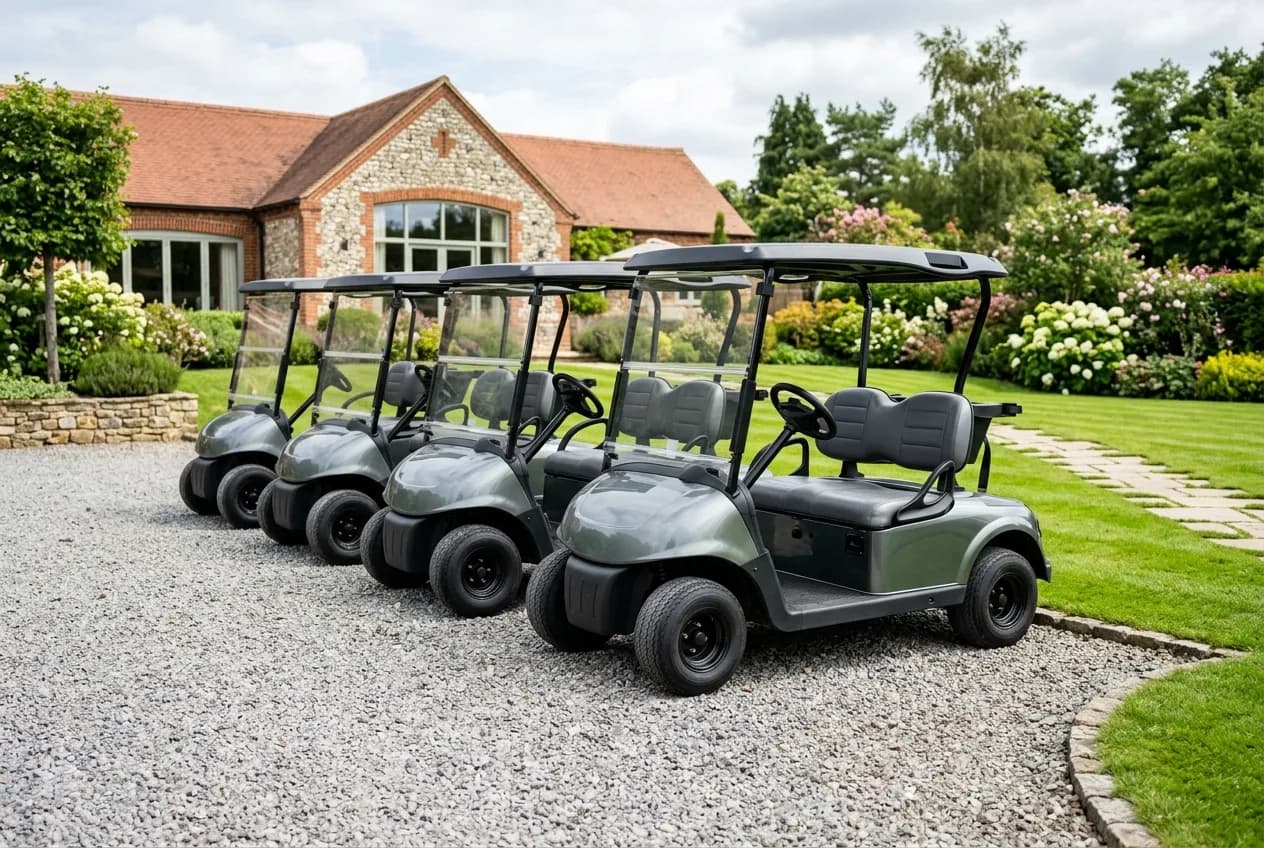
A three to five year comparison
Here is the shape of the decision over a typical three to five year window. The figures will vary with your site, your supplier and your usage, so treat this as a way of thinking rather than a quote. The pattern, though, holds almost everywhere.
- Buying
- High: full price or finance deposit
- Hiring
- Low: a hire rate, no capital
- Buying
- Low once used heavily across the year
- Hiring
- Higher; convenience is priced in
- Buying
- You still pay storage, insurance, depreciation
- Hiring
- None: you hand the vehicles back
- Buying
- Your responsibility to service and cover
- Hiring
- The supplier's; swaps handle breakdowns
- Buying
- Fixed fleet you own
- Hiring
- Scale up or down by the week
- Buying
- Used most of the year, every year
- Hiring
- Short, seasonal or one-off demand
| Factor | Buying | Hiring |
|---|---|---|
| Up-front cost | High: full price or finance deposit | Low: a hire rate, no capital |
| Cost per day in use | Low once used heavily across the year | Higher; convenience is priced in |
| Off-season cost | You still pay storage, insurance, depreciation | None: you hand the vehicles back |
| Maintenance and downtime | Your responsibility to service and cover | The supplier's; swaps handle breakdowns |
| Flexibility | Fixed fleet you own | Scale up or down by the week |
| Best when | Used most of the year, every year | Short, seasonal or one-off demand |
The split that suits most hospitality sites
In practice few resorts sit at either extreme. The pattern that works for most is to own a core fleet for the work you do every week of the year, then hire extra vehicles for the summer peak, a wedding season or a run of events. You buy only what you can keep busy, so your owned cost per day stays low, and you flex the rest without buying for two busy weeks. It keeps capital working where it earns and pushes the seasonal spike onto a hire bill you only pay when you need it.
Whichever way you lean, the vehicles should suit your site rather than a catalogue. Because we build to order you can match seat counts, finish and livery across an owned fleet, and hire vehicles that fit the same look. Browse the range to see the options, or request a quote and we will help you weigh the split.
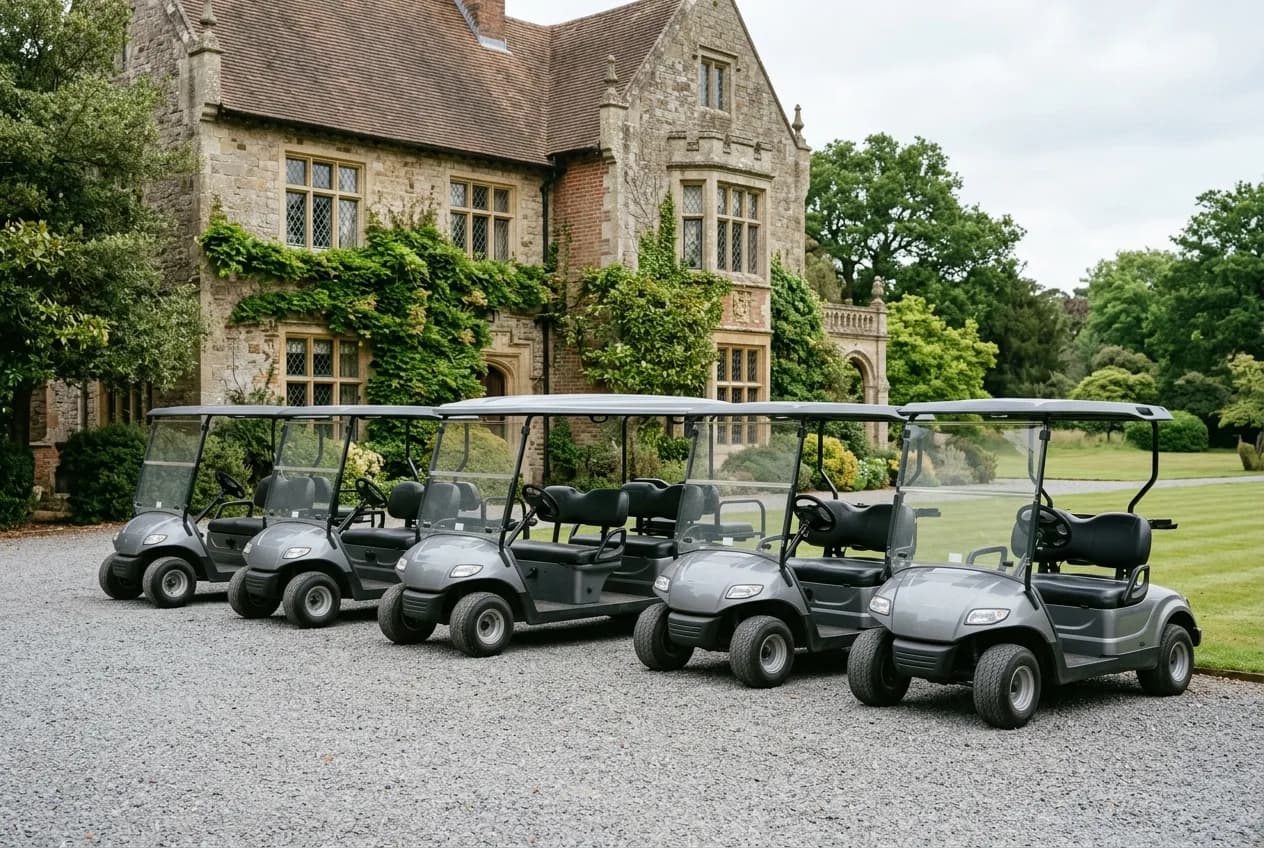
Own the core, hire the peak
From two seats to eight, plus utility builds, every vehicle is made to order, assembled and finished in the UK and branded as your own, whether you buy it or hire it for the season.
How to make the call for your site
- 01
Map your year
Mark the weeks the fleet runs hard, the weeks it runs light, and the weeks it sits idle. The shape of that calendar drives the decision.
- 02
Set the year-round baseline
Decide how many vehicles you genuinely need every week. That is your case for owning, where cost per day is lowest.
- 03
Size the peak on top
Work out the extra vehicles you need only at the busy times. That is your case for hiring, paid for just those weeks.
- 04
Add the hidden costs
For owning, include servicing, charging, storage, insurance and downtime. For hiring, confirm what the rate covers and what it does not.
- 05
Compare cost per day, not sticker price
Spread each option across three to five years and compare the cost for every day the fleet is actually in use.
Not sure whether to hire or buy?
Send us your busy weeks, your quiet weeks and a rough idea of your routes, and we will model owning, hiring and a split for your site, honestly, so you commit to whichever costs least over the years.
Frequently asked questions
Is it cheaper to hire or buy electric buggies?+
It depends on how many weeks a year you use them. Buying is cheaper per day once a vehicle works most of the year. Hiring is cheaper overall when demand is short, seasonal or one-off, because you pay only for the weeks you need.
How long does an owned electric buggy last?+
A well-built buggy that is serviced properly works for many years, which is why owning makes sense for heavy, year-round use; the price spreads across a long working life and a low cost per day.
What does a hire rate usually include?+
Typically the vehicle, servicing during the hire and cover for breakdowns, often with a swap if something fails. Always confirm what is and is not included, such as delivery, charging and any damage terms, before you compare.
Can we hire first and buy later?+
Yes, and many sites do. Hiring is a good way to trial buggies on your site and confirm the right seat count and spec before committing to an owned fleet built to match.
Will you help us work out the split?+
Gladly. Tell us your busy and quiet weeks and your routes, and we will model owning, hiring and a mix of the two, and tell you honestly which works out cheapest for your site.
Related solutions
Ready to explore what we build?
See the vehicles and the setting this applies to, or get a tailored quote built around your site.

Ready to find the right buggy?
Tell us how and where it will work and we will specify a vehicle and a tailored quote built around you. Every build comes with a 3-year warranty and a 24-hour priority call-out.
Our guides are written and reviewed by the Hawke Electric Vehicles team, the people who specify, build, deliver and support the vehicles. We focus on honest, practical advice and flag where a figure depends on the build rather than guessing.
More guides by Hawke